
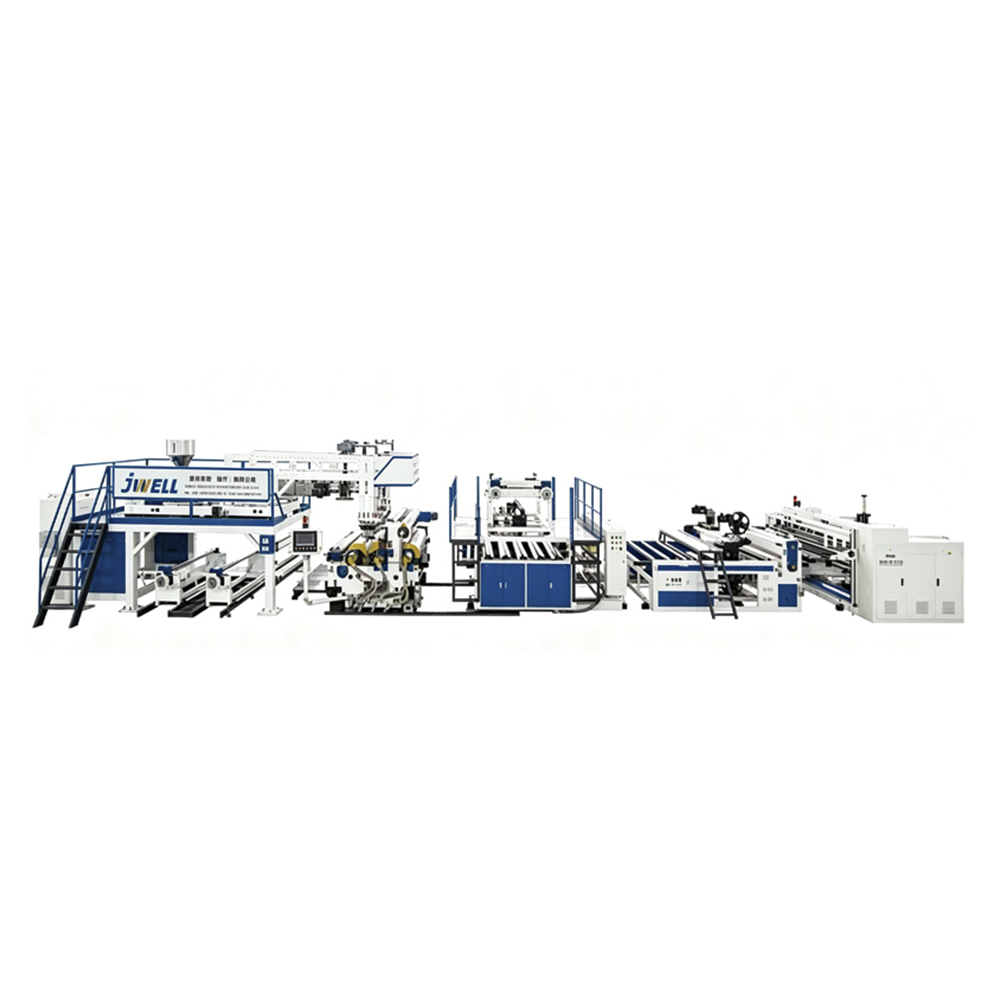


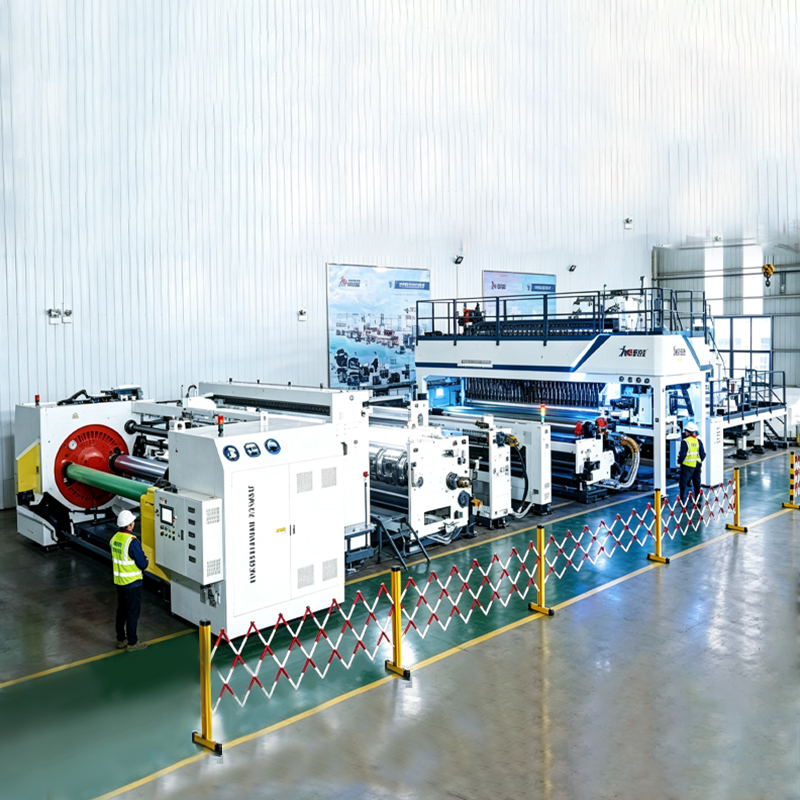
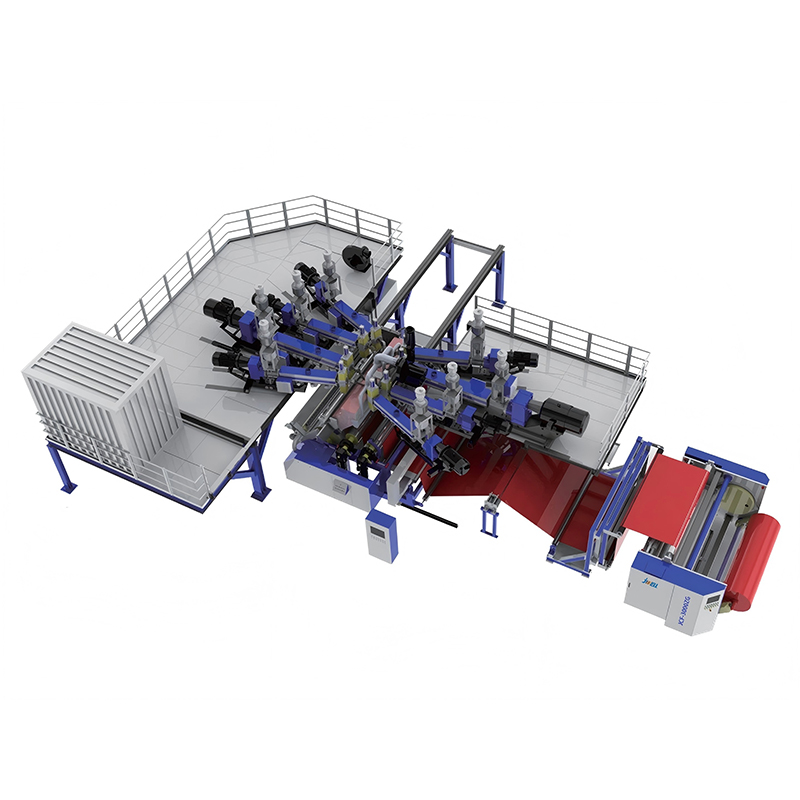
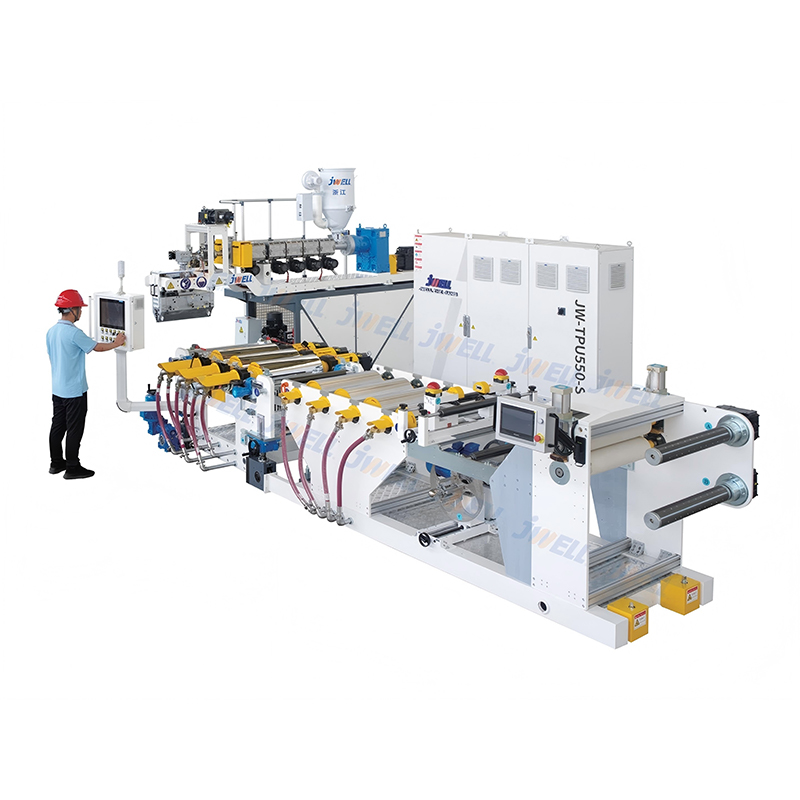
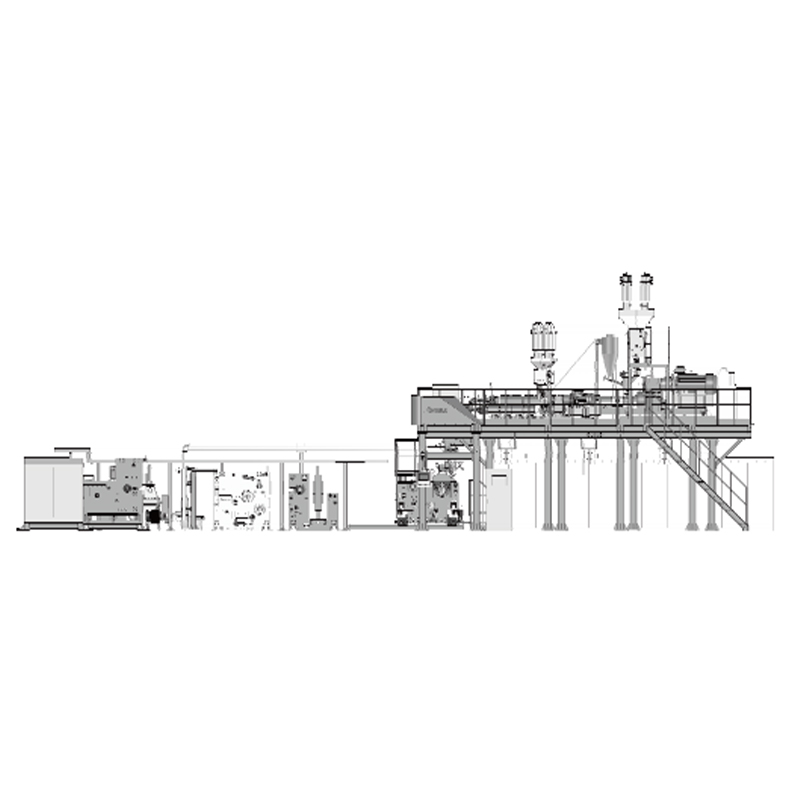
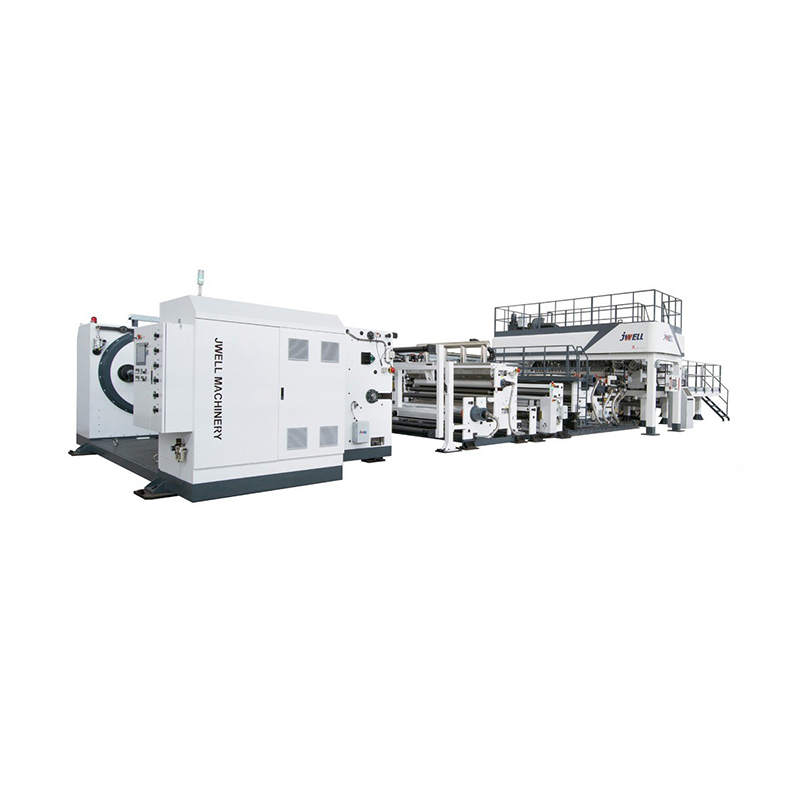
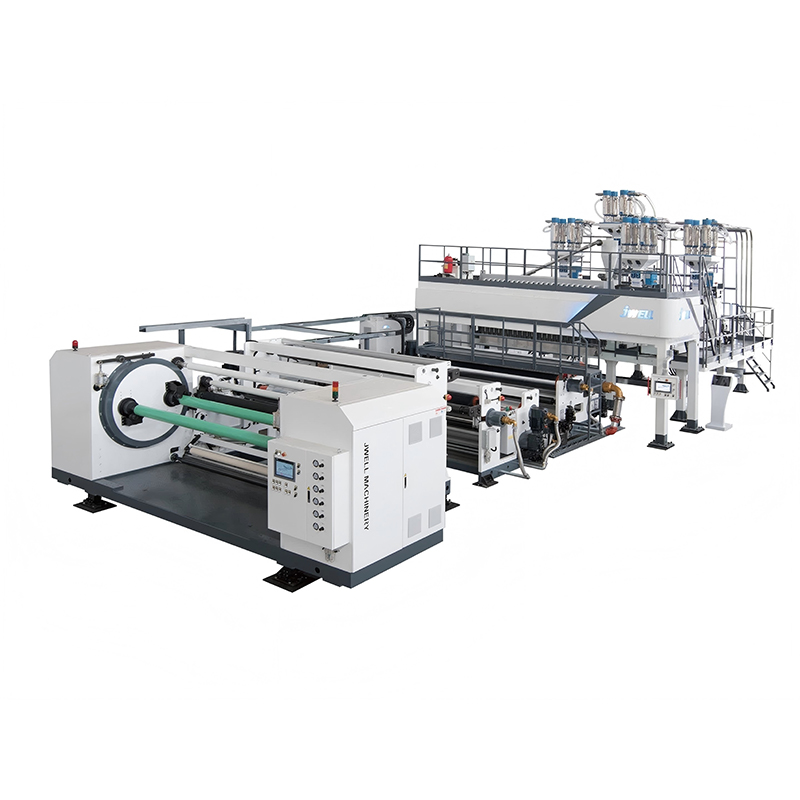
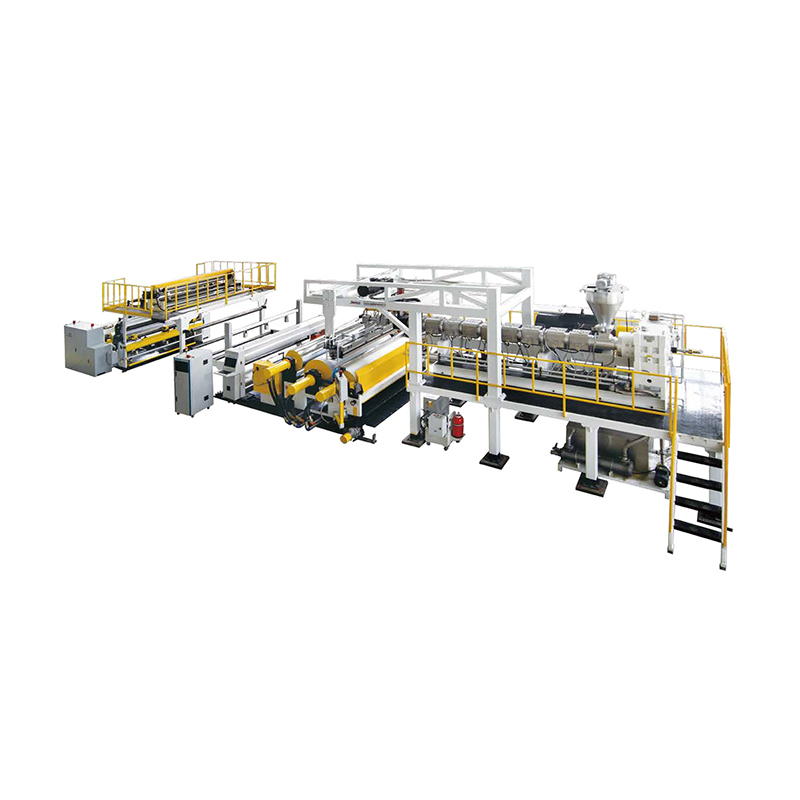
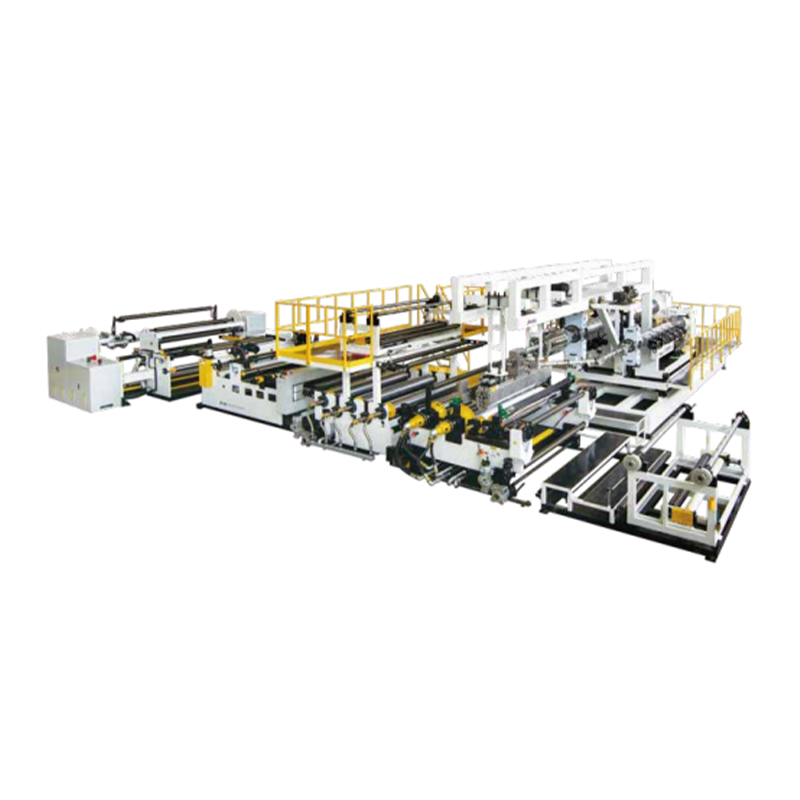
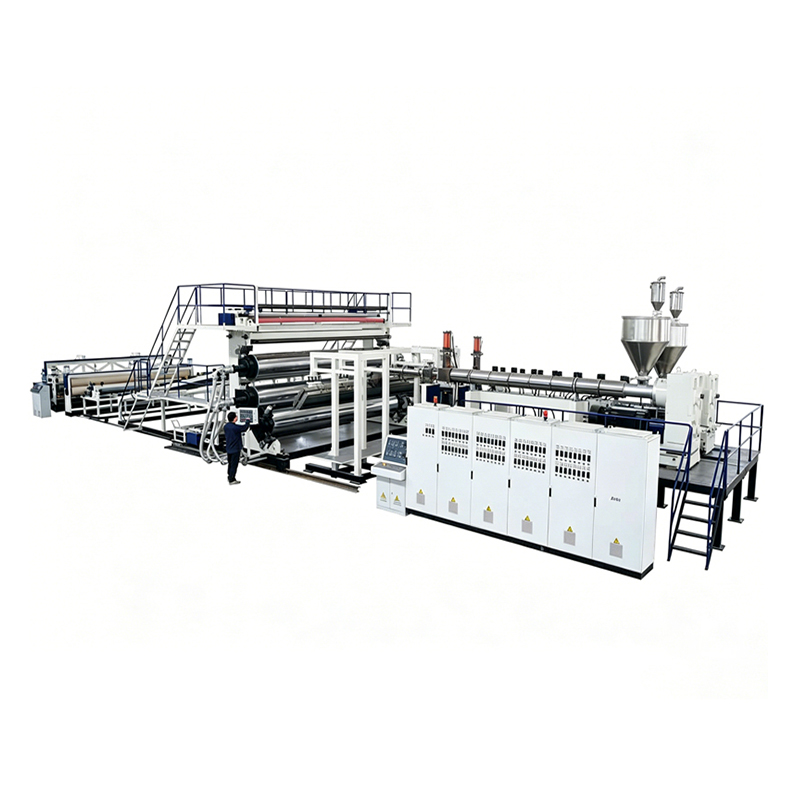
Jwell's Film Extrusion Line is designed for high-performance soft packaging applications, delivering consistent quality and excellent barrier properties. With multi-layer co-extrusion technology, this machine efficiently produces films that effectively block oxygen, moisture, and other gases, extending product shelf life and ensuring freshness.
At Jwell, we pride ourselves on combining advanced extrusion technology with customized solutions tailored to your production needs. Our machines support various polymers including CPP, CPE, and EVOH, providing flexibility for a wide range of packaging applications. The line features high automation, energy-efficient design, and easy thickness adjustment, ensuring stable production and minimal downtime.
Customers frequently ask about material compatibility, production capacity, and barrier performance. For example, when asked about achieving consistent thickness across layers, Jwell engineers recommend precise calibration and regular maintenance schedules. For issues related to film clarity or surface quality, our team provides on-site training and guidance to optimize operational parameters.
Beyond equipment, Jwell offers comprehensive support including installation, staff training, and prompt technical assistance. By partnering with us, manufacturers gain a reliable production partner committed to efficiency, quality, and innovation.
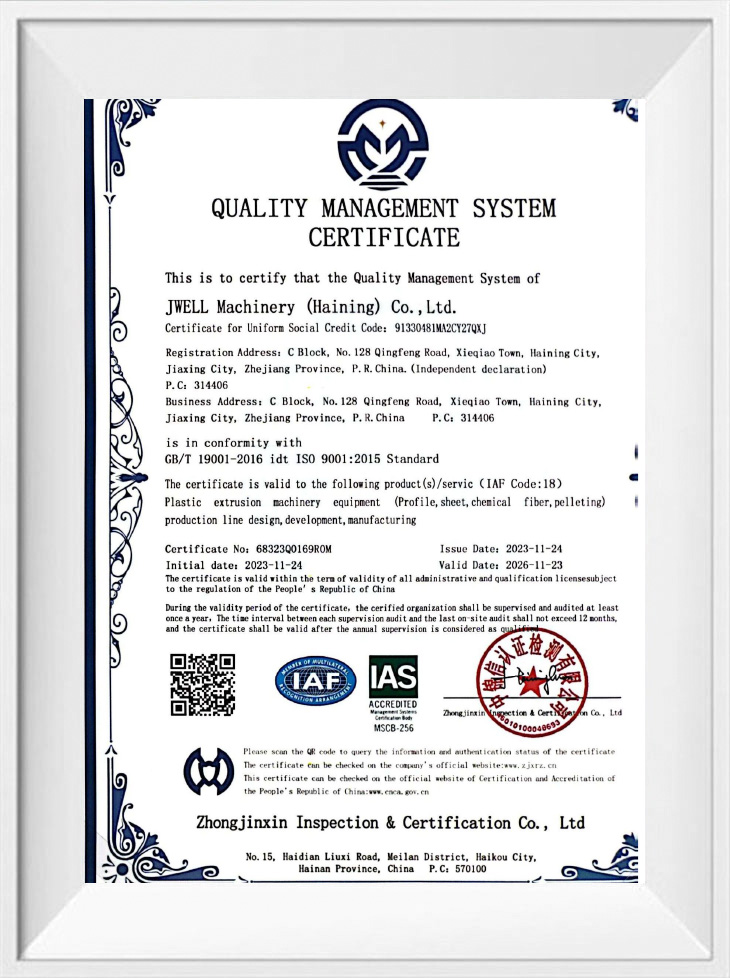
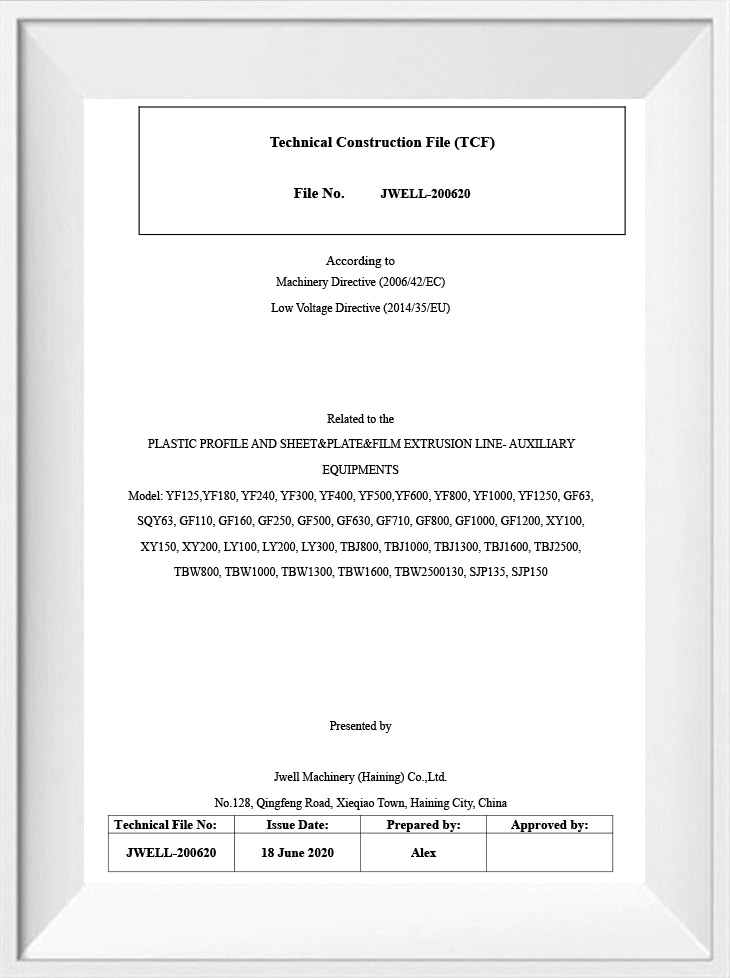
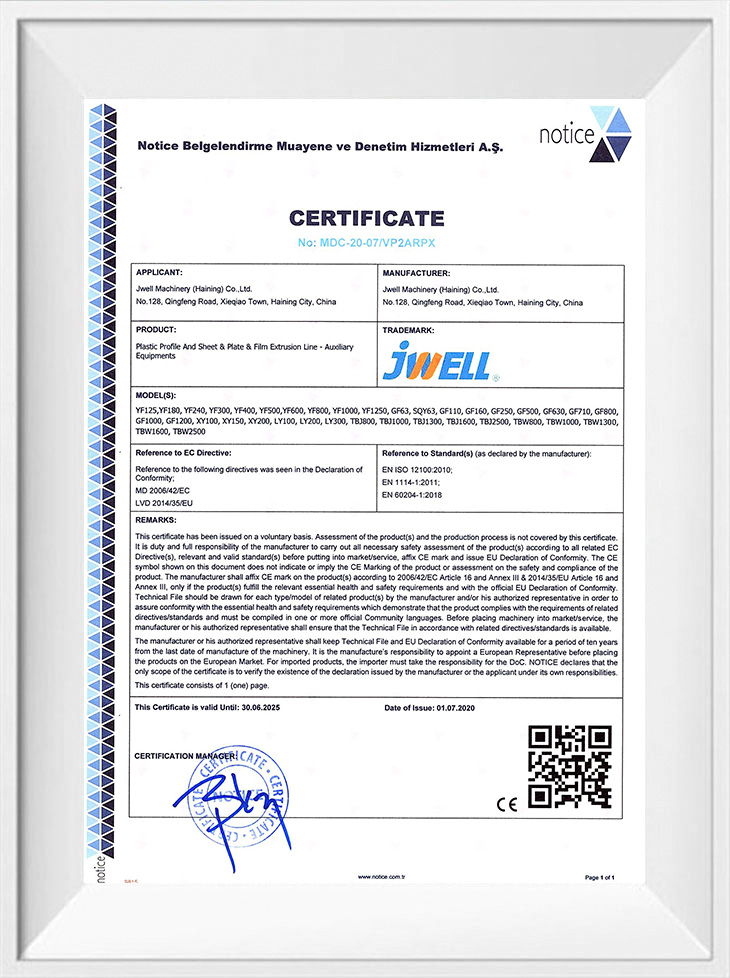
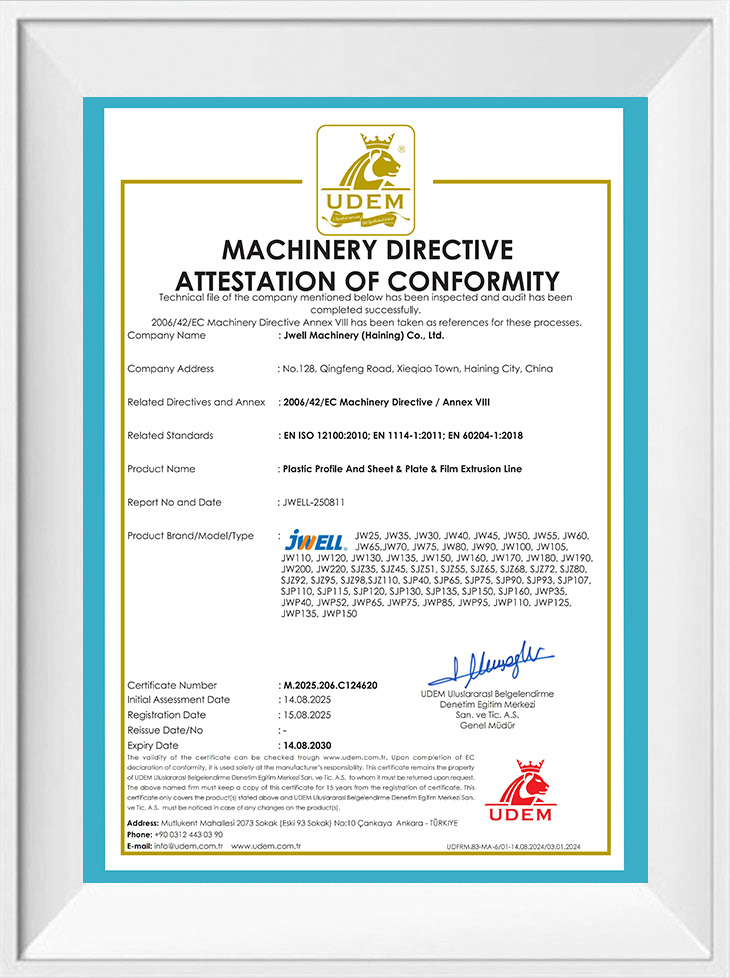
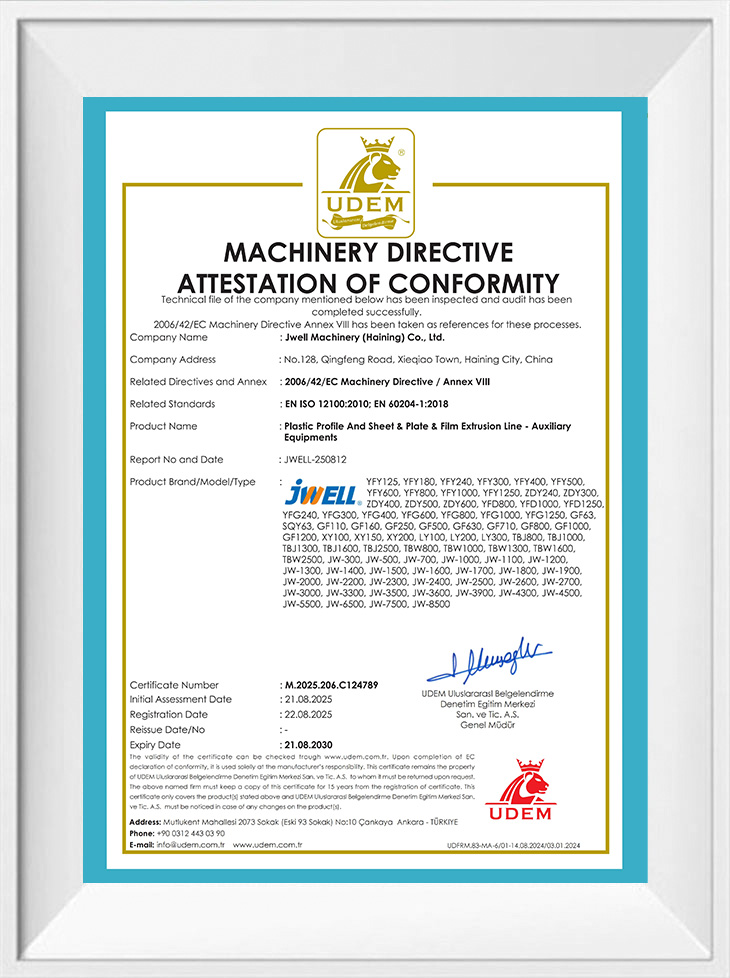
JWELL Machinery was founded in Shanghai in 1997. It is a national high-tech enterprise specializing in complete plastic extrusion and chemical fiber spinning equipment. The company has 14 modern production bases in China and overseas, covering a total area of over 1,000 acres, with more than 3,000 employees, including 480+ technical and management personnel. The annual output is over 3,000 sets of high-end extrusion lines, with annual sales exceeding 5 billion RMB. Products are exported to more than 130 countries and regions worldwide, serving over 10,000 customers. It is a national high-tech enterprise, holding over 1,000 national patents (including 100+ invention patents), and has passed CE and ISO9001 certifications. It has won honors such as "National Top 50 Light Industry Equipment Manufacturers" and "Specialized and Sophisticated 'Little Giant' Enterprise". Products are sold to more than 120 countries and regions. It is the Vice President Unit of the China Plastics Machinery Industry Association (CPMIA), a globally leading professional manufacturer of complete plastic extrusion and chemical fiber spinning equipment, and has ranked first in China's plastic extrusion industry for many consecutive years.
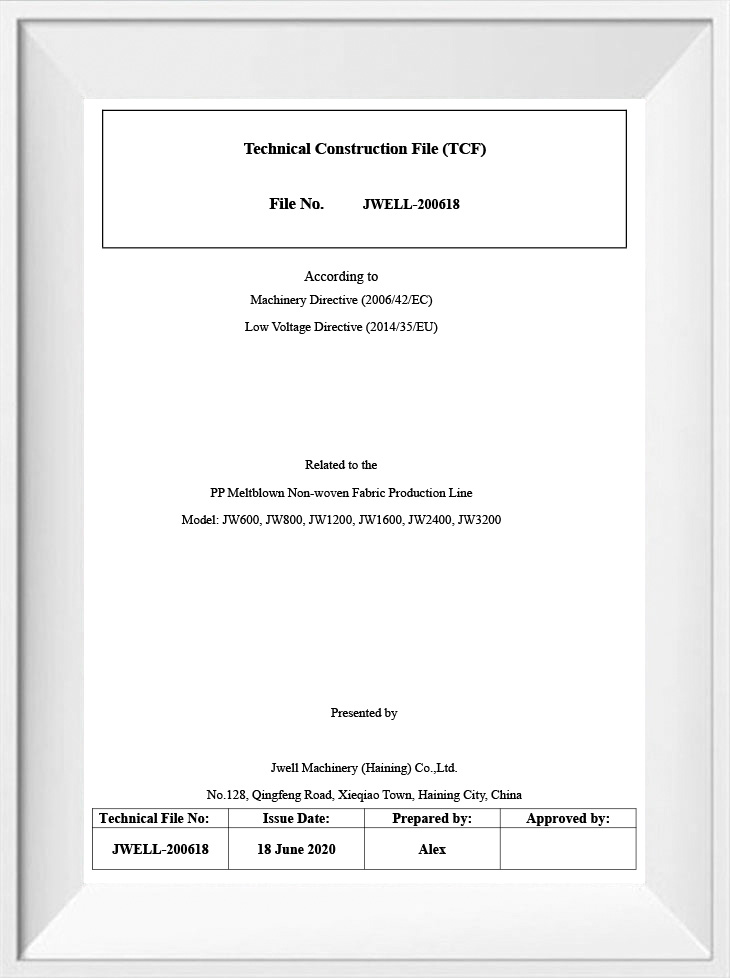
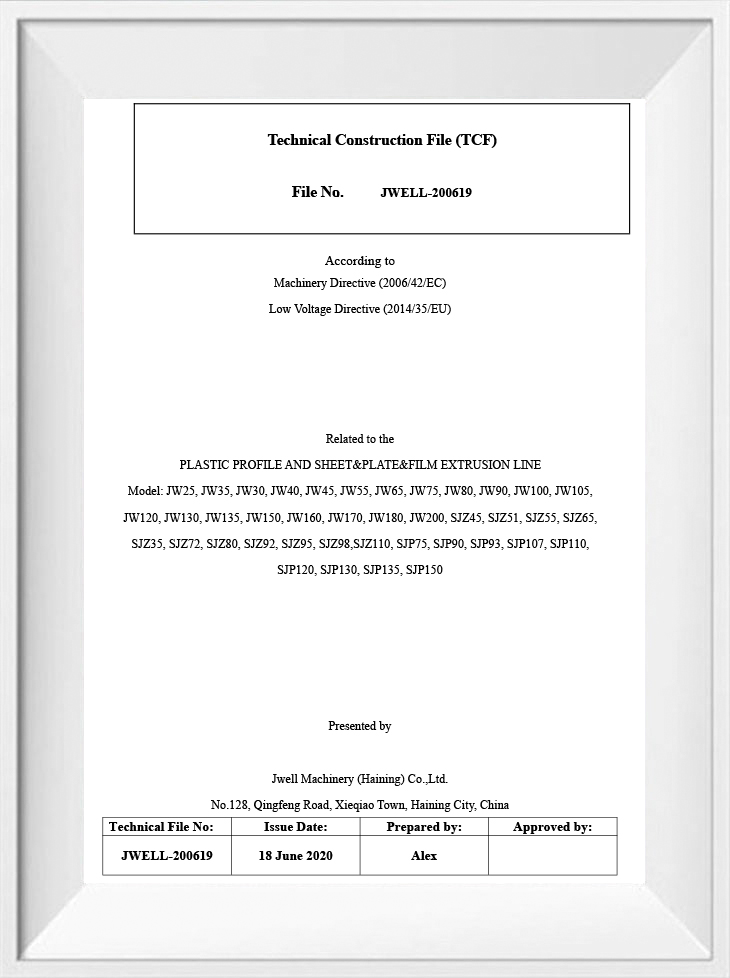
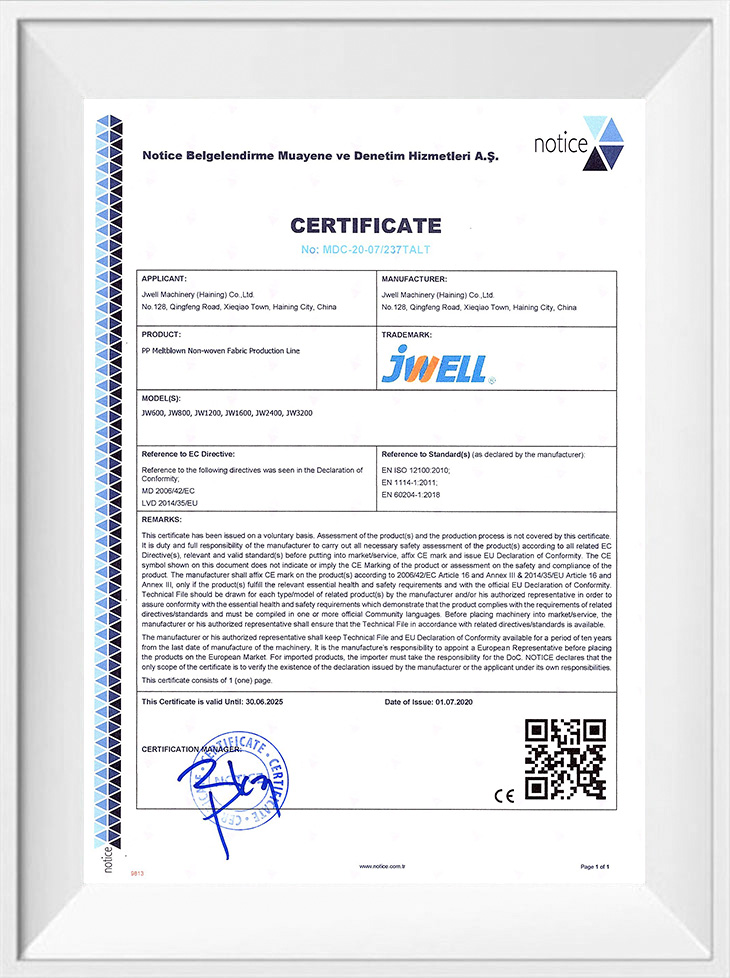
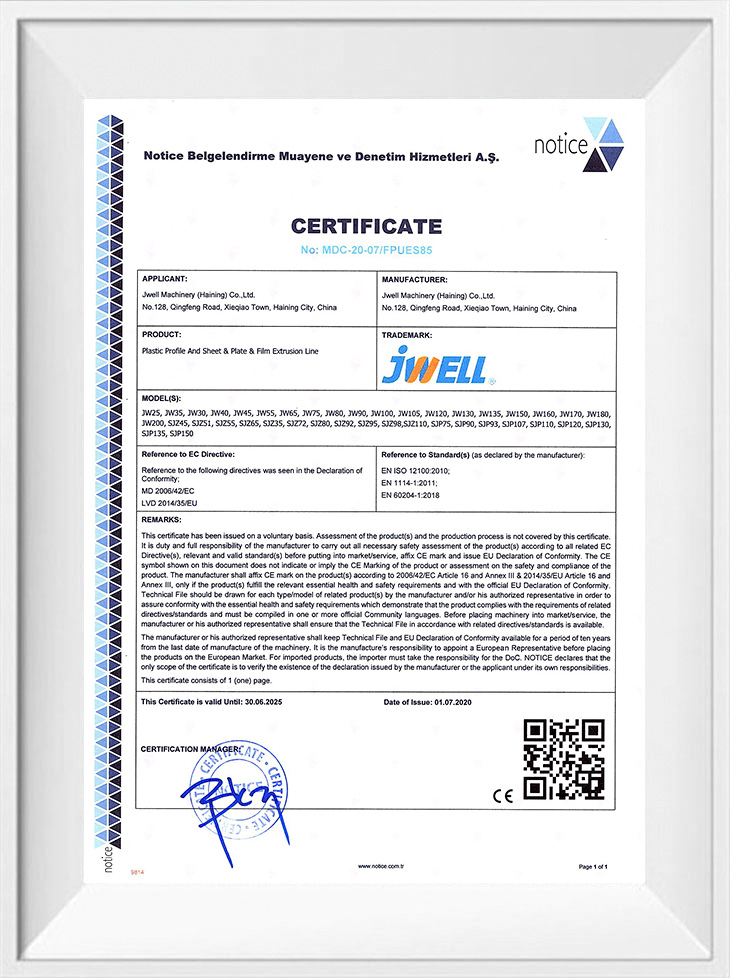
For industrial production customers, purchasing an extruder is not simply a matter of comparing equipment prices and par...
A plastic bottle looks like one material. It is not. The wall is a sandwich, an outer layer, an inner layer, and a barri...
New materials, new energy, green and low-carbon initiatives, and intelligent manufacturing are continuously driving the...
Defining the gap between theory and production
Walk onto the floor of any film extrusion plant, and you will see operators making constant adjustments. Screw speed, die gap, air ring position, haul-off tension—each parameter interacts with the others. What technical challenges do film extrusion lines face? The short answer is this: producing film that is perfectly uniform in thickness, optically clear, and mechanically consistent across thousands of meters is far harder than it looks on a process flow diagram.
Thickness variation: the persistent enemy
Thickness uniformity is the single critical quality parameter in film extrusion. A 10-micron variation in a 50-micron film represents 20 percent deviation—enough to cause bagging issues in converting or weak spots in packaging. The root causes are numerous. Die geometry variations, melt temperature fluctuations, air ring instability, and cooling roll eccentricity all contribute. Advanced lines use beta or X-ray thickness gauges with closed-loop feedback to die lip heaters, but even with these systems, achieving ±2 percent variation across the web requires constant vigilance.
Melt fracture and surface defects
At high output rates, the melt experiences high shear stress as it passes through the die gap. When shear stress exceeds the critical value, the extrudate surface develops a characteristic "sharkskin" or "orange peel" texture. The fix is either reducing output, increasing melt temperature, or using process aids like fluoropolymer additives. Each approach has trade-offs. Lower output reduces productivity. Higher temperature risks degradation. Additives add cost and can affect downstream adhesion or printing.
Gel formation and contamination
Gels—small, cross-linked polymer particles—appear as transparent specks in the finished film. They come from degraded polymer, dust contamination, or poor mixing. For optical film applications, a single gel larger than 100 microns can reject an
Defining breathable film and its market drivers
A breathable film allows water vapor to pass through while blocking liquid water. Think diaper backsheets, surgical gowns, roofing underlayment, and food packaging for fresh produce. The technology has existed for decades, but key trends in breathable film extrusion lines are reshaping how these films are made, what they cost, and where they find new applications.
Trend one: calcium carbonate loading for cost and breathability
The traditional approach to breathability is stretching a filled film. Calcium carbonate particles create micro-voids around them when the film is oriented. The voids allow vapor transmission. Current trends are pushing filler loadings higher—from 30 percent a decade ago to 45–50 percent today. Higher loading reduces resin cost and increases breathability. The challenge is maintaining film strength and elongation at break. Extrusion lines now use specialized screws with intensive mixing sections to disperse the filler uniformly without agglomerates.
Trend two: mono-material construction for recyclability
Multi-layer breathable films used to combine different materials—PE, EVA, and tie layers—to achieve the right balance of breathability, strength, and sealability. That construction is difficult to recycle. The trend now is mono-material PE films with engineered breathability. The extrusion line runs a single resin type with filler, but the breathability comes from controlled stretching and pore formation rather than from incompatible layers.
Trend three: high-speed lines with online gauging
Breathable film demand has grown with the hygiene market. A modern breathable film line runs at 300–400 meters per minute. At those speeds, manual quality checks are impossible. Online thickness gauging with X-ray or beta sensors provides continuous feedback. The real trend is combining thickness measurement with basis weight and breathability measurement in a single pass—multi-sensor arrays that give operators a complete quality picture in real time.
Comparison: conventional versus advanced breathable film lines
Conventional breathable film lines run at 150–200 m/min with separate gauging stations after the line. Advanced lines run at 300–400 m/min with integrated multi-sensor gauging and automatic feedback. Conventional lines use single-screw extruders with moderate mixing. Advanced lines use twin-screw extruders or tandem single-screw setups with intensive compounding. The advanced line costs 50–60 percent more but produces 80–100 percent more output with 30 percent lower scrap rates.
Defining the new energy applications for cast film
When people think cast film extrusion, they picture stretch wrap or food packaging. But look closer at a lithium-ion battery, a solar panel, or a fuel cell membrane, and you will find extruded film. The question how are cast film extrusion lines expanding into the new energy sector has a clear answer: by producing the separator films, backing layers, and encapsulation sheets that these energy devices require.
Battery separator films: the first wave
Lithium-ion batteries need microporous separator films that allow ion flow while physically separating the anode and cathode. Cast film lines produce the base film—typically PE or PP—which then undergoes stretching and pore formation in a separate operation. The cast film must have uniform thickness (typically 10–25 microns) and small gel content. Any defect creates a potential short circuit point. Several Asian film makers have installed dedicated cast film lines running at 80–120 m/min for battery separator base film.
Encapsulation films for solar PV modules
Photovoltaic panels use EVA or POE sheets to encapsulate the solar cells. These sheets need UV resistance, thermal stability, and optical clarity. Cast film lines produce 0.4–0.6-millimeter sheets at 8–12 m/min. The challenge is cross-linking. EVA sheet requires a specific cross-linking agent package that activates during panel lamination. The extruder must mix these additives uniformly without pre-curing the material.
Dielectric films for capacitors and EV inverters
High-performance BOPP films used in DC-link capacitors for EV inverters start as cast film. The cast film provides the initial thickness uniformity and cleanliness that the subsequent stretching process requires. New energy sector demand for BOPP is growing at 8–10 percent annually, and cast film line makers are responding with wider lines and tighter thickness controls.
Table: cast film applications in the new energy sector
| Application | Material | Film Thickness | Key Requirements | Line Speed (Typical) | Unique Challenge |
| Battery separator base | PE or PP | 10–25 microns | ±0.5 micron thickness, zero gels >50 micron | 80–120 m/min | Gel-free production; cleanroom operation |
| PV encapsulation | EVA or POE | 400–600 microns | ±5% thickness, cross-linking additive dispersion | 8–12 m/min | Additive stability; no pre-curing |
| Film | PP | 8–15 | ±0.3 | 15– | Low residual |
| capacitor dielectric | (BOPP feed) | 8–15 microns | micron thickness, low ash content | 25 m/min | catalyst; zero contamination |
| Fuel cell membrane backing | PTFE-based (skived) | 15–30 microns | Pore size uniformity, thickness consistency | 5–10 m/min | Sintering compatibility; high-temperature processing |
Comparison: new energy cast film lines versus conventional packaging lines
New energy cast film lines operate in cleanroom environments—ISO Class 7 or better. Conventional packaging lines operate on a standard plant floor. New energy lines use stainless steel components to prevent rust particles from contaminating the film. Packaging lines use standard carbon steel. New energy lines have higher equipment costs and slower speeds but produce higher-value film. A 15-micron battery separator film sells for $5–10 per square meter. Packaging film of similar thickness sells for $0.30–0.50 per square meter. The margins justify the extra capital and operating care.


Pipe Extrusion Production Line
Plastic Shredder Crusher Machine

Tel: +86-19057068112

E-mail: [email protected]

Company Address
No. 128 Qingfeng Road, Xieqiao Town, Haining City, Jiaxing City, Zhejiang Province

19057068112

 English
 русский