
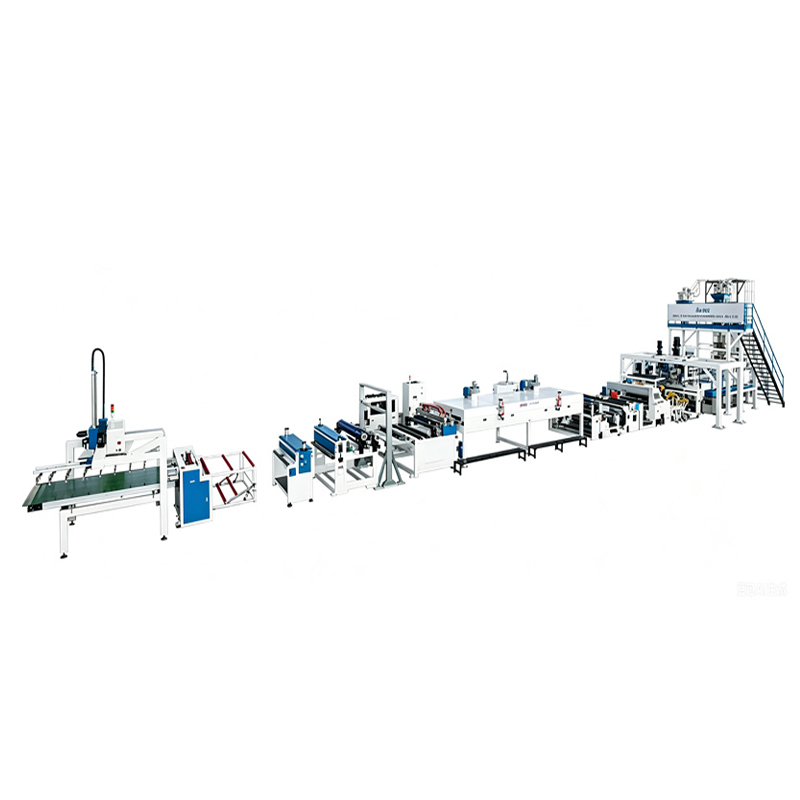


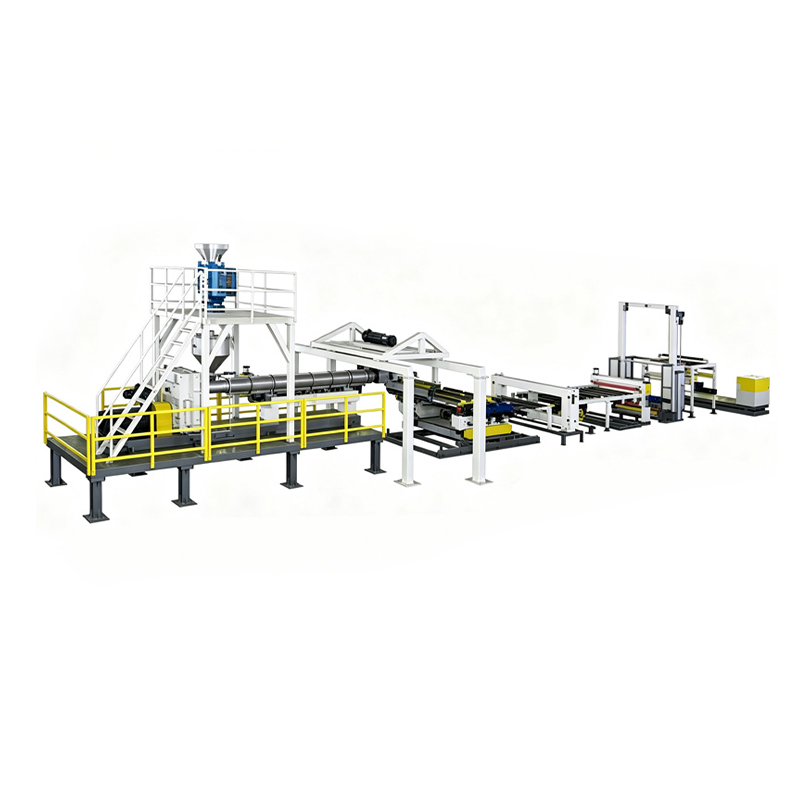
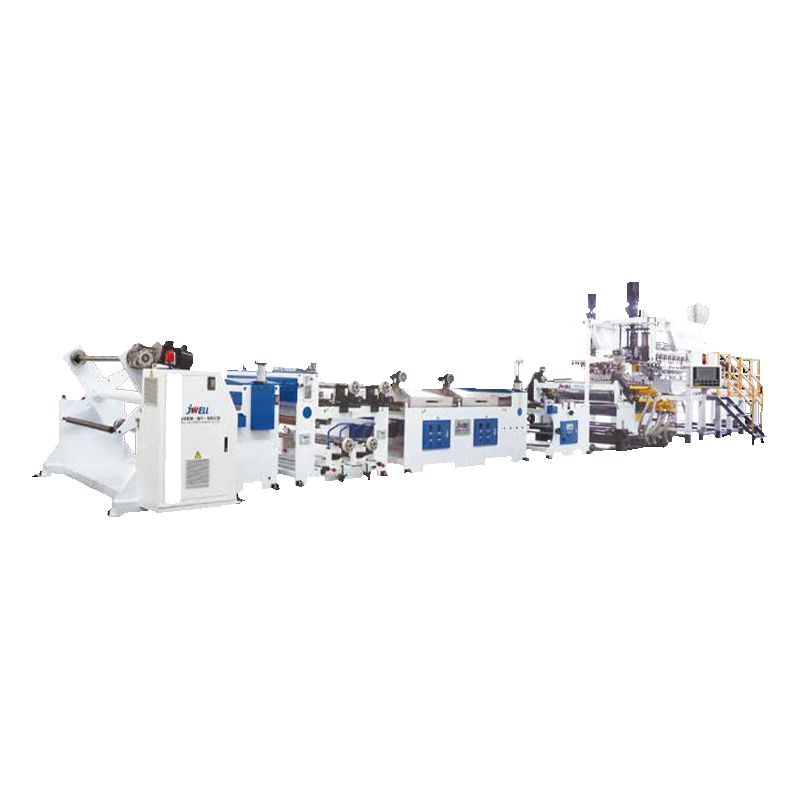
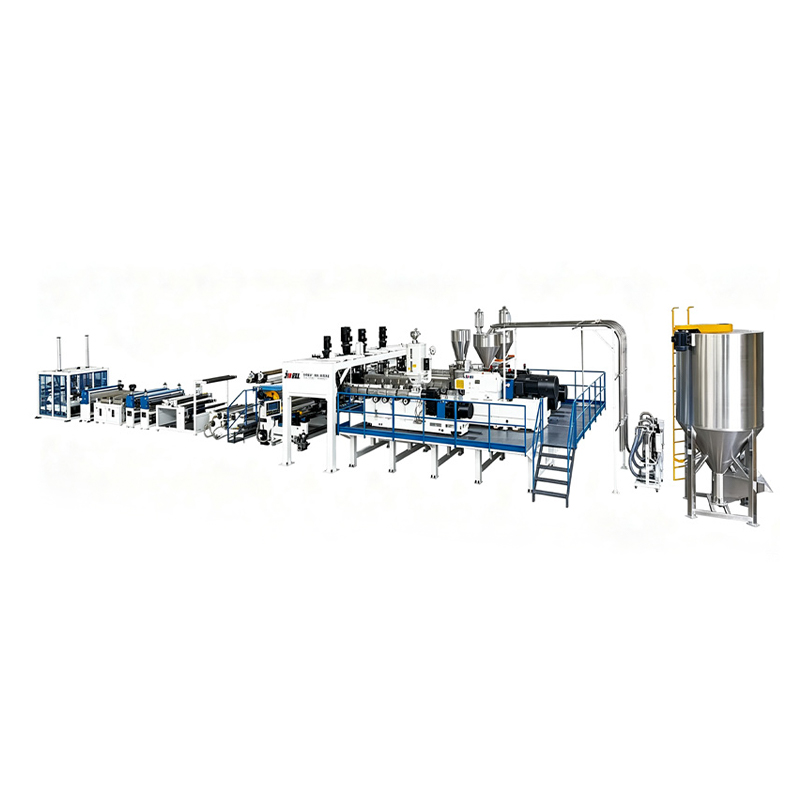
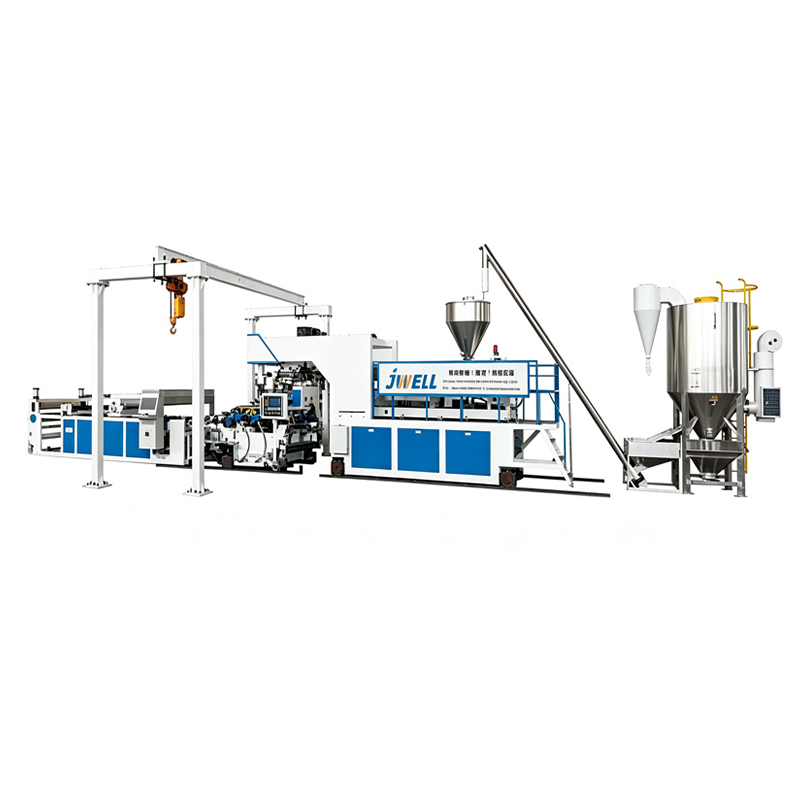
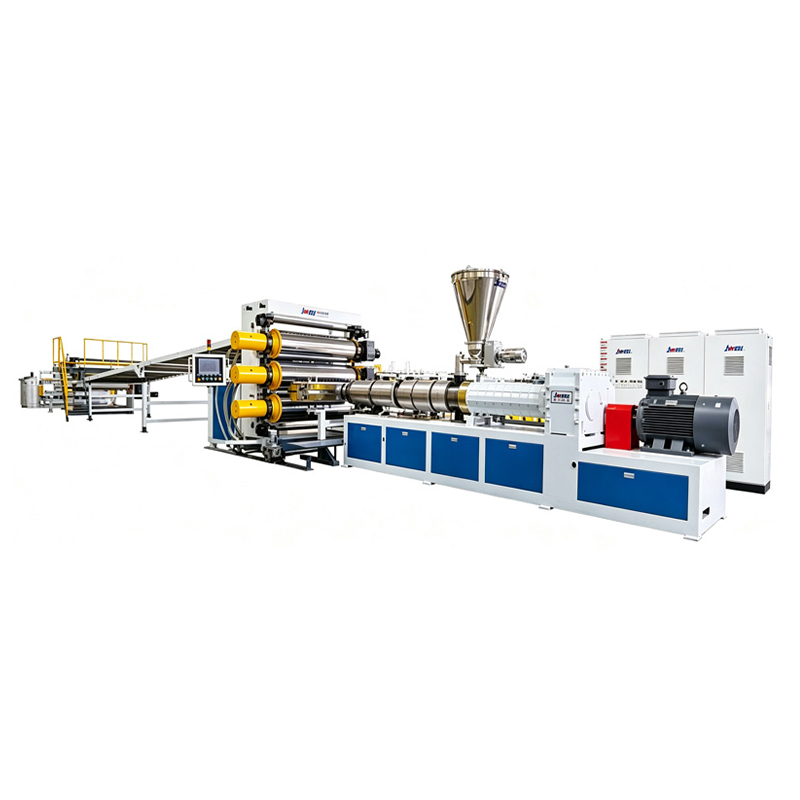
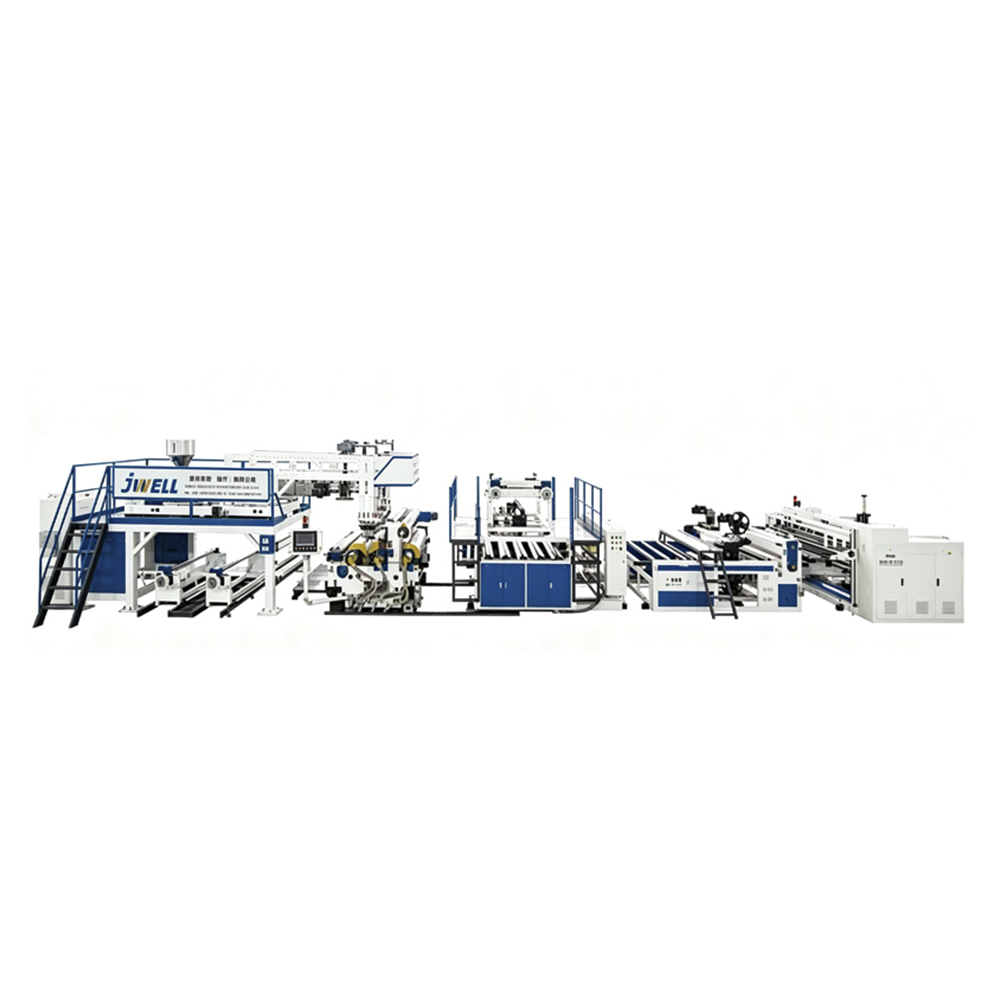
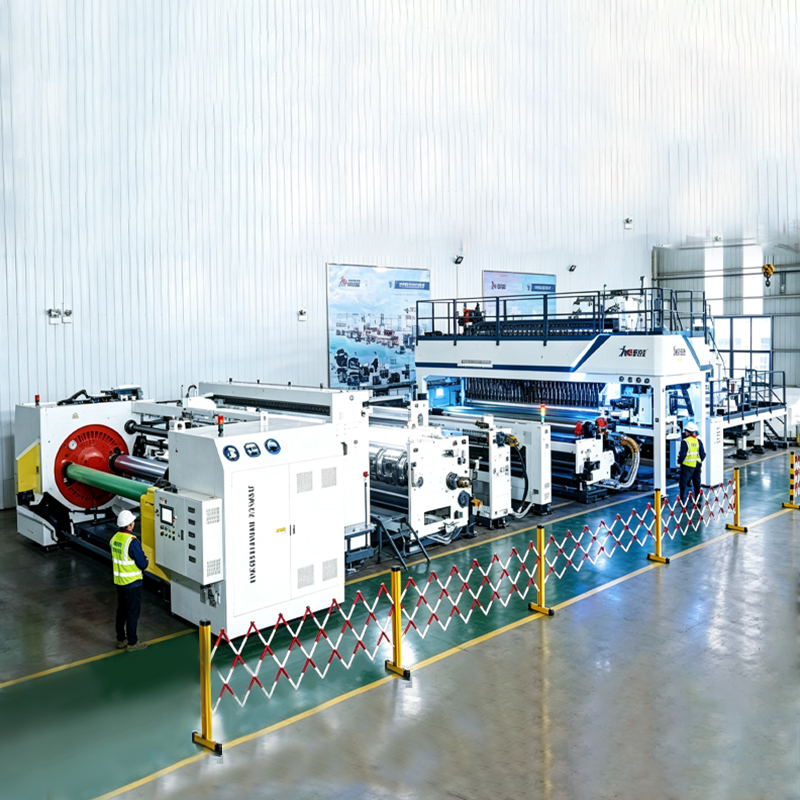
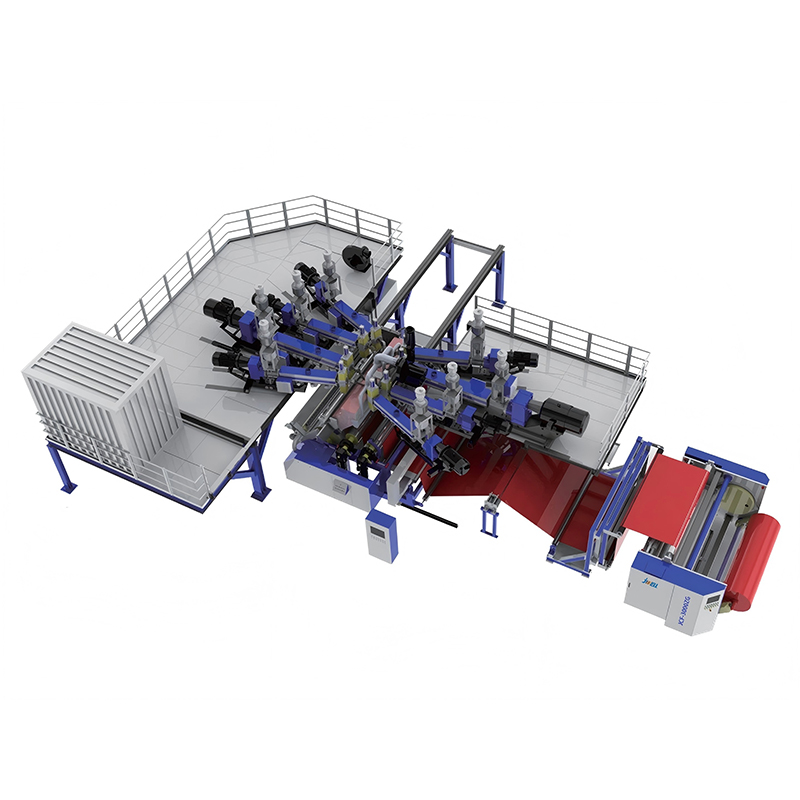
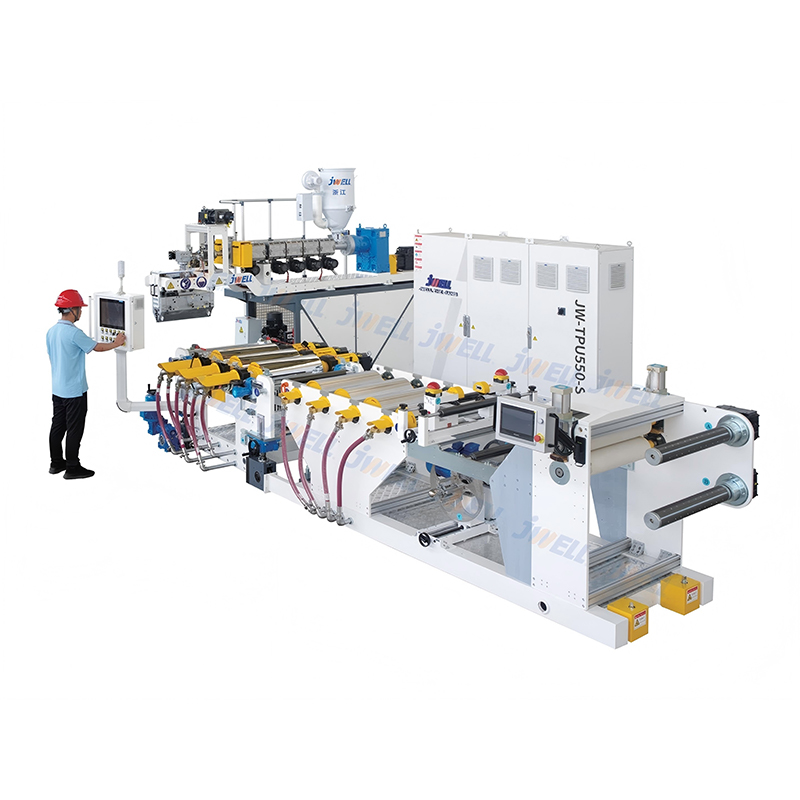
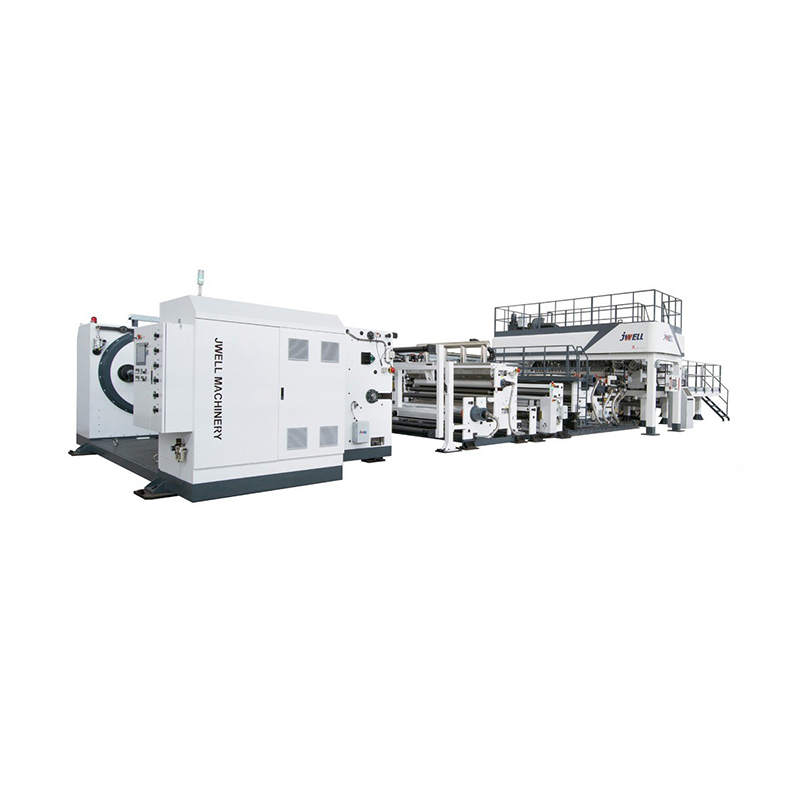
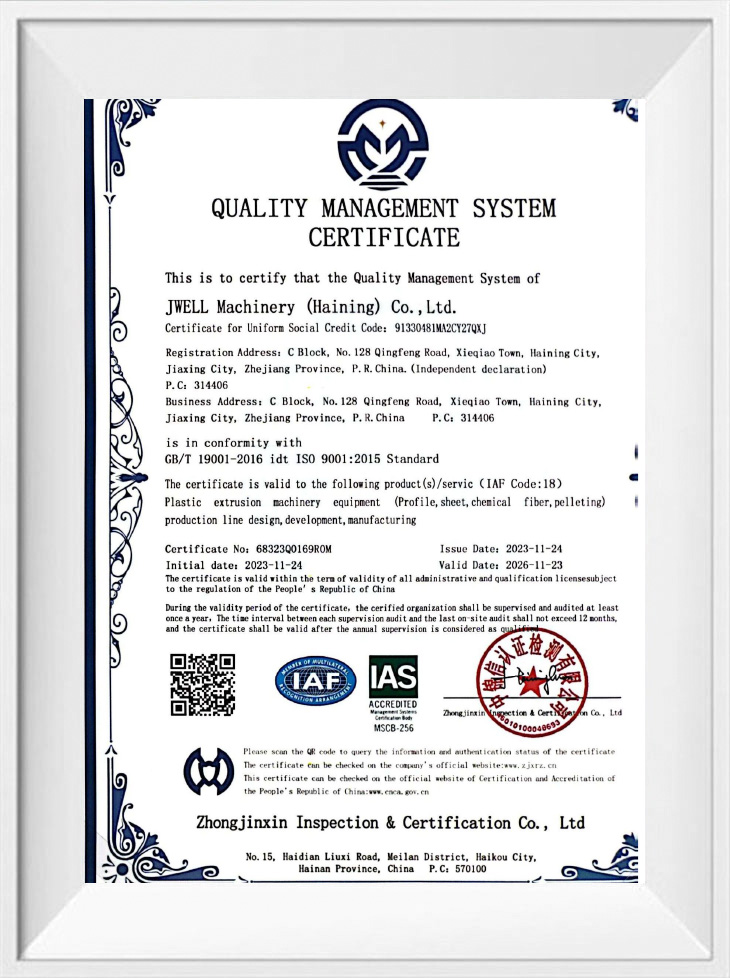
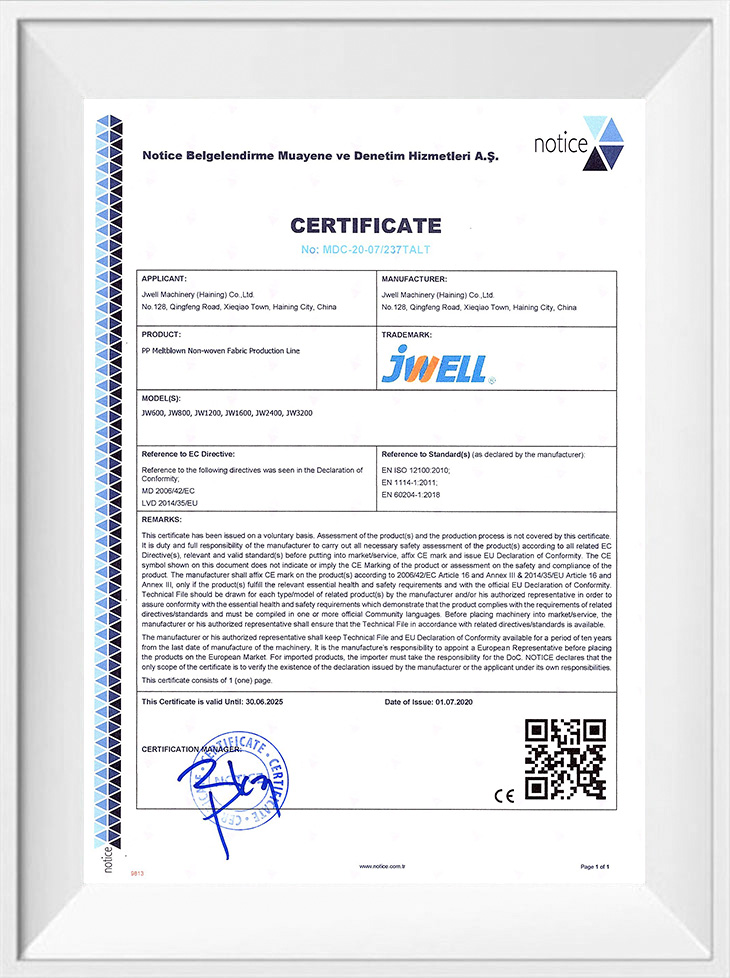
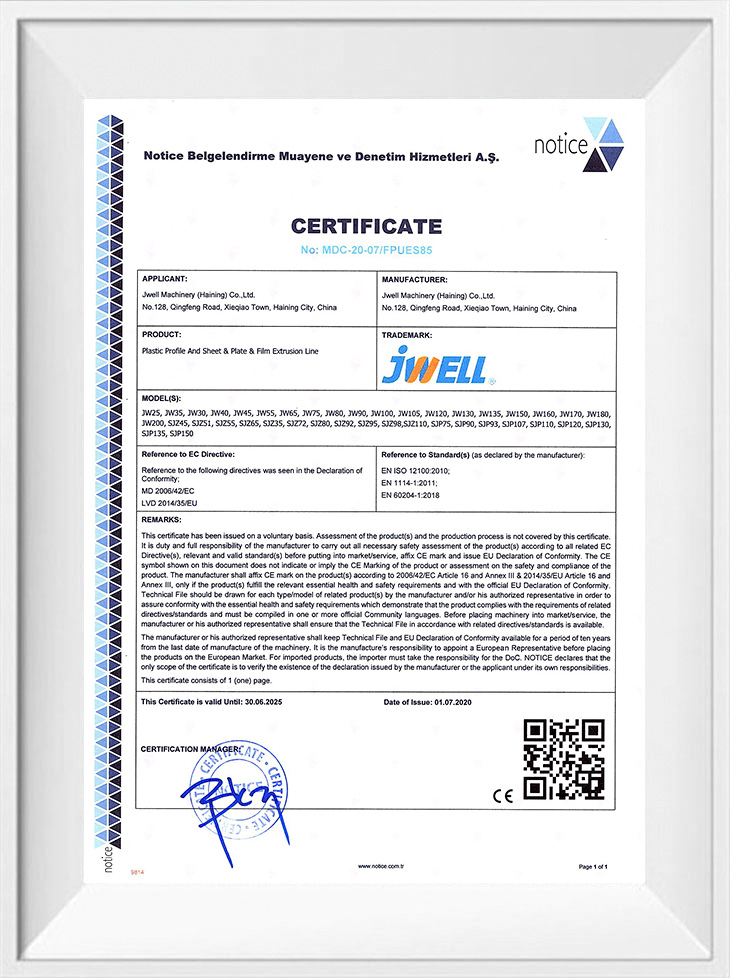
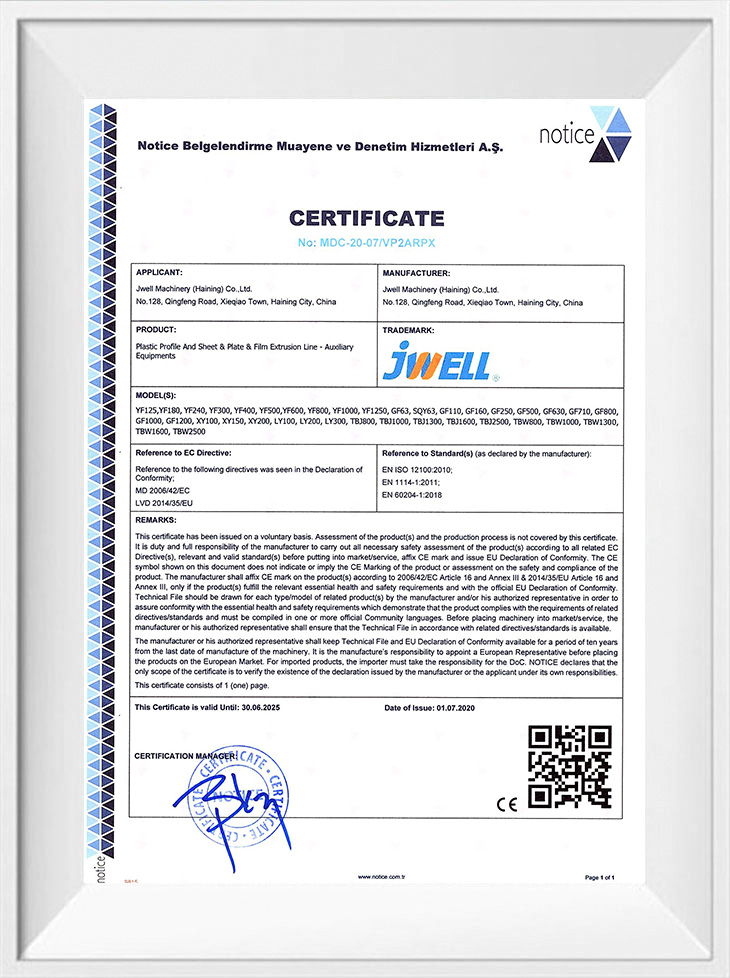
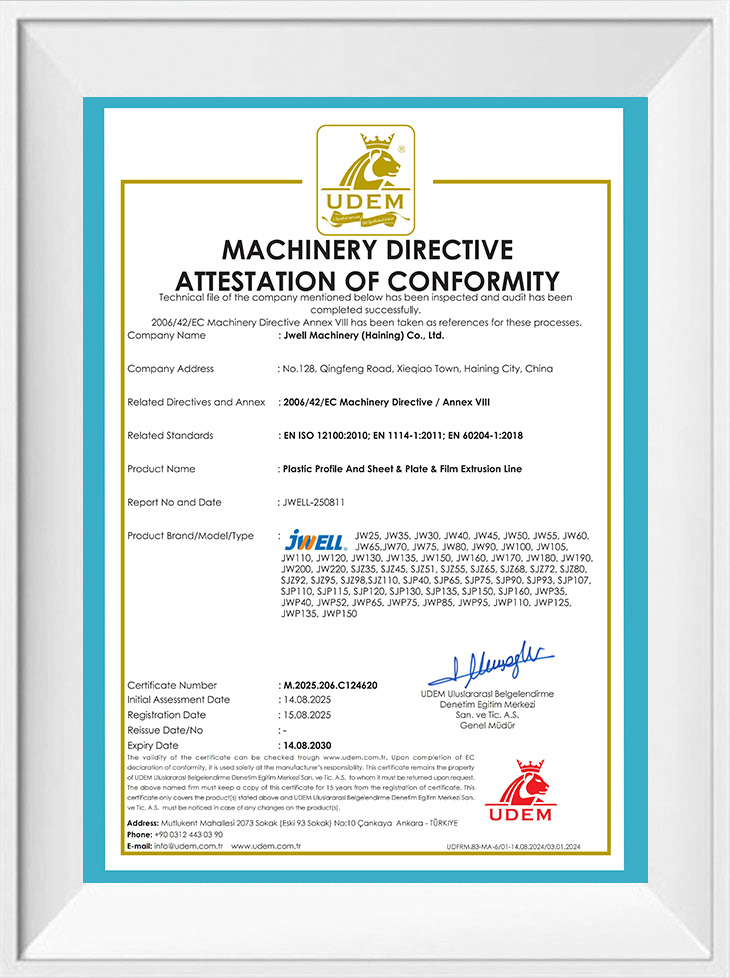
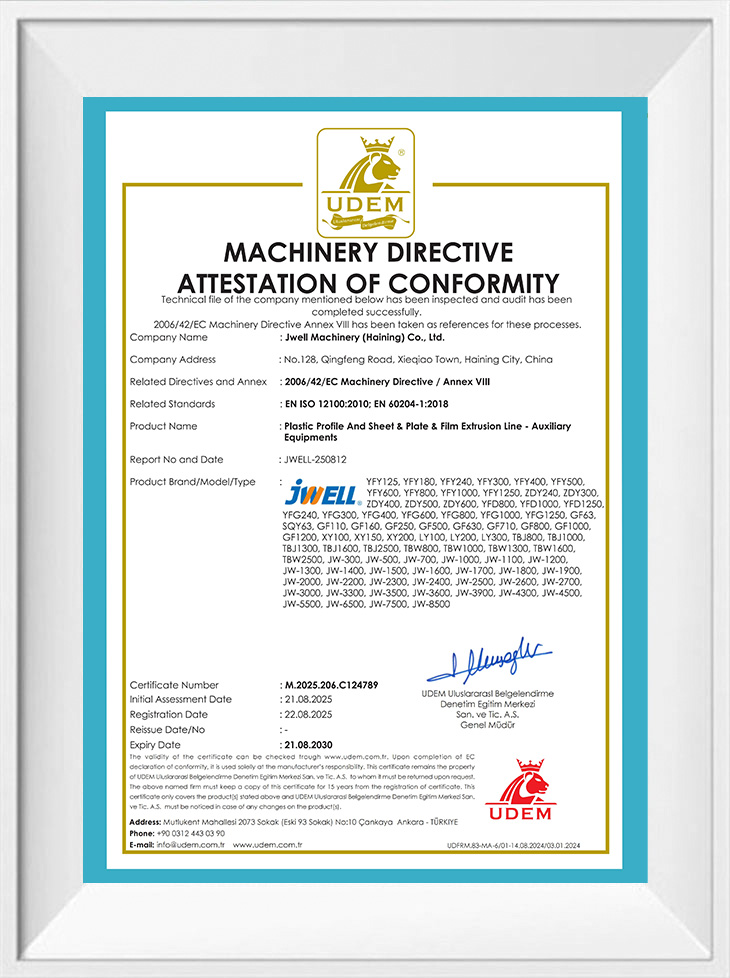
JWELL Machinery was founded in Shanghai in 1997. It is a national high-tech enterprise specializing in complete plastic extrusion and chemical fiber spinning equipment. The company has 14 modern production bases in China and overseas, covering a total area of over 1,000 acres, with more than 3,000 employees, including 480+ technical and management personnel. The annual output is over 3,000 sets of high-end extrusion lines, with annual sales exceeding 5 billion RMB. Products are exported to more than 130 countries and regions worldwide, serving over 10,000 customers. It is a national high-tech enterprise, holding over 1,000 national patents (including 100+ invention patents), and has passed CE and ISO9001 certifications. It has won honors such as "National Top 50 Light Industry Equipment Manufacturers" and "Specialized and Sophisticated 'Little Giant' Enterprise". Products are sold to more than 120 countries and regions. It is the Vice President Unit of the China Plastics Machinery Industry Association (CPMIA), a globally leading professional manufacturer of complete plastic extrusion and chemical fiber spinning equipment, and has ranked first in China's plastic extrusion industry for many consecutive years.
For industrial production customers, purchasing an extruder is not simply a matter of comparing equipment prices and par...
A plastic bottle looks like one material. It is not. The wall is a sandwich, an outer layer, an inner layer, and a barri...
New materials, new energy, green and low-carbon initiatives, and intelligent manufacturing are continuously driving the...
Defining what medical extrusion demands that others do not
Walk into any FDA-registered extrusion facility, and the first thing you notice is the air handling. Positive pressure. HEPA filtration. Temperature control within one degree Celsius. These are not luxuries. They are baseline requirements for Critical Quality Controls & Capabilities for Medical Industry Extrusion Lines. Medical tubing, catheter shafts, and IV line components operate inside the human body. A particle, a gel streak, or an out-of-spec dimension can mean a patient complication or a product recall.
The four pillars of medical extrusion quality
First, material traceability. Every resin pellet that enters the hopper must have a lot number and a certificate of analysis. If a batch of PVC or PEBAX produces a questionable tube, the extruder must trace every meter back to the exact resin lot. Second, dimensional monitoring. Medical tubes typically hold tolerances of ±0.025 millimeters on outer diameter and ±0.013 millimeters on inner diameter. Laser micrometers measure OD continuously. Air gauges or ultrasound measure wall thickness. Data logs record every millimeter produced.
Third, particulate control. Class 100,000 cleanroom conditions are standard for medical extrusion. The extruder itself must be designed to less dust generation. Gear pumps, static mixers, and melt filters remove contaminants before the melt enters the die. Fourth, process validation. Every medical extrusion line undergoes IQ (Installation Qualification), OQ (Operational Qualification), and PQ (Performance Qualification) before producing patient-contact products. These protocols document that the line produces consistent product across defined operating ranges.
Comparison: medical versus industrial extrusion controls
| Control Parameter | Medical Extrusion | Industrial/Construction Extrusion |
| Dimensional tolerance | ±0.025 mm on OD, ±0.013 mm on wall | ±0.1 to ±0.5 mm typical |
| Cleanroom requirement | ISO Class 7 or better | None or general shop floor |
| Material traceability | Lot-level, full chain of custody | Batch-level or shift-level |
| Process validation | IQ/OQ/PQ required for every product | First article inspection only |
| Documentation retention | Indefinite (often 10+ years) | 1–3 years typical |
Defining what makes corrugated pipe unique
A corrugated pipe is not a straight tube. It is a series of peaks and valleys formed continuously by a rotating mold block or a vacuum forming tunnel. The geometry changes constantly, which means the melt flow, cooling rate, and wall thickness distribution must adapt every few milliseconds. Process optimization for corrugated pipe extrusion lines focuses on synchronizing the extruder output with the corrugator speed.
Key optimization parameters
Melt temperature control. Corrugated pipes typically use HDPE or PP. The melt temperature must stay within a ±3-degree window. Too hot, and the corrugated peaks sag before cooling. Too cold, and the valleys do not fill completely. A thermocouple at the die exit provides feedback to a PID controller that adjusts barrel heaters in real time.
Corrugator synchronization. The extruder pushes melt through a die head that oscillates. The corrugator pulls the parison through vacuum molds that close and open on a rotating turret. If the extruder output lags behind the corrugator speed, the wall thickness drops below spec. If output exceeds corrugator speed, melt piles up and creates uneven corrugations. Advanced lines use encoder feedback from the corrugator to modulate screw speed.
Vacuum and cooling balance. The corrugated profile is shaped by vacuum applied through holes in the mold blocks. Uneven vacuum causes asymmetric corrugations. Cooling water temperature and flow rate determine how quickly the pipe solidifies. The sweet spot depends on pipe diameter and wall thickness. A 110-millimeter drainage pipe typically needs vacuum at 0.4 to 0.6 bar and cooling water at 15–20 degrees Celsius.
Comparison: optimization priorities for single-wall versus double-wall corrugated pipe
Single-wall pipe optimization focuses on output speed and wall thickness uniformity. Double-wall pipe adds a second layer, typically a smooth inner wall and a corrugated outer wall. The optimization priority shifts to layer distribution. The inner wall must be perfectly circular to accept fittings. The outer wall must have consistent corrugation depth. A co-extrusion head distributes melt between two channels, and the process engineer adjusts the channel pressure ratio to balance layer thickness.
Defining what green extrusion actually means
Ask ten pipe extruders about Energy Efficiency and Green Extrusion in Pipe Extrusion Machines, and you will get ten different answers. Some will talk about barrel insulation. Others will mention servo-driven haul-offs. A few will point to solar panels on the factory roof. The useful definition is this: producing the same output using less electrical and thermal energy while generating less scrap and fewer emissions.
The major energy consumers on an extrusion line
An extruder consumes energy in three main areas. Barrel heating accounts for 30 to 40 percent of total energy use. The screw motor accounts for 20 to 30 percent. Downstream equipment—corrugators, cooling tanks, haul-offs, cutters—accounts for the remaining 30 to 40 percent. Efficiency improvements target each area separately.
Comparison: reactive versus proactive energy management
Reactive energy management means addressing high electricity bills when they arrive. The extrusion line runs at whatever settings the operator chooses. Proactive energy management means installing energy meters on each major consumer, setting baseline consumption targets, and tracking performance weekly. The proactive approach typically identifies 5 to 10 percent additional savings beyond major equipment upgrades, simply by optimizing operating conditions. One North American extruder reduced energy consumption by 8 percent through operator training alone—no capital investment required.


Pipe Extrusion Production Line
Plastic Shredder Crusher Machine

Tel: +86-19057068112

E-mail: [email protected]

Company Address
No. 128 Qingfeng Road, Xieqiao Town, Haining City, Jiaxing City, Zhejiang Province

19057068112

 English
 русский