
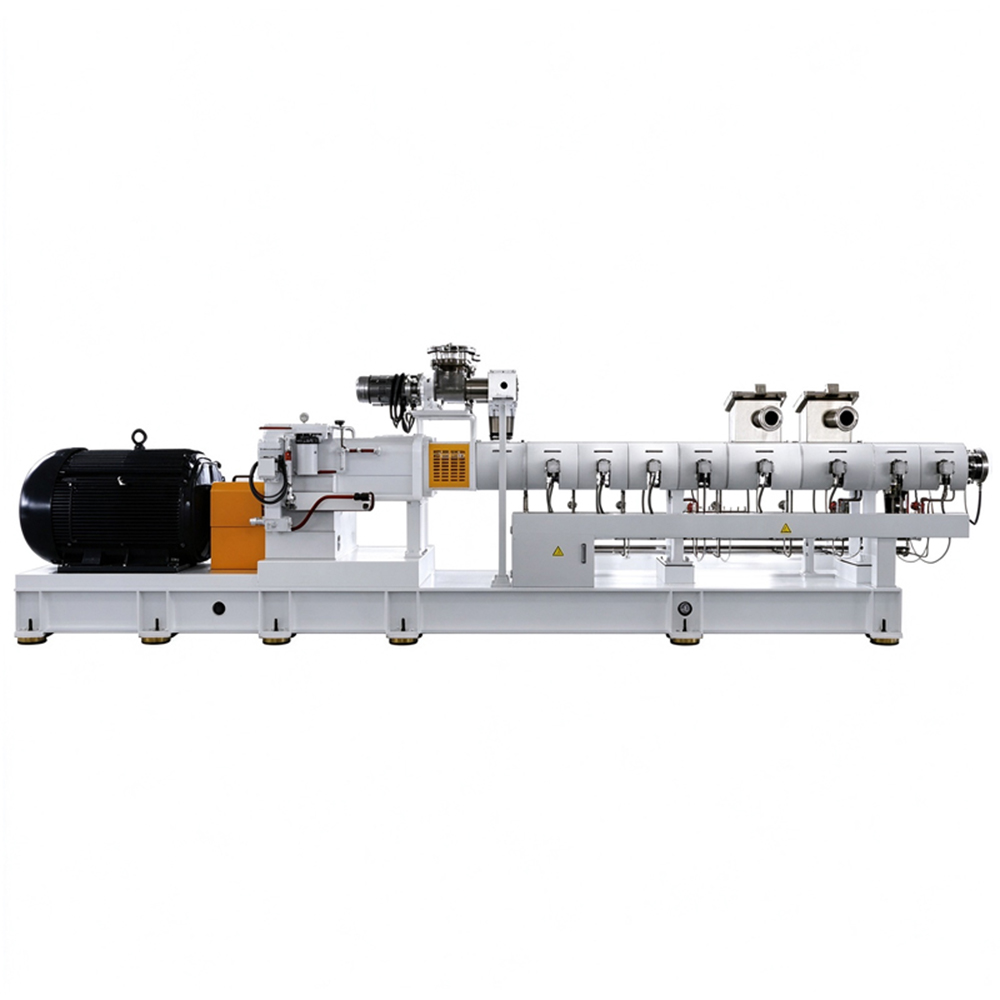
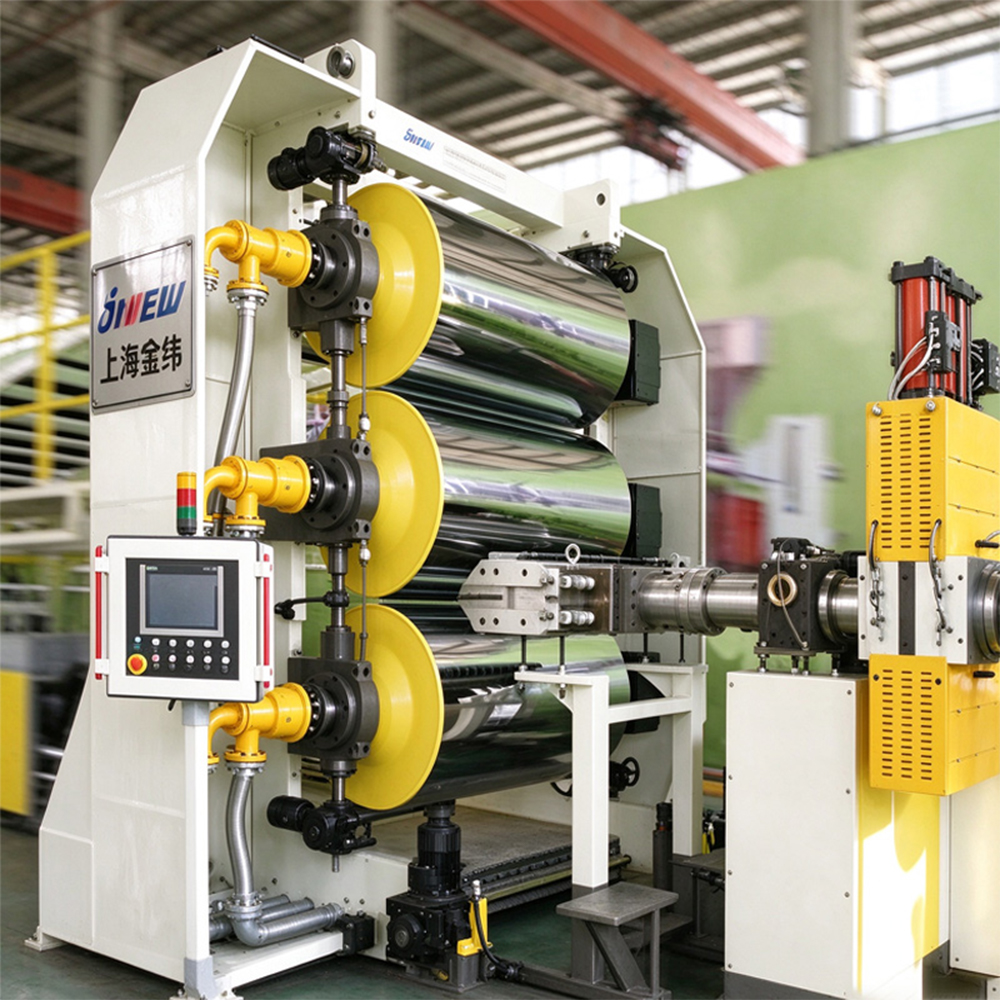
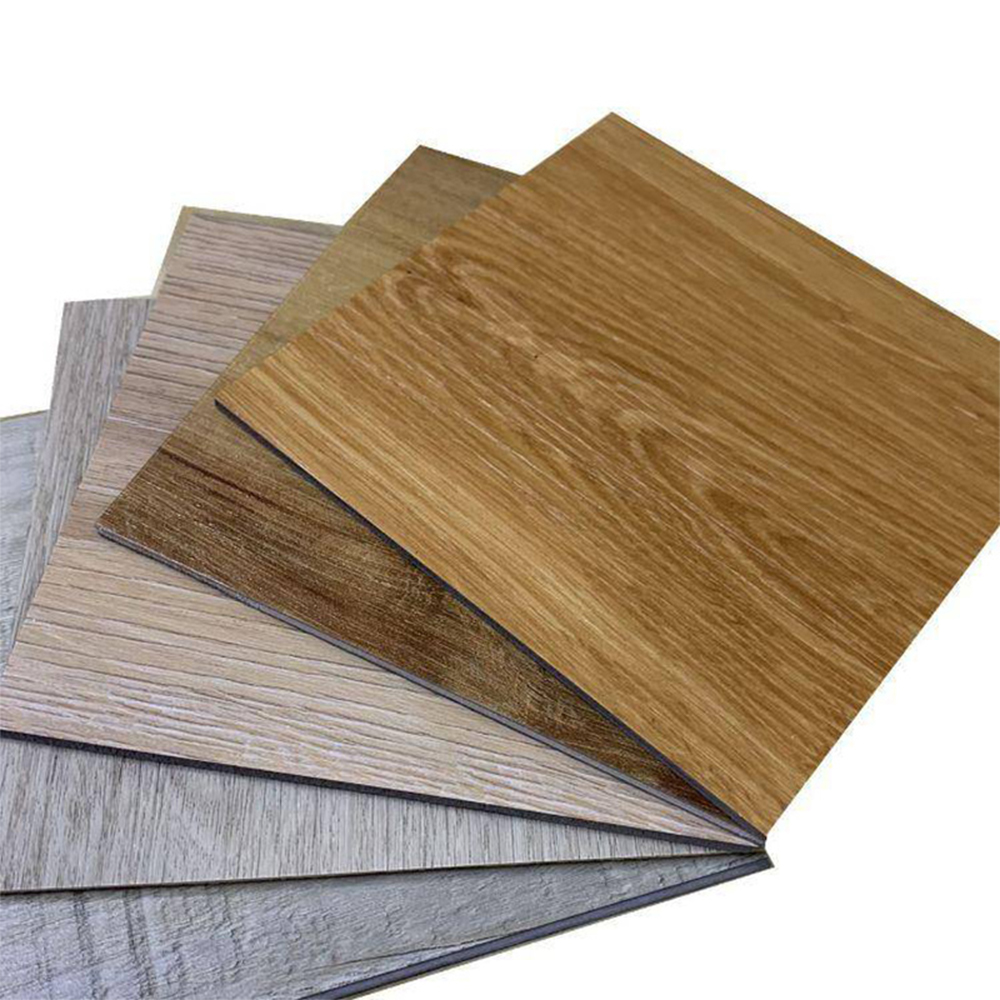
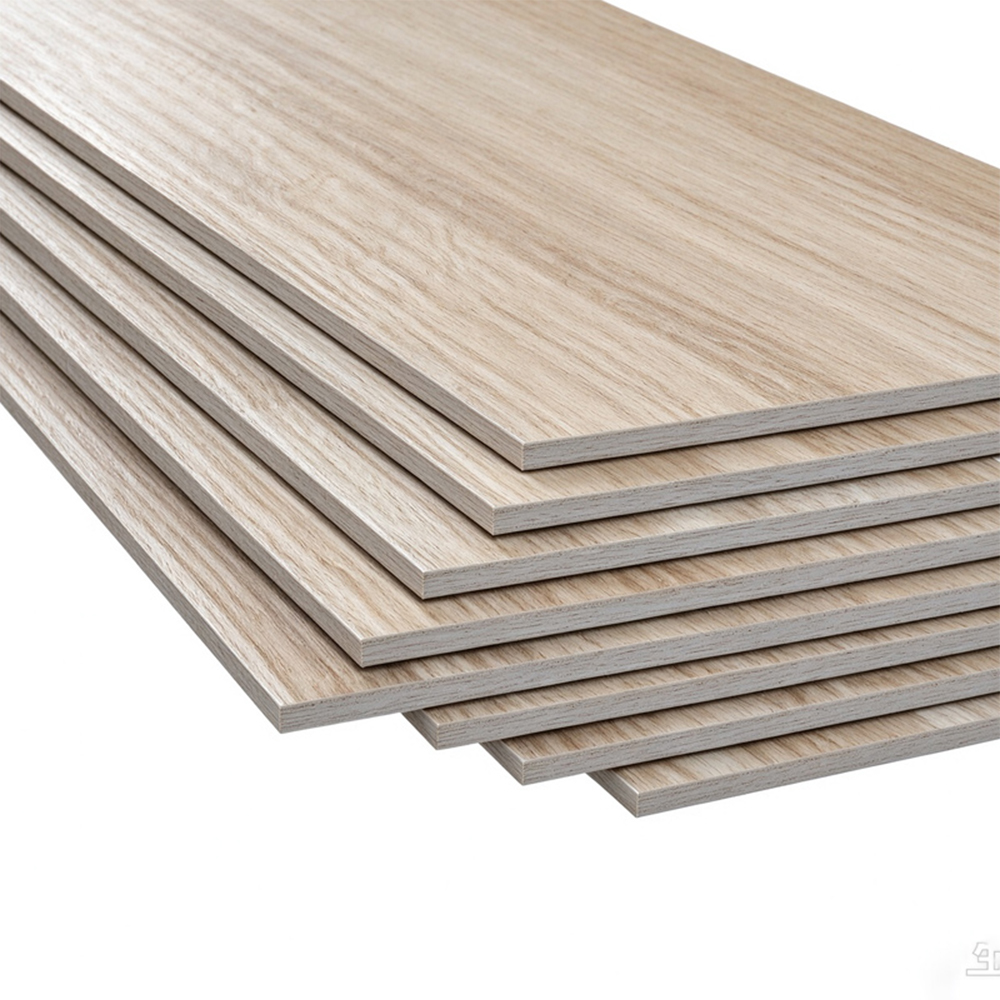
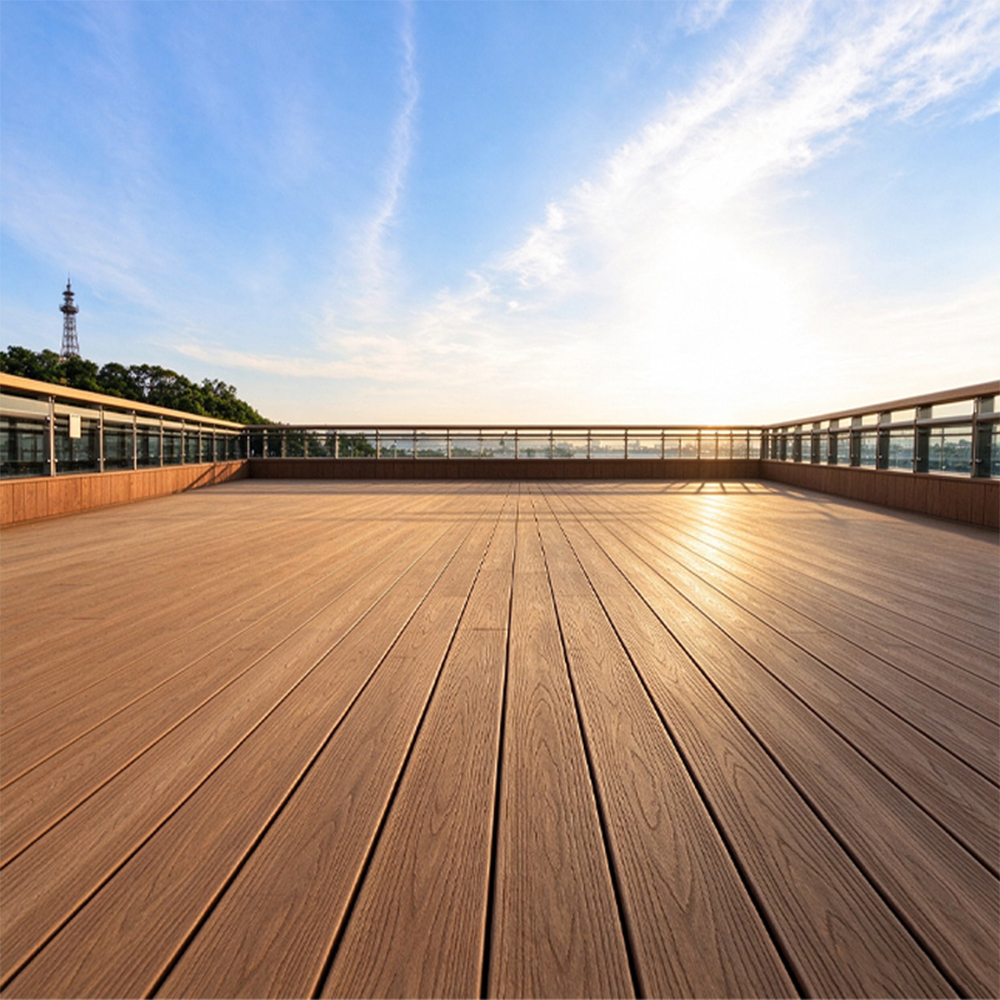
The PP high-filled flooring production line is specifically designed to manufacture rigid, environmentally friendly, and dimensionally stable polypropylene (PP)-based floor panels, widely used in residential, commercial, and industrial applications. With a thickness range of 2–6 mm, a width range of 1000–2000 mm, and a production capacity of 1000–2500 kg/h, this line offers high efficiency and versatility for large-scale flooring producers.
1.1 Residential and Commercial Flooring
This production line produces high-filled PP composite flooring (similar to SPC or WPC but with a PP substrate). Thanks to the 2–6 mm thickness, the panels are lightweight and impact-resistant, making them ideal for underfloor heating systems (PP has good thermal conductivity and stability).
Case study: A German flooring manufacturer used this line to produce 4 mm × 1500 mm planks for rental apartments. The high filling level (up to 70% calcium carbonate or talc) reduces raw material costs while maintaining rigidity. Daily output reached approximately 48 tons (at 2000 kg/h), meeting a demand of 10,000 m² per day.
1.2 Industrial and Warehouse Flooring
With a maximum width of 2000 mm, the line can produce wide panels for rapid installation in logistics centers, exhibition halls, or cleanrooms. The 6 mm thick variant offers excellent load-bearing capacity (flexural strength up to 800 kg/cm²) through optimized formulation.
Case study: A Polish industrial flooring supplier used the line to produce 2000 mm wide × 6 mm thick interlocking floor tiles. The high output (2500 kg/h) allowed them to cover 5000 m² per shift, reducing installation joints by 40% compared to standard 1000 mm wide panels.
1.3 Outdoor and Wet Areas
PP is inherently waterproof and UV-resistant (when formulated accordingly). The line’s precise thickness control (tolerance ±0.05 mm) ensures uniform density, preventing warping on balconies, pool surrounds, or garden paths.
2.1 High Production Capacity
A capacity of 1000–2500 kg/h means one line can replace two smaller lines. At 2500 kg/h, using 2 mm thin panels, you can produce approximately 1250 m² per hour (typical density of high-filled PP ≈ 1.8 g/cm³). Continuous operation with automatic screen changers and melt pumps ensures minimal downtime.
2.2 Wide and Flexible Dimensions
Width 1000–2000 mm – seamless adjustment via adjustable die lip and calibration unit. No need for multiple molds.
Thickness 2–6 mm – quick changeover (within 30 minutes) via calibrated gap control and cooling roll adjustment.
2.3 Material Efficiency and Cost Savings
High filling level (60–80% mineral filler) reduces PP resin consumption by up to 50%.
Energy-saving extruder screw design (specific energy <0.25 kWh/kg) lowers production cost per ton.
2.4 Superior Product Quality
Multi-zone temperature control (±1°C accuracy) prevents degradation of PP and fillers.
Online thickness gauge (laser or ultrasonic) with closed-loop feedback ensures thickness uniformity across 2000 mm width.
2.5 Eco-friendly and Recyclable
PP-based panels are 100% recyclable. PVC-free, plasticizer-free – compliant with global green building standards (LEED, BREEAM).
3.1 In-process Quality Control
|
Parameter |
Control Method |
Target Value |
|
Thickness |
Online beta-ray or laser scanner + feedback to die bolts |
±0.05 mm (full width) |
|
Width |
Optical edge sensor + trimming unit |
1000–2000 mm ±2 mm |
|
Output stability |
Melt pressure & temperature monitoring |
Pressure fluctuation <±1.0 MPa |
|
Surface defects |
High-speed camera inspection |
No visible pinholes, flow marks, o r gels |
3.2 Finished Product Testing (per ASTM/EN standards)
Dimensional stability (EN 434): Heat exposure at 80°C for 6 hours – shrinkage <0.1%.
Flexural strength & modulus (ISO 178): For 6 mm thick panels, require strength ≥20 MPa, modulus ≥2000 MPa.
Water absorption (ASTM D570): <0.5% after 24 hours immersion.
Coefficient of friction (ASTM D1894): Dry >0.5, wet >0.4.
Indentation resistance (EN 433): 100 kg load for 10 minutes ≤0.1 mm.
Actual QC data from a Turkish customer: Using 4 mm thickness at 1800 kg/h, the line achieved thickness variation of only +0.02/-0.03 mm across 1600 mm width, and 24h water absorption of 0.2%.
3.3 Durability Testing
Freeze-thaw cycling (-20°C to +40°C, 20 cycles): No cracking or delamination.
UV accelerated aging (500 hours QUV): ΔE <1.5, no chalking.
| Thickness range | 2–6mm |
| Width range | 1000–2000mm |
| Capacity range | 1000–2500kg/h |
Q1: Can you produce 2 mm thin panels at 2500 kg/h without warping?
A: Yes – the line’s cooling roll section has 4 independently temperature-controlled rolls (5–35°C). For 2 mm thickness, we recommend a line speed of 8–12 m/min and cooling roll temperature of 10–15°C. A Portuguese customer produced 2 mm × 1200 mm floor mats at 2300 kg/h with flatness <0.3 mm/m.
Q2: How long does it take to switch from 1000 mm to 2000 mm width?
A: Approximately 45 minutes, including die lip adjustment, trimming unit reconfiguration, and winder core change. The line is equipped with an electric die width adjustment system – no manual bolt change required.
Q3: Which filler materials are compatible?
A: Calcium carbonate (coated or uncoated), talc, wollastonite, or fly ash. Maximum particle size D98 <10 μm. For best dispersion, we recommend a twin-screw extruder (optional upgrade). A Russian customer successfully used 65% recycled chalk with virgin PP.
Q4: What is the energy consumption per ton?
A: Typical total power (extruder + heating + cooling + downstream equipment) is 180–250 kWh per ton. For example, at 2000 kg/h, total installed power is about 500 kW, so actual consumption is about 220 kWh/ton.
Q5: How is start-up scrap and thickness deviation handled?
A: The line includes an automatic scrap cutter and edge grinder that feed directly back to the extruder hopper (closed-loop recycling). Thickness deviation exceeding ±0.1 mm triggers an alarm and automatic die bolt adjustment – response time typically 5 seconds.
Q6: Can you produce embossed or textured surfaces?
A: Yes – an optional embossing roll unit can be placed after the calibration unit to add wood grain, linen, or slate patterns. Texturing does not affect the thickness range (2–6 mm) as long as the minimum residual thickness is maintained.




Pipe Extrusion Production Line
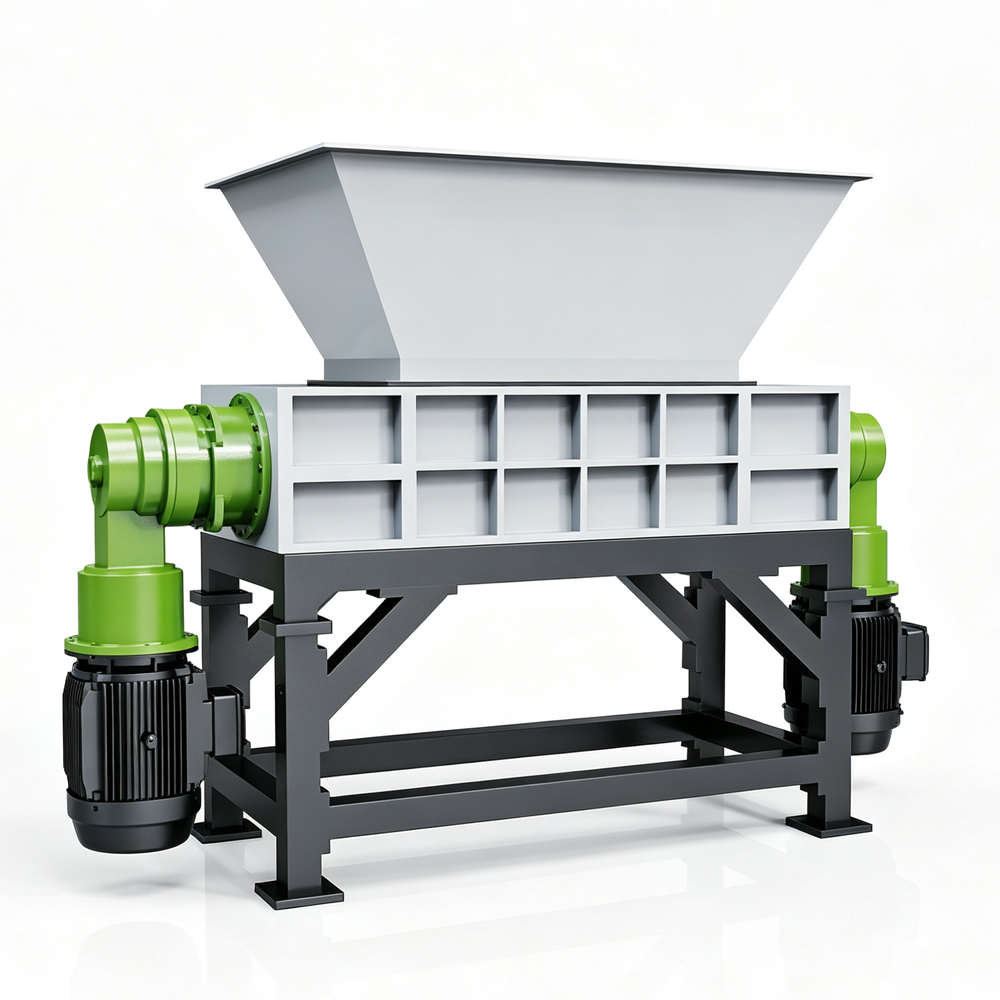
Plastic Shredder Crusher Machine

Tel: +86-19057068112

E-mail: [email protected]

Company Address
No. 128 Qingfeng Road, Xieqiao Town, Haining City, Jiaxing City, Zhejiang Province

19057068112

 English
 русский