
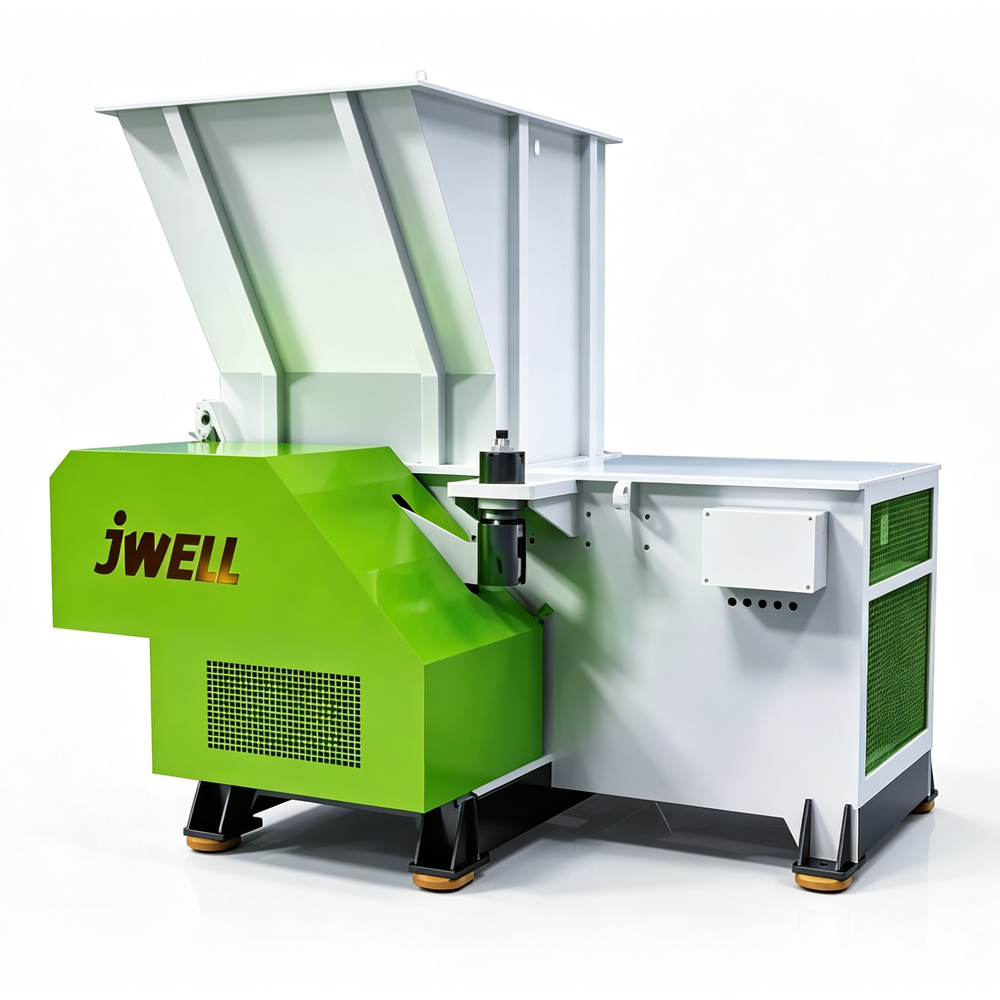
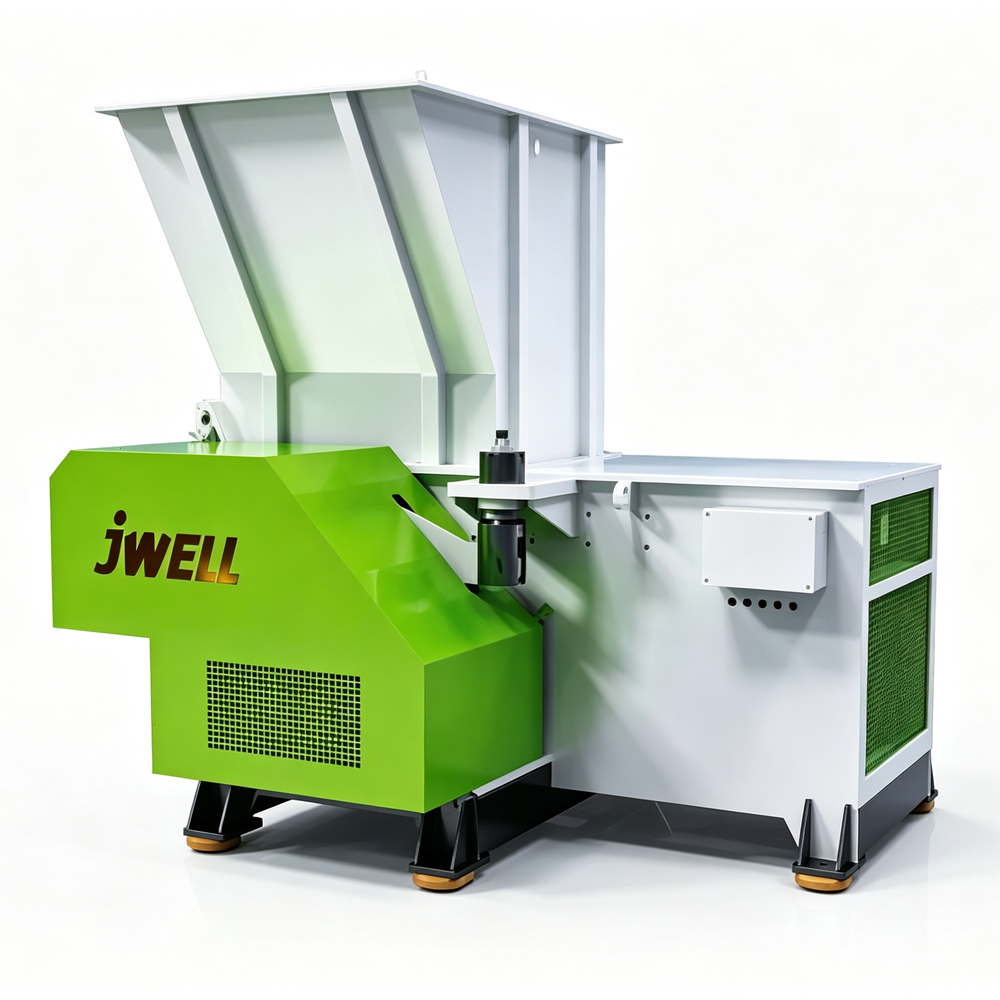
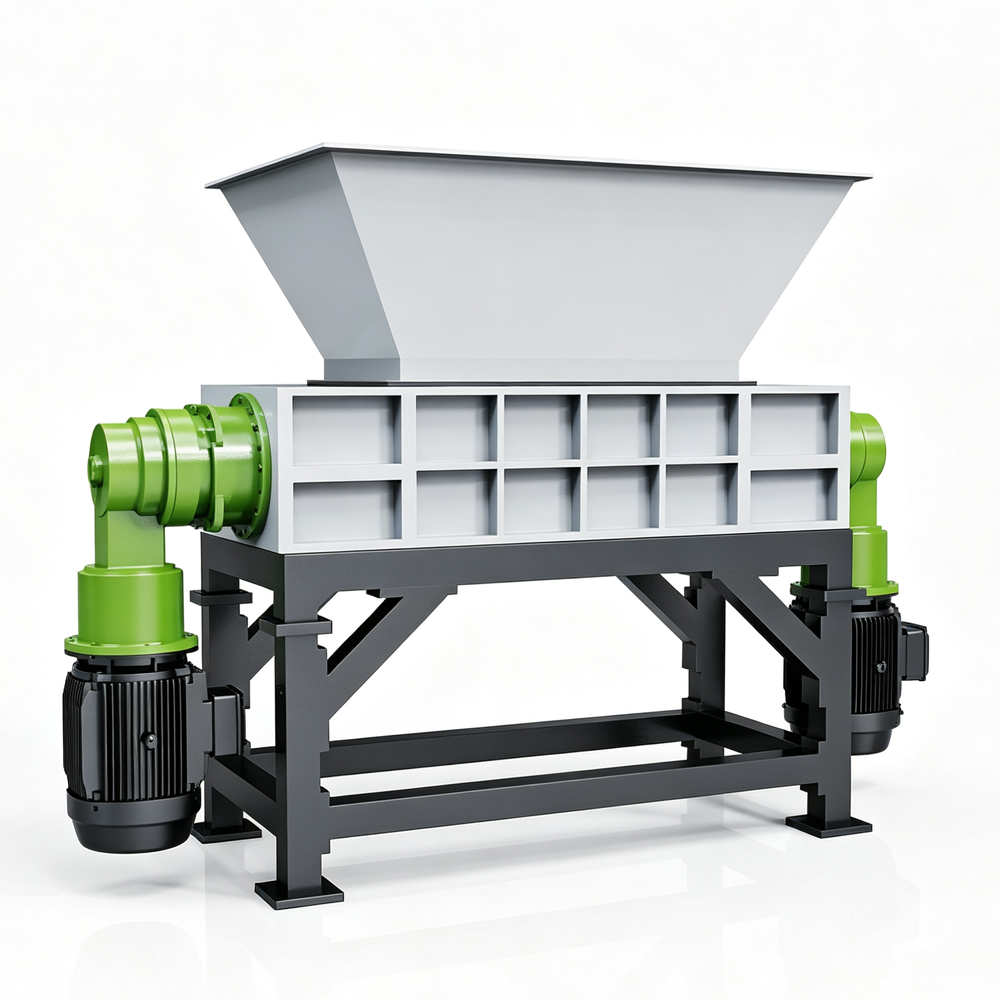
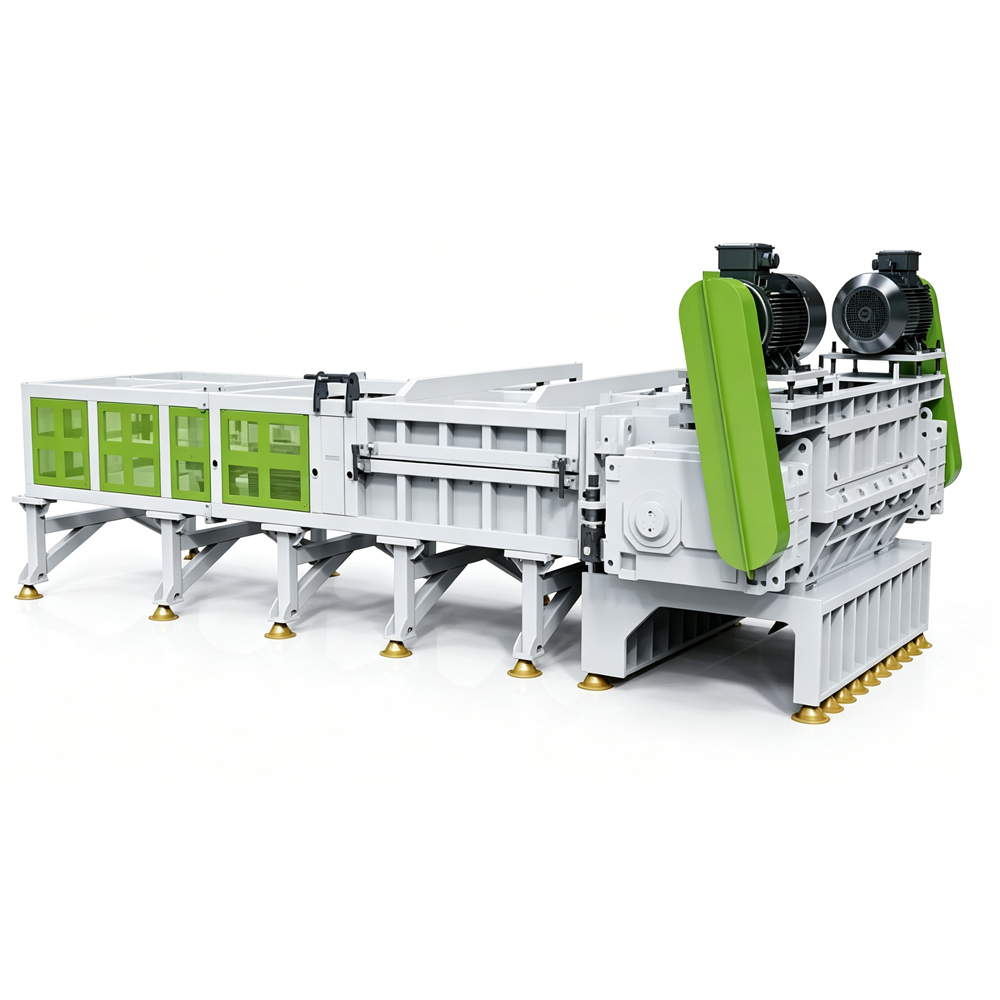
The DYSSQ series light-duty single-shaft shredder is designed specifically for medium-to-light volume reduction tasks. This series includes two well-balanced models – the DYSSQ-600 and DYSSQ-1000 – offering a cost-effective solution for processing a wide range of materials such as plastics, wood, paper, cardboard, rubber, and light metal scrap.
DYSSQ-600 (18.5/22 kW, Φ200 mm rotor, 23 moving blades, 4 fixed blades, 600×500 mm crushing chamber)
Plastic recycling plants – Suitable for shredding small-to-medium sized plastic lumps, purgings, hollow containers, and thin-walled pipes.
E-waste recycling – Efficiently processes small electronic device housings and computer chassis.
Woodworking shops – Reduces wood offcuts, pallet waste, and thin veneer scrap into small wood chips.
Paper & packaging industry – Shreds paper rolls, cardboard boxes, and document waste.
DYSSQ-1000 (45/55 kW, Φ400 mm rotor, 69 moving blades, 6 fixed blades, 980×800 mm crushing chamber)
Higher-capacity production lines – Suitable for shredding bulky plastic crates, drums, industrial film rolls, and woven bags.
Waste-to-energy pre-treatment – Volume reduction of municipal solid waste (light fraction) or industrial waste prior to further processing.
Metal recycling lines – Processes light metal scrap such as aluminum profiles, thin steel sheets, and copper wire (with proper feed control).
Rubber recycling – Processes rubber seals, hoses, and tire sidewalls (limited suitability for light truck tires).
Real-world case: A plastic recycling plant in Thailand uses the DYSSQ-1000 to process rejected HDPE drums (5–20 liters). With 69 moving blades, the machine achieves an output of 1.2–1.5 tons per hour using a 15 mm screen, reducing energy consumption by 18% compared to a competitor model equipped with only 50 blades.
✅ Blade configuration optimized for light materials
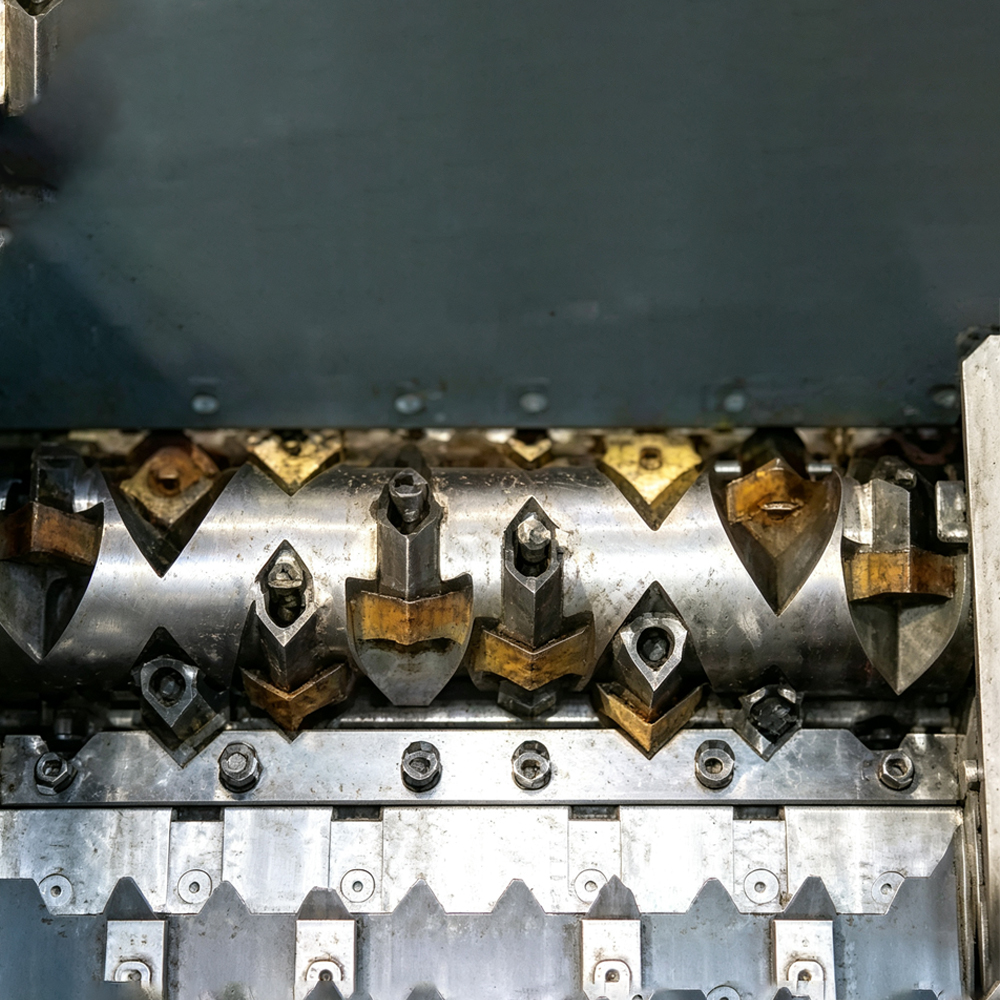
More moving blades, cleaner cutting: The DYSSQ-600 features 23 blades on a Φ200 mm rotor; the DYSSQ-1000 features 69 blades on a Φ400 mm rotor. The high blade density ensures each cut is small and uniform, avoiding the long strips or stringy output often seen when shredding light materials.
Fixed blade support: Equipped with 4 and 6 fixed blades respectively, they provide a shearing action that significantly improves cutting efficiency while preventing over-grinding.
✅ Energy-efficient drive system
Dual power options (18.5/22 kW and 45/55 kW) allow operators to match power consumption to material hardness. For soft plastics or paper, use lower power to save energy; for harder materials, use higher power to maintain throughput.
✅ Compact yet spacious crushing chamber
The DYSSQ-600’s 600×500 mm chamber is ideal for workshops with limited space or small recycling centers.
The DYSSQ-1000’s 980×800 mm chamber can directly accept large items such as 200-liter plastic drums or pallets without pre-cutting.
✅ Low speed, high torque – safe and quiet
The single-shaft design operates at low speed (typically 60–100 rpm), reducing noise, dust, and the risk of material fly-off, while also reducing wear on blades and bearings.
✅ Easy maintenance
Blades are individually mounted and can be flipped or replaced without removing the rotor. Daily inspection and access to the crushing chamber are facilitated by a hinged hopper.
Every DYSSQ shredder undergoes a rigorous 5-step quality assurance process before leaving the factory.
|
Step |
Test Item |
Standards & Methods |
|
1 |
Raw material inspection |
Blades made of alloy steel (Cr12MoV or equivalent) – hardness test to HRC 52–56. Rotor shaft – 100% ultrasonic flaw detection. |
|
2 |
Rotor dynamic balancing |
Rotor with blades assembled – balance grade ≤ G6.3 to minimize vibration and bearing stress. |
|
3 |
No-load run test |
Machine runs for 2 hours without material. Monitor abnormal noise, temperature rise (bearings <40°C), and current fluctuation (±5%). |
|
4 |
Load material test |
Each model tested with typical materials: DYSSQ-1000 with HDPE drums, DYSSQ-600 with ABS scrap. Output particle size and throughput must meet specification requirements (±10%). |
|
5 |
Safety & overload protection |
Reverse function, emergency stop, and overload relays tested continuously for 20 cycles. Electrical cabinet undergoes high-voltage insulation test (1500V, 1 minute). |
Real-world case: During a random shipment audit, a DYSSQ-600 destined for a Mexican customer was recalled for retesting due to a 2% deviation in blade gap consistency. The rotor was re-machined, and a uniform gap of 0.3–0.5 mm was finally achieved across all 23 blades – ensuring consistent flake size in the output.
| Model | Drive Power (kW) | Rotor Dia. (mm) | Rotor Blade (pcs.) | Fixed Blade (pcs.) | Crushing Chamber Size Max. (mm) |
|---|---|---|---|---|---|
| DYSSQ-600 | 18.5/22 | Φ200 | 23 | 4 | 600x500 |
| DYSSQ-1000 | 45/55 | Φ400 | 69 | 6 | 980x800 |
Q1: Can the DYSSQ-1000 shred metal drums?
A: Yes, but only for light-gauge steel drums (thickness ≤ 1.2 mm) and aluminum drums. For heavy drums (carbon steel thickness ≥ 1.5 mm), we recommend our heavy-duty twin-shaft shredder series. Always remove lids and clean residues before operation.
Q2: How often do I need to replace or rotate the blades?
A: It depends on the abrasiveness of the material. For clean plastics (no glass/fillers), blade life is approximately 600–1000 hours. Blades have 4 cutting edges – rotate 90° when dull. Typically, DYSSQ-600 users rotate blades every 3–4 months under 8-hour shifts.
Q3: What screen sizes are available?
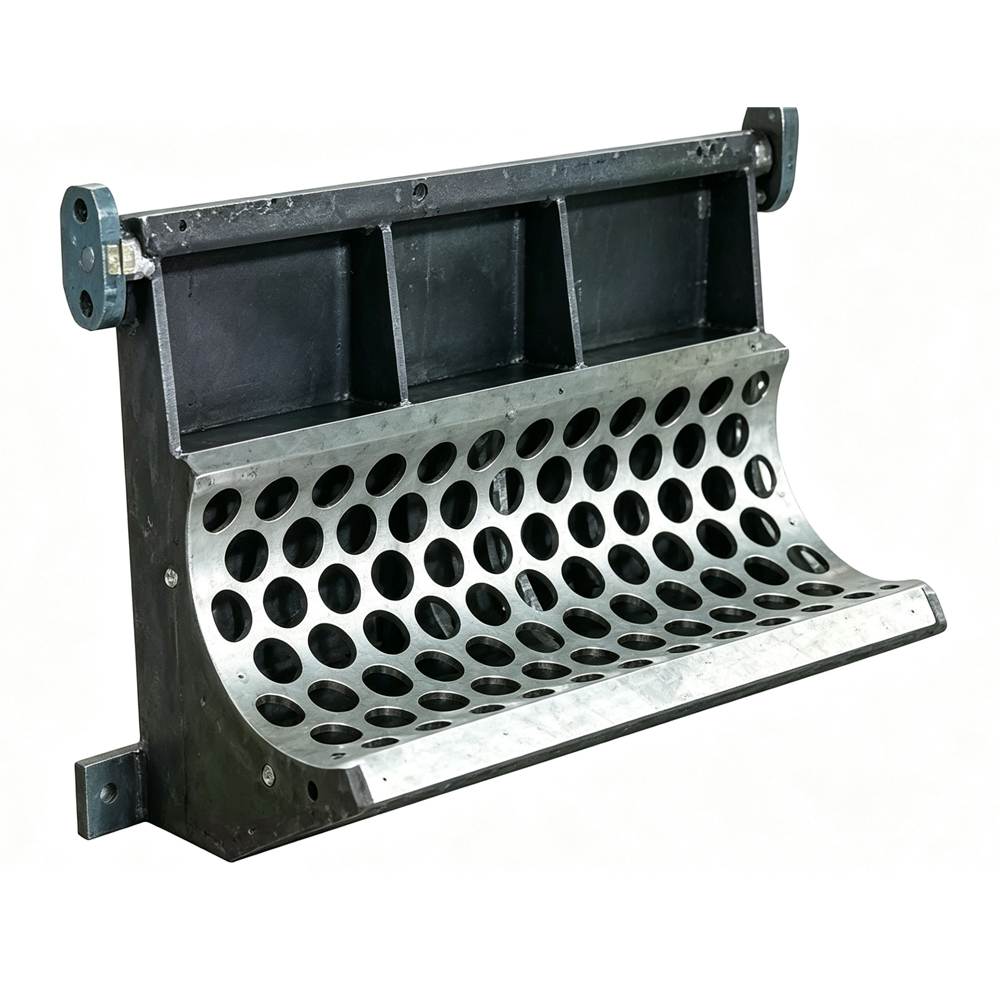
A: Standard screen apertures: 12 mm, 20 mm, 30 mm, and 40 mm. For fine powder (below 8 mm), we recommend an additional fine grinder. The DYSSQ series is optimized for output sizes of 15–40 mm.
Q4: Does the shredder require a special foundation?
A: No. The DYSSQ-600 can be installed on vibration-damping pads on a flat concrete floor of at least 150 mm thickness. The DYSSQ-1000 requires only simple anchor bolts; no complex foundation is needed due to low dynamic forces.
Q5: How does the DYSSQ-600 differ from competitors’ 600 mm models?
A: Many competitors use only 15–18 moving blades on a Φ200 mm rotor. Our 23 blades produce shorter, more uniform chips, reducing recirculation load. Additionally, the 22 kW power option provides 18% extra margin for handling harder batches.
Q6: Can it run light films or woven bags without clogging?
A: Yes, but we strongly recommend adding a hydraulic ram feeder or a feed roller for film processing. Without assisted feeding, light materials may bridge. The DYSSQ-600 can be optionally equipped with a manual feed hopper adapter.




Pipe Extrusion Production Line
Plastic Shredder Crusher Machine

Tel: +86-19057068112

E-mail: [email protected]

Company Address
No. 128 Qingfeng Road, Xieqiao Town, Haining City, Jiaxing City, Zhejiang Province

19057068112

 English
 русский