
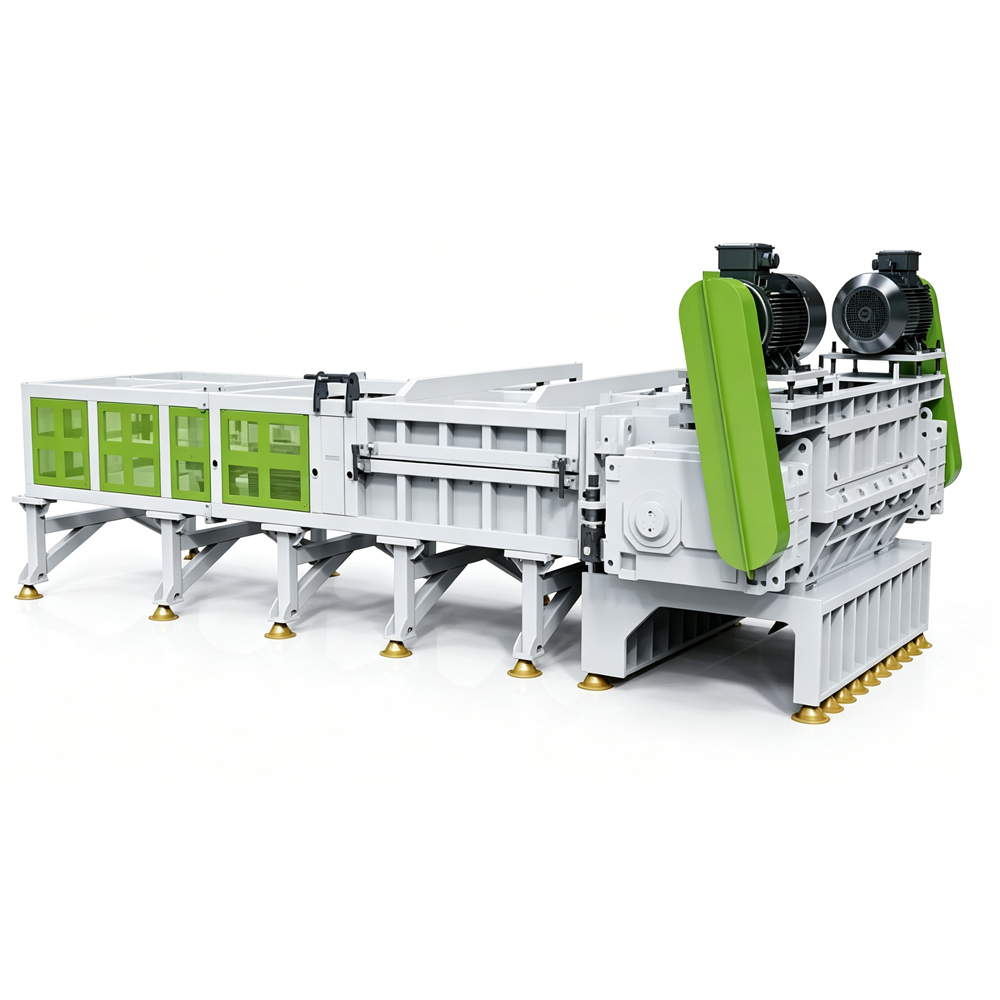
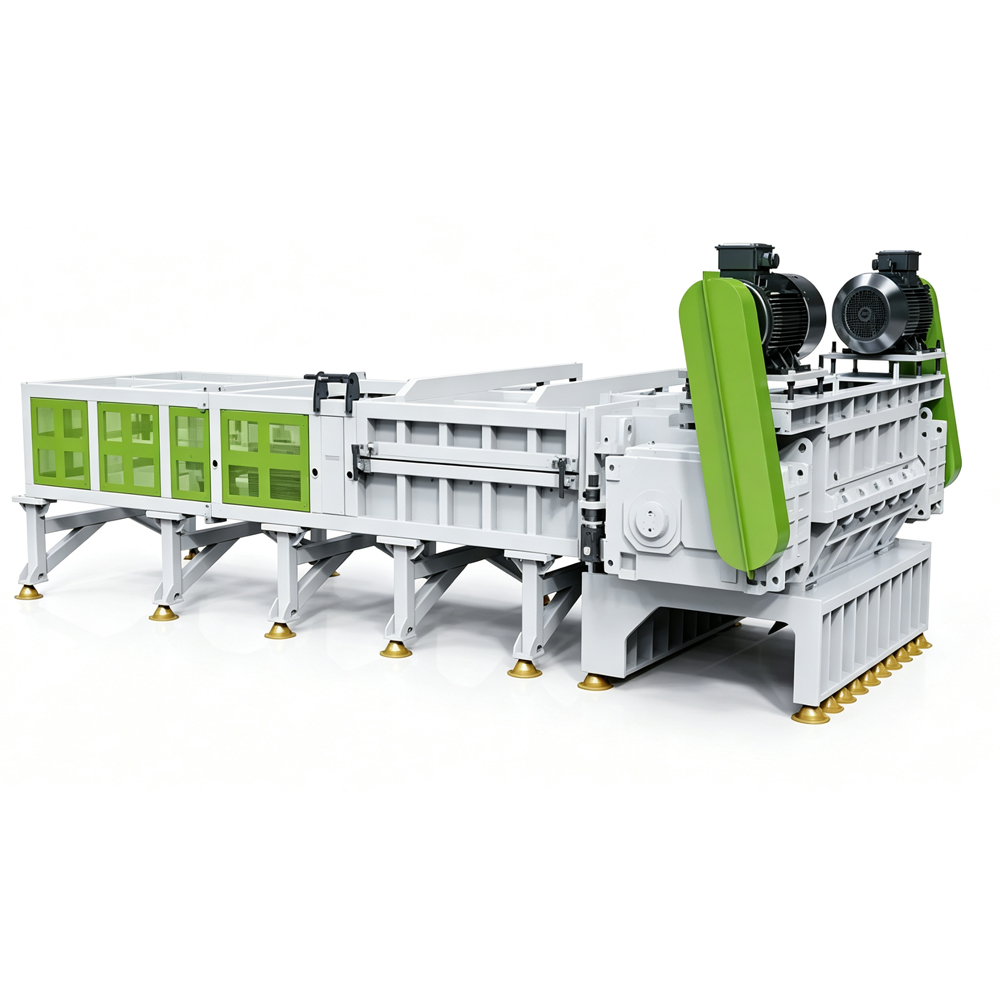
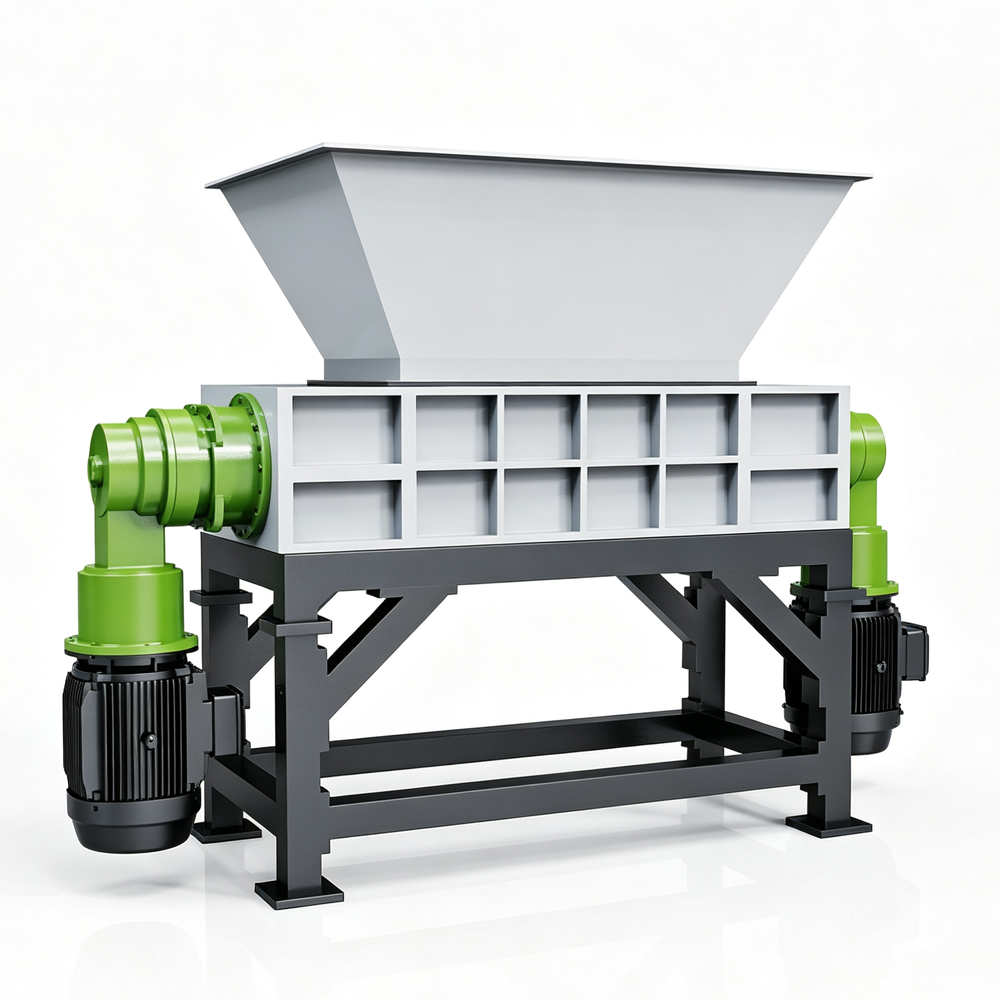
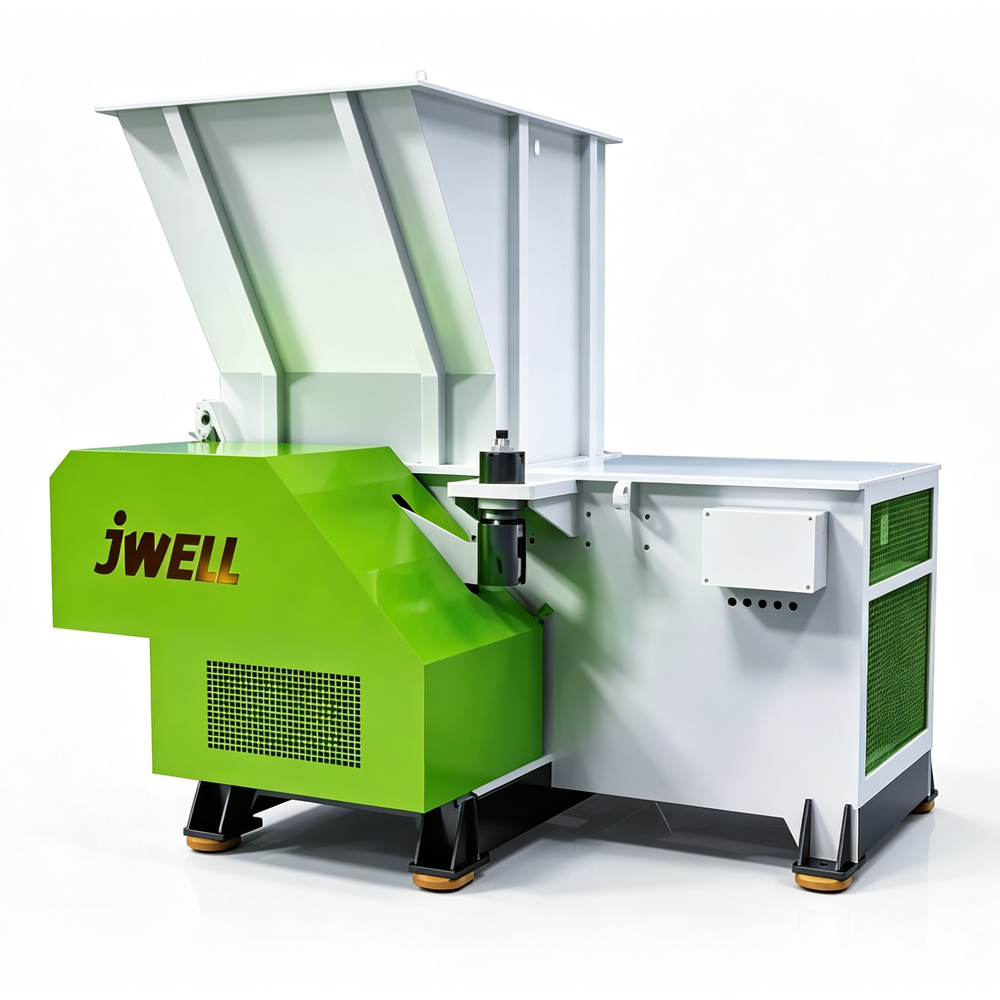
The DYSSZ series is a heavy-duty single-shaft shredder designed for medium-to-high output and large-sized material recycling. Rotor diameter ranges from Φ400mm to Φ750mm, drive power covers 22×2kW to 132×2kW, and the maximum crushing chamber size reaches 1800×2800×600mm. It can process a variety of waste materials.
Plastic recycling: Large plastic pipes (PE, PP, PVC), plastic pallets, IBC drums, car bumpers, injection molded lumps, film rolls. For example, the DYSSZ-1600 has a crushing chamber of 1500×1400×600mm, easily accommodating a whole IBC drum.
Wood processing: Wood pallets, construction formwork, branches, log sections. The DYSSZ-2000, with 147kg·m torque, can shred nail-studded wood pallets.
E-waste: TV casings, washing machine drums, computer chassis, circuit board frames. The DYSSZ-1400 delivers 102kg·m torque; low speed, high torque prevents overheating.
Household waste and industrial refuse: Waste textiles, cardboard bales, RDF (Refuse Derived Fuel) pretreatment. The DYSSZ-3000 features a 2800mm long crushing chamber, suitable for continuous feeding of large bales.
Rubber and tires: Small truck tires, rubber seals, conveyor belt scrap.
Real case: An e-waste recycling company in Guangdong uses a DYSSZ-2500 (Φ750 rotor, 2×90kW, torque 177kg·m) to process waste TV casings (ABS plastic) with 12 stationary blades. Single-unit daily throughput reaches 25 tons, output particle size is uniform at 30-50mm, feeding directly into a pelletizing line.
Dual motor drive, ultra-high torque output
All models feature dual motor drive (22×2 ~ 132×2 kW), torque range 54~218 kg·m. Compared to single motor, dual motors provide smoother torque distribution during startup and overload, especially suitable for shredding high-toughness, thick-walled materials. For example, the DYSSZ-3000 with 218kg·m torque can easily tear solid PE bars.
Large crushing chamber with multiple stationary blade configurations
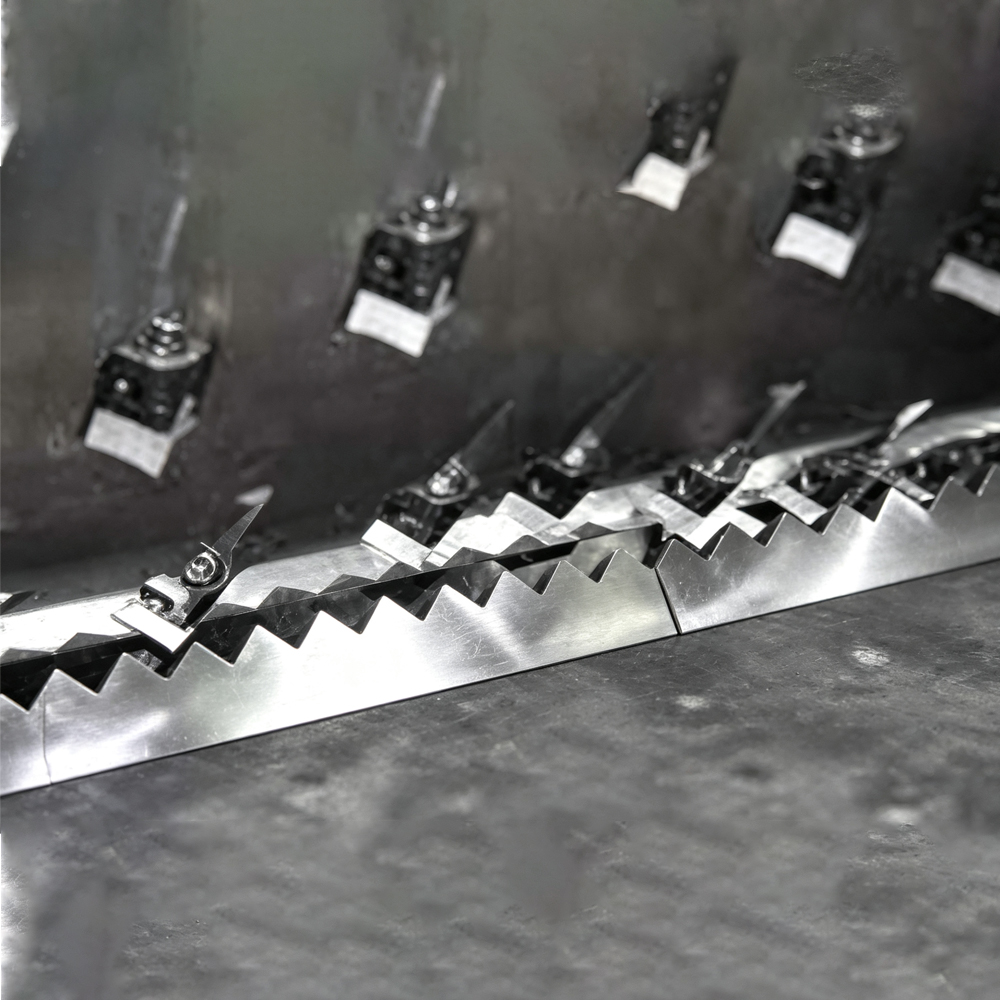
Crushing chamber length ranges from 1300mm to 2800mm, height 350~600mm. The long chamber allows feeding multiple materials at once, reducing pre-cutting steps. Number of stationary blades: 5 to 14, forming a shearing angle with the rotor blades to improve cutting efficiency. The DYSSZ-2000 crushing chamber (1500×1800×600mm) can accommodate 3~4 25kg plastic drums in one load.
Large rotor diameter and optimized blade life
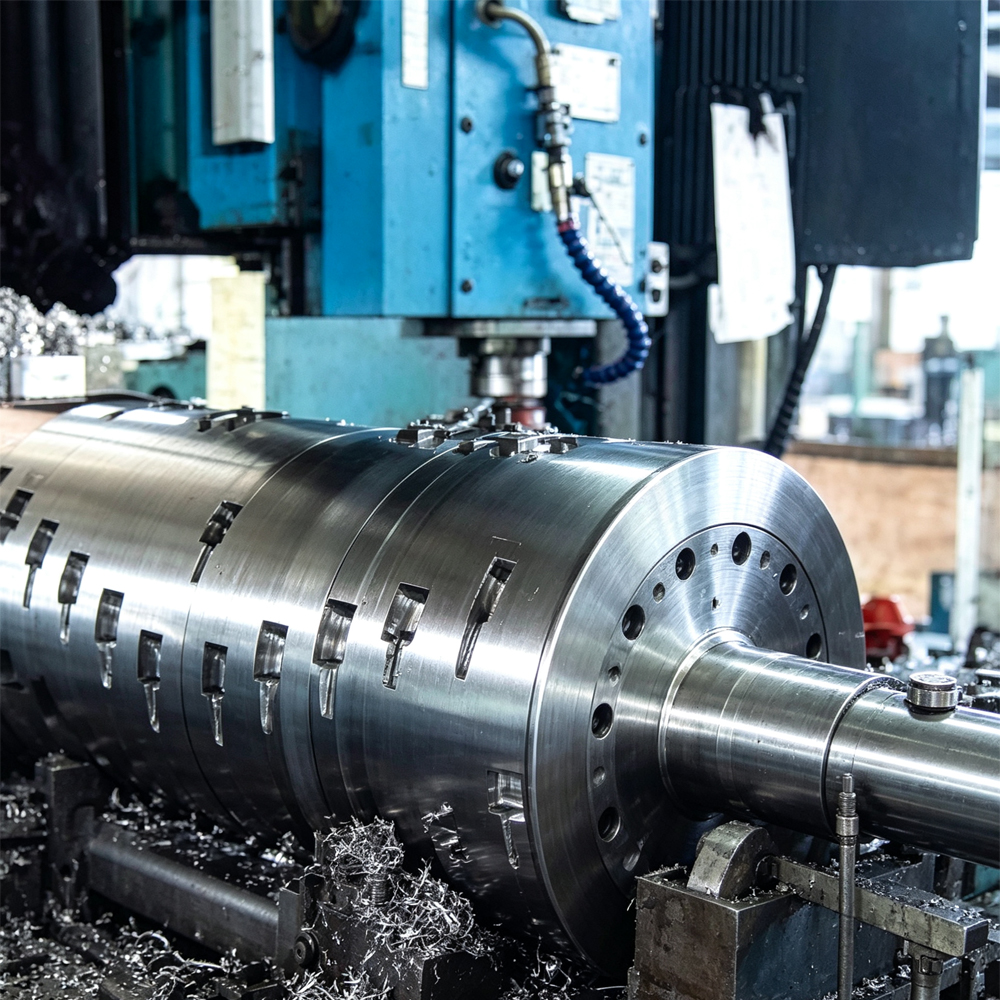
Rotor diameter Φ400~Φ750mm. The large rotor results in lower blade tip speed (typically 80-120 rpm), reducing frictional heat and extending blade life. Rotor blades are replaceable alloy steel, usable on four sides; stationary blades are also adjustable, leading to low maintenance costs.
Intelligent overload protection and hydraulic ram feeder
Standard hydraulic ram system automatically adjusts feed frequency based on current load, preventing material jamming. Combined with high torque, stable operation is maintained even with uneven material density. Customer feedback on DYSSZ-1600: Processing waste plastic film with 20% moisture content, spindle jamming never occurred.
Modular design, adaptable to various screens
Screen mesh size range: 15~120mm, easy to change. The DYSSZ-1400 comes standard with a 40mm screen; output can directly go to next stage of fine shredding or sorting.
Each DYSSZ series shredder undergoes strict quality control before leaving the factory to ensure it meets heavy-duty operating requirements. The process is as follows:
Raw material and component inspection
Steel plates: Bearing housings and crushing chamber walls use Q355D low-alloy high-strength steel. Each batch undergoes spectral composition analysis and tensile testing.
Blades: Rotor blade material is Cr12MoV or SKD-11, hardness HRC58-62; each blade is flaw-detected to eliminate internal cracks.
Motors and gearboxes: Siemens/ABB brands, with factory test reports provided.
Welding and structural component inspection
All welds undergo 100% ultrasonic inspection (compliant with EN 10160 standard).
After assembly, the crushing chamber is measured using a CMM to ensure parallelism and perpendicularity ≤0.5mm/m.
Rotor dynamic balancing test
After assembly (including blade holders), the rotor is balanced on a H10-grade balancing machine; residual unbalance ≤5g·mm/kg, operating vibration ≤4.5mm/s.
No-load and load test runs
No-load: Continuous operation for 4 hours, monitoring bearing temperature rise (≤40°C), noise (≤85dB), current fluctuation.
Load: 2-hour load test using actual customer materials (e.g., PE drums, wood pallets), recording throughput, peak torque, output particle size distribution. For example, the DYSSZ-2000 test fed 10 200L chemical drums; torque stabilized at 140~147kg·m, no overload triggered.
Safety and sealing test
Shaft end seals: Labyrinth + fluororubber oil seal; pressure maintained at 5kPa for 30 seconds without leakage.
Electrical safety: Ground resistance ≤4Ω, insulation resistance ≥50MΩ.
Final delivery documents
Each machine comes with: inspection report, dynamic balancing certificate, load test curve, wear parts list and recommended stock quantities.
Case: An environmental equipment trader in Zhejiang conducted an independent third-party spot check on a DYSSZ-1600. After shredding 300kg of mixed waste plastic containing 10% metal impurities, blade wear was only 0.12mm, far below the industry standard of 0.3mm.
| Model | Rotor Dia. (mm) | Drive Power (kW) | Rotor Blade (pcs.) | Fixed Blade (pcs.) | Crushing Chamber Size Max. (mm) |
|---|---|---|---|---|---|
| DYSSZ-1000 | Φ400 | 22×2 | 54 | 5 | 850×1300×350 |
| DYSSZ-1400 | Φ630 | 37×2 | 102 | 7 | 1200×1300×550 |
| DYSSZ-1600 | Φ750 | 2×55 | 117 | 8 | 1500×1400×600 |
| DYSSZ-2000 | Φ750 | 2×75 | 147 | 10 | 1500×1800×600 |
| DYSSZ-2500 | Φ750 | 2×90 | 177 | 12 | 1500×2200×600 |
| DYSSZ-3000 | Φ750 | 2×132 | 218 | 14 | 1800×2800×600 |
Q1: How to select the appropriate model based on material?
A: Refer to two core parameters: crushing chamber length and torque.
For large-volume materials (e.g., whole IBC drums, pallets), crushing chamber length must exceed the material's longest dimension. DYSSZ-1400 chamber length 1300mm can accommodate 1200mm pallets; DYSSZ-2500 chamber length 2200mm is suitable for long pipes.
For high-density/thick-walled materials (e.g., solid PE plates, tires), prioritize high-torque models. For example, DYSSZ-3000 torque 218kg·m can shred PE blocks with 80mm wall thickness; while DYSSZ-1000 torque 54kg·m is more suitable for thin-walled drums or film.
Q2: How often are rotor blades and stationary blades replaced? What is the wear cost?
A: Depends on material abrasiveness.
For ordinary waste plastics (PP/PE drums), rotor blade life is about 800–1200 hours; for materials containing fiberglass or sand, life drops to 300–500 hours.
Rotor blades can be reversed for 4 uses. A full set of blades costs approximately 3000–8000 RMB (depending on model). For DYSSZ-1600 (8 rotor blades), each replacement costs about 5000 RMB, unit cost per ton approx. 5–8 RMB. Stationary blade life is roughly twice that of rotor blades.
Q3: Can it process wrapping materials (e.g., film, woven bags)?
A: Yes, but anti-wrapping stationary blades and hydraulic ram are recommended. The single-shaft structure of DYSSZ series is more friendly to wrapping than twin-shaft shredders, but we still suggest:
Adding a shear grid at the feed inlet.
Controlling moisture content ≤15%.
Real case: A recycling station in Hebei used a DYSSZ-1400 to process waste agricultural film (containing 5% soil) with a 22mm screen, achieving 1.8 t/h throughput without shaft wrapping.
Q4: How is output particle size adjusted? What is the minimum achievable size?
A: By changing to different screen mesh sizes. The minimum screen aperture is 15mm (requires more stationary blades).
DYSSZ-1000 with 15mm screen gives output ≤20mm, but throughput decreases by about 40%.
Recommended economic particle size: 30–50mm (screen aperture 30–40mm). Customer case: DYSSZ-2000 with 40mm screen processing e-waste casings produced 92% of output particles ≤45mm.
Q5: How to set the hydraulic ram feed frequency?
A: Default is automatic adjustment by PLC based on main motor current: accelerate feed when current is below 80% of rated, decelerate or pause when above 95%. Manual fixed interval setting (e.g., every 3 seconds) is also possible. Recommendations:
Brittle materials (wood, hard plastic): fast feed, high frequency.
Elastic materials (rubber, film): slow feed, short stroke each time. Initial settings: ram stroke 30–50mm, interval 2–5 seconds.
Q6: What are the key daily maintenance points?
A:Per shift: Check bearing temperature (≤75°C), hydraulic oil level, loose or damaged blades/screens.
Weekly: Lubricate bearings (lithium-based grease #3), clean metal debris from magnetic separator.
Monthly: Check belt tension (keep tension consistent for dual motors), change gearbox oil (first time at 500 hours, then every 2000 hours).
Quarterly: Calibrate torque sensor, check spindle concentricity.
Q7: What are the advantages of DYSSZ parameters compared to similar models from competitors?
A: Taking the mainstream 2500 model as an example:
Competitor A: Rotor Φ700mm, power 90×2kW, torque 160kg·m, crushing chamber 2000mm.
DYSSZ-2500: Rotor Φ750mm (larger moment of inertia), torque 177kg·m (10.6% higher), crushing chamber 2200mm (10% longer).
In a test shredding 50 waste PP pallets, DYSSZ-2500 took 23 minutes, Competitor A took 31 minutes, energy consumption 15% lower.




Pipe Extrusion Production Line
Plastic Shredder Crusher Machine

Tel: +86-19057068112

E-mail: [email protected]

Company Address
No. 128 Qingfeng Road, Xieqiao Town, Haining City, Jiaxing City, Zhejiang Province

19057068112

 English
 русский