
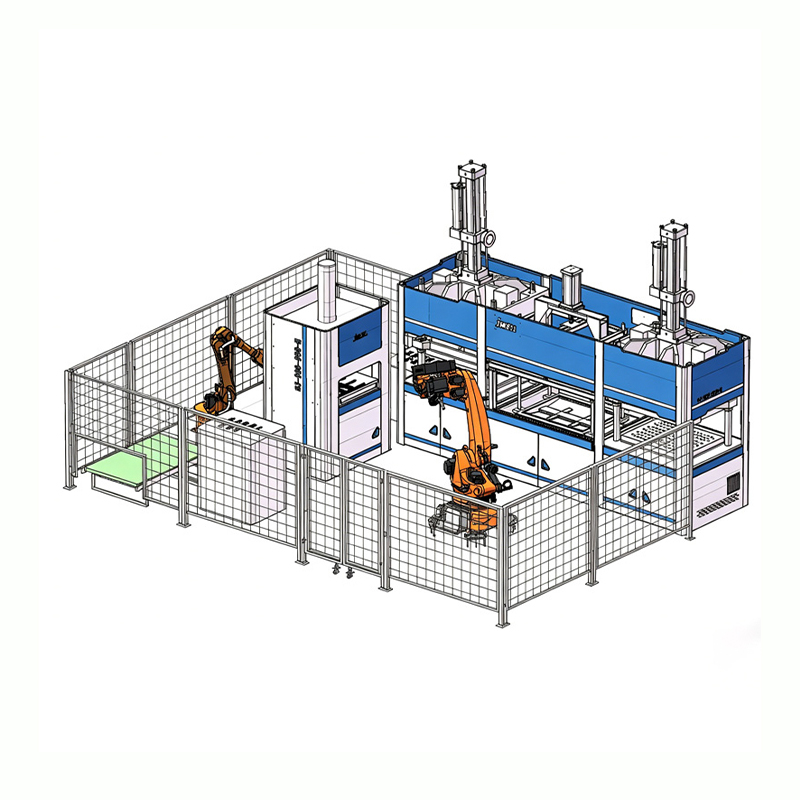
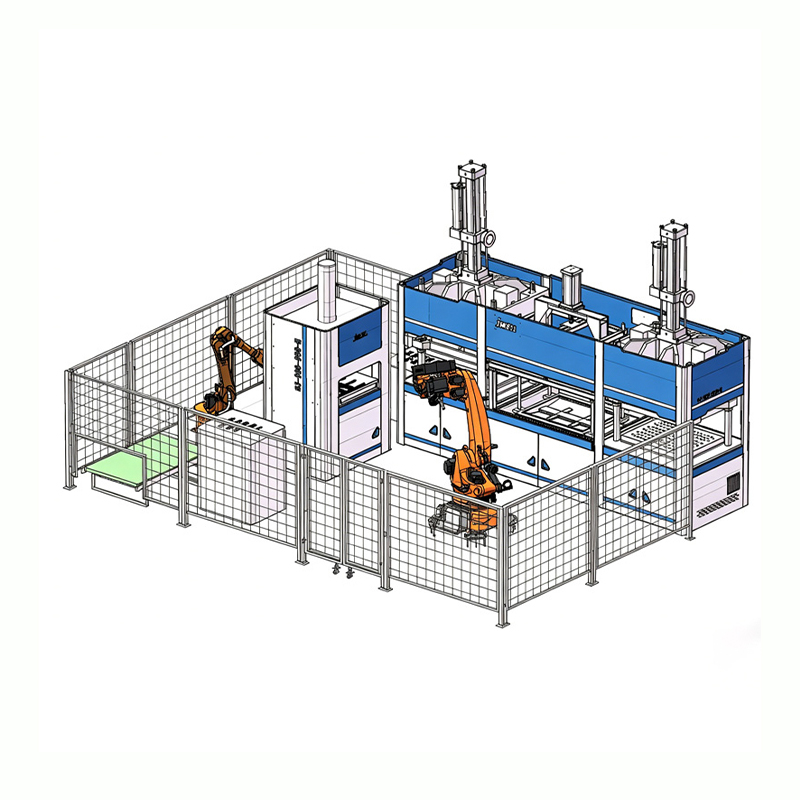
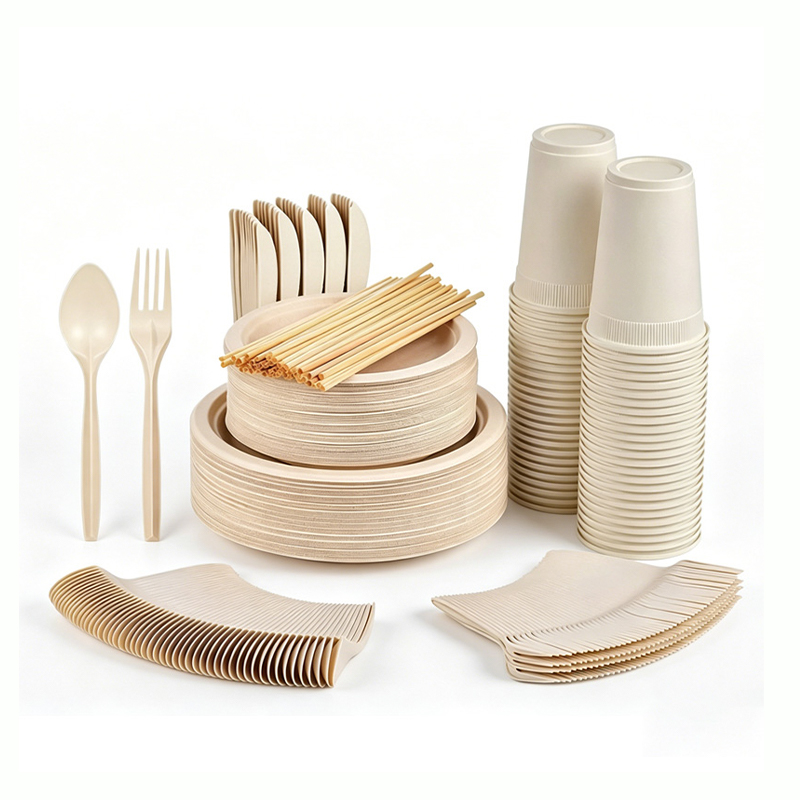
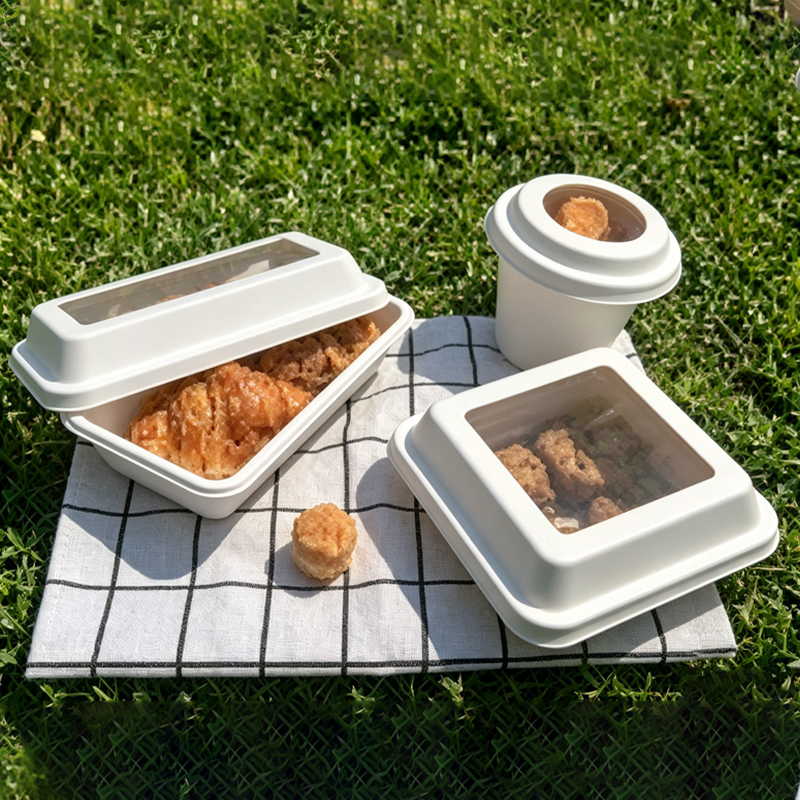
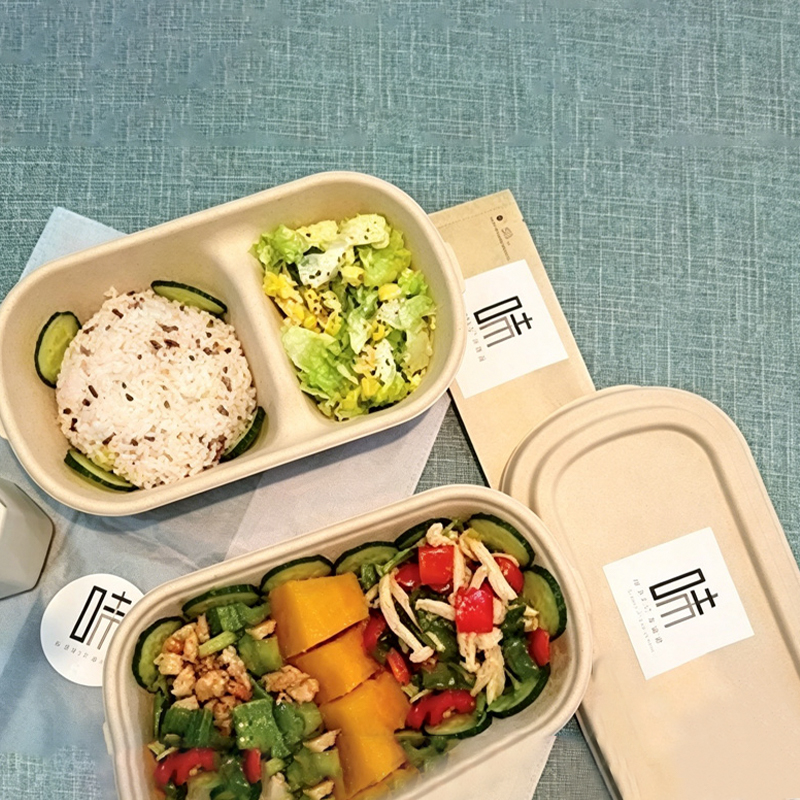
The Fully Automatic Pulp Molding Premium Tableware Production Line is specifically designed for high-output production of high-quality tableware and food packaging. Two models – HJ-9895 (980×950 mm, 47T) and HJ-120120 (1200×1200 mm, 60T) – offer flexible forming pressure and platen sizes, with optional electric heating or oil heating, both ensuring rapid and uniform heat distribution.
Aviation & In-Flight Catering – lightweight yet sturdy trays that withstand temperature variations during service.
Quick Service Restaurants (QSR) – multi-compartment trays for burgers, fries, and combo meals.
Institutional Catering – school lunch trays and corporate cafeteria solutions that are microwave-safe and compostable.
Retail & Premium Packaging – custom-shaped trays for organic produce, baked goods, and gourmet takeaway.
Medical & Hospitality – disposable bed trays and room-service platters where hygiene and single-use convenience are priorities.
The machine’s adjustable parameters allow rapid mold changes, making it equally suitable for large-scale standardized production and smaller-batch custom orders.
Our Fully Automatic Pulp Molding Premium Tableware Production Line stands out in the competitive pulp molding market thanks to robust engineering and user-centric design. Below is how the specific parameters translate into real-world benefits:
1. Dual Heating Flexibility (Electric vs. Oil Heating Optional)
Specification: “Electric heating and oil heating are optional.”
Advantage: Manufacturers can choose the most cost-effective energy source based on local utility rates. Electric heating delivers rapid temperature rise and precise control for intricate product details, while oil heating provides uniform heat distribution over large platen areas, reducing energy waste during 24/7 continuous operation. This flexibility is vital for plants in regions with unstable power grids or fluctuating fuel prices.
2. High Forming Pressure
Specification: Model HJ-9895: 47 tons | Model HJ-120120: 60 tons.
Advantage: The immense pressure ensures that fibers are densely compacted during the forming stage. Results include:
Smoother edges – less burr and fraying, reducing secondary trimming costs.
Superior structural integrity – trays can carry heavier food loads without deformation.
Consistent wall thickness – uniform pressure distribution eliminates weak spots, ensuring each tray meets the same quality standard.
3. Optimized Production Depth
Specification: Production height/depth: 80 mm.
Advantage: The 80 mm forming depth accommodates deep-draw tray designs with high sidewalls, ideal for meals with sauces, soups, or large portions. This depth is a “sweet spot” – deep enough for versatility yet shallow enough to maintain fast drying and forming cycles.
4. Competitive Cycle Time
Specification: Cycle time: 22–40 seconds.
Advantage: The variable speed allows operators to balance output against product complexity.
22 seconds: high-speed mode for simple, flat tray designs, producing approximately 160+ trays per mold per hour.
40 seconds: precision mode for intricate textures, multi-compartment trays, or heavier basis-weight products, ensuring perfect forming without significantly sacrificing throughput.
5. Robust Build Quality
Specification: Platen dimensions: 980×950 mm (HJ-9895) and 1200×1200 mm (HJ-120120).
Advantage: Larger platens accommodate more cavities per mold. The HJ-120120 model, with 1.44 m² of forming area, maximizes output per square foot of factory floor space, making it the top choice for high-volume producers looking to reduce labor and energy costs per unit.
We implement a rigorous multi-stage quality assurance framework to ensure that every machine leaving our factory performs at its best. Our testing process is divided into three phases:
Phase 1: Pre-Assembly Component Inspection
Material Hardness Testing – all structural steel components undergo Rockwell hardness testing to verify they can withstand 60 tons of forming pressure without deformation over a decade of use.
Hydraulic System Leak Testing – hydraulic lines and cylinders are pressurized to 125% of operating capacity to detect micro-leaks before assembly.
Heating Element Calibration – electric heating rods are individually tested for resistance consistency; oil heating systems undergo thermal flow analysis to verify temperature uniformity across the 1200×1200 mm platen.
Phase 2: Assembly Process and Dry-Run Testing
Pressure Accuracy Calibration – we use precision load cells to verify that the nominal 47-ton or 60-ton pressure is accurately delivered at the mold interface. We test at 10%, 50%, and 100% capacity to ensure linear performance.
Cycle Time Optimization – the PLC is programmed with 50 different recipe settings. We simulate 72 hours of continuous operation, cycling between 22-second and 40-second intervals while monitoring servo motor response times and pneumatic valve actuation times.
Thermal Imaging Analysis – infrared cameras map the heat distribution across the platen during the heating phase. Any hot-spot deviation exceeding ±3°C triggers recalibration of the thermal management system.
Phase 3: Final Wet-End and Product Validation
Pulp Consistency Simulation – we use actual pulp slurries at varying consistencies (0.8% to 1.5%) to test vacuum forming efficiency. The goal is to ensure that the machine removes moisture evenly, preventing wet spots that lead to drying cracks.
Dimensional Tolerance Verification – test products (trays) are measured using a 3D optical scanner. Every dimension must fall within ±0.5 mm of the CAD design.
Drop Testing and Stress Fracture Analysis – formed trays, loaded with 2 kg of weight, are subjected to 1.5-meter drop tests. We also perform edge crush tests to simulate warehouse stacking. Only machines that produce 99.8% defect-free trays pass final inspection.
| Model | HJ-9895 | HJ-120120 |
| Plate size | 980*950 | 1200*1200 |
| Heating method | Electricity and oil are optional | |
| Forming pressure | 47T | 60T |
| Production height | 80mm | 80mm |
| Cycle time | 22-40s | 22-40s |
Q1: What is the difference between the HJ-9895 and HJ-120120 models?
A: The primary differences are platen size and forming pressure.
HJ-9895 – accommodates 980×950 mm molds. Best suited for small-to-medium factories, R&D facilities, or businesses with limited floor space. Its 47-ton pressure is sufficient for standard multi-compartment tray production.
HJ-120120 – accommodates 1200×1200 mm molds. Designed for industrial-scale production, offering a wider forming area that holds more cavities per cycle for higher overall output. The increased 60-ton pressure ensures adequate compaction over the larger area for a high-quality surface finish
Q2: Should I choose electric heating or oil heating?
A: It depends on your operating environment.
Electric heating – choose this if your factory has stable, low-cost electricity. Electric heaters are simpler to install, have fewer moving parts, and typically respond faster to temperature adjustments (ideal for complex mold designs).
Oil heating – choose this if your plant has access to a cheaper thermal oil boiler system or a centralized heating unit. Oil heating provides gentler, more uniform heat retention, which is excellent for thick, heavy products. Pro tip: If you produce a diverse product range with varying thicknesses, oil heating offers a more stable thermal buffer.
Q3: Can I change the 80 mm production depth?
A: The maximum depth is designed to be 80 mm. This is a structural limit of the machine’s stroke mechanism to ensure consistent pressing force. While you cannot exceed 80 mm, you can produce shallower products (e.g., 10 mm – 60 mm) by adjusting the mold design and PLC stroke settings. We recommend making full use of the 80 mm capacity to produce deep bowls or multi-layer trays and maximize the machine’s value.
Q4: How does the machine handle different pulp materials (bagasse, bamboo pulp, recycled paper)?
A: The machine is compatible with all common pulp grades. The main adjustments involve vacuum intensity and squeezing time.
Bagasse and bamboo pulp – these have longer fibers and require a slightly longer “squeeze” phase (closer to the 40-second cycle) to prevent fiber tearing.
Recycled paper – shorter fibers are easier to form and can be run at the 22-second cycle.
Our automated PLC control system includes a preset recipe library for these materials, simplifying changeovers.
Q5: How do you ensure that the “product depth” does not compromise drying quality?
A: The 80 mm depth poses a challenge for moisture retention in bottom corners. Our solution is a multi-stage hot-pressing protocol:
Stage 1 (pre-pressing) – removes 60% of the moisture.
Stage 2 (high-temperature hot pressing) – heating platens (up to 220°C) evaporate residual moisture while high pressure prevents expansion. For 80 mm deep products, we recommend the oil-heating option because it provides the most uniform thermal gradient, preventing surface scorching while effectively drying the core.
Q6: What are the maintenance intervals for key components?
A: To maintain the reliability of 22–40 second cycles:
Hydraulic oil – replace every 4,000 operating hours.
Heating elements (electric) – check for scaling every 3 months.
Thermal oil (oil system) – test the oil’s flash point annually; typically replace every 2 years.
Seals and gaskets – inspect for hardening monthly; replace every 12 months to prevent pressure loss.




Pipe Extrusion Production Line
Plastic Shredder Crusher Machine

Tel: +86-19057068112

E-mail: [email protected]

Company Address
No. 128 Qingfeng Road, Xieqiao Town, Haining City, Jiaxing City, Zhejiang Province

19057068112

 English
 русский