
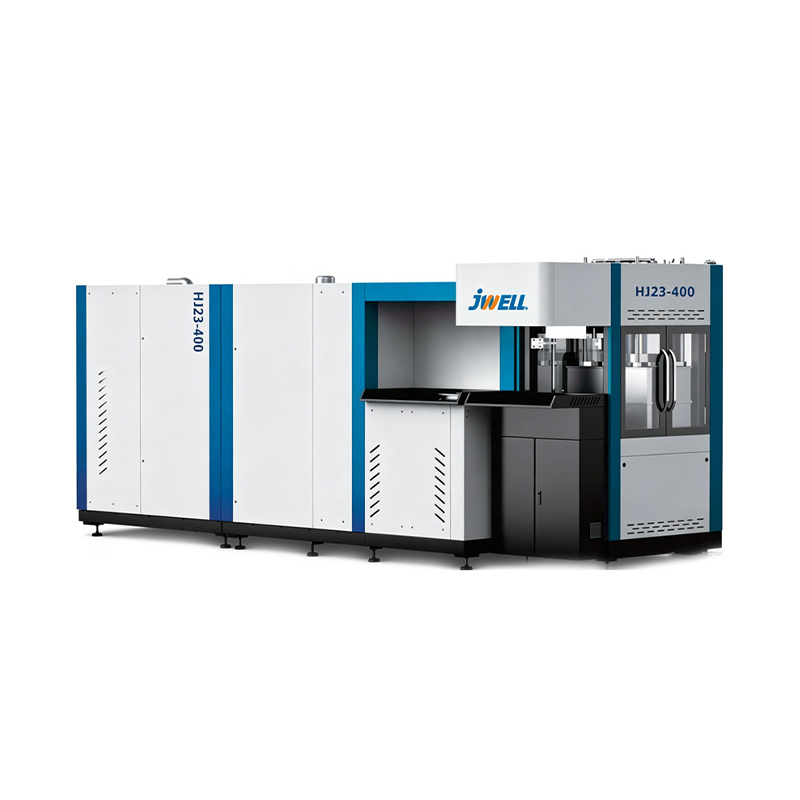
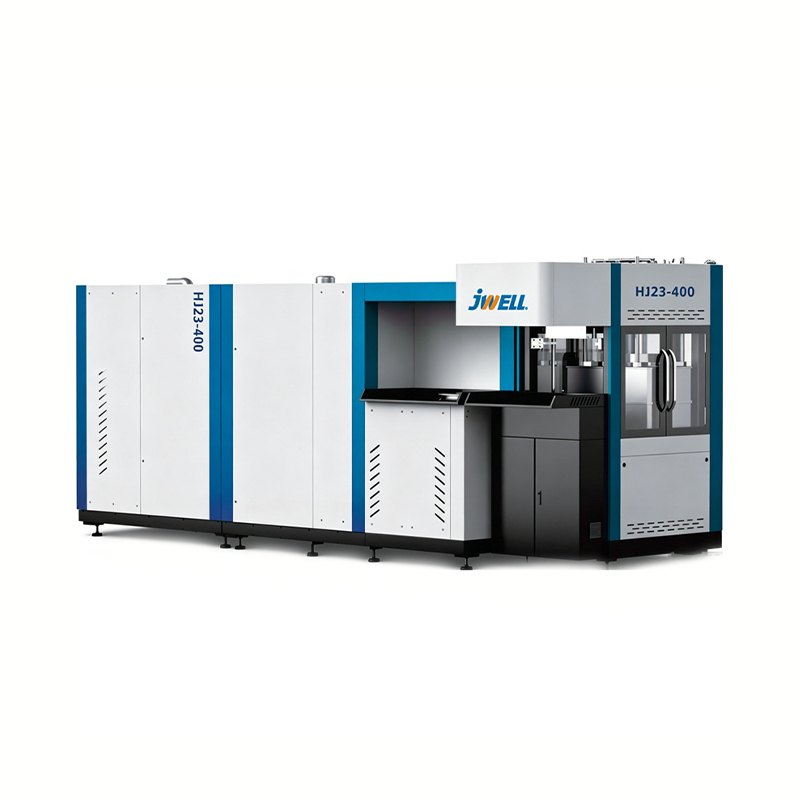
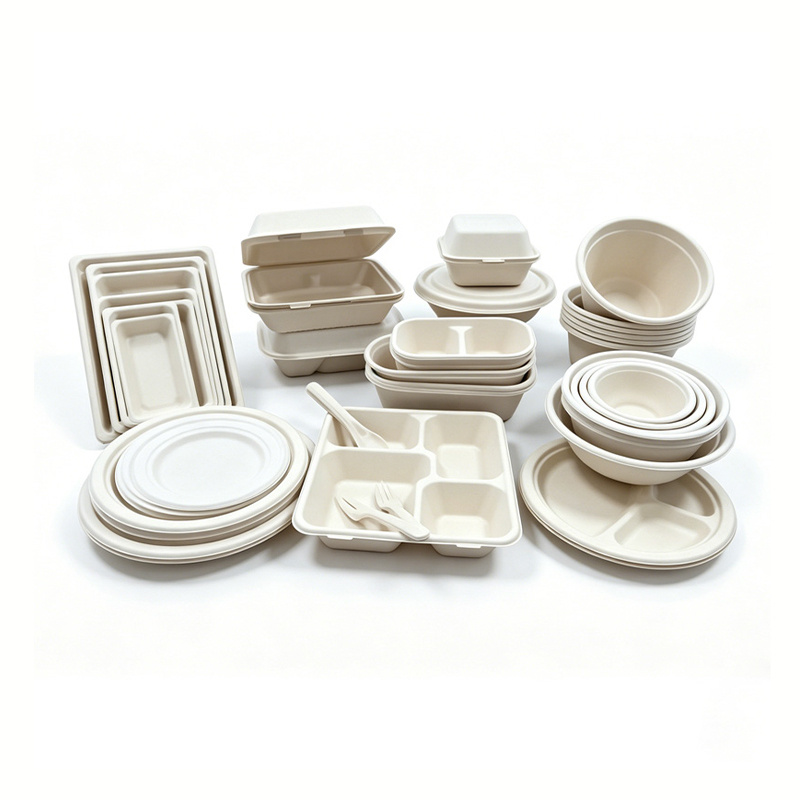
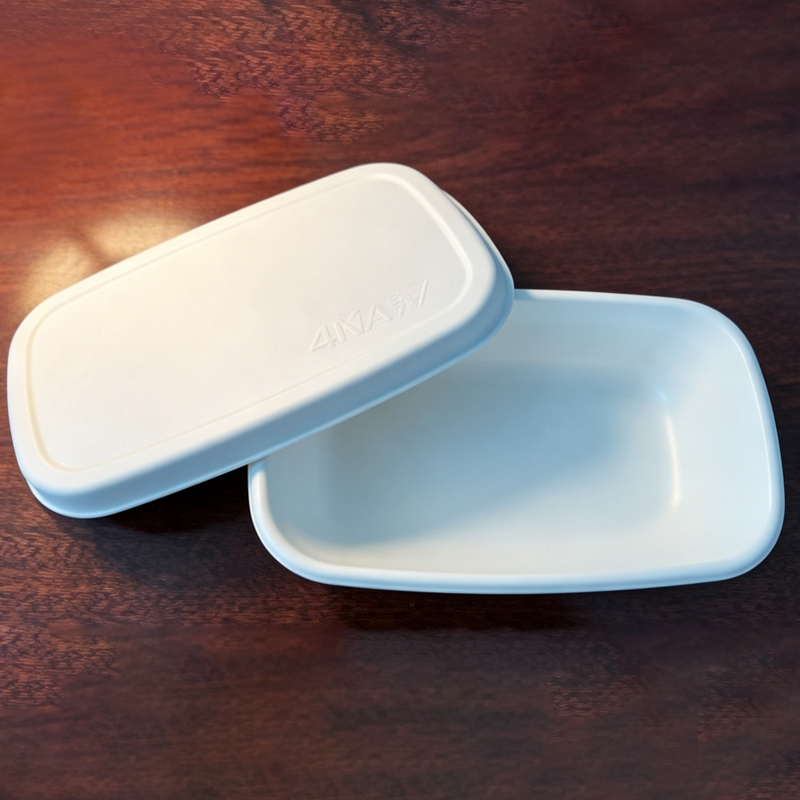
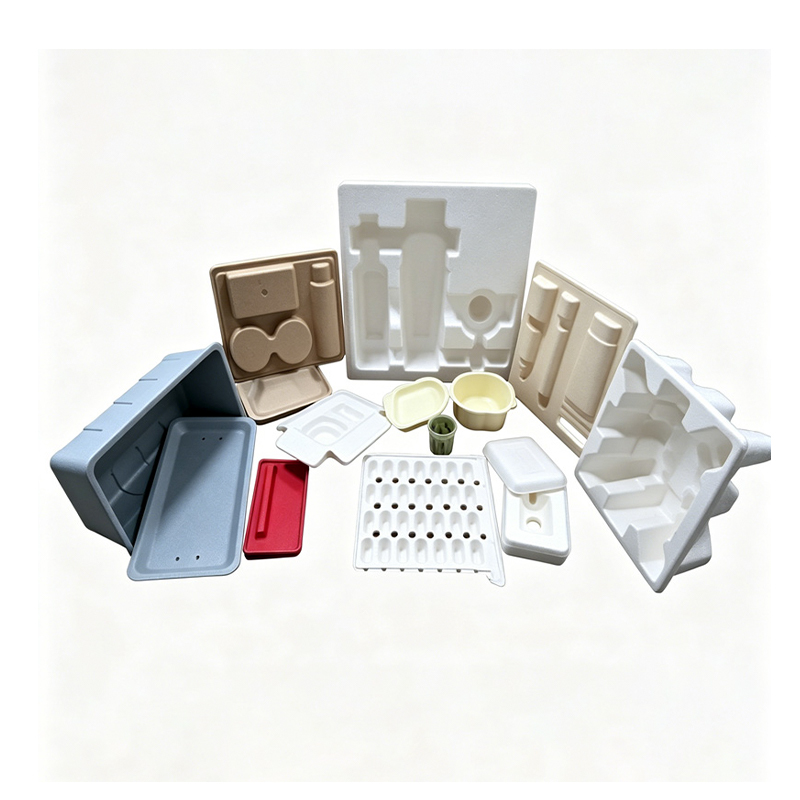
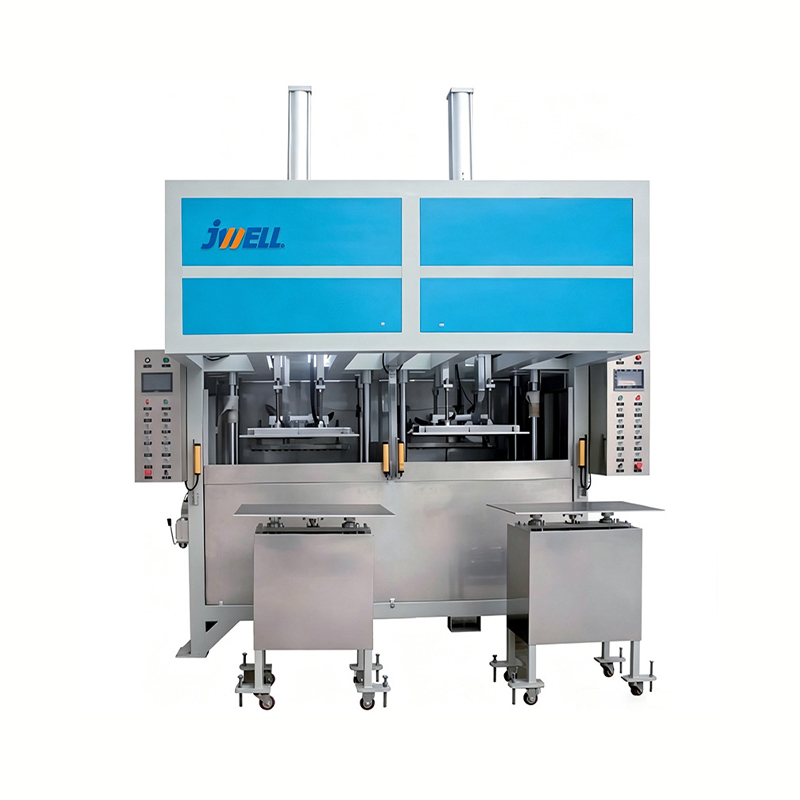
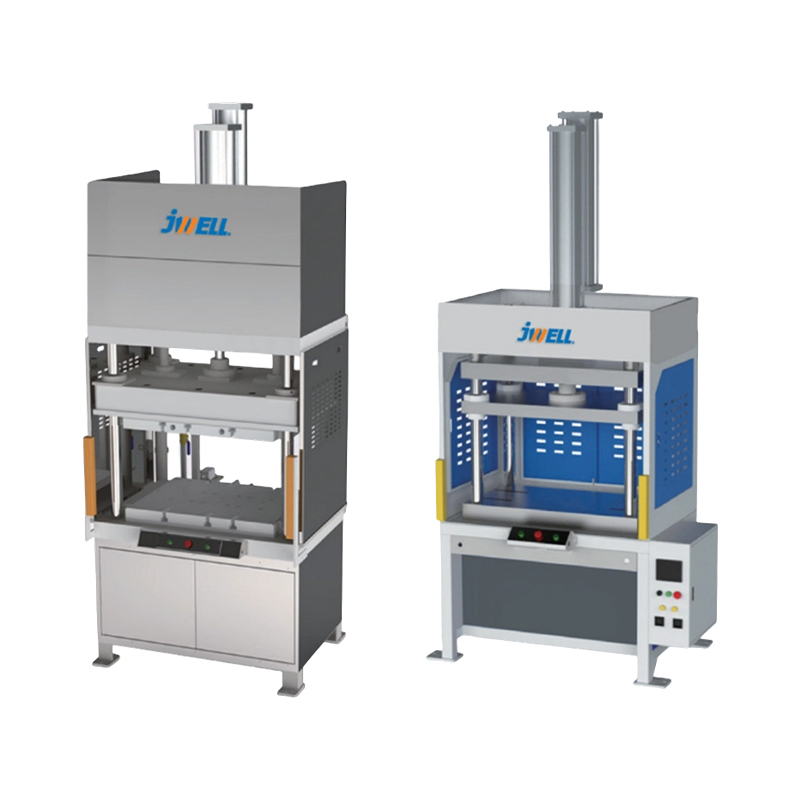
The HJ23-400 fully automatic pulp molding sampling production line is not just a piece of industrial equipment; it is a bridge connecting sustainable packaging design concepts with the reality of mass production. It is a fully automatic reciprocating pulp molding sampling production line.
·High-end electronics packaging: Produces precision inner liners for consumer electronic products such as earphones, smart watches, and drone components. The 425×425 mm mold platen size is ideally suited for manufacturing complex multi-cavity trays that demand extremely tight tolerances on corner radii and wall thickness.
·Cosmetics and luxury goods: Creates customized, eco-friendly inner supports for perfume bottles and skincare sets. The electric heating (D) option provides a smoother, silky-touch surface finish, which is critical for high-end brand image.
·Medical and laboratory consumables: Produces sterile, single-use pulp trays for pharmaceutical vial packaging. The oil heating (Y) option delivers superior thermal uniformity, minimizing warpage in thin-wall designs and thereby meeting stringent dimensional stability standards.
Practical use case:
A European automotive supplier used the HJ23-400D/Y to develop an alternative to plastic foam for its headlamp packaging. By employing the reciprocating forming process and custom tooling, they achieved a 100 mm deep cup-shaped structure within a 120-second cycle. The result was a 40% reduction in packaging volume and a fully biodegradable solution that passed ISTA 3A drop tests, while maintaining a production feed rate of 180 kg per 22-hour shift during the pilot phase.
Based on the original specifications, the machine’s competitive edge lies in its mechanical synergy and operational flexibility.
A. Triple composite drive system (servo + ball screw + electric cylinder)
Unlike conventional hydraulic or pneumatic presses that suffer from oil leakage and pressure instability, the HJ23 uses servo-driven electric cylinders with precision ball screws.
Advantage: Absolute position repeatability in the forming stroke reaches ±0.02 mm. This ensures uniform pulp fiber distribution across the entire 425×425 mm platen, eliminating the “weak spots” common in traditional machines that compromise product integrity.
Benefit: Energy savings up to 35% compared with hydraulic systems, because the servo motor consumes power only during the pressing phase and draws none during standby hold-pressure.
B. Dual heating flexibility (D/Y configuration)
The model designation explicitly offers either electric heating (D) or oil heating (Y), which is uncommon in a single prototyping platform.
Electric heating (D): Suitable for rapid temperature rise (0–200°C in just 18 minutes) and for lab environments where frequent temperature changes are needed for different pulp formulations (e.g., bamboo vs. bagasse).
Oil heating (Y): Provides a thermal buffer that maintains ±1°C temperature uniformity across the hot-press platen. This is critical for tall products (up to 100 mm), where uneven heating can cause sidewall collapse or wrinkling.
C. Wide process window (40–180 s/cycle)
Cycle-time variability is not a weakness but a strategic feature.
At 40 seconds, the machine operates in “thin-wall rapid prototyping” mode, suitable for producing flat trays or lids with a basis weight of 200–300 g/m².
At 180 seconds, it switches to “high-density structural” mode, producing thick, rigid parts such as heavy-duty electronics packaging or horticultural pots that require deep drawing and high compressive strength.
The quality assurance for the HJ23-400D/Y is a closed-loop process integrating online monitoring with off-line laboratory verification. Below is our recommended standard 5-step QC protocol for operators:
|
Stage |
Monitored Parameter |
Instrument / Method |
Acceptance Criteria |
|
1. Pulp consistency |
Freeness (°SR) and consistency (%) |
Canadian Standard Freeness Tester & Consistency Meter |
Fine surface: 18–22°SR; high-absorption products: 12–15°SR |
|
2. Forming vacuum |
Negative-pressure stability during dewatering |
Digital vacuum sensor (mounted on manifold) |
-0.06 to -0.08 MPa; deviation ≤ 2% over 10 cycles |
|
3. Dimensional TPS |
Length, width, height (critical for 100 mm tall products) |
CMM or vision measuring system |
Tolerances: X/Y ±0.15 mm; Z (height) ±0.2 mm |
|
4. Hot-press temperature distribution |
Surface temperature uniformity |
12-point thermal imager (across the full platen) |
Oil heating: max-min difference ≤ 3°C; electric heating: ≤ 5°C |
|
5. Mechanical strength |
Edge crush test (ECT) and drop test |
ECT compression tester & free-fall drop tester |
Industrial grade ECT ≥ 8 kN/m; no structural cracks after 1.2 m drop |
In-process control (IPC):
The machine’s PLC automatically records the forming pressure curve for each cycle. If the peak pressure deviates by more than 5% from the setpoint (due to screen clogging or pulp consistency drift), the system triggers an audible/visual alarm and pauses the discharge conveyor, preventing defective molds from entering the drying stage.
| Model | HJ23-400D/Y |
| (D means electric heating, Y means oil heating) | |
| Outer dimension | L5200*W3000*H2500mm |
| Platen size | 425*425mm |
| Equipment weight | 3T |
| Forming method | Reciprocating |
| Max. product height | 100mm |
| Machine drive mode | Servo+screw+electric cylinder |
| Capacity | 80-200kg/22H |
| Cycle time | 40-180 seconds/drop |
Q1: Can this machine handle 100% bamboo pulp, or does it require a blended ratio?
A: The reciprocating forming mechanism is robust enough to process 100% bamboo fibers with a length of 2.5–3.5 mm. However, we recommend starting with a 70/30 (bamboo/bagasse) blend during the initial 40-second cycle trials. Pure bamboo pulp tends to have higher drainage resistance, which may extend the cycle to 60–70 seconds. We have successfully tested 100% wheat-straw pulp on this model using the oil-heating option to compensate for its higher moisture content.
Q2: The specification states “80–200 kg/22H.” How do I calculate the specific output for a 15 g product?
A: Taking 200 kg (lightweight tray benchmark) as an example:
200 kg/22H → approximately 9.1 kg/hour.
For a 15 g product, assuming a 4-cavity mold: 9.1 kg/h / (0.015 kg × 4) = approximately 152 pieces/hour.
This calculation is accurate at a 40-second cycle. If the product height approaches 100 mm, the output is expected to drop toward the 80 kg range due to increased dewatering time.
Q3: What is the maintenance interval for the servo-driven electric cylinders?
A: The ball screws and electric cylinder assemblies require grease replenishment every 2,000 operating hours (approximately 3 months under 22-hour/day operation). We offer an automatic lubrication kit as an optional accessory. In a recent on-site test with a Thai packaging manufacturer, these cylinders maintained ±0.02 mm positional accuracy for over 8,000 hours without major overhaul, thanks to the sealed scraper system that prevents pulp splash contamination.
Q4: We change molds 3 times per day. How long does a typical mold change take?
A: The HJ23 is equipped with a quick-mold-change platen with hydraulic clamping. A standard mold change (including hot-platen stabilization time) takes approximately 25–35 minutes for one operator, assuming the mold weighs less than 150 kg. For the 425×425 mm size, we also offer a mold cart with locating pins, which can reduce the changeover time to under 20 minutes for experienced technicians.
Q5: Is the machine compatible with water-based coatings (e.g., PVA or bio-wax) for moisture resistance?
A: Yes. Although the HJ23 itself is a forming and hot-pressing line, its reciprocating design allows integration of an optional spray-coating station between the forming mold and the hot press. Some of our users producing coffee-cup trays have successfully applied 3–5 gsm of PVA coating inline, achieving a water contact angle >110° without reducing the cycle time below 90 seconds.
Q6: Which should I choose – electric heating (D) or oil heating (Y)?
If you need rapid temperature rise and frequent material changes (R&D scenarios), choose electric heating (D). If your product is tall or has thick walls and requires a uniform temperature field (±1°C) to avoid deformation, choose oil heating (Y). Both heating methods can be configured on the same machine.




Pipe Extrusion Production Line
Plastic Shredder Crusher Machine

Tel: +86-19057068112

E-mail: [email protected]

Company Address
No. 128 Qingfeng Road, Xieqiao Town, Haining City, Jiaxing City, Zhejiang Province

19057068112

 English
 русский