
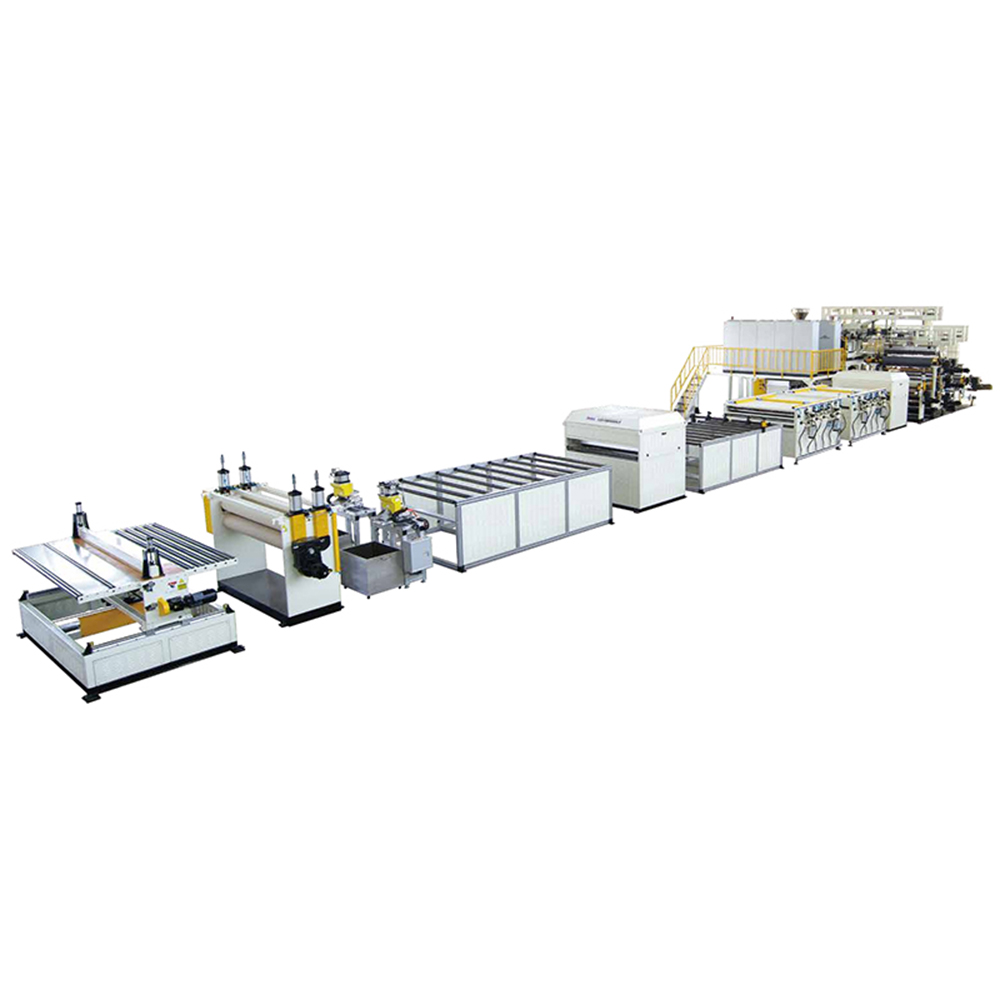
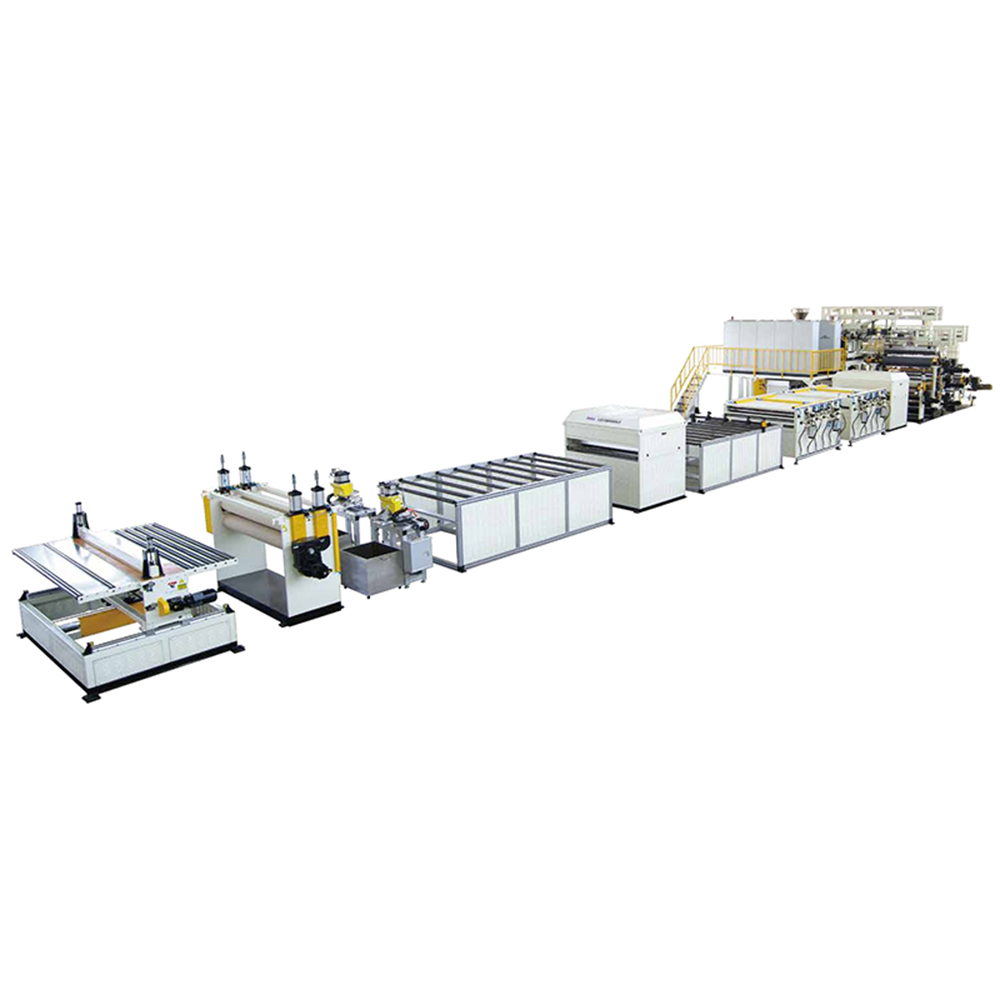
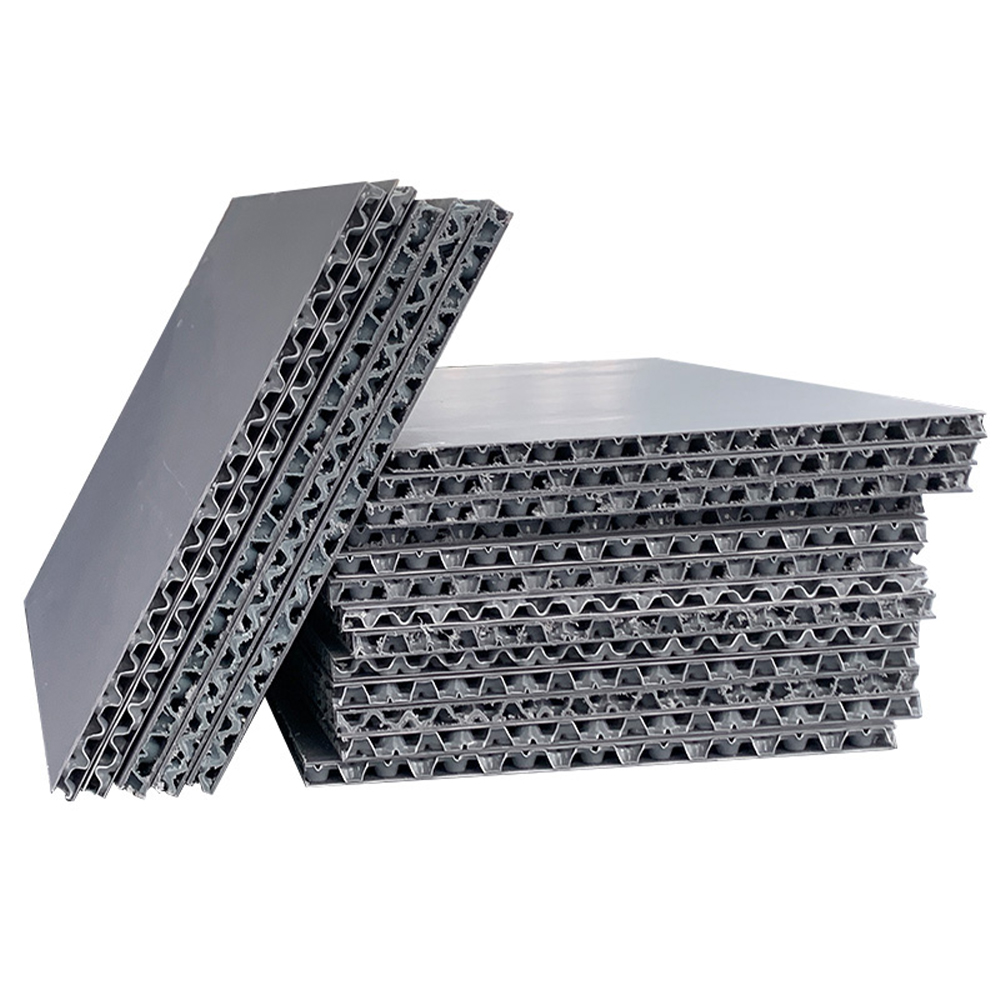
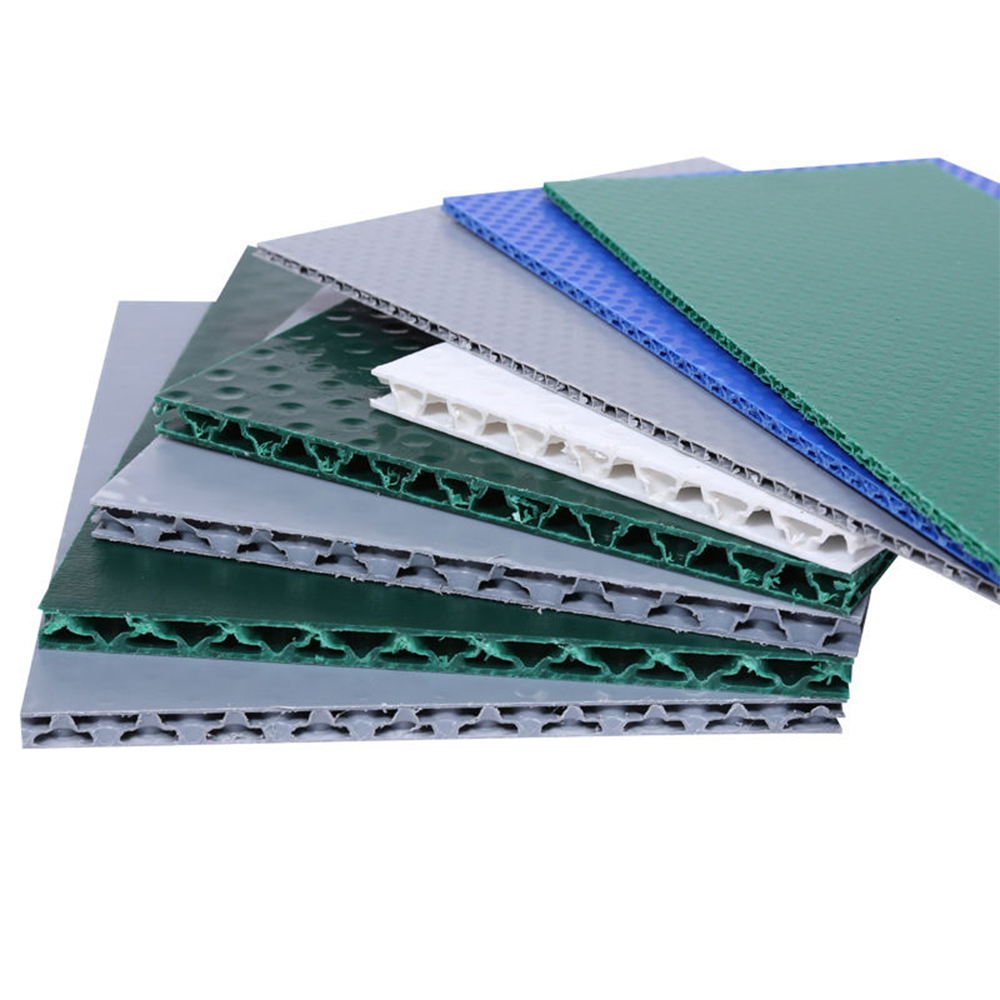
The PP honeycomb board extrusion line is a specialized production system for manufacturing lightweight and rigid polypropylene honeycomb boards. Based on the technical specifications of models JWS75/75/75 and JWS100/100/100, these lines are designed for high efficiency and versatility to meet a wide range of industrial application requirements.
PP honeycomb boards produced by these extrusion lines are widely used in industries requiring high strength-to-weight ratio, chemical resistance, and moisture resistance. Below are typical applications based on actual width and thickness ranges:
Automotive Industry
Used for interior luggage compartment liners, headliners, and floorings. Boards with thickness 2–8 mm and width up to 1600 mm are commonly used in RVs and light commercial vehicles. For example, a German RV manufacturer uses the JWS75/75/75 line to produce 1500 mm wide, 5 mm thick honeycomb boards, replacing heavier plywood and reducing vehicle weight by 35%.
Signage & Display Boards
The smooth PP skin combined with a honeycomb core forms strong, weather-resistant signage. Boards with thickness 6–12 mm and width 1200–2000 mm are ideal for outdoor billboards and exhibition stands. A UK signage company reported a 50% reduction in installation time using PP honeycomb boards produced on the JWS100/100/100 line compared to aluminum composite panels.
Packaging & Logistics
Reusable transport pallets and dunnage plates. Thickness up to 20 mm offers high impact resistance to protect heavy automotive parts during shipping. A logistics supplier in Poland switched from corrugated plastic to 15 mm thick PP honeycomb pallets, achieving over 100 use cycles without structural failure.
Construction & Furniture
Lightweight partition walls, suspended ceilings, and modular furniture. The 2–12 mm range is suitable for wall cladding, while 15–20 mm boards can be used as table tops. A Spanish prefabricated house manufacturer uses 1800 mm wide, 10 mm thick boards for interior walls, reducing material handling costs by 40%.
Based on technical parameters and field feedback, the key advantages are:
High Output with Good Stability
The JWS75/75/75 has a capacity of 350–450 kg/h, and the JWS100/100/100 can reach 600–700 kg/h, supporting 24/7 continuous production for large orders. A Turkish packaging plant reduced from three shifts to two after upgrading to the JWS100 line.
Product Flexibility
Width can be adjusted from 1200 mm to 2000 mm (JWS100) without changing the die. Thickness range 2–20 mm covers both thin and thick boards.
Example: A Polish recycler processes post-industrial PP waste on the same line to produce 3 mm thin boards for office folders and 18 mm thick boards for heavy-duty pallets.
High Energy Efficiency and Material Savings
Direct extrusion of the honeycomb structure saves 30–40% PP material compared to a solid board of equivalent stiffness. The three-screw design (75/75/75) ensures melt homogeneity with lower back pressure, reducing energy consumption per ton of output by approximately 15%.
Excellent Mechanical Properties
PP honeycomb boards offer outstanding stiffness-to-weight ratio. Tests by a Dutch laboratory show that a 10 mm thick board produced on the JWS100 line withstands a point load of 120 kg over a 50 cm² area without permanent deformation.
Environmentally Friendly and Recyclable
100% recyclable polypropylene. Production waste can be reground and re-extruded at ratios up to 30% without affecting quality. Many customers use the line to produce boards from recycled PP, thanks to its wide processing window.
To ensure each batch meets international standards, the JWS series implements a rigorous quality control process. Below is a typical workflow used by experienced manufacturers:
In-Process Quality Checks
Melt temperature and pressure monitoring – Sensors on each screw barrel ensure rheological stability. For PP, target melt temperature is 190–230°C with pressure fluctuation ≤ ±2%.
Thickness control – Online ultrasonic or laser thickness gauge (installed after the calender rolls) measures thickness across the board width every 100 mm. Tolerance: ±0.1 mm for thickness ≤10 mm; ±0.2 mm for 10–20 mm.
Width and trimming – Automatic saw with encoder feedback ensures width accuracy within ±2 mm.
Physical and Mechanical Tests (per shift or batch)
Density test – Cut a 100×100 mm sample, weigh and calculate. Target density for honeycomb core: 80–150 kg/m³ (depending on cell size).
Flatwise compression strength – According to ASTM C365. Minimum 1.2 MPa for 10 mm thick board. JWS lines typically achieve 1.5–1.8 MPa.
Impact resistance – Drop dart test (1 kg, 500 mm height). Requirement: no cracks or delamination.
Heat aging – 72 h at 80°C, then visual inspection. PP boards show no warping or surface bubbles.
Final Inspection and Documentation
Each master board (e.g., 2000×4000 mm) is visually inspected for surface defects (scratches, bubbles, warping).
Traceability: batch number printed on the edge, test reports kept for 10 years.
Example: A Japanese automotive supplier required a PPAP level 3 report. The built-in data logging system on the JWS line provides all necessary Cpk values for thickness, width, and weight per square meter.
| Model | Suitable material | Products width(mm) | Products thickness(mm) | Capacity(kg/h) |
| JWS75/75/75 | PP | 1200-1600 | 2-12 | 350-450 |
| JWS100/100/100 | PP | 1200-2000 | 2-20 | 600-700 |
Q1: Can the same line produce both thin boards (2 mm) and thick boards (20 mm) without changing screws?
A: Yes. The JWS three-screw design has a high compression ratio (3:1) that accommodates the 2–20 mm thickness range. However, for 2 mm thin boards, a flow restrictor ring and increased cooling roll speed are recommended. For 20 mm thick boards, reduce the haul-off speed and increase the melt temperature (220°C) to ensure proper honeycomb formation. A Belgian customer produces 2.5 mm and 18 mm boards on the same JWS75 line, requiring only 30 minutes to adjust the die lip gap.
Q2: What are the typical cell size and shape of the honeycomb structure?
A: The extruded honeycomb is hexagonal. Standard cell diameter is 6–12 mm (adjustable via die design). The JWS100 line can achieve honeycomb wall thickness of 0.3–0.6 mm. Smaller cells (6 mm) provide higher strength; larger cells (12 mm) further reduce weight.
Q3: How to prevent warping of wide boards (e.g., 2000 mm wide)?
A: Warping is controlled by three factors: (1) Uniform cooling – The line uses 4 independently temperature-controlled rolls (two upper, two lower) with a temperature difference of 5°C. (2) Balanced haul-off tension – Servo-driven haul-off with feedback sensors, tension fluctuation <3%. (3) Annealing station – Optional online hot-air tunnel (120°C) to eliminate internal stresses. A Spanish customer producing 2000 mm wide, 5 mm thick boards reports warpage less than 2 mm per meter length.
Q4: Can I use recycled PP (post-industrial or post-consumer)?
A: Yes, up to 40% clean, label-free post-industrial recyclate can be used without venting. For post-consumer recycled PP, a melt filter (120 mesh) and a vented screw are recommended. A French recycler uses 70% recycled PP from yogurt cups on a JWS75 line to produce 8 mm boards for pallets – but output drops by about 15%. Always test your specific recycled material first.
Q5: What is the typical power consumption per kg of output?
A: For the JWS100 line running at 650 kg/h, total installed power is approximately 210 kW (including extruders, haul-off, heating, and cooling). Actual energy consumption is about 0.32–0.38 kWh per kg of board. This is 20% lower than twin-screw lines because the three-screw design distributes torque more efficiently.
Q6: How often do I need to replace the screws or barrels?
A: For plain PP (without fillers such as talc or glass fiber), screw life is about 12,000–15,000 operating hours. Bimetallic barrel liner life is 20,000 hours. If using highly contaminated recycled PP, reduce inspection intervals to 6,000 hours. An Italian customer using a JWS75 line for virgin PP replaced screws after 5 years of two-shift operation.
Q7: What is the maximum line speed?
A: For thin boards (2–3 mm), the JWS100 line can reach speeds up to 4.5 m/min. For 20 mm thick boards, speed is reduced to 0.8–1.2 m/min to ensure proper honeycomb formation and cooling. The limiting factor is the cooling section length – the standard cooling section is 12 m, but for 20 mm thick boards at 1 m/min, an additional 6 m extension is recommended.




Pipe Extrusion Production Line
Plastic Shredder Crusher Machine

Tel: +86-19057068112

E-mail: [email protected]

Company Address
No. 128 Qingfeng Road, Xieqiao Town, Haining City, Jiaxing City, Zhejiang Province

19057068112

 English
 русский