
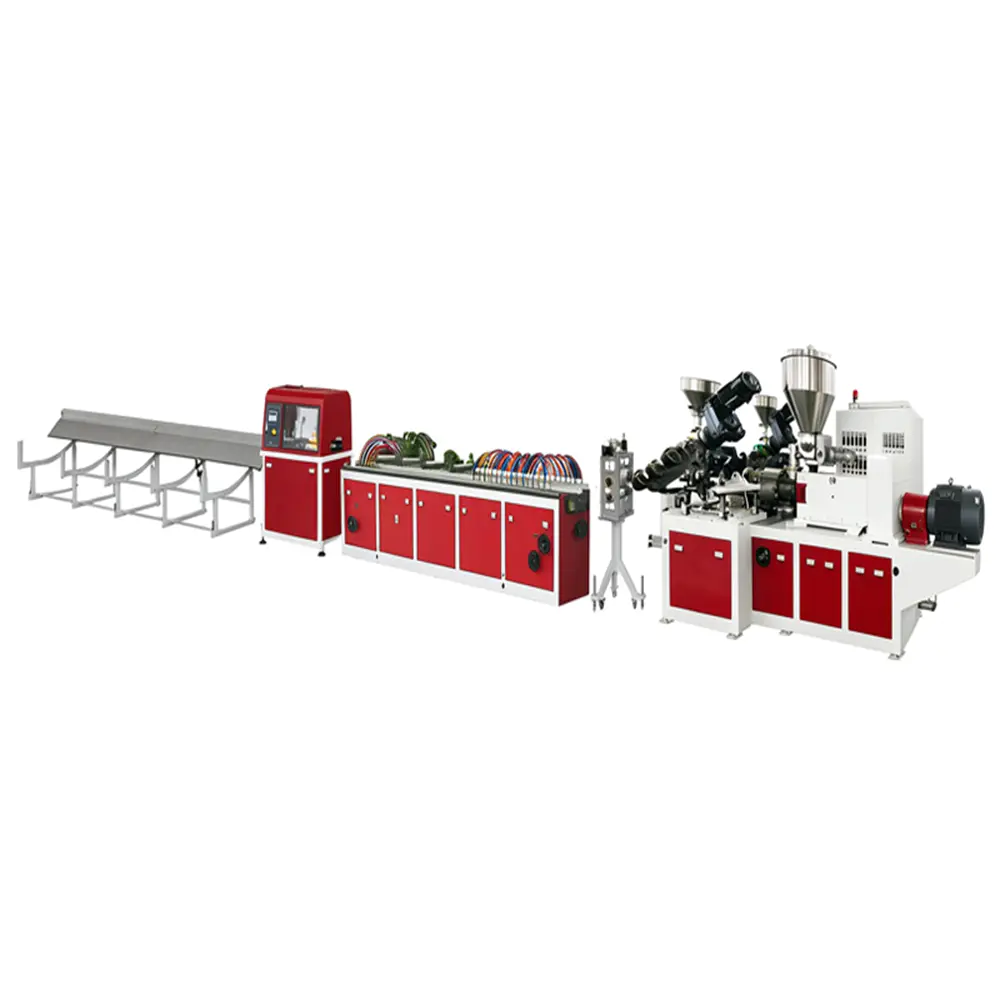
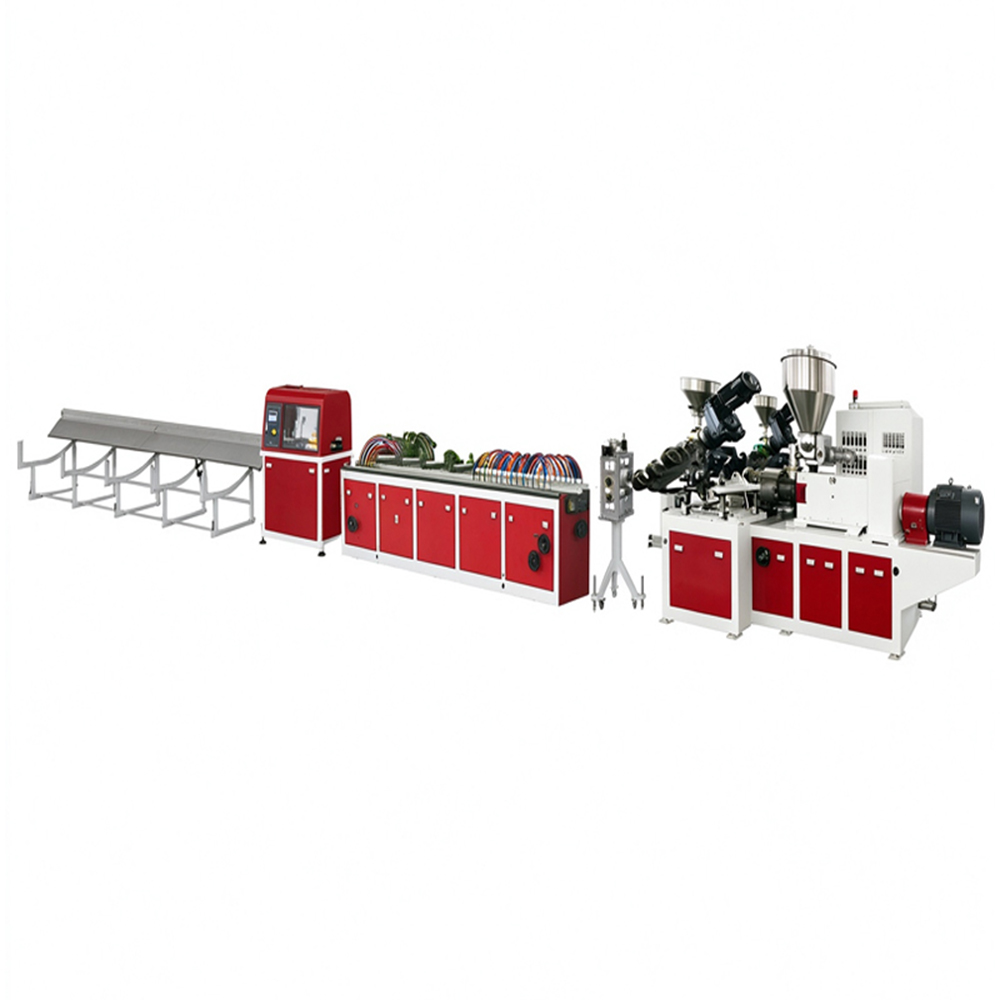
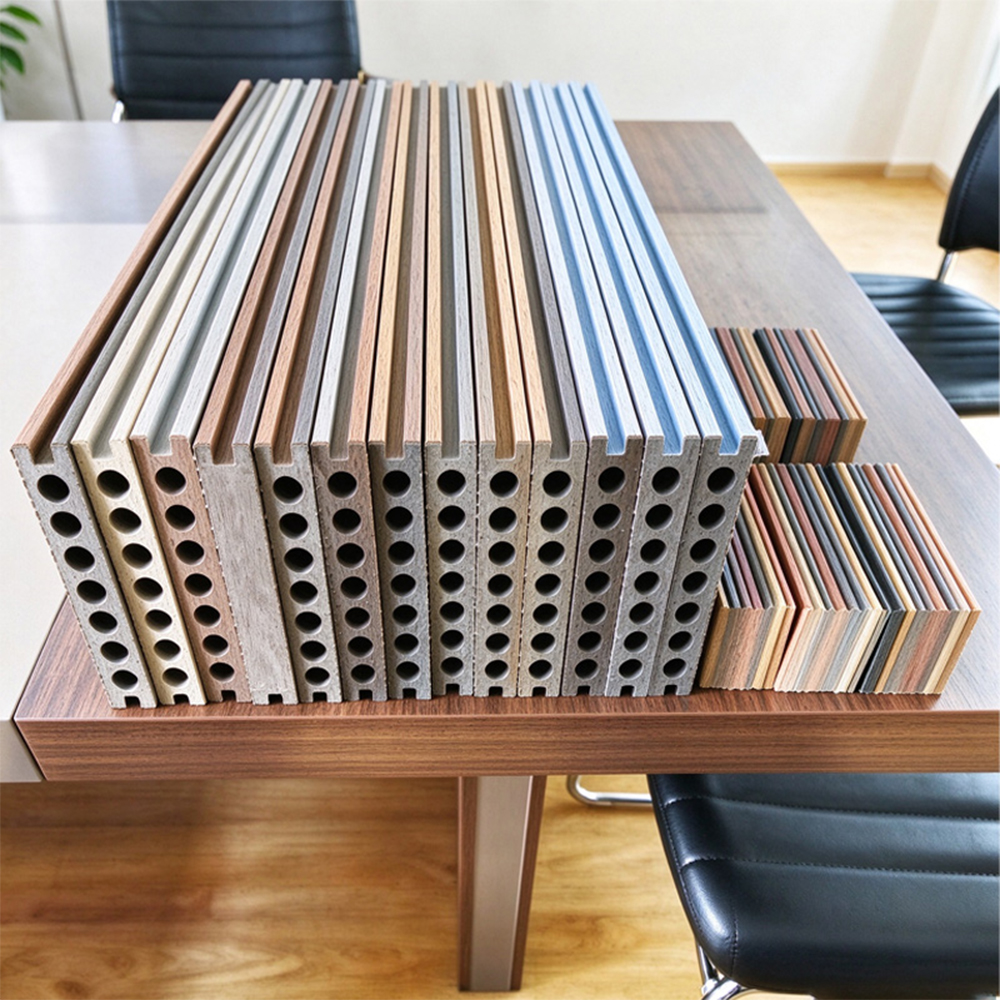
PE and PP Wood-Plastic Composite (WPC) flooring extrusion lines are designed for manufacturers seeking stable output, energy efficiency, and durable product quality. Our SJZ series conical twin-screw extruders – models SJZ65, SJZ72, and SJZ80 – are optimized for wood-plastic profiles, offering precise screw geometry and powerful drive systems.
This series of production lines is widely used for producing:
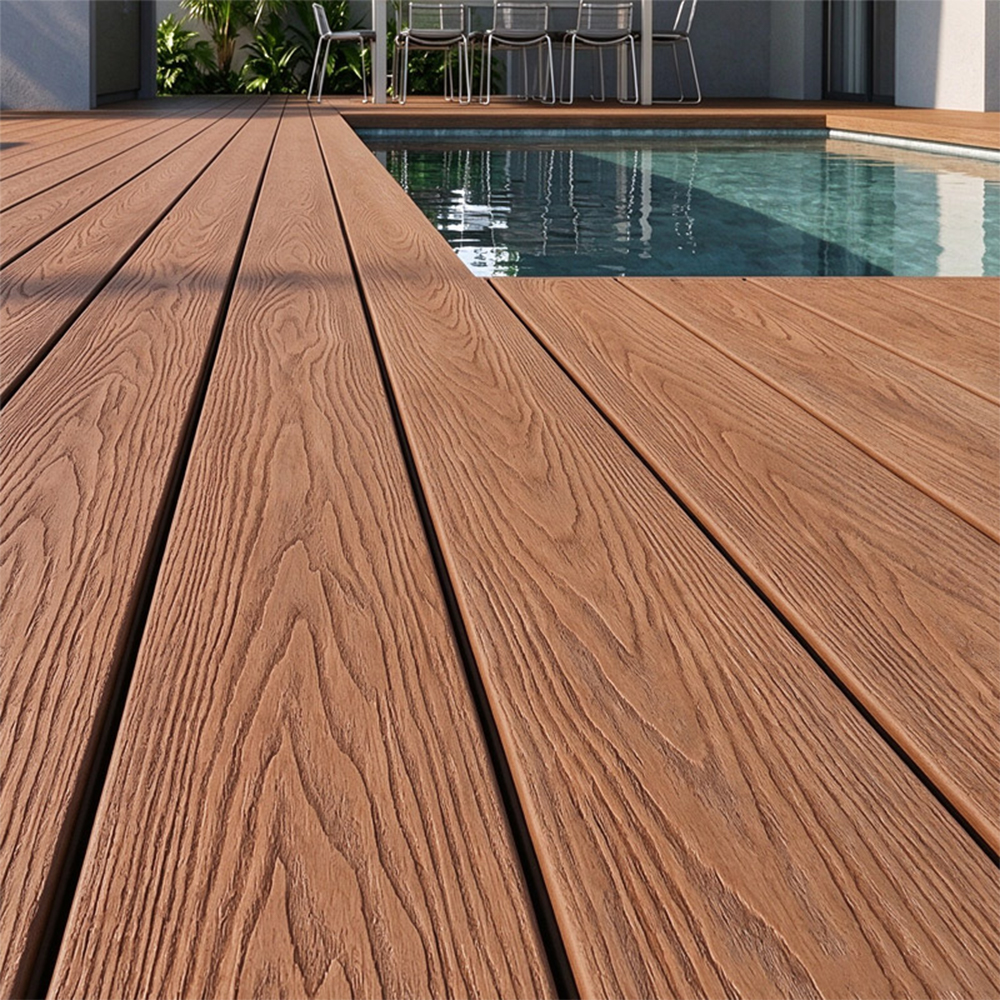
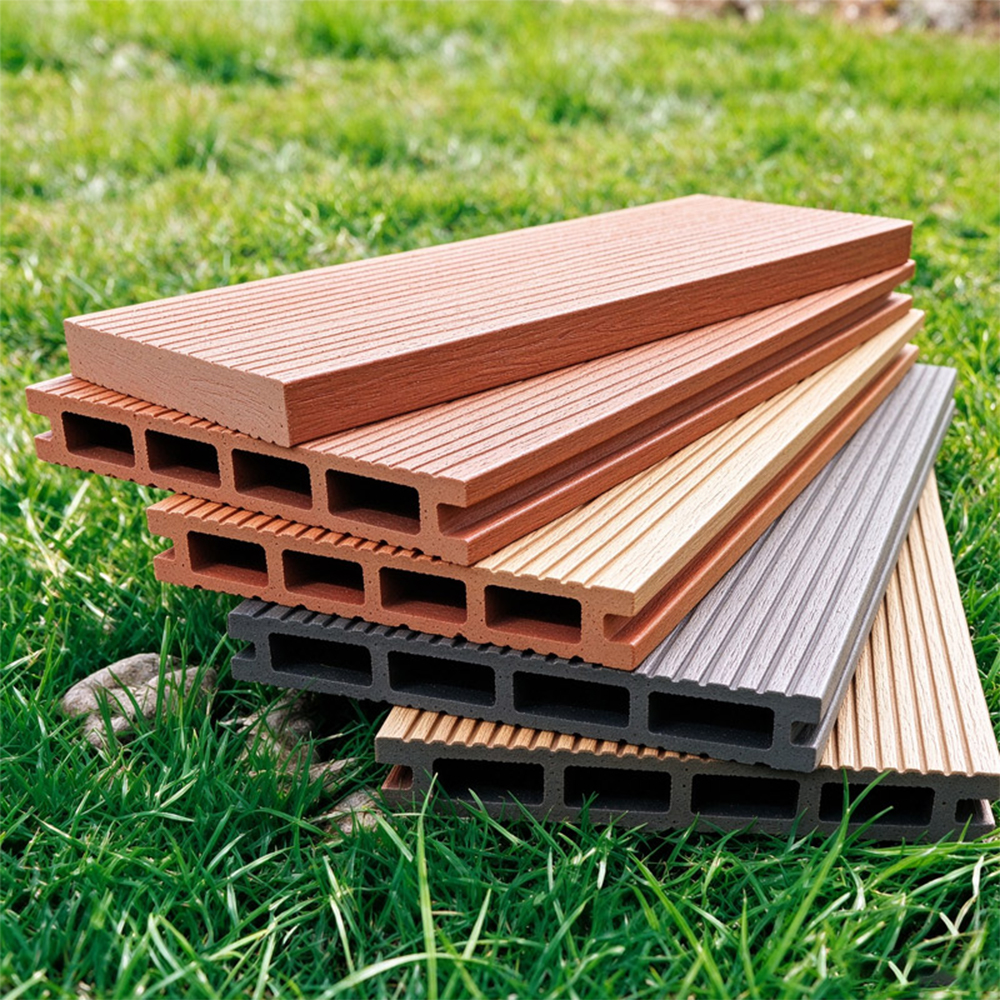
Outdoor WPC decking and flooring (hollow or solid profiles)
Indoor high water-resistant PE/PP WPC floor tiles
Co-extruded WPC boards with protective layers (e.g., UV-resistant or scratch-resistant layers)
Automotive interior profiles (using PP + natural fibers)
Real-world case: A flooring manufacturer in Vietnam installed an SJZ80 production line to produce 140×25 mm hollow decking. Under screw speeds of 18–38 rpm and a main motor power of 55 kW, a stable output of 380 kg/h (close to the maximum 400 kg/h) was achieved, operating 22 hours per day for six months without screw wear issues. The final product passed ASTM D7032 certification for outdoor decking.
|
Model |
Screw (mm) |
Motor Power (kW) |
Output (kg/h) |
|
SJZ65 |
65/132 |
37 |
150–180 |
|
SJZ72 |
72/152 |
45 |
220–300 |
|
SJZ80 |
80/162 |
55 |
260–400 |
High Torque & Low Shear
The conical twin-screw design increases the surface area in the compression zone. For example, the SJZ72 is equipped with a 45 kW motor, with specific torque >12 Nm/cm³, allowing filler content up to 60% (wood flour/rice husk flour) without degrading the polymer chain.
Wide Output Range per Model
The SJZ80 can run from 260 kg/h (processing high MFI PP + 50% wood flour) to 400 kg/h (PE + 40% calcium carbonate). This flexibility allows one production line to be used for multiple formulations.
Energy Efficiency
Measured energy consumption of SJZ65: 28–32 kWh per ton of WPC flooring profile, which is 15% lower than parallel twin-screw extruders of similar output.
Stable Screw Cooling System
Integrated screw core cooling prevents material from burning in the compression zone – critical for wood-plastic composites, as overheating leads to black streaks.
Each extrusion line undergoes a 5-stage QC protocol before delivery:
Stage 1 – Component Inspection
Screw and barrel hardness ≥62 HRC, nitrided layer depth 0.5–0.7 mm.
Heating/cooling zone test: temperature deviation ≤±1.5°C after 30 minutes of stabilization.
Stage 2 – No-Load Running Test
Run the extruder without material for 4 hours. Monitor:
Main motor current fluctuation <5%
Gearbox oil temperature rise ≤25°C
Screw tip radial runout ≤0.03 mm
Stage 3 – Production Trial Run with WPC Formulation
Typical formulation: PE/PP (35%), wood flour (50%), coupling agent (3%), lubricant (2%), calcium carbonate (10%). We measure:
Melt temperature (target 165–185°C for PE, 190–210°C for PP) – excessive deviation triggers alarm.
Output stability – weigh five consecutive 1-minute samples; coefficient of variation ≤3%.
Line pressure (normal range 12–18 MPa) – pressure drop indicates screw wear or poor plasticization.
Stage 4 – Final Product Testing (flooring samples)
Dimensional accuracy – width tolerance ±0.3 mm, thickness tolerance ±0.2 mm.
Flexural strength ≥25 MPa (ASTM D790).
Water absorption (24-hour immersion) for PE-WPC ≤1.5%.
Boiling water test (2 hours at 100°C) – no blistering or delamination.
Stage 5 – Continuous Operation Test
Run the SJZ72 continuously for 48 hours at 260 kg/h. Record:
Energy consumption per unit (kWh/kg)
Temperature uniformity across 5 heating zones
Vacuum degassing efficiency (removal of wood flour moisture)
Real-world case: During QC of an SJZ80 line destined for Poland, the 48-hour test revealed temperature fluctuations of 4°C in zone 4. We replaced the faulty solid-state relay and retested – after repair, all zones maintained fluctuations within ±0.8°C. The customer received complete test logs and videos.
|
Model
|
mm
|
Power of main motor (KW)
|
Output (kg/h)
|
|
SJZ65
|
65/132
|
37
|
150-180
|
|
SJZ72
|
72/152
|
45
|
220-300
|
|
SJZ80
|
80/162
|
55
|
260-400
|
Q1: With a PP formulation using 50% wood flour and a target output of 300 kg/h, which model should be chosen?
A: The SJZ72 (max 300 kg/h) would run at full capacity with no margin for screw wear. We recommend the SJZ80 (rated 260–400 kg/h). Running at 300 kg/h means 75% load – longer screw life, lower melt temperature, and stable pressure. Example: A flooring manufacturer in Turkey switched from SJZ72 to SJZ80 and doubled screw service life from 12 months to 24 months.
Q2: When processing WPC, how often should the screw and barrel be replaced?
A: With good lubrication (external grease every 500 hours) and proper cooling, typical service life for SJZ65 is 18–24 months, and for SJZ80 is 24–30 months when processing abrasive wood flour. If wood flour fineness >60 mesh, a sacrificial coating (chromium or tungsten carbide) is recommended.
Q3: Can the same production line process both PE and PP?
A: Yes – but the temperature profile and screw venting must be adjusted. PE-WPC runs at 165–185°C, PP-WPC runs at 190–210°C. The SJZ series is equipped with quick-change vacuum ports (20 minutes for cleaning). A German customer uses the same SJZ72 line to produce PE decking in summer and PP automotive profiles in winter.
Q4: What causes rough surface or "orange peel" on WPC flooring boards?
A: Usually three causes:
Insufficient coupling agent (maleic anhydride grafted). Add 3–5 phr.
Wood flour moisture >2% – pre-dry to ≤1% or increase vacuum to -0.08 MPa.
Melt temperature too low – increase zone 3–4 temperature by 5°C. Our SJZ80 is equipped with a 55 kW motor, providing enough shear to raise melt temperature without reducing output.
Q5: How can I verify that the extrusion line achieves the claimed output before purchase?
A: We perform a Factory Acceptance Test (FAT) using your formulation. Example: For an Indian customer testing PP+60% rice husk flour with a target of 170 kg/h, we ran the SJZ65 at 178 kg/h for 6 hours, recorded data every 30 minutes, and sent the logs and die-face video.
Q6: For processing wood-plastic materials, how often do your screws and barrels generally need replacement?
A: This depends on wood flour fineness and lubrication maintenance. For common 60-mesh wood flour at 50% loading, the SJZ65 lasts about 18–22 months, and the SJZ80 can reach 26–30 months. The key is to add high-temperature grease to external bearings every 500 hours and ensure normal circulation of screw core cooling water – if water is cut off, the temperature inside the barrel instantly exceeds 230°C and accelerates wear. If your wood flour fineness exceeds 80 mesh (more abrasive), we recommend opting for tungsten carbide coated screws, which can extend replacement intervals to over 36 months. Actual record from our Polish customer: operating 20 hours per day, the SJZ80 was disassembled for inspection after 24 months, and the screw outer diameter wear was only 0.25 mm, still usable.
Q7: Can the same machine produce both PE wood-plastic flooring and PP wood-plastic flooring? Is the changeover troublesome?
A: Absolutely. The SJZ series control system has built-in multiple recipe storage. PE-WPC recommended melt temperature 165–185°C, PP-WPC 190–210°C – just recall the preset temperature curve on the touchscreen (about 20 seconds to switch). Physical cleaning is also easy: we designed a quick-opening vacuum vent; loosen four hand wheels to clean residual wood flour and carbon deposits – a skilled worker can complete it in 15 minutes. A German customer uses the same SJZ72 to produce PP automotive interior profiles (high rigidity) in winter and PE outdoor decking (high impact resistance) in summer; it has been alternating for three years without melt fracture or surface pitting due to material changes. Note: After changing materials, the first 30 kg of discharge should be treated as waste to avoid residual cross-contamination.


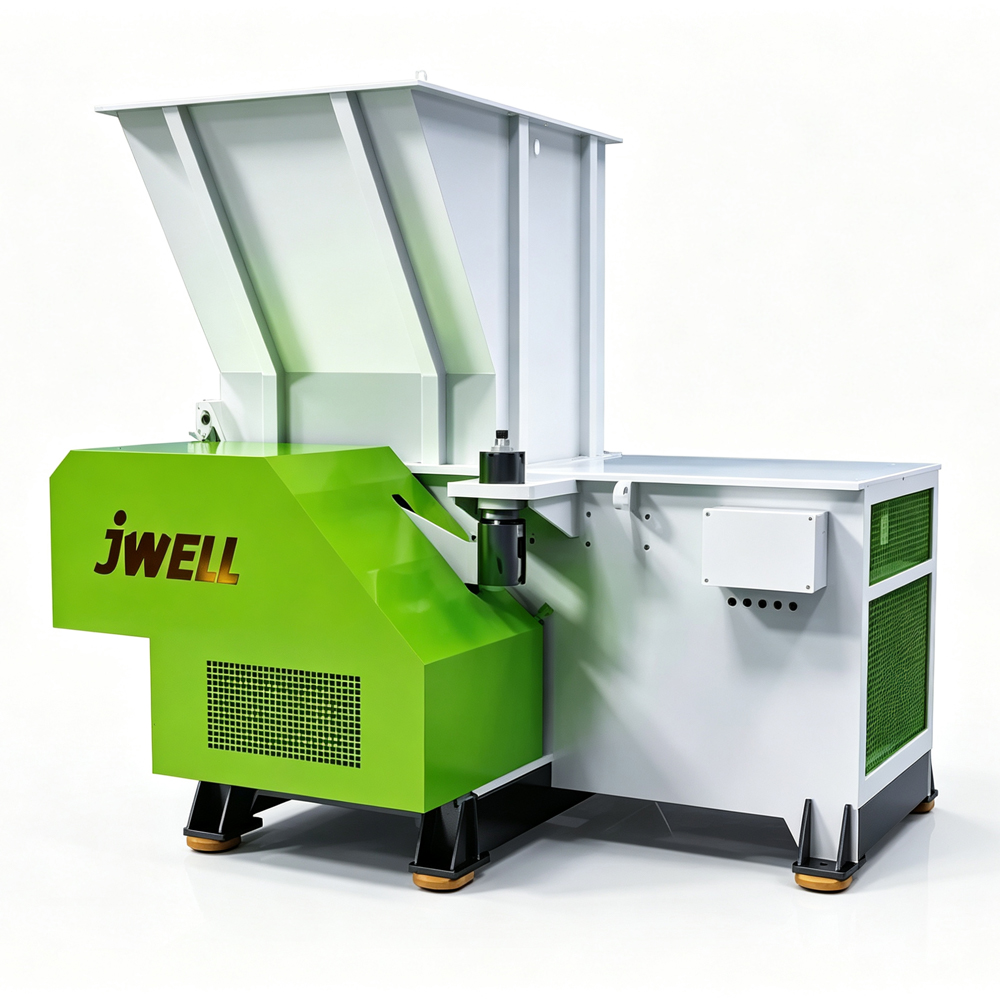


Pipe Extrusion Production Line
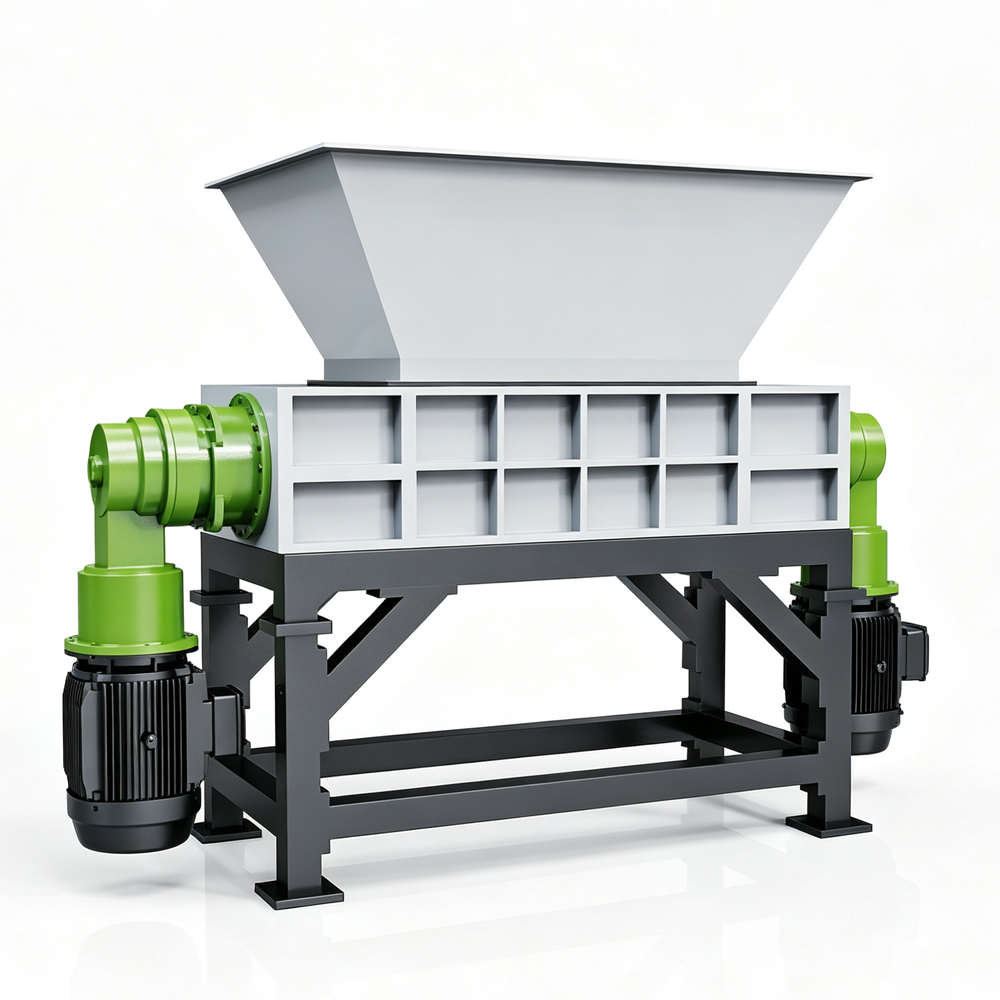
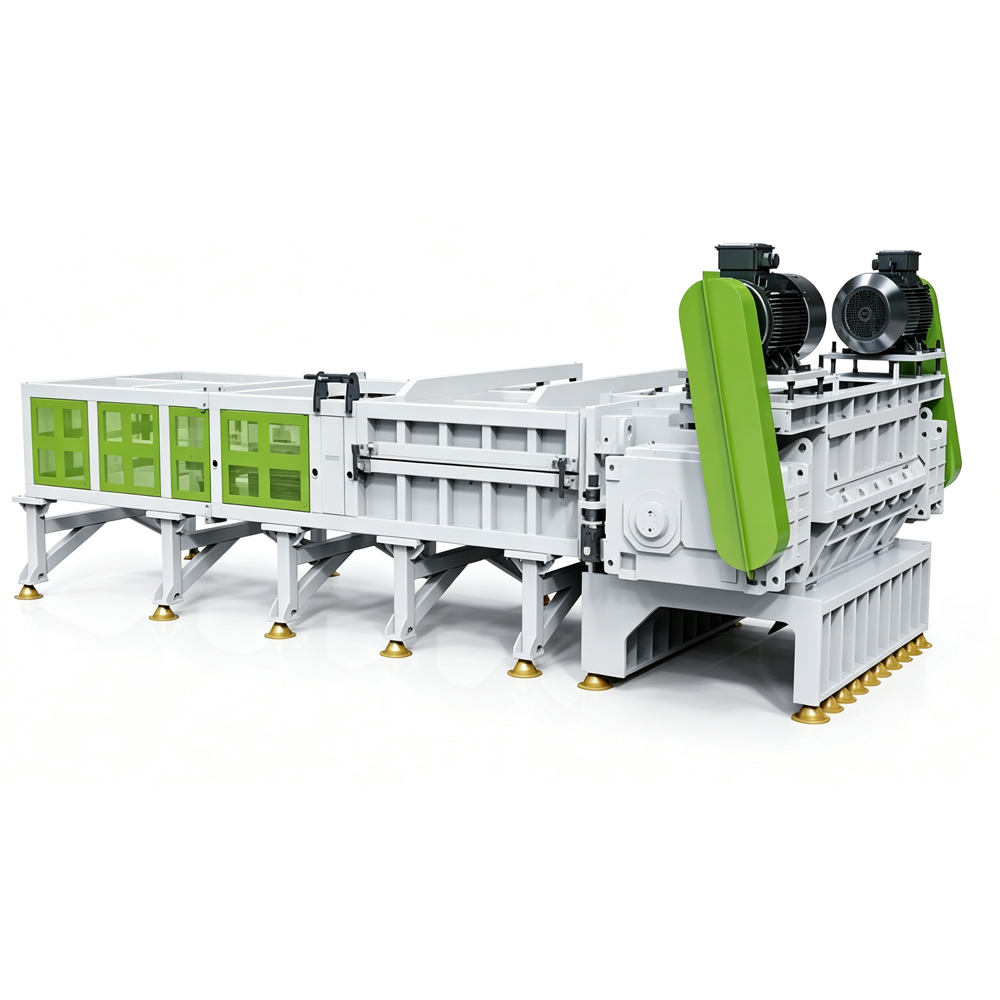
Plastic Shredder Crusher Machine

Tel: +86-19057068112

E-mail: [email protected]

Company Address
No. 128 Qingfeng Road, Xieqiao Town, Haining City, Jiaxing City, Zhejiang Province

19057068112

 English
 русский