
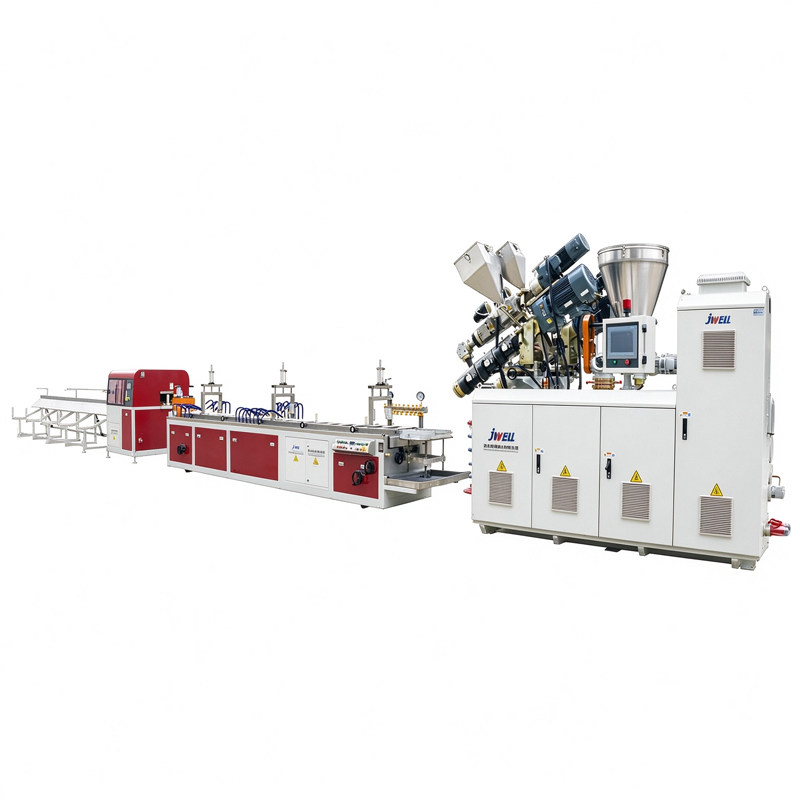
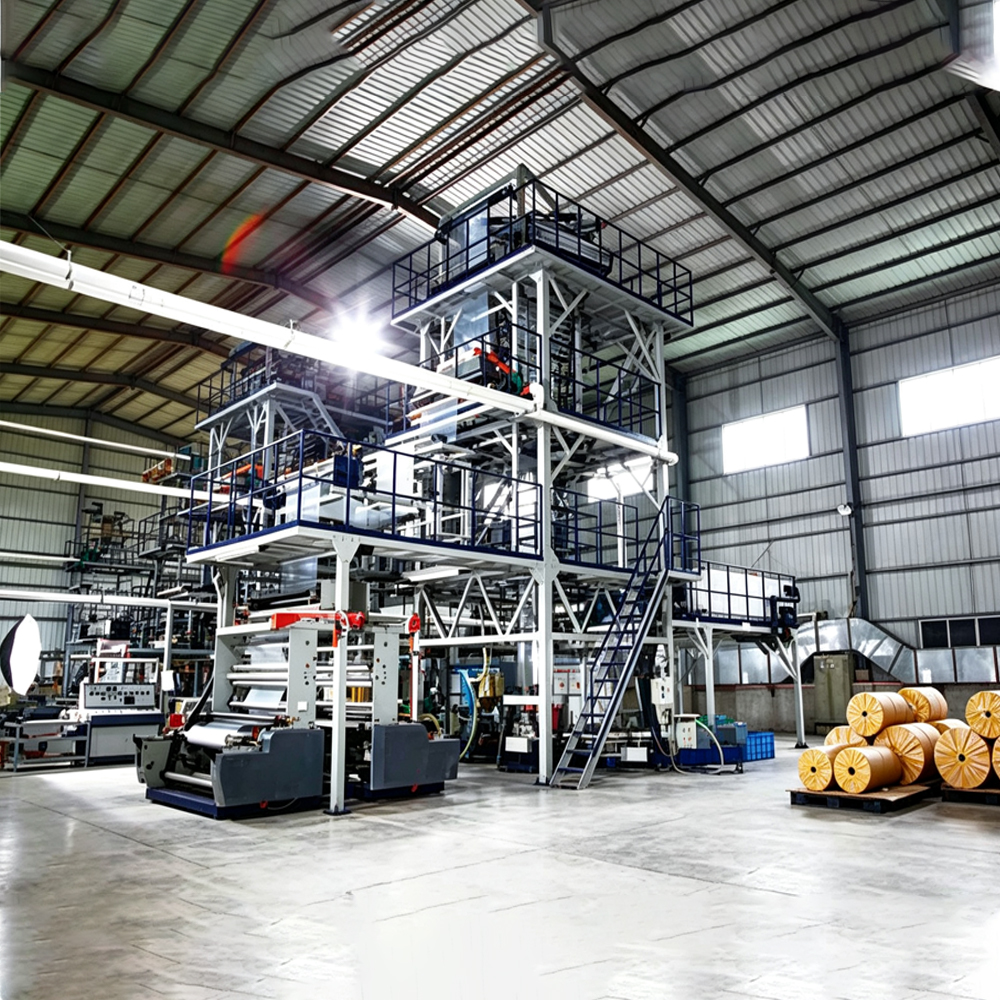
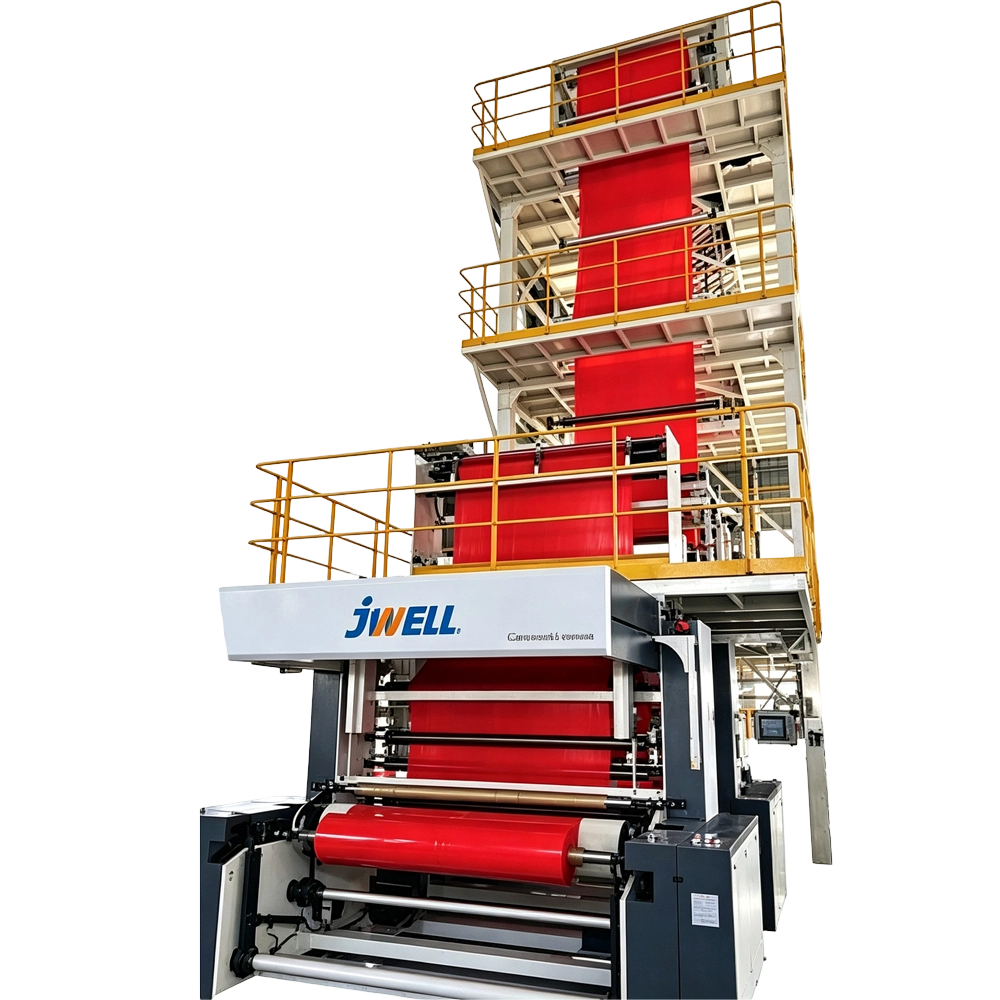
A PP EVA EVOH EVA PP multi-layer sheet co-extrusion line produces the barrier sheet used for the food packaging, the medical pouch, and the chemical container. The five layers are not decoration. Each one does a job. The PP outer layers give the stiffness and the heat resistance. The EVA tie layers bond the EVOH to the PP. The EVOH core blocks the oxygen and the aroma. The sheet comes out of the die as one piece, with the layers bonded but not mixed. For the packaging converter, the line is the equipment that builds the barrier into the sheet itself.
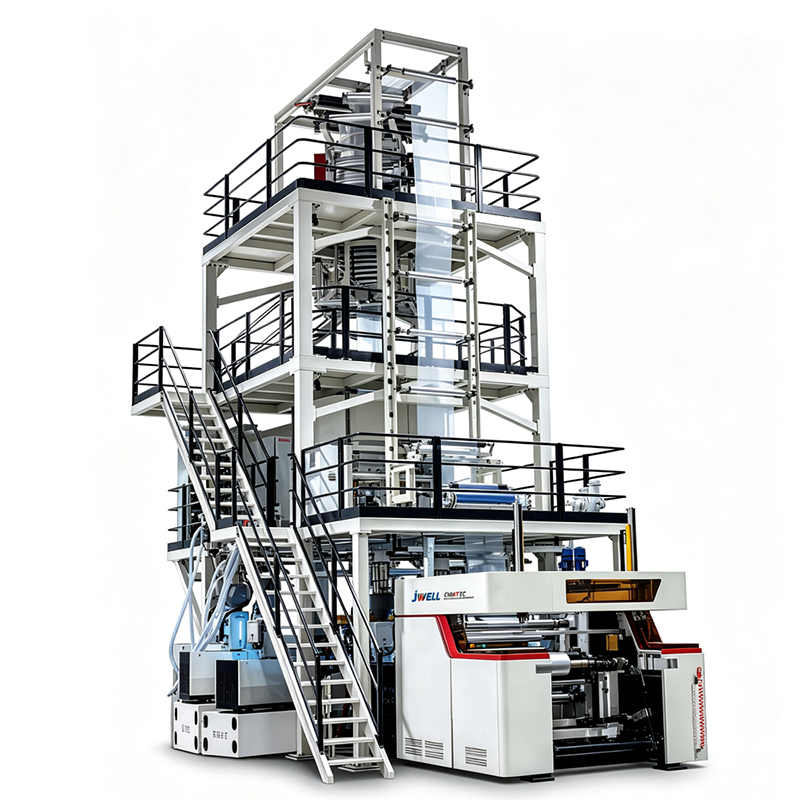
The line runs five extruders, one for each layer. The PP extruders feed the outer skins. The EVA extruders feed the tie layers. The EVOH extruder feeds the barrier core. The five melt streams converge in the feedblock. The feedblock arranges the layers in the order and keeps them distinct.
A PP EVA EVOH EVA PP multi-layer sheet co-extrusion line with the properly designed feedblock holds the layer ratios across the width. The EVOH core stays continuous. The tie layers stay bonded. The sheet that loses the EVOH continuity loses the barrier.
The combined melt enters the flat die as the stratified flow. The die spreads the sheet to the width without the layer mixing. The die manifold has to avoid the dead spots where one polymer stagnates and degrades. A PP EVA EVOH EVA PP multi-layer sheet co-extrusion line with the streamlined manifold produces the sheet with the clean interfaces.
The EVOH is the barrier, but it is the moisture-sensitive. The EVOH absorbs the water and loses the barrier property when it is wet. That is why the EVOH sits in the core, between the two PP skins, and the tie layers. The PP keeps the moisture away from the EVOH. The line that keeps the layer structure intact keeps the barrier working.
The sheet exits the die and enters the three-roll stack. The rolls cool the sheet and set the thickness and the surface. The line with the proper roll temperature and the gap control produces the sheet with the uniform thickness.
Here is what a PP EVA EVOH EVA PP multi-layer sheet co-extrusion line has to deliver:
The same co-extrusion discipline runs the PE/PP Wood-Plastic Composite Extrusion Line. The WPC line combines the polymer with the wood fiber and forms the decking, the fencing, and the profile. The layer control and the die design matter in the same way. The producer who runs both lines controls the packaging sheet and the composite profile from the same technical base.
The food packaging uses the sheet for the barrier tray and the lidding. The medical packaging uses the sheet for the sterile pouch. The chemical packaging uses the sheet for the solvent-resistant container. The EVOH core blocks the oxygen and the aroma and extends the shelf life.
The EVOH layer breaks because the flow was unstable or the temperature was wrong. The barrier fails. The tie layer delaminates because the EVA was not compatible with the adjacent polymer. The right grade holds. The sheet curls because the cooling was uneven. The balanced cooling holds the flat.
A PP EVA EVOH EVA PP multi-layer sheet co-extrusion line stacks five polymers into one sheet. The feedblock arranges. The die spreads. The rolls cool. Choose a line with the right extruders, the right feedblock, and the right thickness control.




Pipe Extrusion Production Line
Plastic Shredder Crusher Machine

Tel: +86-19057068112

E-mail: [email protected]

Company Address
No. 128 Qingfeng Road, Xieqiao Town, Haining City, Jiaxing City, Zhejiang Province

19057068112

 English
 русский