
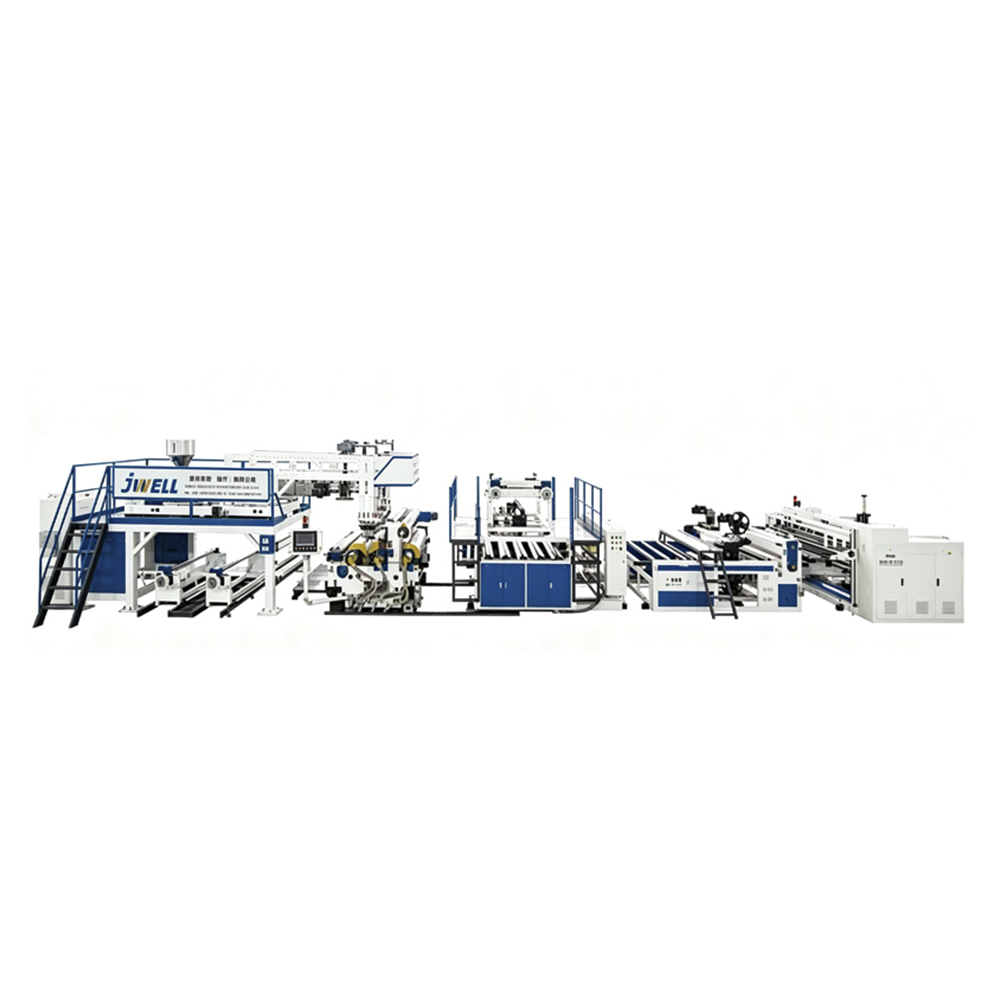
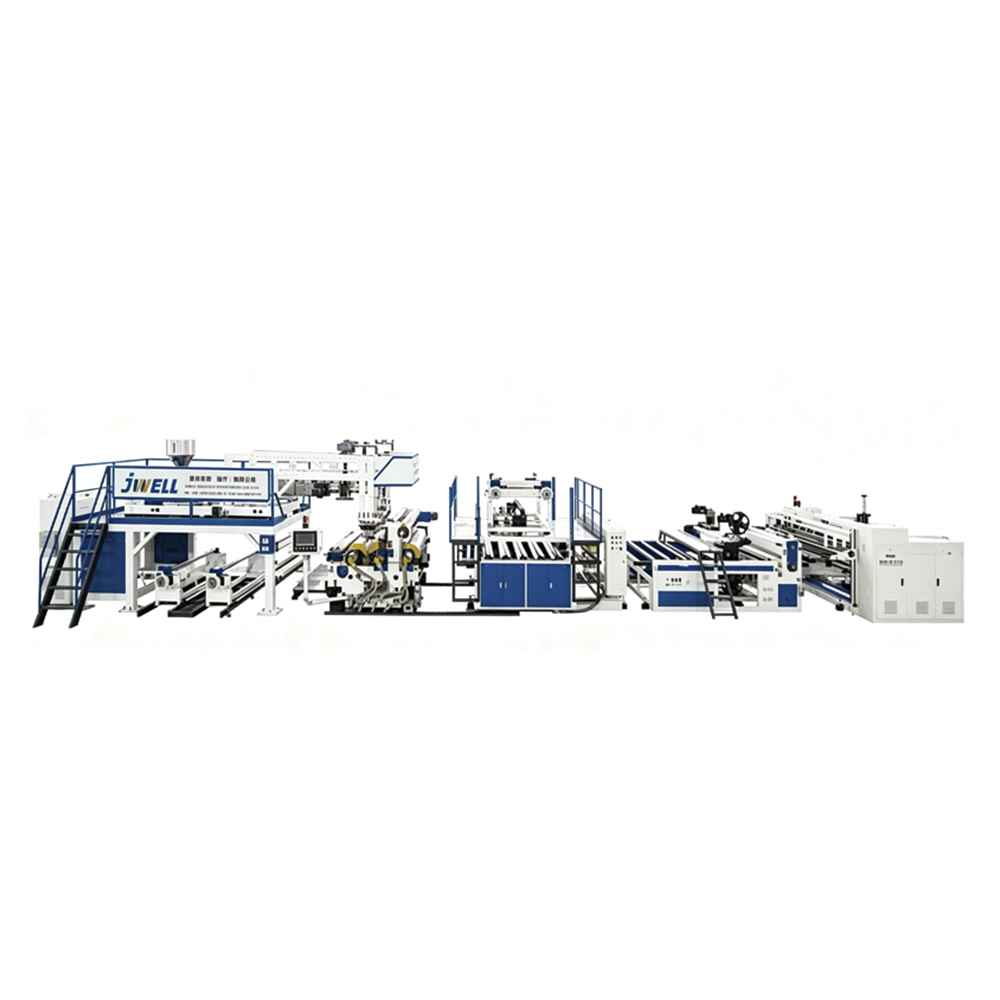
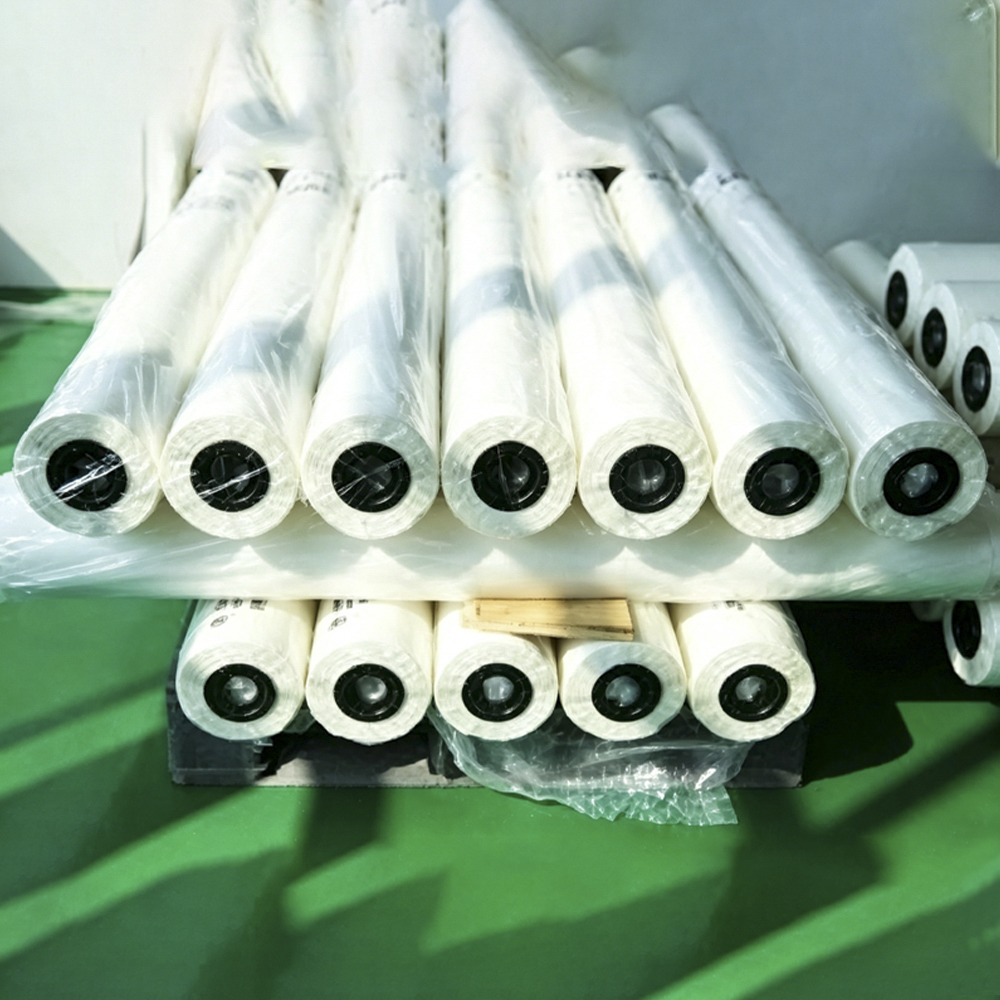
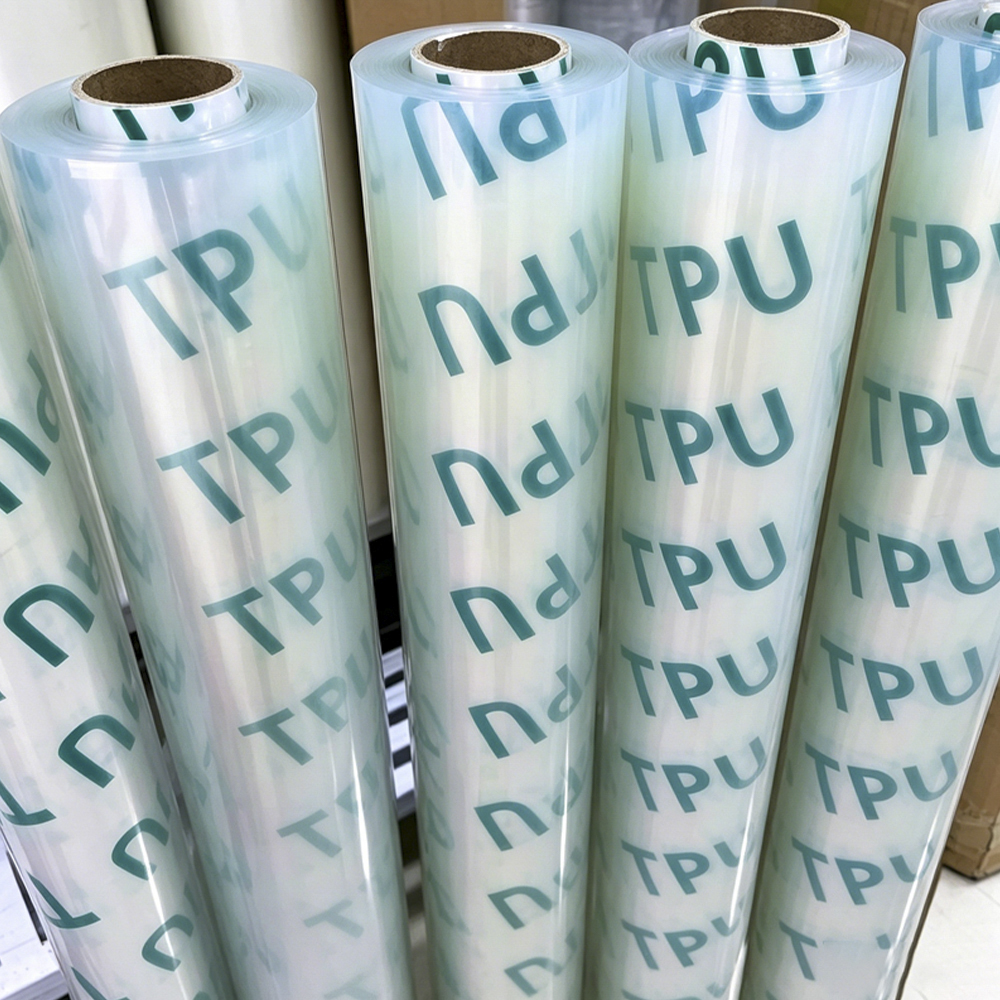

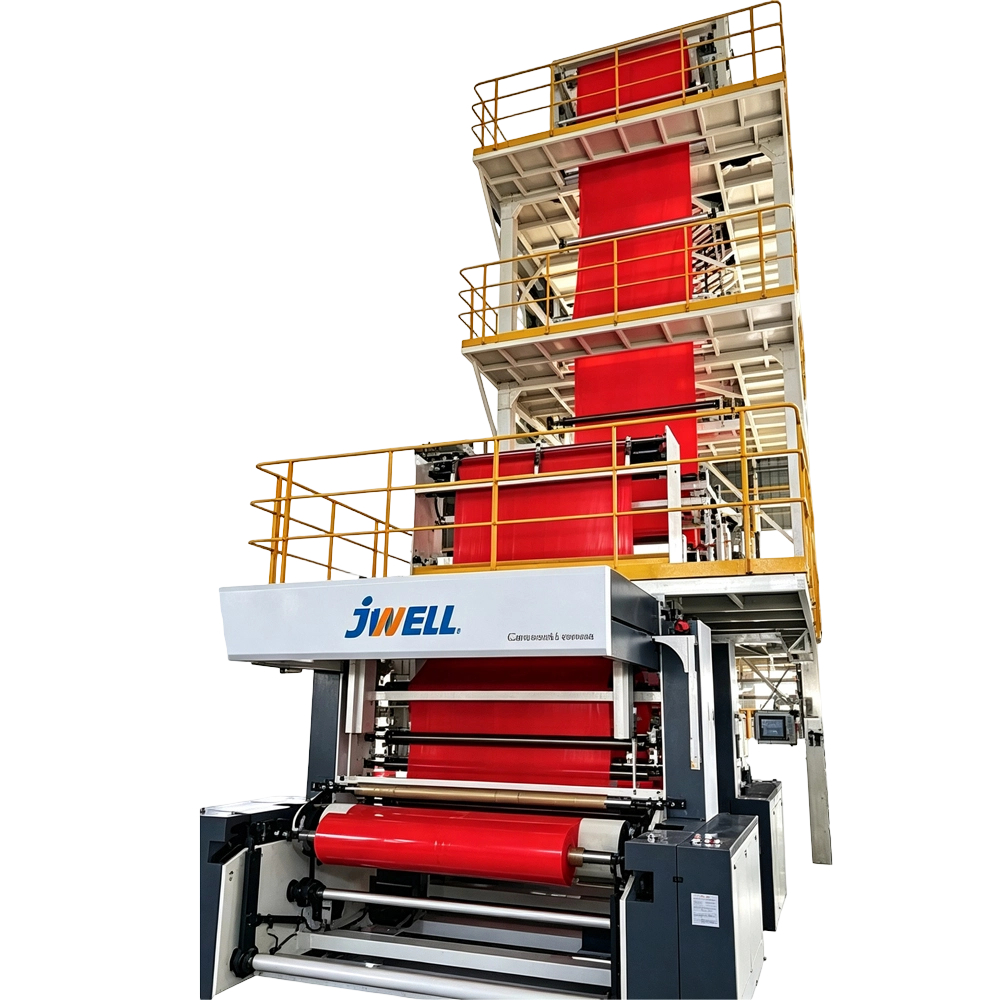
Jwell's TPU film extrusion lines are designed to deliver high precision, high efficiency, and high versatility. With a standard product width of 1620 mm and thickness range of 0.03 mm to 0.30 mm, these lines are built to meet the most demanding production requirements.
The combination of TPU, TPE, and EVA materials and the wide output range (100–250 kg/h) makes this line suitable for high-volume, high-precision film extrusion.
Case 1: Medical-grade protective film (TPU)
A European medical supplier uses the JWS100-2000 to produce breathable, antibacterial surgical drape film. The thin film at 0.03 mm maintains an output of 150 kg/h while achieving barrier performance and patient comfort. The 1620 mm width allows efficient die-cutting for standard operating table dimensions.
Case 2: Sportswear lamination film (TPE/EVA blend)
An Asian sportswear OEM adopts the JWS120-2000 to produce stretchable waistband film. At the maximum output of 250 kg/h, they continuously run 0.15 mm thick film that bonds seamlessly to nylon and polyester. The line's uniform thickness control (±0.003 mm) eliminates delamination issues previously caused by uneven substrate.
Case 3: Automotive interior skin (TPU)
A Tier 1 automotive parts manufacturer uses the JWS90-2000 to produce soft-touch dashboard film. At 0.25 mm thickness and 120 kg/h output, thanks to the robust screw and barrel design, the line runs 24/7 for six months without major maintenance.
Other typical applications:
Inflatable products (life jackets, air mattresses) – using high-strength TPU film
Conveyor belts (food processing) – abrasion-resistant TPU
Raincoats and tarpaulins – high-frequency weldable TPU/EVA blends
2.1 Wide thickness and width flexibility
1620 mm fixed width – Maximizes material utilization for standard roll sizes, reducing edge trim waste by up to 8% compared to 1500 mm lines.
0.03 – 0.30 mm thickness range – One line handles both ultra-thin breathable film (0.03 mm) and heavy-duty industrial film (0.30 mm) without mechanical changeover.
2.2 Scalable output capability
|
Model |
Output (kg/h) |
Best suited for |
|
JWS90-2000 |
100–150 |
R&D, small batch, high-mix low-volume |
|
JWS100-2000 |
150–200 |
Medium-scale production, medical and apparel |
|
JWS120-2000 |
200–250 |
Large-scale production, automotive and industrial |
Real example: A flexible packaging converter switched from a generic 120 kg/h line to the JWS120-2000, increasing daily output from 4.8 tons to 6.0 tons (a 25% increase) while maintaining the same energy consumption per kg.
2.3 Multi-material compatibility
TPU (polyester/polyether based) – for high abrasion and chemical resistance.
TPE – for soft-touch, overmolding applications.
EVA – for low-temperature flexibility and transparency.
Thanks to the optimized compression ratio and cooling zone, all three materials can be run on the same screw geometry without degradation.
2.4 Energy efficiency and stability
The JWS extruder features a high-torque gearbox and ceramic barrel heaters, reducing energy loss by 15% compared to conventional heating bands. In a 2023 field test, the JWS100-2000 consumed only 0.32 kWh per kg of TPU film (industry average: 0.38 kWh/kg).
We implement a six-stage quality control protocol that exceeds ISO 9001:2015 standards. Each line is validated before shipment, and we provide the same process for your internal quality team.
3.1 Incoming material validation
Melt flow index test for each batch of TPU/TPE/EVA.
Moisture content analysis (must be <0.02% for TPU to prevent hydrolysis).
3.2 Online monitoring (real-time)
Thickness gauge (X-ray or beta ray) with accuracy ±0.001 mm, scanning the 1620 mm width. Automatic air ring adjustment corrects deviations within 0.5 seconds.
Visual surface inspection system (high-definition camera array) detects gels, fish eyes, and black spots down to 0.1 mm.
3.3 Mechanical property testing (offline – per roll)
For each production shift, samples are cut for testing:
|
Test |
Standard |
Acceptance criteria (TPU film, 0.10 mm) |
|
Tensile strength (MD/TD) |
ASTM D882 |
≥25 MPa / ≥20 MPa |
|
Elongation at break |
ASTM D882 |
≥450% |
|
Tear strength (trouser method) |
ASTM D624 |
≥80 kN/m |
|
Modulus at 100% |
ASTM D882 |
4–8 MPa (depending on hardness) |
3.4 Lamination film and heat seal strength (for multi-layer films)
For films intended for lamination, we perform 180° peel tests on heat-sealed samples (150°C, 2 bar, 1 sec). Minimum seal strength: 15 N/15 mm.
3.5 Durability simulation
Hydrolysis resistance: 7 days at 70°C / 95% RH – tensile strength loss <15%.
UV resistance (for outdoor applications): 500 hours QUV test – ΔE < 3.
3.6 Roll quality inspection
Hardness (Shore A) measurement across the entire roll – variation ≤ ±2A.
Slit edge quality – no burrs or wavy edges (visual inspection under 10x magnification).
Real QC example:
A customer producing TPU film for medical blister packaging reported a defect rate of 0.5% after 6 months. Our team traced this to inconsistent cooling roll temperatures. We added an automatic temperature recording system to the QC checklist, reducing the defect rate to 0.08%.
| Model | JW590-2000 | JW5100-2000 | JW5120-2000 |
| Material | TPU、TPE、EVA | ||
| Extruder Specification | JW590 | jW5100 | JW5120 |
| Products Width(mm) | 1620 | 1620 | 1620 |
| Products Thickness(mm) | 0.03-0.30 | 0.03-0.30 | 0.03-0.30 |
| Capacity(Max.)(kg/h) | 100-150 | 150-200 | 200-250 |
Q1: How do I switch between TPU, TPE, and EVA without generating a large amount of purging waste?
A: Use our controlled purging process:
Set barrel temperature to 180°C (the middle range for the three materials).
Run 5 kg of purging compound (PE-based) at 50 rpm for 10 minutes.
Then gradually introduce the new material. Change the screen pack if pressure rises >15%.
Real result: A JWS90-2000 user switched from TPU to TPE in just 25 minutes with only 8 kg of waste.
Q2: What causes thickness variation at the edges (within 150 mm on both sides)?
A: Typical "neck-in" effect. Solutions:
Increase die gap by 0.05–0.10 mm.
Adjust air ring flow (reduce outer ring by 10-15%).
For JWS100-2000 and above, activate the edge baffle system (optional feature).
Case: A customer reduced edge variation from ±0.008 mm to ±0.002 mm by lowering melt temperature from 210°C to 195°C.
Q3: How can I maximize output without losing transparency (for clear TPU film)?
A: Transparency is inversely related to screw speed (shear heat causes degradation). Optimal parameters for JWS120-2000:
Output: 220 kg/h (instead of max 250 kg/h)
Screw speed: 65 rpm
Chill roll temperature: 35°C
This yields haze value <5% (ASTM D1003) vs. 12% at maximum output.
Q4: What is the typical screw and barrel life for TPU?
A: For TPU (mildly abrasive due to fillers like silica anti-block agents), re-nitriding is needed after 18-24 months of continuous operation. For unfilled TPU, life exceeds 30 months. For a JWS90-2000 running only EVA, over 5 years is common.
Q5: Can I use recycled TPU (regrind)?
A: Yes, but limit regrind ratio to 20-25% for JWS90 and JWS100, and to 15% for JWS120 (higher shear degrades polymer chains). Always dry regrind at 90°C for 3 hours. A Malaysian customer blended 20% post-industrial TPU regrind into a JWS100-2000, saving 12% on material costs without loss of mechanical properties.
Q6: How often should I clean the die lip?
A: For continuous TPU production (24/7), clean the die lip every 8 hours using a brass scraper and PTFE release agent. For EVA, clean every 24 hours. Neglecting this causes "die drool" – black spots that ruin optical quality.
Q7: What chill roll configuration is recommended for thin films of 0.05 mm?
A: Use three chill rolls (instead of the standard two) with temperatures set at: Roll 1 = 25°C, Roll 2 = 35°C, Roll 3 = 45°C. This prevents film sticking and maintains flatness. The JWS series can be retrofitted with a third roll. A Japanese electronic film producer achieved flatness of 0.03 mm ±0.0005 mm using this configuration.




Pipe Extrusion Production Line
Plastic Shredder Crusher Machine

Tel: +86-19057068112

E-mail: [email protected]

Company Address
No. 128 Qingfeng Road, Xieqiao Town, Haining City, Jiaxing City, Zhejiang Province

19057068112

 English
 русский