
In the plastic extrusion industry, when customers inspect a production line or start up equipment for the first time, in addition to focusing on production capacity, product quality, and energy consumption performance, they also pay special attention to one question:
“Is the sound produced when the production line starts up normal? What kind of sound indicates that the equipment is operating well?”
For large industrial equipment, a certain amount of mechanical sound during operation is inevitable.The rotation of screws, operation of motors, startup of cooling systems, and operation of haul-off equipment will all produce different levels of sound. However, there is a clear difference between normal operating sounds and abnormal equipment noise. By observing changes in sound, operators can identify potential equipment problems in advance, reduce downtime risks, and improve production stability.
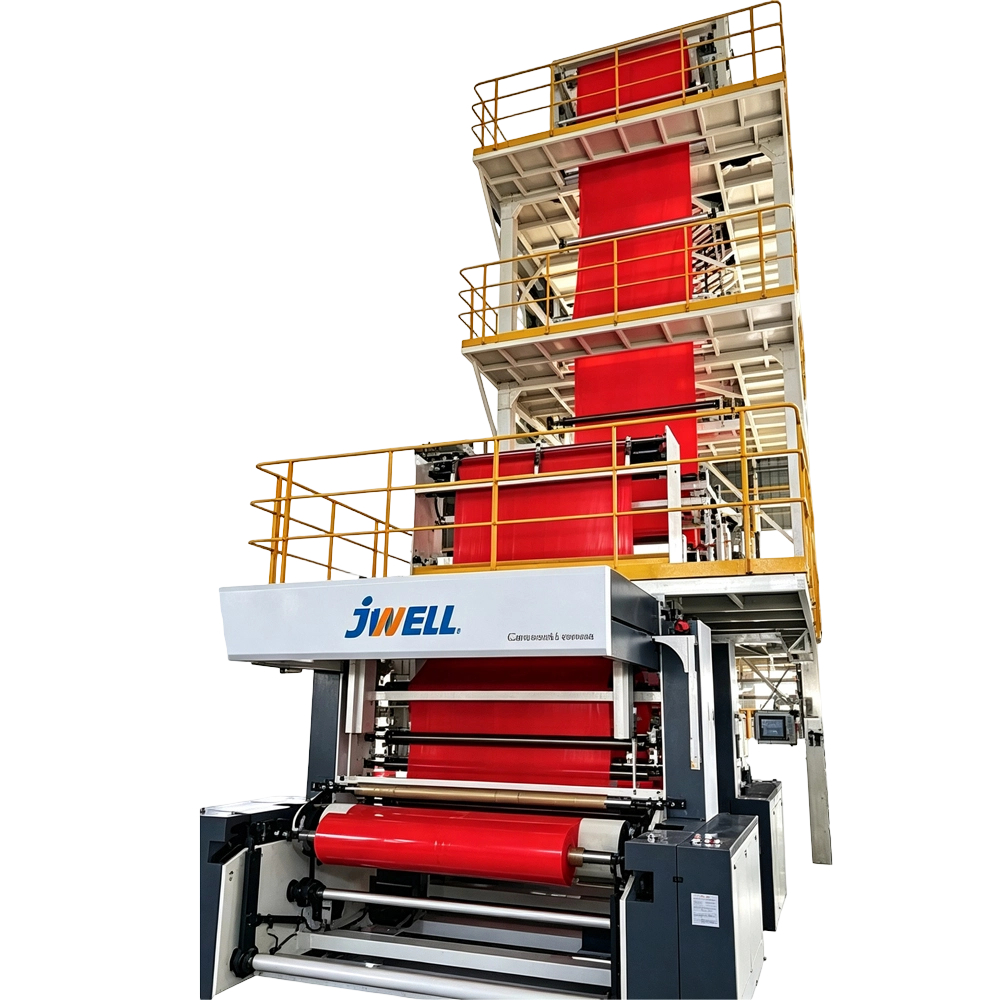
As a professional plastic extrusion equipment manufacturer, Jwell Machinery (Haining) Co., Ltd. has been focusing on the research, development, manufacturing, and complete production line solutions of plastic extrusion machinery for many years. JWELL equipment is widely used in the production of plastic products such as sheets, plates, pipes, films, and profiles in many countries and regions around the world.
A complete extrusion production line usually consists of multiple systems, and different components will generate corresponding sounds during the startup process.
The main sources of sound include:
1. Operating Sound of the Main Motor and Gearbox
After the extruder starts, the main motor begins to drive the screw rotation, and the power is transmitted to the extrusion system through the gearbox.
Under normal conditions:
If the following occurs:
It may indicate abnormalities in the bearings, gears, or lubrication system, which require timely inspection.
Many customers ask:
“Is there a fixed sound standard, such as requiring the machine to be below a certain number of decibels when it starts?”
In fact, for different types of industrial equipment, there is no single unified sound value applicable to all extrusion production lines.
Equipment noise levels are usually affected by multiple factors:
1. Different Types of Equipment
Different production lines have different structures. Due to differences in equipment specifications, production capacity, and auxiliary equipment configurations, the operating sounds may also vary.
2. Different Production Environments
The sound measured from the same machine may also be different in different factory environments.
For example:
Therefore, industrial equipment noise evaluation generally needs to take into account the actual working environment, equipment distance, and operating conditions for comprehensive assessment.
At Jwell Machinery (Haining) Co., Ltd., noise control is not something adjusted only after the machine has been manufactured. Instead, it is taken into consideration in advance during the design, processing, and assembly processes.
1. High-Precision Processing Reduces Mechanical Vibration
Long-term stable operation of an extruder depends on the precise matching of core components.
During equipment manufacturing, Jwell uses precision processing to control:
This reduces additional vibration caused by excessive gaps between components or installation errors, thereby reducing operating noise at its source.
2. Optimized Power System Design
The power system in an extrusion production line is one of the important sources of sound.
According to the requirements of different production lines, Jwell makes reasonable matching of:
This enables the equipment to remain stable even when operating at high speed. Stable power output not only improves production efficiency but also reduces unnecessary mechanical impact.
3. Strict Testing of Equipment Operating Conditions
Before the equipment is delivered to the customer, Jwell conducts complete machine commissioning.
The testing includes:
Through actual operation testing, Jwell ensures that the equipment meets the delivery standards.
For overseas customers, the first startup after the installation of new equipment often raises questions.
In fact, during the first operation:
Therefore, changes in sound over a short period of time are considered normal.
During equipment commissioning, Jwell's overseas installation engineers will:
This ensures that customers can quickly enter the stage of stable production.
For B2B customers, purchasing an extrusion production line is not simply purchasing a piece of equipment, but making a long-term production investment.
The operating sound of the equipment is only one aspect of judging the condition of the machine. More importantly, customers should consider:
As a company with many years of experience in the research, development, and manufacturing of extrusion equipment, Jwell Machinery (Haining) Co., Ltd. has always focused on customers' actual production needs and provides stable, efficient, and reliable plastic extrusion solutions for customers around the world.From equipment design and manufacturing to overseas installation and commissioning, Jwell pays attention to every detail that affects the customer's production experience.
1. Is It Normal for an Extruder to Make Sound During Operation?
Yes. Industrial equipment will produce mechanical sounds during operation. The key is whether the sound is stable and whether there is any abnormal vibration or impact sound.
2. How Can I Determine Whether an Extruder's Sound Is Abnormal?
Usually, multiple factors need to be considered, such as:
If an abnormal situation occurs, the equipment manufacturer should be contacted promptly for inspection.
3. How Does Jwell Ensure Long-Term Stable Operation of Its Equipment?
Jwell helps customers reduce equipment operating risks and improve production stability through mature design solutions, strict manufacturing processes, and professional installation and commissioning services.
An excellent extrusion production line should not only meet production capacity requirements, but also remain stable, safe, and reliable during long-term operation.
For plastic processing companies around the world, choosing Jwell Machinery (Haining) Co., Ltd. means choosing a partner with technical capabilities,manufacturing experience, and global service capabilities.From the first startup to years of stable production, Jwell will always accompany customers through every production upgrade.




Pipe Extrusion Production Line
Plastic Shredder Crusher Machine

Tel: +86-19057068112

E-mail: [email protected]

Company Address
No. 128 Qingfeng Road, Xieqiao Town, Haining City, Jiaxing City, Zhejiang Province

19057068112

 English
 русский