
In the plastic film industry, CPP, OPP, BOPP, and MOPP are all common polypropylene (PP) film products. For end consumers, these names may seem quite similar; but for film manufacturers, packaging companies, and equipment purchasers, they have significant differences in production processes, molecular orientation, mechanical properties, transparency, heat-sealability, and application fields.
Especially for B2B customers planning to invest in film production lines, simply knowing the film names is not enough for equipment selection. Different film products correspond to different production processes and equipment configurations, which ultimately directly affect product performance, production efficiency, and return on investment.
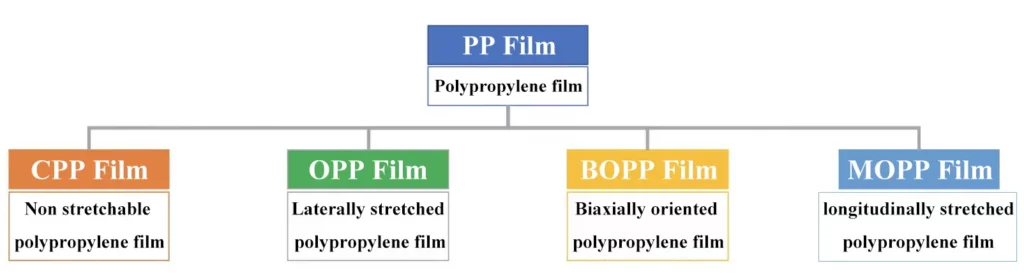
First, it is necessary to clarify the relationships among these four film types. Their base material can all be polypropylene (PP), but because the forming and orientation methods used in the production process differ, different types of PP films are formed.
|
Film Type |
English Name |
Main Process Characteristics |
Orientation Method |
Typical Features |
|
CPP |
Cast Polypropylene Film |
Cast extrusion |
Non-oriented or essentially non-oriented |
Good heat-sealability, good flexibility |
|
OPP |
Oriented Polypropylene Film |
Orientation stretching |
Generally refers to oriented PP |
Improved strength and transparency |
|
BOPP |
Biaxially Oriented Polypropylene Film |
Biaxial stretching |
Machine direction (MD) + transverse direction (TD) |
High strength, high transparency, good dimensional stability |
|
MOPP |
Machine Direction Oriented Polypropylene Film |
Uniaxial stretching |
Machine direction (MD) |
High strength in MD, suitable for specific packaging applications |
Conceptually, BOPP and MOPP are both oriented PP films, while the biggest difference between CPP and them is whether the stretching orientation process has been applied.
CPP, i.e., Cast Polypropylene Film, is a polypropylene film produced by the cast extrusion process.
Unlike oriented PP films, CPP is generally not stretched in the machine or transverse directions during production, so the film has good flexibility and heat-sealability.
Main Features of CPP Film
For packaging manufacturers, CPP is often used in packaging structures that require good heat-sealability, and can also serve as the heat-seal layer in laminated packaging.
Common Applications of CPP
CPP films are commonly used for:
For B2B customers planning to produce CPP film, heat-seal temperature range, film thickness uniformity, transparency, production stability, and output are usually the key parameters to focus on during equipment selection.
OPP is the abbreviation for Oriented Polypropylene, i.e., oriented polypropylene film. Compared with CPP, OPP has undergone orientation treatment, so its mechanical properties are generally improved. However, in actual industry applications, OPP is sometimes used as a broader term, while BOPP is a more specific type of biaxially oriented PP film. Therefore, when communicating with film production equipment suppliers, it is recommended that B2B customers clearly specify their orientation method, product structure, thickness range, and final application, rather than just using the name "OPP Film."
BOPP, i.e., Biaxially Oriented Polypropylene Film, is a biaxially stretched polypropylene film.
Its production process typically includes:
PP raw material → Extrusion → Cast sheet → Machine direction orientation (MDO) → Transverse direction orientation (TDO) → Heat setting → Cooling → Haul-off → Winding
Compared with CPP, BOPP is stretched in both the machine and transverse directions, thus having a more pronounced oriented structure.
Main Features of BOPP Film
1. High mechanical strength
Biaxial stretching improves the mechanical properties of the film in both machine and transverse directions, making it suitable for high-speed packaging and lamination processes.
2. Good transparency and gloss
BOPP generally has good transparency and surface gloss, so it is widely used in packaging and labeling applications.
3. Good dimensional stability
After biaxial stretching and heat treatment, the film has good dimensional stability.
4. Suitable for high-speed production and processing
BOPP can be surface-treated, printed, and laminated according to different applications.
Common Applications of BOPP
For B2B film manufacturers, BOPP production lines typically require special attention to stretch ratio, production speed, thickness uniformity, online thickness gauging, cooling systems, winding stability, and automation control.
MOPP generally refers to Machine Direction Oriented Polypropylene Film, i.e., polypropylene film oriented in the machine direction. Unlike BOPP, which is stretched in both machine and transverse directions simultaneously, **MOPP is primarily oriented in the **machine direction (MD)****. Therefore, its performance exhibits significant directionality.
Features of MOPP Film
The specific performance of MOPP is influenced by factors such as resin formulation, stretch ratio, production temperature, and process conditions. Therefore, for MOPP manufacturers, production line design cannot simply copy ordinary CPP equipment; rather, the process must be matched according to product specifications and target performance.
From the perspective of B2B procurement and production, a comparison can be made in the following aspects:
|
Comparison Item |
CPP |
OPP |
BOPP |
MOPP |
|
Base Material |
PP |
PP |
PP |
PP |
|
Main Process |
Cast |
Orientation |
Biaxial stretching |
Uniaxial stretching |
|
Orientation |
Essentially non-oriented |
Oriented |
MD + TD |
Mainly MD |
|
Heat-Sealability |
Good |
Depends on structure |
Usually requires dedicated seal layer/structure |
Depends on product design |
|
Mechanical Strength |
Good |
Relatively high |
High |
High in MD direction |
|
Flexibility |
Good |
Medium |
Medium |
Depends on structure |
|
Transparency |
Good |
Good |
Generally higher |
Depends on formulation and process |
|
Dimensional Stability |
Good |
Good |
Good |
Directional |
|
Typical Applications |
Heat-seal layer, flexible packaging |
Packaging, printing |
Packaging, labels, tape |
Specific packaging and industrial applications |
It should be noted that the above are typical material and process characteristics. Actual film performance is also affected by resin grade, additives, thickness, stretch ratio, cooling conditions, and post-treatment processes.
This is a common question in the film industry.
Put simply:
CPP focuses on "cast film formation," while BOPP focuses on "cast film + biaxial stretching."
Therefore, although both films use PP as the main raw material, their corresponding production lines are not identical.
If the customer mainly produces:
They can focus on CPP production solutions.
If the customer mainly produces:
Then BOPP production solutions can be considered based on product requirements.
The biggest difference between BOPP and MOPP lies in the direction of stretching.
Therefore, BOPP generally has more balanced performance, while MOPP can be designed for machine-direction strength, rigidity, or other directional properties.
Forcustomers, choosing between BOPP and MOPP should not be based solely on the film name, but on the final product's:
This is one of the most concerning issues for equipment purchasers.
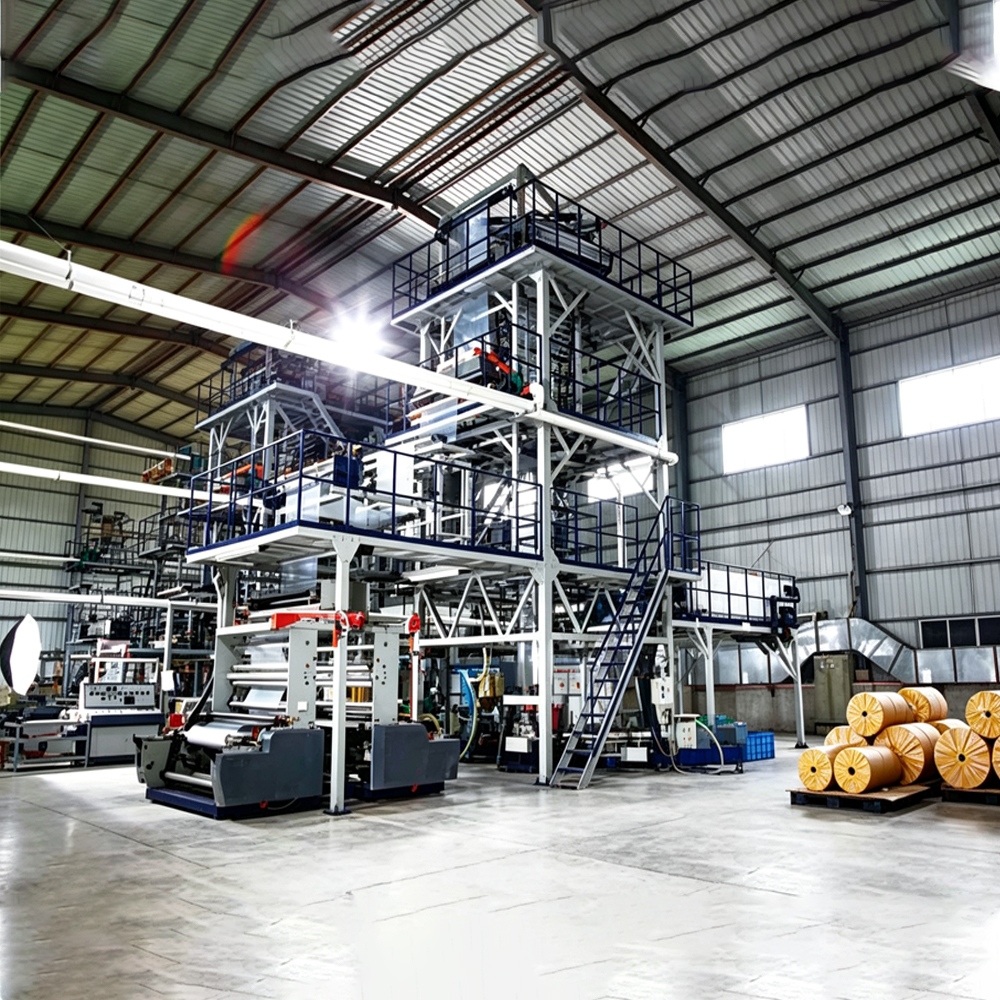
CPP Film Extrusion Line
CPP typically uses a cast film extrusion line.
Typical process flow:
PP raw material → Extruder → Die → Casting roll → Cooling → Haul-off → Thickness gauging → Corona treatment → Winding
For CPP lines, equipment design focuses typically include:
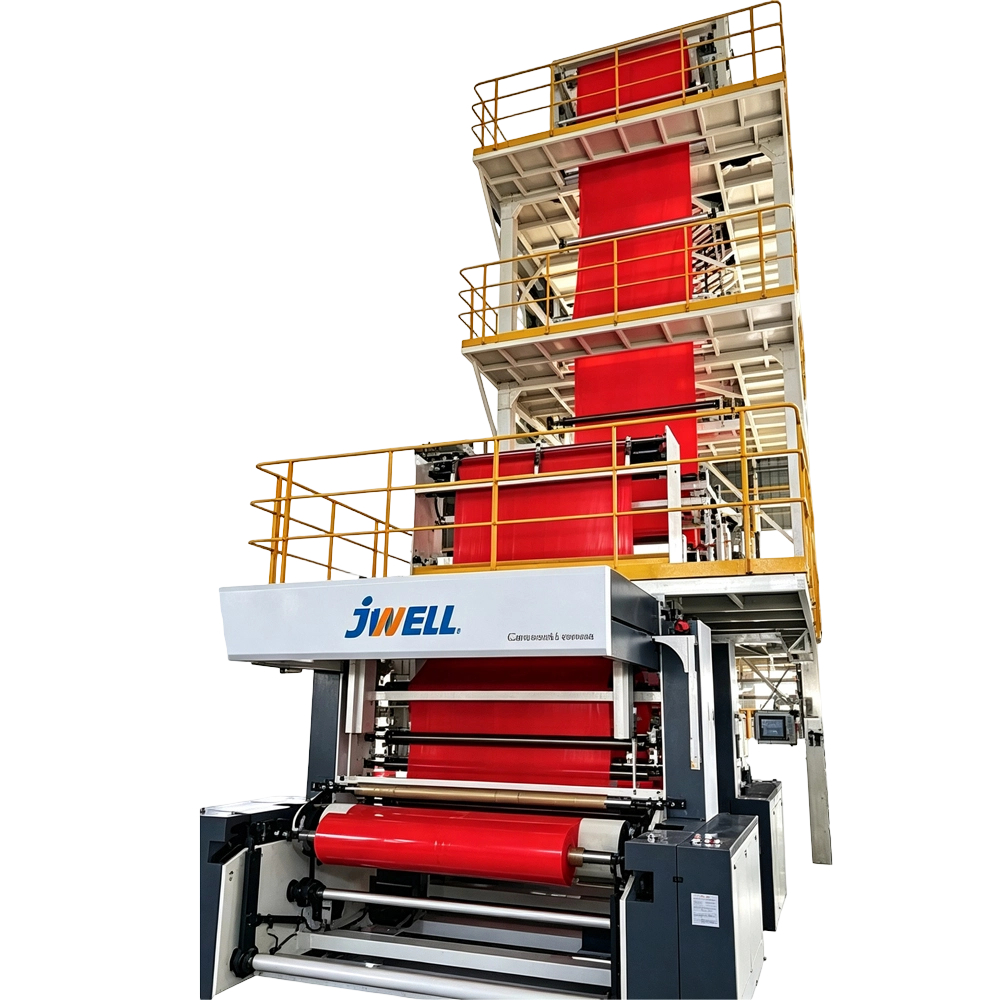
BOPP Film Production Line
The BOPP production process is more complex.
Typical process flow:
PP raw material → Extrusion → Cast sheet → Machine direction stretching → Transverse direction stretching → Heat setting → Cooling → Online treatment → Thickness gauging → Winding
Therefore, BOPP production lines typically require more complex stretching, heating, cooling, and automatic control systems.
MOPP Film Production Line
MOPP primarily involves machine direction orientation, so the production process focuses on MD stretching control. Its line design needs to be customized according to target thickness, stretch ratio, production speed, and final application.
As a plastic extrusion equipment manufacturer, JWELL focuses not only on individual extruders, but on the overall production solution from raw materials, extrusion, forming, stretching, cooling, haul-off, to winding. For PP film products such as CPP, OPP, BOPP, and MOPP, we can provide tailored production line solutions based on the customer's:
For B2B customers, a suitable film production line should not only meet "capability of production," but also satisfy requirements such as stable production, product consistency, production efficiency, and long-term operating costs. Therefore, before purchasing a CPP, BOPP, or other PP film production line, it is recommended to first define product requirements, and then select appropriate equipment configurations based on the product process.
Can CPP and BOPP use the same production line?
Generally, they cannot simply be considered interchangeable. CPP mainly uses a cast film process, while BOPP requires additional machine and transverse stretching processes; the line structures differ significantly.
Which is more suitable for food packaging, CPP or BOPP?
Both can be used for food packaging, but the specific choice depends on packaging structure, heat-seal requirements, transparency, rigidity, and subsequent lamination processes.
Are BOPP and OPP the same thing?
Not exactly. OPP is a broad term for oriented polypropylene films, while BOPP specifically refers to biaxially stretched polypropylene films.
Why does MOPP require a separate production process?
MOPP emphasizes machine direction (MD) orientation performance, so its stretching and process control methods differ from BOPP, requiring equipment configuration based on target product properties.
What parameters should be provided when purchasing a PP film extrusion line?
It is recommended to provide at least film type, thickness range, maximum film width, target output, resin grade, product structure, and final application. If BOPP or MOPP is involved, further confirmation of stretching process and product performance requirements is needed.
Although CPP, OPP, BOPP, and MOPP are all related to PP films, due to differences in production processes and molecular orientation methods, they exhibit significant differences in mechanical properties, heat-sealability, transparency, dimensional stability, and application fields.
From CPP cast film production, to BOPP biaxially stretched film production, to specific oriented PP film solutions like MOPP, JWELL can provide corresponding extrusion equipment and production line solutions according to the customer's product specifications and production targets.




Pipe Extrusion Production Line
Plastic Shredder Crusher Machine

Tel: +86-19057068112

E-mail: [email protected]

Company Address
No. 128 Qingfeng Road, Xieqiao Town, Haining City, Jiaxing City, Zhejiang Province

19057068112

 English
 русский