
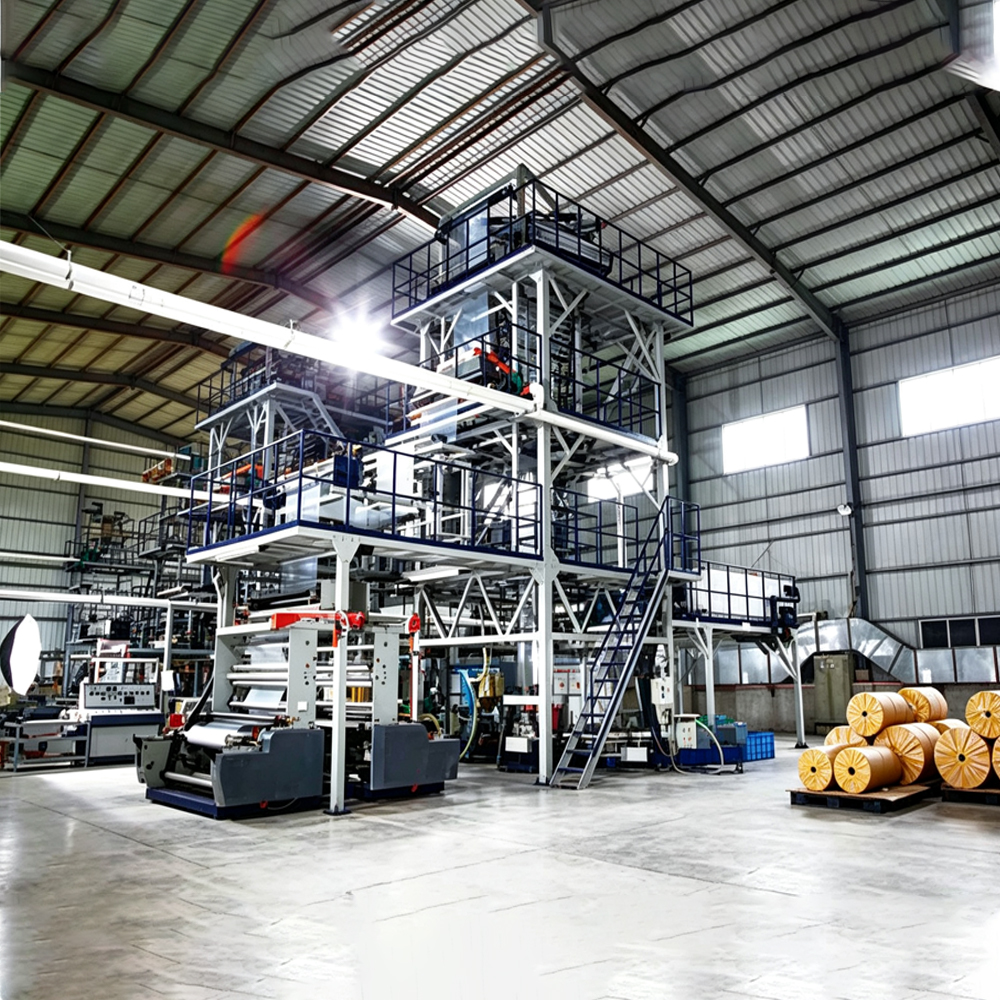
A barrier blown film extrusion line produces the multi-layer film that keeps oxygen out of food packaging, keeps moisture out of medical devices, and keeps the aroma inside the coffee bag. The process starts with resin pellets, melts them, and inflates a bubble of film that rises through a cooling tower before collapsing into a flat web. The barrier layer sits inside the film structure, buried between the layers that provide strength and the layers that provide the seal. For packaging converters and film producers, the line that builds that structure is the line that decides the shelf life.
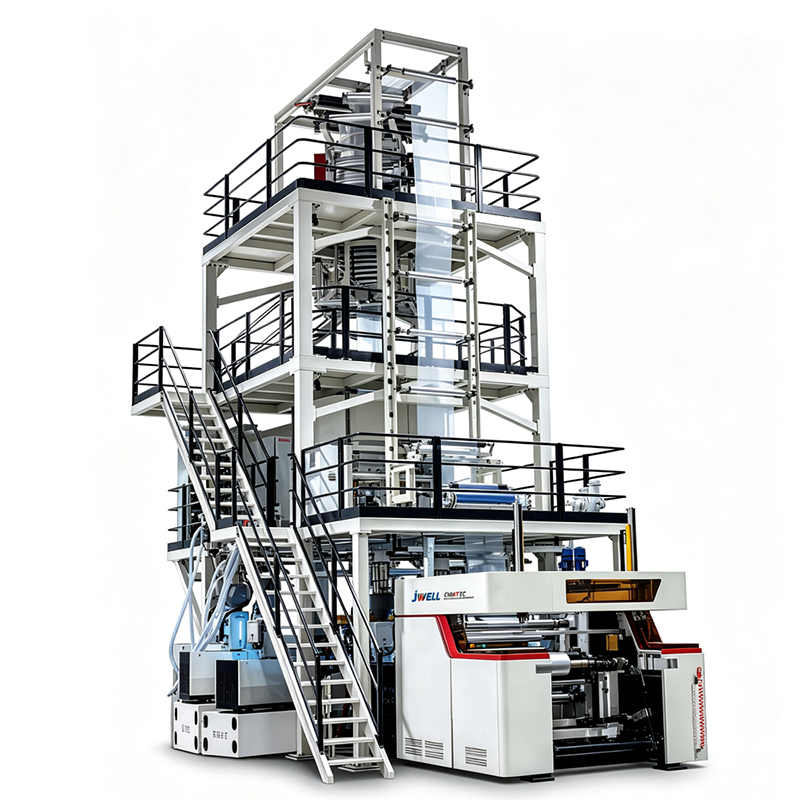
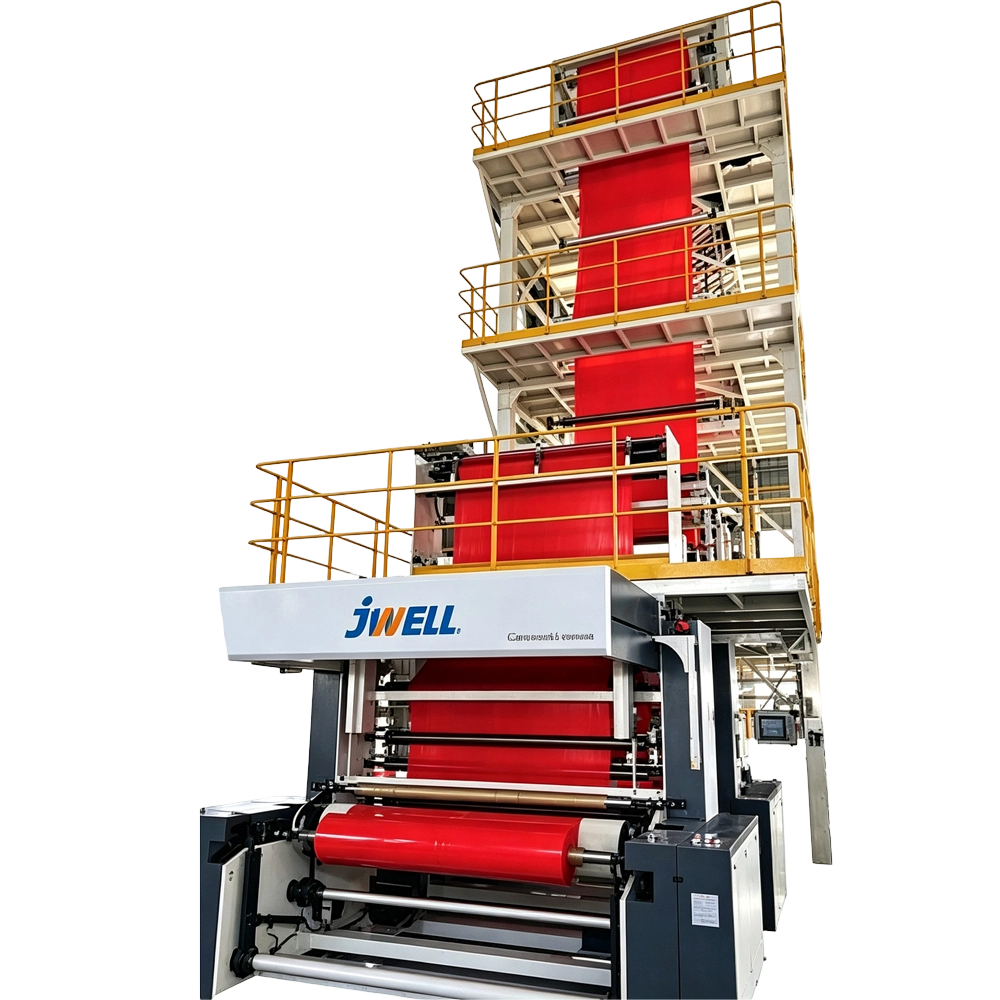
The blown film process feeds multiple extruders into a single annular die. Each extruder delivers a different polymer: the outer layer, the tie layers, the barrier layer, the sealant layer. The die stacks the layers into a tube, and air inflates the tube into a bubble. The bubble stretches the film in both directions at once, which gives blown film its balanced strength.
A barrier blown film extrusion line controls the layer thickness ratios through the die and the extruder outputs. The barrier layer, usually EVOH or a polyamide, sits at the core of the structure. The tie layers bond the barrier to the polyethylene skins. A line that loses the layer ratio loses the barrier.
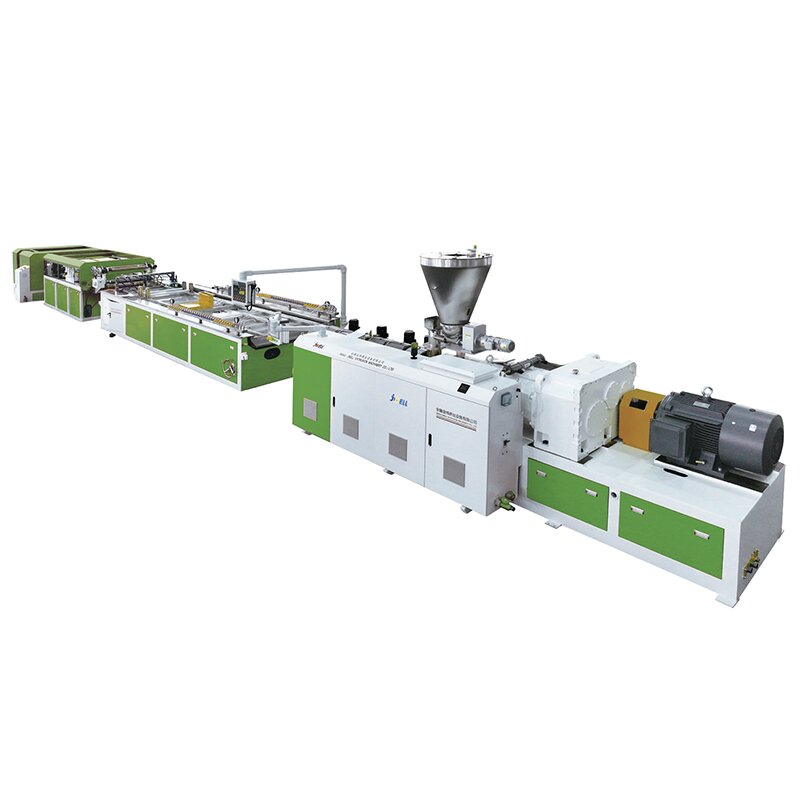
The same principle applies to the PVC Profile Wide Board Extrusion Line, where multiple extruders feed a die that shapes a wide, rigid profile. The PVC line runs a different process, but the control of the layer ratios and the die flow is the same discipline. Both lines are judged by what comes out of the die.
The bubble rises through the cooling tower. The frost line is where the film solidifies, and its height determines the film properties. A high frost line gives more time for the polymer chains to relax, which improves the toughness. A low frost line produces a stiffer, clearer film.
A barrier blown film extrusion line controls the air flow and the temperature in the tower to hold the frost line steady. A frost line that moves during the run produces film with variable properties. The converter who runs the film on the printing and lamination line sees the variation.
Above the frost line, the bubble collapses through the nip rolls into a flat web. The web is trimmed, slit, and wound. The tension control through the collapsing and winding sections determines the roll quality. A barrier blown film extrusion line with automatic tension control produces rolls that unwind flat and print without registration drift.
The trim is recycled back to the extruder. The edge trim from the barrier film carries the barrier layer, and the recycling has to be managed so the barrier material does not contaminate the structural layers.
Here is what a barrier blown film extrusion line needs to deliver:
Food packaging uses the barrier film for the vacuum pouches, the lidding, and the modified atmosphere packs. The barrier keeps the oxygen out and the shelf life long.
Medical packaging uses the barrier film for the sterile pouches and the device packaging. The barrier keeps the moisture out and the sterility in.
Coffee and dry goods use the barrier film for the aroma retention. The barrier keeps the flavor inside the bag.
The layer ratio drifts and the barrier layer becomes too thin. The shelf life drops. The frost line moves and the film properties vary. The tension control fails and the rolls telescope. The trim recycling contaminates the structural layers and the film weakens.
A barrier blown film extrusion line and a PVC Profile Wide Board Extrusion Line share the same core discipline: control the melt, control the die, control the cooling. Choose a line that holds the layer ratios and the frost line. The film protects the product and the shelf life holds.




Pipe Extrusion Production Line
Plastic Shredder Crusher Machine

Tel: +86-19057068112

E-mail: [email protected]

Company Address
No. 128 Qingfeng Road, Xieqiao Town, Haining City, Jiaxing City, Zhejiang Province

19057068112

 English
 русский