
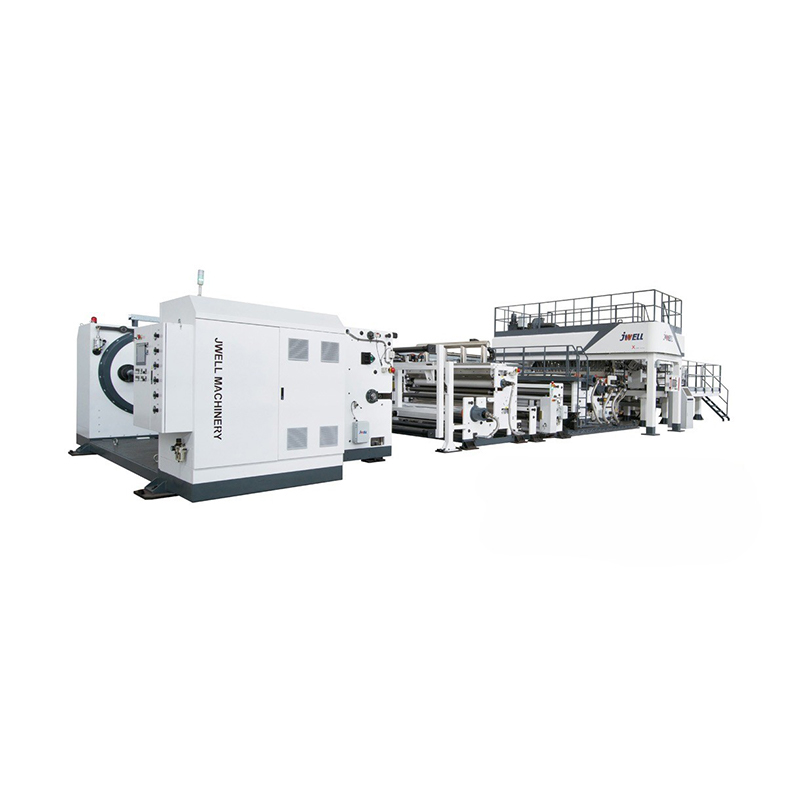
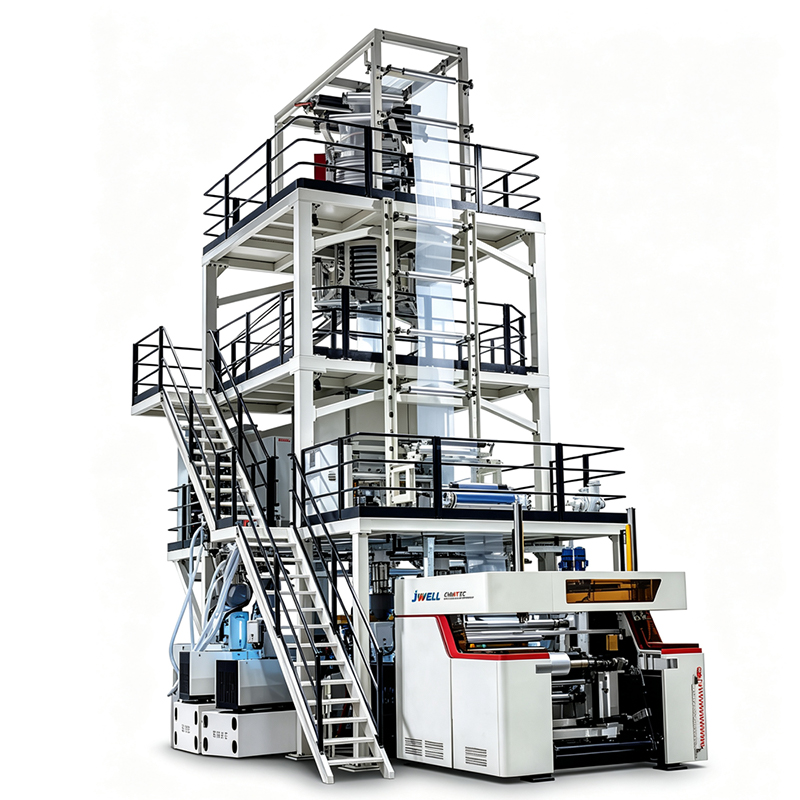
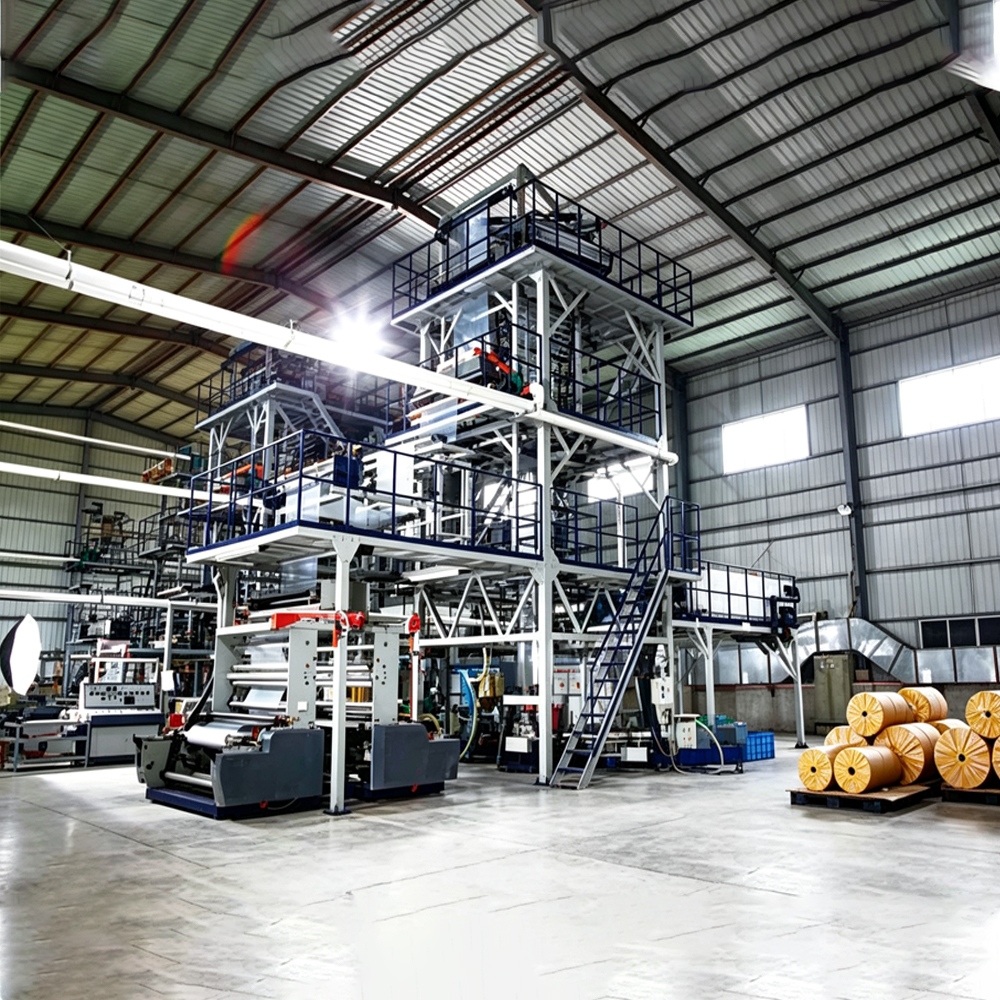
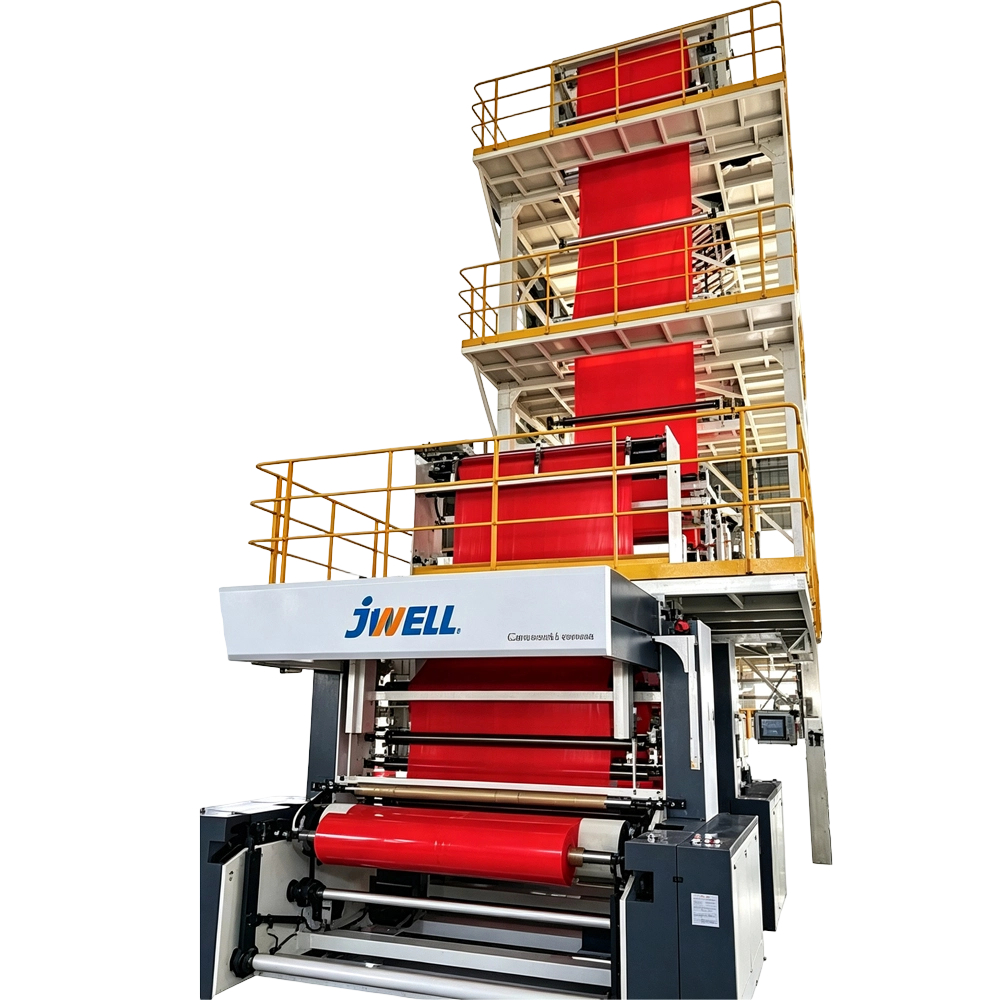
A diaper sits against a baby's skin. The outer layer keeps moisture in. It also has to let air move so the skin does not suffocate. A CPE embossed breathable film does both. The film is polyethylene filled with calcium carbonate. After extrusion, the film is stretched. The stretching opens microscopic pores around the filler particles. Air passes through. Liquid does not. A CPE embossed breathable film extrusion line produces this film, then embosses a texture into the surface. For hygiene products, medical disposables, and protective apparel, the line makes the barrier that breathes.
Polyethylene pellets and calcium carbonate powder meet in the extruder. The filler ratio runs 40 to 60 percent by weight. That is not a minor additive. It is half the material. The screw has to fold that powder into the polymer without letting it clump or settle. Uneven mixing shows up downstream as weak spots and breathability that changes from one meter of film to the next.
A barrier screw handles the job. The melt passes through a screen changer that catches any filler agglomerates before they reach the die. The die casts a sheet wider than the final film because the stretching stage will pull it thinner.
The cast sheet solidifies on a chill roll, then enters a series of heated rollers. Each roller runs faster than the previous one. The film stretches between them at a ratio of 2:1 to 4:1.
Calcium carbonate does not stretch. Polyethylene does. As the polymer pulls, it separates from the filler particles. Microscopic voids open at every particle interface. Those voids connect into pores through the film. The pores are small enough to block water droplets but large enough for air molecules to pass through.
Breathability is measured as moisture vapor transmission rate, grams per square meter per day. Filler size, filler loading, and stretch ratio all feed into that number. A CPE embossed breathable film extrusion line holds those variables steady so every roll breathes at the specified rate.
Here is what the line needs to produce:
After stretching, the film is breathable but glossy. It feels like plastic because it is plastic. The embossing roller changes that. A heated steel roller engraved with a pattern presses into the film surface. The texture breaks up the gloss and gives the film a cloth-like hand.
The embossing also makes the film easier to handle. Smooth film blocks together on the roll. Textured film separates cleanly. A CPE embossed breathable film extrusion line with the embossing station placed after the orienter produces film that converts without jamming.
The film is thin enough to stretch under its own weight. Winding tension has to be controlled precisely, or the roll develops soft spots and unwinds poorly at the customer's plant. Automatic tension control through the cooling and winding sections keeps the roll hard and even.
In-line slitting cuts the web to the width the converter ordered. The master roll becomes finished rolls ready for the diaper line or the gown machine. A CPE embossed breathable film extrusion line that slits and winds in one pass saves a separate converting step.
Breathability drops because the stretch ratio slipped or the filler settled in the hopper. A CPE embossed breathable film extrusion line with closed-loop roller speed control and consistent filler feeding holds the moisture vapor transmission rate on target. The film tears at the embossing station because tension was too high after stretching. Automatic tension control prevents it.
A CPE embossed breathable film extrusion line makes the barrier that breathes. Half the melt is chalk. The stretch opens the pores. The embossing roller softens the feel. Choose a manufacturer that mixes the filler evenly, controls the stretch ratio, and winds without stretching the film further. The diaper backsheet will keep fluid in and let air pass. That is the job.




Pipe Extrusion Production Line
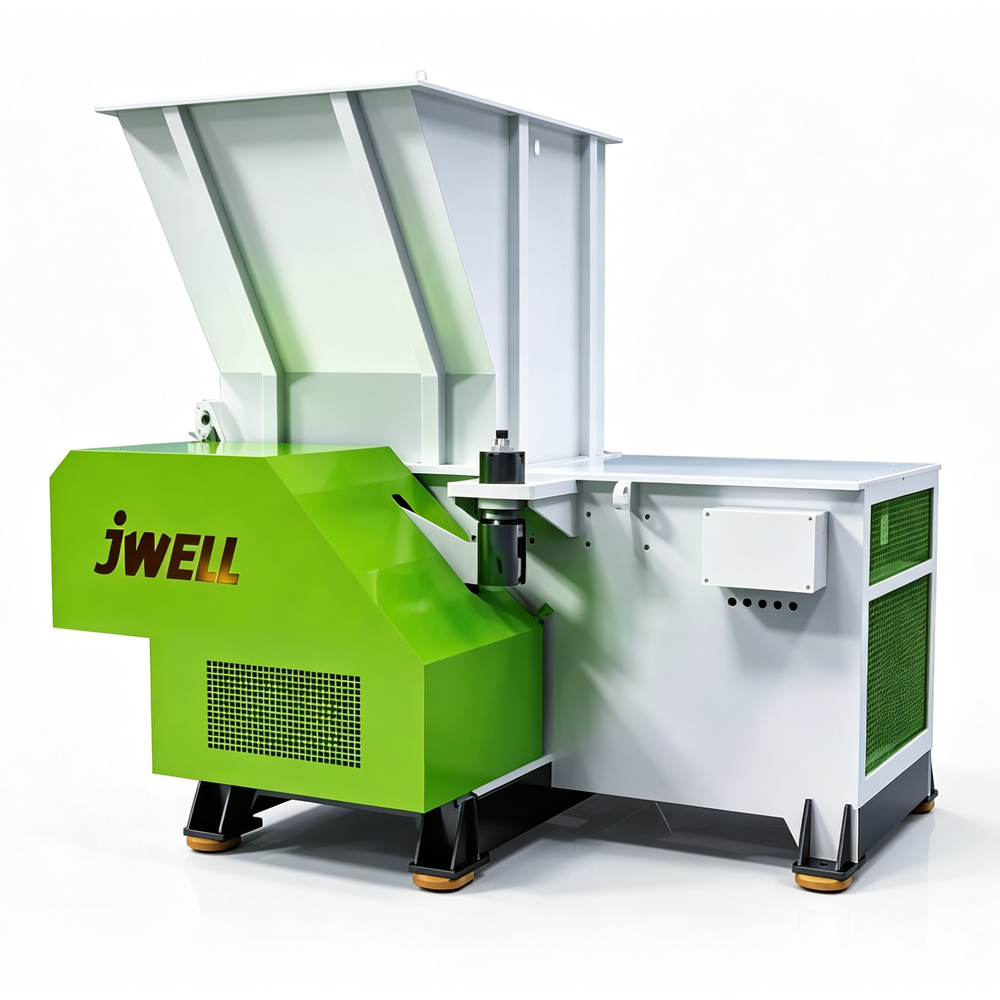
Plastic Shredder Crusher Machine

Tel: +86-19057068112

E-mail: [email protected]

Company Address
No. 128 Qingfeng Road, Xieqiao Town, Haining City, Jiaxing City, Zhejiang Province

19057068112

 English
 русский