
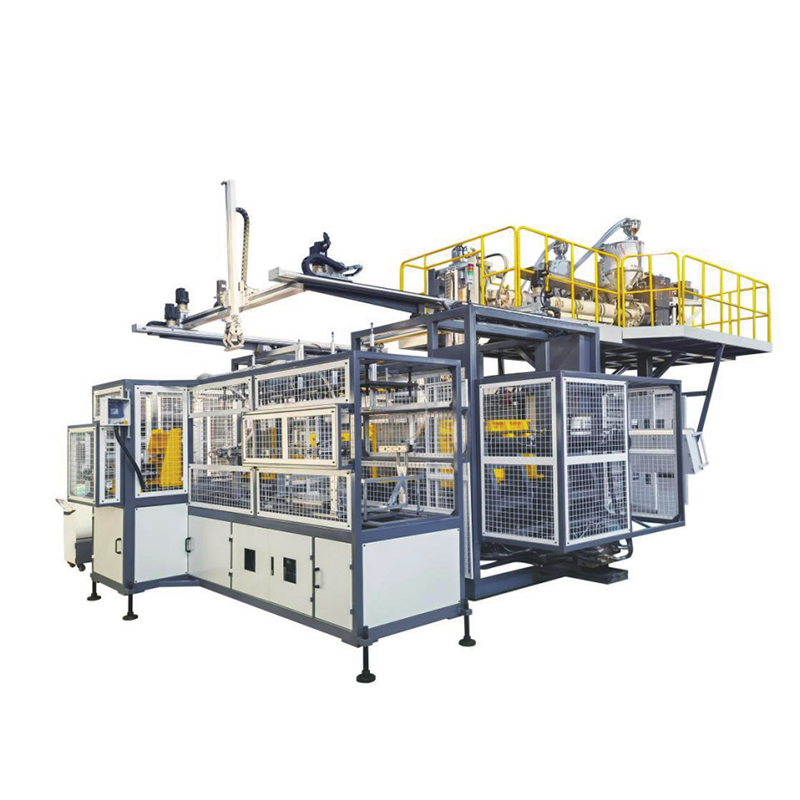
A plastic bottle looks like one material. It is not. The wall is a sandwich, an outer layer, an inner layer, and a barrier layer in the middle. The barrier stops oxygen from reaching the product and keeps flavors from escaping. A three-layer four station blow molding machine builds this wall structure while molding bottles at four stations simultaneously. Each station runs the same cycle: extrude, inflate, cool, eject. The four-station layout multiplies output without multiplying floor space. For packaging producers making bottles for food, chemicals, and personal care, the three-layer barrier is the sell and the four-station speed is the margin.
A single-layer bottle is simple but limited. A three-layer bottle puts a barrier resin, typically EVOH or nylon, between two layers of structural resin like HDPE or PP. The barrier blocks oxygen and carbon dioxide. The structural layers provide strength and cost control. A three-layer four station blow molding machine coextrudes all three layers through one die head. The layers meet in the die, stay separate, and form the parison that inflates into the bottle.
The layer ratios adjust to the product. A bottle for orange juice needs more EVOH than one for shampoo. The coextrusion system controls the output of each extruder so the barrier layer is continuous and correctly placed. A three-layer four station blow molding machine with three independent extruders gives the processor control over the layer structure.
The tie layers are the adhesive. EVOH does not bond to HDPE without help. A tie resin between the barrier and the structural layers keeps the sandwich together. A three-layer four station blow molding machine often runs five extruders: two structural, one barrier, two tie layers. The name says three layers. The reality is five materials.
A single-station blow molder makes one bottle per cycle. A four-station machine makes four. The stations are arranged around a rotary table or in a shuttle configuration. Each station has its own mold. The parison drops. The mold closes. The air inflates. The bottle cools. The mold opens. The bottle ejects. The table rotates. A three-layer four station blow molding machine keeps all four stations running in sequence so there is always a mold closing, always a bottle ejecting.
The rotary design saves floor space compared to four separate machines. It also shares the extruder, the die head, and the control system. One operator runs the whole line. A three-layer four station blow molding machine with a rotary table and four molds produces continuously without waiting between cycles.
The cycle time depends on the bottle size and the wall thickness. A small bottle cools fast. A large bottle needs more time. A three-layer four station blow molding machine with proper cooling in each mold holds the cycle time that the bottle design allows.
The parison is the tube of molten plastic that drops from the die head before the mold closes. The die head shapes the parison. A three-layer four station blow molding machine uses a multi-layer die head that keeps the three layers distinct as they flow together. The die gap adjusts to control the parison wall thickness.
Parison programming varies the wall thickness along the length of the parison. The bottle needs more material at the neck and the base, less in the middle. A three-layer four station blow molding machine with parison programming blows a bottle with uniform wall thickness after inflation, even where the material has to stretch farther.
The die head also has to deliver the parison to each station in turn. The rotary table moves the molds under the die head. A three-layer four station blow molding machine sequences the parison drop with the mold position so each mold catches its parison at the right moment.
Food packaging uses three-layer bottles for ketchup, sauces, and edible oil where the product degrades on contact with oxygen. The barrier extends shelf life.
Chemical packaging uses three-layer bottles for agricultural chemicals and cleaning products where the barrier prevents the aggressive contents from attacking the bottle wall or escaping as odor.
Personal care packaging uses three-layer bottles for lotions and shampoos where the barrier preserves fragrance and prevents the bottle from developing a plastic smell.
Here is what a three-layer four station blow molding machine needs to deliver:
The barrier layer breaks inside the parison. The EVOH flow was too low or the temperatures were wrong. The bottle loses its barrier. A three-layer four station blow molding machine with precise extruder control prevents layer interruption.
The molds do not close at the right time. The parison drops early or late. The bottle comes out with a fold or a thin spot. A three-layer four station blow molding machine with synchronized rotary timing holds the sequence.
The bottle sticks in the mold because the cooling was insufficient. The ejection system pulls it out. A three-layer four station blow molding machine with proper cooling and release design ejects cleanly every cycle.
A three-layer four station blow molding machine builds bottles with a barrier inside and produces four at a time. The coextrusion keeps the layers separate. The rotary table keeps the stations moving. Choose a machine that controls the layer structure and synchronizes the four stations. The bottles will hold the product and the line will hold the pace. That is what the machine is for.




Pipe Extrusion Production Line
Plastic Shredder Crusher Machine

Tel: +86-19057068112

E-mail: [email protected]

Company Address
No. 128 Qingfeng Road, Xieqiao Town, Haining City, Jiaxing City, Zhejiang Province

19057068112

 English
 русский