
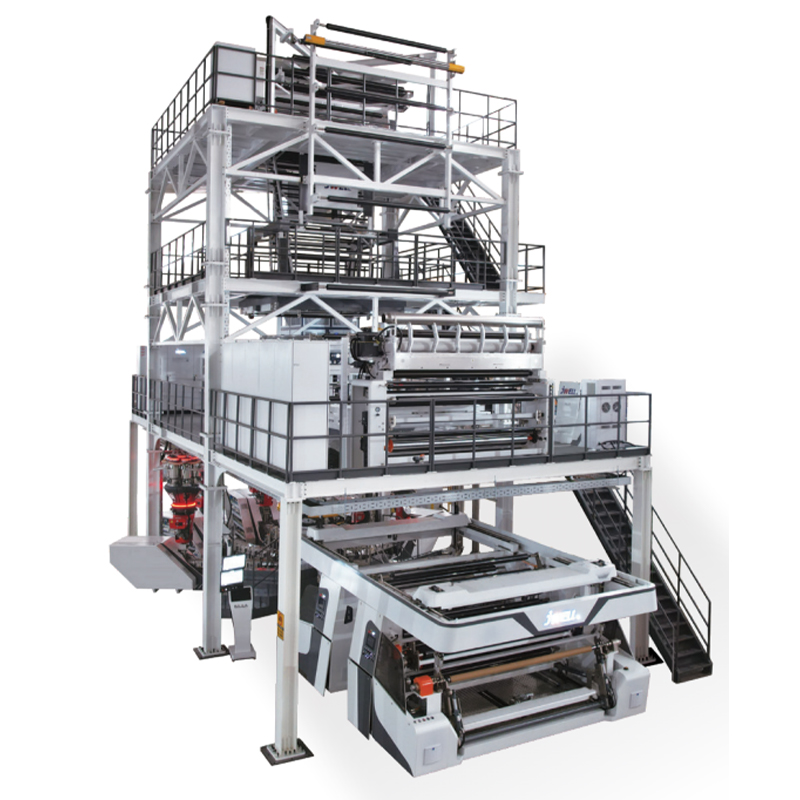
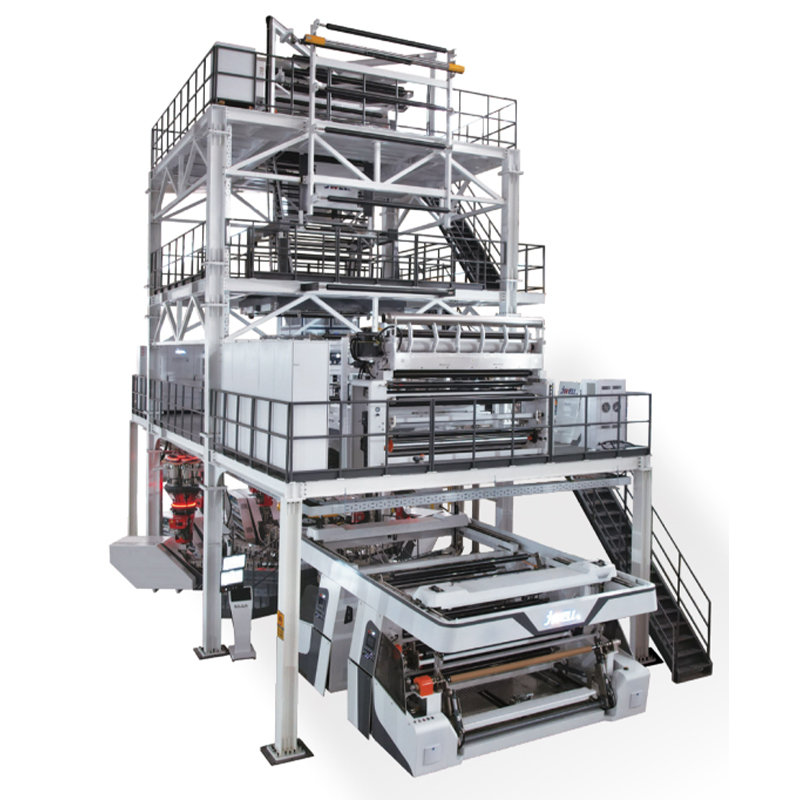
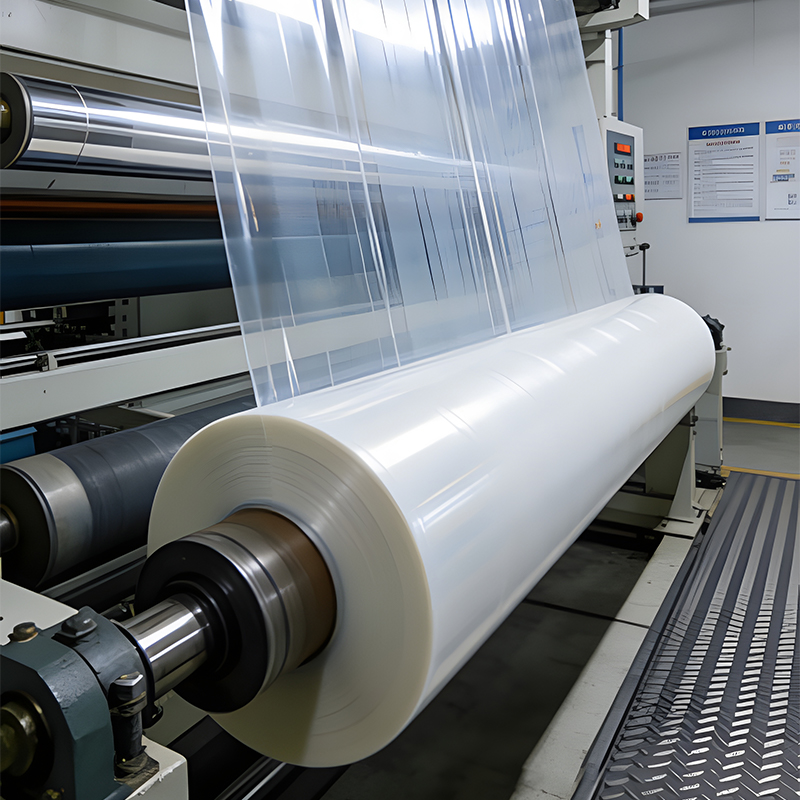
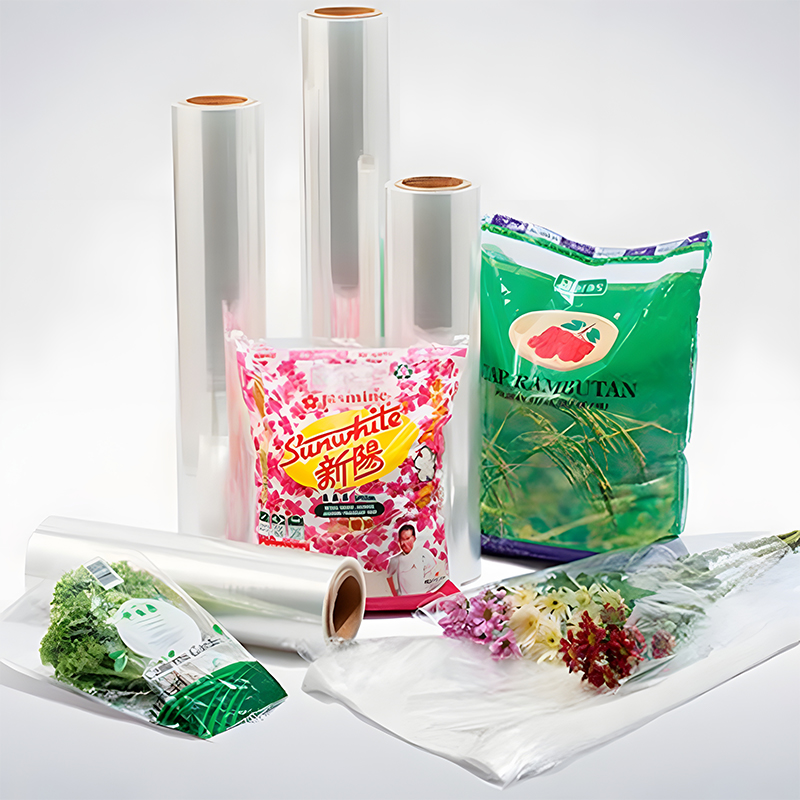
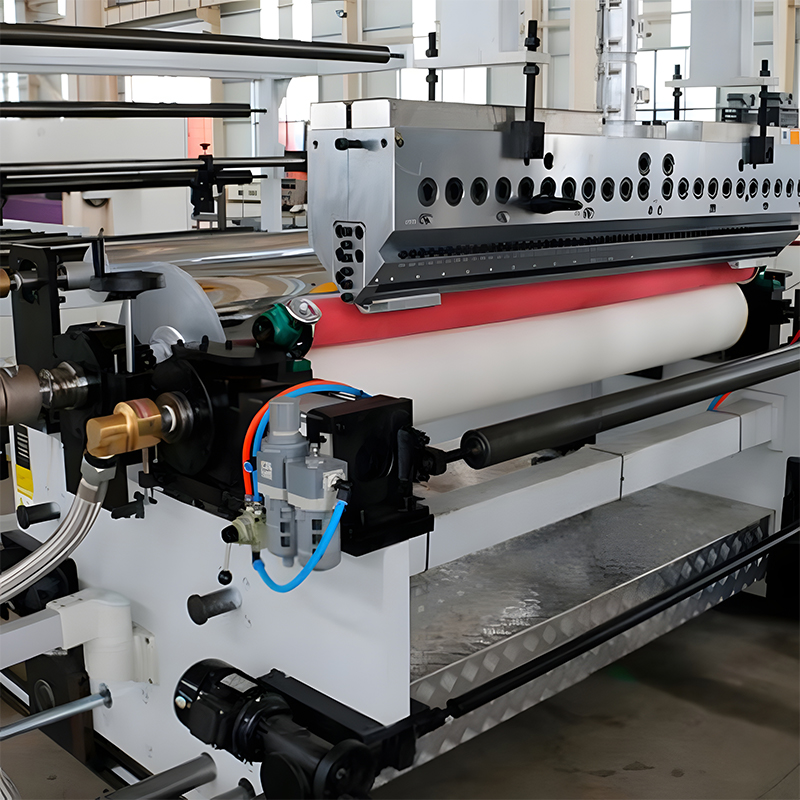
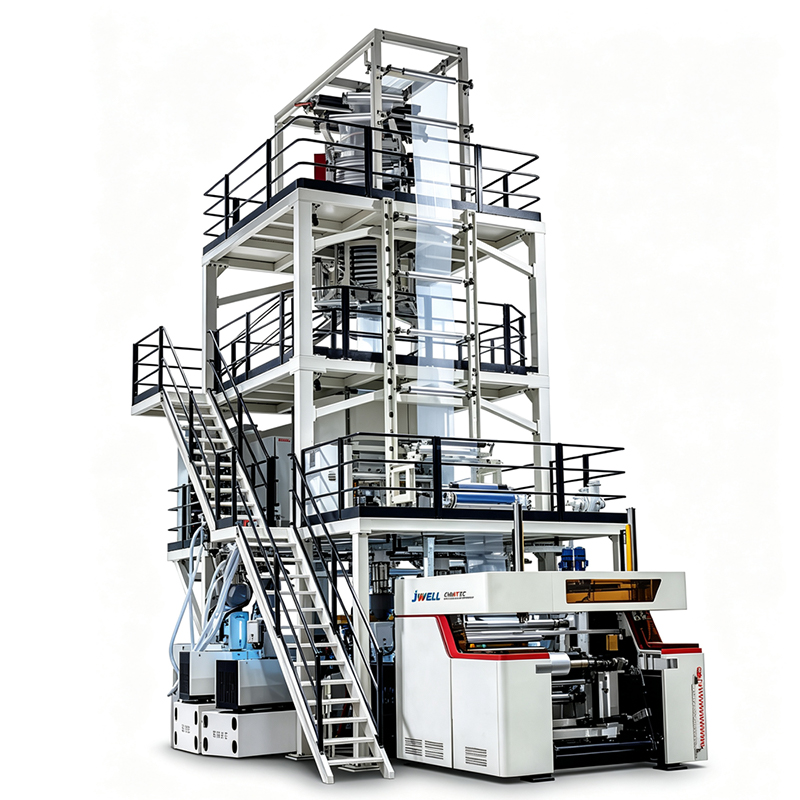
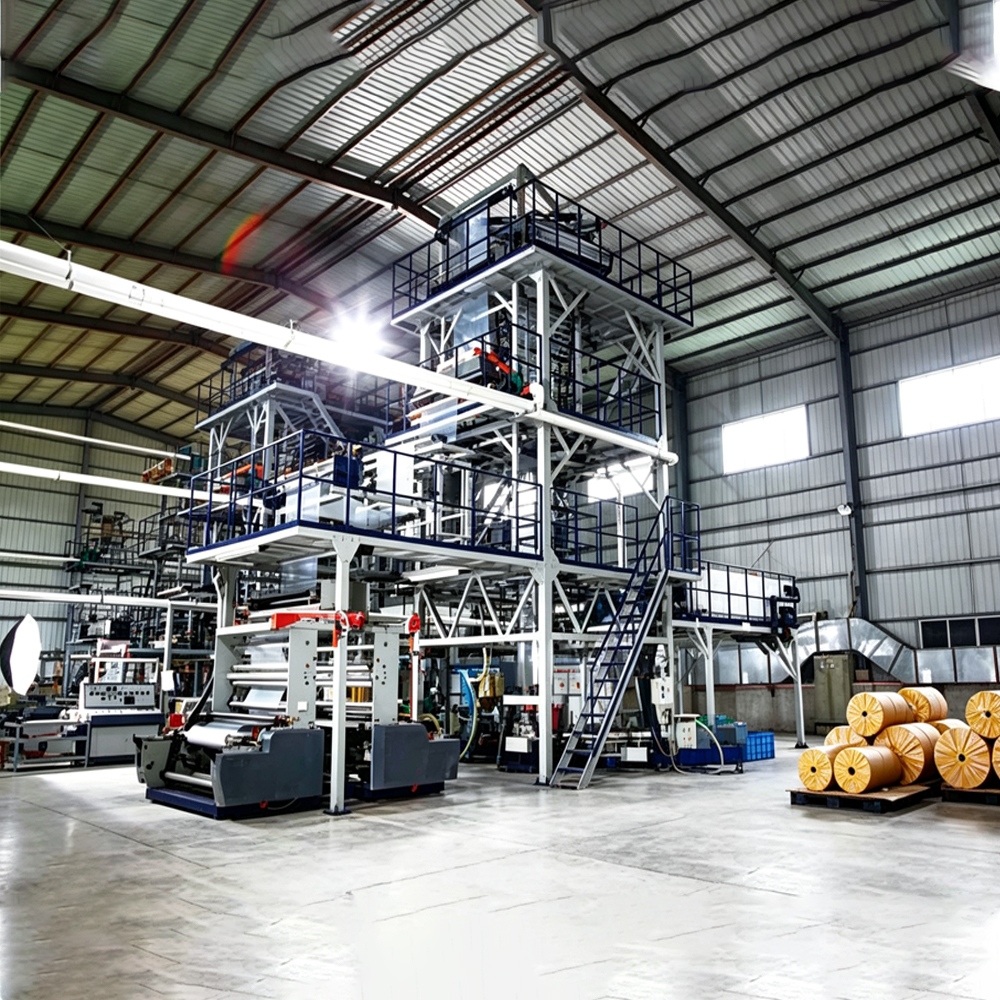
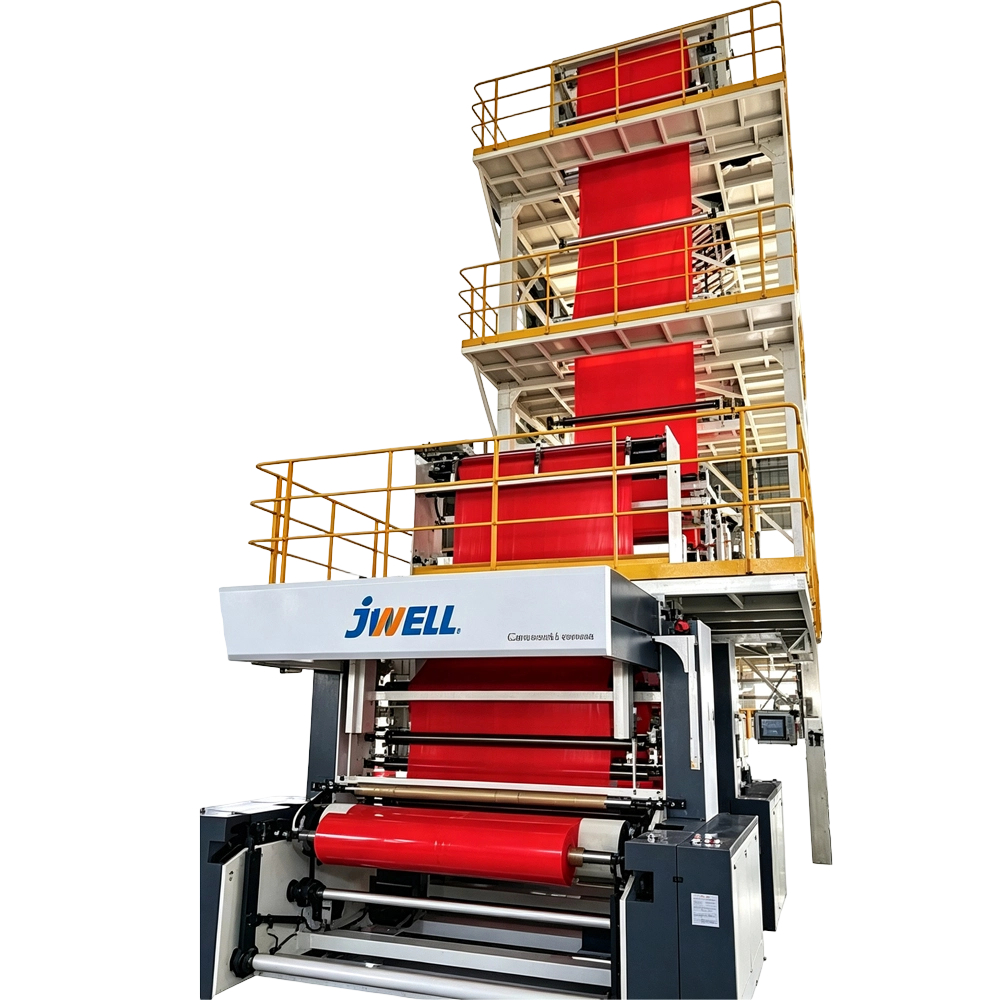
The three-layer/five-layer co-extrusion blown film production lines (Models 1600–2800) are specially designed for high-performance flexible packaging production, serving multiple industries. Their maximum flat lay-flat film width ranges from 1400mm to 2600mm, with thickness capability between 0.03–0.2mm.
Industrial Packaging: Heavy-duty transport bags, stretch hoods, and pallet covers, where the 2100–2600mm film widths (JBF-2300 and JBF-2800 models) are capable of wrapping oversized palletized goods without the need for edge trimming or splicing.
Agricultural Films: Greenhouse cover films, silage stretch films, and mulch films benefit from the A/B/C three-layer structure, which allows a high-performance core layer (often containing UV stabilizers or anti-fog additives) to be sandwiched between protective outer layers. A large agricultural enterprise in California's Central Valley used the JBF-2300-3/5X to produce 200-micron-thick silage film at an output of 550 kg/h, achieving UV durability of 18 months and reducing film consumption by 12% compared with monolayer alternatives.
Consumer Packaging: Stand-up pouches, laminated roll stock, and heavy-duty transport bags for pet food, chemicals, and building materials. The five-layer A/B/C/D/E configuration (available for all models) allows the incorporation of EVOH or PA barrier layers for oxygen-sensitive products – a European pet food manufacturer leveraged this with the JBF-1800-5X configuration, extending the shelf life of its premium pet food pellet packaging by 40%.
Medical and Hygiene Films: The precise thickness tolerance of ±3% within the 0.03–0.2mm range makes these lines suitable for surgical drape films and diaper backsheet applications, where thickness uniformity directly impacts seal integrity and liquid barrier performance.
A notable case is that a processor in Southeast Asia deployed the JBF-2800-5X to produce 2600mm-wide agricultural mulch film at a sustained output of 720 kg/h. The five-layer design allowed them to incorporate a black core layer for weed suppression and a white reflective outer layer for temperature management – a combination estimated to have increased crop yields by approximately 15% in field trials on mango plantations in Thailand.
Modular Layer Configuration Flexibility
The JBF series supports both 3-layer (A/B/C) and 5-layer (A/B/C/D/E) structures on the same frame. This dual capability eliminates the need for separate equipment investment when switching between standard co-extrusion and high-barrier structures. A North American processor reported a 30% improvement in product changeover speed after adopting the JBF-2300, using a quick-change adapter ring to switch between 3-layer general-purpose film and 5-layer engineered structures in 45 minutes – approximately half the industry average time.
Output Expansion and Energy Efficiency
These production lines have installed power ratings ranging from 250 kW to 450 kW and maximum output capacities of 300–800 kg/h, achieving unit energy consumption as low as 0.42–0.56 kWh/kg, depending on model and material combination. According to an independent audit at a recycling plant in Poland, the JBF-2800-5X, despite its rated power of 450 kW, processes LDPE/LLDPE blends at 800 kg/h, with an output-to-power ratio outperforming many competitive European lines by 8–12%.
Wide Thickness Range and Superior Tolerances
The ability to produce films from 0.03 mm (ultra-light liners) to 0.2 mm (heavy-duty industrial films) on the same platform provides processors with outstanding market adaptability. Actual production data from a Turkish film processor shows that the JBF-1600-3/5X, while producing 0.04 mm HDPE T-shirt bags at 380 kg/h, maintained thickness deviation within ±0.0015 mm – this consistency reduced annual raw material waste by 2.3%, equivalent to saving approximately 18 metric tons of resin per year.
Robust Construction Ensures Continuous Operation
The classic design incorporates heavy-duty gearboxes, hardened chrome-plated cooling rolls, and dual-lip air rings, capable of sustaining 24/7 production cycles with minimal drift. A Malaysian packaging plant recorded that its JBF-1800-3/5X ran almost continuously for 8,760 hours over 14 months, with total planned maintenance downtime of less than 72 hours – achieving an uptime rate of 99.3%.
Simplified Layer Structure for Fast Start-Up
The A/B/C and A/B/C/D/E configurations employ a streamlined feed block assembly that minimizes melt residence time, reducing degradation risk for heat-sensitive materials such as EVOH or PLA. This design feature enabled a European bioplastics processor to run formulations containing 30% post-consumer recyclate on the JBF-2300 without significant performance loss, achieving a tensile strength in the machine direction of 32 MPa – well above the 28 MPa required for their shopping bag specifications.
The JBF series features a comprehensive quality assurance framework covering everything from incoming raw material verification to finished roll inspection.
Incoming Resin Testing:
Each batch of polymer pellets is verified for Melt Flow Index (MFI) using a certified extrusion plastometer, with tolerance limits set at ±5% of the supplier's nominal value. Moisture content is measured by Karl Fischer titration, with maximum allowable limits of 300 ppm for PET-based formulations and 600 ppm for polyolefins. According to two years of production data, rejected batches average less than 0.5% of total incoming material, and these are quarantined and returned.
In-Process Monitoring (Real-Time):
Each extrusion line is equipped with a thickness control system, including:
Nuclear or infrared thickness sensors mounted on the collapsing frame, scanning the entire film width at 20 mm intervals. These sensors feed data to an automatic profile control system that dynamically adjusts die bolt heaters and air ring flow.
Melt pressure sensors at each extruder outlet, with alarm triggers set at ±10% of the set point. Deviations outside this range initiate automatic screw speed adjustments or alert operators.
Temperature profiles for all barrel zones, each independently PID-controlled to within ±1°C of set values.
Data from these sensors is logged into a central SCADA system for Statistical Process Control (SPC) analysis. A German JBF-2800-5X operator reported that CpK values for thickness variation remained at 1.67 over a 6-month production campaign – exceeding the industry standard requirement of 1.33.
Finished Roll Inspection:
Before release, each finished roll is subjected to:
Visual inspection under 2,000 lux lighting to check for gels, fish eyes, and contaminants, with defect density counted per square meter and compared against internal acceptance criteria (typically < 3 defects/m² for food-grade films).
Tensile property testing per ASTM D882 in both machine and transverse directions, with at least 5 specimens tested per master roll. For the JBF-1600 producing 0.05 mm film, typical values reach 45–50 MPa (MD) and 35–40 MPa (TD).
Seal strength evaluation using a hot tack and heat seal tester, after conditioning at 23°C and 50% RH for 24 hours. Seal initiation temperatures are recorded to ensure consistency; a Japanese food packaging customer required seal strength above 6 N/15mm at 120°C – all JBF-produced films consistently met this specification.
Optical property measurements, including haze (ASTM D1003) and gloss (ASTM D2457), as well as color monitoring by spectrophotometry for clear or pigmented films. Delta E values between production batches are maintained below 1.0.
Traceability and Certification:
Each roll is assigned a unique barcode linked to a digital production record containing extruder parameters, material batch ID, operator details, and quality test results. This traceability system supports ISO 9001 and FSSC 22000 certification requirements – a critical factor for processors supplying the pharmaceutical and food-contact sectors.
| Model | Max.layflat film width (mm) | Products thickness (mm) | Lay structure | Total power (kW) | Max. capacity (kg/h) |
|---|---|---|---|---|---|
| JBF-1600-3/5X | 1400 | 0.03-0.2 | A/B/C & A/B/C/D/E | 250-300 | 300-400 |
| JBF-1800-3/5X | 1600 | 0.03-0.2 | A/B/C & A/B/C/D/E | 300-350 | 400-500 |
| JBF-2300-3/5X | 2100 | 0.03-0.2 | A/B/C & A/B/C/D/E | 250-300 | 500-600 |
| JBF-2800-5X | 2600 | 0.03-0.2 | A/B/C/D/E | 350-450 | 600-800 |
Q1: What is the difference between 3-layer and 5-layer configurations, and how should I choose?
The 3-layer (A/B/C) structure is suitable for standard applications requiring a functional core layer and two protective skin layers – typically used for general packaging, agricultural films, and industrial liners. The 5-layer (A/B/C/D/E) adds two extra layers, enabling the incorporation of barrier resins (EVOH, PA), adhesive layers, or recycled content sandwiched between virgin skin layers. Choose 3-layer if your primary concerns are cost-effectiveness and output; choose 5-layer for high-barrier food packaging, structural engineering films, or when incorporating post-consumer recyclate (PCR) without compromising mechanical properties. Many of our customers start with 3 layers and upgrade to 5 layers as their product portfolios diversify, because the line design accommodates this conversion.
Q2: Can the JBF series process biodegradable materials such as PLA or PBAT?
Yes. The JBF series has successfully processed PLA, PBAT, and starch-based blends in our technical center. However, biodegradable materials require modified temperature profiles (typically 20–30°C lower than for PE), shorter melt residence times, and tailored screw designs. We offer barrier screws and vented extruders specially designed for biopolymer processing as optional features. A client in Chile recently produced 0.06 mm PBAT compostable bags on the JBF-1800-3/5X at 320 kg/h, achieving 91% degradation within 120 days under industrial composting conditions (ISO 14855).
Q3: What film thickness tolerance can be expected across the entire width?
Under standard operating conditions with automatic profile control enabled, the JBF series maintains thickness variation within ±3–5% of the target nominal value across the usable film width. For example, 0.05 mm film produced on the JBF-2300 typically exhibits a standard deviation of 0.0015–0.0020 mm across the 2100mm width. With optional capacitive or beta-ray thickness measurement systems and automatic die bolt adjustment, precision can be further improved to ±2.5% – we recommend this upgrade for customers producing high-value barrier films or medical-grade materials.
Q4: How long does a typical die and air ring cleaning cycle take, and how often is it required?
We recommend a thorough die cleaning every 800–1,200 operating hours, depending on resin type and additive package. For a skilled maintenance team, a complete cleaning – including disassembly, breakdown, screen pack change, and reassembly – typically takes 6–8 hours. The JBF series features removable dies and quick-release air ring clamps, significantly reducing disassembly time compared with conventional designs. For customers processing high-titanium-dioxide white masterbatches, we recommend shortening the cycle to 600 hours; for standard clear LDPE films, 1,200 hours is generally achievable. Using our recommended purging compounds between color/product changes can extend cleaning intervals by up to 20%.
Q5: What are the space requirements and installation considerations?
The JBF-1600 requires approximately 18m × 6m of floor space, while the JBF-2800 requires about 24m × 8m, including the extruder platform, cooling water tower access, and roll storage areas. For the larger models, building height should accommodate at least a 7.5m tower structure. We strongly recommend reinforced concrete foundations with vibration isolation mounts – especially for the JBF-2800, whose combined weight of extruders, die, and tower exceeds 28 metric tons. Our installation team provides comprehensive site surveys and foundation blueprints as part of the turnkey service.
Q6: What are the requirements for plant building height and floor foundation?
Answer: Taking the JBF-2300 as an example, the recommended clear building height is no less than 7.5 m, and the equipment footprint is approximately 22 m × 7 m (including extrusion platform and winding area); the JBF-2800 has a total weight exceeding 28 tons, requiring a separately cast reinforced concrete foundation with vibration-damping pads installed to avoid resonance affecting film surface flatness. Our installation team will provide detailed foundation drawings and load calculations, and will conduct an on-site survey to ensure a one-time, proper installation.




Pipe Extrusion Production Line
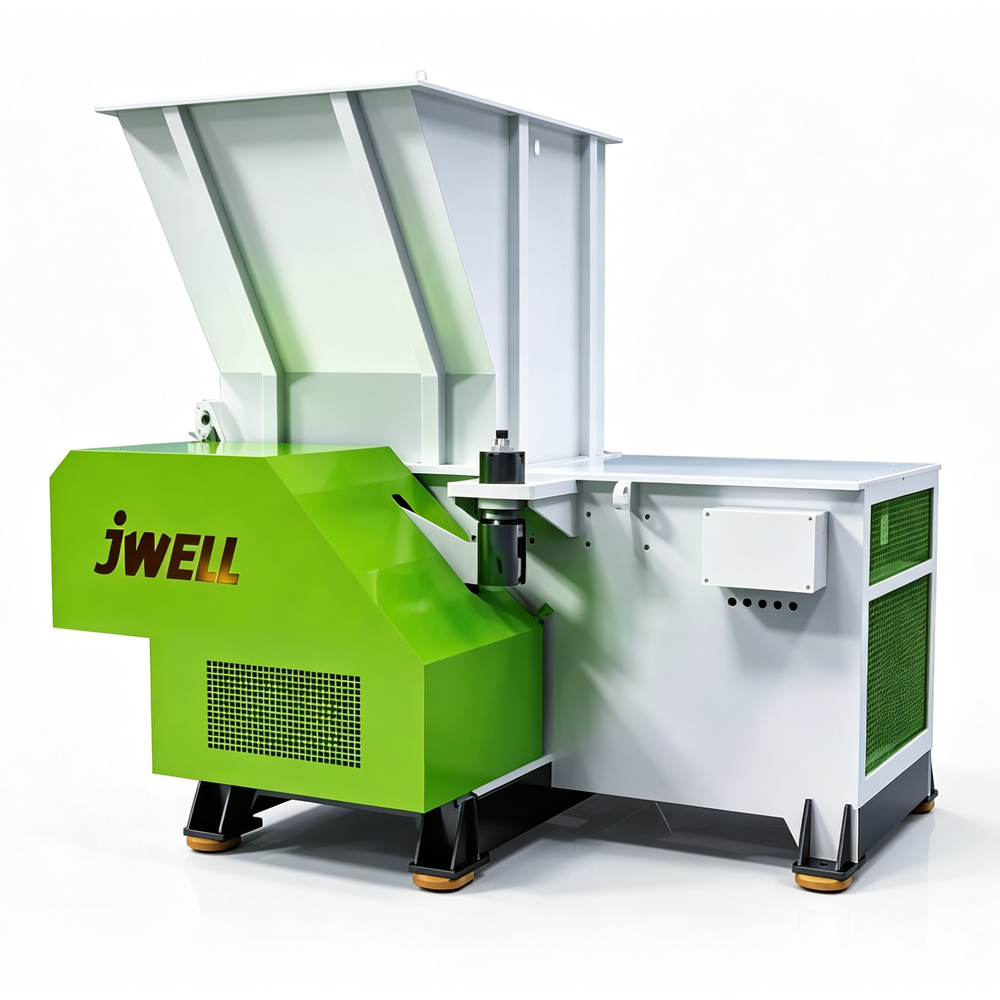
Plastic Shredder Crusher Machine

Tel: +86-19057068112

E-mail: [email protected]

Company Address
No. 128 Qingfeng Road, Xieqiao Town, Haining City, Jiaxing City, Zhejiang Province

19057068112

 English
 русский