
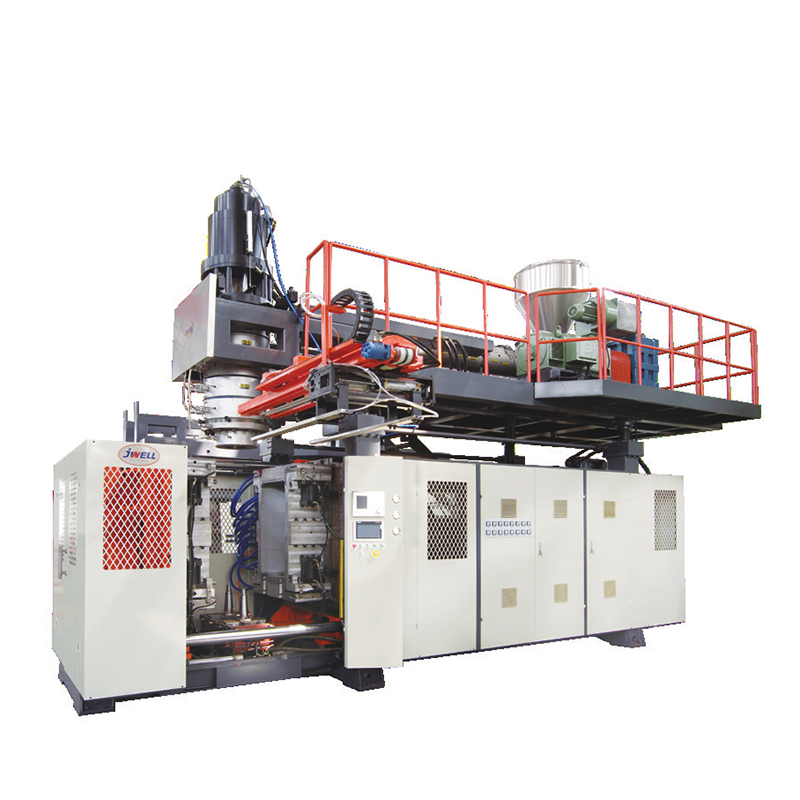
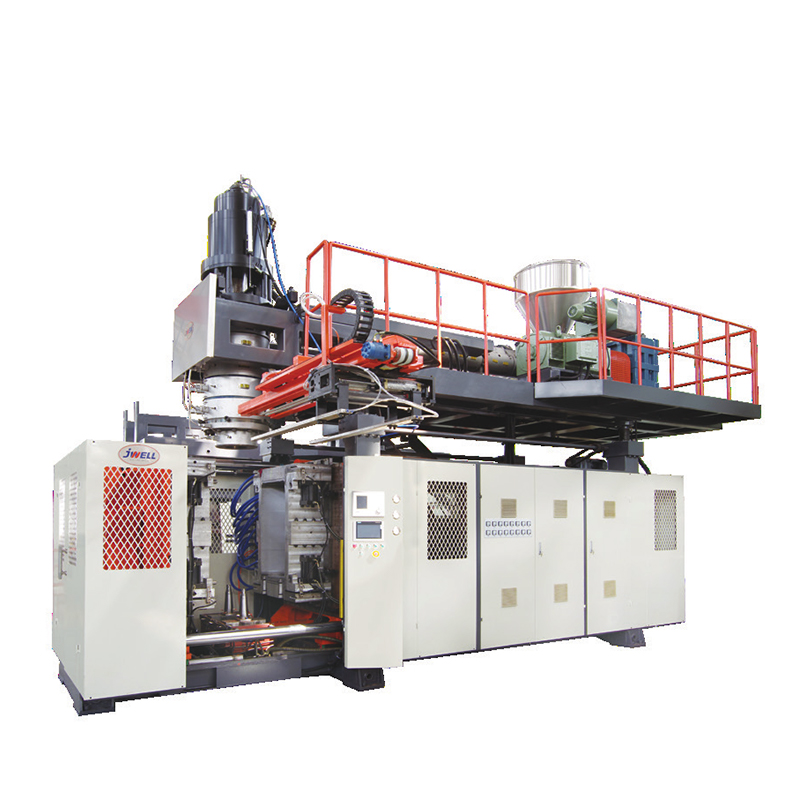
The BM160 and BM230 are accumulator-head blow molding machines designed for the high-volume production of medium to large hollow containers. The BM160 offers a maximum product volume of 160L with a single-layer head; the BM230 supports a maximum product volume of 230L with three-layer co-extrusion capability. Both models are equipped with servo-driven hydraulic systems, balancing high output with energy efficiency.
The BM160 and BM230 are accumulator-head blow molding machines designed for producing large hollow products with maximum volumes of 160L and 230L respectively. These two machines are widely used in industrial packaging, automotive, and chemical industries.
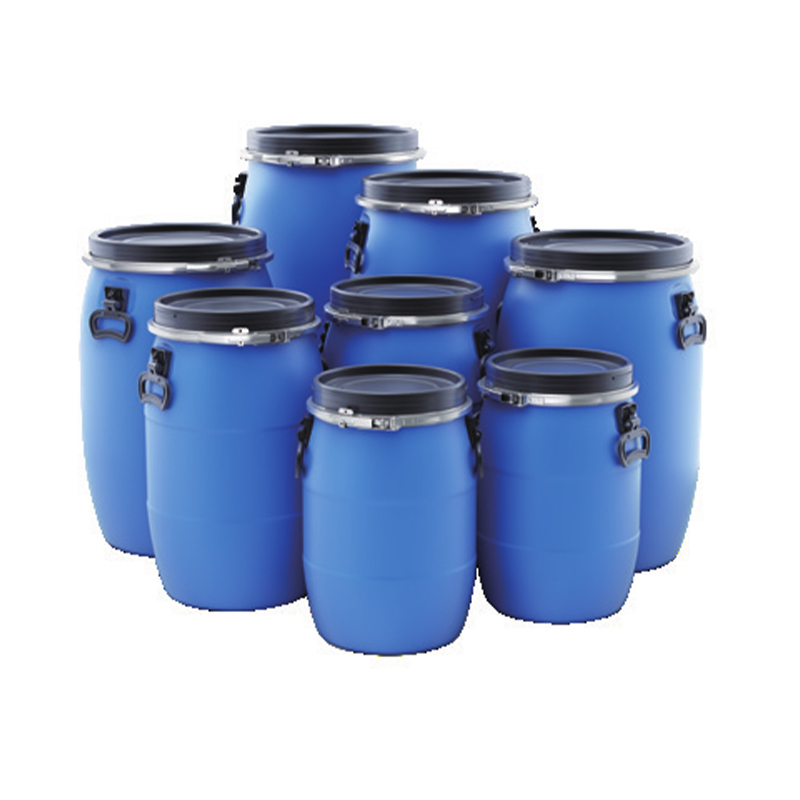
Typical products include:
Industrial drums (e.g., 120L–230L chemical drums)
Water storage tanks
Automotive parts (e.g., air ducts, fuel tanks)
Toolboxes and large containers
Real case: A German chemical packaging company uses the BM230 to produce three-layer 200L industrial drums, achieving a total output of 450–500 kg/h with excellent barrier properties against hazardous liquids.
High output & energy efficiency
BM160: Plasticizing capacity 200 kg/h (PE), motor power 55 kW.
BM230: Twin-screw design (90/26×2 + 70/26×1), output 450–500 kg/h, ideal for high-volume production.
Multi-layer co-extrusion capability (BM230)
Three-layer structure allows simultaneous extrusion of virgin material + regrind + barrier layer, reducing material costs while improving product strength and chemical resistance.
Large mold & high clamping force
BM230 clamping force: 900 kN, mold opening stroke: 750–1750 mm → accommodates extra-large molds.
Platen size: 1250×1450 mm → supports complex, large-sized products.
Servo-driven hydraulic system
Both models use servo pump motors (30 kW), saving 30–50% energy compared to conventional hydraulic systems.
Compact footprint
BM160: 5.5×3.5×4 m → fits standard factory layouts without extensive civil works.
We implement a strict 4-stage quality control process to ensure machine reliability and product consistency.
Stage 1 – Raw material & component inspection
All hydraulic components (pumps, valves) and electrical parts (servo motors, PLC) are tested before assembly.
Stage 2 – In-process inspection during assembly
Verify screw concentricity, barrel heating uniformity, and accumulator piston seal integrity.
Stage 3 – No-load & dry cycle test
Cycle time test: BM230 completes a full mold open/close cycle in ≤12 seconds.
Hydraulic leak test: Maintain 30 MPa for 2 hours.
Stage 4 – Trial production run (using customer’s material)
Example: Continuous 8-hour run using HDPE material with a 150L drum mold.
Inspections: Wall thickness distribution (±0.2mm), weight consistency (±0.5%), and flash thickness.
Stage 5 – Final inspection report
Includes servo response curves, temperature profiles, energy consumption records, and output records.
Product Parameters:
|
Model
|
Unit
|
BM160
|
BM230
|
|
Max product volume
|
L
|
160
|
230
|
|
Layer
|
-
|
Single Layer
|
Three layer
|
|
Die head structure
|
-
|
Accumulating type
|
Accumulating type
|
|
Main screw diameter
|
mm
|
100/25 / 100/30
|
90/262+70/261
|
|
Max plasticizing capacity (PE)
|
kg/h
|
200 / 240
|
450-500
|
|
Driving motor
|
Kw
|
55 / 90
|
75*2+37
|
|
Accumulating volume
|
L
|
12
|
25
|
|
Oil pump motor power (Servo)
|
Kw
|
30
|
30
|
|
Clamping force
|
KN
|
600
|
900
|
|
Space between platen
|
mm
|
500-1500
|
750-1750
|
|
Platen size W*H
|
mm
|
1200*1400
|
1250*1450
|
|
Max. mould size
|
mm
|
1000*1400
|
1050*1500
|
|
Heating power of die head
|
Kw
|
28
|
32
|
|
Machine dimension LWH
|
m
|
5.5×3.5×4
|
8.2×5.4×6
|
|
Machine weight
|
T
|
16
|
25
|
|
Total power
|
Kw
|
138
|
320
|
Q1: Can the BM230 use regrind material?
A: Yes. The three-layer head allows regrind to be placed in the middle layer, with virgin material on the inner and outer layers. This maintains surface quality while reducing material costs by up to 25%.
Q2: What is the actual energy consumption of the BM160?
A: At full load (200 kg/h output), the servo system consumes about 30–35 kWh, and total machine consumption is approximately 65–80 kWh, depending on the mold and cycle time.
Q3: How long does it take to change molds on the BM230?
A: With the optional quick mold change system, it takes about 20–30 minutes for molds up to 1050×1500 mm. Using the standard clamping system, it takes about 1.5 hours.
Q4: What is the maximum single-part weight?
A: The BM230, equipped with a 25L accumulator, can shoot a maximum part weight of 25 kg (e.g., one 230L drum body). The BM160, with a 12L accumulator, can shoot a maximum of 12 kg.
Q5: Do you provide training?
A: Yes. We provide on-site installation + 5 days of training, covering screw parameter settings, mold alignment, servo tuning, and basic troubleshooting.
Q6: The BM230 has a total installed power of 320 kW. Is that much power really needed in actual production?
A: No. Total installed power is the theoretical maximum when all heaters, motors, pumps, etc., run simultaneously at full load, but this never occurs in actual production.
Take the BM230 producing 200L three-layer drums as an example:
Main screw motors (75×2+37 kW) are actually loaded at about 60–70%;
Head heating power (32 kW) works intermittently (temperature control on/off);
Servo pump (30 kW) outputs on demand, averaging about 18–22 kW.
Actual total power consumption is typically between 110–150 kW. We recommend customers size transformers and cables based on measured current draw to avoid unnecessary capacity waste.
Q7: Can the BM160 be upgraded to multi-layer co-extrusion? What if we need to produce three-layer products in the future?
A: The BM160 comes standard with a single-layer accumulator head and cannot be directly upgraded to three-layer. However, if you currently produce single-layer products but plan to make three-layer items in the future (e.g., chemical drums with a regrind layer), we recommend directly choosing the BM230 three-layer model.
For existing BM160 customers, we offer a trade-in service: the old machine is evaluated and its value deducted from the purchase price of a BM230, and some common molds can be retained. In a real case, a Turkish customer first used a BM160 to produce 120L single-layer water tanks; one year later, their orders upgraded to 200L three-layer chemical drums. Through the trade-in solution, they quickly switched without leaving equipment idle.




Pipe Extrusion Production Line
Plastic Shredder Crusher Machine

Tel: +86-19057068112

E-mail: [email protected]

Company Address
No. 128 Qingfeng Road, Xieqiao Town, Haining City, Jiaxing City, Zhejiang Province

19057068112

 English
 русский