
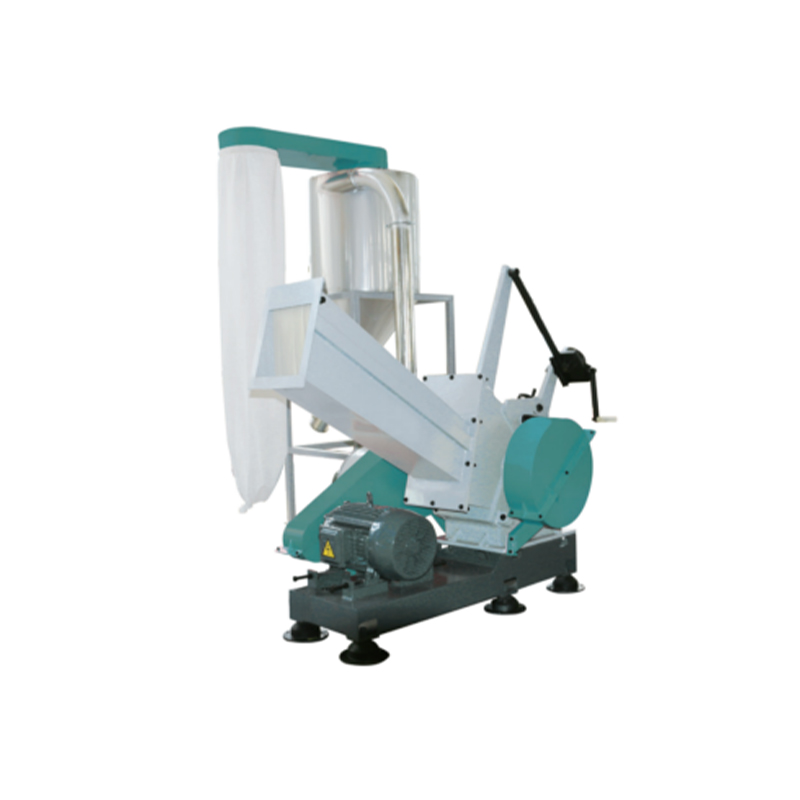
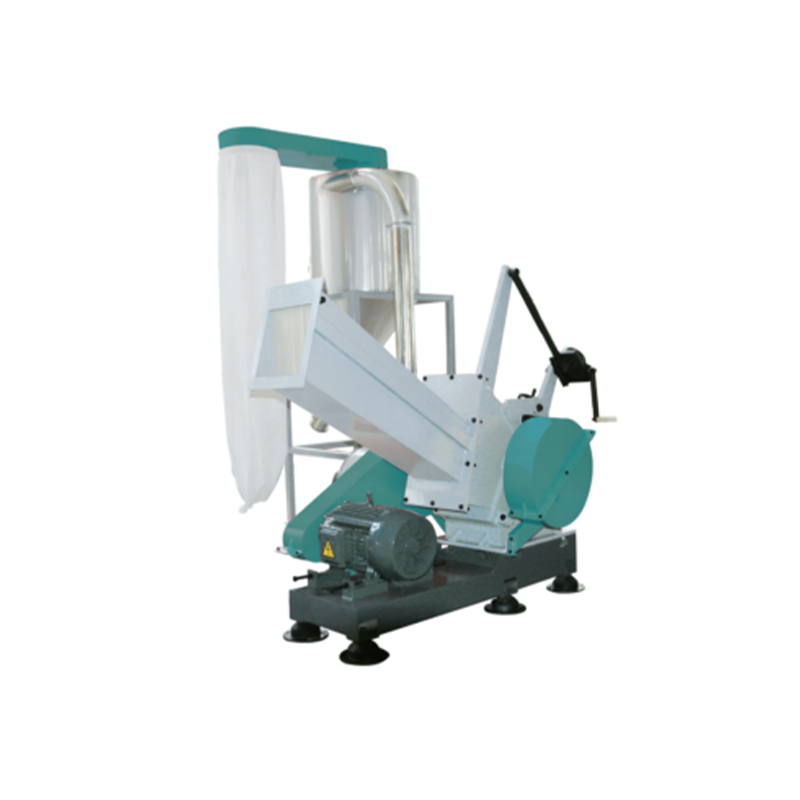
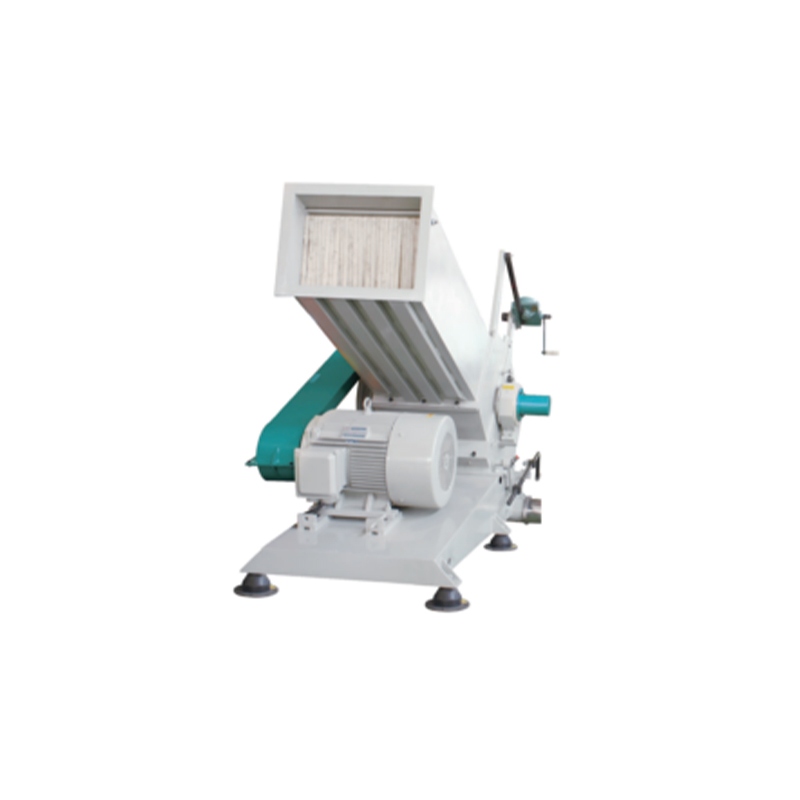
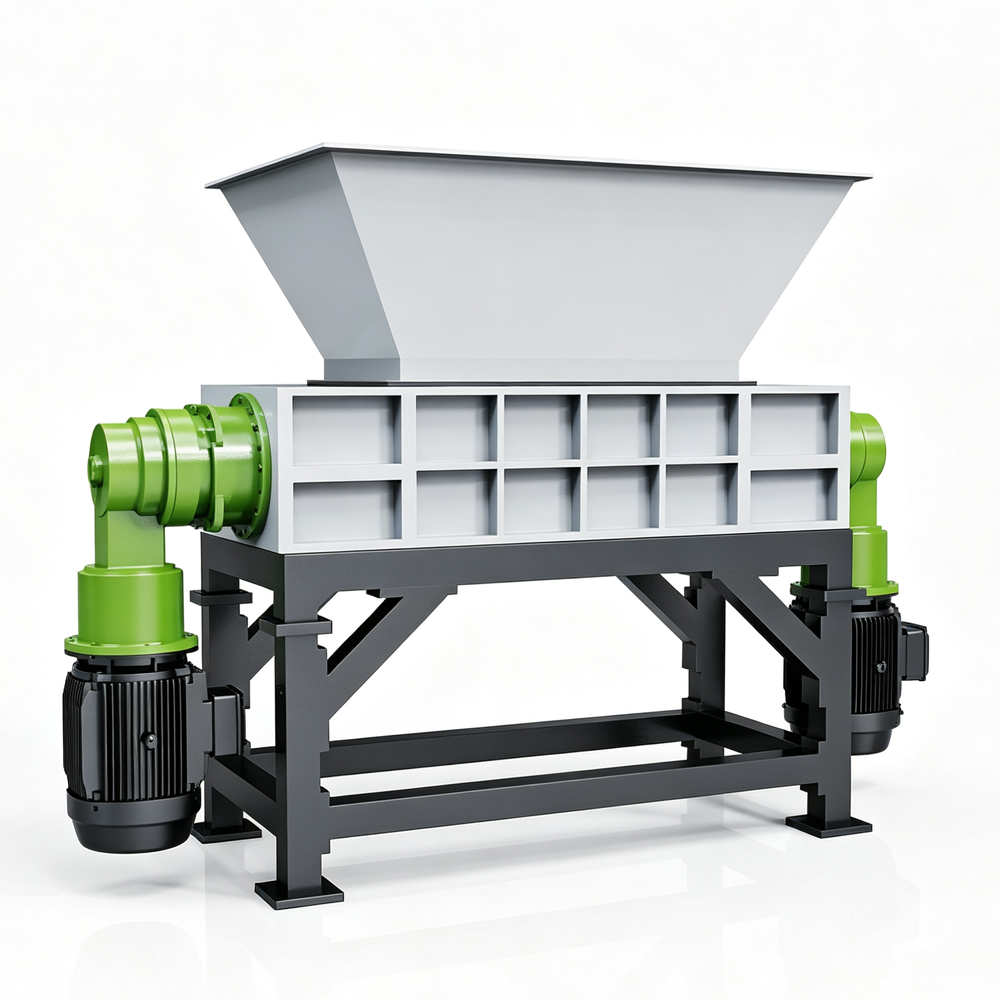
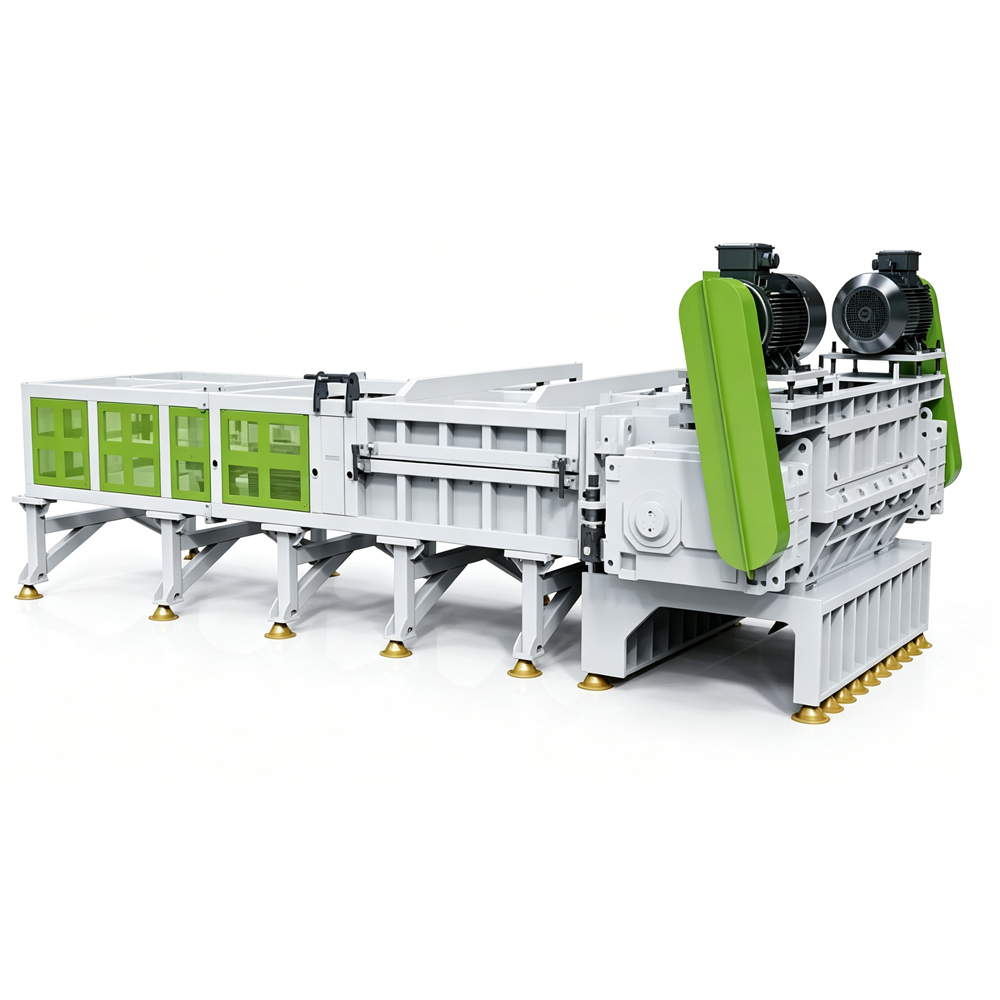
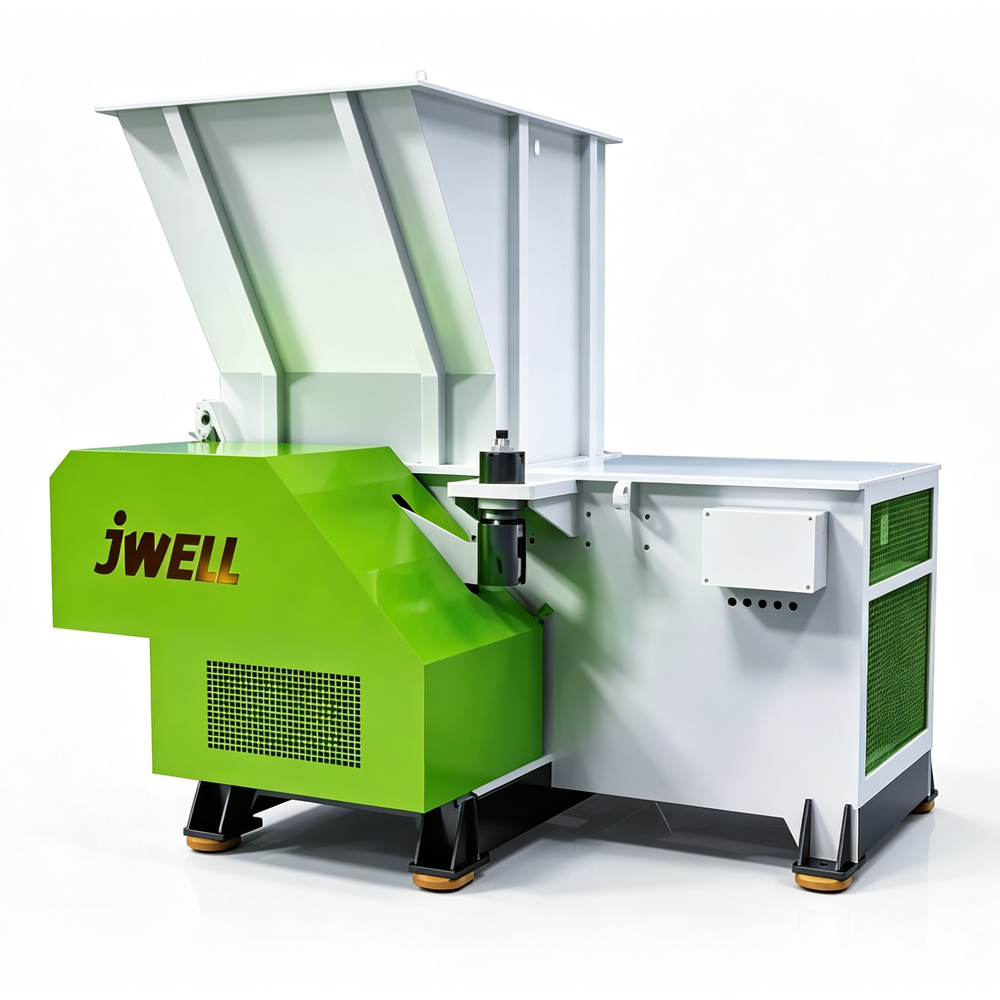
The WPS-XM series is a dedicated size reduction solution for Wood-Plastic Composite (WPC) profiles (e.g., decking, window frames, railings, decorative trim). Designed to handle the unique abrasiveness and profile shapes of WPC,
Case 1: USA – Outdoor Decking Profile Manufacturer
A medium-sized producer in Ohio struggled with edge trim and reject boards from their extrusion line. They installed a JWPS-X600 (300×600mm feed opening, 35kW, 15 rotating blades). The granulator now processes 2-meter-long hollow decking boards into 8–10mm regrind at 500–600 kg/h, feeding directly back to the extruder. Blade change downtime was reduced by 60% compared to their previous general-purpose granulator.
Case 2: Germany – Door & Window Profile Recycler
A German WPC window frame recycler needed fine, uniform regrind from hard, high-wood-fiber profiles. They chose the JWPS-M400 (240×400mm feed opening, 22kW, 24 rotating blades). The multi-blade design produces stable 5–6mm particles, ideal for co-extrusion processes. Running 8 hours/day, they recycle 2.8 tons of factory waste per week, saving €18,000 in raw material costs annually.
Typical applications include:
Size reduction of WPC window/door profiles, decking, fence posts, automotive trim profiles
In-line recycling of extrusion line waste (startup lumps, rejected boards, die trim)
Volume reduction of long, hollow, or ribbed profiles that tend to jam conventional granulators
|
Feature |
Benefit to User |
|
Wide feed opening (up to 300×600mm) |
Feeds long profiles without pre-cutting – saves labor and sawing costs |
|
Rotor working width (300/400/600mm) |
Matches profile width, reduces material circulation |
|
Two rotor designs – X (5–15 blades) vs. M (24–36 blades) |
X for coarse granulation (8–12mm), M for fine, uniform granulation (4–6mm) |
|
Low motor power vs. throughput – e.g., 55kW → 650 kg/h (M600) |
Energy efficient – saves up to 20% electricity compared to conventional granulators |
|
Special wear-resistant steel in cutting chamber |
Handles high wood-fiber content (up to 60% wood flour) – 3x longer service life |
|
Easy-access screen and blade design |
Screen change or blade reversal in <15 minutes – minimal downtime |
Compared to general-purpose granulators:
No “wrapping” of long profiles.
Less fines (dust) generation – critical for WPC (dust can cause combustion risk).
More uniform particle size distribution thanks to optimized rotor geometry.
Every JWPS-XM granulator undergoes a 4-stage quality process before shipment:
Stage 1 – Raw Material & Component Inspection
Rotating blades: D2 steel, hardness HRC 58–62 (Rockwell test).
Main shaft: 42CrMo alloy, 100% ultrasonic flaw detection.
Bearings: SKF/FAG, validated by vibration analysis (≤1.8mm/s).
Stage 2 – Rotor Dynamic Balancing
Rotor assembly achieves G2.5 balance grade (ISO 1940-1 standard) at operating speed.
Ensures smooth operation and prevents bearing damage.
Stage 3 – No-Load & Load Testing
No-load: Run for 2 hours – monitor current, temperature (bearings <70°C), noise (<85dB).
Load test: Feed actual WPC profiles (e.g., 40% wood flour, 60% HDPE) for 4 hours. Measure throughput and size deviation (within ±5%).
Example: For JWPS-X300, verified throughput of 300±15 kg/h at 15kW.
Stage 4 – Final Assembly & Safety Check
Test all guards, emergency stops, and interlock switches (CE/ANSI compliant).
Each machine comes with a test report and particle size chart (sieve analysis).
“We run your material on a pilot machine and send you video proof of output quality before shipment.” – Factory Quality Team
|
Model
|
Feed Mouth Size (mm)
|
Rotor Effective Width (mm)
|
Motor Power (kW)
|
Rotor Blade (pcs.)
|
Output (kg/h)
|
|
JWPS-X300
|
200×300
|
300
|
15
|
5
|
3000
|
|
JWPS-X600
|
300×600
|
600
|
35
|
15
|
6000
|
|
JWPS-M400
|
240×400
|
400
|
22
|
24
|
3500
|
|
JWPS-M600
|
300×600
|
600
|
55
|
36
|
6500
|
Q1: Which model should I choose – X series or M series?
X series (5–15 blades): For coarse granulation (8–15mm), or if you have a separate fine-grinding step. Higher throughput per kW.
M series (24–36 blades): For direct in-line recycling requiring uniform 4–6mm particles. Slightly lower throughput per kW, but better particle consistency.
Q2: What is the typical blade life when granulating WPC?
At 40–50% wood flour content, blade life is 400–600 hours (~2–3 months at 8 hours/day). Each blade has 2 cutting edges (reversible), doubling the life. Cost for a full blade set is approx. $180–350, depending on model.
Q3: Can it granulate long profiles (e.g., 3 meters)?
Yes – the wide feed opening and open rotor design allow full-length feeding without pre-cutting. Use a conveyor belt or hand-feed at an angle. For very thin-walled profiles (<2mm), we recommend an optional feed roller.
Q4: How is dust controlled?
WPC generates less dust than pure wood but more than plastic. Standard features:
Water mist nozzle connection (optional kit) – fine mist suppresses dust.
Enclosed discharge – can connect to your dust collection system (4” flange provided).
Q5: What is the difference between “rotor working width” and “feed opening size”?
Feed opening size (e.g., 300×600mm) = opening dimensions – limits profile cross-section.
Rotor working width (e.g., 600mm) = actual cutting length – a wider rotor accommodates more blades, increasing throughput.
Q6: Do you provide sample testing?
Yes – send 50–100kg of your waste profiles. We will run them on the appropriate model, record throughput, particle size, and energy consumption, then send you the granulated sample along with a video report. This service is free for serious customers.




Pipe Extrusion Production Line
Plastic Shredder Crusher Machine

Tel: +86-19057068112

E-mail: [email protected]

Company Address
No. 128 Qingfeng Road, Xieqiao Town, Haining City, Jiaxing City, Zhejiang Province

19057068112

 English
 русский