
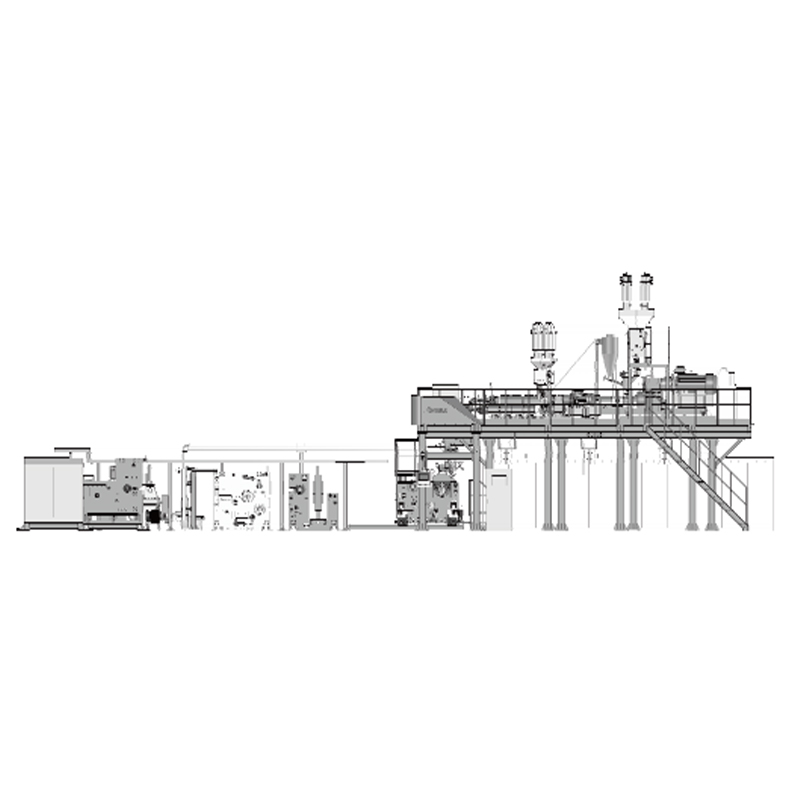

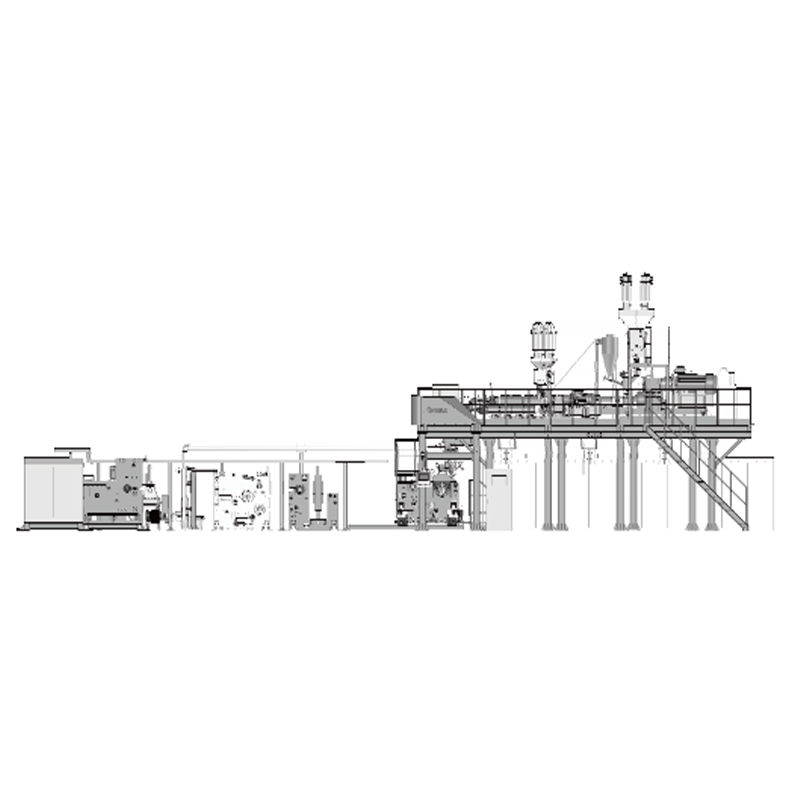
Jwell's JCFPP series CPP cast decorative film extrusion lines are specifically designed for high-efficiency production of multi-layer cast polypropylene (CPP) decorative films. With proven configurations such as JCFPP-1650ZS-2 and JCFPP-2900ZS-4, these lines provide precise width control, stable output, and excellent layer distribution to meet demanding decorative applications.
These extrusion lines are specifically designed for decorative CPP films for:
Furniture surfaces – lamination for cabinets, wardrobes, desks (wood grain, marble, or solid color finishes)
Automotive interior parts – door panels, instrument panels, pillar trims requiring scratch resistance and soft-touch surfaces
Wall coverings and ceiling films – lightweight, printable, washable decorative layers
Packaging with decorative effect – gift wrapping paper, laminated packaging boxes, high-grade carton surface layers
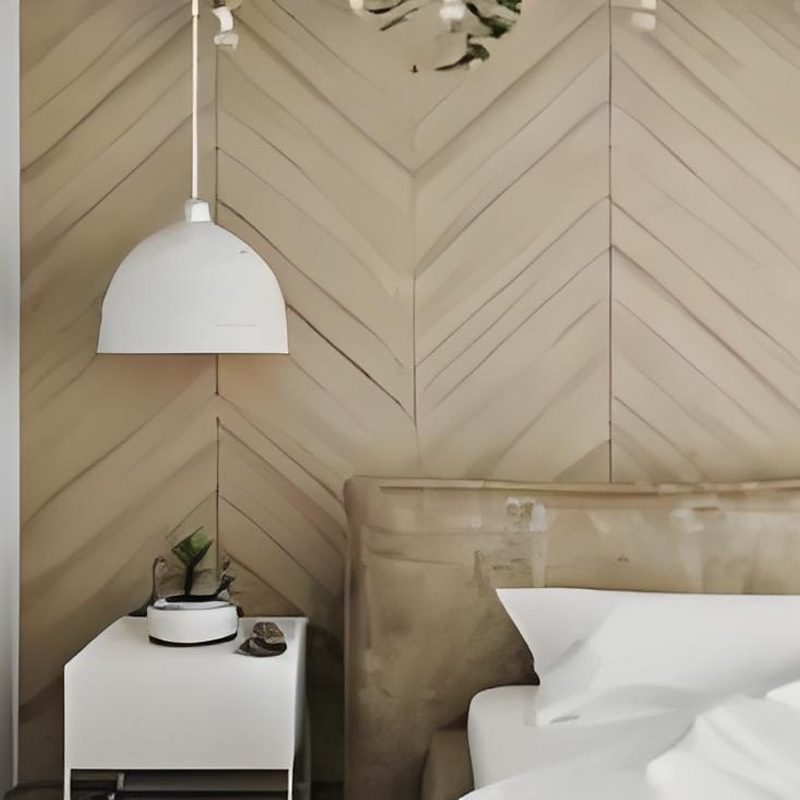
Real case: A Turkish furniture film producer uses JCFPP-1650ZS-2 (die 1650 mm, net film width 1350 mm), output 380 kg/h, with ABA layer structure. They successfully replaced PVC film with CPP, achieving better heat resistance and lower VOC emissions for bedroom furniture.
Large-scale case: A Chinese decorative film manufacturer runs two JCFPP-2900ZS-4 lines (die 2900 mm, net film width 2600 mm), each output 750 kg/h. The ABCD 4-layer design enables them to produce in one pass a composite structure of white opaque bottom layer + colored middle layer + top UV-resistant layer + bottom primer layer for wall panel lamination.
|
Feature |
Advantage (based on actual parameters) |
|
Wide die and film width – 1650/2900 mm die → 1350/2600 mm net film |
Minimizes edge trim waste (only ~150 mm per side), more saleable area per hour |
|
High output range – 350– 450 kg/h (1650ZS-2) / 700– 800 kg/h (2900ZS-4) |
Stable production even at maximum output; proven in 24/7 continuous operation |
|
Multi-layer configurations – ABA (2-layer) / ABCD (4-layer) |
ABA: excellent symmetry prevents curling. ABCD: enables functional layers (e.g., UV-resistant layer, adhesive layer, matte surface layer) without additional lamination steps |
|
Cast process – rapid quenching from melt to solid |
High gloss and high clarity – critical for wood grain or metallic decorative films |
|
Energy-saving design – optimized screws and barrels |
Lower melt temperature, reduced cooling energy consumption (field data shows ~12– 15% lower electricity than comparable lines)
|
Additional practical advantages reported by customers:
Quick die cleaning system (less than 2 hours for 2900 mm die)
Automatic thickness profile control (±1.5 μm accuracy across 2600 mm width)
Integrated edge trim cutting and recycling – recycled material directly back to extruder for ABA structure
We adopt a 4-stage QC workflow to ensure every roll of decorative film meets global standards (ASTM, ISO, or customer-specific standards).
Stage 1 – Online Monitoring
Melt pressure and temperature sensors on each extruder (alarm on deviation >2%)
Continuous thickness measurement (online β-ray or X-ray gauge) – full width data recorded every 0.5 seconds
Automatic die bolt adjustment – full width thickness variation kept within ±2%
Stage 2 – Sampling and Laboratory Testing (every 2 hours)
|
Test Item |
Equipment |
Acceptance Criteria (example) |
|
Thickness profile |
Micrometer / off-line scanner |
1350 mm ≤ ±1.5 μm; 2600 mm ≤ ±2.0 μm |
|
Tensile strength (MD/TD) |
Universal tester |
MD ≥ 35 MPa, TD ≥ 25 MPa |
|
Elongation at break |
Universal tester |
MD ≥ 500%, TD ≥ 700% |
|
Haze & gloss |
Haze meter / gloss meter |
Haze ≤ 3%, gloss (60°) ≥ 85 (for clear top layer) |
|
Heat seal strength (if applicable) |
Heat sealer + peel tester |
≥ 2.5 N/15mm at 130°C |
|
Coefficient of friction |
COF tester |
0.2 – 0.4 (for slip performance)
|
Stage 3 – Simulated End-Use Testing (once per shift)
Printability test – apply solvent-based/UV ink on treated surface (dyne level ≥ 38 mN/m)
Lamination peel test – bond film to MDF at 110°C, peel strength > 1.5 N/mm
Heat aging test – 48 hours at 80°C; no yellowing or delamination
Stage 4 – Final Roll Inspection
Winder inspection – check for meandering, wrinkles, bubbles
Metal detector and black light – detect any contaminants or pinholes
Roll weight and dimensions – conform to order requirements (e.g., 1350 mm width × 600 mm OD, 3-inch core)
Real case: A UAE customer producing decorative wall films used JCFPP – 2900ZS – 4 with online thickness feedback. They reduced thickness variation from ±4 μm to ±1.8 μm within one week, saving 8% in material.
|
Model
|
T-die(mm)
|
Products width(mm)
|
Capacity(kg/h)
|
Layers
|
|
JCFPP-1650ZS-2
|
1650
|
1350
|
350-450
|
ABA LAYER
|
|
JCFPP-2900ZS-4
|
2900
|
2600
|
700-800
|
ABCD LAYER
|
Q1: What is the MOQ for this line?
A: We sell by individual line. MOQ = 1 complete extrusion line (extruder, die, chill roll unit, winder, and optional corona treater). A spare parts kit is recommended but not mandatory.
Q2: Can I produce film below 0.1 mm thickness?
A: Yes. The JCFPP series can produce 0.03 mm to 0.5 mm thickness. For decorative film, the common range is 0.08 – 0.25 mm. Below 0.05 mm, we recommend ABCD configuration for better melt stability.
Q3: How long does it take to switch between ABA and ABCD?
A: The line cannot be field-converted between 2-layer and 4-layer – you select the configuration when ordering. However, within the same configuration, changing layer ratios (e.g., A/B from 20/80 to 40/60) via the control panel takes about 15 minutes.
Q4: What raw materials are suitable?
A: Homopolymer PP, random copolymer PP, and special decorative-grade CPP resins. Also compatible with calcium carbonate filler (up to 40%) for cost reduction, and in-house recycled material (for core layer in ABA/ABCD, up to 30%).
Q5: How are the 1650 mm and 2900 mm die widths shipped?
A: The die and chill roll are packed in reinforced wooden crates. For 2900 mm (~9.5 ft wide), we use a 40-ft open-top container or flat rack. On-site installation support is provided.
Q6: What is typical power consumption?
A: Field measured:
JCFPP – 1650ZS – 2: Installed power 210 kW, actual consumption ~160 kW (at 400 kg/h output)
JCFPP – 2900ZS – 4: Installed power 380 kW, actual consumption ~290 kW (at 750 kg/h output)
Q7: Do you provide training and commissioning services?
A: Yes. We provide 14 days of on-site commissioning and operator training. Remote support via video call is also available during the warranty period (12 months).
Q8: How to quickly clean the die for color changes?
A: Use purging compound (PP-based) followed by manual scraping. For the 1650 mm die, one full cleaning takes about 1 hour; for the 2900 mm die, about 1.5 hours with two technicians.





Tel: +86-19579950928

E-mail: [email protected]

Company Address
No. 128 Qingfeng Road, Xieqiao Town, Haining City, Jiaxing City, Zhejiang Province

19579950928

 English