
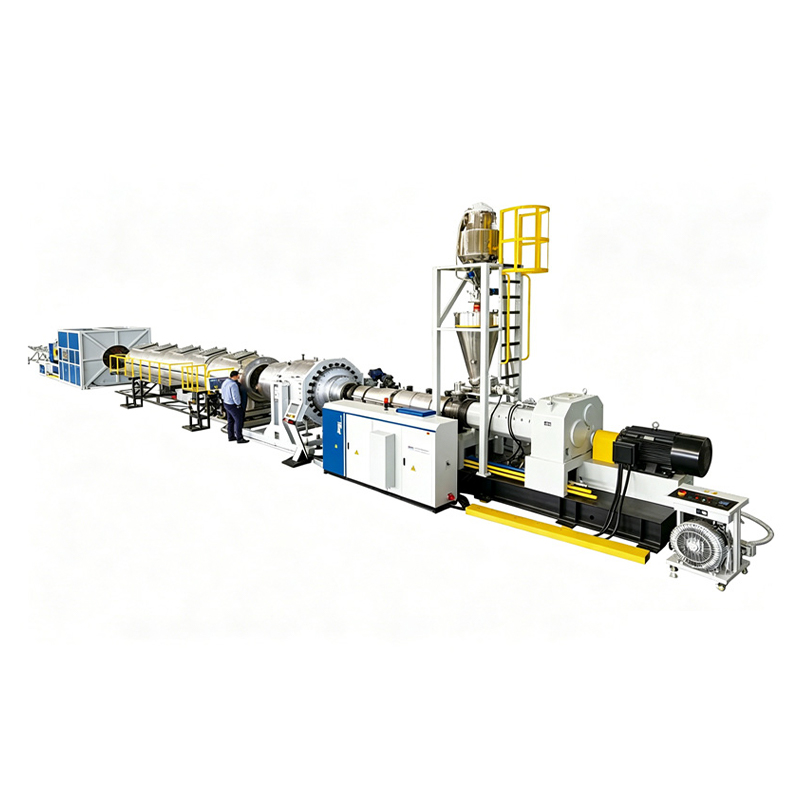
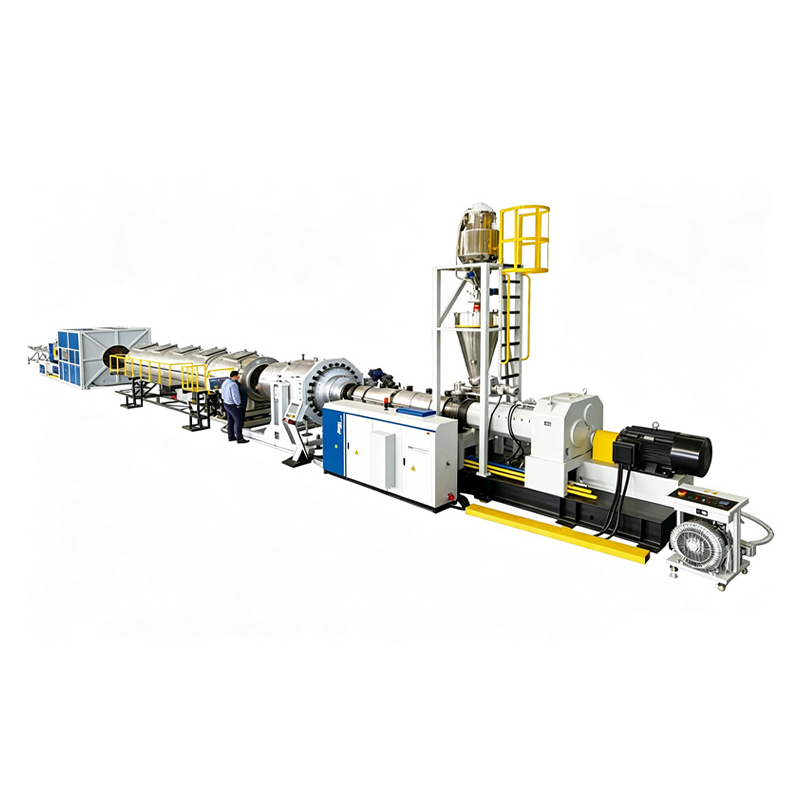
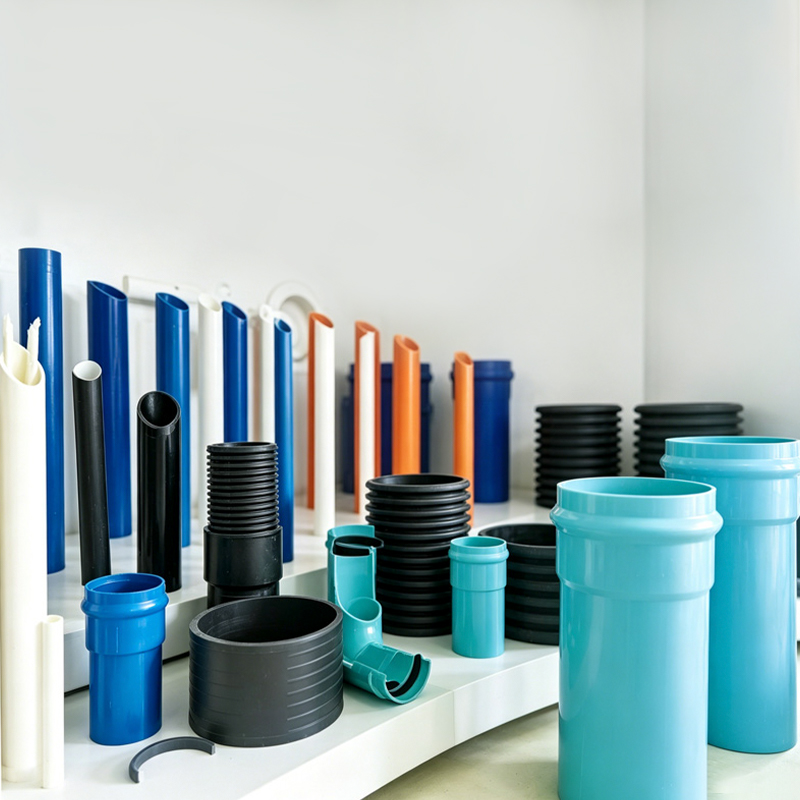
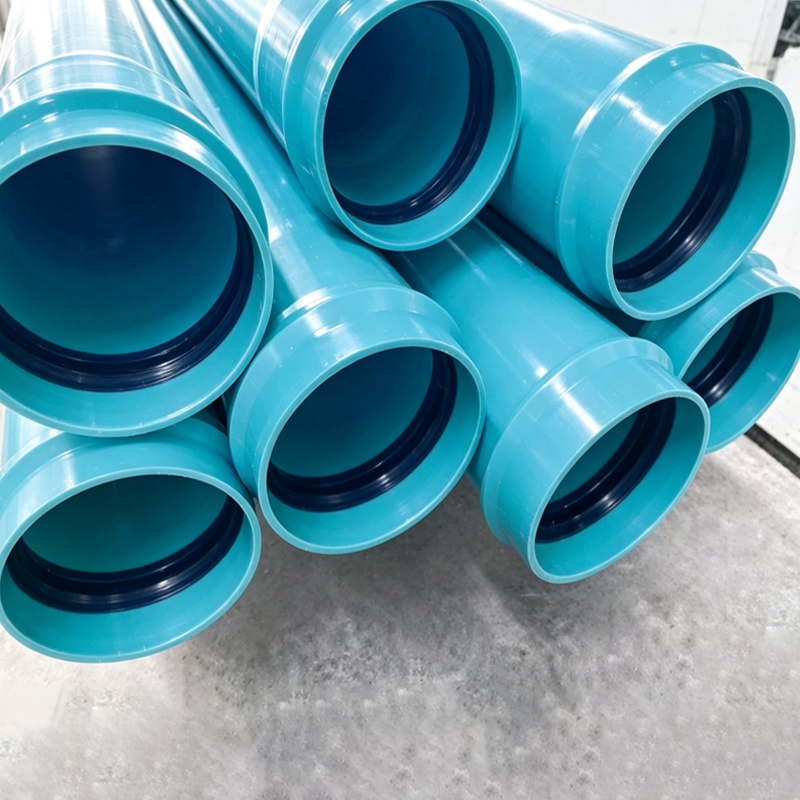
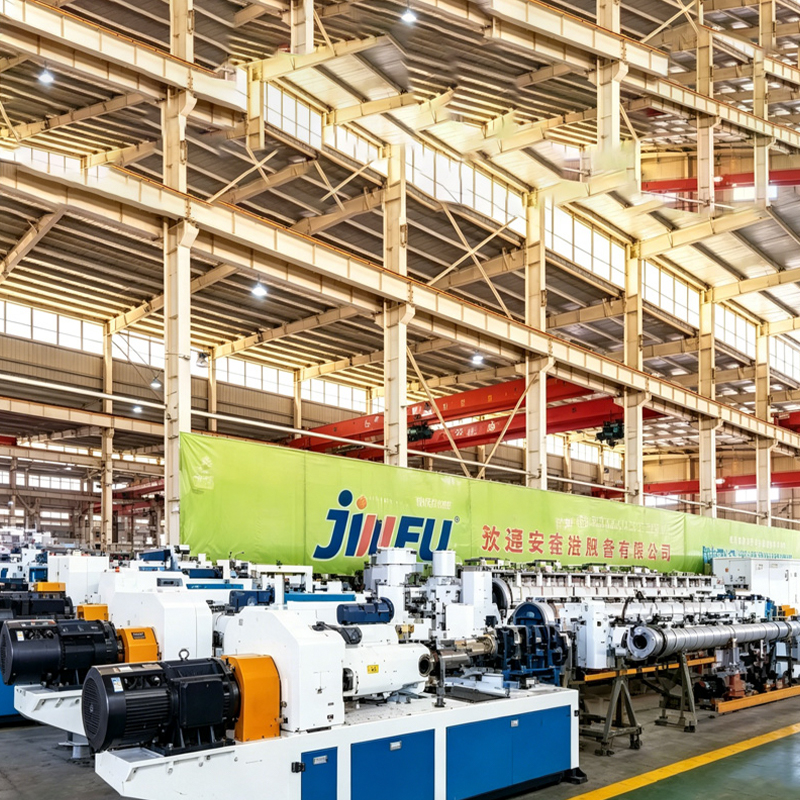
In the fields of municipal water supply, drainage, power sheathing, and chemical transportation, the demand for high-performance PVC pipes continues to grow. Jwell's JWG series conical twin-screw PVC pipe extrusion lines are specially designed to produce PVC-UH, UPVC, and CPVC pipes, with a pipe diameter range of Φ16mm – Φ1200mm and an output of up to 1200 kg/h.
|
Production Line Model |
Typical Pipe Specifications |
Typical Applications |
|
JWG-PVC63 / 110 / 160 |
Φ16-Φ160 |
Building water supply, wire conduits, agricultural irrigation |
|
JWG-PVC250 / 400 |
Φ75-Φ400 |
Municipal drainage, buried sewage, industrial fluid transport |
|
JWG-PVC500 / 630 |
Φ250-Φ630 |
Large-diameter municipal water supply, utility tunnel projects |
|
JWG-PVC800 / 1000 / 1200 |
Φ400-Φ1200 |
Cross-sea drinking water projects, main pipes of large-scale wastewater treatment plants |
Real case: In 2023, a municipal engineering company in Vietnam purchased a JWG-PVC400 line to produce φ315mm UPVC drainage pipes. The equipment runs stably at an output of 580 kg/h, with uniform pipe wall thickness and ring stiffness reaching SN8 grade. It was successfully applied in the drainage renovation project of Ho Chi Minh City's new district.
1. Conical Twin-Screw Design, Good Plasticization, Low Energy Consumption
The extruder adopts SJZ65/132, SJZ80/156, SJZ92/188 and SJZ110/220 series conical twin screws.
Compared with parallel twin screws, the conical twin screw has a larger feed section diameter and a shorter compression section. PVC powder is fed directly without bridging, and plasticization uniformity is improved by more than 20%.
For example, the SJZ80/156 with a 55kw main motor can achieve an output of 450-550 kg/h, with a unit energy consumption of only 0.12-0.14 kw/kg, far better than the industry average.
2. Full Coverage of Specifications, One Machine for Multiple Functions
From micro pipes (Φ16mm) to ultra-large diameters (Φ1200mm), a total of 10 models meet all requirements from small renovation projects to national backbone pipe networks.
For example, the JWG-PVC250 can produce Φ75-250mm pipes. Only the die and calibration sleeve need to be replaced; changeover time ≤ 40 minutes, flexibly handling multi-order production.
3. High Torque, High Stability Motor
Main motor power ranges from 37kw to 160kw, all using AC variable frequency motors + hard-tooth gearboxes.
The JWG-PVC500/630 is equipped with a 110kw motor, output 700-800 kg/h, trouble-free continuous operation for 5000 hours (actual test data from a pipe factory in Shandong, 2022).
4. Adaptability to Multiple PVC Materials
Compatible with PVC-UH (ultra-high molecular weight), UPVC (ordinary rigid), CPVC (chlorinated polyvinyl chloride, high temperature resistant).
By adjusting the screw speed (5-35 rpm) and heating zone temperature (160-210°C), material changeover can be done quickly. For example, when producing CPVC fire-fighting pipes, the output remains above 90% of the rated value.
We provide customers with a full-process control solution from raw material to finished pipe. The core nodes are as follows:
1. Online Quality Control (During Production)
|
Test Item |
Method |
Corresponding Parameters/Standards |
|
Melt pressure stability |
Pressure sensor monitoring |
Fluctuation ≤ ±3%, prevents inner wall rupture |
|
Pipe outer diameter / wall thickness |
Laser diameter gauge + ultrasonic thickness gauge |
Tolerance complies with ISO 1452 or ASTM D1784 |
|
Output consistency |
Gravimetric feeding system |
Weight deviation per meter ≤ 0.5% |
|
Vacuum calibration tank vacuum degree |
Digital vacuum gauge |
-0.04 ~ -0.08 MPa, ensures pipe roundness |
2. Offline Laboratory Testing (Sampling per batch)
Tensile strength: UPVC pipe ≥45 MPa, CPVC ≥55 MPa (according to GB/T 8804.1).
Vicat softening temperature: CPVC pipe ≥110°C, meeting hot water transport requirements.
Drop weight impact test: 0% failure rate at 0°C (drop weight 1kg, height 2m).
Ring stiffness test: SN4, SN8, SN12.5 grades adjustable, using electronic universal testing machine.
3. Quality Acceptance in a Real Case
A CPVC fire-fighting pipe manufacturer in Guangdong ordered a JWG-PVC160 line. We assisted them in setting up the following process:
First pipe after startup was subjected to dichloromethane immersion test (15°C, 30min), no cracks observed.
After 2 hours of continuous production, 10 sections of 1-meter-long pipe were randomly cut and subjected to flattening test (flatten to 50% of outer diameter); all passed.
Final product passed UL 1821 certification and was exported to Australia.
| Type | Pipe Spec(mm) | Extruder | Main Power(kw) | Output(kg/h) |
| JWG-PVC63 | φ16-φ63 | SJZ65/132 | 37 | 250~300 |
| JWG-PVC110 | φ20-φ110 | 5JZ65/132 | 37 | 250~300 |
| JWG-PVC160 | φ50-φ160 | SJZ65/132 | 37 | 250~300 |
| JWG-PVC250 | φ75-φ250 | SJZ80/156 | 55 | 450~550 |
| JWG-PVC400 | φ200-φ400 | SJZB0/156 | 75 | 550~650 |
| JWG-PVC500 | φ250-φ500 | SJZ92/188 | 110 | 700~800 |
| JWG-PVC630 | φ315-φ630 | SJZ92/188 | 110 | 700~800 |
| JWG-PVC800 | φ400-φ800 | SJZ110/220 or SJP135/31 | 160 | 1100~1200 |
| JWG-PVC1000 | φ630-φ1000 | SJZ110/220 or SJP135/31 | 160 | 1100~1200 |
| JWG-PVC1200 | φ800-φ1200 | SJZ110/220 or SJP135/31 | 160 | 1100~1200 |
Q1: Can your SJZ65/132 extruder produce both UPVC and CPVC pipes?
A: Yes. However, different screw combinations (we provide bimetallic screws, corrosion resistant) need to be replaced. For CPVC, the compression ratio must be adjusted from 1:3 to 1:2.8, and the homogenization zone temperature raised to 195-210°C. We can provide detailed material changeover process cards.
Q2: The nominal output of the JWG-PVC250 is 450-550 kg/h. Can it actually achieve that?
A: Absolutely. The above output is based on UPVC powder with 30% calcium carbonate filler, pipe specification φ110mm×3.2mm. We measured at a customer site in Zhejiang: 55kw motor, screw speed 28 rpm, average output 523 kg/h over 8 consecutive hours, with pipe surface roughness Ra ≤0.4μm. If the material flowability is better, output can approach 600 kg/h.
Q3: When producing Φ800mm ultra-large diameter pipes, how do you ensure wall thickness uniformity?
A: The key lies in the spiral mandrel die and multi-section vacuum calibration tank. The JWG-PVC800 adopts:
Spiral distributor (4 flow channels), melt linear velocity deviation <5%;
Three independent vacuum calibration sections (each vacuum can be adjusted individually), combined with calibration sleeve water ring cooling. In actual production, for Φ800×19.6mm pipe, the maximum wall thickness difference is ≤0.6mm (standard requirement ≤1.2mm), far exceeding national standards.
Q4: Why is your motor power 15% lower than other brands' machines with the same output?
A: Thanks to the conical twin-screw forced feeding and short thermal (thermal path) design. Take the SJZ80/156 as an example:
The effective screw length is only 1560mm, but the screw channel depth gradient is reasonable, resulting in high melting efficiency;
Meanwhile, low-friction alloy linings reduce the friction coefficient by 30%. Therefore, only 55kw is needed to achieve the output that other brands require 75kw for, saving about 60,000 RMB in electricity costs per year (calculated at 0.8 RMB/kWh, 7000 hours/year).
Q5: Can the equipment be equipped with automatic feeding and cutting?
A: Yes. We provide a full set of auxiliary equipment:
Vacuum auto loader (4.5kw, conveying height 5 meters);
Chip-less cutter (suitable for pipes up to Φ630mm, cut end perpendicularity ≤0.5°);
Automatic belling machine (inline belling, saves labor). Existing customers have achieved a line requiring only 2 operators (including quality inspection).
Q6: How long does it take to change pipe specifications (e.g., from Φ110mm to Φ200mm)? Is screw replacement required?
A: Screw replacement is not required. Only the die, calibration sleeve, and cutting (fixtures) need to be changed. Our quick-change flange design makes the complete changeover time approximately 30-50 minutes (for JWG-PVC250, operated by 2 skilled workers). If changing from a small diameter (e.g., Φ63) to a large diameter (e.g., Φ160), screw replacement is still not required because the conical twin screw is highly adaptable to pipe diameter changes. We provide an operation video for specification changeover, and remote guidance is available for the first month.
Q7: What power voltages and frequencies do your equipment support? How much floor space is required for installation?
A: Supports common global voltages: 380V / 415V / 440V, 50Hz or 60Hz (specify when ordering; we adjust motor and heater configurations). For a medium-sized model like the JWG-PVC250, the entire line footprint is approximately 28m long × 3m wide (including extruder, calibration table, puller, cutter, tipping rack). If a more compact layout is needed, a foldable collecting rack can be selected, reducing the length to 24m. We provide free 3D workshop layout service.


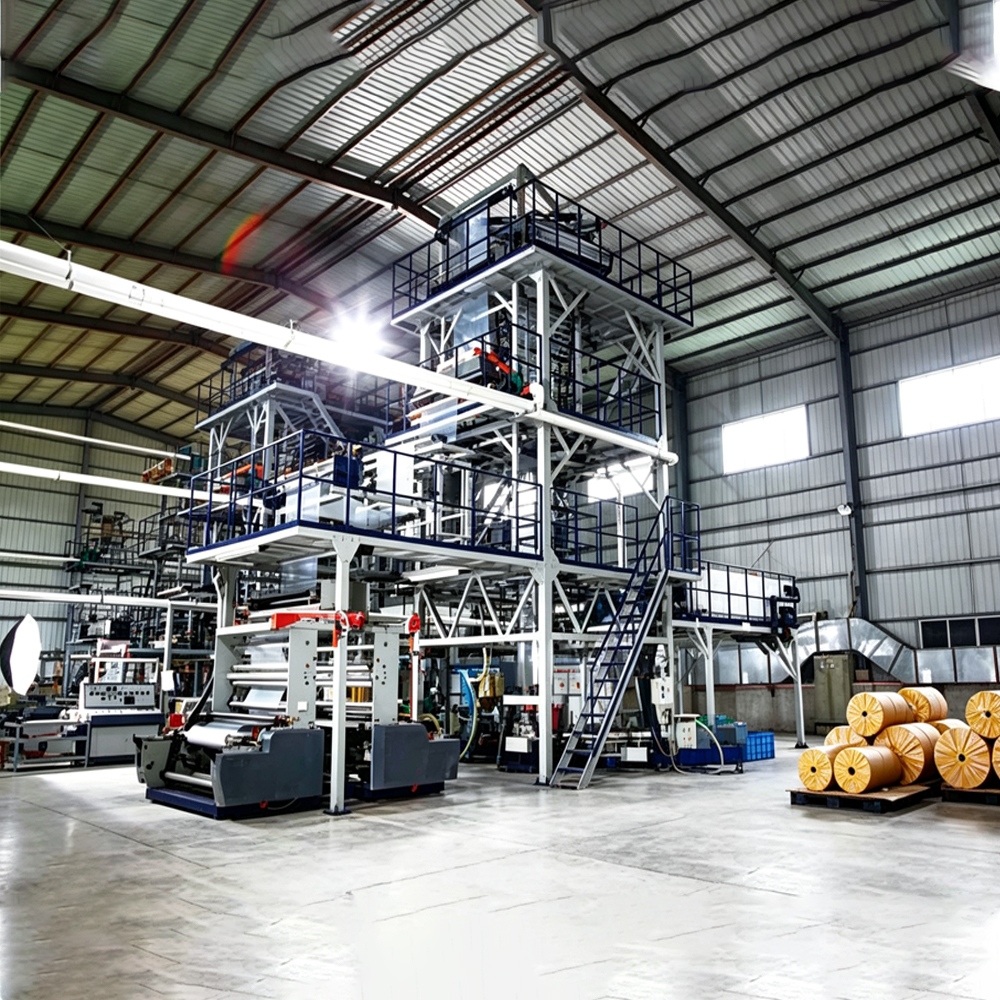
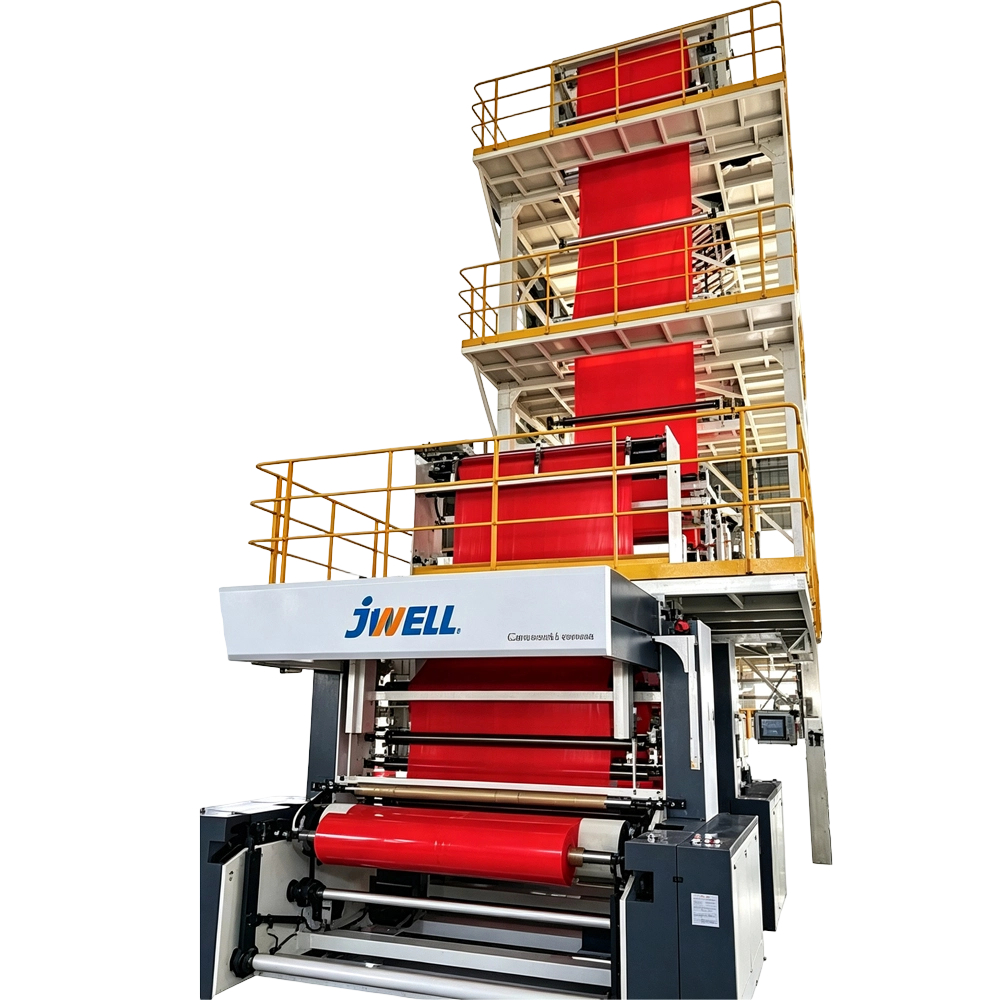
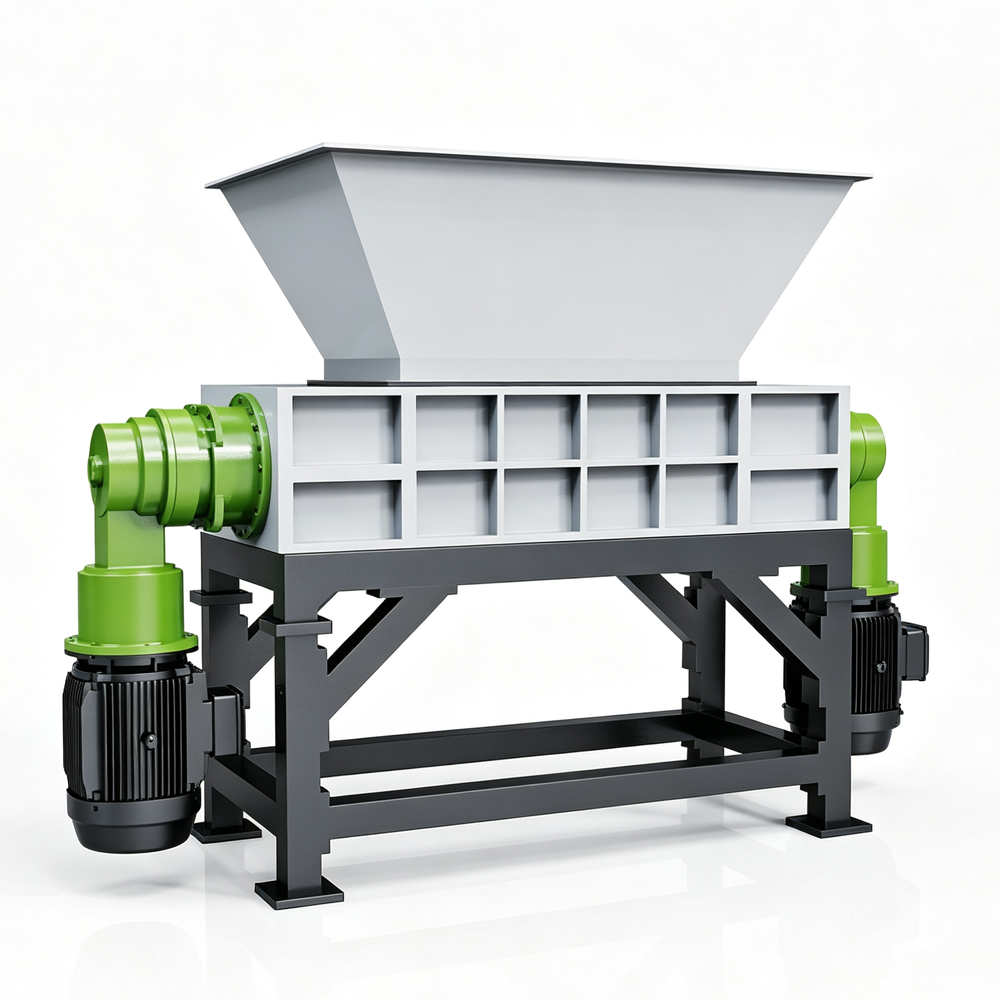
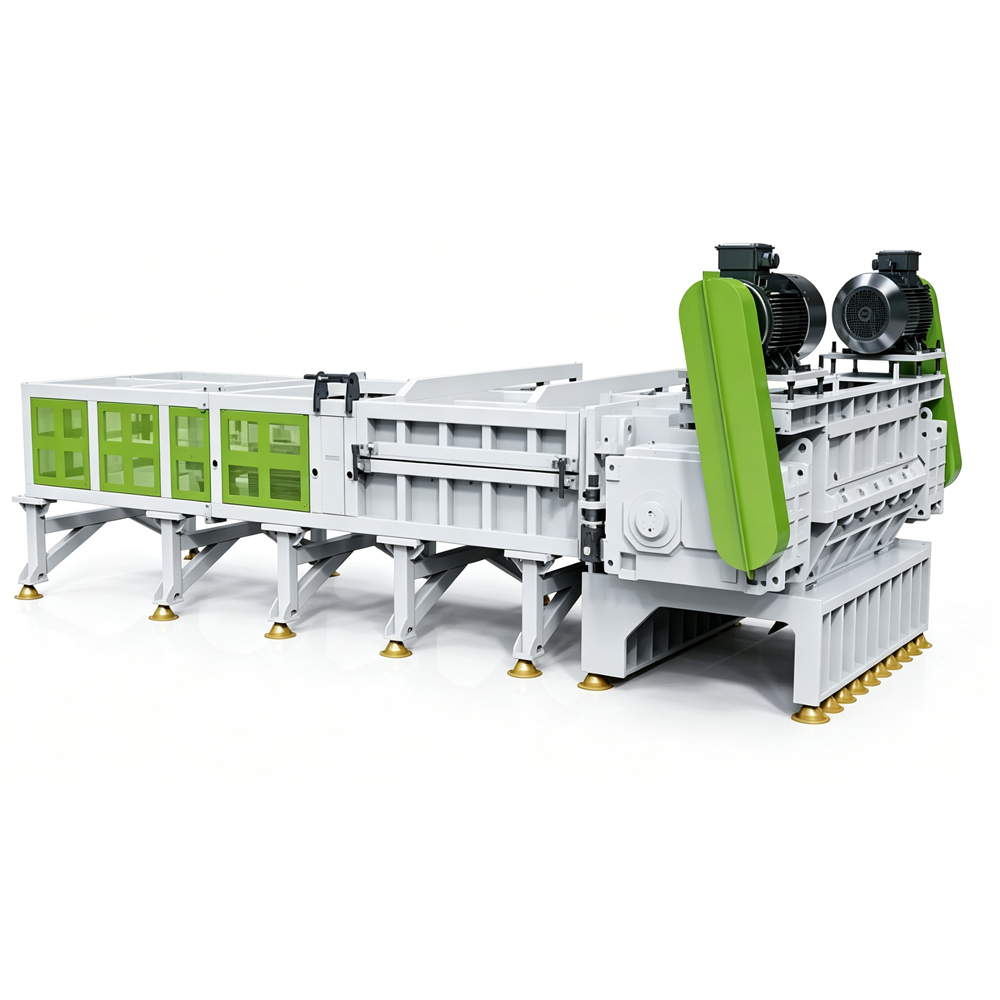
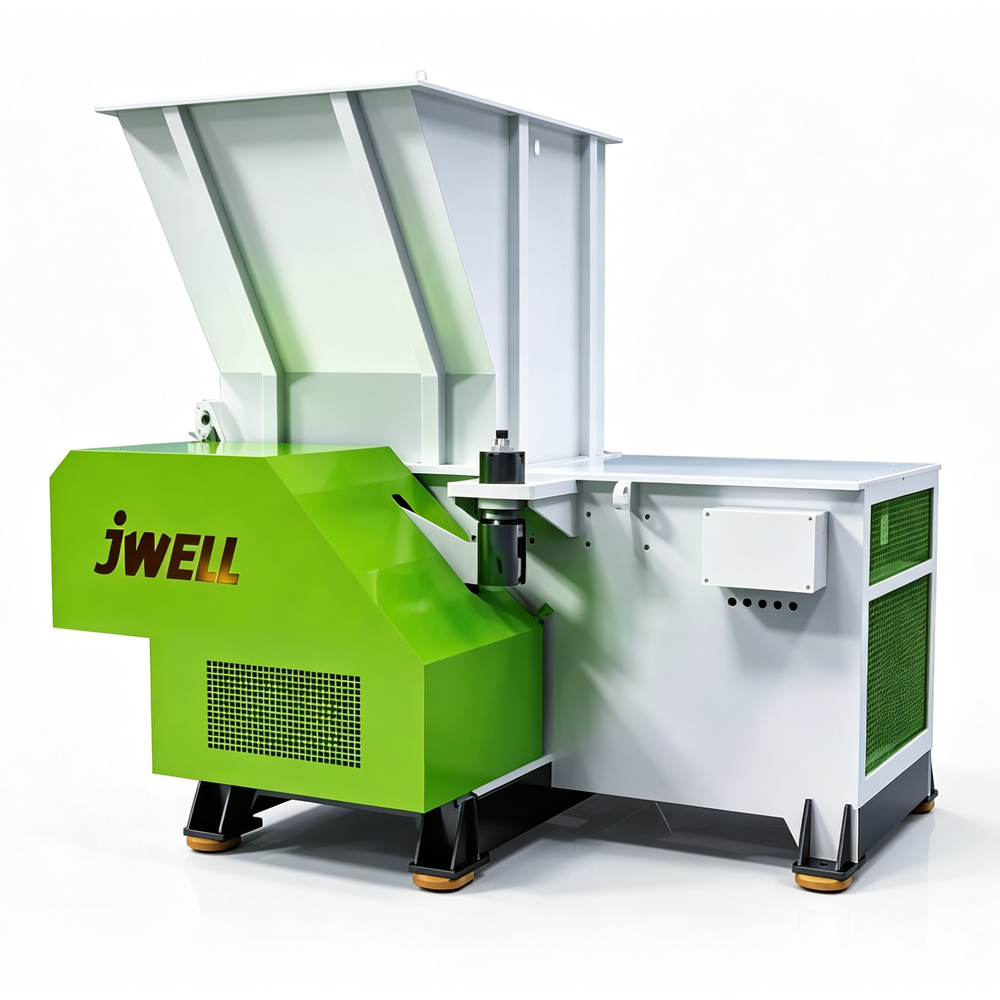


Pipe Extrusion Production Line
Plastic Shredder Crusher Machine

Tel: +86-19057068112

E-mail: [email protected]

Company Address
No. 128 Qingfeng Road, Xieqiao Town, Haining City, Jiaxing City, Zhejiang Province

19057068112

 English
 русский