
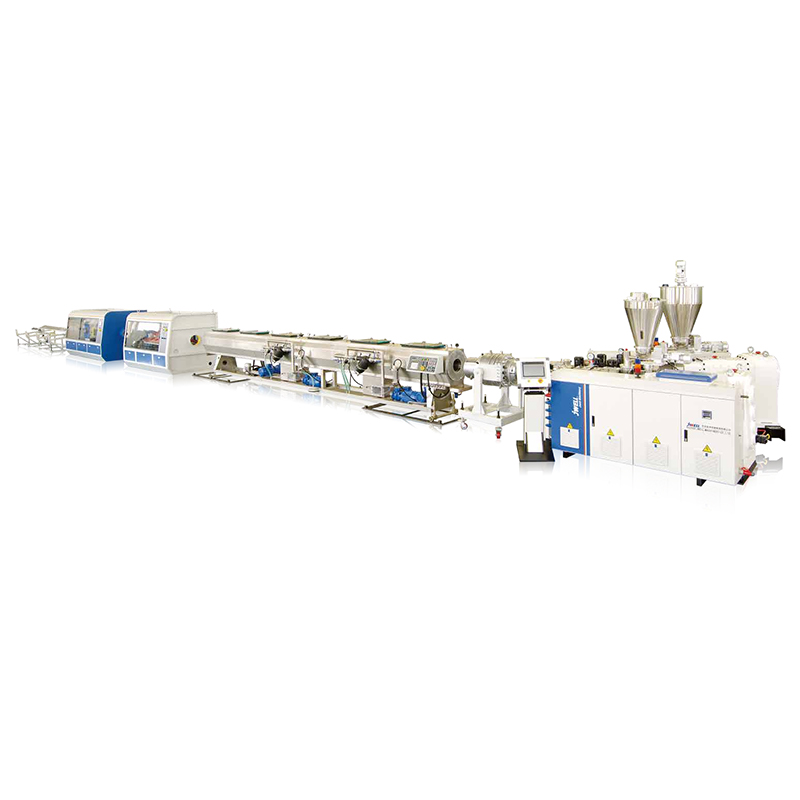
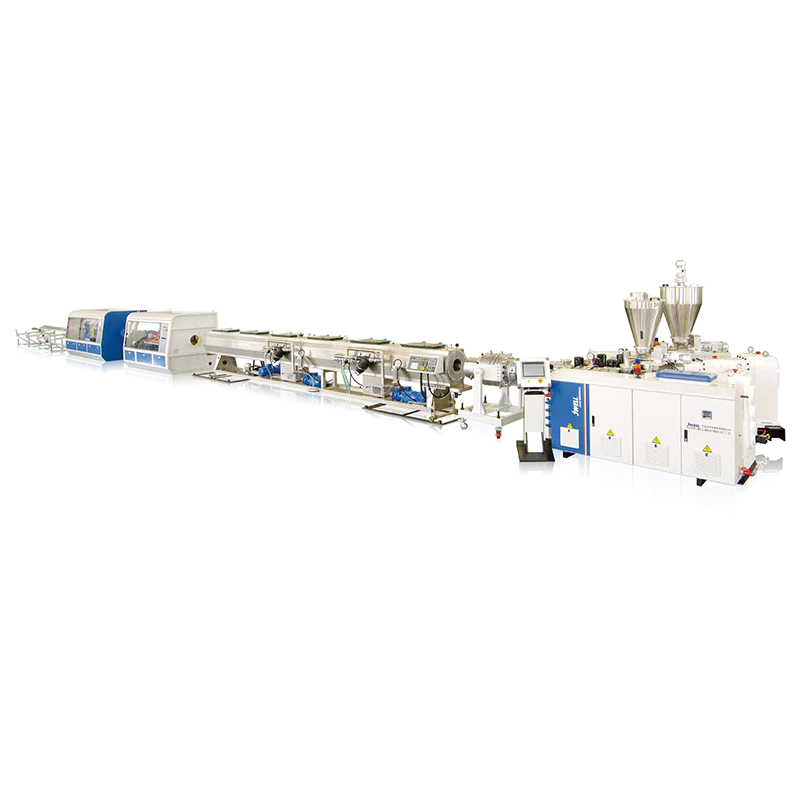
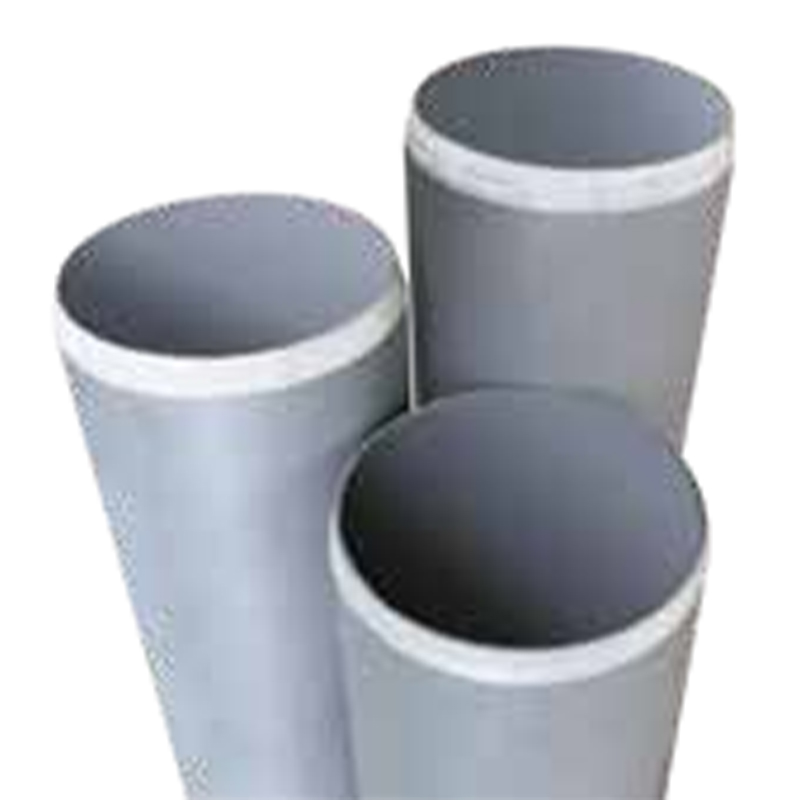
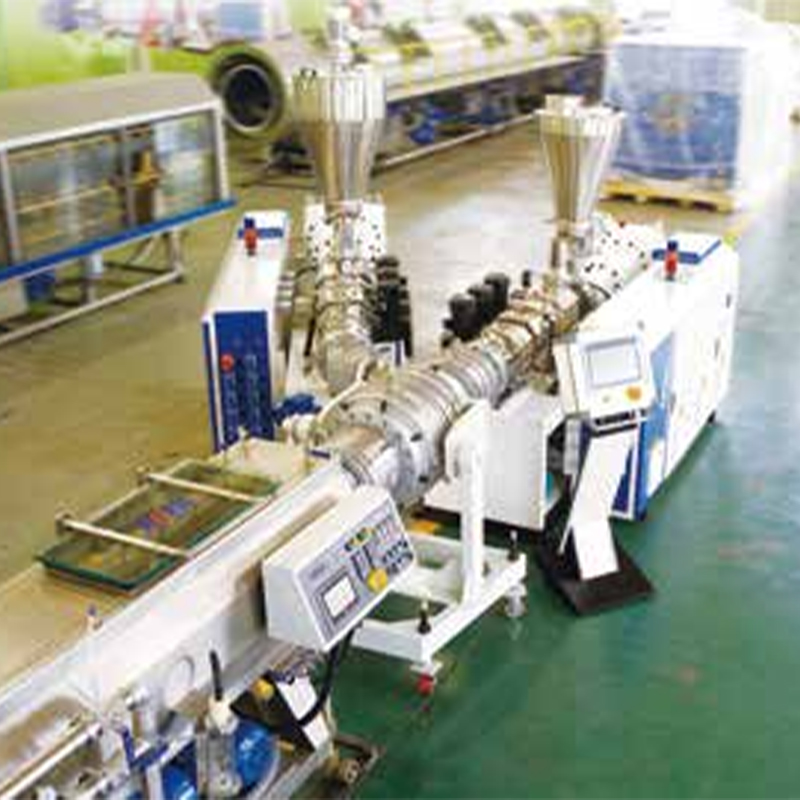
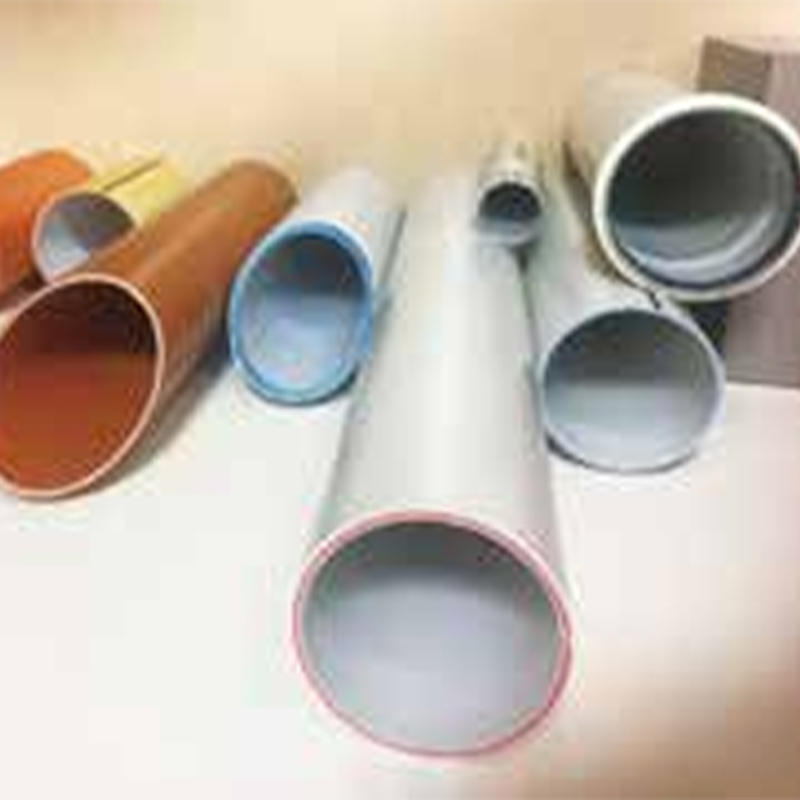
This production line is a three-layer PVC solid-wall pipe co-extrusion equipment, suitable for pipe production in the range of Φ75–Φ630 mm. It adopts a twin-extruder configuration (e.g., SJZ65/132 + 55/110), with main motor power ranging from 37–110 kW and a production capacity of 300–900 kg/h. Its advantage lies in the three-layer co-extrusion structure, which allows flexible use of recycled material to reduce costs while maintaining high quality of the inner and outer layers. It is suitable for water supply, drainage, cable protection, and other municipal and infrastructure projects.
Pipes produced by the JWG series three-layer PVC solid-wall pipe are widely used in:
Municipal water supply and drainage (Φ75–Φ630 mm)
Sewage and industrial wastewater systems
Power and telecommunications cable protection conduits
Rainwater drainage in infrastructure projects
Agricultural irrigation (large-diameter main pipelines)
Real case: A municipal water supply project in Southeast Asia used the JWG-PVC450 production line to manufacture DN400 pipes. The co-extrusion process was applied: the inner layer was virgin material, the middle layer was recycled material, and the outer layer was UV-resistant material. Result: Material cost was reduced by 25%, while the pipe passed a 6-bar pressure test and a 10-year UV exposure simulation test.
|
Model |
Pipe Diameter Range |
Main Motor Power |
Output |
Core Advantage |
|
JWG-PVC250 |
Φ75–250 mm |
37+22 kW |
300–400 kg/h |
Suitable for small and medium-sized municipal projects |
|
JWG-PVC450 |
Φ200–450 mm |
55+37 kW |
400–600 kg/h |
Balanced power and output, ideal for mass production |
|
JWG-PVC630 |
Φ315–630 mm |
110+37 kW |
740–900 kg/h |
Large diameter, high output, for infrastructure projects |
Summary of advantages based on actual parameters:
·Dual extruder configuration (e.g., SJZ65/132 + 55/110) allows independent control of inner/outer layers and the middle layer. This means you can use economical recycled material in the core layer while maintaining high-quality virgin material for the surface layers.
·High torque and energy efficiency – Parallel twin-screw extruders (SJZ series) offer excellent plasticizing effect, reducing material waste. For example, the JWG-PVC630 achieves up to 900 kg/h output with a total power of only 147 kW, resulting in a specific energy consumption of approximately 0.16 kWh/kg – among the best in its class.
·Wide pipe diameter range without changing screws – A single production line can cover a diameter ratio of >3:1 (e.g., 450 model from Φ200 to Φ450), saving changeover time.
Three-layer co-extrusion ensures:
Better impact resistance (outer layer)
Lower cost (middle layer can use up to 50% calcium carbonate or recycled PVC)
Improved flow characteristics (smooth inner layer)
To ensure every meter of pipe complies with ISO 1452 or ASTM F891 standards, the JWG production line integrates the following quality control steps:
|
Stage |
Control Method |
Typical Standard |
|
|
Raw material |
Moisture & particle size check; thermal stability test (170°C, 20 min) |
Melt index within ±5% |
|
|
During extrusion |
Automatic gravimetric feeding per layer (accuracy ±1%) |
Layer thickness deviation <0.05 mm |
|
|
Online monitoring |
Laser outer diameter gauge (accuracy ±0.01 mm) + ultrasonic wall thickness scanner |
Outer diameter tolerance ±0.5% |
|
|
Post-production |
Hydrostatic pressure test (e.g., 1.6 MPa, 1 hour) |
No leakage or rupture |
|
|
Physical testing |
Falling weight impact test (0°C, 2 kg hammer from 2 m height) + Vicat softening point ≥80°C |
Pass rate ≥99.5% |
|
Real case: A pipe manufacturer performed a 24-hour continuous production test using the JWG-PVC630 line. With online ultrasonic feedback, they controlled core layer thickness deviation within ±0.08 mm over 8 km of Φ500 mm pipe production. The final pressure test at 0.8 MPa (1.5 times working pressure) resulted in zero failures.
| Type | Pipe spec(mm) | Extruder | Main Power(kw) | Output(kg/h) |
| JWG-PVC250 Three-layer | φ75~φ250 | SJZ65/132+55/110 | 37+22 | 300~400 |
| JWG-PVC450 Three-layer | φ200~φ450 | SJZ80/156+65/132 | 55+37 | 400~600 |
| JWG-PVC630 Three-layer | φ315~φ630 | SJZ92/188+65/132 | 110+37 | 740~900 |
Q1: How to adjust layer thickness ratios for different applications?
A: On the JWG control panel, independently set screw speeds and gravimetric feeder outputs. For example:
Drinking water pipe: inner layer 20%, middle layer 60%, outer layer 20%
Drainage pipe: inner layer 15%, middle layer 70%, outer layer 15%
Start by adjusting the middle layer as the cost-adjustable layer. Typical settings on JWG-PVC450 at total output 500 kg/h: inner extruder 100 kg/h, middle 300 kg/h, outer 100 kg/h.
Q2: What is the maximum proportion of recycled material that can be used in the middle layer?
A: Thanks to the excellent dispersion of SJZ series extruders, up to 50% recycled PVC (clean, uncontaminated) plus 30% calcium carbonate filler and 20% virgin resin to aid flow can be used. When recycled material exceeds 50%, impact strength may drop below 4 kJ/m². On the JWG-PVC630 line, many customers use 45% recycled material in the core layer while still maintaining an impact strength of 6 kJ/m².
Q3: How often should the twin-screw barrel be cleaned?
A: For light-colored pipes (white/light grey), use purging compound every 500–600 operating hours. For dark-colored pipes (black/blue), clean every 800 hours. One JWG-PVC250 user reported no carbonization issues after 1200 hours when using a high thermal stability stabilizer (organotin).
Q4: The line shows output fluctuations of ±10 kg/h. What should be checked?
A: Most common causes:
Clogged screen pack (replace every 4–6 hours if using recycled material)
Unstable feeding – check gravimetric feeder calibration
Worn screw elements (after 8000–10000 hours) – SJZ screws typically last 12000 hours under normal maintenance
For JWG-PVC450, monthly feeder recalibration can reduce output fluctuations to within ±3 kg/h.
Q5: Can non-standard diameters (e.g., Φ530 mm) be produced on the JWG-PVC630 line?
A: Yes, as long as the diameter is within Φ315–Φ630 mm. You need dedicated sizing sleeves and traction belt adjustments. A customer in the Middle East regularly produces Φ530 mm irrigation pipes using a standard die head, with a quick-change sizing ring that can be replaced in 5 minutes.
Q6: Does the equipment require an additional drying system for PVC powder or pellets?
A: No. The JWG series parallel twin-screw extruders can directly process conventional PVC dry blends (moisture content <0.3%) without pre-drying. However, if using highly hygroscopic recycled material (e.g., old pipe crushings stored outdoors for a long time), it is recommended to add a simple hot-air dryer (80–90°C, 1 hour drying) to avoid surface bubbles on the pipe. For virgin formulations, as long as the material is stored in a dry environment, no drying is needed.
Q7: How long does it take to change pipe specifications (diameter) on the same production line?
A: Approximately 30–40 minutes. This includes changing the sizing sleeve, adjusting the caterpillar traction belts, and changing the calibrator. For example, on a JWG-PVC250 line, switching from Φ250 to Φ160 takes about 35 minutes (with two operators).




Pipe Extrusion Production Line
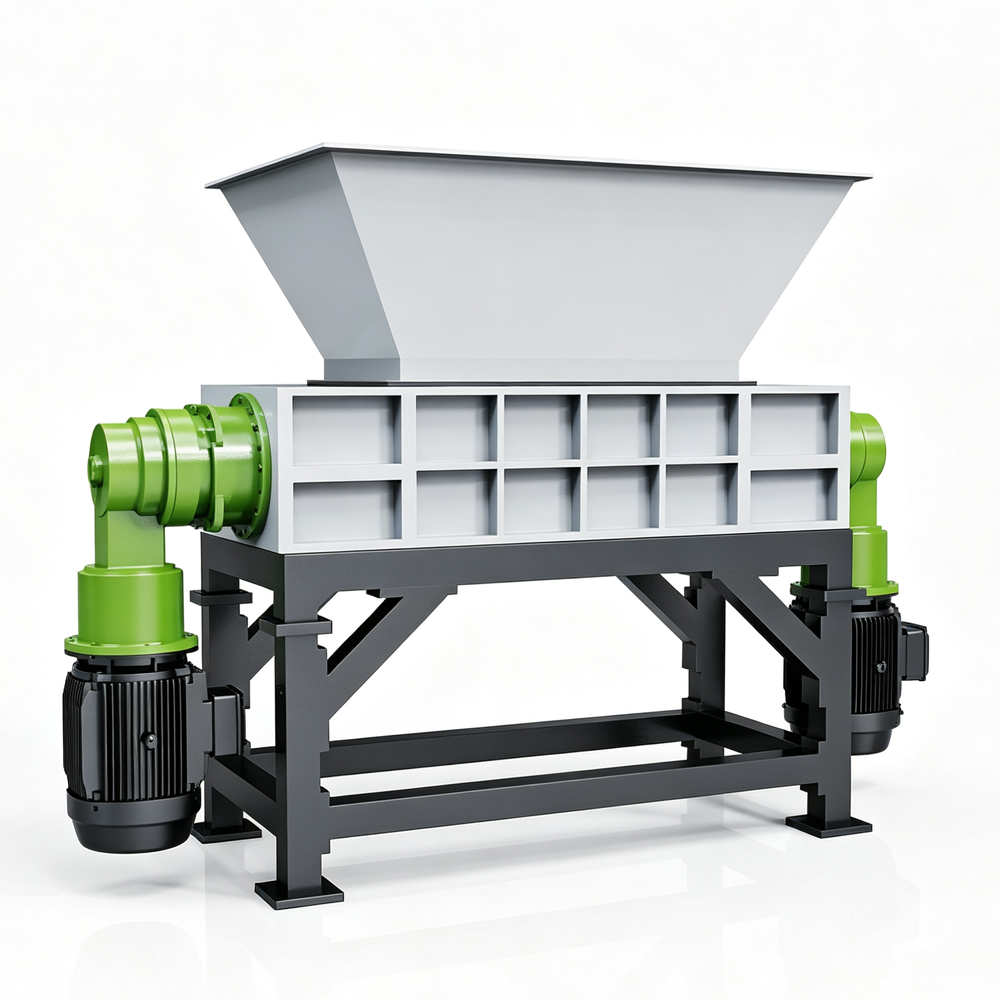
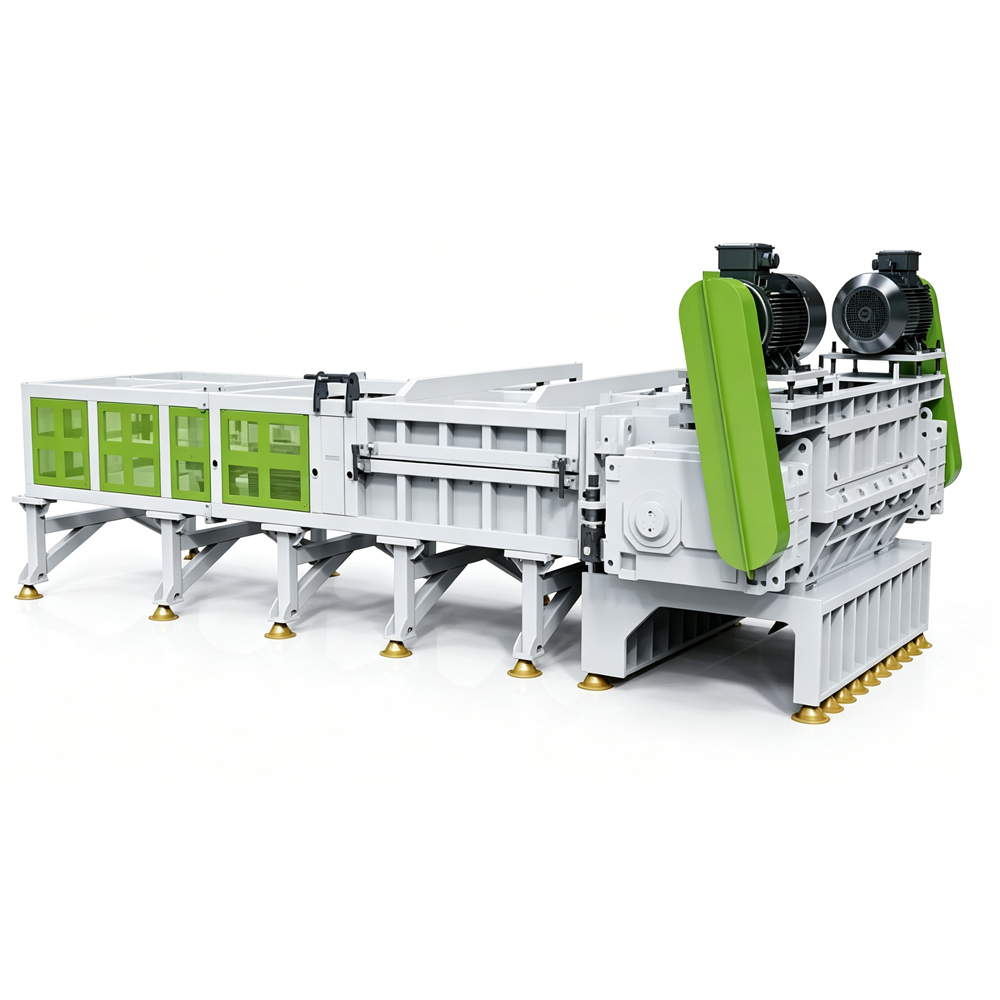
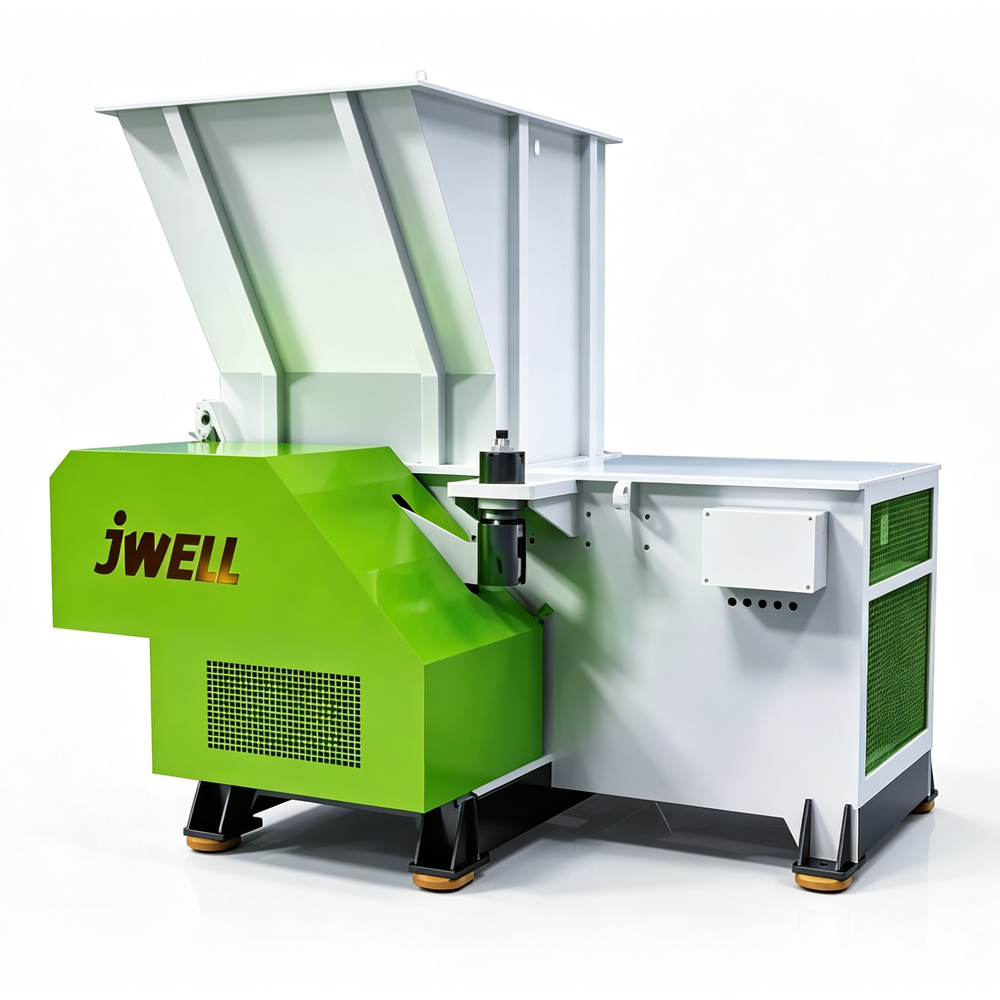
Plastic Shredder Crusher Machine

Tel: +86-19057068112

E-mail: [email protected]

Company Address
No. 128 Qingfeng Road, Xieqiao Town, Haining City, Jiaxing City, Zhejiang Province

19057068112

 English
 русский