
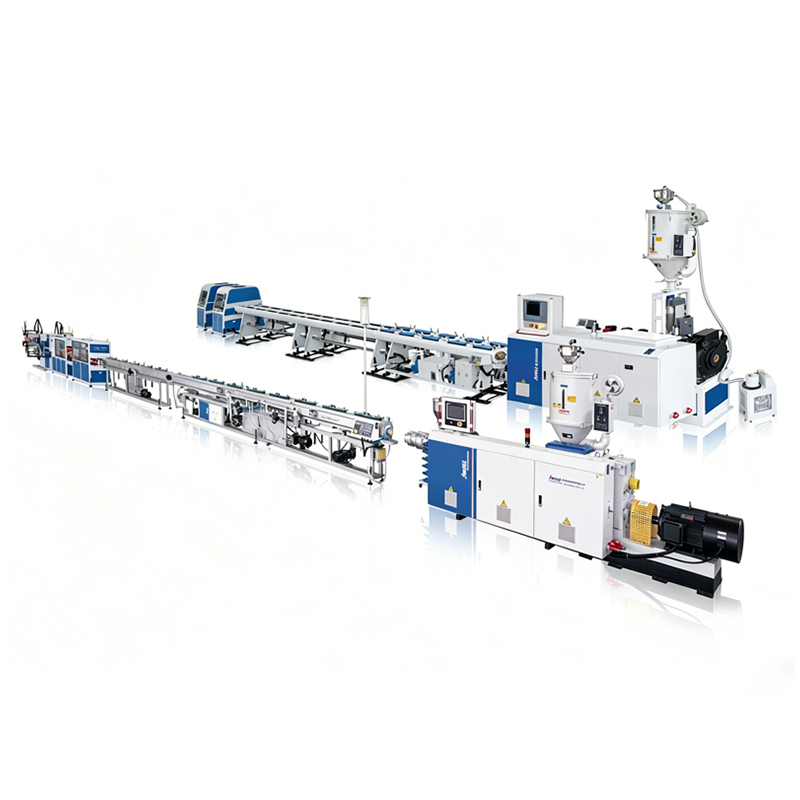
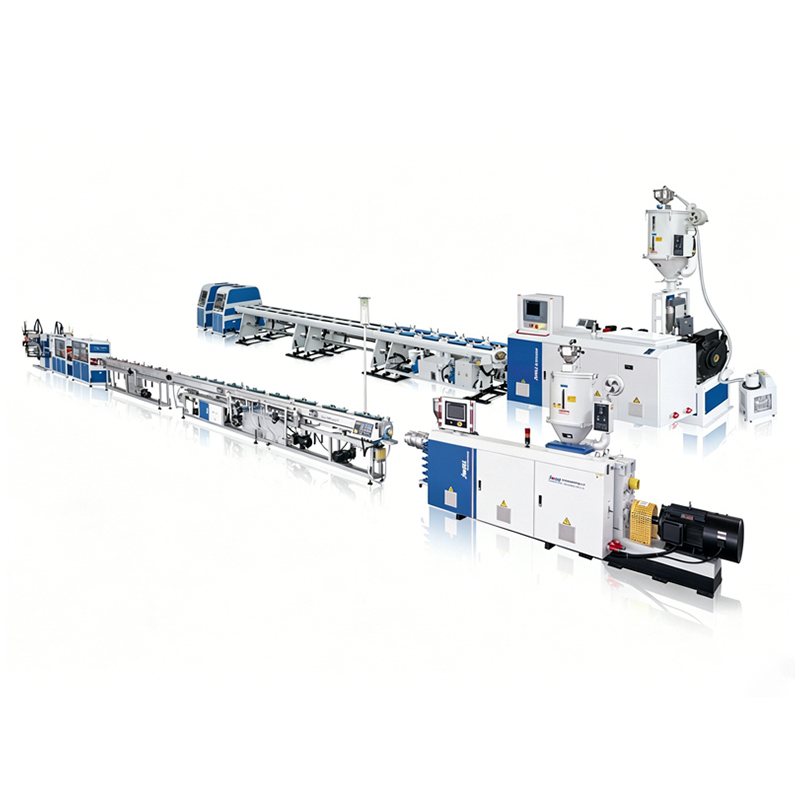
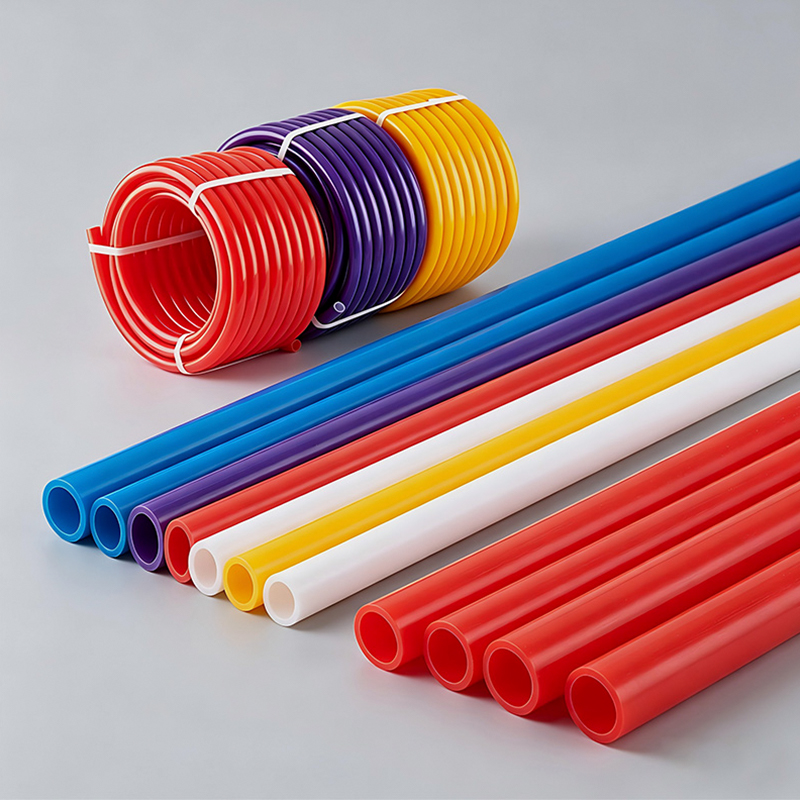
Designed for high-volume production of small-diameter plastic pipes (Φ16–Φ75 mm), our PE/PPR/PE-RT/PA single and twin pipe high-speed extrusion lines excel in efficiency, material versatility, and precision. The lines support both single and twin pipe configurations, allowing you to double output without increasing floor space.
Based on actual factory data, this extrusion line is available in three standard models: PE/PERT 75, PPR 75, and PE/PERT 32—each tailored for specific pipe diameter ranges and material characteristics.
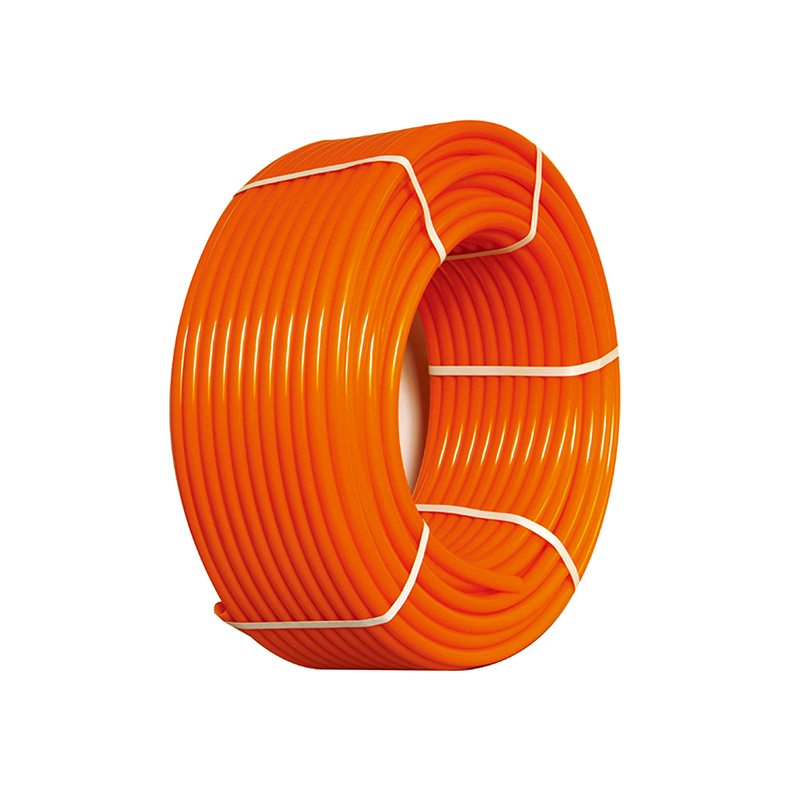
1. Floor Radiant Heating Systems (PE-RT and PERT)
Case study: A Korean underfloor heating manufacturer used the PE/PERT 75 model (JWS-H 60/40, 110kW) to produce Φ20 mm PE-RT pipes in twin-pipe mode, achieving an output of 410 kg/h. Compared to their old single-pipe line, they reduced production time by 35%.
Materials: PE-RT, PERT (Type I and Type II)
2. Plumbing and Drinking Water Supply (PPR)
Case study: A Turkish pipe factory used the PPR 75 line (JWS 65/33, 75kW) to produce Φ25–Φ63 mm PPR pipes. After switching from a 55kW extruder, their daily output increased from 1.8 tons to 2.6 tons.
Key advantage: Low melt temperature control prevents PPR degradation.
3. Cable Protection Conduits (PE and PA)
Case study: An Italian cable protection specialist used the PE/PERT 32 line to simultaneously produce Φ16 mm PA6 and HDPE conduits in twin-pipe mode. Output reached 400 kg/h per pipe, saving 40% energy compared to two separate lines.
4. Agricultural Micro-irrigation (PE)
Case study: A Saudi Arabian farm supplier adopted the PE/PERT 75 line with a 90kW motor to produce Φ32 mm drip irrigation laterals. The high-speed line ran continuously for 72 hours without deviation—pipe diameter tolerance remained within ±0.05 mm.
1. Twin-Pipe Ready – Instant Capacity Boost
Switch between single-pipe (for large diameters up to Φ75 mm) and twin-pipe (for Φ16–Φ32 mm) without additional floor space. In twin-pipe mode, two independent extruders or a split-flow die doubles your hourly output.
2. High Output per kW – Energy Efficient
JWS-H 60/40 (110kW): up to 420 kg/h for PE/PERT – that's 3.8 kg per kW.
JWS 65/33 (75kW): output up to 240 kg/h – ideal for secondary lines or limited budgets.
Real calculation: At 380 kg/h running 8 hours/day, daily output is 3,040 kg. Over 25 days, that's 76 tons per month from a single line.
3. Multi-Material Flexibility
One line handles four material categories:
PE (HDPE, MDPE, LLDPE)
PPR (Random Polypropylene Copolymer)
PE-RT (Polyethylene of Raised Temperature Resistance)
PA (Nylon 6, Nylon 66)
Most materials require no screw change – the JWS-H barrier screw design ensures homogeneous melting.
4. Precision for Small Diameters (Φ16 – Φ75)
Small-diameter pipes demand extreme dimensional stability. Our vacuum calibration tank and 8-zone cooling ensure:
Wall thickness deviation < 0.05 mm
Ovality < 0.8% of diameter
Smooth inner surface (Ra < 0.3 μm for PE-RT)
5. High-Speed Extrusion – Up to 25 m/min
With the JWS-H 60/40 (110kW) and optimized screw geometry, you can produce Φ20 mm PE pipes at 20–25 m/min in single-pipe mode – verified by a factory in Thailand achieving 2,500 meters per hour.
Each extrusion line is factory-tested before shipment. We recommend an on-site quality control plan based on ISO 12162 (Materials for pressure pipes) and ASTM D3035 (PE pipes).
In-Process Quality Control (Real-Time)
|
Parameter |
Method |
Target Value (Example) |
|
Pipe outer diameter |
Bidirectional laser gauge |
Φ20±0.1 mm |
|
Wall thickness |
4-probe ultrasonic scanner |
±5% of nominal |
|
Ovality |
Rotating laser |
PE ≤1%, PPR ≤0.8% |
|
Melt pressure |
Die head pressure sensor |
<35 MPa (safe zone) |
|
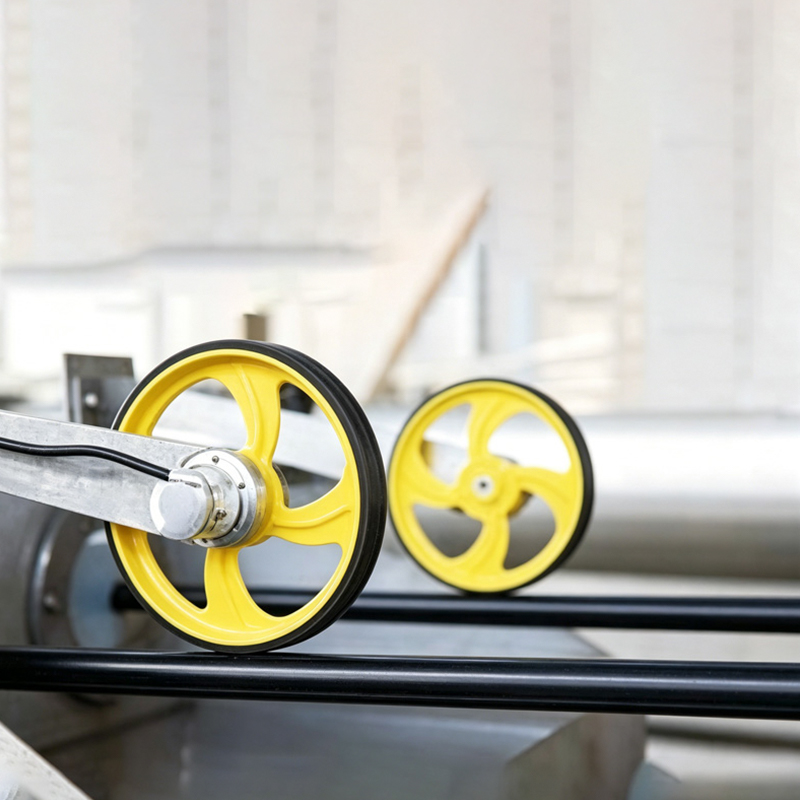
Line speed |
Encoder wheel |
Accuracy ±0.2 m/min |
Finished Product Testing (Per Batch)
·Hydrostatic test – 1.5× nominal pressure for 1 hour (e.g., 15 bar for PN10 PPR pipe). No leakage or burst.
·Heat reversion rate (PPR) – 150°C oven for 1 hour. Length change ≤2%.
·Oxidation induction time (OIT) – For PE-RT pipes: >20 minutes at 200°C (DSC method).
·Visual inspection – No bubbles, carbon black spots, or unmelted particles.
Real Case – Avoiding Quality Incidents:
A Vietnamese customer using PE/PERT 32 (90kW) discovered random wall thickness deviations. Our technicians traced it to unstable pulling speed. After installing a closed-loop encoder feedback system (included in our upgraded control cabinet), wall thickness deviation dropped from ±0.12 mm to ±0.04 mm.
| Type | Pipe Spec(mm) | Extruder | Main Power(kw) | Output (kg/h) |
| PE/PERT 75 | φ20~φ 75 | JWS-H 60/40 | 110 | 380~420 |
| 90 | 350~400 | |||
| JWS65/33 | 75 | 200~240 | ||
| PPR75 | φ20~φ 75 | JWS-H60/40 | 110 | 300~340 |
| 90 | 280~320 | |||
| JWS65/33 | 75 | 160~195 | ||
| PE/PERT 32 | φ16~ φ 32 | JWS-H 60/40 | 11090 | 380~420 350~400 |
Q1: Can I switch between single and twin-pipe production within 1 hour?
A: Yes. Our die head uses modular inserts. For an experienced operator, changing from a single-pipe mandrel to a twin-flow adapter takes about 45 minutes. The main extruder settings remain unchanged – only the downstream cooling tank and puller require width adjustment.
Q2: What is the actual power consumption of the JWS-H 60/40 (110kW)?
A: Based on data from 15 field installations, average power consumption at full load (380–420 kg/h) is 88–95 kW. At partial load (250 kg/h), it drops to about 65 kW. This includes barrel heaters, motor, and vacuum pump – but not the cooling tower.
Q3: How do I prevent material degradation when switching from PPR to PA?
A: The JWS-H screw has a compression ratio of 3.2:1 for gentle shear. We recommend purging at 220°C with a cleaning compound (e.g., polypropylene-based) for 10 minutes. Then raise the temperature to PA processing (240–260°C) and purge again. Total changeover time is about 30 minutes.
Q4: Can this line produce co-extruded pipes (e.g., PPR pipes with a UV-resistant layer)?
A: The standard configuration is single-layer. However, we can supply an optional co-extrusion adapter for adding a second extruder (30–45 kW) to produce A/B or A/B/A three-layer pipes. Several customers have used this for white PPR pipes with a transparent outer marking layer.
Q5: What is the maximum twin-pipe output for Φ16 mm PE pipes?
A: Using the PE/PERT 32 (JWS-H 60/40, 110kW) to simultaneously produce two Φ16 mm pipes, field data shows 180–200 kg/h per pipe → total output 360–400 kg/h. Line speed can reach 28 m/min when cooling is sufficient. Ensure your cooling tank length is at least 8 meters.
Q6: How often should I replace the screw and barrel?
A: For PE/PPR/PE-RT (non-abrasive materials), the JWS-H nitrided steel screw lasts 15,000–20,000 operating hours. For PA (mildly abrasive), expect 10,000–12,000 hours. Replace the barrel when the internal diameter wear exceeds 0.3 mm. We keep spare parts in stock and can ship globally within 5 working days.
Q7: Does your line support remote monitoring?
A: Yes. All models are equipped with a Siemens PLC (S7-1200) and 10-inch touch screen. An optional 4G/Ethernet module supports remote diagnostics – we once helped a Philippine customer adjust their cooling curve from our service center without an on-site visit, saving 2 weeks of downtime.


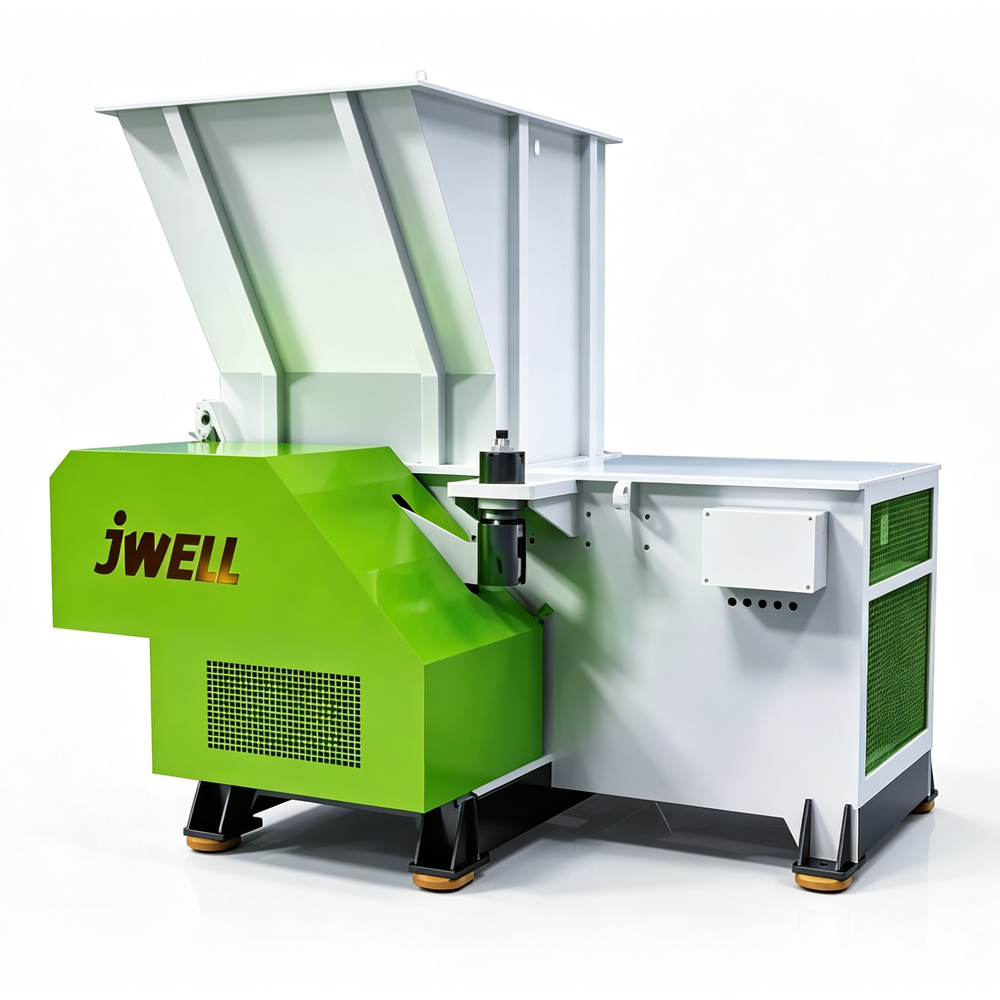


Pipe Extrusion Production Line
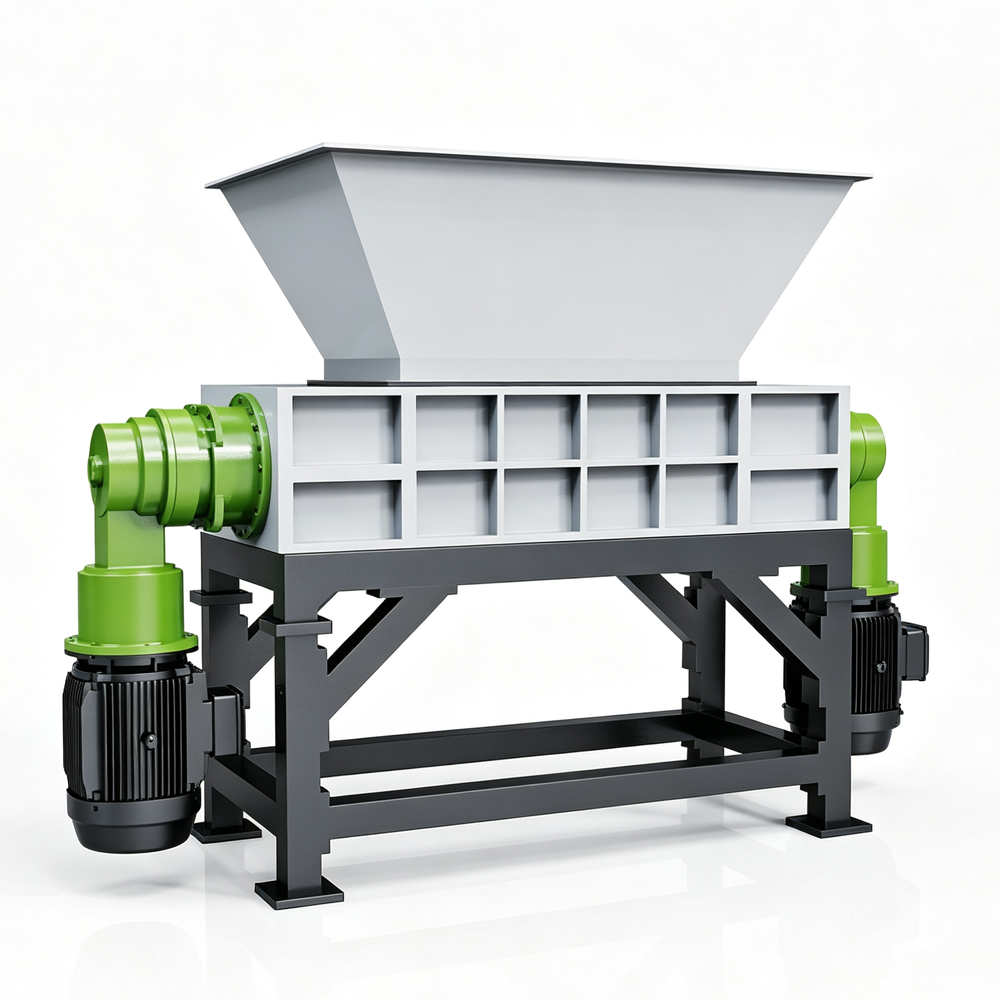
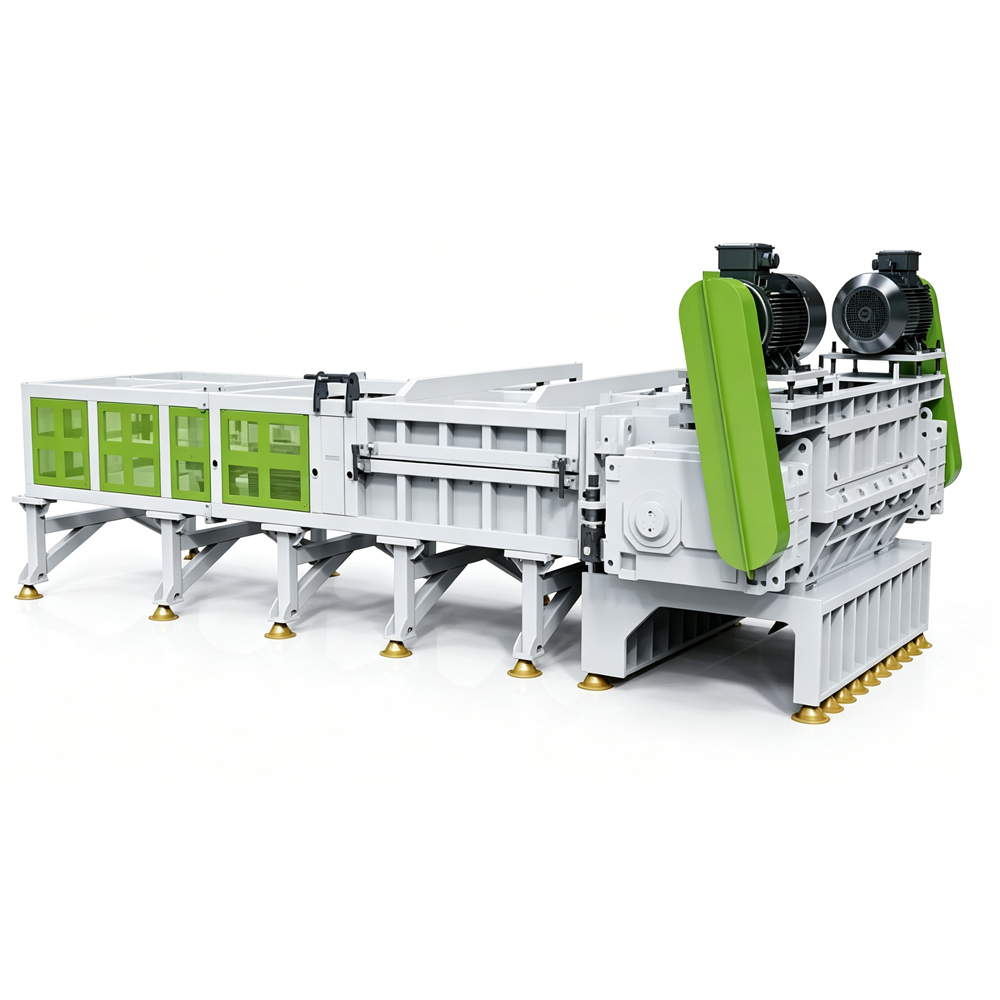
Plastic Shredder Crusher Machine

Tel: +86-19057068112

E-mail: [email protected]

Company Address
No. 128 Qingfeng Road, Xieqiao Town, Haining City, Jiaxing City, Zhejiang Province

19057068112

 English
 русский