
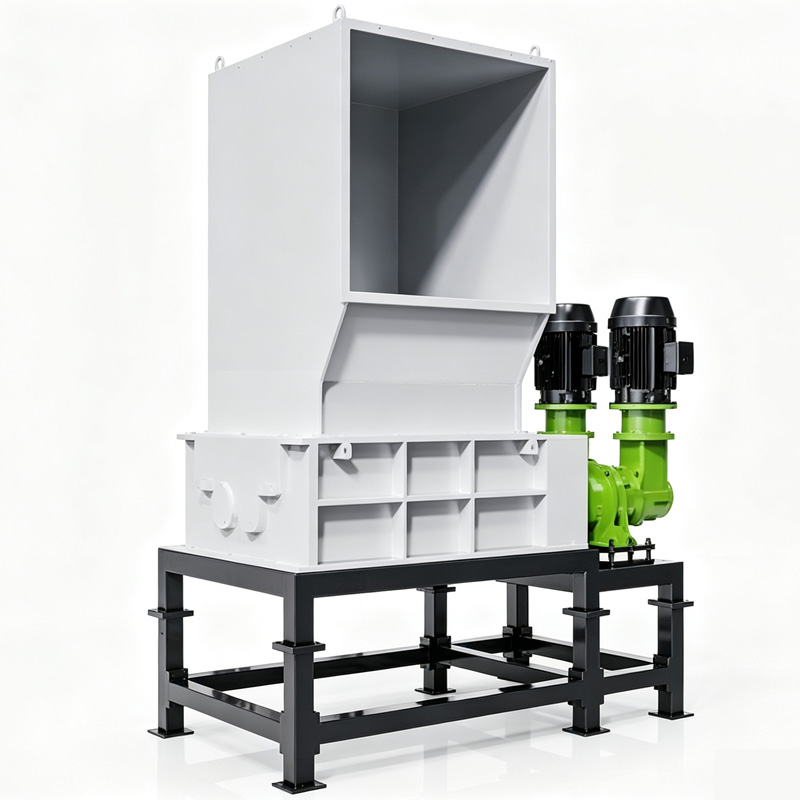
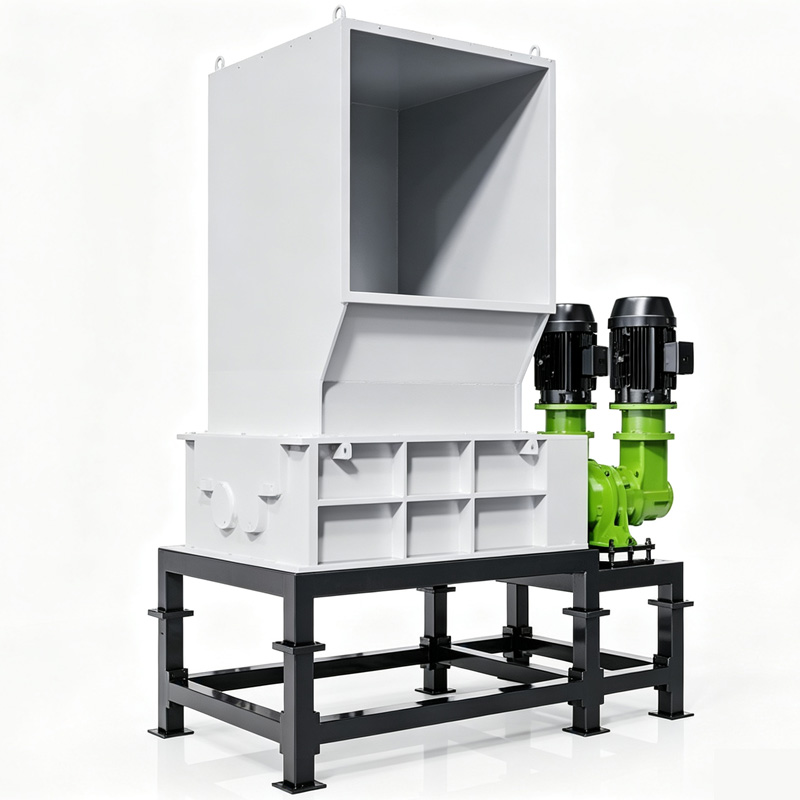
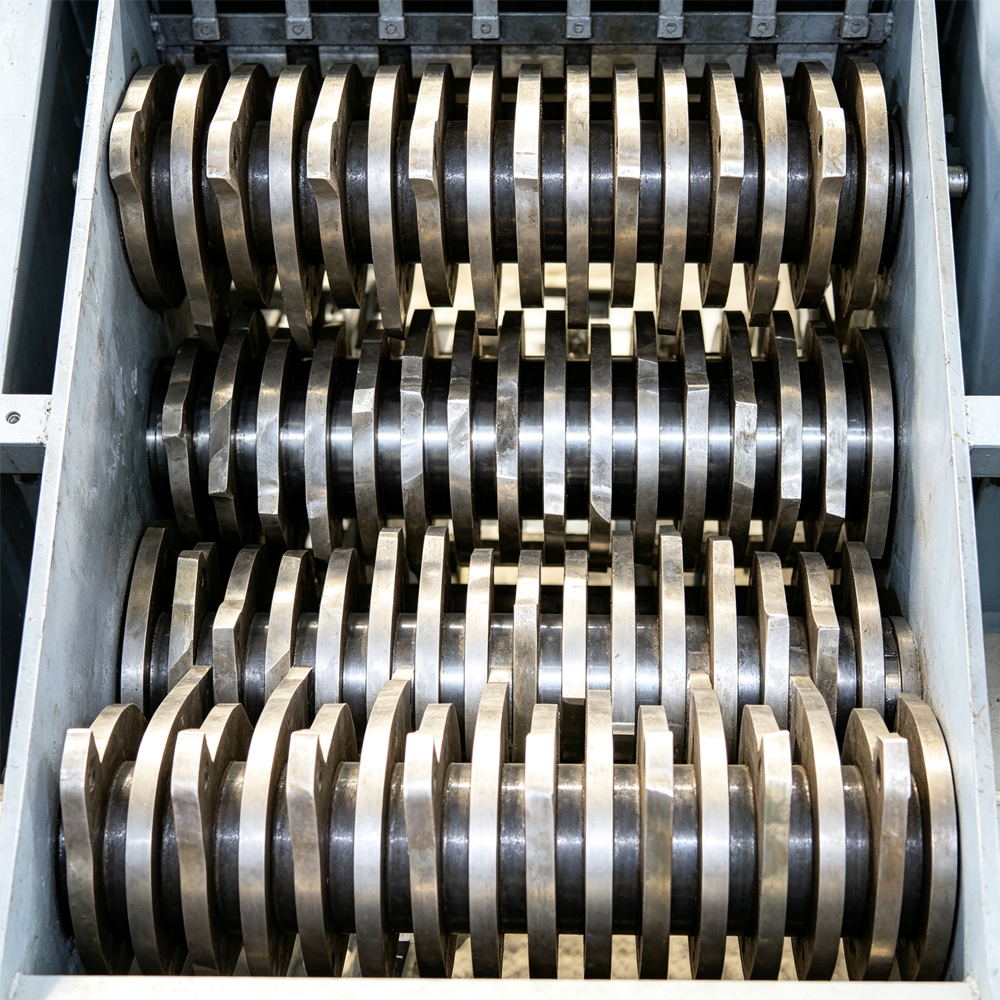
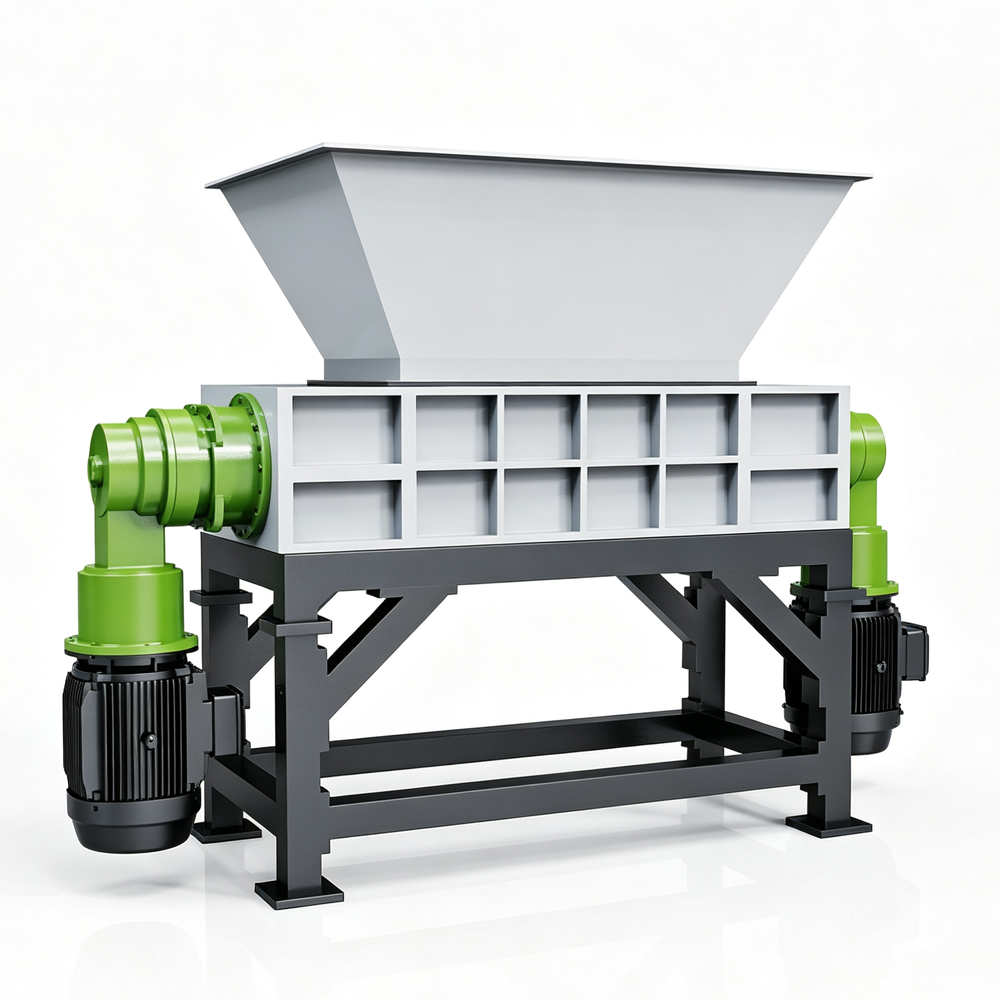
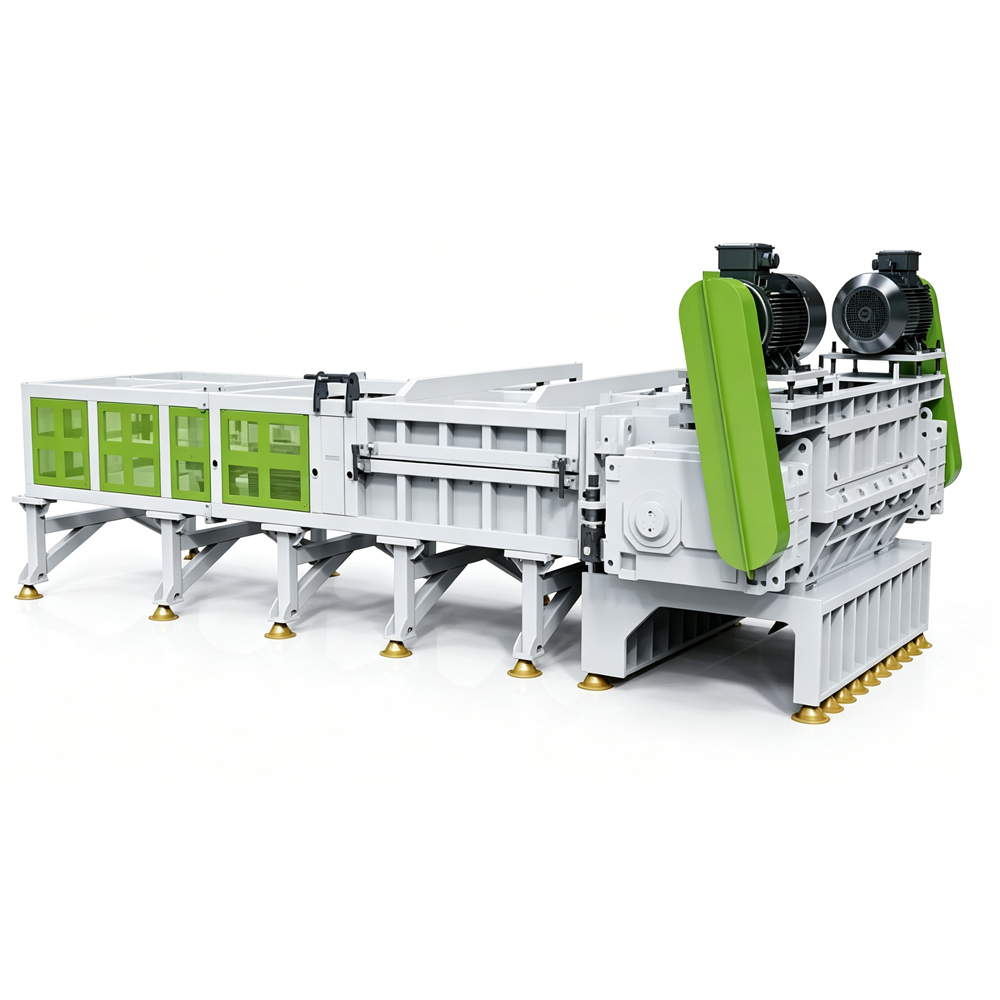
The DYFSS series is our flagship four-shaft shredder product line, designed for applications with strict requirements for particle size consistency, low dust, and high throughput. The series includes three well-balanced models – DYFSS-90 80, DYFSS-100 120, and DYFSS-130 140 – capable of processing a wide range of materials from electronic scrap, industrial plastics, to metal chips and municipal solid waste (MSW).
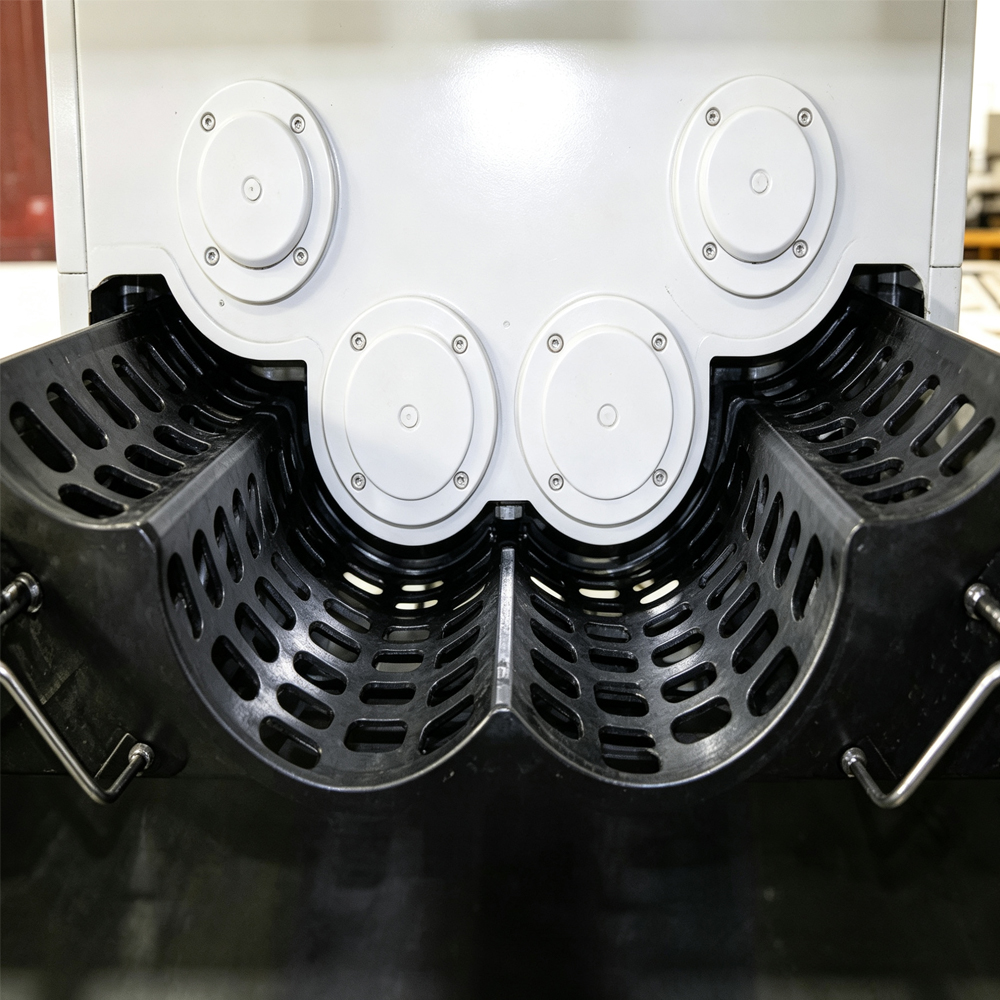
Thanks to the four-shaft design (two main shafts + two counter/sizing shafts), the DYFSS achieves controlled output sizing without over-grinding. Common applications include:
E-waste recycling – Shredding circuit boards, hard drives, lithium batteries (with safety modifications), and mixed electronic components. Low rotor speed minimizes sparks and dust.
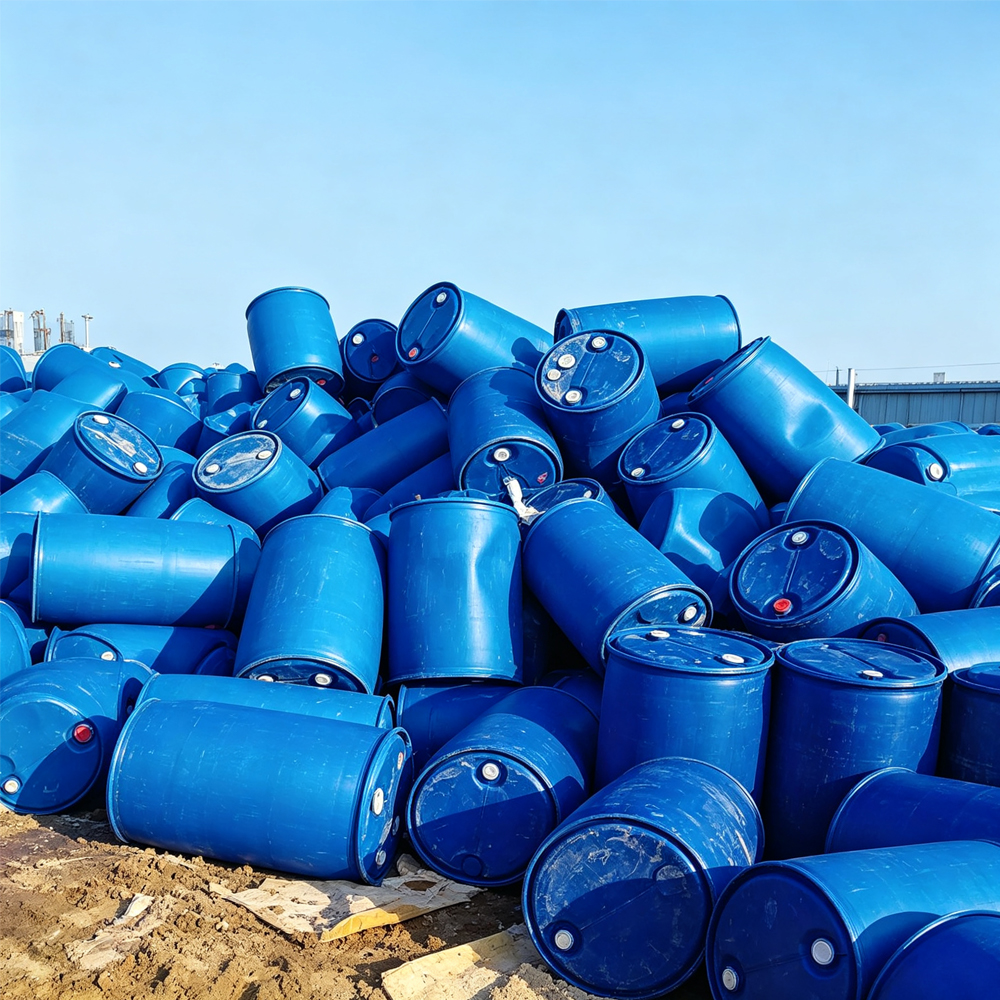
Plastics & rubber – Large injection-molded parts, thick-wall pipes, plastic drums, and car tires (without steel or with steel cord when using appropriate wear parts).
Wood & biomass – Pallet waste, demolition wood, and landscaping waste. Optional VFD enables soft start for heavy wood.
Metal processing – Aluminum profiles, light-gauge steel, copper radiators, and engine blocks (pre-shredding stage).
Waste-to-energy – MSW, RDF, and industrial waste – the four-shaft action produces uniform flakes ideal for downstream sorting equipment.
Real-world case – A German recycling plant uses a DYFSS-100 120 to process post-consumer HDPE drums at 3–5 t/h. The 40 mm blade thickness and Φ320 cutters handle thick walls without clogging; 31 blades per shaft produce ideal 20–50 mm flakes for a washing line.
| Feature | Advantage |
| Four-shaft counter-rotating design |
Top two shafts perform initial tearing; bottom two shafts act as sizing shafts. This prevents "plugging" and reduces circulating load. |
| High torque, low speed (approx. 15–35 rpm) |
Lower noise, less dust, lower dust explosion risk, and excellent performance on difficult materials (e.g., solid metal drums). |
| Heavy-duty blade geometry |
Blade thickness ranges from 25 mm (DYFSS-90 80) to 50 mm (DYFSS-130 140). Thicker blades mean longer service life when shredding abrasive materials like nylon or glass-filled plastics. |
| Independent gearboxes and drives |
Models use multiple motors: DYFSS-9080: 2×18.5 kW, DYFSS-100 120: 2×22 kW, DYFSS-130140: 2×15 + 2×30 kW. If one shaft stalls briefly, others can reverse independently – no manual cleaning. |
| Large crushing chamber |
The largest model has a chamber size of 1300×1400 mm – can accommodate bulky items like refrigerators (after refrigerant removal) or whole car tires. |
| Easy maintenance |
All blades are mounted on splined shafts with replaceable wear rings. A single cutter can be replaced without disassembling the entire machine |
Real-world case – A Canadian tire recycler replaced a two-shaft shredder with a DYFSS-130 140. The four-shaft design reduced "snake strips" (uncut strands) from 18% to 3%. Blade life increased by 40% because the counter shafts protect the main blades from over-sized material.
Every DYFSS shredder undergoes a four-stage QC process before leaving our factory. We follow ISO 9001:2015 procedures.
Stage 1 – Raw material & component inspection
Blade steel – Each blade blank is hardness tested (standard HRC 48–52, hardened option up to HRC 58) and chemically verified (Cr-Mo-V alloy).
Gearboxes and motors – 2-hour no-load run-in; oil temperature, vibration, and unusual noise checked (noise limit <75 dB at 1 m).
Stage 2 – In-process inspection
Shaft concentricity ≤0.05 mm per meter of length.
Blade slot positioning tolerance ±0.1 mm to ensure perfect meshing.
Crushing chamber wall thickness verified with ultrasonic thickness gauge – no weak points.
Stage 3 – Pre-assembly & idle running
Trial assembly of shafts; measure blade clearance (target 0.5–1.5 mm depending on model). All fasteners torqued to specification and torque-seal marked.
Stage 4 – Load test with real materials
Standard test – 500 kg of mixed waste (25% heavy HDPE, 25% aluminum profiles, 25% soft copper, 25% pine wood). Machine must run continuously for 4 hours with gearbox temperature rise ≤60°C.
Destructive sample – For DYFSS-100 120 and larger, we run a 1-ton batch of solid steel drums (1 mm thick) to verify motor current stays below 90% of rated current.
Output analysis – Screen the shredded material; at least 95% must pass through a 50 mm screen (or according to customer specification).
Real-world case – Before shipping a DYFSS-9080 to an e-waste recycler in Spain, we ran 800 kg of mixed PCBs with aluminum heat sinks. After the test, we checked every blade edge – wear was less than 0.2 mm. The customer received a signed load test report with video.
| Model | Motor Power (kW) | Main Blade Dia. (mm) | Main Blade (pcs.) | Blade Thickness (mm) | Crushing Chamber Size Max. (mm) |
|---|---|---|---|---|---|
| DYFSS-9080 | 2x18.5 | Φ290 | 32 | 25 | 900x800 |
| DYFSS-100120 | 2x22 | Φ320 | 31 | 40 | 1000x1200 |
| DYFSS-130140 | 2x15+2x30 | Φ430 | 28 | 50 | 1300x1400 |
Q1: How often do I need to rotate or replace blades?
A: Blade life depends on material abrasiveness. For general MSW or plastics, expect 800–1,200 hours before rotating blades. For abrasive materials like nylon 66 or glass fiber, rotate every 400 hours. All four shafts are indexable, so you can use the opposite cutting edge. Replacement blades for the DYFSS series are in stock and can be shipped within 72 hours.
Q2: Can I change the output particle size?
A: Yes. The lower two shafts act as a sizing comb. By changing the lower blades with different tooth profiles (standard, fine, or coarse), you can achieve output sizes from 10 mm to 80 mm. No need to change an entire screen – a major advantage over single-shaft or two-shaft designs.
Q3: What happens if a foreign object (hard metal) enters the crushing chamber?
A: The PLC controller continuously monitors the current of each motor. If torque on any shaft suddenly exceeds 130% of rated torque, the machine automatically reverses for 2 seconds, then tries forward again. After three failed attempts, an alarm is triggered and the machine stops completely. In our tests, 16 mm mild steel bars are ejected without damaging the machine. For harder objects (e.g., broken hammer heads), shear pins on the couplings break – each pin costs $12 and is designed to protect the gearbox.
Q4: How much floor space do I need?
|
Model |
Footprint (L×W×H, approx.) |
Weight |
|
DYFSS-9080 |
3200×1800×2200 mm |
4.8 t |
|
DYFSS-100120 |
3800×2100×2500 mm |
6.2 t |
|
DYFSS-130140 |
4500×2500×2800 mm |
9.5 t |
Add an extra 1.5 m on the feed side for a conveyor or hopper.
Q5: Do you offer spare parts kits?
A: Yes. We offer a recommended starter spare parts kit covering 2,000 operating hours, which includes: 12 spare blades (3 per shaft), 2 sets of shear pins, 1 set of shaft seals, 2 gearbox oil filters, and 1 set of crushing chamber wear plates. The kit saves approx. 25% compared to buying parts individually.
Q6: Can I shred wet material (e.g., wet MSW)?
A: Yes, with one caveat: the output may become slightly compacted. We add an optional anti-bridging pusher and enlarge the discharge chute. Some customers in Southeast Asia shred wet kitchen waste mixed with plastics – even at 40% moisture, the four-shaft design pushes the material through.
Q7: What is typical energy consumption
DYFSS-9080 – shredding medium plastics (20 mm output): 22–28 kWh/t
DYFSS-100120 – 20–26 kWh/t (more efficient due to larger bite)
DYFSS-130140 – processing bulky waste: 18–24 kWh/t
These figures come from actual field operating records – lower than most two-shaft machines because the four-shaft design reduces idle recirculation.


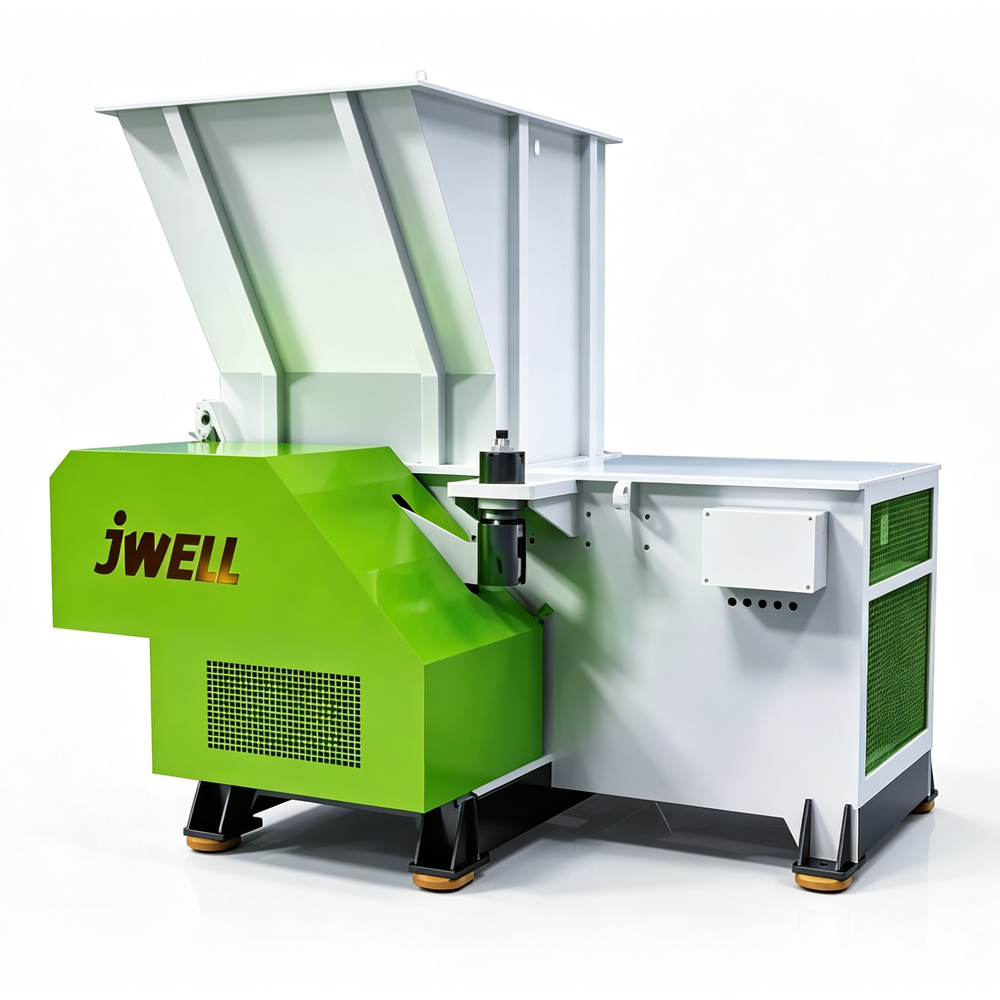


Pipe Extrusion Production Line
Plastic Shredder Crusher Machine

Tel: +86-19057068112

E-mail: [email protected]

Company Address
No. 128 Qingfeng Road, Xieqiao Town, Haining City, Jiaxing City, Zhejiang Province

19057068112

 English
 русский