
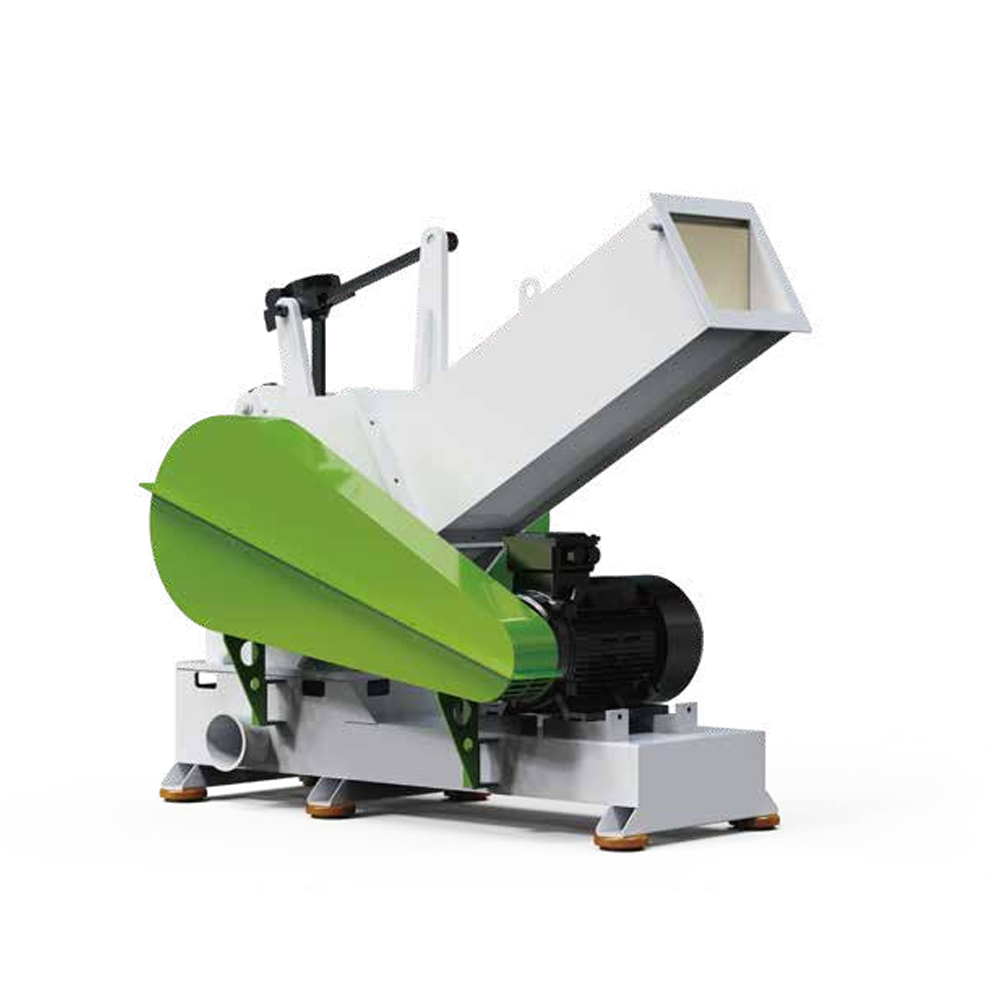
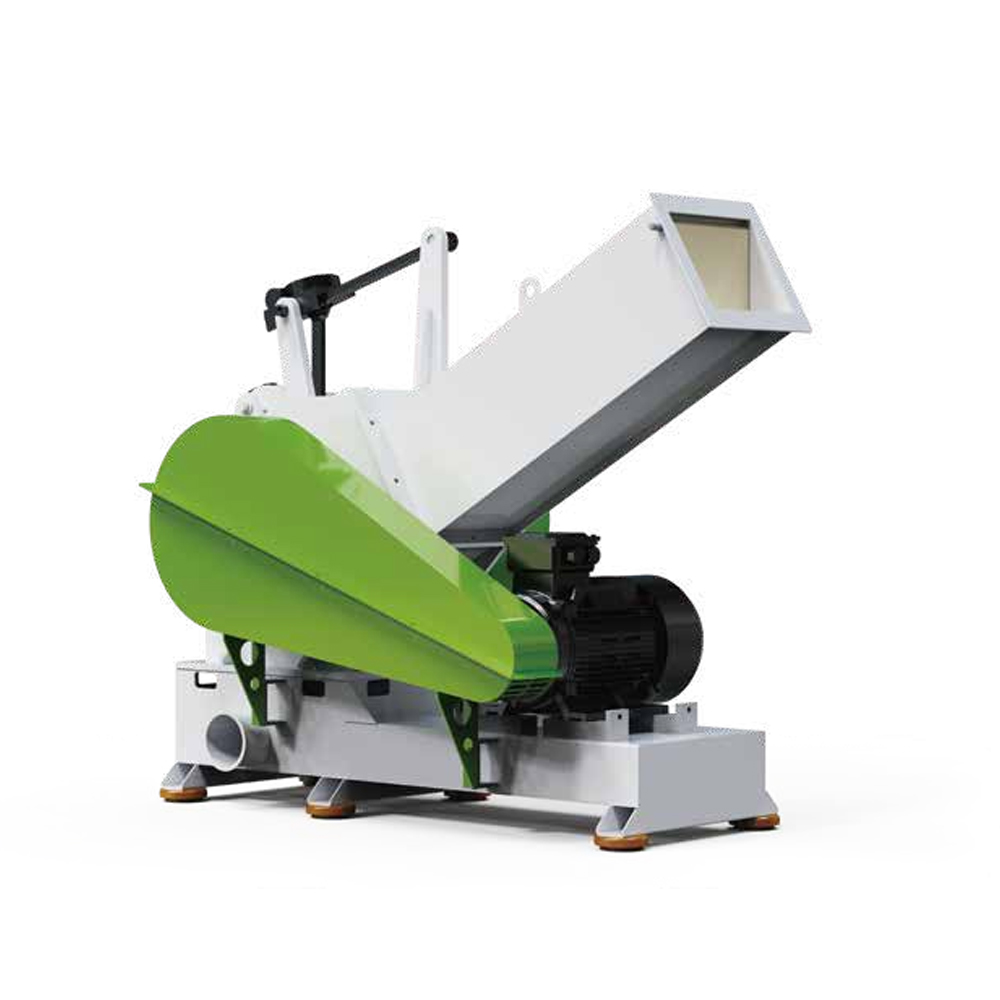
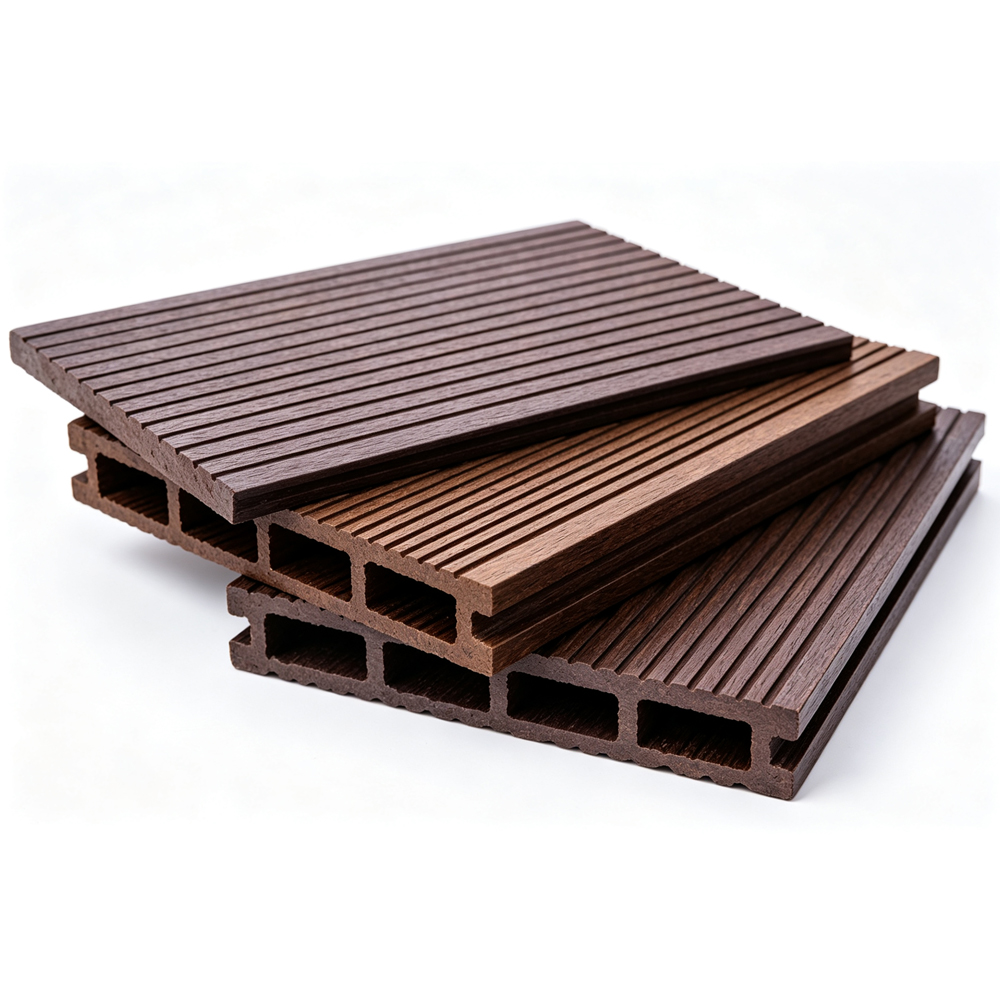
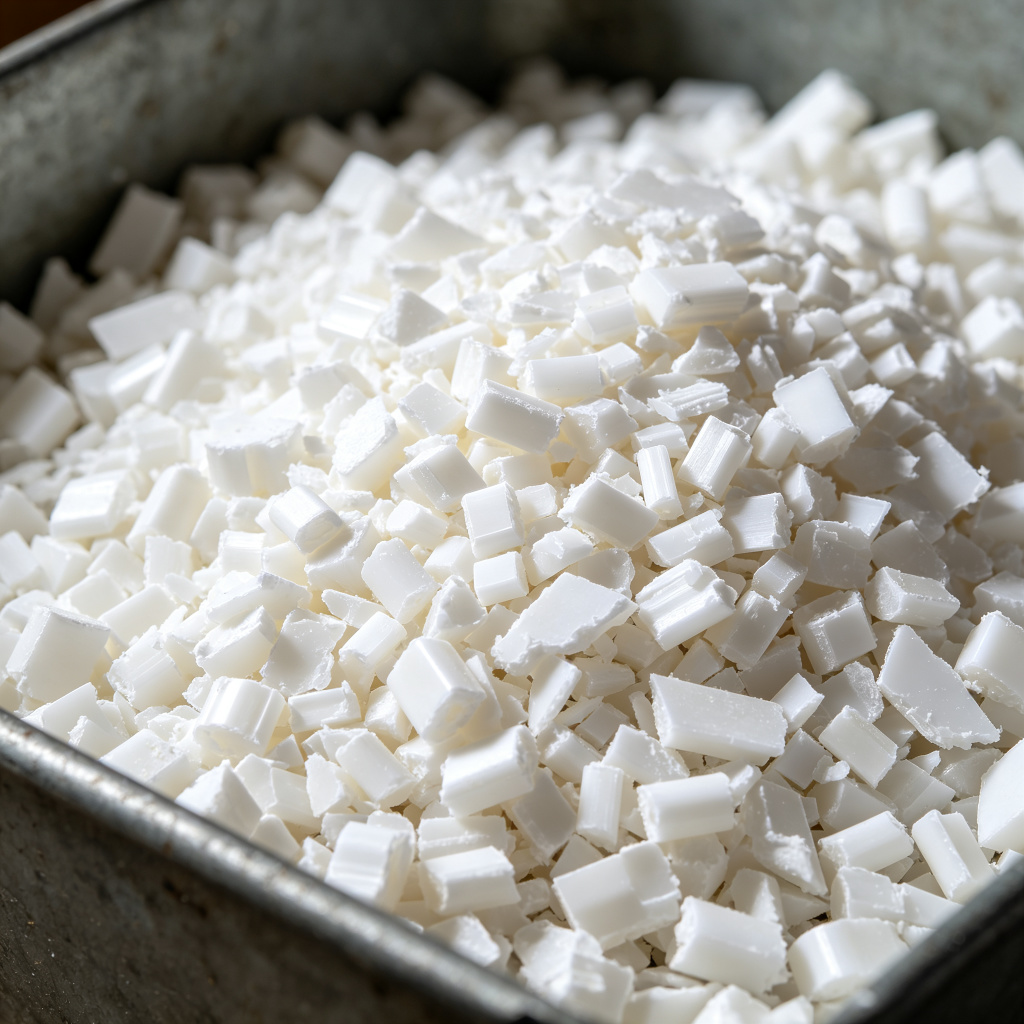
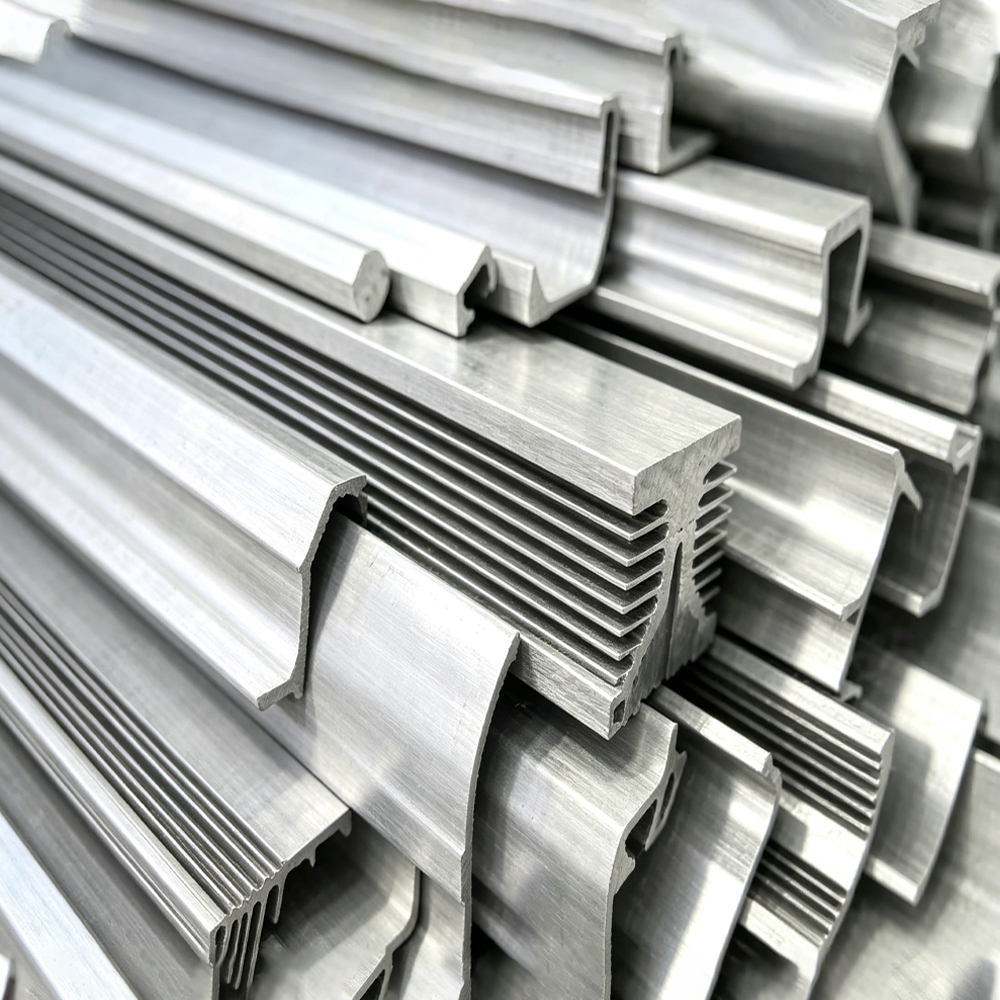
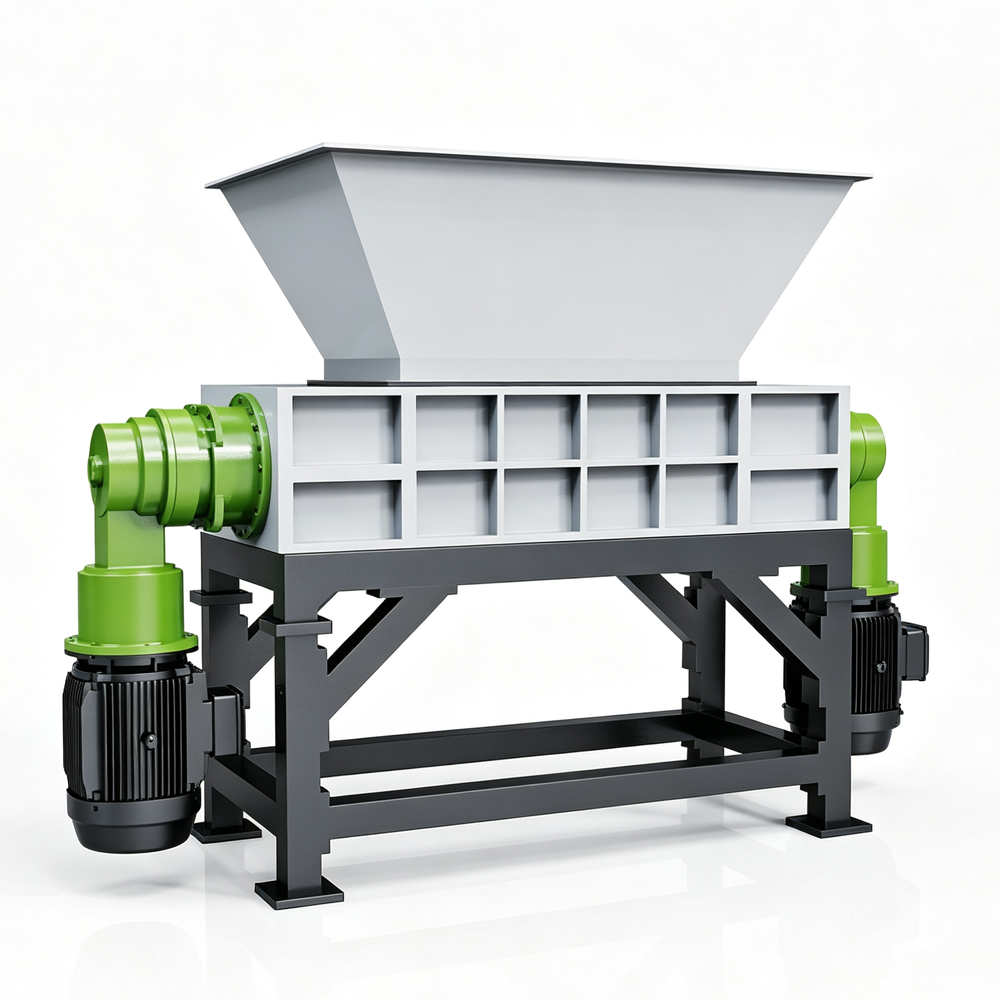
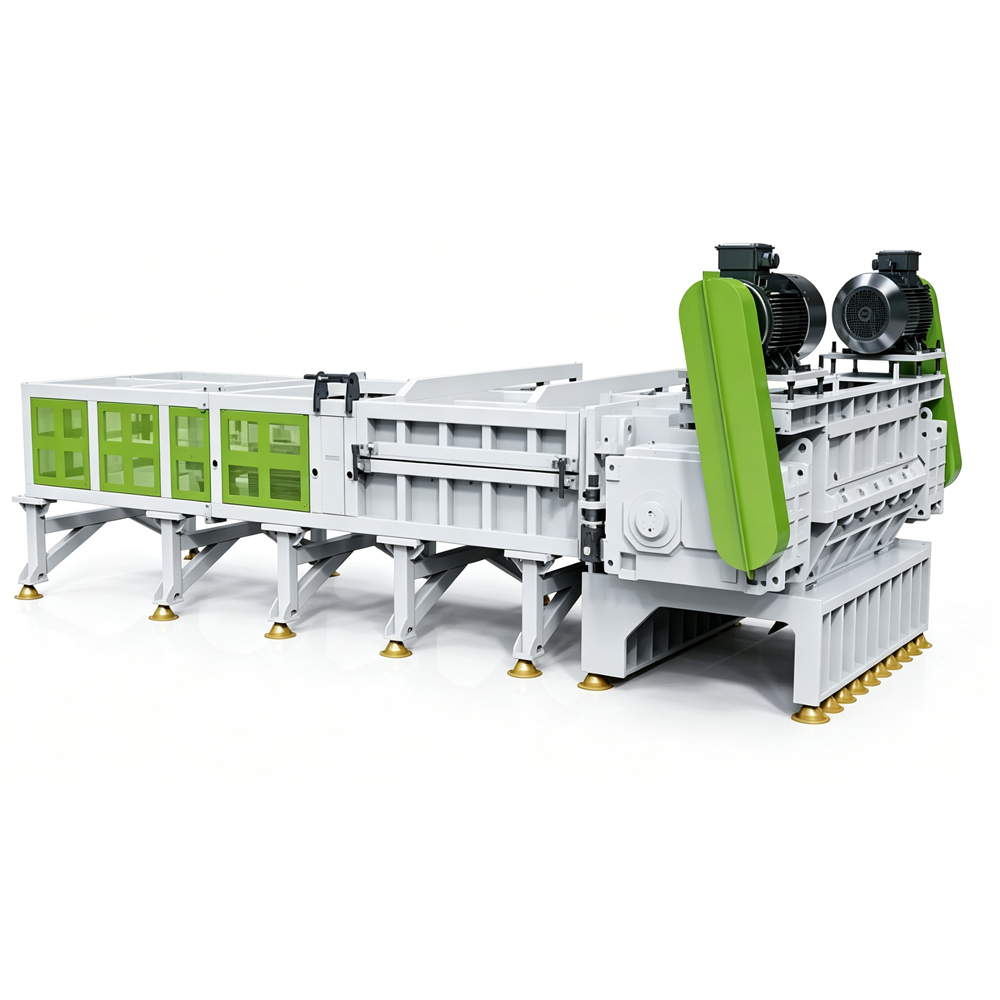
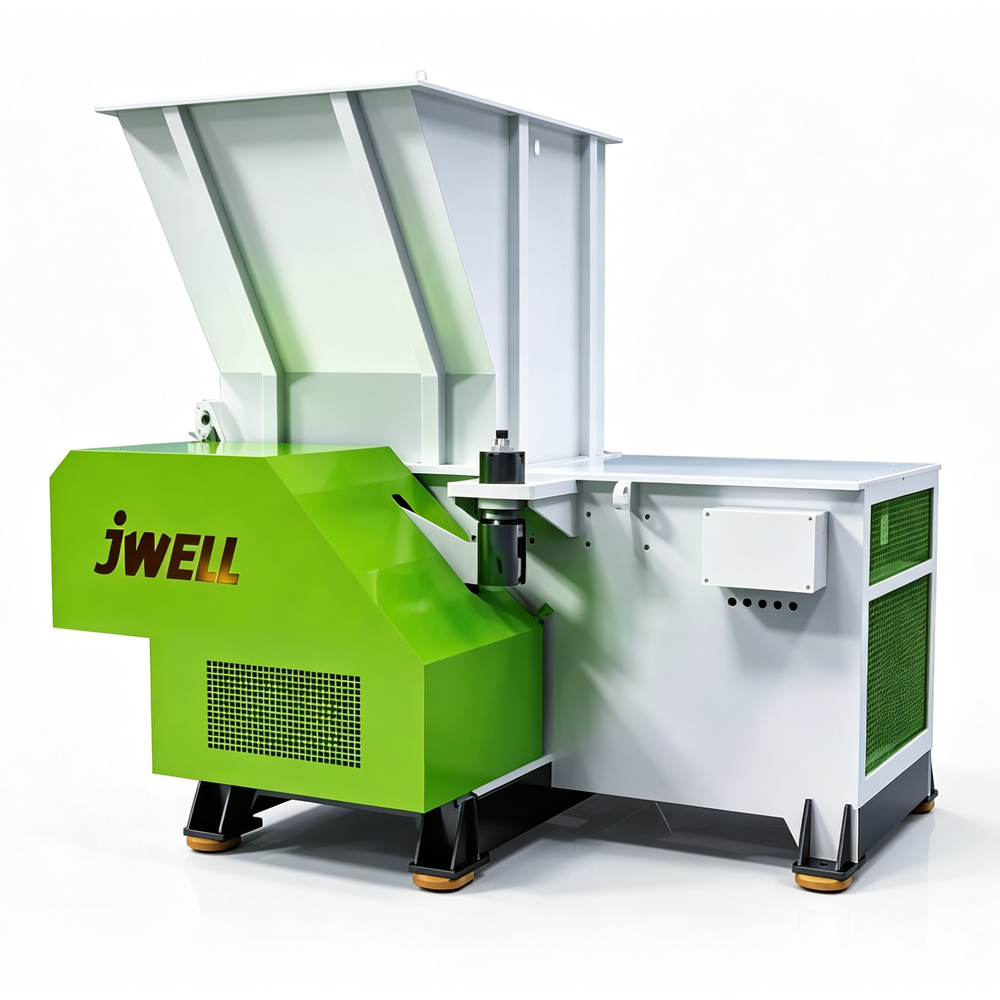
The DYPS-XM series is a volume reduction solution specifically designed for plastic profiles (PVC, UPVC, window frames, cable conduits, decorative lines) and wood-plastic composites (flooring, fencing, outdoor furniture offcuts). This series is engineered to handle the unique geometry and toughness of slender profiles and fiber-filled materials, filling the gap between light-duty granulators and heavy-duty industrial shredders.
Profile extrusion lines – In-line direct recycling for PVC, ABS or nylon window frames, pipe fittings, and sealing strips. The narrow and wide feed opening matches typical profile cross-sections (X300 max 200×300mm, M400 max 240×400mm), allowing long strips to be fed directly without pre-cutting.
Wood-Plastic Composites (WPC) – Especially recommended for composite flooring offcuts and railing profiles. The M400 model is equipped with 24 moving blades, providing a shearing cutting action that separates wood fibers from the polymer matrix without overheating, producing clean recyclate that shows no visible spots when re-extruded.
Internal recycling closed loop – Typical end users are extrusion plants generating 200-500 kg/h of scrap. For example, a PVC window frame factory in Canada installed a DYPS-X300 next to its twin-screw extruder. They reduced virgin material consumption by 12% and eliminated landfill fees for profile waste.
✅ Optimized for slender profiles
200×300mm / 240×400mm feed opening accommodates profiles up to 1.5 meters long without tilting. Conventional crushers with square feed openings typically require manual cutting – this saves 30-45 minutes per shift.
✅ Rotor blade configuration tailored to material
DYPS-X300 (5 blades) – Fewer blades generate lower frictional heat, suitable for heat-sensitive PVC and rigid profiles.
DYPS-M400 (24 blades) – Dense cutting pattern reduces wood-plastic composites into uniform 6-8mm flakes, preventing "stringy" oversized particles that clog conveying lines.
✅ High energy efficiency output
15 kW (X300) model consumes approximately 1.2 kWh per 25 kg of recyclate produced – significantly lower than general-purpose granulators. The 22 kW M400 processes WPC scrap at up to 350 kg/h, equivalent to 15.9 kg/kWh (industry average is 11-13 kg/kWh).
✅ Low-maintenance design
External bearing housings keep dust away from rotating seals (critical for wood-plastic materials containing fine sand/additives).
Screen and knives are accessible directly from the front panel – complete blade set change in under 20 minutes.
Each DYPS-XM crusher undergoes a six-stage verification before leaving the factory, accompanied by a signed test report.
|
Stage |
Process |
Acceptance Criteria |
|
1. Raw material inspection |
Ultrasonic inspection of rotor shaft forgings; hardness check of all blades (HRC 52±2). |
No internal defects; blade hardness variation ≤1.5 HRC. |
|
2. Rotor dynamic balancing |
Rotated at 1.2 times operating speed (720-840 RPM) on a hard-bearing balancing machine. |
ISO 1940 G2.5 grade – residual unbalance <2.5 mm/s. |
|
3. No-load trial run |
Run for 2 hours, measuring vibration at three points (bearing housing, frame). |
RMS vibration velocity ≤1.8 mm/s; bearing temperature rise ≤35°C above ambient. |
|
4. Load test |
Feed actual production scrap – e.g., 100 kg of 20mm thick WPC flooring for M400, or 80 kg of PVC profile for X300. |
Output ≥95% of rated capacity; 98% uniformity of recyclate through 8mm screen. |
|
5. Overload & safety verification |
Trip electrical thermal overload relay; verify crusher stops within 3 seconds. |
Emergency stop response time ≤0.5 seconds; overload automatic reset protection. |
|
6. 12-hour durability run |
Continuous operation with controlled feeding (start/stop cycles every 20 minutes). |
No abnormal noise, no seal leakage, final blade edge wear ≤0.1mm. |
Real case: A Spanish WPC extruder ordered two M400 units. The factory recorded the 12-hour test process on video – both units maintained throughput of 346-352 kg/h. The customer subsequently installed them in a closed-loop pneumatic system, with no downstream screen clogging.
| Model | Feed Mouth Size (mm) | Rotor Effective Width (mm) | Motor Power (kW) | Rotor Blade (pcs.) | Output (kg/h) |
|---|---|---|---|---|---|
| DYPS-X300 | 200×300 | 300 | 15 | 5 | 300 |
| DYPS-M400 | 240×400 | 400 | 22 | 24 | 350 |
Q1: Can the same machine handle both rigid profiles and WPC?
A: Yes – but the rotor blades need to be changed. The X300 (5 blades) is recommended for rigid PVC/ABS. For WPC, use the M400 (24 blades) or retrofit a high-density rotor kit. Processing WPC on a low-blade rotor generates excessive dust and overheats the fibers, leading to screen clogging.
Q2: What is the typical output flake size? Can it be adjusted?
A: Standard screen apertures are 8mm, 10mm, or 12mm. For profile extrusion recyclate, we recommend 8mm (dust-free flow). For WPC, 10mm balances throughput and melt uniformity. Changing the screen using the front clamping handle takes only 8 minutes.
Q3: How often should blades be turned or replaced?
A: Based on actual customer data:
PVC profiles (unfilled) – turn blades every 500 operating hours; re-sharpen every 1000 hours.
WPC with 30-40% wood fiber content – turn every 250 hours (fibers are abrasive).
Blades are double-edged – can be turned once, then replaced. Average blade life: 800-1200 hours for WPC, over 2000 hours for PVC.
Q4: My factory only has 220V single-phase power. Can the DYPS-XM series run on it?
A: No. Both models require three-phase 380V-415V (440V optional). The 15 kW and 22 kW motors have high inrush currents that single-phase power cannot supply. If your grid is weak, we can supply a VFD control cabinet for soft start.
Q5: What safety features are included?
A: The machine complies with CE standards:
Mechanical interlock on the hopper – crusher cannot run when hopper is opened.
Reverse button for clearing jams (critical when feeding long profiles).
Rotor overspeed detection (stops infeed conveyor if rotor speed falls below 85% of rated).
Q6: Can you share a real production case from a similar industry?
A: Case – A flooring manufacturer in Tennessee, USA
They generated 450 kg of WPC edge trim and punch scrap per shift. Previously, they paid $180/ton to a hauler. After installing one DYPS-M400:
Recyclate was re-introduced at an 18% ratio with virgin material.
Annual savings = 17,200(haulingfees)+17,200(haulingfees)+63,000 (material substitution cost).
The 24-blade rotor reduced stringy oversized particles by 94% compared to their previous 6-blade granulator.




Pipe Extrusion Production Line
Plastic Shredder Crusher Machine

Tel: +86-19057068112

E-mail: [email protected]

Company Address
No. 128 Qingfeng Road, Xieqiao Town, Haining City, Jiaxing City, Zhejiang Province

19057068112

 English
 русский