
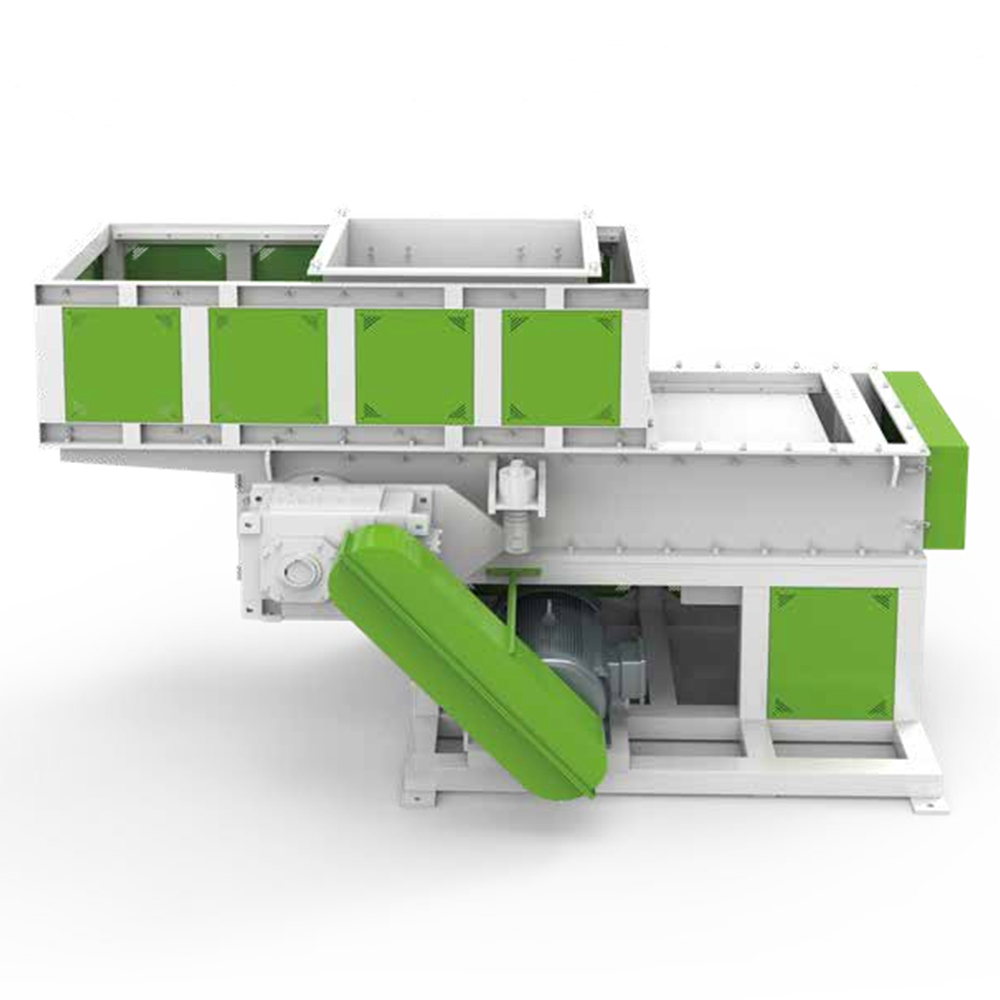
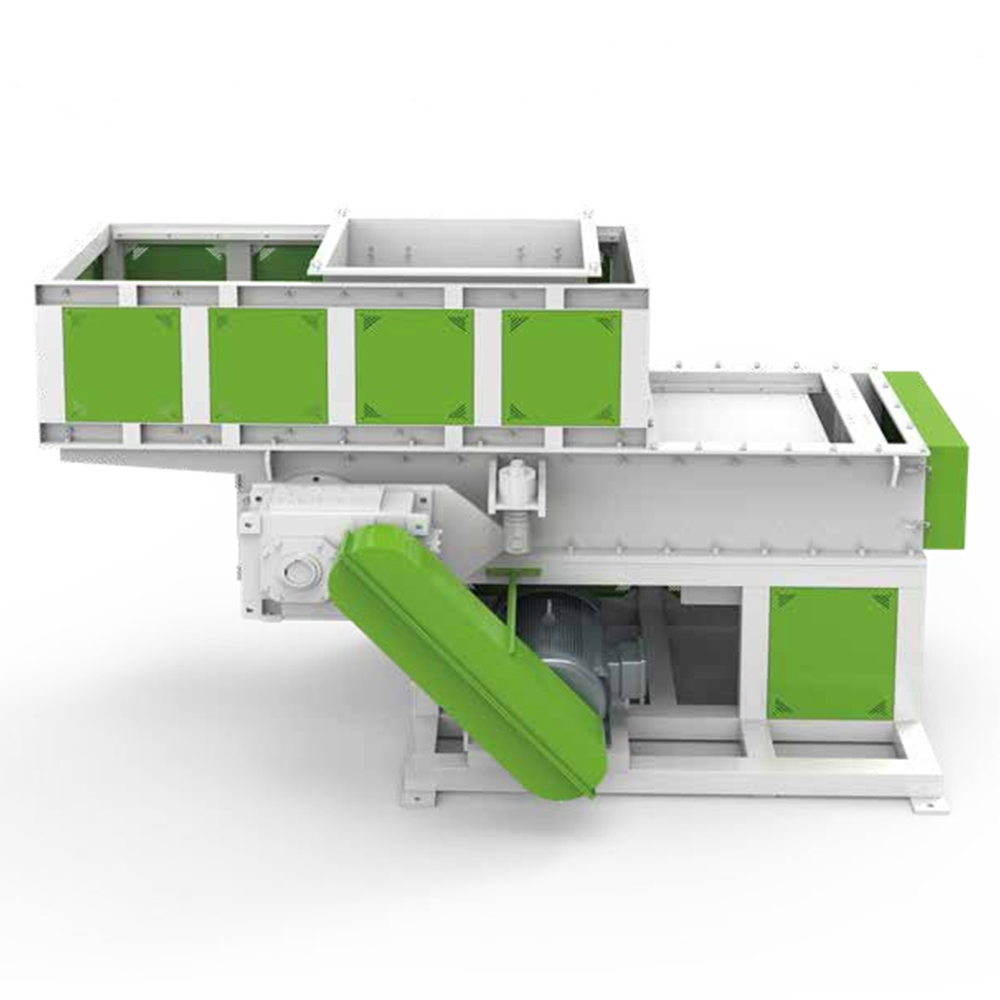
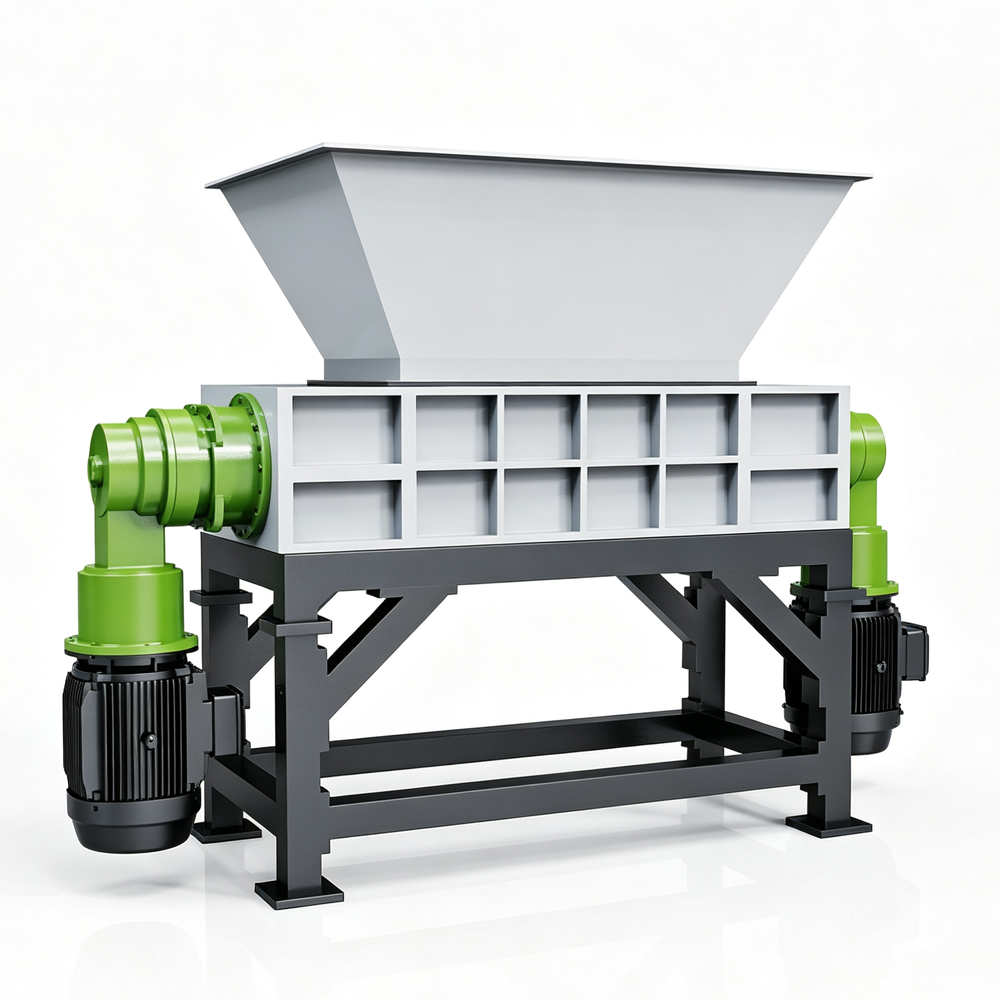
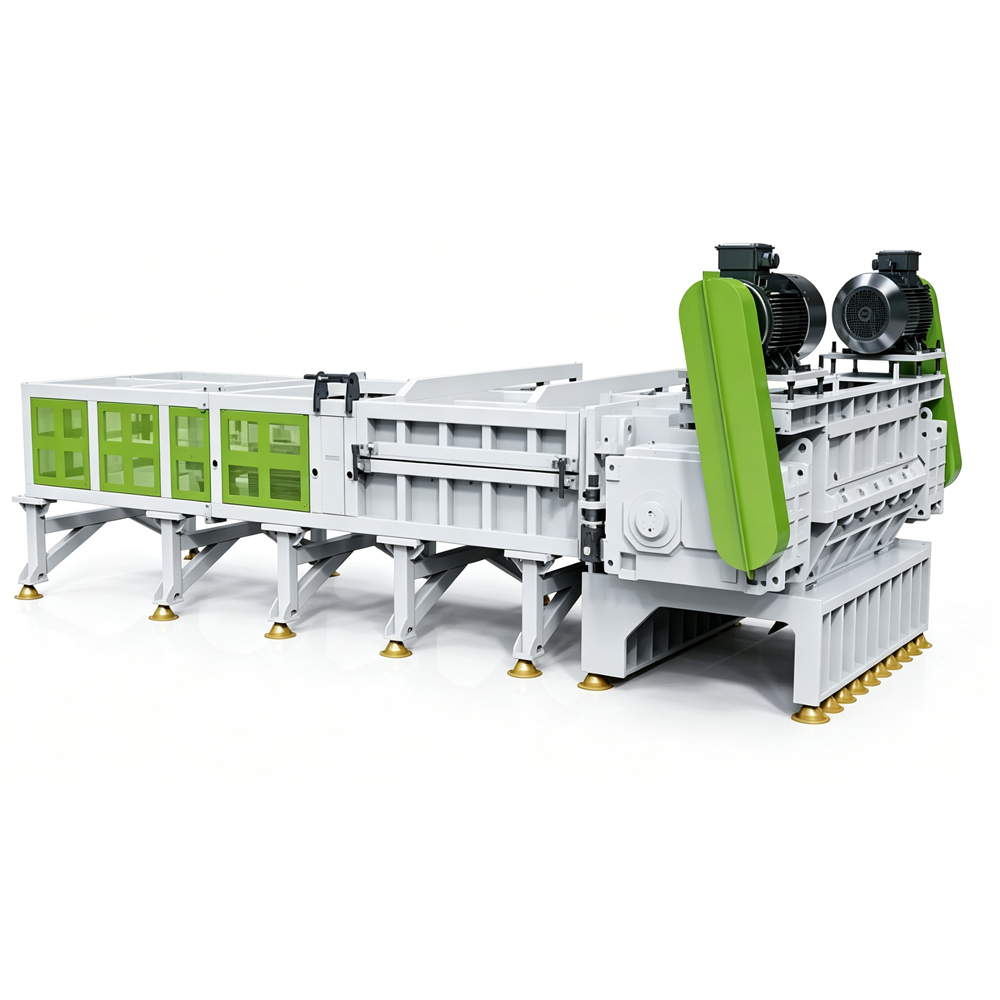
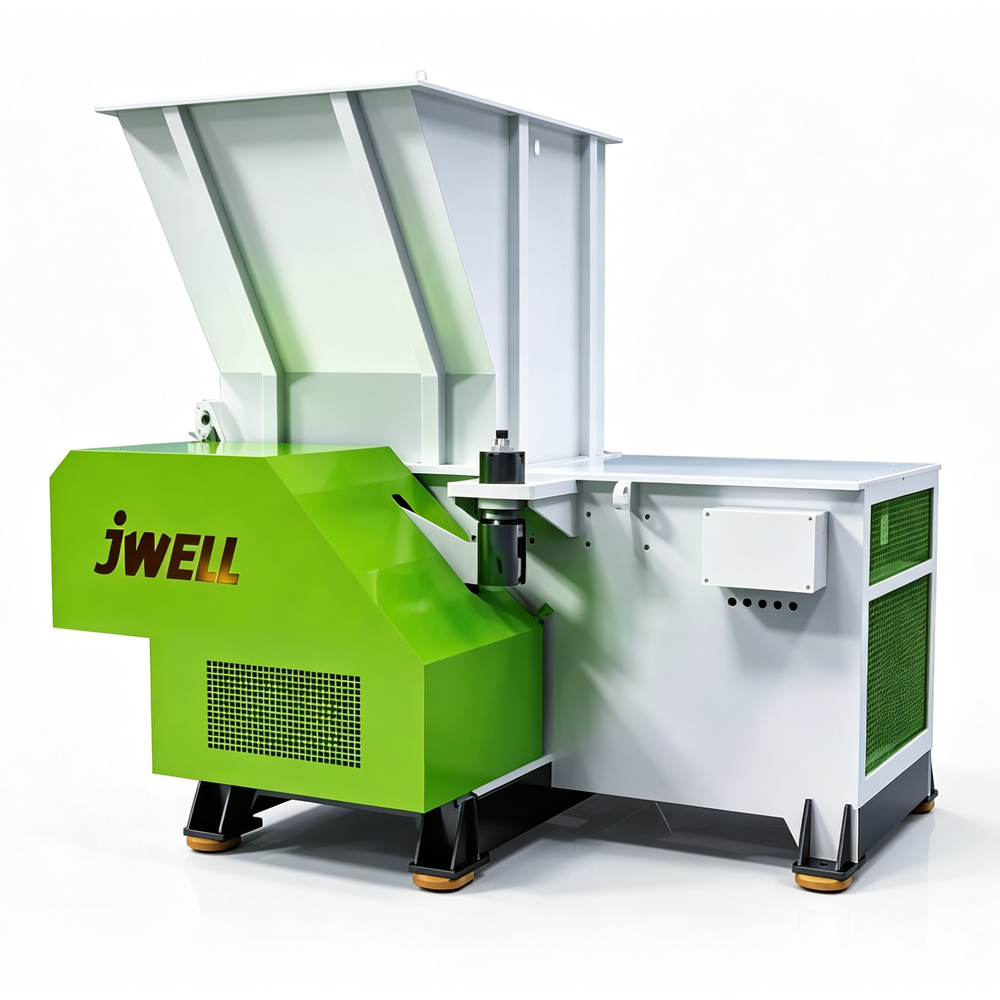
The DYSSGC series is designed for the most demanding pipe shredding applications, offering high torque, exceptional durability, and consistent output. With a robust main shaft diameter and power up to 90kW, this series efficiently handles large-diameter HDPE, PVC, PP, and other plastic pipes.
The DYSSGC series is widely used for in-house waste recycling in pipe extrusion plants, municipal waste pipe treatment, and post-consumer pipe recycling.
Case 1 – Large-Diameter HDPE Pipe Recycling
A recycler in the Middle East processes waste HDPE pipes from water and gas pipeline installations. They use the DYSSGC-1200 to shred pipes up to 1100mm in diameter with wall thickness exceeding 40mm. The 75kW motor and 400mm main shaft diameter provide low-speed, high-torque action to avoid jamming. Average output is 600–650 kg/h, feeding directly into a downstream granulator.
Case 2 – Municipal PVC Pipe Recycling
A European waste management facility processes mixed rigid pipes (up to 1200mm diameter). They chose the DYSSGC-1400 equipped with a 90kW motor and 480mm main shaft. The machine routinely handles pipes containing sand residue and occasional metal fittings (thanks to the overcurrent protection system). Output reaches 800–850 kg/h, well within its rated 600–900 kg/h range.
Case 3 – In-House Extrusion Waste
A pipe extrusion plant uses the DYSSGC-800 to process start-up lumps and waste pipes up to 710mm diameter. With a 45kW motor, it runs quietly for 16 hours per day, producing 450–500 kg/h of uniform 40×40mm fragments that are directly fed back into the extruder.
Extra-large main shaft diameter (400–480mm) – Industry-leading in its class. Larger shaft means higher torsional rigidity and fatigue resistance. Reliable start/stop under heavy loads, reducing shaft maintenance downtime.
Optimized power-to-output ratio – Look at the actual data:
DYSSGC-800: 45kW → 400–600 kg/h
DYSSGC-1200: 75kW → 500–700 kg/h
DYSSGC-1400: 90kW → 600–900 kg/h
This translates to lower energy cost per ton compared to undersized shredders.
Pipe-specific rotor design – V-cut rotor geometry prevents pipes from "walking" or rotating (a common problem with ordinary shredders). Material is immediately grabbed and pulled into the cutting chamber.
Reversible, multi-use blades – Blades can be rotated multiple times before re-sharpening. Made of high-alloy tool steel (Cr12MoV or equivalent). Typical blade life: 800–1500 tons of HDPE/PVC.
Hydraulic pusher (optional) – For extra-long pipes, an automatic horizontal pusher forces material toward the rotor, maximizing throughput and reducing manual feeding risks.
Easy maintenance – Large hinged doors, bearing housings with temperature sensors, and modular screen holders. Screen change time is less than 20 minutes.
Every DYSSGC shredder undergoes rigorous testing before leaving our ISO9001-certified factory. The following steps are mandatory:
Raw material and casting inspection – Main shaft steel (42CrMo) and body plates undergo spectral analysis. Castings are X-ray inspected for internal voids.
Main shaft dynamic balancing – Each rotor is balanced to ≤G6.3 grade at operating speed. This minimizes vibration, bearing wear, and noise.
Blade hardness and impact testing – Each batch is tested on the Rockwell hardness scale (target HRC 52–56) and Charpy impact tester (≥25J).
No-load trial run – The assembled shredder runs for 4 hours, checking bearing temperature (ambient +40°C max), current draw, and noise level (<85dB at 1 meter).
Full-load testing with real pipes – We use actual 600–1200mm diameter waste pipes (depending on model) for 6 continuous hours. Output is weighed, and particle size is verified (screen: 30–100mm, customized as required).
Safety and electrical testing – Overload relay calibration, emergency stop response (<0.5 seconds), and IP54 control panel validation.
Final paint thickness and packaging – Anti-corrosion paint (≥120µm) and shock-resistant export packing.
Each machine comes with a signed test report and a video recording of the load test.
| Model | Spindle Dia. (mm) | Motor Power (kW) | Shreddable Pipe Dia. Max. (mm) | Output (kg/h) |
|---|---|---|---|---|
| DYSSGC-800 | 400 | 45 | 710 | 400-600 |
| DYSSGC-1200 | 400 | 75 | 1100 | 500-700 |
| DYSSGC-1400 | 480 | 90 | 1200 | 600-900 |
Q1: Can it shred pipes with metal attachments such as steel flanges or screws?
A: Yes, but with caution. The DYSSGC series has an auto-reverse system: if a current spike occurs due to non-shreddable metal, the rotor briefly reverses to eject the object. For continuous high metal content, we recommend installing a magnetic separator or hanging magnet upstream. Small screws and fragments are generally fine – the hard blades tolerate occasional mild steel (less than 1% of total feed).
Q2: What is the recommended feeding method for very long pipes (e.g., 6 meters)?
A: We recommend the optional hydraulic feeder or a simple horizontal conveyor with pinch rollers. Without a feeder, you can feed the pipe longitudinally into the hopper; the rotor's staggered blades will gradually pull the material in. However, manual feeding of extra-long pipes reduces output by about 15–20%. For best results, pre-cut pipes to 1.5 times the rotor width.
Q3: What output particle size can I achieve?
A: Standard screen range is 30mm to 100mm. For direct feeding to a granulator, 40mm is typical. Smaller screens (30mm) reduce output by about 20–30% but produce finer regrind. We can customize screens down to 20mm for certain materials.
Q4: How often do the blades need to be replaced or rotated?
A: For clean HDPE pipes (wall thickness ≤30mm), expect to rotate blades every 200–300 operating hours. For abrasive materials such as glass-filled PP or pipes with sand residue, every 120–150 hours. A full set of blades (4–6 blades depending on rotor size) can be rotated 3–4 times before replacement.
Q5: What is the difference between the DYSSGC-1200 and DYSSGC-1400 besides diameter?
A: Besides the maximum pipe diameter (1100mm vs 1200mm), the -1400 model features a 480mm main shaft (vs 400mm) and a 90kW motor (vs 75kW). The larger shaft provides higher inertia mass – crucial for handling extremely thick-walled pipes (e.g., 80mm wall thickness). Additionally, the -1400 includes a slightly wider hopper for irregular shapes. For most applications up to 1000mm diameter, the -1200 model is sufficient.
Q6: Do you provide installation and training?
A: Yes. For each machine, we dispatch a commissioning engineer (travel expenses borne by the buyer). They will oversee installation, conduct initial material testing, and train your operators on safety, blade changes, and daily maintenance. 24/7 remote video support is also available.


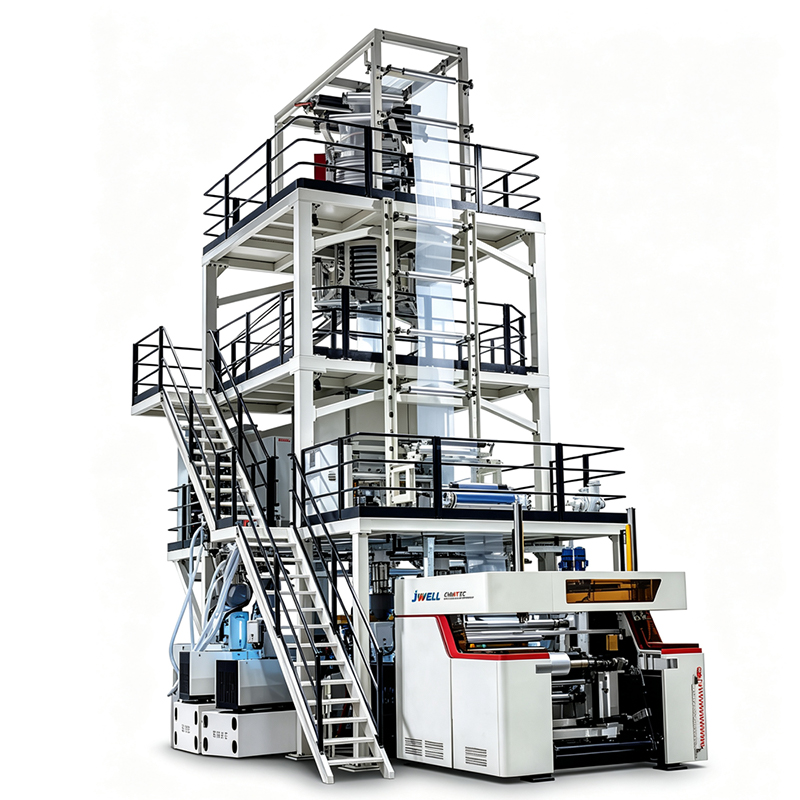


Pipe Extrusion Production Line
Plastic Shredder Crusher Machine

Tel: +86-19057068112

E-mail: [email protected]

Company Address
No. 128 Qingfeng Road, Xieqiao Town, Haining City, Jiaxing City, Zhejiang Province

19057068112

 English
 русский