
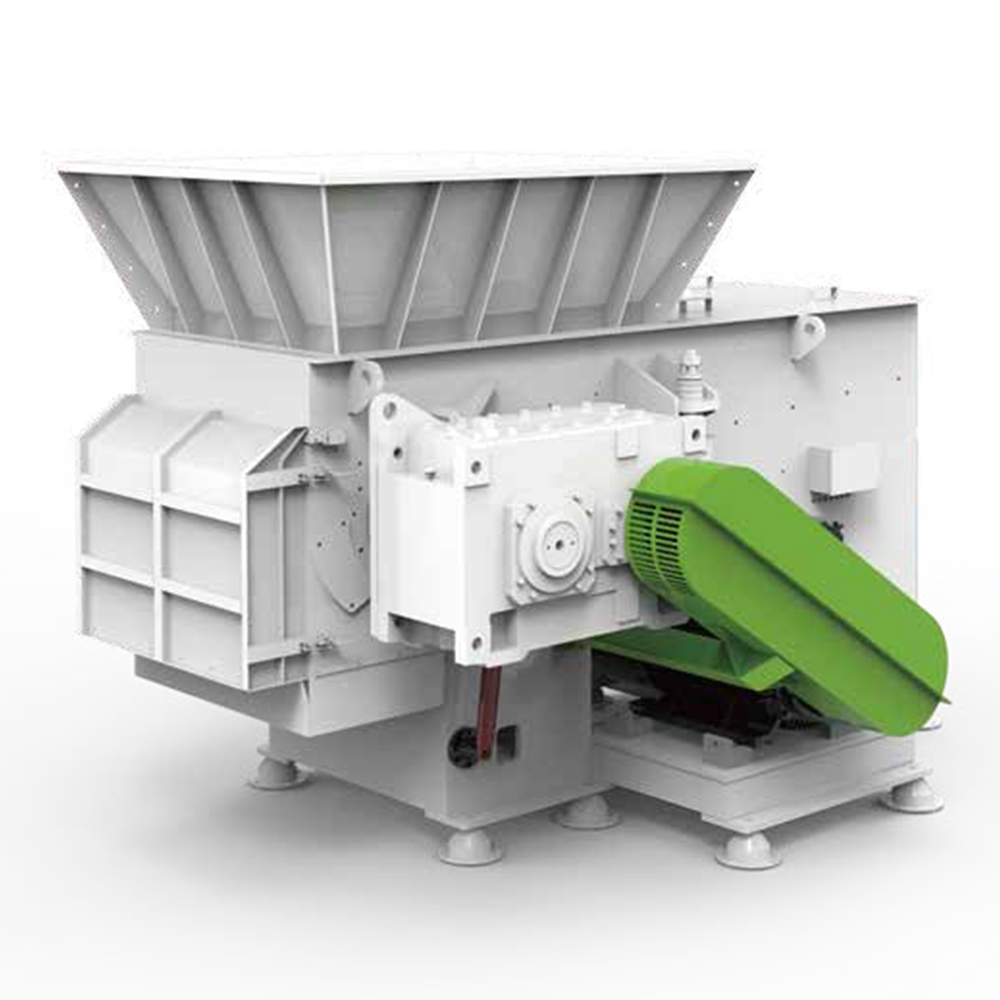
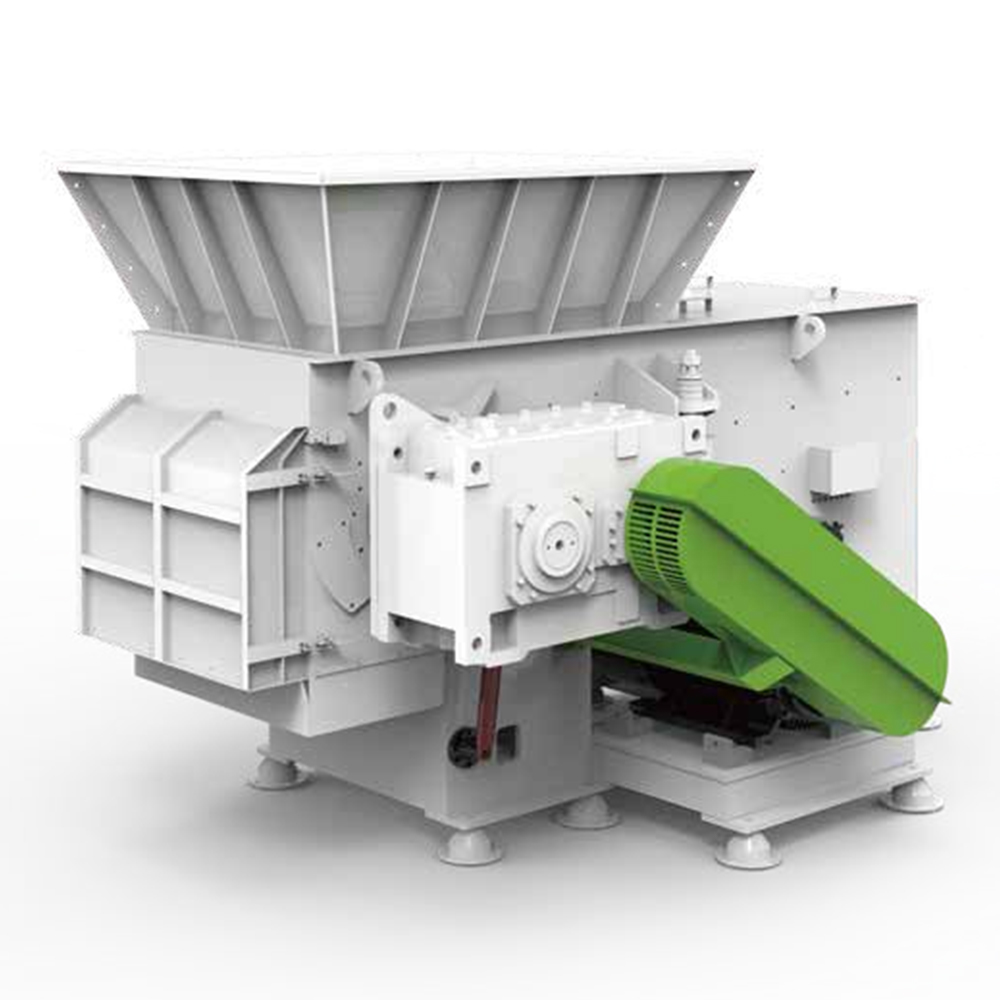
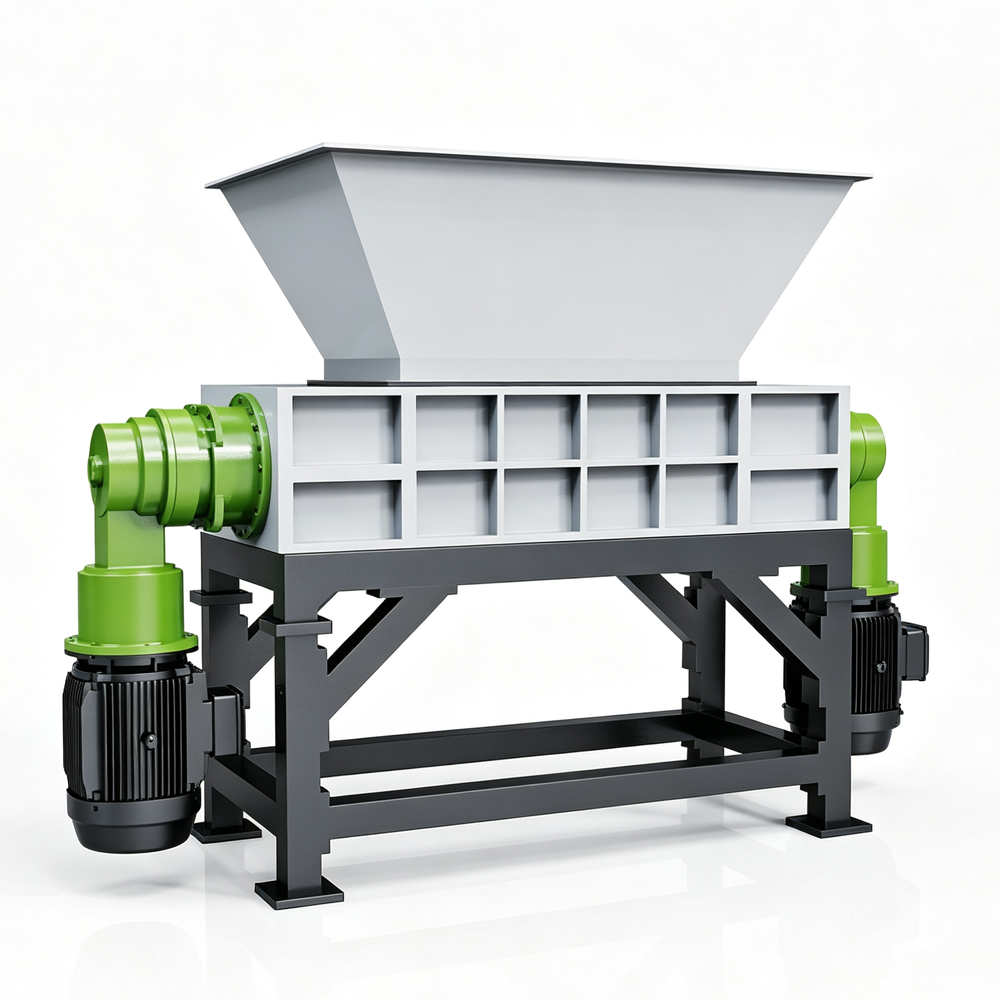
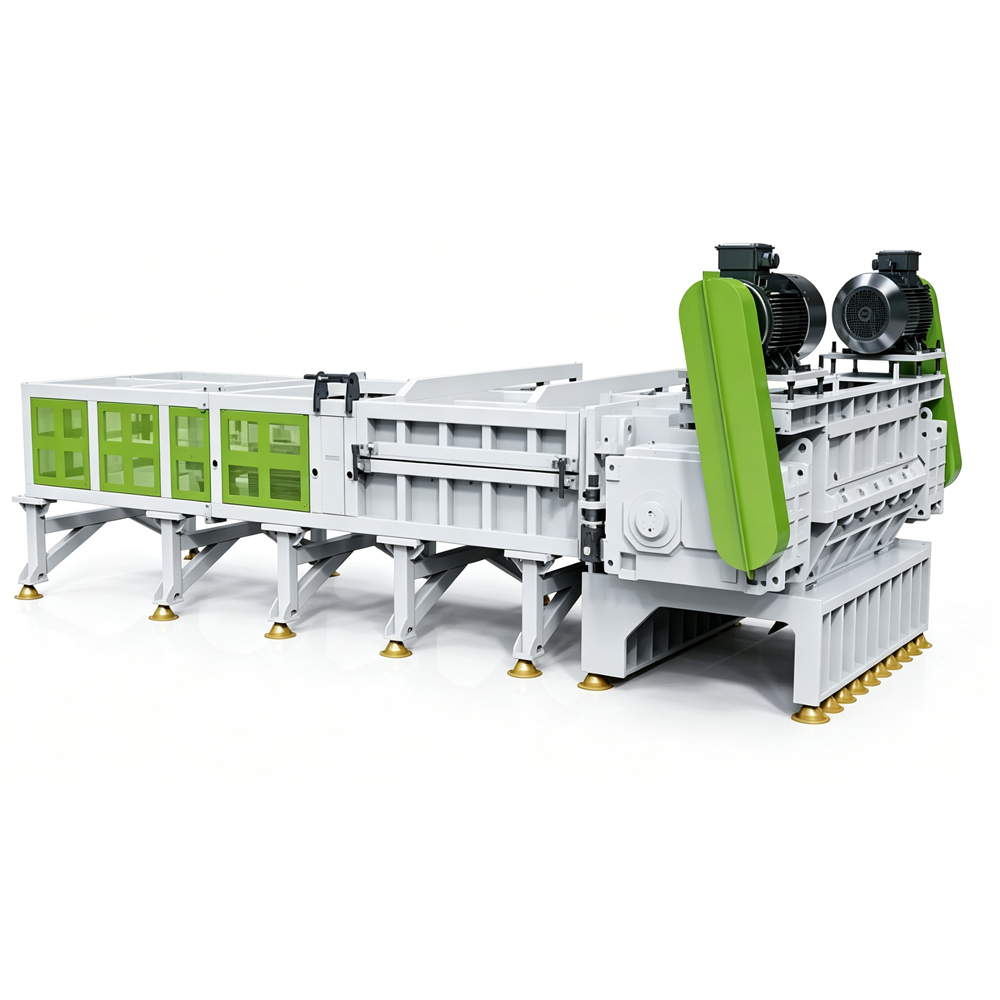
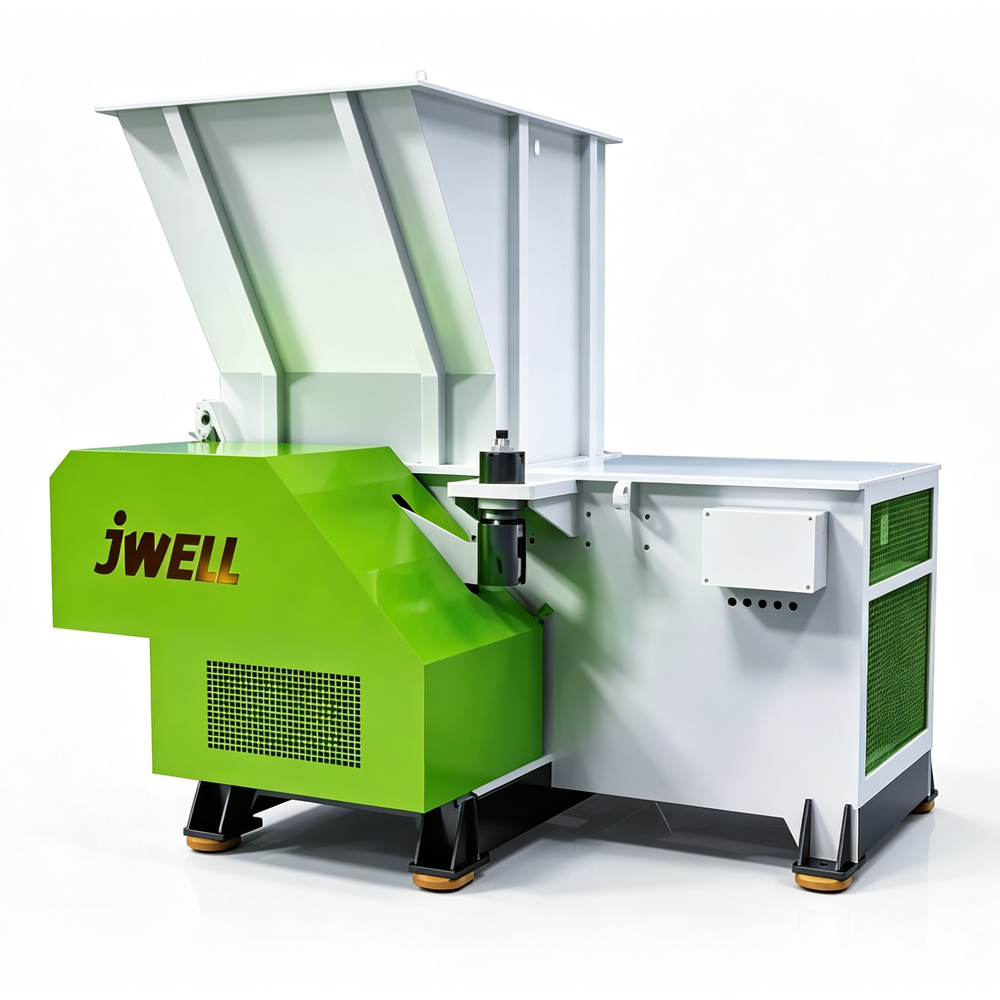
Designed for heavy-duty recycling applications, the DYSSH Series (DYSSH-800 / DYSSH-1400) delivers exceptional shredding performance with low-speed, high-torque cutting action. Whether processing plastic lumps, wood waste, electronic scrap, or industrial rejects, these single-shaft shredders help you achieve consistent particle size and reliable uptime.
Thanks to the Φ400 mm rotor diameter and modular blade configuration, the DYSSH Series is widely used for:
Plastic Recycling – HDPE/LDPE drums, PP woven bags, ABS lumps, engineering plastic waste.
*Case: A recycling plant in Mexico uses the DYSSH-800 to process 700 kg/h of discarded blow-molded HDPE containers, reducing volume by 70% before pelletizing.*
Wood & Biomass – Plywood scrap, pallets, wood blocks (moisture content <15%).
*Case: A wood panel factory in Vietnam uses the DYSSH-1400 to shred pallet offcuts into 30–50 mm wood chips, feeding directly into a biomass boiler. Average output: 1,300 kg/h.*
E-scrap & Cables – Aluminum/copper radiators, monitor plastic housings, small e-waste.
*Case: An e-waste recycler in India uses the DYSSH-800 to pre-shred old monitor housings (ABS/PC), liberating metals for downstream separation.*
Rubber & Fiber – Tire sidewalls (after bead removal), rubber seals, fiber-reinforced conveyor belts.
|
Feature |
DYSSH-800 |
DYSSH-1400 |
Advantage |
|
Rotor diameter |
Φ400 mm |
Φ400 mm |
Uniform torque distribution, handles dense materials |
|
Drive power |
90 kW |
160 kW |
High crushing force for thick-walled or solid materials |
|
Rotor blades |
40 + 38 |
60 + 56 |
Fine and powerful shredding; staggered layout reduces dead zones |
|
Stationary blades |
3 + 3 |
5 + 5 |
Double-shear cutting effect, self-cleaning design |
|
Output range |
600–800 kg/h |
1,200–1,500 kg/h |
Scalable to medium/large recycling lines |
What truly makes DYSSH stand out:
Low-speed, high-torque drive – Prevents jamming and overheating even when processing materials containing metal contaminants.
External bearing housings – Keep bearings away from dust and fine particles, extending service life by 40% compared to conventional designs.
Quick blade change – Rotor blades are bolted onto replaceable blade holders; no need to disassemble the entire rotor (full changeover downtime < 2 hours).
Hydraulic pusher with adjustable pressure – Automatic feed control reduces bridging of hollow materials (e.g., drums, pipes).
Every DYSSH machine undergoes a 6-stage quality control protocol before shipment:
① Raw material inspection
Rotor steel: 42CrMo forging, hardness HB 240–280.
Blades: Cr12MoV or D2 tool steel, HRC 56–60, impact toughness ≥30 J/cm².
② Welding and structural inspection
100% magnetic particle inspection (MPI) of rotor body welds.
Vibration test: ≤0.05 mm/s under no-load conditions.
③ Assembly precision
Rotor dynamic balance accuracy: Grade G6.3.
Stationary blade gap adjustment: 0.8–1.5 mm, verified with feeler gauge at 12 points.
④ No-load run test (4 hours)
Monitor bearing temperature rise (≤40°C), noise level (≤85 dBA at 1 meter).
⑤ Load test (simulated production)
DYSSH-800 – Shred 500 kg of 10 mm thick HDPE plate; recorded output: 720 kg/h, motor current stable at 88% of rated value.
DYSSH-1400 – Shred mixed waste (plastic+wood+aluminum profiles) at 1,350 kg/h, power fluctuation within ±5%.
⑥ Final inspection
CE safety compliance check (interlocked guards, emergency stop, reverse function).
Each machine comes with a 30-item test report signed by the QC engineer.
| Model | Rotor Dia. (mm) | Drive Power (kW) | Number of Rotor Blades (pcs.) | Number of Fixed Blades (pcs.) | Output (kg/h) |
|---|---|---|---|---|---|
| Model | Rotor Dia. | Drive Power | Rotor Blade | Fixed Blade | Output(kg/h) |
| DYSSH-800 | Φ400 | 90 | 40+38 | 3+3 | 600-800 |
| DYSSH-1400 | Φ400 | 160 | 60+56 | 5+5 | 1200-1500 |
Q1: Can the DYSSH-800 shred steel drums (e.g., 200L closed-head drums)?
A: Yes, but we recommend crushing or de-gassing them first. The Φ400 rotor with 40+38 blades can handle drum wall thickness up to 1.5 mm. However, if you process drums daily, choose the DYSSH-1400 (25% higher pushing force). Be sure to remove non-metallic parts such as plastic caps or rubber gaskets.
Q2: How often should I change the blades?
A: Blade life depends on the abrasiveness of the material:
Clean plastics (PP/PE): 400–600 operating hours.
Wood with nails: 150–250 hours (one blade flip).
E-waste (ABS): 300–400 hours.
Both models support 4-edge usage (rotate blade 90°). When all edges are worn, replace the entire set of blades. Typical cost per edge for DYSSH-800: approx. 1.2–1.2–1.8 per blade.
Q3: Does the machine have overload protection?
A: Yes. The PLC monitors motor current in real time. If a jam occurs (e.g., a metal block), the shredder automatically:
Stops the pusher
Reverses the rotor for 3 seconds
Re-attempts forward rotation (up to 3 times)
If unsuccessful, an alarm is triggered. This protects the gearbox and blades from sudden damage.
Q4: What is the typical output particle size?
A: Depends on the installed screen mesh size (10–80 mm optional). For standard recycling:
20 mm screen → 85% of output <25 mm (suitable for granulator feed).
40 mm screen → for washing lines or air classification.
*Note: With the same screen, the DYSSH-1400 (with 60+56 blades) produces slightly finer particles than the DYSSH-800.*
Q5: Can I shred bundled wires or cables?
A: Yes, but copper/aluminum conductor diameter must be <8 mm. The stationary blades (3+3 or 5+5) produce a shearing effect that cuts through insulation. However, do not feed armored steel tape cables – this will damage the rotor blades. A magnetic separator is recommended before the shredder.
Q6: What are the power requirements for the DYSSH-1400?
A: Three-phase, 380–415V / 50Hz or 460V / 60Hz. Starting current: 650A (star-delta starter included). For a wiring distance of 50 meters, you need a 200A main circuit breaker and 95 mm² copper cable.




Pipe Extrusion Production Line
Plastic Shredder Crusher Machine

Tel: +86-19057068112

E-mail: [email protected]

Company Address
No. 128 Qingfeng Road, Xieqiao Town, Haining City, Jiaxing City, Zhejiang Province

19057068112

 English
 русский