
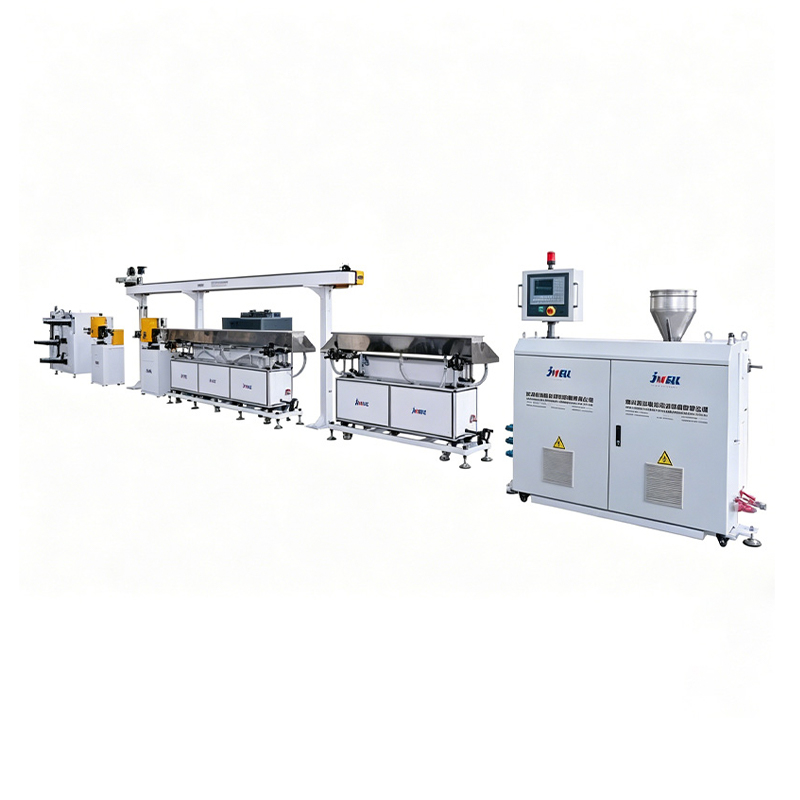
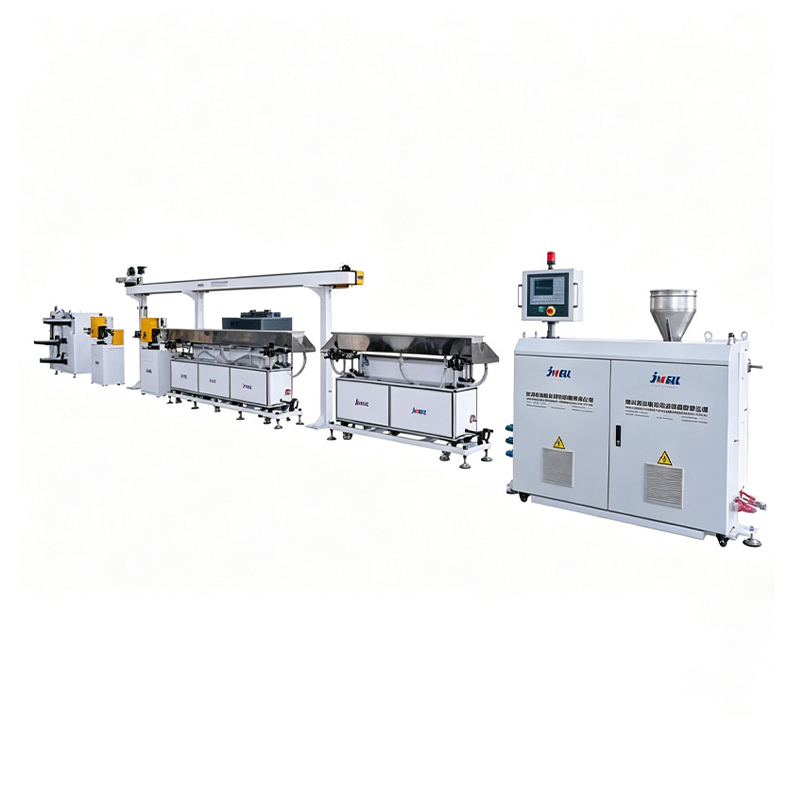
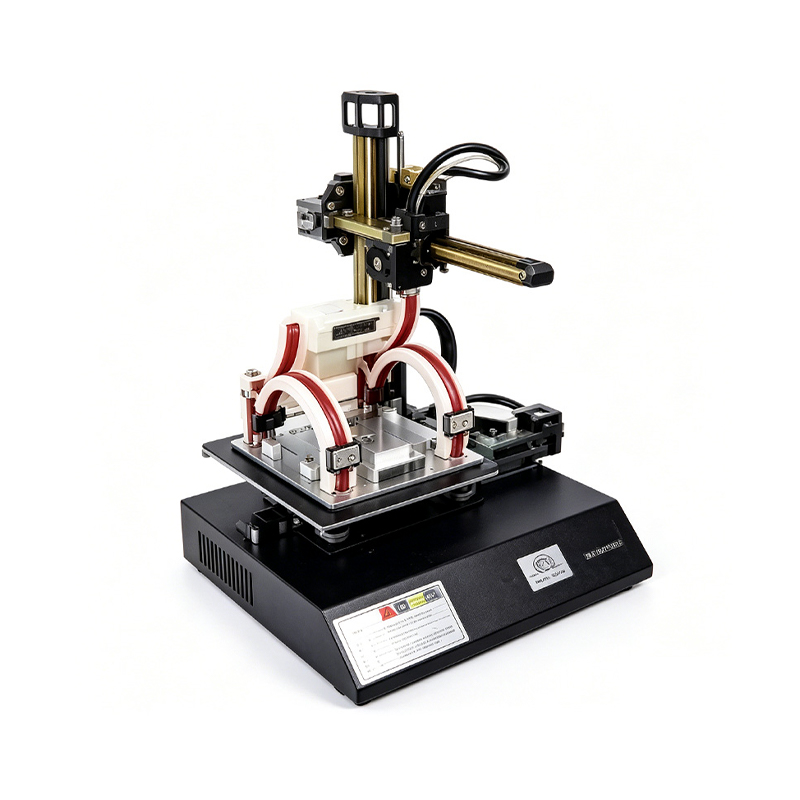
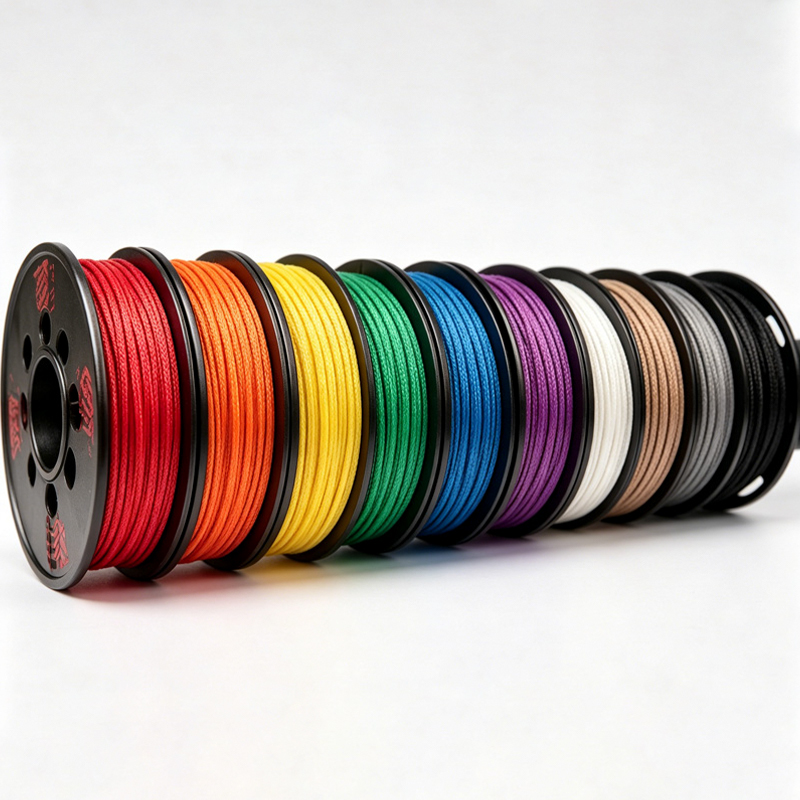
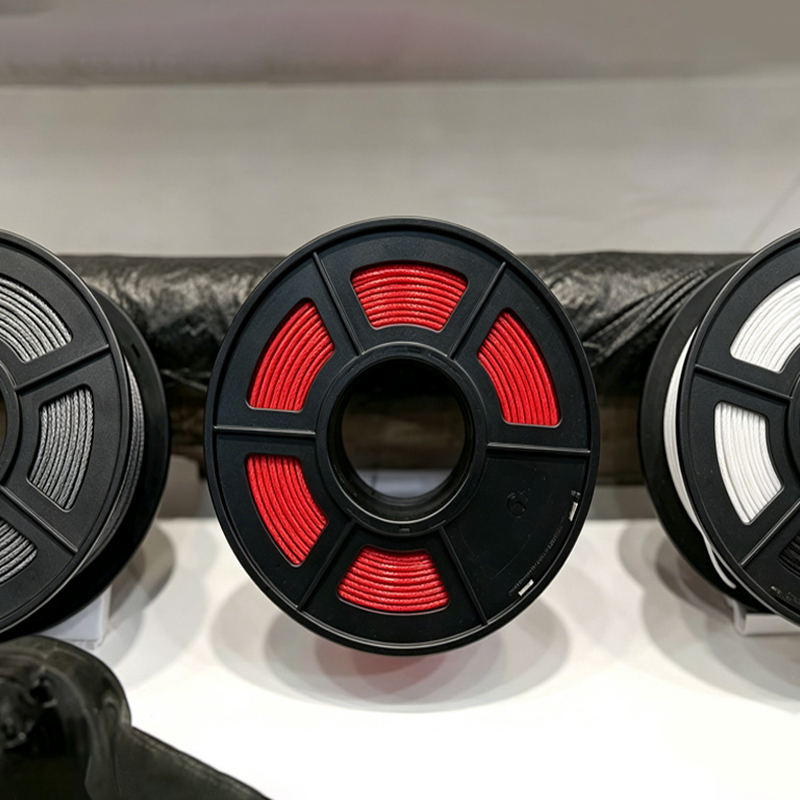
The 3D printing filament extrusion line uses 35mm and 45mm screws respectively, enabling stable production of 1.75mm or 2.85mm filaments such as PLA, ABS, PETG, etc. JW35 output: 5–15 kg/h, main motor power: 7.5kW; JW45 output: 10–25 kg/h, main motor power: 11kW. This series features a compact footprint and fast material changeover, making it ideal for startups, material R&D labs, and small-batch custom production.
JW35 and JW45 are compact, high-efficiency extrusion lines designed specifically for producing 1.75mm and 2.85mm 3D printing filaments (e.g., PLA, ABS, PETG, TPU). The two models have screw diameters of 35mm and 45mm respectively (both with an L/D ratio of 25:1), targeting small-to-medium scale filament manufacturers, material R&D labs, and even 3D printing service providers with in-house production needs.
Real-world case: A German 3D printing filament startup uses the JW35 line to produce 1.75mm PLA filament at 12 kg/h (within the machine’s 5–15 kg/h range), with diameter tolerance controlled within ±0.02mm. They supply local schools and makerspaces, reducing raw material costs by 40% compared to imported filaments.
·Precise diameter control – The 25:1 screw design ensures full melting and homogenization. Paired with a dedicated cooling bath and optional laser diameter gauge, filament diameter tolerance (1.75/2.85mm) is kept within ±0.03mm.
·Energy-efficient drive – JW35 main motor 7.5kW, JW45 main motor 11kW, saving 30% energy compared to conventional 50mm lines – ideal for small-batch, multi-material production.
·Wide output flexibility –
JW35: 5–15 kg/h → excellent for testing new materials (e.g., carbon fiber reinforced PLA)
JW45: 10–25 kg/h → suitable for 8-hour continuous daily production (~200 kg/day)
·Fast material changeover – Thanks to the compact 35/45mm screw/barrel design, changing color or resin takes no more than 30 minutes (validated by a UK filament recycling company).
Every JW series line follows a 4-step QC process:
|
Step |
Process |
Equipment/Method |
Objective |
|
1 |
Raw material screening |
Moisture meter + melt flow index tester |
Ensure MI within ±5% |
|
2 |
In-line diameter monitoring |
Laser diameter gauge (dual-axis) |
Real-time feedback to puller |
|
3 |
Tensile strength & ovality test |
Hand-held gauge + tensile tester |
Ovality <0.02mm, tensile strength >25MPa (PLA) |
|
4 |
Winding consistency |
Automatic tension control |
No overlapping or loose winding |
Example: A Spanish filament producer using the JW45 line performs a “first-meter check” after each material change: collect 10 meters of filament, measure diameter every 50cm, and perform a brittle bending test. Any deviation triggers automatic screw speed adjustment.
| Model | JWS35 | JWS45 |
| Specification of extruder | 35/25 | 45/25 |
| Specification | 1.75/2.85mm | 1.75/2.85mm |
| Main motor power | 7.5kw | 11kw |
| Capacity(Max) | 5-15kg/h | 10-25kg/h |
Q1: Can the JW35 produce flexible filaments like TPU?
Yes. With an extended 1.5m cooling water tank and silicone roller puller, the JW35 can produce 1.75mm TPU filament at 6 kg/h. An Italian customer has successfully used this machine to produce TPU 85A.
Q2: What is the actual power consumption?
During stable production, the JW35 consumes approximately 5.5–6.5 kW; the JW45 consumes approximately 8–9.5 kW. Both support 220V/380V, 50/60Hz.
Q3: How to achieve diameter tolerance below ±0.02mm?
Three factors:
Use the recommended screen pack combination (40/80/120 mesh)
Keep the first cooling bath water temperature at 25–35°C
Set the laser gauge feedback gain to “medium” (value 4 on the controller)
Q4: Can the line process recycled pellets?
Yes, but the recycled material must first be reground into pellets and dried (moisture <0.5%). A Greek circular economy startup grinds failed prints and re-extrudes 2.85mm filament on a JW45 with 15% recycled content, achieving an output of 18 kg/h.
Q5: Can this machine produce engineering plastic filaments like PEEK or PEKK?
Not directly. The standard configuration of JW35/JW45 has a maximum heating temperature of 280–300°C, and the screw compression ratio is designed for conventional plastics (PLA/ABS/PETG). Producing high-temperature materials like PEEK requires an upgraded heating system (up to 400°C), a high-temperature screw, and a special die. A custom high-temperature model is recommended.
Q6: How long does it take to change filament diameter (1.75mm ↔ 2.85mm)?
About 15–20 minutes. Simply replace the die tip mandrel, adjust the puller speed, and recalibrate the laser diameter gauge parameters – no screw replacement is needed. A US customer routinely switches diameters between batches, 2–3 times per day, with stable operation.




Pipe Extrusion Production Line
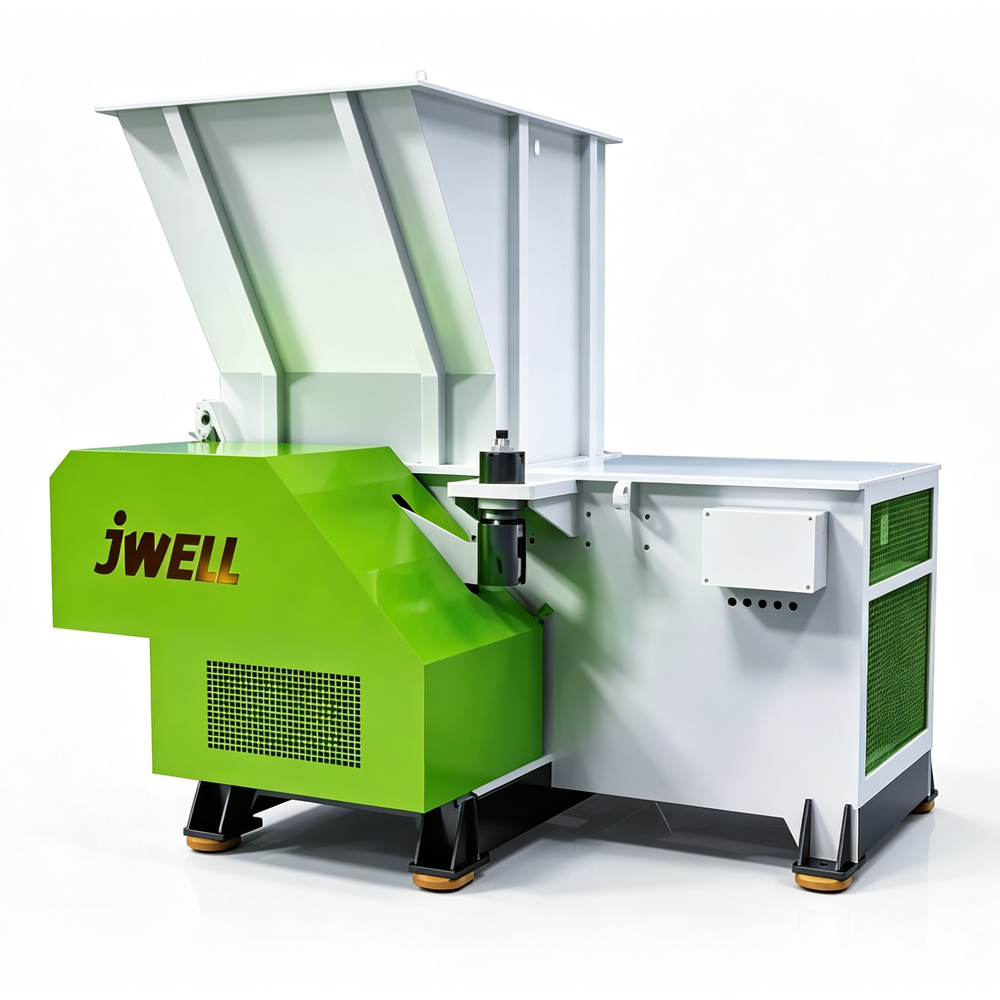
Plastic Shredder Crusher Machine

Tel: +86-19057068112

E-mail: [email protected]

Company Address
No. 128 Qingfeng Road, Xieqiao Town, Haining City, Jiaxing City, Zhejiang Province

19057068112

 English
 русский