
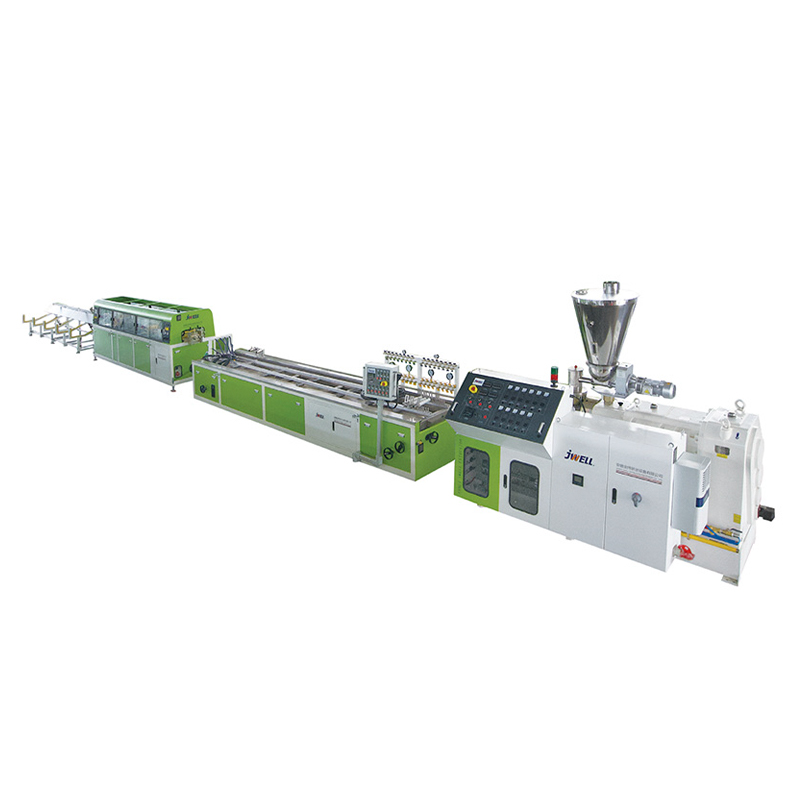
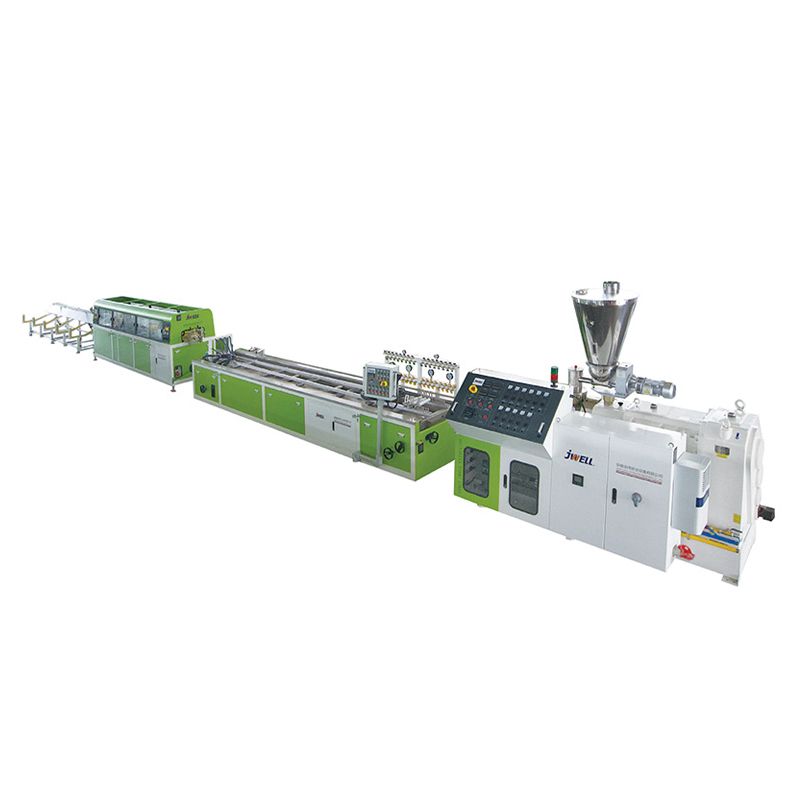
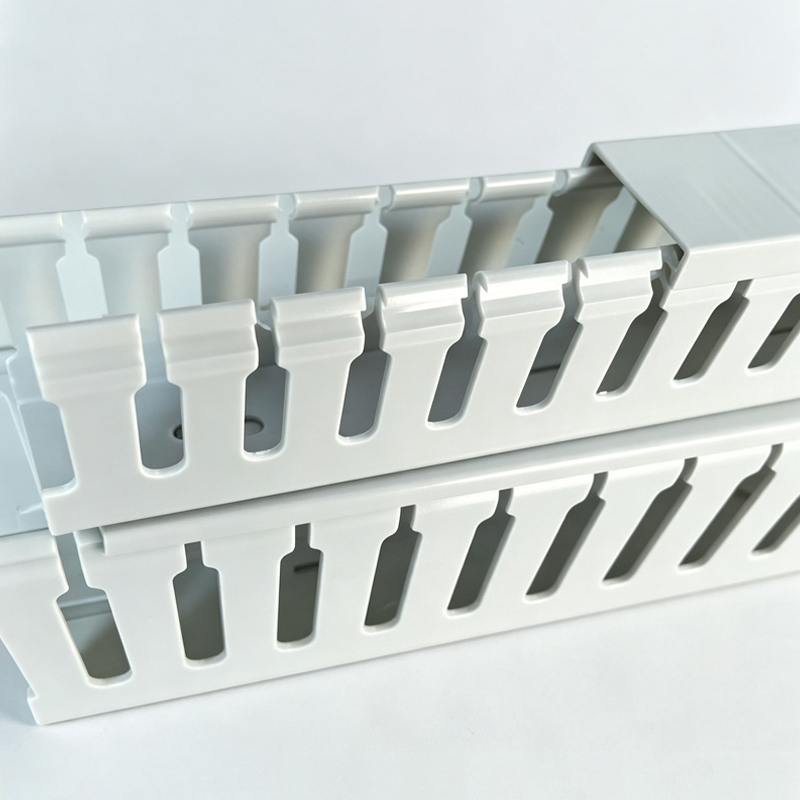
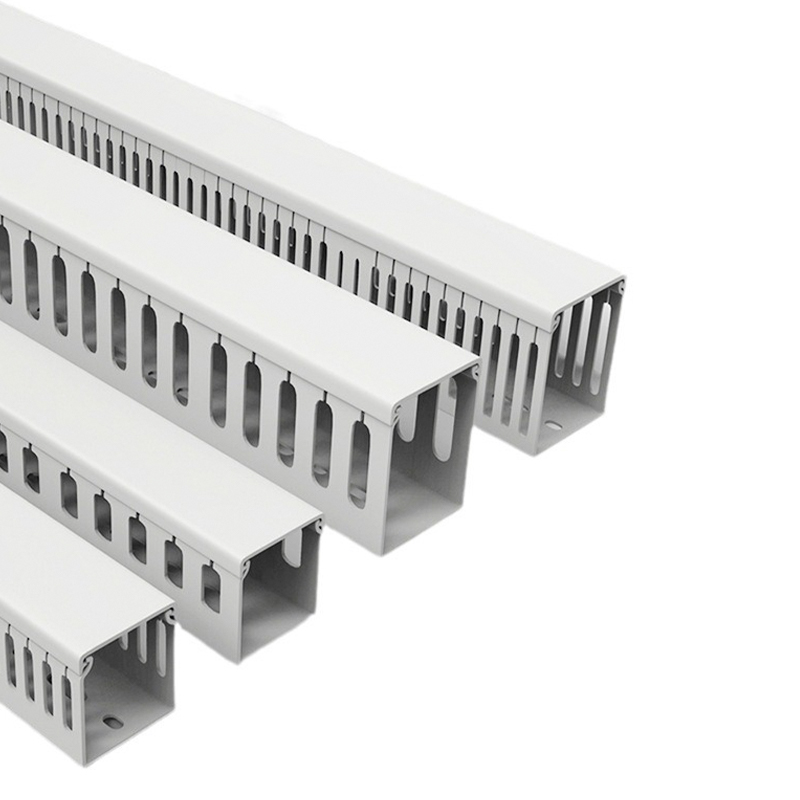
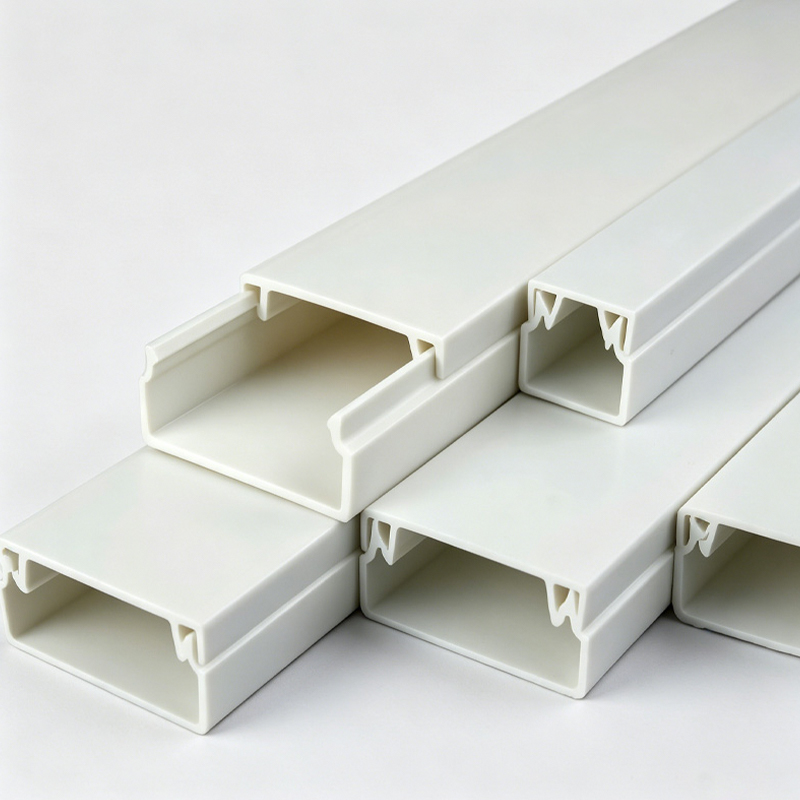
This series of PVC trunking extrusion lines adopts a parallel twin-screw design, with main motor power ranging from 18.5–37 kW and output 80–200 kg/h. The equipment features uniform plasticization, low energy consumption, and stable production of cable trunks in different specifications, suitable for wiring management in building electrical, data center and other fields. The complete machine has passed strict accuracy and stability tests to meet the requirements of continuous high-efficiency production.
Our SJZ series parallel twin-screw extruders (SJZ51, SJZ55, SJZ65) are specially designed for high-efficiency production of PVC cable trunking (also called cable tray, wiring duct or slotted conduit). These lines are widely used for:
Electrical installations in residential and commercial buildings
Cable management systems in data centers
Industrial control cabinets and switchgear
Public infrastructure (airports, hospitals, subway stations)
Real case: A Malaysian electrical accessory manufacturer upgraded from a single-screw line to our SJZ55 model. At an output of 120 kg/h (within the 100–150 kg/h range), they reduced unit cost by 18% while maintaining precise slot dimensions for snap-fit covers.
|
Parameter |
SJZ51 |
SJZ55 |
SJZ65 |
|
Screw diameter (mm) |
51/105 |
55/110 |
65/132 |
|
Main motor (kW) |
18.5 |
22 |
37 |
|
Output (kg/h) |
80–100 |
100–150 |
150–200 |
High energy efficiency – lower energy consumption per kg: e.g., SJZ65 consumes 37 kW for 150–200 kg/h output (approx. 0.21 kW/kg), outperforming many conventional designs.
Wide processing window – parallel twin-screw geometry ensures excellent PVC mixing and plasticizing ability, enabling stable production of thin-wall (0.8 mm) and thick-wall (3 mm) trunking.
Scalable output – from small workshops (SJZ51) to large-capacity factories (SJZ65), the series matches different production scales.
Durable screw and barrel – nitrided steel construction, optional bimetallic lining, extending service life by 30% when processing recycled PVC or high calcium carbonate filled formulations.
Case study: A Turkish profile manufacturer used an SJZ51 to continuously produce 25×25 mm small trunking at 95 kg/h, running for 8 months without screw wear issues – saving 15 kWh per ton compared to their old extruder.
To ensure each production line complies with international standards (CE, ISO 9001), we implement a 4-stage quality control plan:
Stage 1 – Raw material and component inspection
Verify alloy composition of screw/barrel using a spectrometer.
Test heating elements and gearbox for power rating and noise (<75 dB).
Stage 2 – In-process control
Screw concentricity within 0.02 mm (laser alignment check).
Calibrate barrel heating zones with thermocouple simulator, accuracy ±1°C.
Stage 3 – Factory acceptance test (FAT)
Each line runs for ≥6 hours using actual PVC trunking material. We measure:
Output stability (fluctuation <3% of rated capacity).
Trunking dimensional accuracy (EN 50085 standard): width tolerance ±0.2 mm, slot pitch tolerance ±0.1 mm.
Die head pressure fluctuation (<5 MPa).
Stage 4 – Post-installation validation
On-site trial run using customer's formulation.
24-hour continuous operation monitoring – record vibration (<4.5 mm/s), motor current and melt temperature.
Example: Before shipping an SJZ55 line to Chile, we simulated high temperature (40°C) conditions and performed a 150 kg/h test – all trunking passed drop weight impact test (5 J) and hot set test (<25%).
| Model | SJZ51 | SJZ55 | SJZ65 |
| Screwsize | 51/105 | 55/110 | 65/132 |
| Main motor power (kw) | 18.5 | 22 | 37 |
| Output (kg/h) | 80-100 | 100-150 | 150-200 |
Q: Can I produce both solid and slotted trunking on the same line?
A: Yes. By changing the calibrator and cooling tank, our SJZ series can easily switch between slotted (for cable trunking) and unslotted (for conduit) profiles. The twin-screw design supports fast recipe adjustments – typical changeover time is 40 minutes.
Q: My target output is 120 kg/h. Which model should I choose – SJZ55 or SJZ65?
A: SJZ55 is the most cost-effective (rated 100–150 kg/h). However, if you plan to increase capacity within 2 years, or process highly filled formulations (e.g., 40 phr CaCO₃), then SJZ65 offers higher torque and screw cooling to avoid thermal degradation while maintaining a stable 120 kg/h output.
Q: What is the typical screw wear life when processing recycled PVC?
A: With a standard nitrided screw (HV 950–1000) and clean recyclate (metal impurities <0.5%), expect 8,000–10,000 hours. For high-abrasion applications (e.g., wood-plastic composite trunking), we recommend a bimetallic screw (HRC 58–62) – life can be extended to 15,000 hours.
Q: How do I ensure consistent trunking slot dimensions?
A: Our extruder is combined with a closed-loop vacuum calibration tank featuring 6 independent cooling zones. In addition, the SJZ series has a melt pressure feedback system that automatically adjusts screw speed – keeping slot width within ±0.15 mm even when batch viscosity varies.
Q: Does the SJZ51 support off-line punching/slotting?
A: The line is only the extrusion system. For slotted punching, we recommend a separate in-line rotary punching unit (optional) that synchronizes with the haul-off speed. Many customers pair the SJZ51 with a servo-driven punching unit to produce slots at 15 mm pitch with line speeds up to 5 m/min.




Pipe Extrusion Production Line
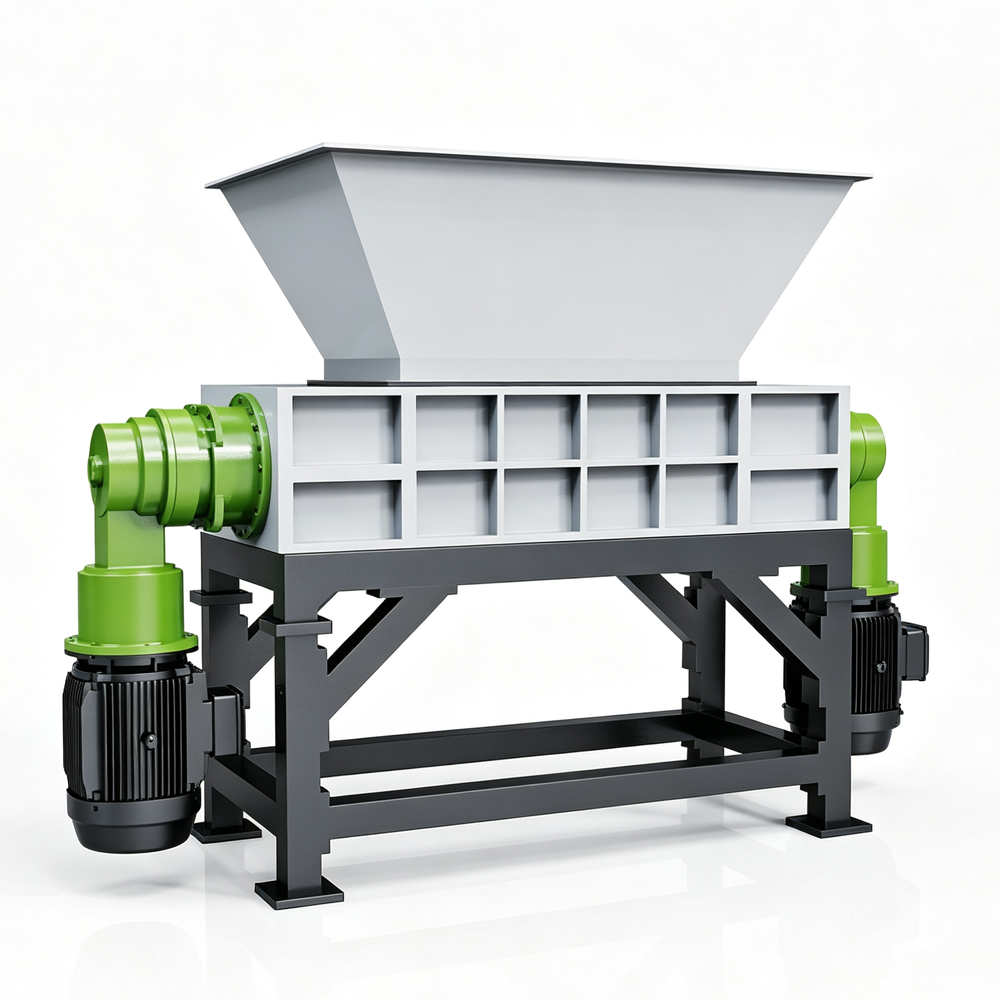
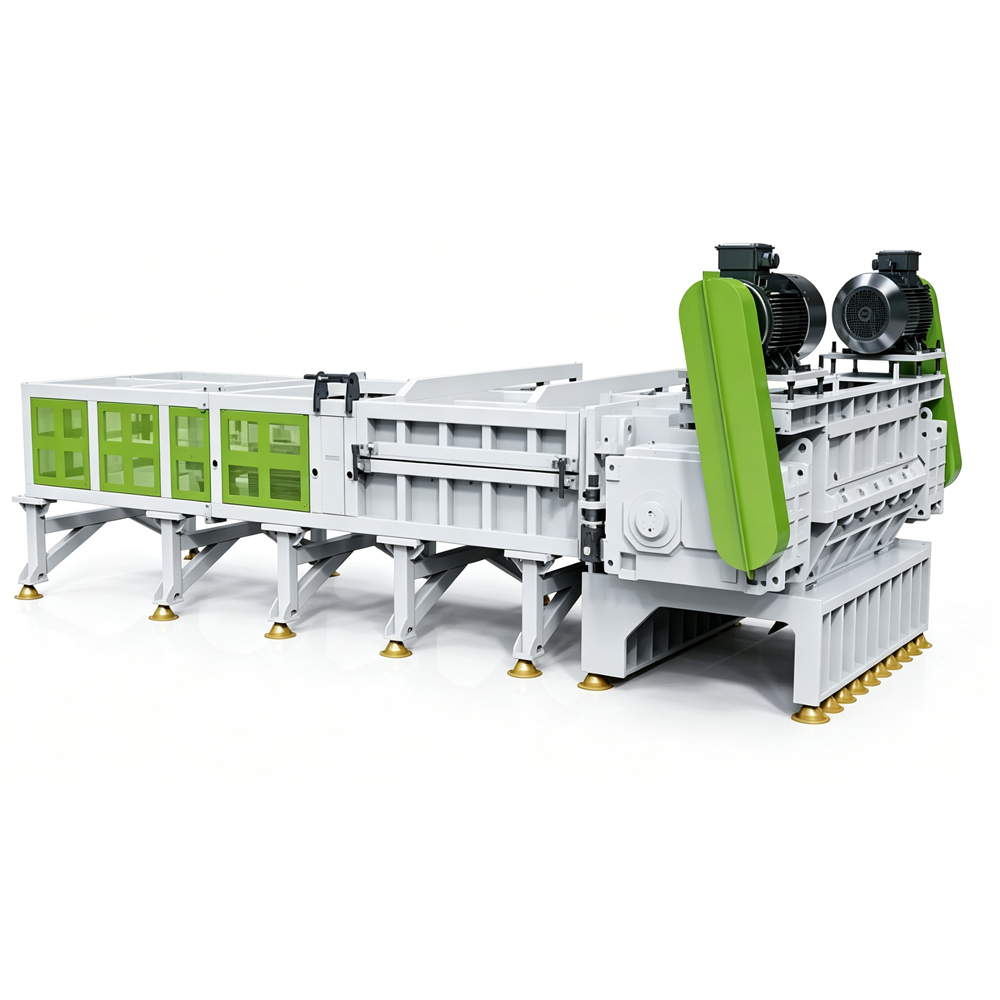
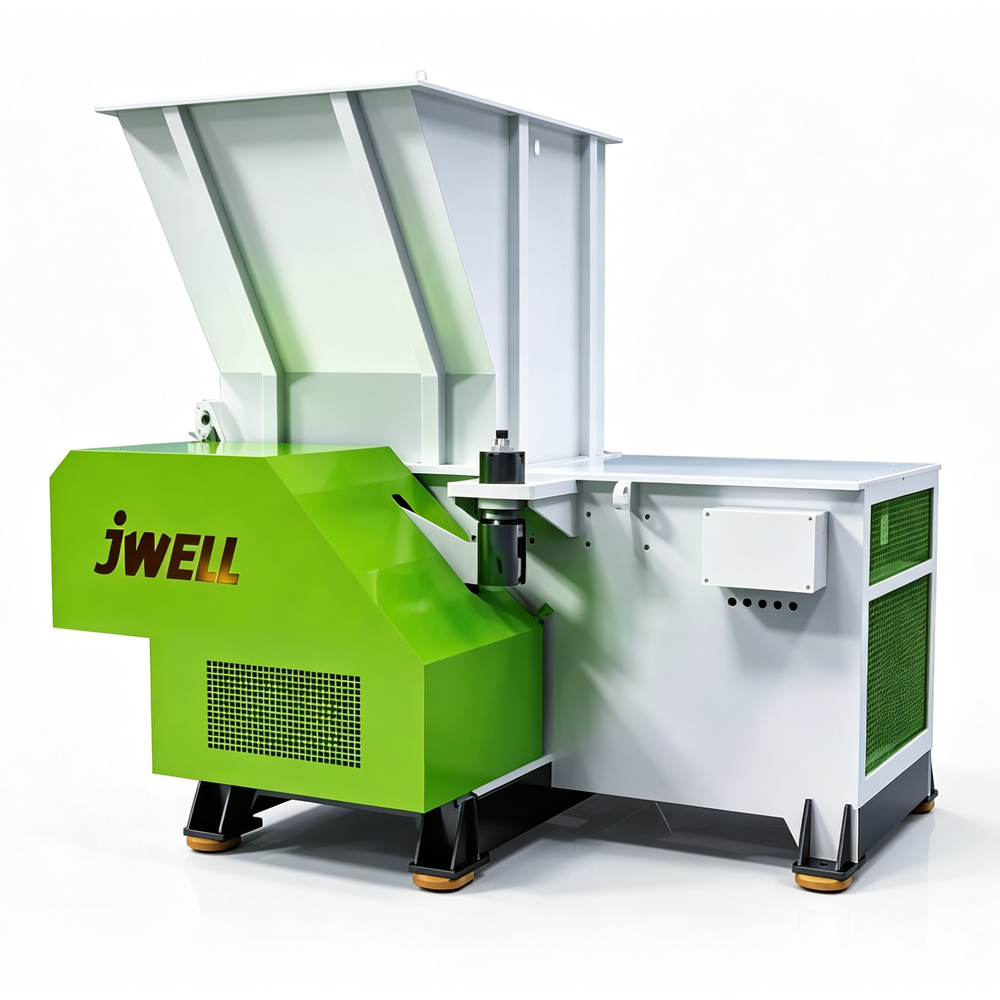
Plastic Shredder Crusher Machine

Tel: +86-19057068112

E-mail: [email protected]

Company Address
No. 128 Qingfeng Road, Xieqiao Town, Haining City, Jiaxing City, Zhejiang Province

19057068112

 English
 русский