
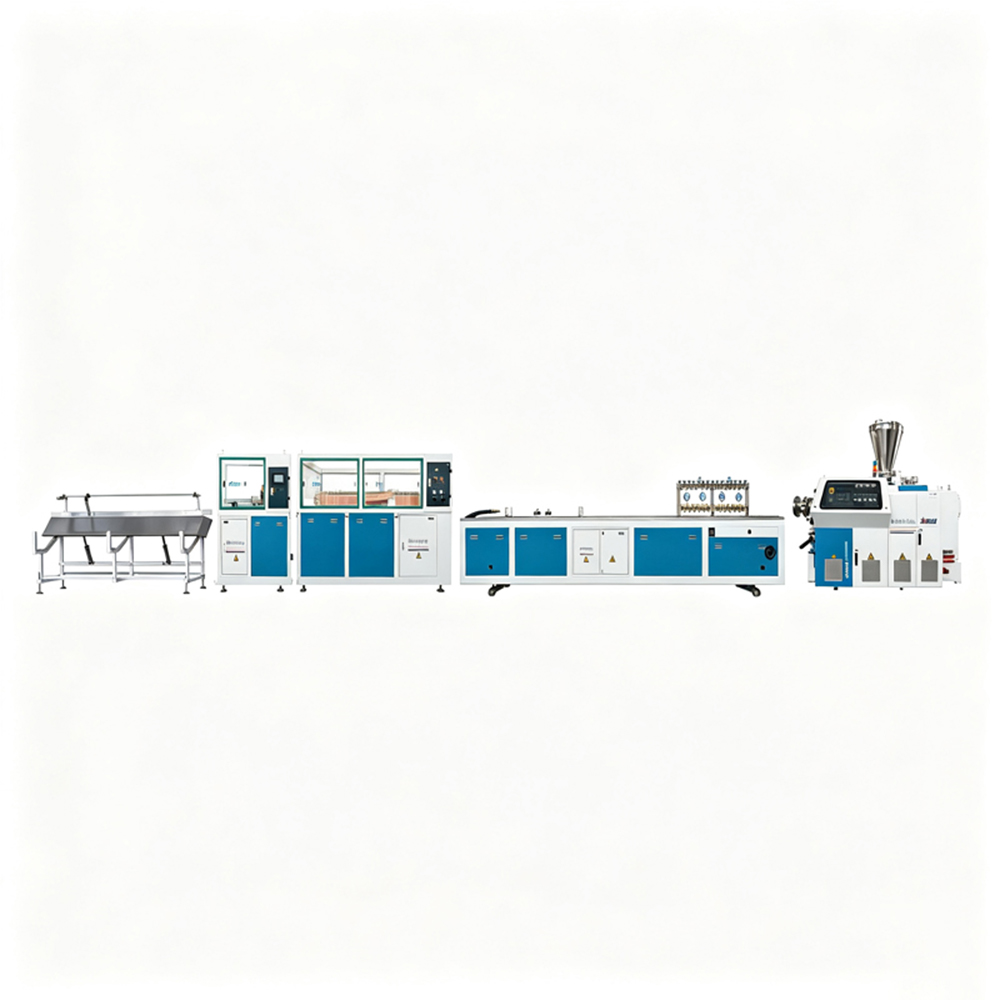
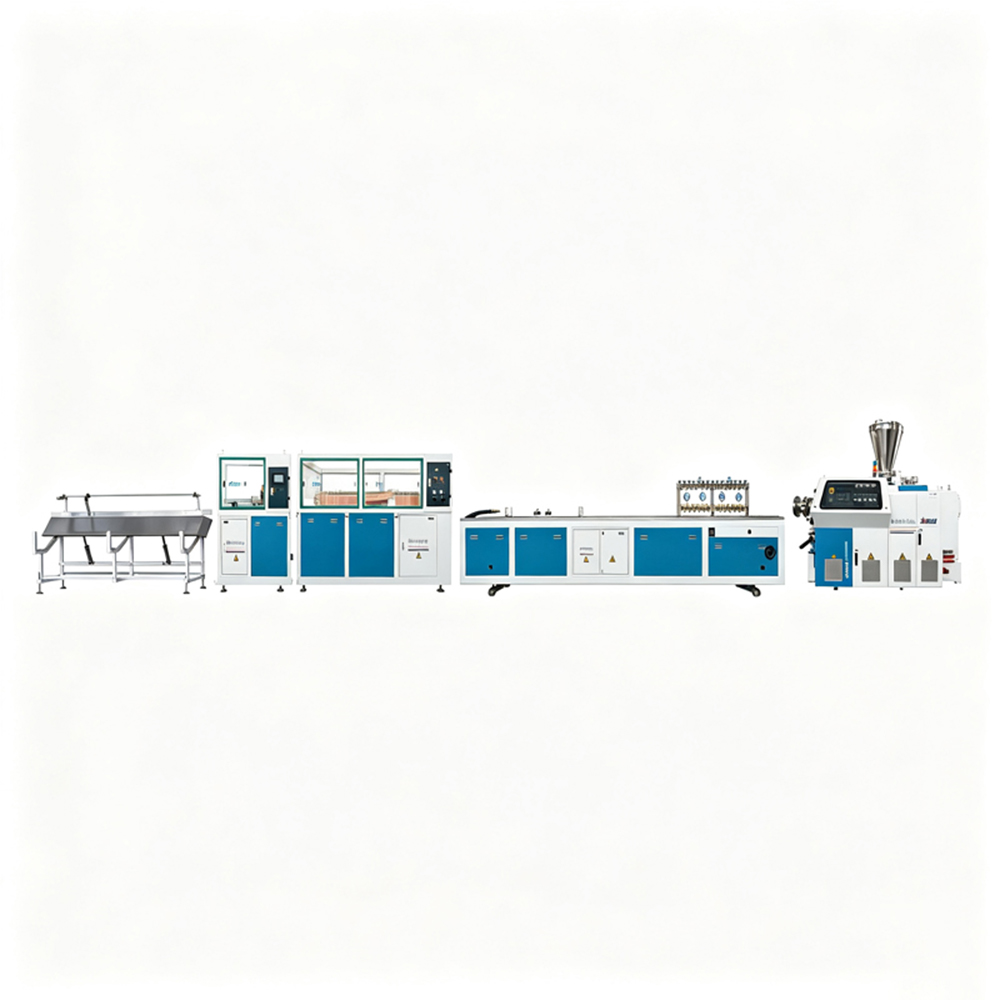
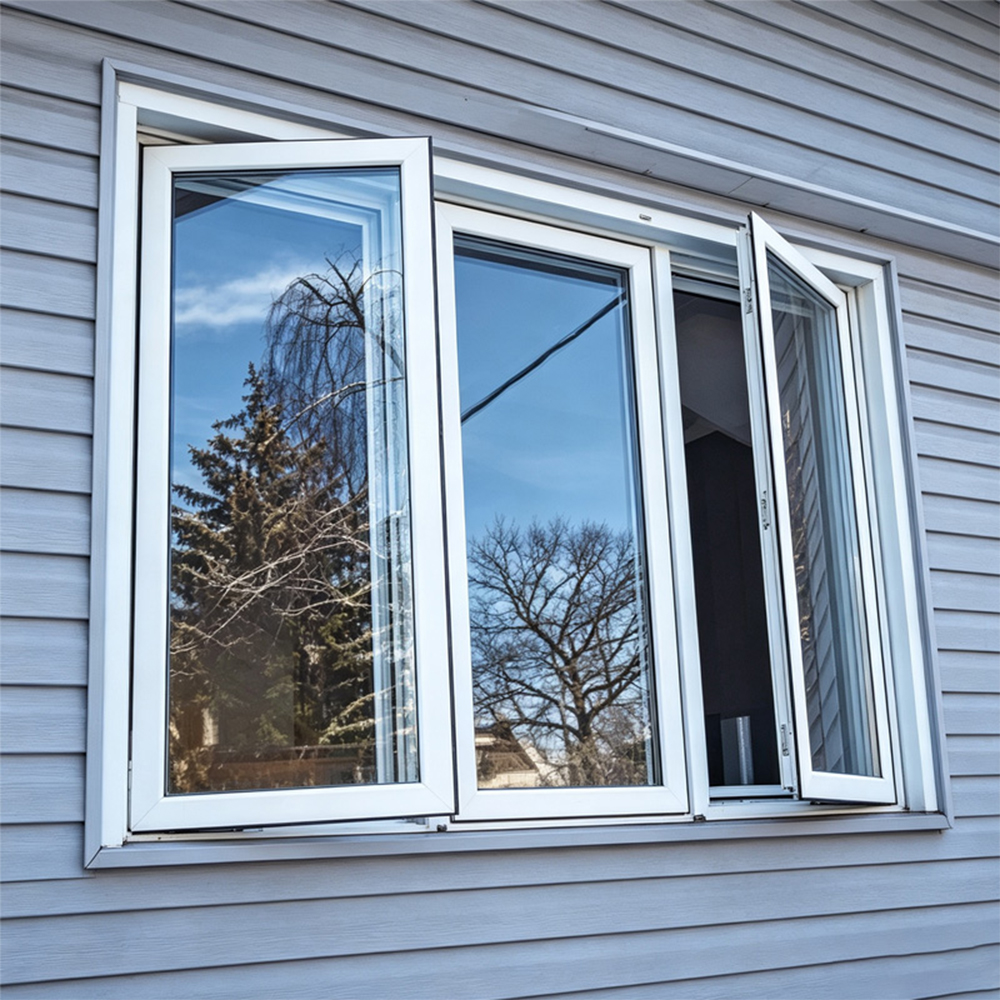
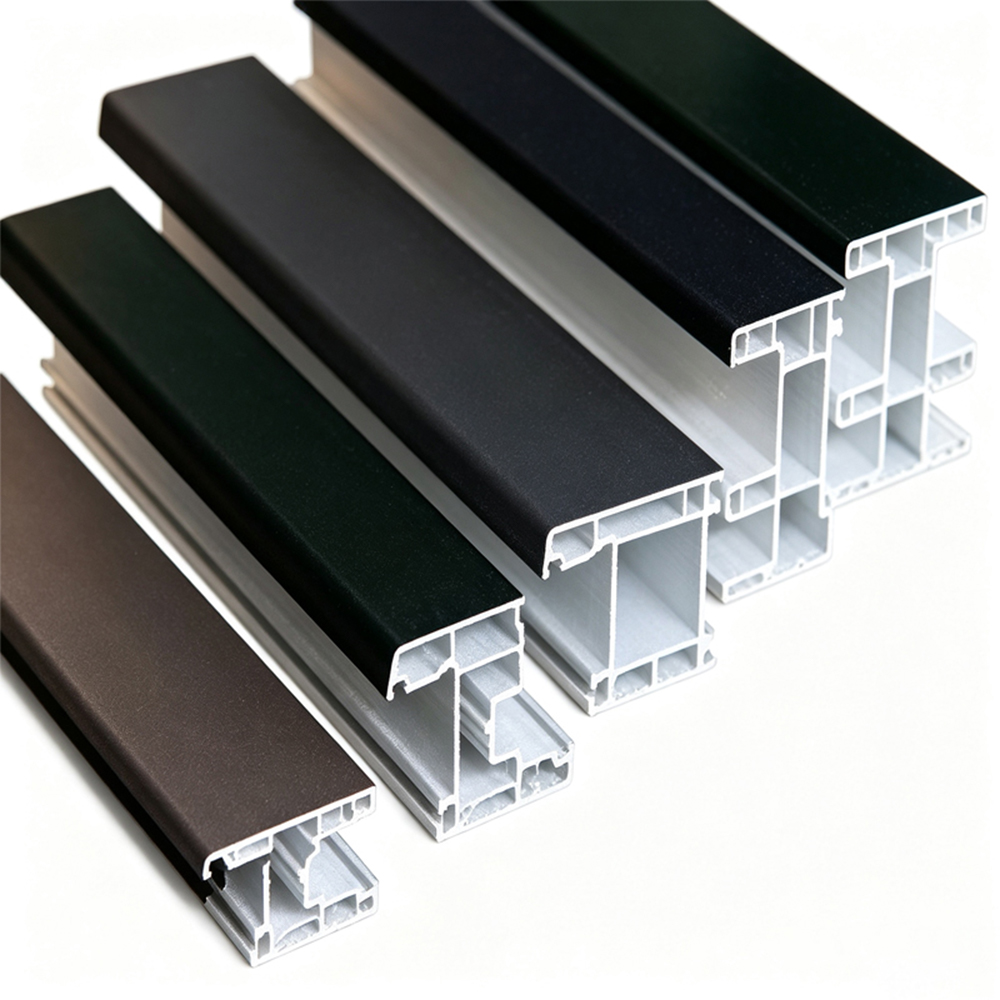
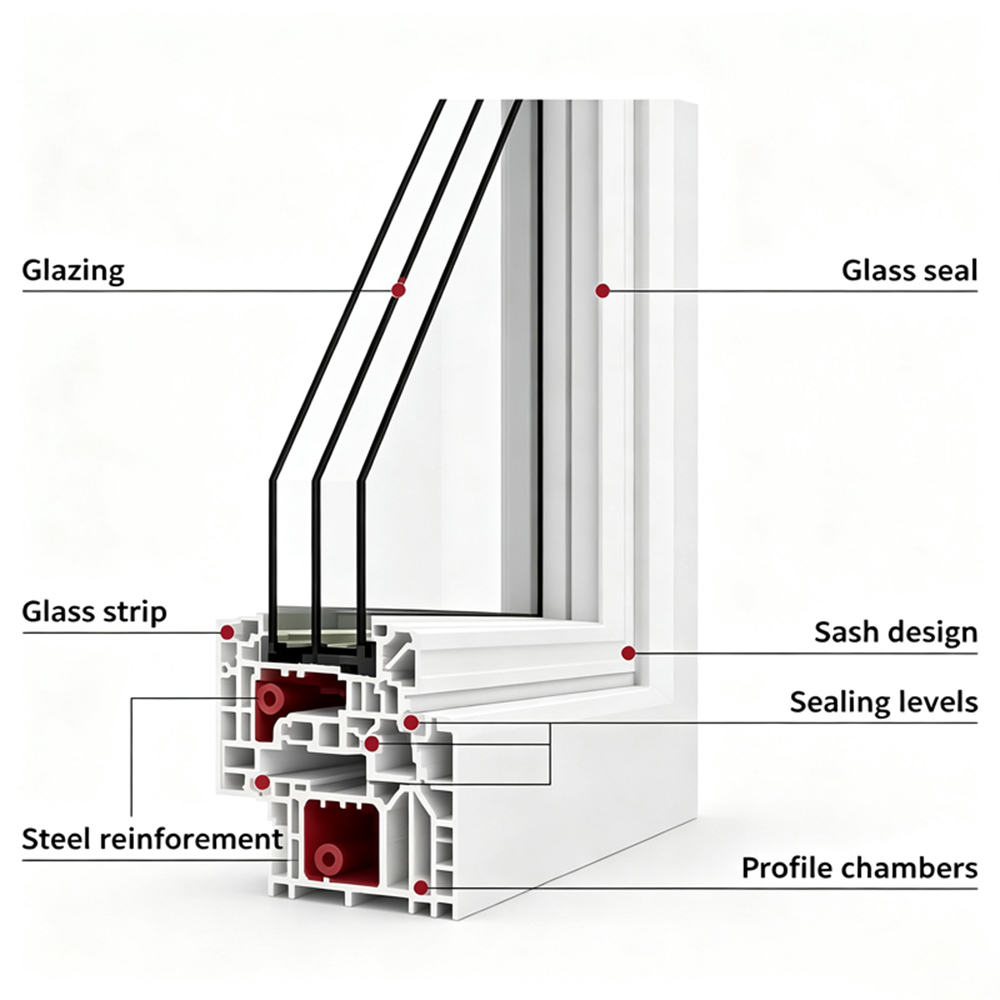
The Classic and High-Speed PVC Profile Extrusion Line (YF Series) is a mature, high-performance solution for producing rigid PVC profiles such as window frames, door frames, cable trunking, decorative lines, and industrial channels.
Thanks to adjustable product widths (108 mm to 400 mm) and extrusion capacities from 150 to 500 kg/h, the YF series is widely used in:
Building & Construction – PVC window profiles, door frames, corner protectors, and skirting boards.
Electrical & Cable Management – Trunking, conduits, and cable trays (108 mm width and 150×2 mm twin-strand).
Furniture & Decoration – Edge banding, decorative trim, and protective profiles.
Industrial Profiles – Seals, gaskets, and custom hollow sections.
Real-world example: A Vietnamese window profile manufacturer replaced two old single-strand lines with one YF240A twin-strand line (150 mm × 2). Despite achieving the same total capacity of 250 kg/h, they reduced floor space by 40% and labour costs by 30% while maintaining the same product quality.
High Speed, Energy-Efficient Extrusion
The SJZ series conical twin-screw extruders (e.g., SJZ65/132, 37 kW) deliver high torque at low screw speeds, reducing energy consumption per kg of output. For the YF400, the SJZ80/156 (55 kW) outputs 450 kg/h – that’s only 0.122 kWh/kg, well below the industry average (0.15–0.18 kWh/kg).
The optional SJF series (SJF110/128, 90 kW) reaches up to 500 kg/h, ideal for 24/7 high-volume orders.
Twin-Strand Configuration (YF240A)
Produces two 150 mm profiles simultaneously. Compared to a single 300 mm line, it offers faster cooling (smaller cross-section) and lower scrap rates (if one strand deviates, the other can continue running). This is a real advantage for manufacturers producing narrow components such as cable trunking.
Optimised Utility Consumption
Cooling water: only 7–10 m³/h. For example, the YF108 uses 7 m³/h – sufficient for a closed-loop cooling tower, saving thousands of litres of water per day.
Compressed air: 0.6–0.8 m³/min. Many competitors require 1.0 m³/min for similar output. Over 8,000 operating hours, this saves more than 19,000 m³ of compressed air – directly reducing compressor power consumption.
High Versatility, Wide Product Range
From 108 mm (YF108, ideal for small conduits) to 400 mm (YF400, for large window frames). Mold changeover time is less than 2 hours.
Real-world example: A Turkish profile extruder reported that after switching to the YF300 (250 kg/h, 37 kW), electricity costs per tonne dropped by 18% compared to their previous 45 kW machine, while the higher torque allowed them to increase CaCO₃ filler by 15% without affecting surface finish.
Each YF extrusion line is validated through a 5-stage quality assurance protocol before delivery. Below is the actual in-house test process used by the manufacturer.
Stage 1 – Raw Material & Component Inspection
Check screw and barrel hardness (HRC 58–62 after nitriding).
Check heating zone uniformity (±1°C).
Stage 2 – Assembly & No-Load Operation
The entire line (extruder, calibration table, cooling tank, haul-off, cutter) is assembled and run without material for 4 hours to verify synchronisation.
Stage 3 – On-Site Extrusion Trial (Using Real PVC Dry-Blend)
Test parameters: standard rigid PVC formulation (K value 65–67, 8 phr CaCO₃, 1.2 phr CPE).
Output verification: For YF240, at 80% screw speed, measured output must reach ≥245 kg/h – pass criterion is within 2% of the nominal 250 kg/h.
Profile dimensional accuracy: Use laser micrometer to measure width and wall thickness every 2 metres. Tolerance: ±0.1 mm for width ≤240 mm, ±0.15 mm for width 400 mm.
Surface quality: No bubbles, burn marks, or rough lines. Use a 60° gloss meter to check gloss uniformity.
Stage 4 – Long-Term Stability Test
Continuous operation for 8 hours. Record fluctuations of the following parameters:
Melt pressure (should stay within ±5%)
Main motor current (within ±3%)
Cooling water outlet temperature (stable between 35–45°C)
Stage 5 – Final Report & Documentation
Issue a 15-page test report including:
Comparison of actual vs. nominal capacity
Energy consumption log
Photographs of measured profile samples
Flow curves for compressed air and water
Real-world example: During a Factory Acceptance Test (FAT) for a German buyer, a YF400 line extruded 400 mm window profiles continuously for 10 hours, achieving a speed of 462 kg/h (2.7% above rated capacity). Melt temperature fluctuation was only ±1.8°C, far better than the required ±3°C. The customer accepted the line on the spot.
| Type | YF240 | YF240 | YF240A |
| Max.width of product(mm) | 240 | 240 | 150*2 |
| Extruder model | SJP75/28 | SJP93/30 | SJP110/28 |
| Max.extrusion capacity(kg/h) | 150–250 | 250–400 | 400–500 |
| Extruder power(kw) | 45 | 55 | 90 |
| Cooling water(m³/h) | 7 | 8 | 10 |
| Compressed air(m³/min) | 0.6 | 0.6 | 0.8 |
| Type | YF108 | YF240 | YF240A | YF300 | YF400 |
| Max.width of product(mm) | 108 | 240 | 150*2 | 300 | 400 |
| Extruder model | SJZ55/110 | SJZ65/132 | SJZ65/132 | SJZ65/132 | SJZ80/156 |
| Max.extrusion capacity(kg/h) | 150 | 250 | 250 | 250 | 450 |
| Extruder power(kw) | 22 | 37 | 37 | 37 | 55 |
| Cooling water(m³/h) | 7 | 8 | 8 | 8 | 10 |
| Compressed air(m³/min) | 0.6 | 0.6 | 0.8 | 0.6 | 0.6 |
Q1: What is the actual difference between the YF240 and YF240A?
A: The standard YF240 produces a single-strand profile up to 240 mm width. The YF240A is a twin-strand machine (150 mm × 2) using the same extruder (SJZ65/132, 37 kW) but with a wider die head and two independent calibration/cooling lines. It requires slightly more compressed air (0.8 vs. 0.6 m³/min) to handle the two strands’ air cooling/cutting systems. Choose the YF240A if you produce narrow profiles (≤150 mm) in high volumes and want higher piece-part output.
Q2: How do I calculate actual hourly production output?
Formula: Net output = Rated capacity × efficiency factor (typically 0.85–0.92 for rigid PVC).
Example: YF400 rated at 450 kg/h, efficiency 0.9 → 405 kg/h. For a profile weighing 0.5 kg/m, that equals 810 m/h. Our customer in Poland consistently achieves 780 m/h for a 1.2 mm wall thickness profile.
Q3: Can the line process recycled PVC?
A: Yes, but with limitations. The YF series can handle up to 30% clean recyclate (40–60 mesh) mixed with virgin material. For higher ratios, use the SJF110/128 model (higher screw strength). When using recyclate, always install a melt filter (150 µm) to prevent contaminants from damaging the die. One customer in Malaysia runs 50% recycled window profile scrap on a YF240A without issues – they increased screw cleaning frequency from every 4 weeks to every 2 weeks.
Q4: What maintenance does the cooling water system require?
A: A closed-loop circuit with 7–10 m³/h is recommended. Check:
Scale build-up in cooling channels every 3 months (if water hardness >200 ppm, use a descaling solution).
Pump seal leaks weekly. Flow rate should not fall below 6 m³/h for YF108/YF240 – otherwise the calibration table cannot stabilise profile dimensions. One Brazilian user reported that installing a water softener reduced cooling-related downtime by 70%.
Q5: My YF240 output has dropped from 250 kg/h to 200 kg/h. What is wrong?
Troubleshooting checklist (based on actual service cases):
Screw/barrel wear – after 8,000–10,000 hours processing highly filled PVC (≥15 phr CaCO₃), the flight clearance may exceed 0.3 mm. Measure and re-certify.
Screen pack clogged – if melt pressure is 20% higher than normal, replace the screens.
Cooling water temperature – above 30°C reduces screw cooling, thus lowering feeding efficiency. Keep below 25°C.
Compressed air line leak – for YF240A, insufficient air (below 0.6 m³/min) slows the cutter and haul-off gripper speed. Check with a flow meter.
Real-world example: A Russian installer reported output drop on a YF300. Upon inspection, they found the water flow to the vacuum calibration tank was only 4 m³/h due to a clogged filter. After cleaning, flow was restored to 8 m³/h and output recovered to 248 kg/h.
Q6: What is the maximum profile thickness this line can handle?
A: For rigid PVC: up to 5 mm for 240 mm width, up to 3 mm for 400 mm width (limited by cooling capacity). For thicker profiles, reduce line speed by 30–50%. One customer in Egypt extruded 8 mm thick decking profiles on a YF300 at 120 kg/h (half of rated capacity) – this was achieved using an upgraded calibration table and an extended cooling tank.


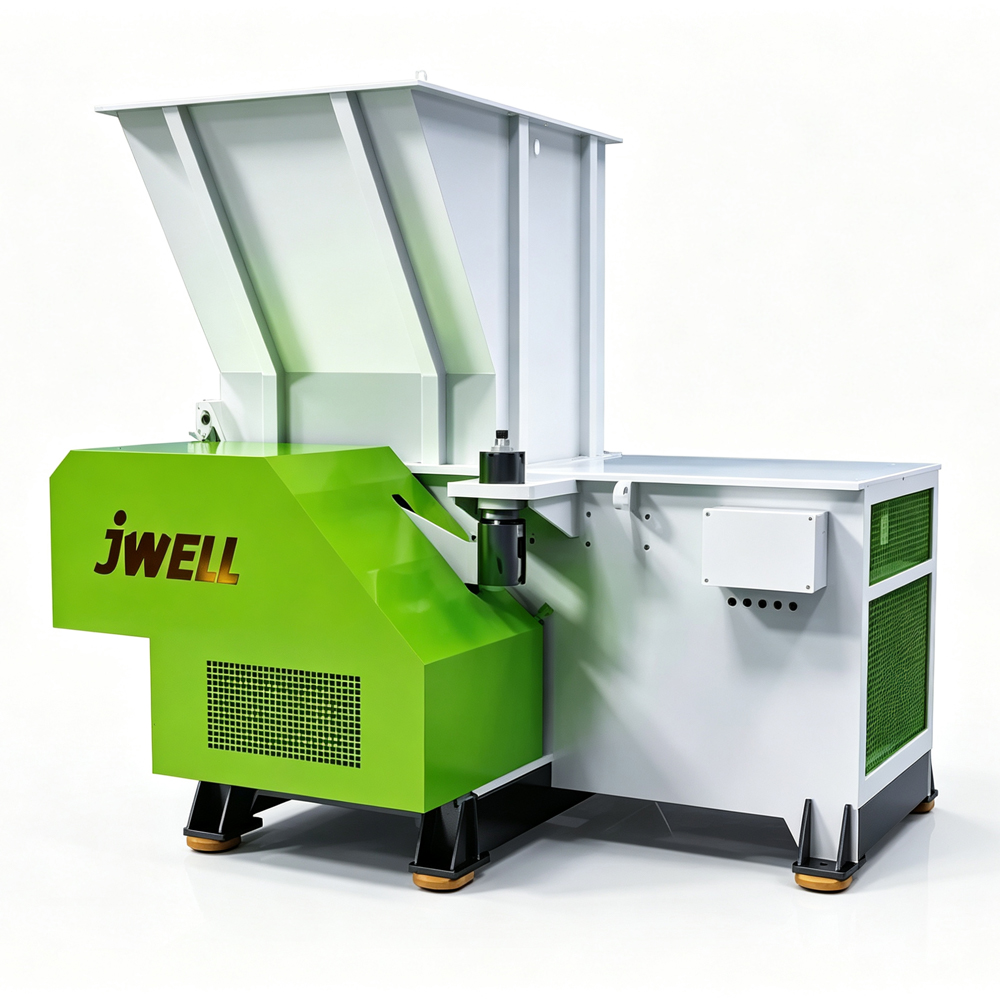


Pipe Extrusion Production Line
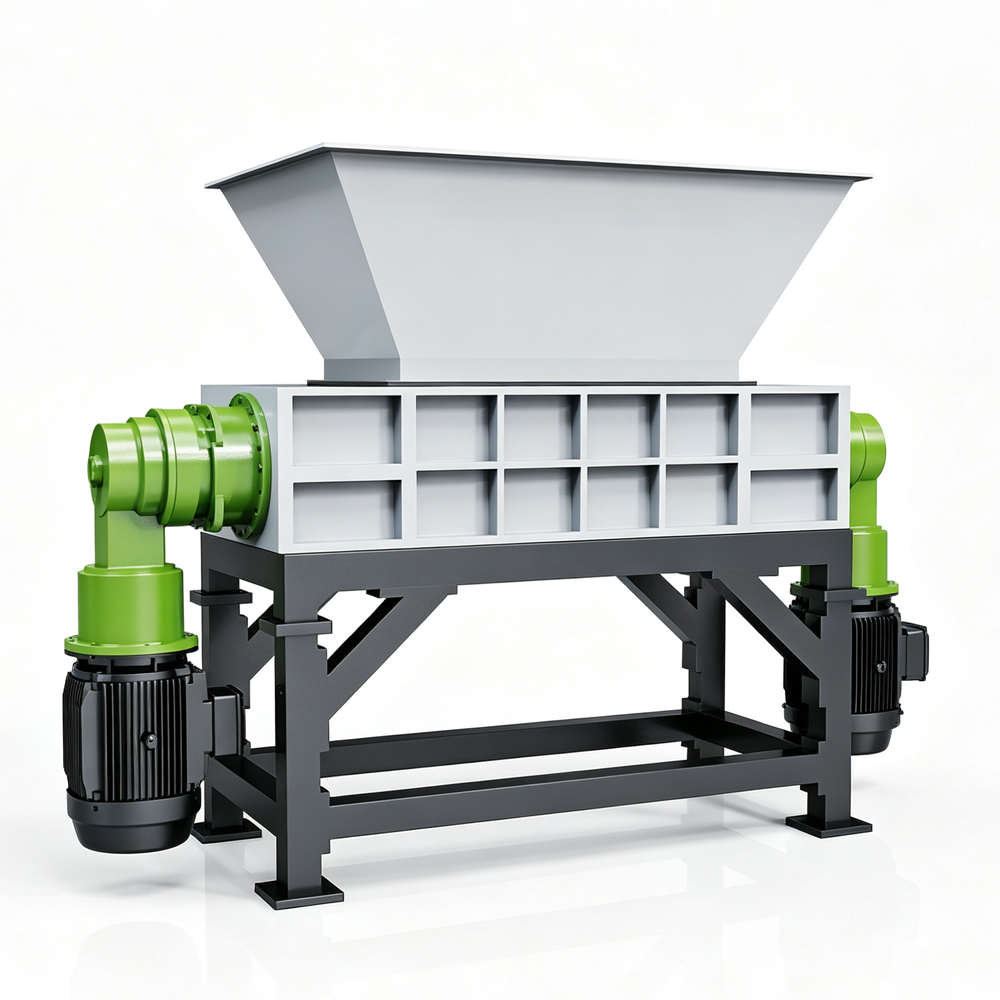
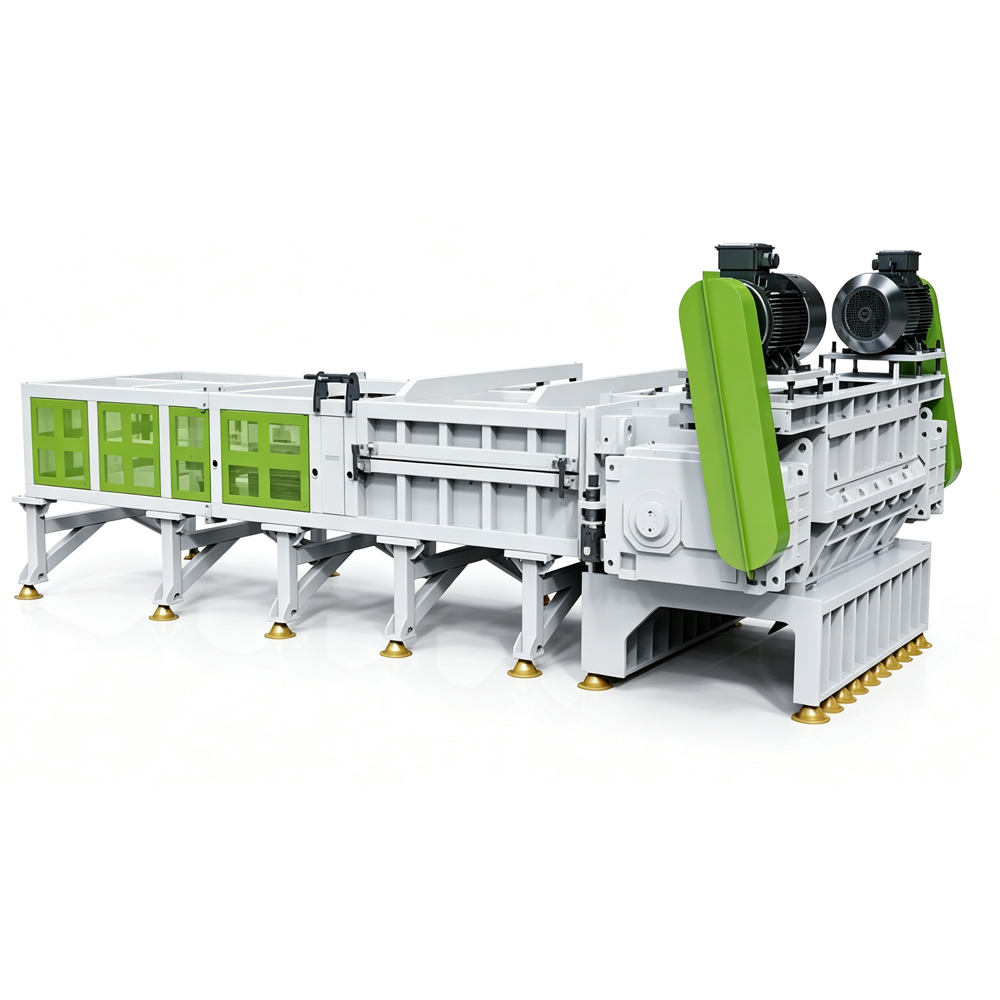
Plastic Shredder Crusher Machine

Tel: +86-19057068112

E-mail: [email protected]

Company Address
No. 128 Qingfeng Road, Xieqiao Town, Haining City, Jiaxing City, Zhejiang Province

19057068112

 English
 русский