
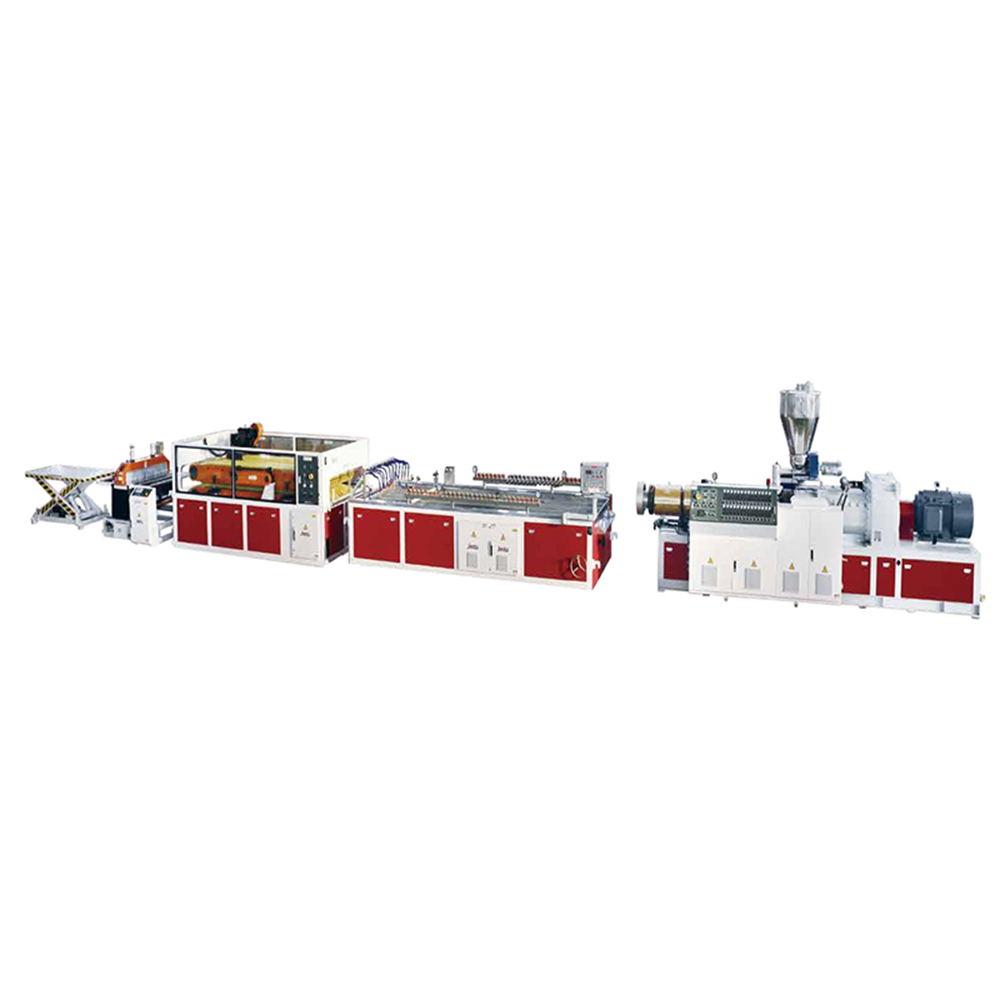
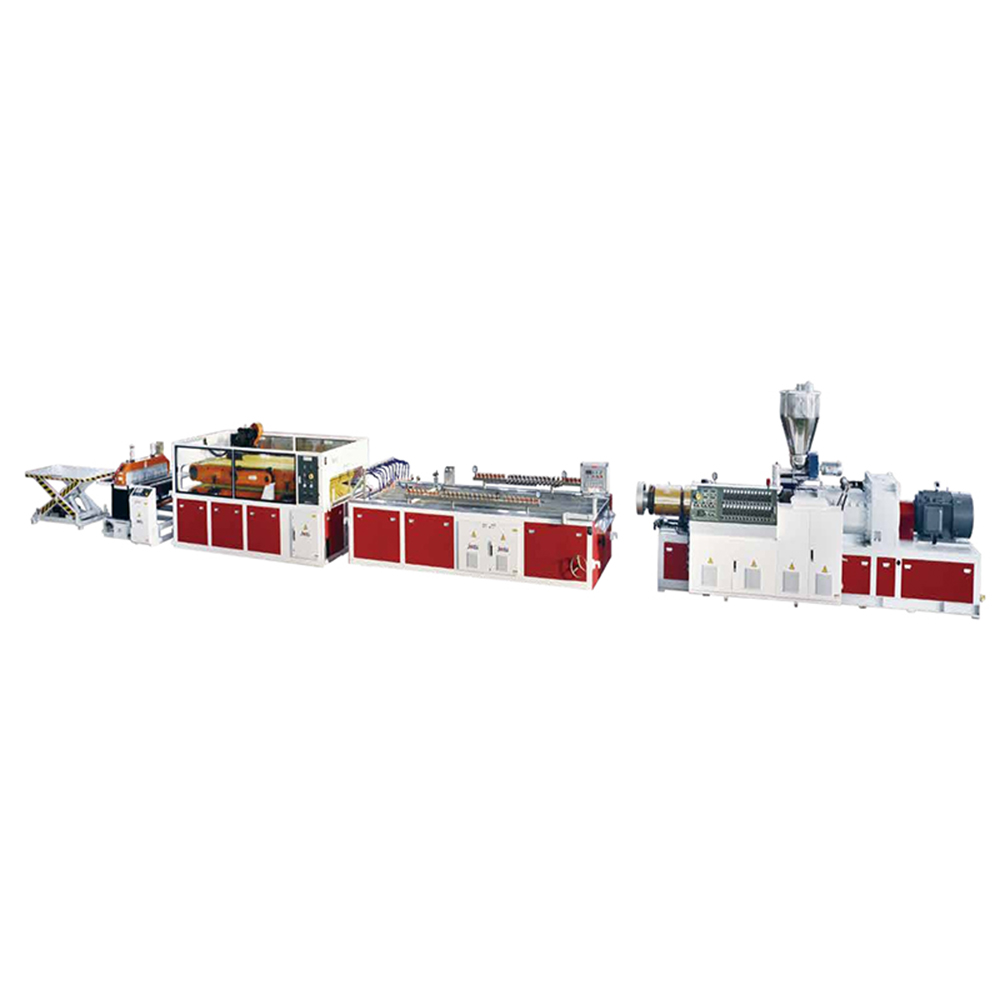
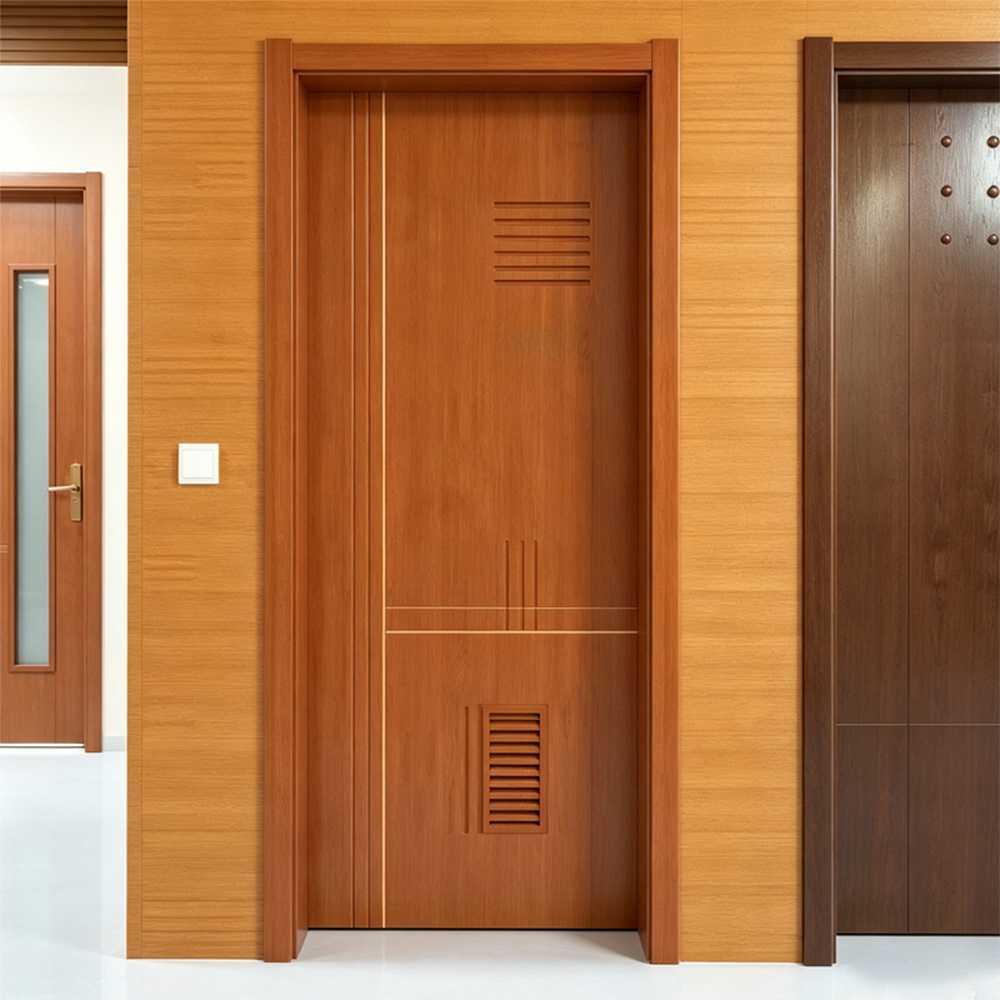
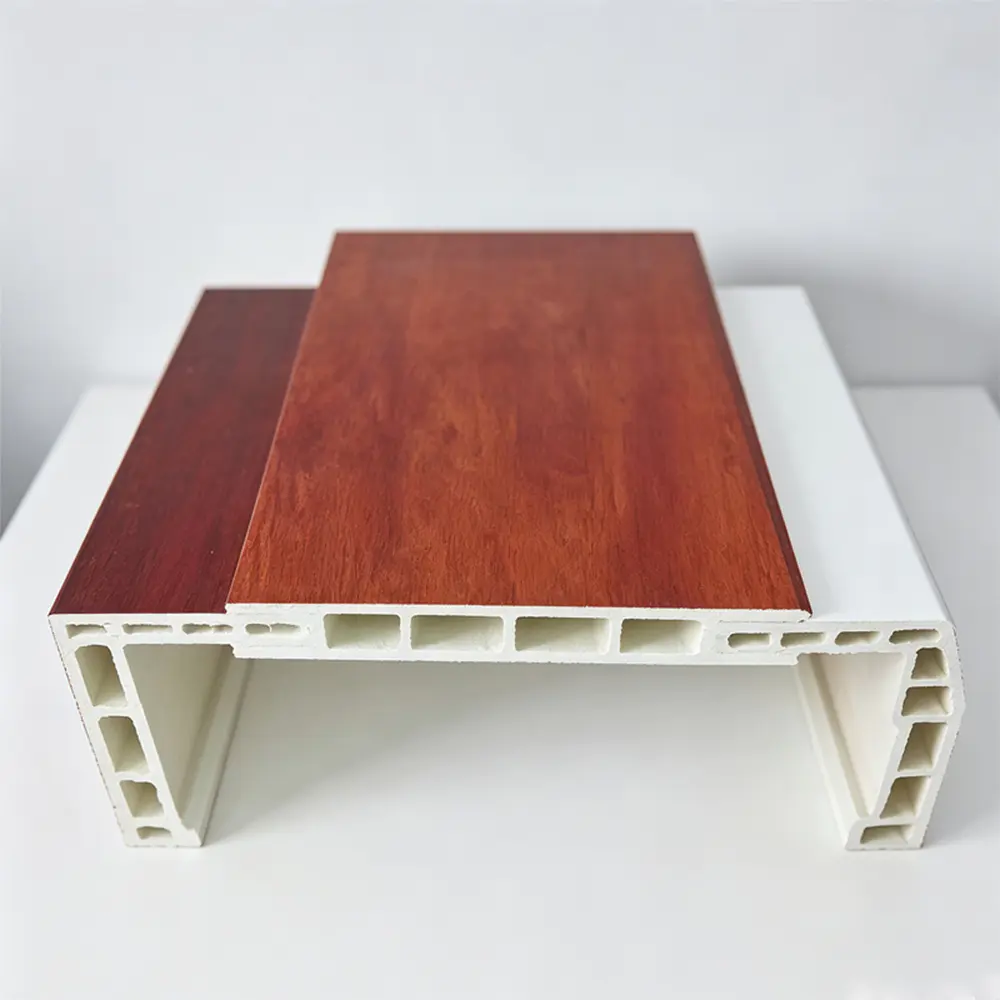
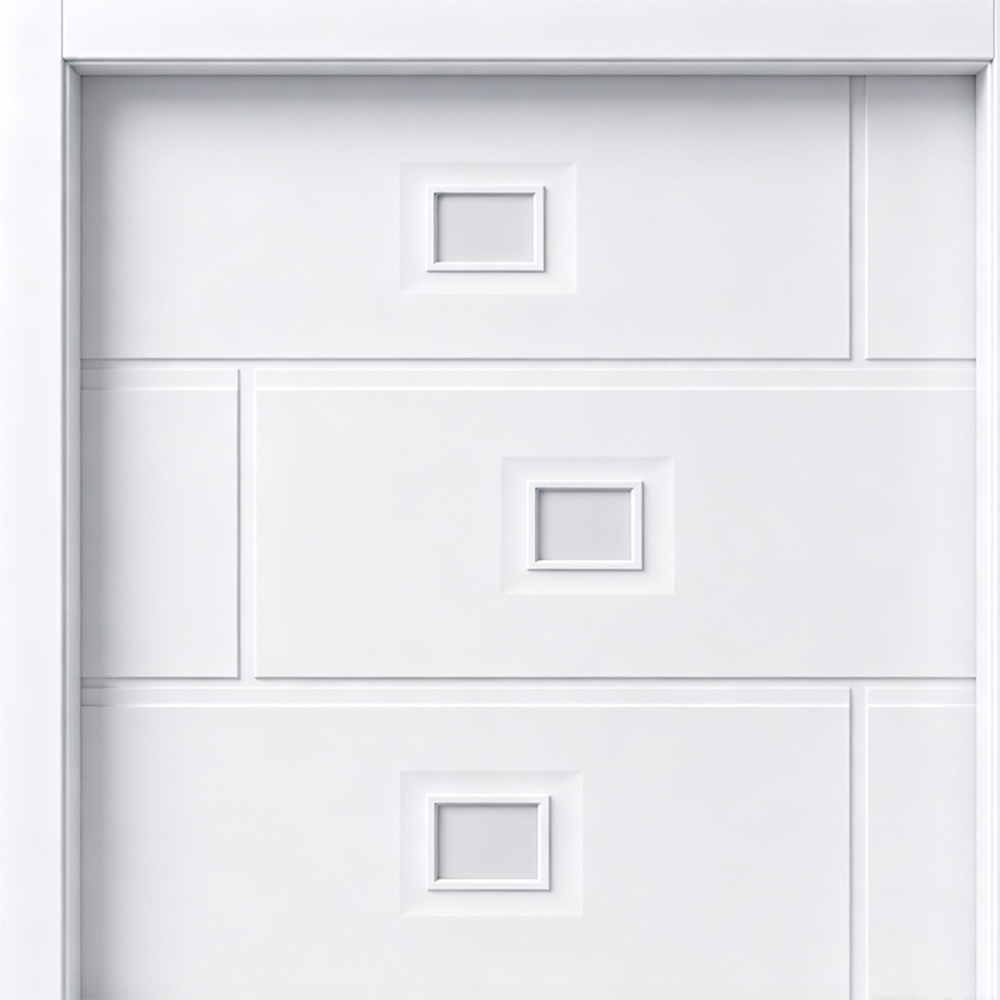
The WPC Wood-Plastic Hollow Door Extrusion Line adopts the SJZ series conical twin-screw extruder main unit, with drive power ranging from 55 to 132 kW and a maximum output of 600 kg/h. It is suitable for producing eco-friendly, waterproof wood-plastic hollow doors with widths of 800–1250 mm, featuring high output, low energy consumption, and water usage of only 12–15 m³/h. The production line is stable and reliable, widely used in residential, hotel, and wet-environment interior doors, with a short investment payback period.
WPC hollow doors are widely used in residential, commercial, and industrial buildings due to their excellent moisture resistance, termite resistance, and sound insulation properties. Typical applications include:
Interior room doors (bedrooms, living rooms)
Bathroom and kitchen doors (high-humidity environments)
Office partition doors and hotel doors
Exterior door frames (UV stabilizers required)
Our production line can be configured with three models based on door panel width requirements:
|
Model |
YF800 |
YF1000 |
YF1250 |
|
Max. product width (mm) |
800 |
1000 |
1250 |
|
Extruder model |
SJZ80/156 |
SJZ92/188 |
SJZ92/188 |
|
Extruder power (kW) |
55 |
132 |
132 |
|
Max. output (kg/h) |
250-350 |
400-600 |
400-600 |
Real case: A Malaysian door panel manufacturer used the YF1000 model to produce 1000 mm wide WPC hollow doors for over 5,000 apartment units. The line achieved a stable output of 520 kg/h and reduced material waste by 18% compared to traditional solid wood doors.
2.1 High Output & Energy Efficiency
The parallel twin-screw extruder (SJZ series) ensures thorough mixing and plasticization. For the YF800, the 55 kW drive produces 250–350 kg/h; larger models (YF1000/1250) use a 132 kW drive for up to 600 kg/h. This corresponds to only 0.22–0.33 kWh per kg of output.
2.2 Wide Product Flexibility
With an adjustable die head and calibration table, the same line can produce door skins, hollow cores, and complete door panels. Width ranges from 800 mm to 1250 mm, covering global standard door sizes.
2.3 Low Utility Consumption
Cooling water: 12–15 m³/h (closed-loop circulation recommended)
Compressed air: 0.8–1.0 m³/min at 0.6–0.8 MPa
These parameters are optimized for continuous 24/7 operation. A Turkish customer reported a 30% reduction in water usage after switching to our YF1250 from a traditional line.
2.4 Robust Construction & Long Service Life
The SJZ extruder features nitrided steel screws and bimetallic barrels, providing wear resistance for WPC formulations containing 30–60% wood fiber. With regular maintenance, service life can exceed 8 years.
To ensure consistent profile quality, we implement strict quality control protocols at every stage.
3.1 In-Process Quality Control
|
Stage |
Parameter |
Method |
Tolerance |
|
Raw material mixing |
Wood moisture content |
Oven drying (105°C, 2h) |
< 2% |
|
Extrusion |
Melt temperature |
Infrared sensor |
±5°C |
|
Vacuum calibration |
Vacuum level |
Vacuum gauge |
-0.06 to -0.08 MPa |
|
Cooling |
Water temperature |
Thermometer |
15–25°C |
|
Haul-off |
Haul-off speed |
Encoder |
±1% |
3.2 Finished Product Testing (based on ASTM D6662 / EN 15534)
Density test: Hydrostatic method – target 0.65–0.85 g/cm³ for hollow doors.
Flexural strength: ≥25 MPa (three-point bending, span 800 mm).
Impact resistance: Izod notched impact strength ≥6 kJ/m².
24h water absorption: ≤1.5% (by weight).
Screw holding strength: Edge ≥1500 N, face ≥2000 N.
Real case: A Polish door profile manufacturer using our YF800 line sent samples to an accredited laboratory. Test results showed a flexural strength of 28.3 MPa and 24h water absorption of only 0.9%, exceeding European standards for interior WPC doors.
3.3 Online Non-Destructive Testing
We recommend integrating a laser profile scanner after the cooling tank to detect warpage, cracks, or dimensional deviations (width tolerance ≤±0.5 mm, thickness tolerance ≤±0.3 mm). Typical scrap rate for our line is below 1.2%.
| Modle | YF800 | YF1000 | YF1250 |
| Production width(mm) | 800 | 1000 | 1250 |
| Extruder model | SJZ80/156 | SJZ92/188 | SJZ92/188 |
| Type | YF180 | YF300/400 | YF600 |
| Extruder power(Kw) | 55 | 132 | 132 |
| Max of extrusion capacity (Kg/h) | 250-350 | 400-600 | 400-600 |
| Cooling water(m³/h) | 12 | 15 | 15 |
| Compressor air(m³/min) | 0.8 | 1 | 1 |
Q1: Which model should I choose to produce 900 mm wide hollow doors?
A: The YF800 has a maximum width of 800 mm and cannot produce 900 mm doors. You need the YF1000 (max 1000 mm) or YF1250. For 900 mm, the YF1000 is cost-effective with an output of 400–600 kg/h.
Q2: Can recycled WPC material be used?
A: Yes, but recycled content should not exceed 30% of the total formulation. Higher percentages may lead to unstable melt flow and reduced mechanical properties. Ensure recycled material is clean, dry (moisture <1%), and sieved to 40–80 mesh.
Q3: What is the required floor space?
A: For a complete line (extruder, calibration tank, puller, cutter, stacking table):
YF800: 18 m × 3 m
YF1000/1250: 22 m × 3.5 m
Q4: What is the typical payback period?
A: Based on 500 kg/h output, running 20 hours/day, daily production is 10,000 kg of WPC door profiles. Assuming a net profit of $0.25 per kg, monthly profit is approx. $75,000. The line investment (including auxiliary equipment) is typically recovered within 8–12 months.
Q5: How to troubleshoot low extrusion output?
A: Check in order:
Raw material moisture >2%? (dry it)
Screen pack clogged? (replace)
Screw/barrel worn? (measure flight clearance – replace if >0.3 mm)
Cooling water temperature too high? (lower to <25°C)
Q6: Do you provide installation and training services?
A: Yes. We dispatch 1–2 engineers to your site for 10–15 days, including line commissioning, operator training, and maintenance guidance. 24/7 remote support is available via video call.




Pipe Extrusion Production Line
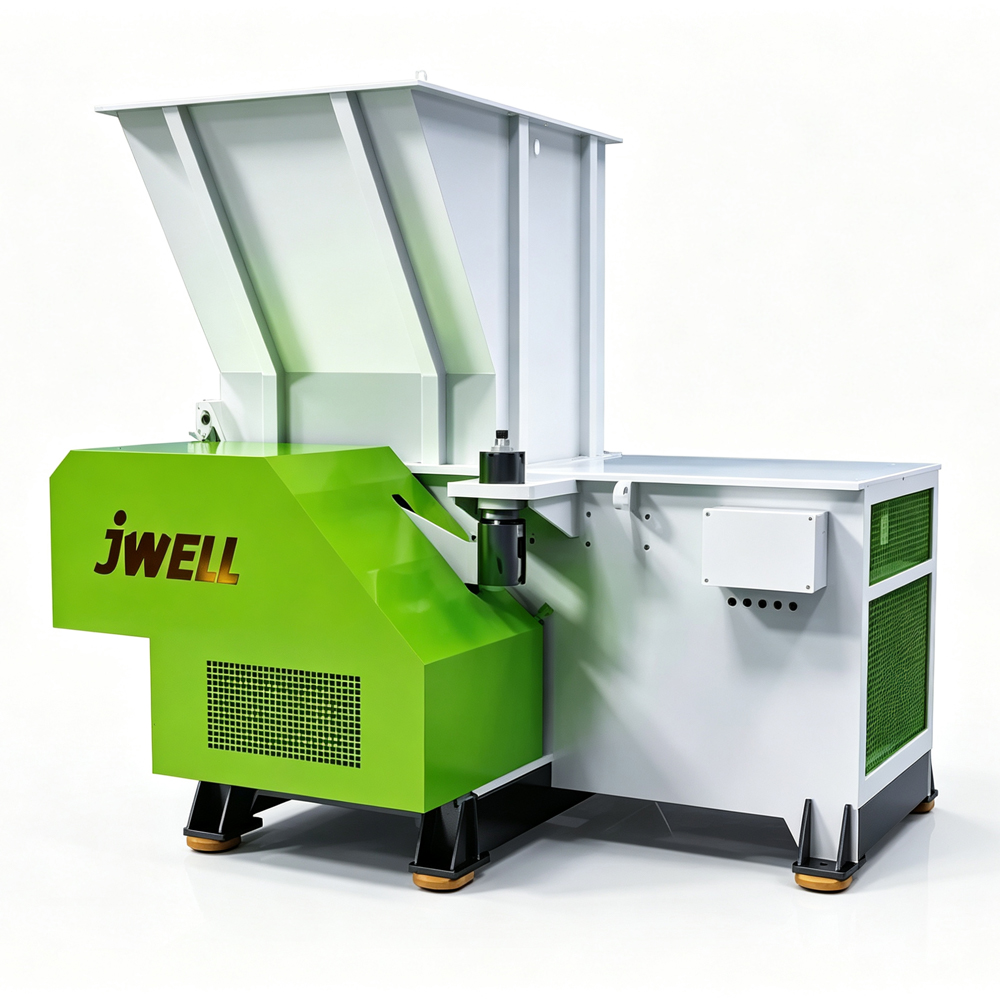
Plastic Shredder Crusher Machine

Tel: +86-19057068112

E-mail: [email protected]

Company Address
No. 128 Qingfeng Road, Xieqiao Town, Haining City, Jiaxing City, Zhejiang Province

19057068112

 English
 русский