
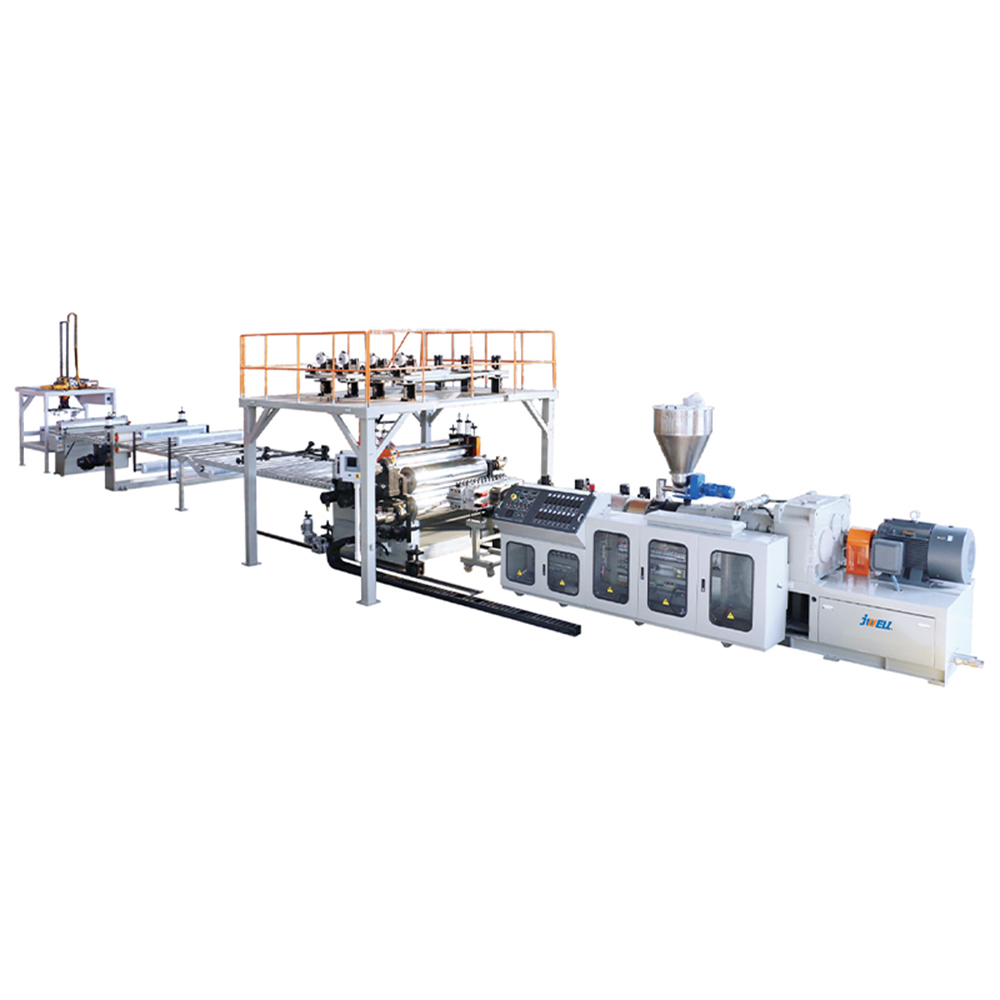
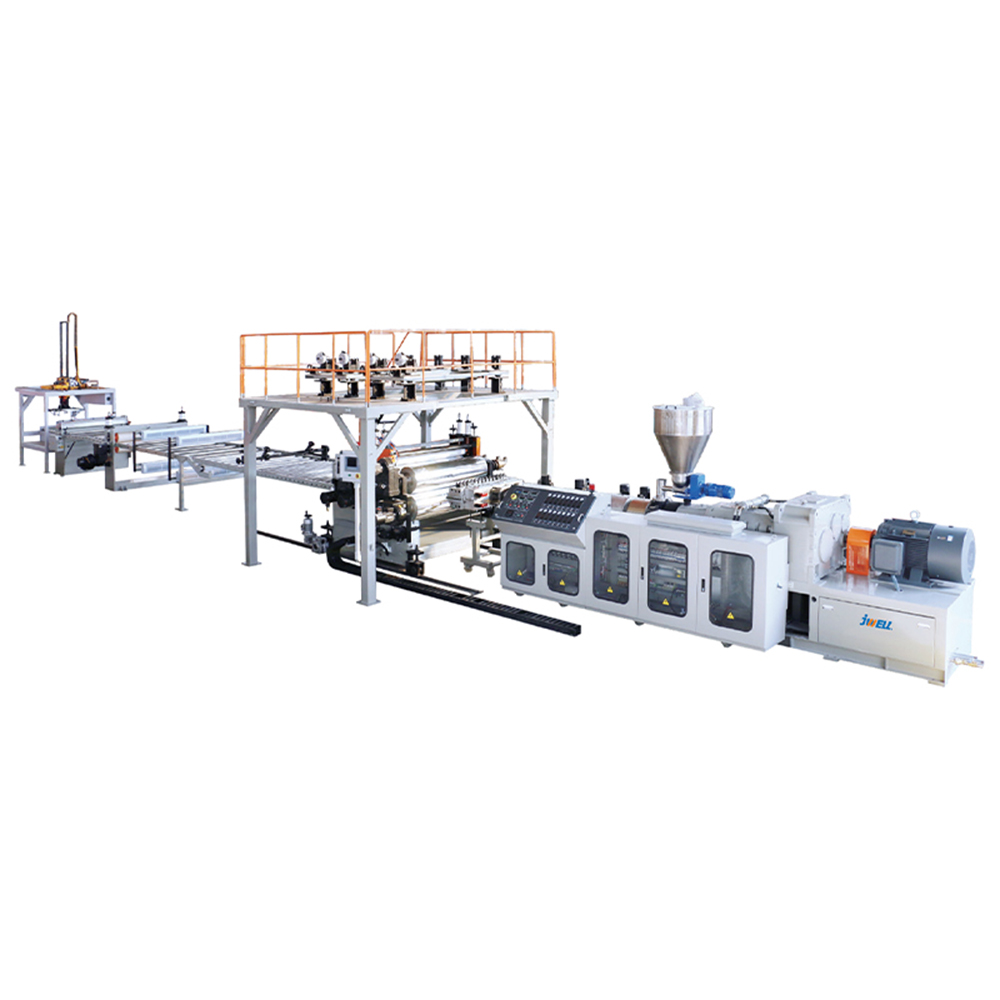
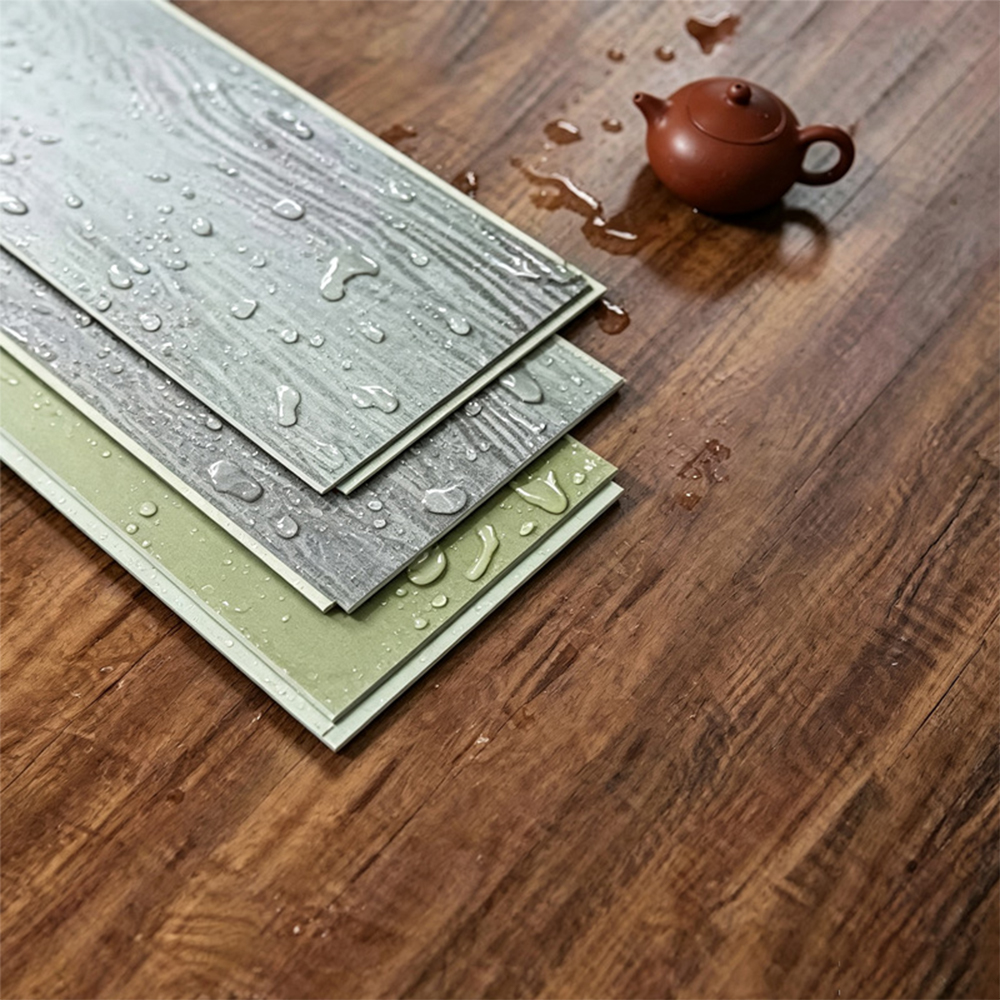
The SPC Stone Plastic Environmentally Friendly Floor Extrusion Machine Production Line is specifically designed for waterproof, environmentally friendly rigid flooring. Product width ranges from 960–1270 mm, thickness from 3–8 mm, and maximum extrusion capacity is 600–1300 kg/h. The equipment features low energy consumption, stable output, and flexible adjustment of width and thickness.
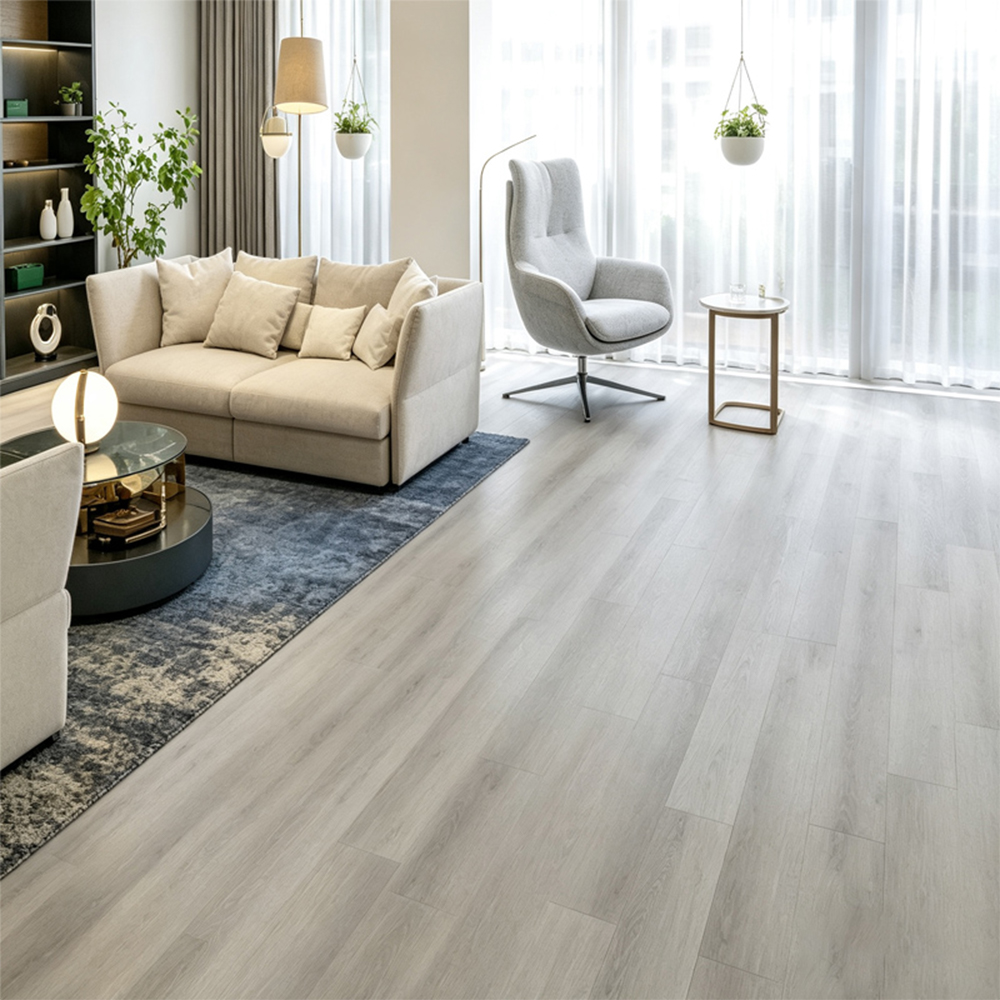
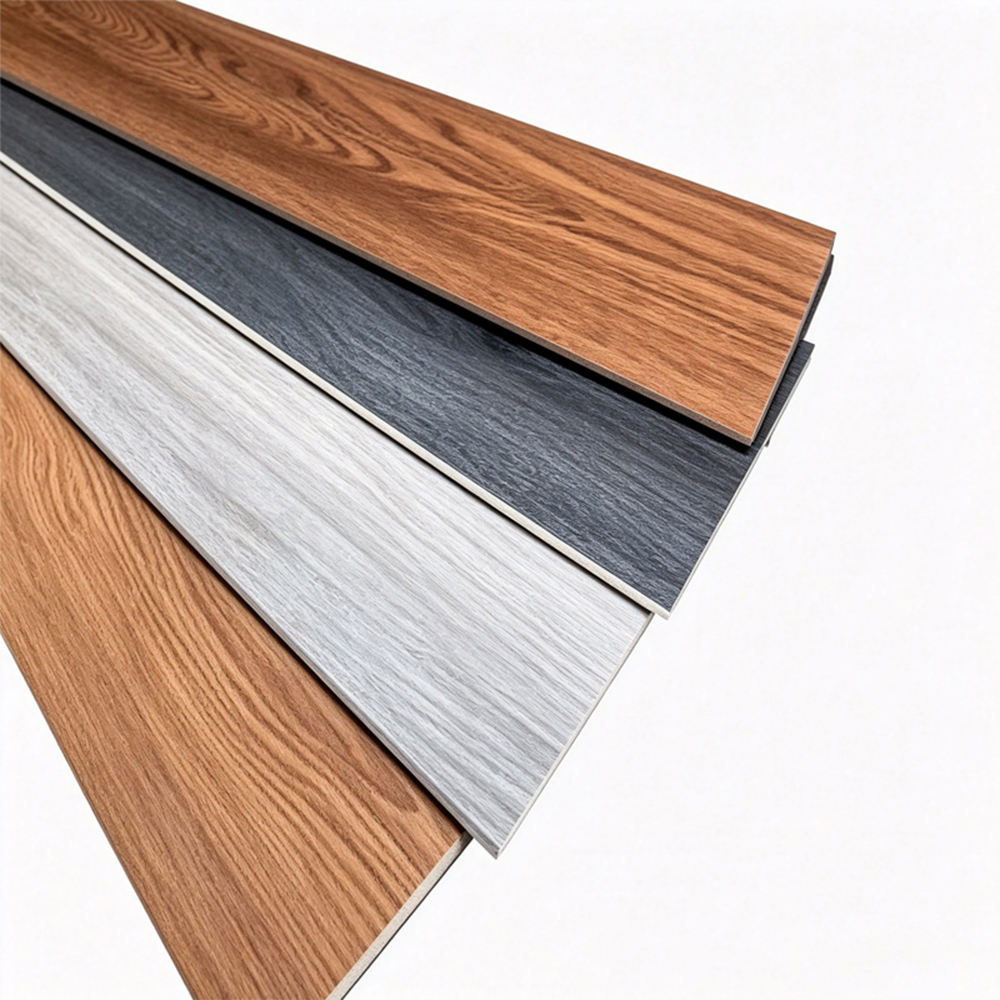
SPC flooring (Stone Plastic Composite) is a rigid, waterproof, and eco-friendly flooring solution widely used in residential, commercial, and industrial spaces. The above extrusion line is specially used to produce SPC planks and tiles.
Real case:
A flooring factory in Vietnam uses the SJZ110/220 model to produce SPC planks of 1220 mm width and 5.5 mm thickness. With a main motor power of 160 kW, they achieve a stable output of 1150 kg/h, supplying nearly 40,000 m² of flooring to the US market every month.
Typical application scenarios:
Residential kitchens, bathrooms, and basements (waterproof requirements)
Commercial spaces such as hotels, schools, hospitals
Retail stores and exhibition centers
Green building projects (100% recyclable, phthalate-free)
Adjustable width (960–1270 mm) and thickness (3–8 mm) allow manufacturers to flexibly switch between producing click-lock planks, dry-back tiles, or even products with an integrated silent pad.
High Output & Energy Efficiency
SJZ92/188: main motor only 110 kW, output 600–800 kg/h – ideal for small to medium workshops.
SJZ135/31: output 1100–1300 kg/h, main motor 160 kW – one of the best output-to-energy ratios in its class.
Broad Product Flexibility
All models support widths of 960–1270 mm and thicknesses of 3–8 mm. This means you can produce standard 4 mm luxury vinyl tiles (LVT) or thicker 7–8 mm rigid core boards without changing the extrusion line.
Twin-Screw (Tapered/Parallel) Options
SJZ series (92/188 and 110/220) are conical twin-screw extruders, excellent for homogenously mixing limestone powder with PVC resin.
SJP series (115/28 and 135/31) are parallel twin-screw extruders, offering better melt flow and suitable for high-speed production.
Real-World Benefit Example
A Polish manufacturer replaced an old single-screw line with the SJP135/31. They reduced raw material scrap rate from 5.2% to 2.1% and increased line speed by 22%, while maintaining a thickness tolerance of ±0.05 mm.
To ensure every batch meets international flooring standards (ASTM, EN, ISO), all four models implement the following QC procedures.
Online Monitoring
Melt pressure and temperature sensors installed at the adapter and die – alarms trigger when deviation exceeds ±1.5%.
Ultrasonic thickness gauge scans the sheet every 500 mm of width. For the SJZ110/220, the target tolerance for 5 mm thickness is ±0.03 mm.
Offline Laboratory Testing (every 2 hours of production)
Dimensional stability – samples heated at 80°C for 2 hours; shrinkage must be <0.2% (EN 434).
Locking strength – measured with a universal testing machine; minimum requirement of 250 N/100 mm for 5 mm planks.
Water absorption – <0.5% after 24-hour immersion (ASTM F2199).
Real-Case Problem Solving
A customer using the SJZ92/188 experienced occasional thickness fluctuations. The QC system detected unstable feeding. After cleaning the gravimetric blender and calibrating the load cells, thickness variation dropped from ±0.10 mm to ±0.03 mm within 2 hours.
Off-line Inspection
Each finished plank passes through a defect detection camera system (0.2 mm resolution) to check for surface pits, gel spots, or edge burrs. On the SJP115/28 model, the reject rate remains below 1.2%.
| Model | SJZ92/188 | SJZ110/220 | SJP115/28 | SJP135/31 |
| Products width (mm) | 960-1270 | 960-1270 | 960-1270 | 960-1270 |
| Products thickness (mm) | 3-8 | 3-8 | 3-8 | 3-8 |
| Main motor power (kw) | 110 | 160 | 90 | 160 |
| Capacity (Max.) (kg/h) | 600-800 | 1000-1300 | 700-900 | 1000-1300 |
Q1: Can these lines produce thin SPC flooring of 4 mm?
A1: Yes. All models support 3–8 mm thickness. For 4 mm production, we recommend the SJZ92/188 or SJP115/28 because their smaller screw diameter provides better melt uniformity for thin sheets. Real case: a Turkish customer uses the SJP115/28 to produce 4.2 mm thick planks at 750 kg/h.
Q2: What is the difference between the SJZ and SJP series?
A2: SJZ (conical twin-screw) provides higher torque at low speeds – ideal for highly filled SPC formulations (limestone content up to 70%). SJP (parallel twin-screw) runs faster with lower shear heat – better for color changes. For high limestone filling, choose SJZ; for high-speed output and frequent color changes, choose SJP.
Q3: How do you maintain a thickness tolerance of ±0.05 mm?
A3: Three key factors:
A calibrated melt pump between the extruder and the die.
Automatic die lip adjustment (optional).
Stable cooling rolls with temperature control accuracy of ±1°C.
On the SJZ110/220, with consistent raw material batches, you can maintain ±0.04 mm tolerance for over 48 hours of continuous operation.
Q4: What is the actual power consumption per ton?
A4: Based on data from a Malaysian factory:
SJZ92/188: approx. 185 kWh/ton (including auxiliary equipment)
SJZ110/220: approx. 172 kWh/ton
SJP135/31: approx. 168 kWh/ton
This is 15–20% lower than conventional single-screw lines.
Q5: Can I use recycled PVC or calcium carbonate?
A5: Yes, but with care. The twin-screw design can handle up to 30% clean recycled PVC regrind without noticeable output reduction. For calcium carbonate, keep particle size ≤25 μm. A Spanish customer used 40% local limestone powder (particle size ≤25 μm) on an SJZ110/220, achieved 1180 kg/h output, and reduced material cost by 12%.
Q6: Can your equipment produce very thin SPC flooring, e.g., below 4 mm?
A6: Yes. All four models (SJZ92/188, SJZ110/220, SJP115/28, SJP135/31) support thicknesses of 3–8 mm, fully covering thin boards of 4 mm and below. In an actual case, a Turkish customer used the SJP115/28 line to stably produce 4.2 mm thick SPC flooring at 750 kg/h. If you focus on thin products, we recommend the SJZ92/188 or SJP115/28 because their screw design offers better melt uniformity for thin-wall extrusion.
Q7: Can your equipment use recycled PVC or local limestone powder?
A7: Yes, but with controlled ratios. Our conical and parallel twin-screw designs have strong adaptability to highly filled formulations. In practice, a Spanish customer used an SJZ110/220 line with 40% local limestone powder (fineness ≤25 μm) and still achieved 1180 kg/h output, reducing material cost by 12%. For clean recycled PVC regrind, we recommend adding no more than 30%; output and surface quality will not be significantly affected. If you need higher recycled content, we can provide customized screw configurations.




Pipe Extrusion Production Line
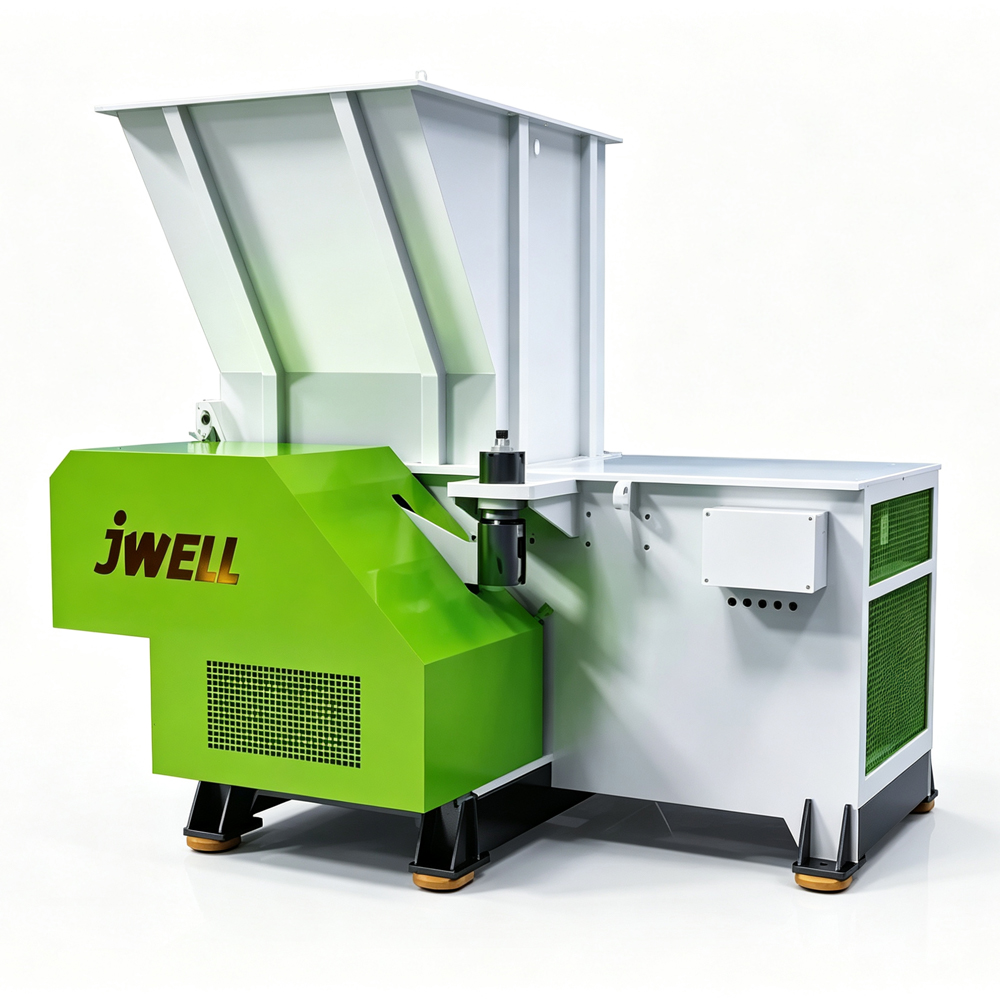
Plastic Shredder Crusher Machine

Tel: +86-19057068112

E-mail: [email protected]

Company Address
No. 128 Qingfeng Road, Xieqiao Town, Haining City, Jiaxing City, Zhejiang Province

19057068112

 English
 русский