
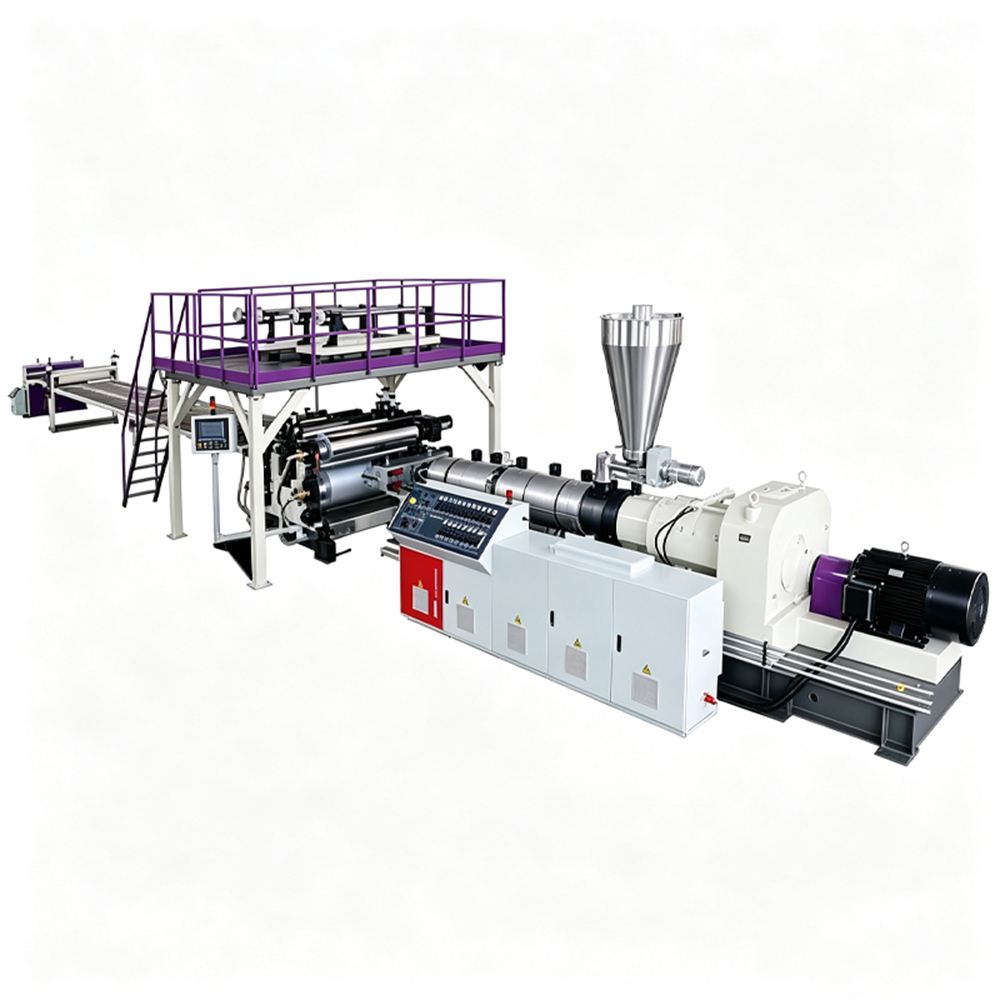
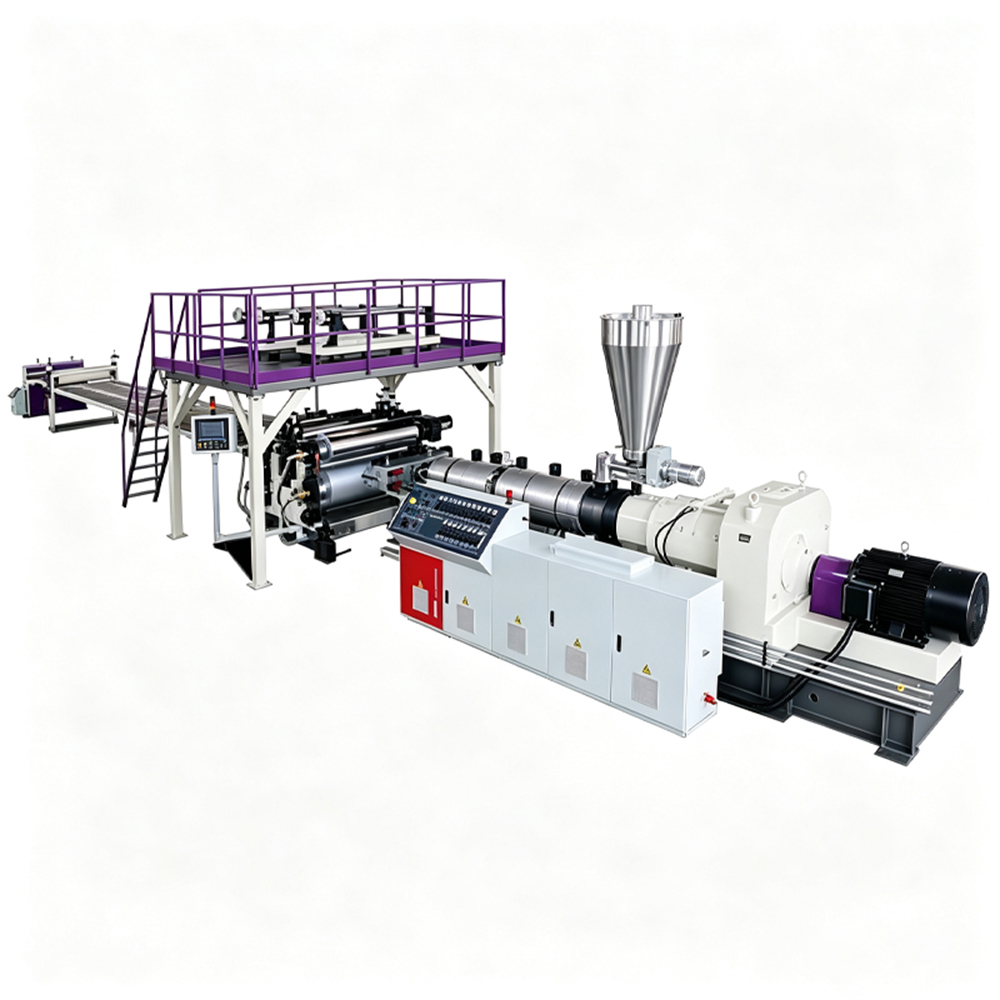
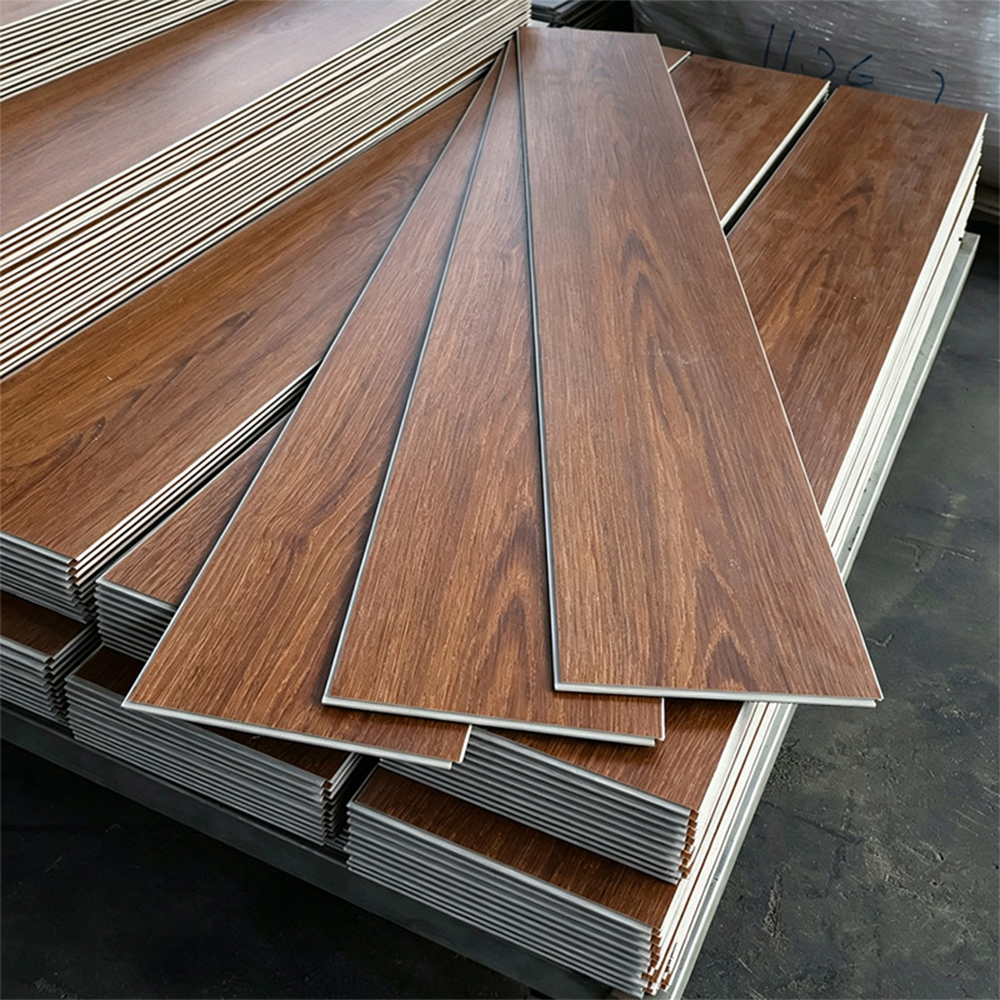
Jwell's SPC Floor / SPC Wall Panel Extrusion Machine Production Line produces rigid panels up to 1220mm wide and 3-9mm thick, with a maximum extrusion output of 2500kg/h. Its advantages include low energy consumption (as low as ~89 kWh/ton), fast product changeover, stable operation, and wide application in waterproof flooring and wall decoration.
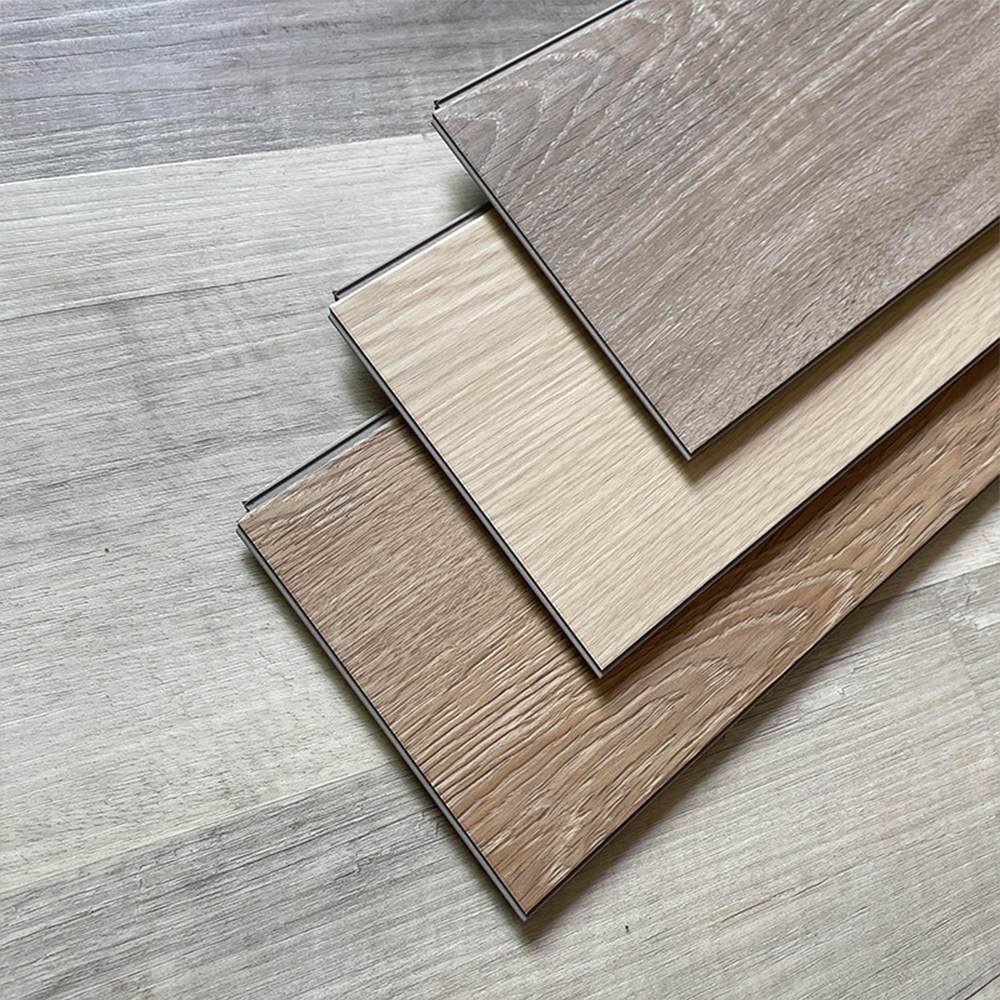
The SPC Floor / SPC Wall Panel Extrusion Machine Production Line is specifically designed to produce SPC click flooring, waterproof wall panels, and rigid core boards. The standard width is 1220mm (suitable for most residential and commercial spaces). Thickness range: 3–8mm for flooring, up to 9mm for wall panels.
Typical projects:
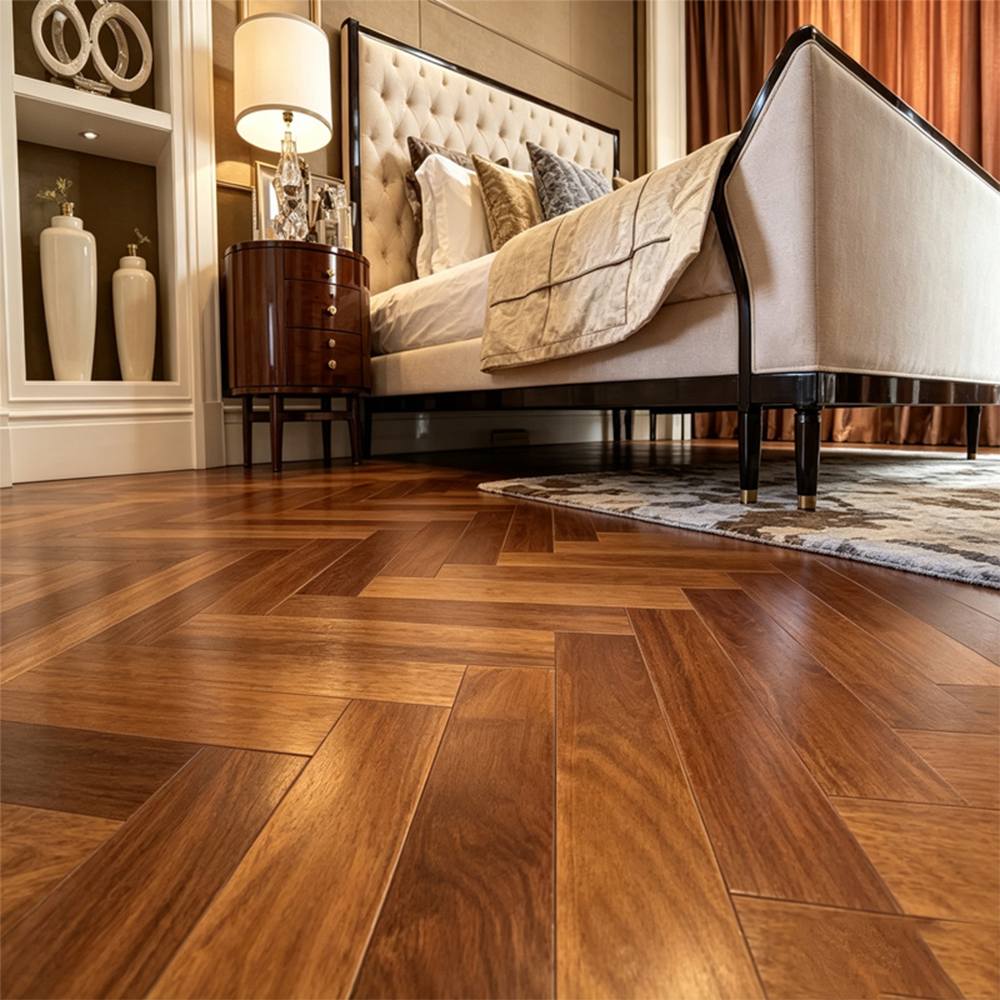
Residential waterproof flooring: An Australian homeowner installed 6mm thick SPC flooring (produced by an SJZ110/220 line) in his basement kitchen and living area – after 18 months, no swelling.
Hotel corridor wall panels: A Vietnamese hotel used 8mm thick wall panels produced by an SW130/28 line. With an extrusion capacity of up to 2000 kg/h, the line enabled installation of 5000㎡ within 10 working days.
Commercial office flooring: A co-working space in the USA chose 4mm thick SPC panels from an SJZ92/188 line. The 1220mm width reduced installation joints by 30% compared to standard 900mm panels.
Our four models cover production scales from small to large. Below are actual parameters translated into advantages:
|
Parameter |
SJZ92/188 |
SJZ110/220 |
SW130/28 |
SW160/28 |
Advantage |
|
Max output (kg/h) |
800–1000 |
1200–1400 |
1500–2000 |
2000–2500 |
Flexible output from startups (~1 ton/day) to industrial giants (~60 tons/day) |
|
Main motor power (kW) |
110 |
160 |
200 |
250 |
Energy efficient – SW160/28 uses only 250kW to produce 2500 kg/h, i.e., 0.1 kWh/kg |
|
Product thickness range |
3–8mm |
3–8mm |
3–8mm |
3–9mm |
SW160/28 can produce thicker wall panels (9mm) without slowing down |
Real-world advantage example:
A Turkish factory replaced two old extruders with one SW130/28. Previously they achieved 1200 kg/h using 220kW total power. Now they achieve 1800 kg/h with 200kW – a 50% output increase while reducing energy consumption by 9%. The fixed 1220mm width also eliminates edge trimming waste (saving about 5% material).
We implement a 7-step quality control process to ensure every SPC panel meets ASTM, EN or ISO standards. Below is the actual process on the production line:
Step 1: Raw material verification
Inspection: Calcium carbonate particle size (at least 325 mesh) and PVC resin K-value (K65-68).
Tools: Sieve analyzer and capillary rheometer.
Acceptance criteria: Moisture <0.2%, no agglomerates.
Step 2: Extrusion stability check
Real-time monitoring: Melt pressure and temperature measured every 2 seconds. For SW160/28, target melt pressure: 25–30 MPa; melt temperature: 190–200°C.
Action: If fluctuation exceeds ±2°C, automatic PID controller adjusts screw speed.
Step 3: Dimensional inspection (in-line)
Laser gauge: Measures thickness 3 times per minute across the 1220mm width.
Example result: For 6mm target thickness, tolerance ≤±0.1mm – achieved on SW130/28 at 1800 kg/h.
Step 4: Surface & appearance inspection
After calibration table: Operators use 1000 lux light panel to check for bubbles, black spots, or uneven gloss.
First-pass yield: >98.5% at our Indian customer’s factory (SJZ110/220 line).
Step 5: Shrinkage test (physical property)
Method: Cut 500mm sample, place in 80°C oven for 1 hour, measure length change.
Standard: ≤0.5% (ASTM F2199). Our SW160/28 consistently gives 0.3–0.4%.
Step 6: Locking strength test
Tool: Universal tensile machine, pull two locked panels apart.
Requirement: ≥500 N/m of width. For 1220mm wide panel, that is ≥610 N per joint.
Step 7: Water resistance validation
Immersion test: Soak in 25°C water for 72 hours, thickness expansion <1%. All models pass thanks to the closed-cell structure of the SPC formulation.
| Model | SJZ92/188 | SJZ110/220 | SW130/28 | SW160/28 |
| Product width | 1220mm | 1220mm | 1220mm | 1220mm |
| Product thickness | 3-8mm | 3-8mm | 3-8mm | 3-8mm |
| Capacity | 800-1000kg/h | 1200-1400kg/h | 1500-2000kg/h | 2000-2500kg/h |
| Main motor power | 110kw | 160kw | 200kw | 250kw |
Q1: Can I produce both flooring (3-8mm) and wall panels (up to 9mm) on the same production line?
A: Yes – the SW160/28 specifically supports 3–9mm thickness. For other models (3–8mm), you can produce wall panels up to 8mm thick. Switching from 4mm flooring to 8mm wall panels only requires adjusting the die lip gap and calibrating device; our quick-change system takes only 45 minutes.
Q2: What is the actual power consumption per ton of product?
A: For SJZ110/220 as an example: 160 kW motor × 0.8 (load factor) = average 128 kW, output 1300 kg/h → 98 kWh/ton. For SW160/28: 250 kW × 0.8 / 2250 kg/h = 89 kWh/ton – very competitive.
Q3: My workshop only has 400V/50Hz power supply; do I need a transformer?
A: No. All models are designed for 380–415V, 50/60Hz. A Vietnamese customer runs an SJZ92/188 directly on 380V/50Hz without any step-up transformer.
Q4: How often do the screw and barrel need replacement?
A: For high calcium-filled SPC (60-70% CaCO₃), wear is moderate. Our twin-screw design (SJZ series) runs 8000–10000 hours before requiring hardfacing repair. Example: A Polish factory running an SW130/28 (two shifts/day) measured the screw outer diameter at 98% of new after 18 months.
Q5: What is the scrap rate at startup?
A: Following our preheating and cleaning procedure, scrap during product changeover is only 15–20 kg. During continuous production (≥4 hours), scrap rate drops to <1%. A UK customer recorded 0.7% scrap over one month on an SJZ110/220 line.
Q6: Can I add an embossing roller to create wood grain textures?
A: Absolutely. We integrate an embossing unit after extrusion. Roller temperature set to 130–150°C, pressure 2–4 bar. Many customers produce realistic oak/chestnut grain textures while maintaining the 1220mm width.




Pipe Extrusion Production Line
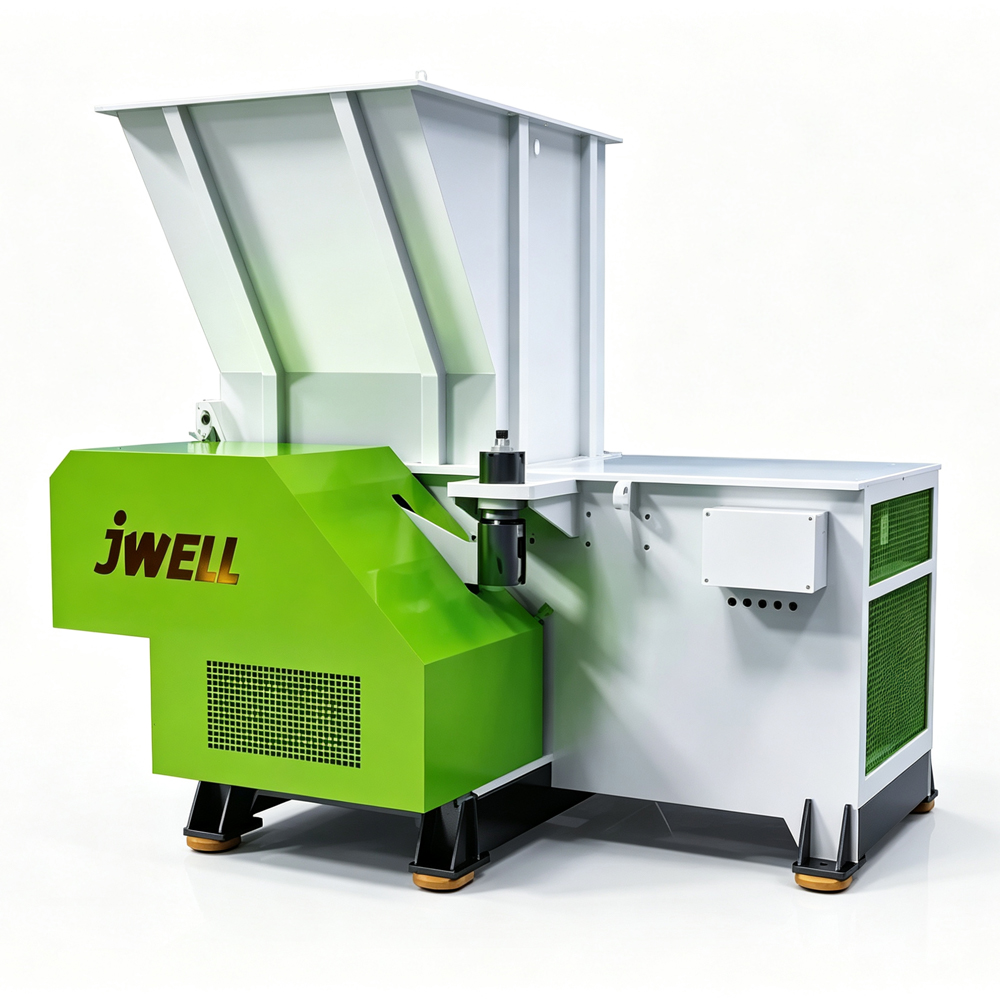
Plastic Shredder Crusher Machine

Tel: +86-19057068112

E-mail: [email protected]

Company Address
No. 128 Qingfeng Road, Xieqiao Town, Haining City, Jiaxing City, Zhejiang Province

19057068112

 English
 русский