
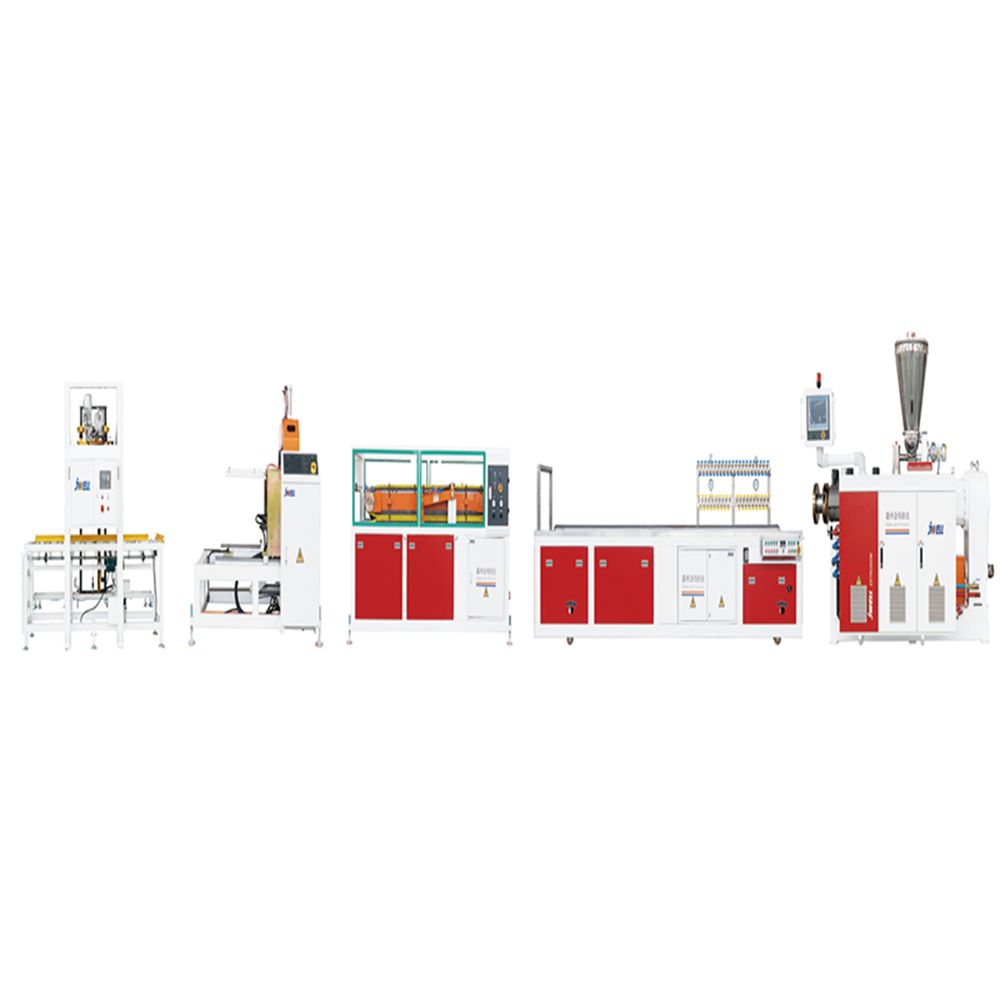
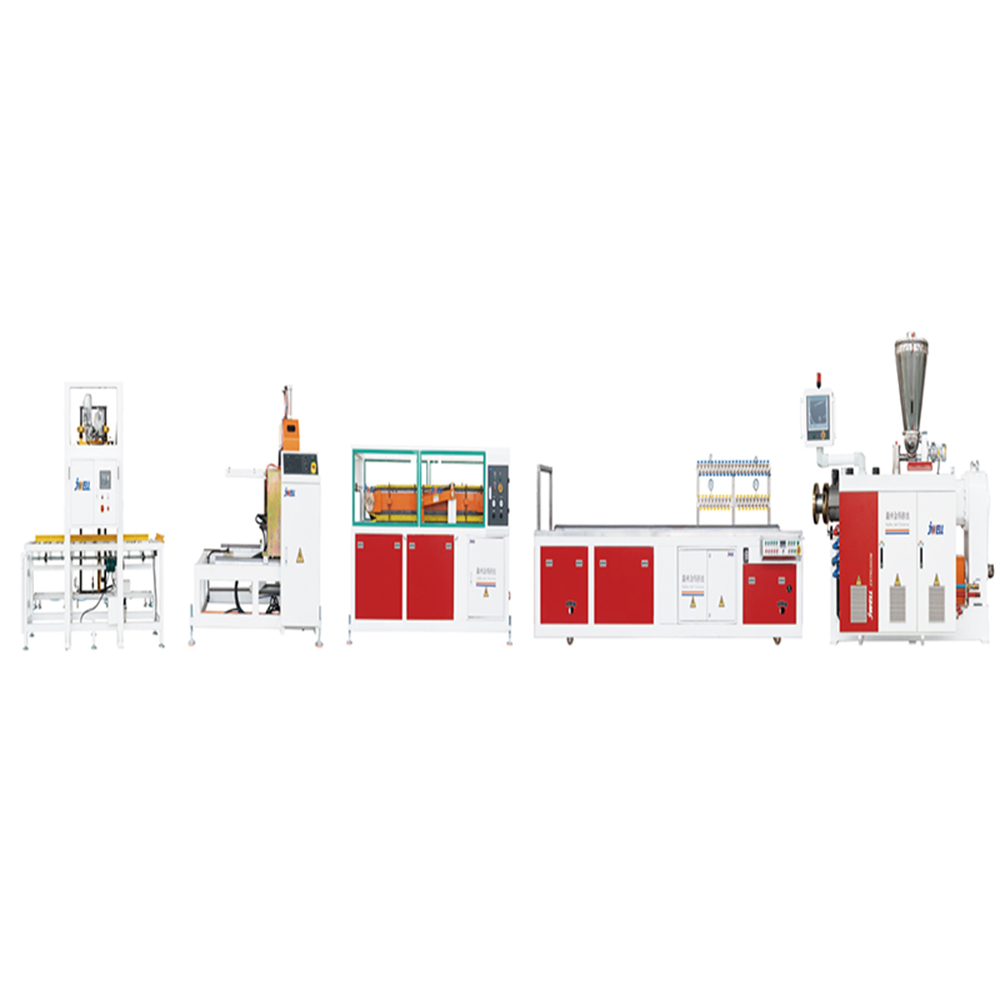
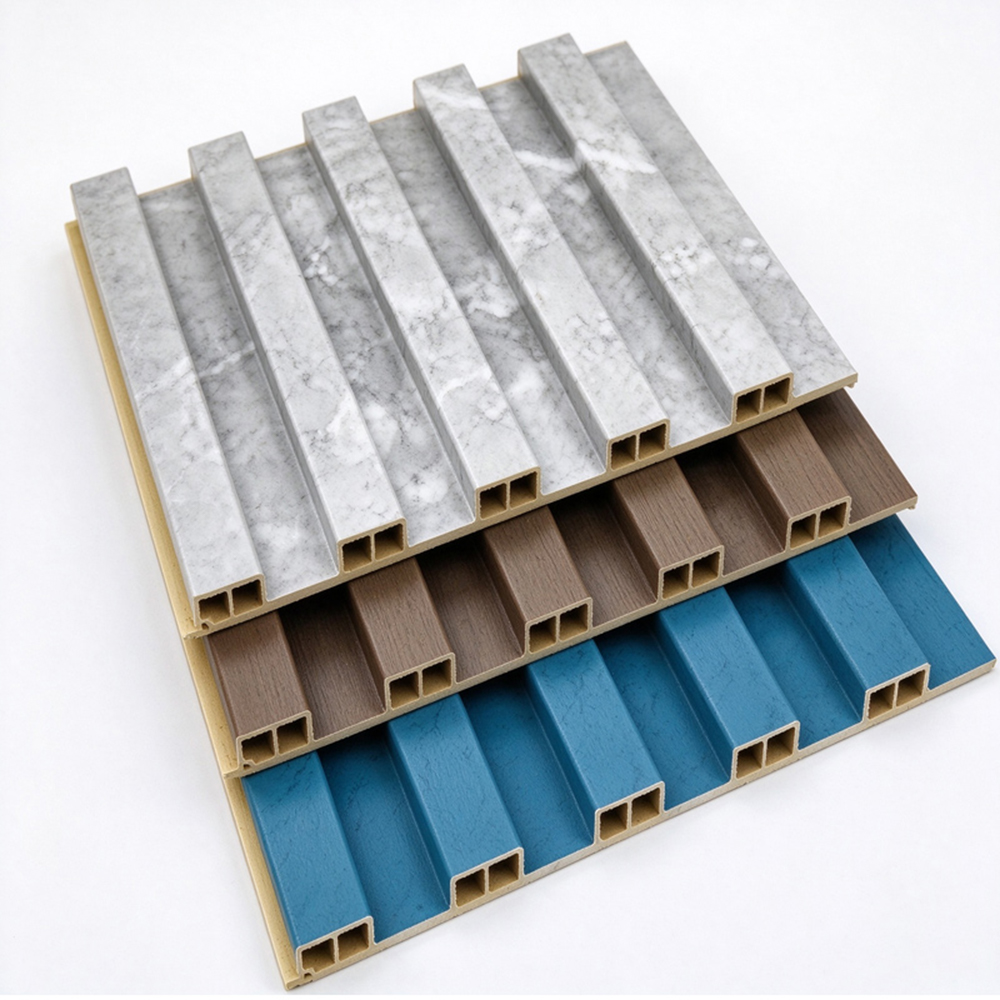
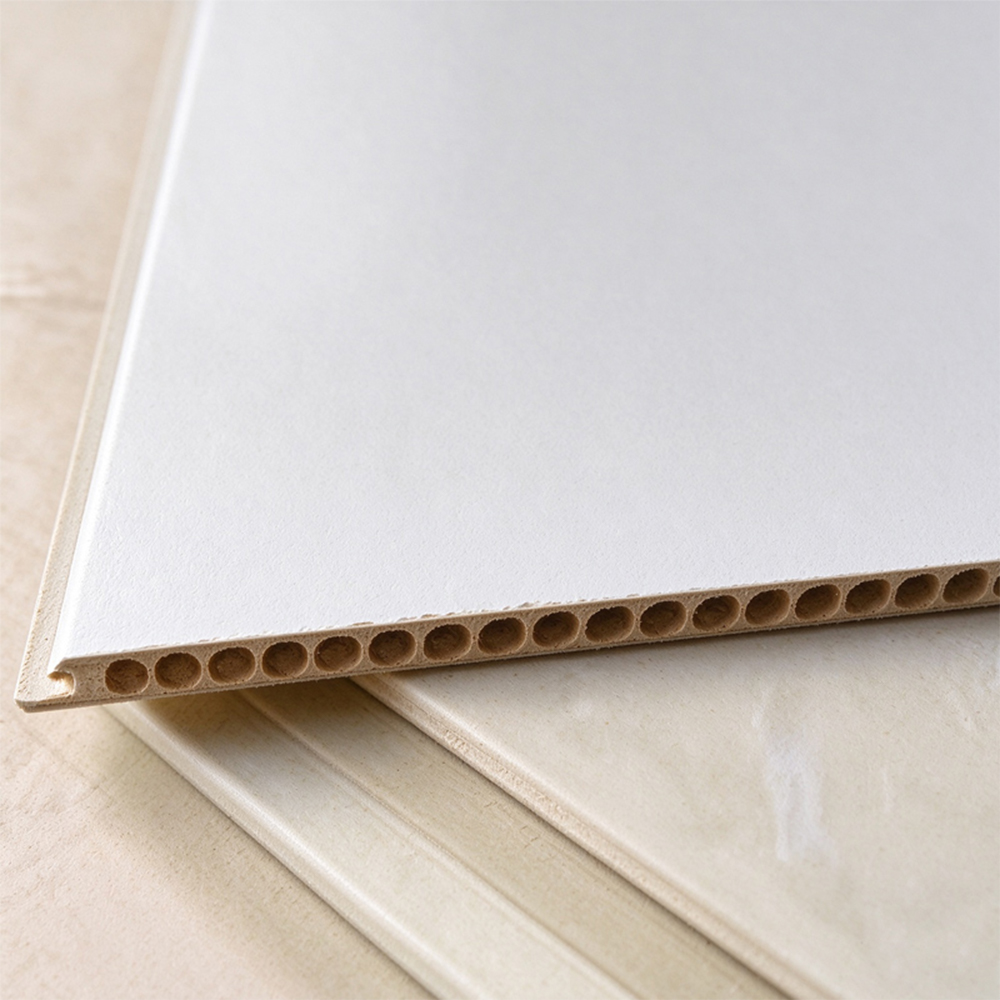
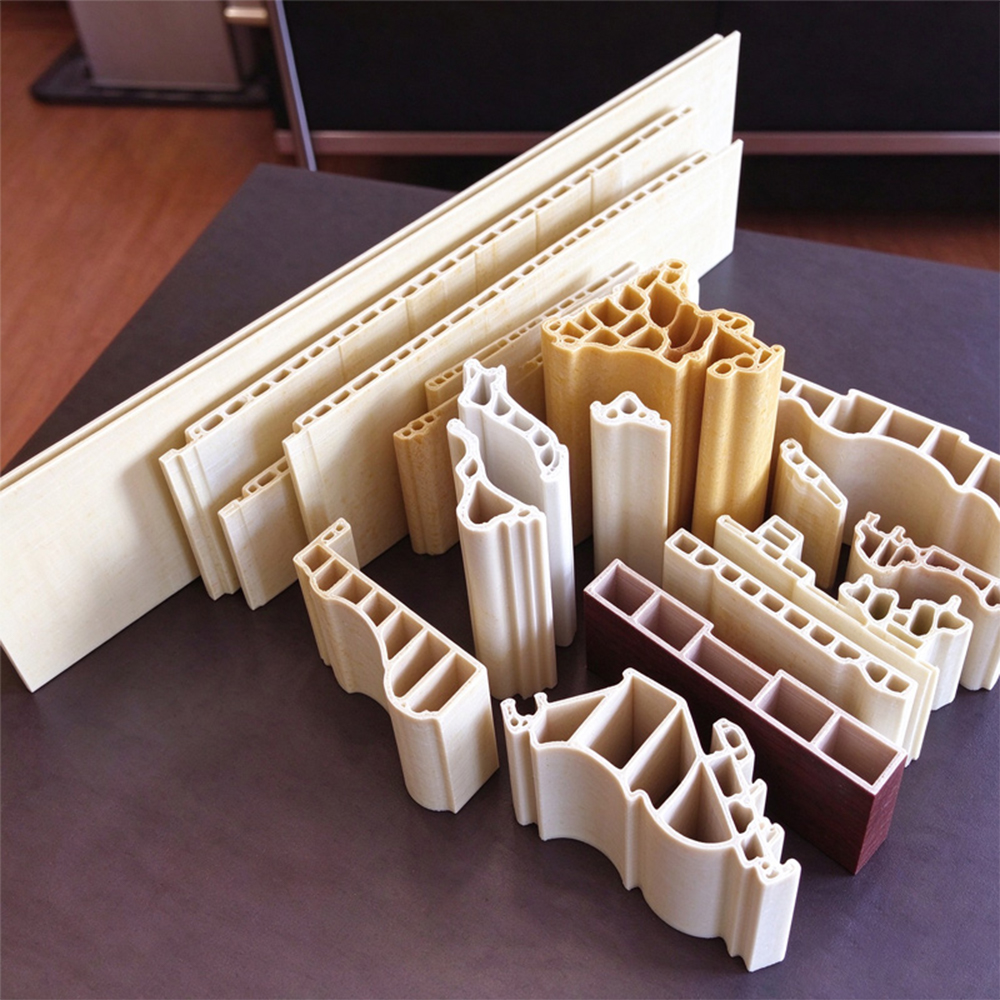
The PVC High-Speed Ceiling and Wall Panel Extrusion Line (models SJZ51/105, SJZ65/132, SJZ80/156) is a professional production system for manufacturing decorative PVC panels used in indoor ceilings, wall cladding, bathroom walls, and commercial partitions. The line integrates a conical twin-screw extruder and downstream auxiliary equipment, delivering high output, stable dimensions, and excellent surface finish.
|
Model |
Max. Panel Width (mm) |
Typical Products |
Actual Case |
|
SJZ51/105 |
300 |
Narrow ceiling strips, bathroom wall panels, trim lines |
A small factory in Vietnam produces 300 mm glossy white ceiling panels, output 90 kg/h, supplying local home improvement stores. |
|
SJZ65/132 |
300–400 |
Standard wall panels (e.g., 300mm, 400mm), woodgrain finish panels |
A customer in Malaysia uses this model to produce 400 mm embossed woodgrain wall panels, output 170 kg/h, cooling water consumption 7 m³/h. |
|
SJZ80/156 |
600 |
Wide ceiling panels, large wall cladding (e.g., 600mm) |
A manufacturer in Turkey produces 600 mm marble-pattern panels for a shopping mall, output 350 kg/h, stable operation. |
These lines are widely used for:
Residential and commercial interior decoration
Moisture-resistant bathroom and kitchen wall panels
Thermal insulation ceiling systems
Fast-installation PVC click-lock panels
2.1 High Output & Energy Efficiency
SJZ80/156 achieves 300–400 kg/h with only 55 kW main motor – excellent specific energy consumption (<0.18 kWh/kg).
Conical twin-screw design provides high torque and gentle mixing, reducing material degradation.
2.2 Wide Panel Flexibility
Models cover max widths of 300 mm, 400 mm, and 600 mm, matching common market sizes.
On SJZ65/132, quick die and calibrator changeover between widths (300↔400 mm) within ≤30 minutes.
2.3 Low Utility Consumption
|
Model |
Cooling water (m³/h) |
Compressed air (m³/min) |
|
SJZ51/105 |
6 |
0.6 |
|
SJZ65/132 |
7 |
0.6 |
|
SJZ80/156 |
8 |
0.6 |
All three models require only 0.6 m³/min of compressed air – one small air compressor can serve the entire line, reducing operating costs. Cooling water can be recirculated with a cooling tower, saving up to 70% water.
2.4 Integrated Downstream Line
Matching YF300 / YF400 / YF600 downstream units include: calibration table → cooling tank → puller → in-line cutter → stacking rack.
Automatic speed synchronization with extruder ensures constant panel thickness (±0.1 mm).
2.5 Actual Case – Productivity Increase
A customer in Poland upgraded from a single-screw extruder (180 kg/h for 400 mm panels) to SJZ65/132, achieving 200 kg/h output while reducing scrap rate from 8% to 3% due to better melt homogeneity.
To ensure high-quality panels meeting global standards (ASTM, EN, ISO), the following QC and testing procedures are implemented on each production line.
3.1 Incoming Material Inspection
PVC resin (K65-67) – moisture content ≤0.2%, particle size distribution.
Calcium carbonate (filler) – particle size (≤10 µm), whiteness ≥90%.
Stabilizers, lubricants, impact modifiers – batch consistency check.
3.2 On-line Quality Control (Real-time)
|
Parameter |
Method |
Tolerance / Target |
|
Melt temperature |
Thermocouple at die |
175–190 °C (±2 °C) |
|
Panel width |
Laser sensor |
±1 mm |
|
Panel thickness |
Ultrasonic thickness gauge |
±0.05 mm |
|
Surface gloss |
On-line gloss meter |
≥70 GU (glossy finish) |
|
Line speed |
Encoder (puller feedback) |
±0.5 m/min |
Example: On SJZ80/156, producing 600 mm × 8 mm panels, typical line speed is 1.2 m/min. Any thickness deviation >0.1 mm triggers automatic screw speed adjustment.
3.3 Off-line Testing (Per Batch)
|
Test Item |
Standard |
Equipment |
Acceptance Criteria |
|
Flexural strength |
EN 13245 |
Universal tester |
≥35 MPa |
|
Impact resistance (Gardner) |
ASTM D4226 |
Drop dart impact tester |
No cracks at 2 J impact |
|
Heat deflection temperature |
ISO 75 |
HDT tester |
≥70 °C |
|
Dimensional stability (80°C,1h) |
ASTM D1204 |
Oven |
Shrinkage ≤0.5% |
|
Water absorption |
ASTM D570 |
Immersion |
≤0.5% after 24h |
|
Flammability (self-extinguishing) |
UL94 |
Vertical burn |
V-0 or V-2 |
3.4 Actual QC Case – Scrap Reduction
A manufacturer in India using SJZ65/132 initially had 6% scrap due to surface bubbles. After installing a vacuum degassing system (optional upgrade) and raising regrind drying temperature to 110°C, scrap fell to 1.5%.
| Extruder type | SJZ51/105 | SJZ65/132 | SJZ80/156 |
| Production width (mm) | 300 | 300/400 | 600 |
| Motor power (kw) | 22 | 37 | 55 |
| Auxiliary machine model | YF300 | YF300/400 | YF600 |
| Output (kg/h) | 80–100 | 150–200 | 300–400 |
| Cooling water (m³/h) | 6 | 7 | 8 |
| Compressor air (m³/min) | 0.6 | 0.6 | 0.6 |
Q1: Why is my SJZ65/132 actual output lower than the claimed 150–200 kg/h?
A: Check the following:
Filler ratio – Too high calcium carbonate (>40 phr) reduces output. Reduce to ≤30 phr to meet target.
Screw speed – Should be 85–95% of maximum. Too low (<60%) lowers output.
Back pressure – Clogged screen pack or worn screw tip. Change screens (80 mesh) every 72 hours.
Actual case: A customer in Egypt had only 120 kg/h. We found cooling water temperature at 32°C (should be ≤25°C). After installing a chiller, output rose to 185 kg/h.
Q2: "Sharkskin" or dull patches appear on the panel surface – how to solve?
A: Sharkskin is caused by melt fracture or insufficient die temperature.
Increase die zone temperatures by 5°C (e.g., from 190°C to 195°C).
Temporarily reduce line speed by 10%.
Check calibrator vacuum is ≤0.06 MPa (too low leaves air marks).
Add 0.5 phr processing aid (e.g., acrylic modifier) – solves 90% of cases.
Q3: Panels warp after cooling – what went wrong?
A: Warping is usually due to uneven cooling or residual stress.
Ensure consistent water temperature in cooling tank (both top and bottom nozzles working).
For SJZ80/156 producing 600 mm wide panels, use double-sided cooling with at least 4 m length.
Adjust puller pressure – excessive pressure flattens panels.
Actual case: A factory in the UK reduced warpage from 12% to 2% by adding a 2 m forced-air cooling section before the cutter.
Q4: Can I produce both solid and foamed PVC panels on the same line?
A: Yes, but with adjustments:
Solid panels – Use standard screw and die.
Foamed (low-density) panels – Require chemical blowing agent (exothermic, e.g., azodicarbonamide) and slightly lower screw speed (to reduce shear). The conical screw design handles foam well. However, for best foam quality we recommend adding a melt pump. Some customers in Russia produce 0.6 g/cm³ foamed panels on SJZ65/132 at 130 kg/h.
Q5: What is the expected service life of screw and barrel?
A: With proper maintenance (regular cleaning, avoiding overheating), bimetallic barrel (nitrided steel) lasts 8,000–10,000 hours. Screw (nitrided + hard chrome plated) lasts 6,000–8,000 hours. For highly filled (>40 phr CaCO₃) or regrind-heavy applications, life is reduced by 30%.
Q6: How often should I clean the cooling water system?
A: Closed-loop system: check filters every two weeks, flush the entire circuit every six months. If untreated tap water is used, scale buildup reduces cooling efficiency and thus output.
Case: A customer in Brazil neglected cleaning for one year – cooling water flow dropped from 7 m³/h to 4 m³/h, causing overheating and frequent stoppages. After descaling, production returned to normal.


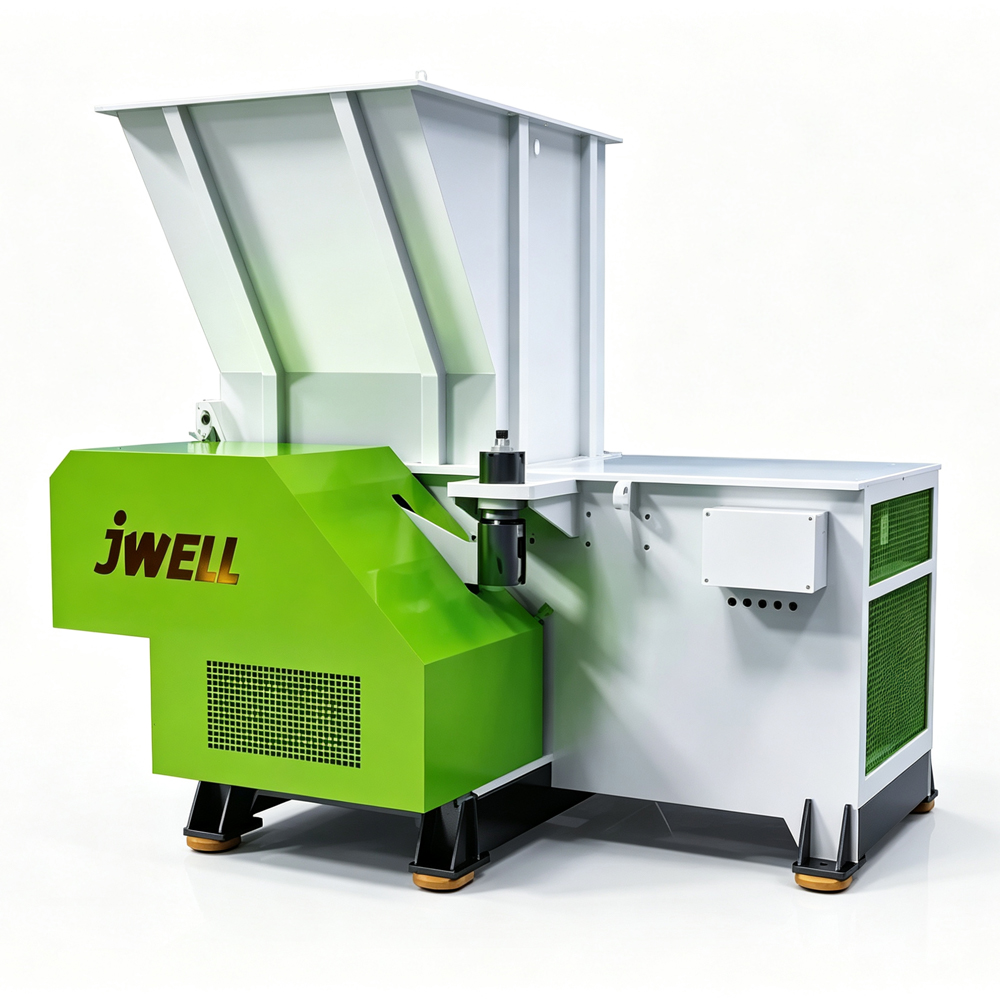


Pipe Extrusion Production Line
Plastic Shredder Crusher Machine

Tel: +86-19057068112

E-mail: [email protected]

Company Address
No. 128 Qingfeng Road, Xieqiao Town, Haining City, Jiaxing City, Zhejiang Province

19057068112

 English
 русский