
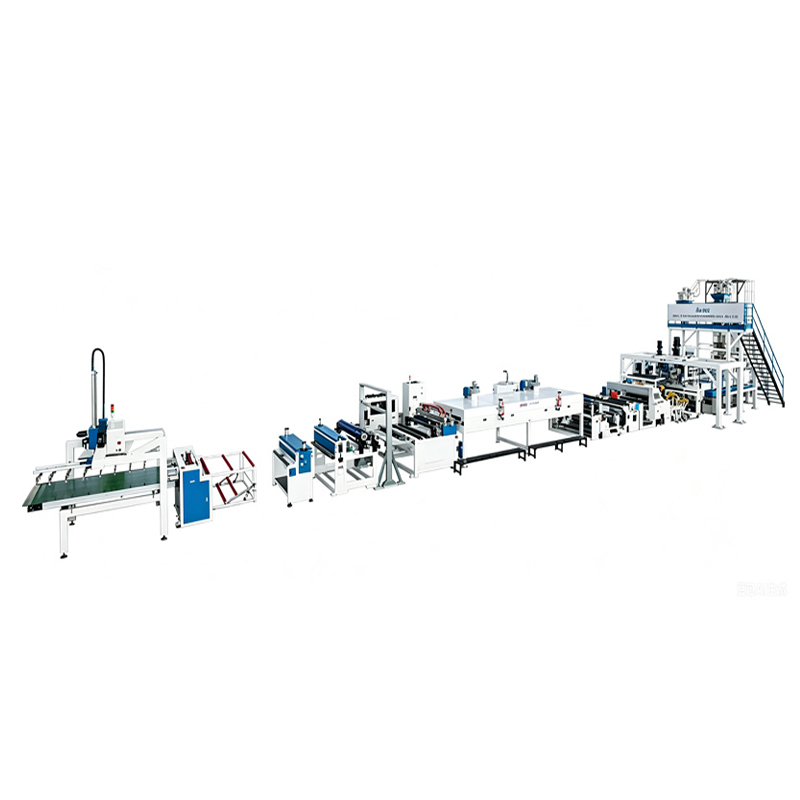
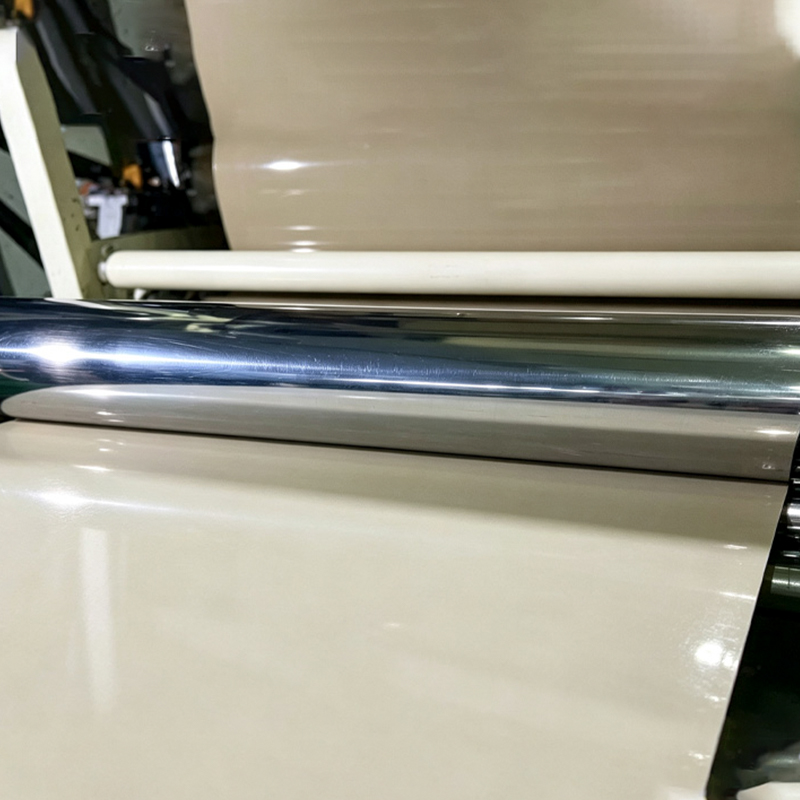
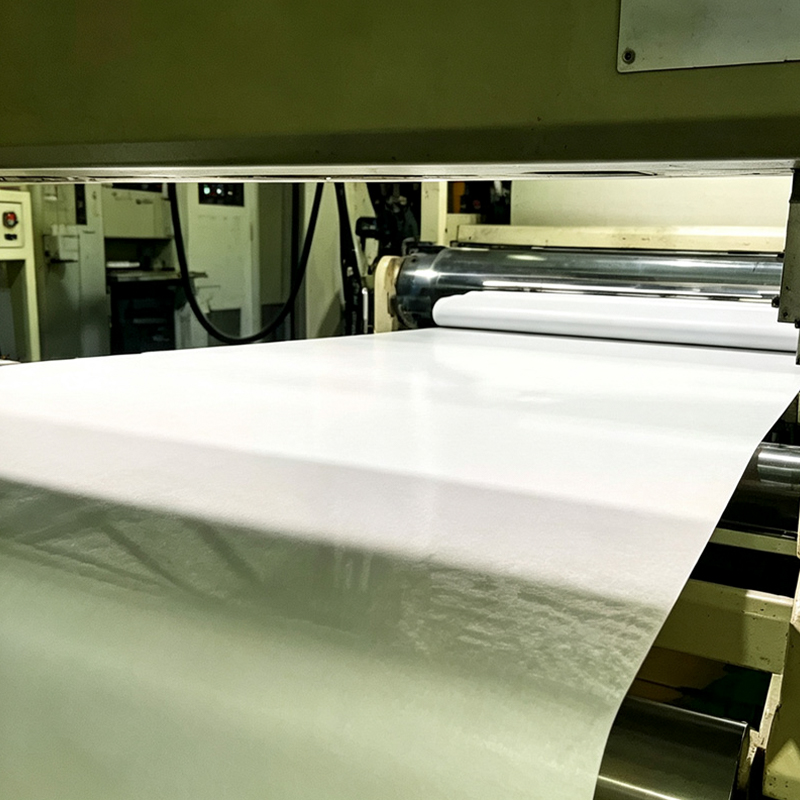
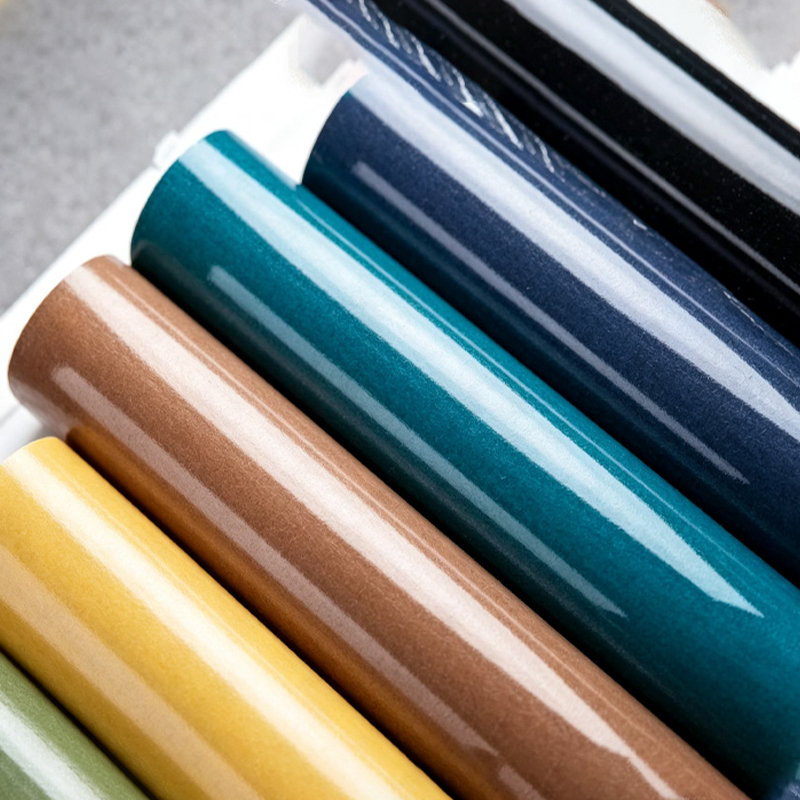
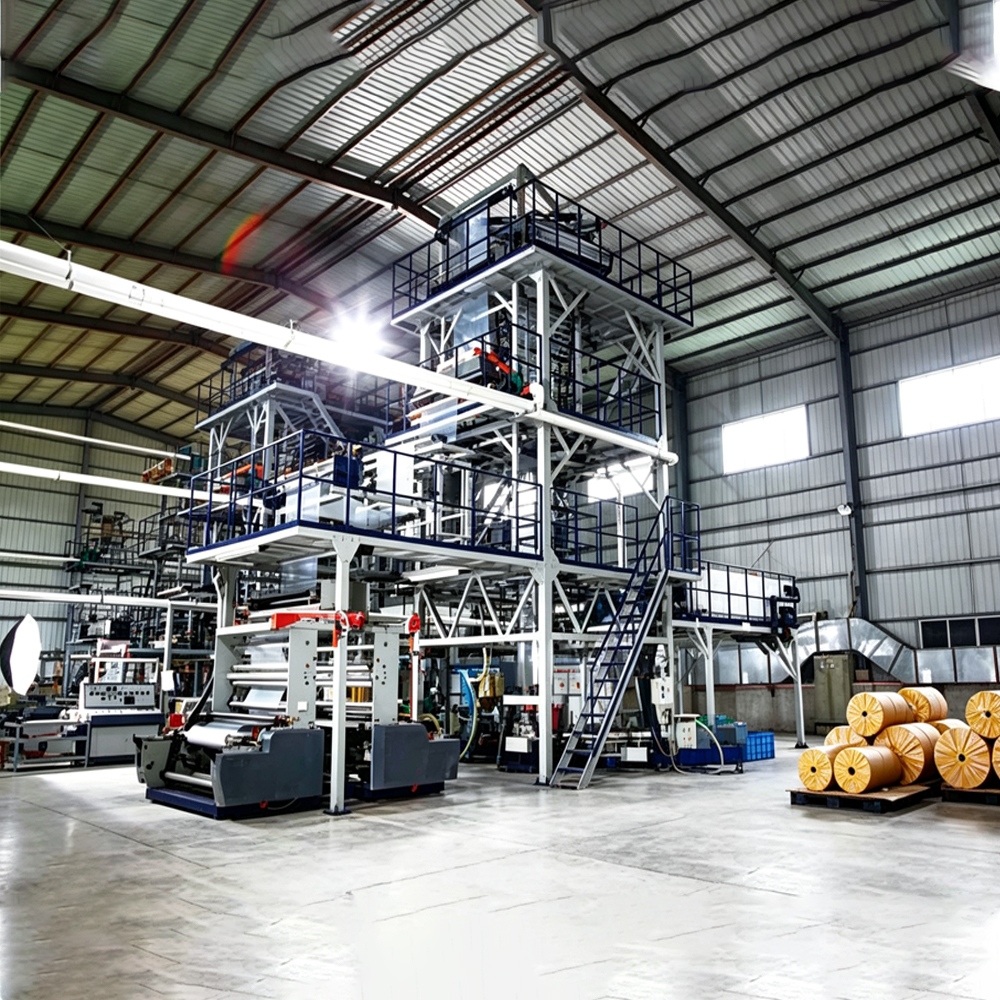
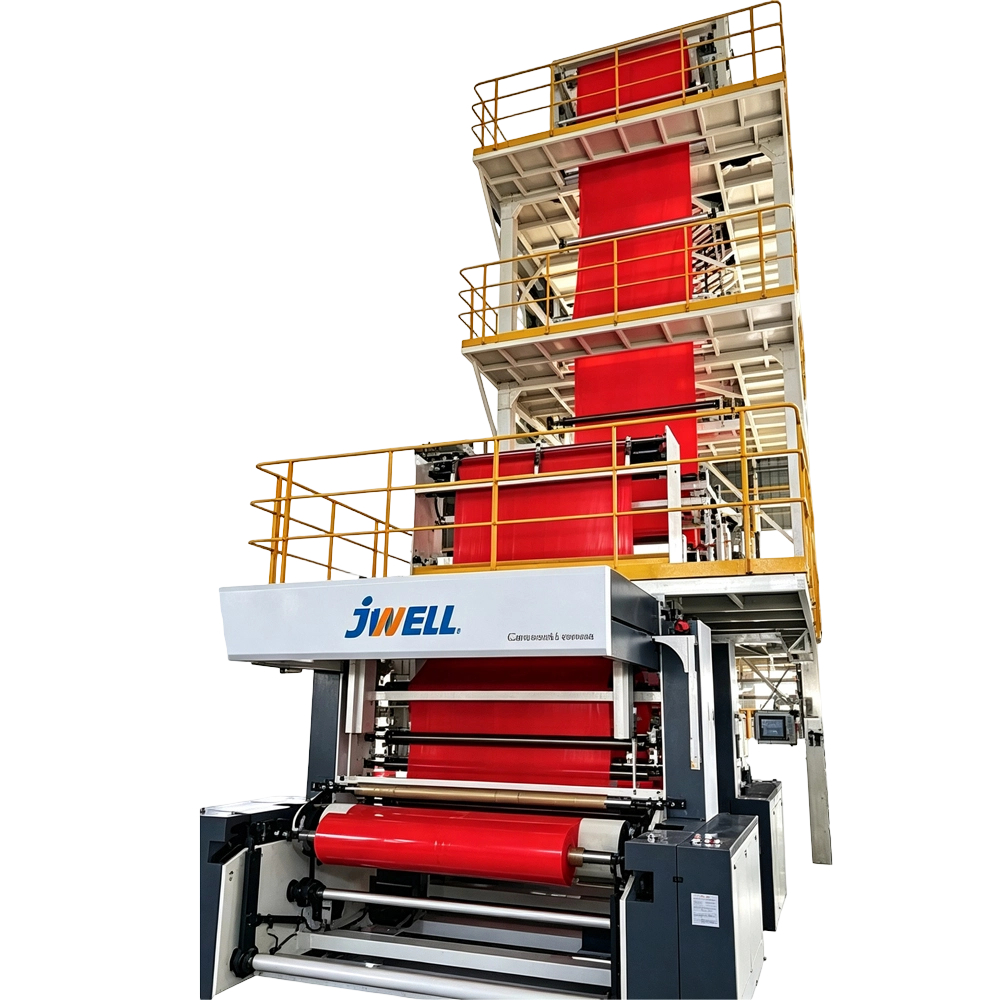
This extrusion line is specifically designed for producing GAG, PET, PMMA, and PP decorative film/sheet with a product width of 1250–1300 mm and thickness of 0.15–1.0 mm. The main motor power options are 200/45 kW and 160/45 kW, with maximum extrusion output of 600–800 kg/h (JWP) or 500–600 kg/h (JWS). This series of equipment can stably produce high-end decorative films for furniture, automotive interiors, and other applications.
Decorative films produced by these lines are widely used in surface finishing, lamination, and thermoforming processes. Typical end products include:
Furniture & Cabinets – PET and PMMA films for high-gloss, scratch-resistant kitchen cabinet doors and wardrobe panels.
Automotive Interiors – PP decorative films (low VOC, lightweight) for door trim and dashboard wrapping.
Flooring & Wall Coverings – GAG and PET-based wear layers for luxury vinyl tiles (LVT) and wall panels.
Consumer Electronics – PMMA films for rear cover protection and decorative in-mold decoration (IMD).
Packaging – Transparent PET/PP films for blister packaging with decorative printing.
Real-life case – A Turkish furniture film manufacturer replaced an old 90 mm single-screw line with a JWP85/65-1500. They increased output from 450 kg/h to a stable 720 kg/h (PET, 0.25 mm thickness) while reducing thickness variation by 35%. The twin-screw configuration (85 mm main + 65 mm co-extruder) allowed them to add functional top layers (e.g., UV-resistant PMMA) without reducing line speed.
JWP85/65-1500 output 600–800 kg/h – ideal for medium-width decorative film batch production.
JWS120/65-1500 output 500–600 kg/h – perfect for precision production or processing high-viscosity materials (e.g., PMMA).
Both figures are achieved at 1250–1300 mm width, ensuring real-world efficiency (not exaggerated “maximum theoretical” values).
The line can process GAG (glycol-modified PET, excellent for thermoforming), PET (recyclable and strong), PMMA (high gloss and weather resistance), and PP (chemical resistance). The 65 mm co-extruder enables A/B or A/B/A layer structures (e.g., PP + adhesive layer + decorative layer) without separate lamination.
JWP85/65: 200 kW (main) + 45 kW (co-extruder)
JWS120/65: 160 kW (main) + 45 kW (co-extruder)
Independent AC vector drives reduce energy consumption by 15–20% compared to hydraulic or single-motor systems. Users report an average line power of 145 kWh per ton of output.
The extruder feeds a coat-hanger die with automatic die bolt adjustment. Together with downstream thickness gauging (beta ray or NIR sensors), the line maintains thickness tolerance of ±0.005 mm across 1300 mm width – critical for decorative films that must be perfectly printed, embossed, or laminated.
Unlike separate extruder-winders, the JWP/JWS series integrates the main extruder and co-extruder on the same base frame. This reduces footprint by approximately 30% and simplifies synchronous control.
A robust QC workflow ensures every roll meets decorative industry standards (e.g., tensile testing ASTM D882, haze/transparency ISO 13468).
|
Parameter |
Equipment / Method |
Acceptance Range |
|
Melt pressure & temperature |
Melt thermocouple + pressure transducer (at adapter and die) |
±1°C, ±10 bar |
|
Thickness profile |
Online capacitive or NIR thickness gauge, scanning across web at die exit |
±5% of setpoint (e.g., 0.20 ±0.01 mm) |
|
Width consistency |
Ultrasonic edge sensors |
1250–1300 mm (target ±2 mm) |
|
Surface defects |
Line-scan camera (for gels, flow marks, black specks) |
Automotive film: no black specks >0.3 mm |
Optical properties – Haze meter (ASTM D1003) and gloss meter (60°) for PMMA/PET films.
Mechanical strength – Tensile tester (ASTM D882) – MD/TD elongation at break: PP >150%, PET >80%.
Adhesion – Cross-cut tape test for co-extruded functional layers.
Heat resistance – Heat shrinkage test (150°C, 15 min) – PET target <1.5%.
Color consistency – Spectrophotometer (ΔE* <0.5 vs. masterbatch standard).
A Chinese decorative panel manufacturer using a JWS120/65-1500 to produce white PET film (0.18 mm thickness) found periodic thickness fluctuations every 20 minutes. The online thickness gauge traced the issue to melt pulsation in the feed zone of the 65 mm co-extruder. By adjusting the barrel temperature profile (Zone 2 from 200°C down to 195°C) and increasing screw back pressure, the problem was eliminated within one hour, avoiding 2 tonnes of reject material.
| Model | JWP85/65-1500 | JWS120/65-1500 |
| Product Specifications(mm) | 1250-1300 | 1250-1300 |
| Thickness Of The Product(mm) | 0.15-1.0 | 0.15-1.0 |
| Main Motor Power(kw) | 200/45 | 160/45 |
| Max Extrusion Capacity(kg/h) | 600-800 | 500-600 |
Q1: Can I use recycled PET (rPET) on the JWP85/65-1500?
A: Yes, up to 30% rPET (clean flakes, IV >0.7) blended with virgin PET. For film thickness below 0.2 mm, limit to 15% to avoid gels. Use a melt filter (40-micron screen) before the die.
Q2: How to quickly switch from PP to PMMA?
A: The purging process takes about 45 minutes:
Raise barrel temperature to 240°C (for PMMA) or 260°C (for PP residue).
Add purging compound (e.g., commercial acrylic-based purging agent) at 30 rpm.
Remove the die and clean the adapter with brass tools. Many customers schedule material/color changes during planned shift breaks.
Q3: What is the typical power consumption per kg of output?
A: For JWP85/65-1500 at 700 kg/h (PET, 0.5 mm), total installed power (main + co-extruder + downstream) is about 210 kW → 0.30 kWh/kg. For PP (lower melt temperature), about 0.27 kWh/kg.
Q4: My film surface shows “orange peel”. What should I check?
A: Common causes for decorative films:
Melt temperature too low → increase main extruder temperature by 5–10°C.
Uneven die lip opening → recalibrate die bolts.
Chill roll temperature too high (should be 30–40°C for PET, 25°C for PMMA).
Also check air knife pressure (0.4–0.6 MPa) and roll surface finish.
Q5: Can I produce transparent PET film with a total thickness of 0.08 mm?
A: The specification range is 0.15–1.0 mm. At 0.08 mm, film tension control becomes very difficult and web breaks may occur. However, some users have successfully produced down to 0.10 mm by modifying with larger-diameter chill rolls (600 mm) and more sensitive load cell tension systems. For 0.08 mm, a dedicated thin-film line is recommended.
Q6: What is the recommended maintenance interval for the 65 mm co-extruder screw?
A: For abrasive materials (e.g., PET with white TiO₂), inspect screw and barrel every 800–1000 operating hours. For non-filled PP or PMMA, every 2000 hours. The standard bimetallic barrel (iron-based alloy) lasts over 12,000 hours under normal operation.
Q7: Does the line support embossing or matte surface treatment?
A: Yes. You can add an embossing nip roll (heated or cooled) downstream of the chill roll. Many customers directly use matte-textured chill rolls to produce “anti-fingerprint” decorative films for black PET/PMMA panels.




Pipe Extrusion Production Line
Plastic Shredder Crusher Machine

Tel: +86-19057068112

E-mail: [email protected]

Company Address
No. 128 Qingfeng Road, Xieqiao Town, Haining City, Jiaxing City, Zhejiang Province

19057068112

 English
 русский