
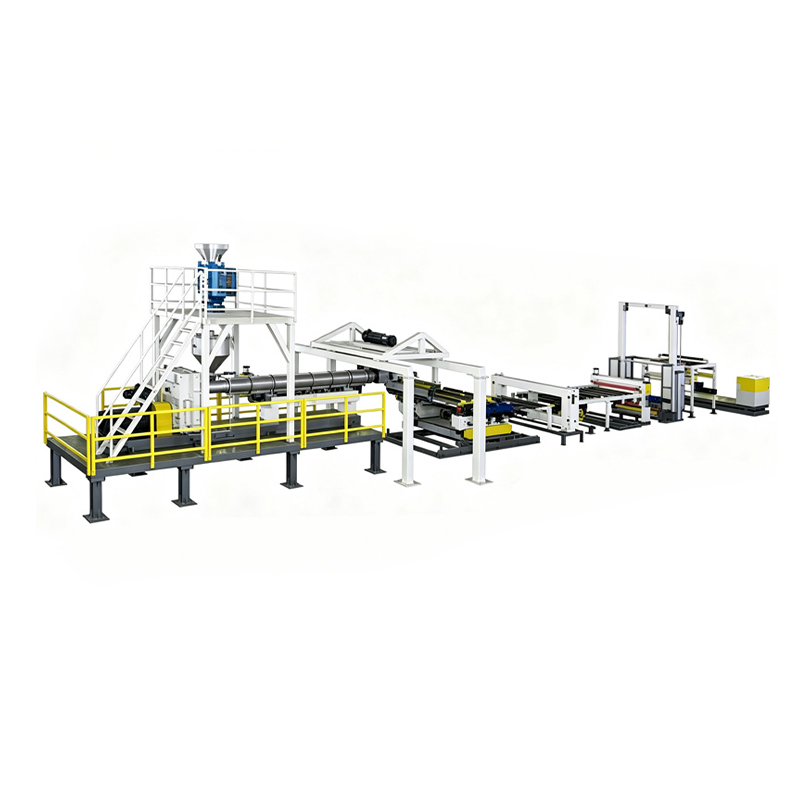
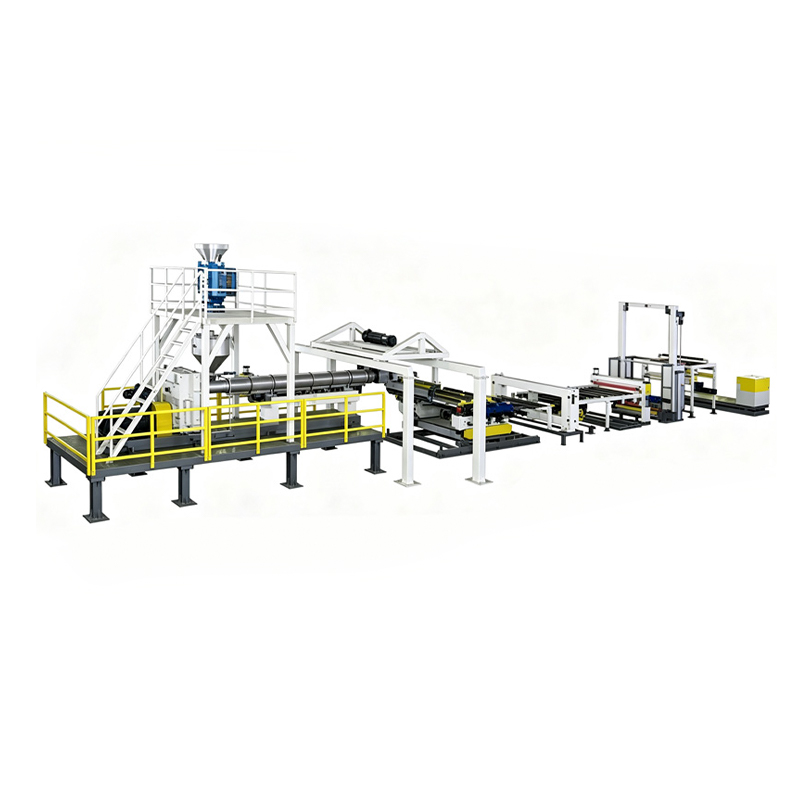
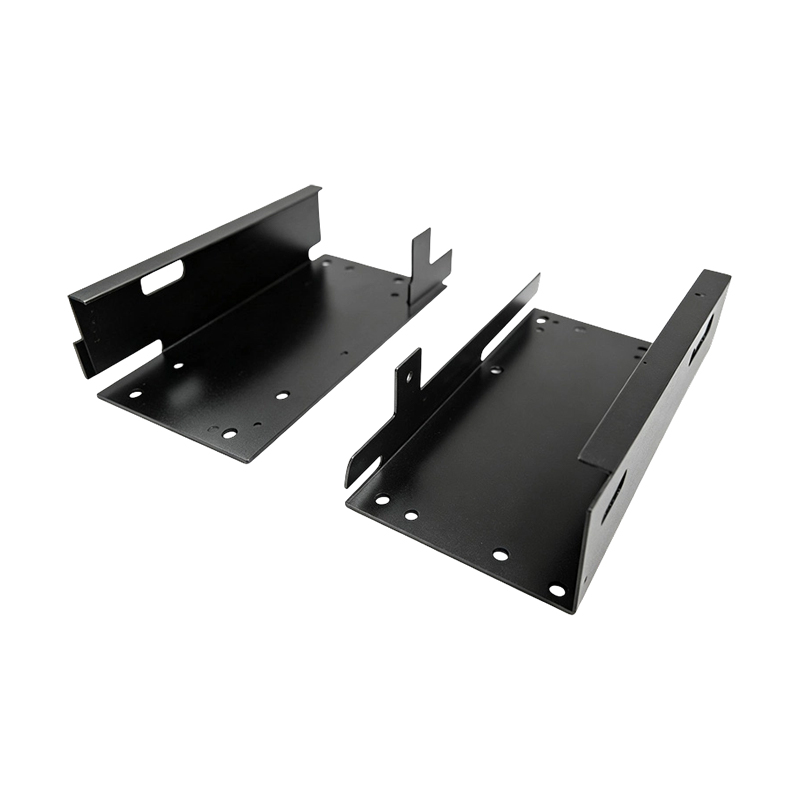
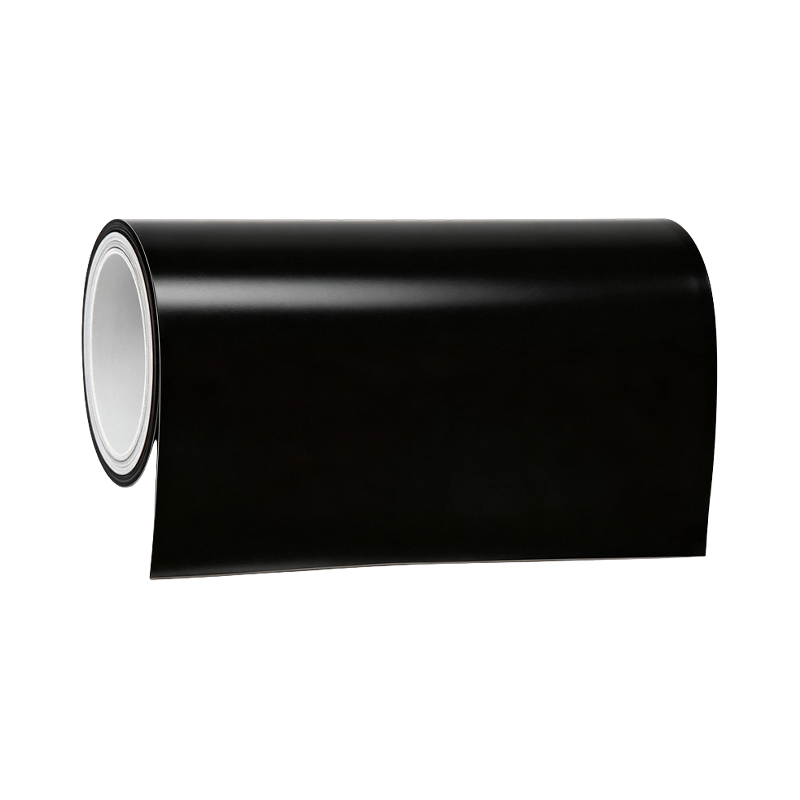
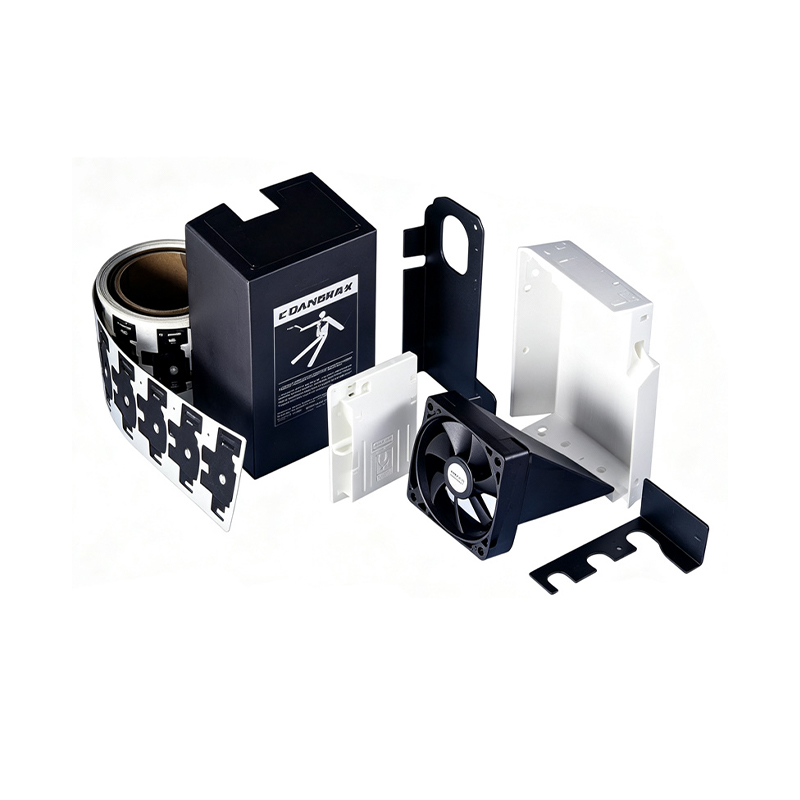
The New Energy Battery Insulation Sheet Extrusion Line is specially designed for producing polycarbonate (PC) battery insulation sheets. The equipment adopts a PC-specific screw, precision three-roll temperature control (±1°C) and servo drive, effectively avoiding defects such as crystal points, black spots and uneven thickness. It is suitable for key components such as EV battery cell spacers and module insulation plates, meeting UL94 V-0 flame retardant requirements.
With the rapid expansion of the global electric vehicle (EV) and energy storage system (ESS) markets, the demand for reliable, flame-retardant and lightweight battery insulation materials is growing exponentially.
The PC insulation sheets (also called flame-retardant PC sheets) produced by these lines are used in several key application areas: EV battery cell spacers and gaskets, battery pack top covers and housings, terminal insulation plates, module separators inside battery packs, and protective layers between cells to prevent short circuits and thermal propagation.
Flame-retardant PC material offers excellent properties: halogen-free, phosphorus-free, environmentally friendly, high temperature resistance, high voltage resistance, low water absorption, and outstanding insulation performance. These characteristics allow PC insulation sheets to gradually replace traditional materials such as PP and PVC for battery housings and top covers, becoming the preferred choice in modern battery designs. Moreover, polycarbonate provides excellent thermal stability and electrical insulation, making it especially suitable for the demanding environment inside EV battery packs.
Technical Specification Comparison
|
Model |
JWS 120 |
JWS 130 |
|
Material |
PC |
PC |
|
Extruder specification |
Ø120/38 |
Ø130/38 |
|
Product width |
1100 mm |
1100 mm |
|
Product thickness |
0.125-0.43 mm |
0.125-0.43 mm |
|
Max. output |
400 kg/h |
500 kg/h |
The JWS 120 and JWS 130 lines can produce sheet with a width of 1100 mm and thickness ranging from 0.125 mm to 0.43 mm, with maximum extrusion outputs of 400 kg/h and 500 kg/h respectively.
The JWS 120 and JWS 130 extrusion lines incorporate several engineering innovations that distinguish them from conventional sheet extrusion equipment.
PC-specific screw design. The line uses a PC-dedicated screw, ensuring complete and homogeneous plasticisation of the raw PC material. This design eliminates common extrusion defects such as crystal points, black spots and white spots on the sheet surface, which are usually caused by poor or excessive plasticisation due to improper screw selection. Given polycarbonate’s high viscosity and temperature sensitivity, the screw configuration is critical for successful processing. PC requires a higher length/diameter (L/D) ratio to improve plasticisation, and the JWS series is designed accordingly.
Precise temperature control. The three-roll calendering system is equipped with independent roll temperature control, maintaining accuracy within ±1°C. This precise control ensures good plasticisation of the PC material and guarantees uniform sheet thickness and a smooth surface across the entire 1100 mm width. Maintaining melt temperature stability is crucial, because even a fluctuation of 2-3°C can cause significant changes in flow rate and sheet thickness.
Special roll heat dissipation design. The rolls adopt a special heat dissipation design that prevents uneven sheet thickness caused by non-uniform heating and cooling of the roll surface, thereby ensuring consistent sheet thickness from edge to edge.
Servo drive transmission. The transmission components use servo control, providing higher precision than conventional drive systems. This ensures stable sheet tension during haul-off, eliminating surface wrinkles and preventing sheet damage.
High level of automation. The entire line is highly automated, reducing labour intensity and significantly improving overall work efficiency. Automated processes include melt pressure monitoring, thickness control, cooling, cutting and stacking.
Corrosion-resistant construction. The screw is made of high-grade 38CrMoAlA alloy steel, ensuring durability and high stress resistance during PC extrusion, thereby extending the equipment’s service life.
Taken together, these advantages enable the JWS series to achieve levels of production efficiency and product quality that make these lines a competitive alternative to imported equipment.
Quality assurance is critical in battery insulation sheet production, because these components directly affect battery safety and reliability. The JWS 120 and JWS 130 lines integrate a multi-stage quality control system that monitors production from raw material preparation to final product verification.
On-line quality monitoring
Melt pressure and temperature control. During extrusion, melt pressure and temperature are continuously monitored by sensors integrated into the barrel and die zones. PC material requires extremely stable temperature conditions, as it begins to decompose above 340°C. Multi-zone PID temperature controllers maintain stability within ±1°C, preventing material degradation that could lead to functional product failure.
On-line thickness measurement. As a key quality verification tool, the on-line thickness gauge provides real-time visibility by continuously displaying the cross-web thickness distribution of the produced sheet. This enables operators to promptly detect and correct thickness deviations, preventing the production of non-conforming product.
Surface quality inspection. Visual inspection systems and manual checks are used to detect surface defects such as bubbles, blisters, roughness or uneven texture.
In-process quality control stages
Dimensional control. Extruded product is regularly measured to verify compliance with dimensional tolerances, including total width (1100 mm ± allowable tolerance) and thickness uniformity (0.125-0.43 mm range with tight cross-web distribution control).
Density and uniformity control. The extruded material maintains uniform distribution of flame-retardant additives and other modifiers throughout the sheet, preventing localised performance deficiencies. The dedicated screw design with an enhanced mixing section ensures adequate dispersion of flame-retardant additives before the homogenisation section.
Mechanical property testing. Finished sheets are subjected to mechanical property tests, including tensile strength, impact resistance (polycarbonate is about 200 times stronger than glass) and flexibility tests, to ensure the material meets battery application requirements.
Thermal and flame-retardant testing. Given the critical nature of battery safety, finished insulation sheets undergo rigorous flame-retardant testing. Flame retardancy is typically verified according to UL94 V-0 or VTM-0 standards, ensuring that the sheet will not propagate flames in the event of battery thermal runaway.
Post-production quality verification
First article inspection (FAI). At the start of each production batch, samples are taken for comprehensive dimensional, appearance and mechanical property testing before full production begins.
Batch sampling. During continuous production, samples are taken at predetermined intervals for laboratory testing to confirm ongoing compliance with customer specifications.
Final quality audit. Before packaging and shipment, finished rolls or cut sheets undergo a final visual inspection and dimensional verification to meet customer requirements.
| Model | JWS120 | JWS130 |
| Material | PC | PC |
| Extruder Specification | φ120/38 | φ130/38 |
| Products Width(mm) | 1100 | 1100 |
| Product Width(mm) | 0.125-0.43 | 0.125-0.43 |
| Capacity(Max.)(kg/h) | 400 | 500 |
Q1: What typical outputs can be achieved with the JWS 120 and JWS 130 lines?
The JWS 120 has a maximum output of 400 kg/h, while the JWS 130 can reach up to 500 kg/h, depending on sheet thickness, material formulation and operating conditions. Both models use a single-screw extruder design, which simplifies maintenance and reduces downtime compared to more complex multi-screw systems.
Q2: What thickness range can these lines produce?
Both lines are designed to produce PC insulation sheets with a thickness ranging from 0.125 mm to 0.43 mm and a width of 1100 mm. Thickness can be adjusted by regulating the die lip and roll gap to meet specific customer requirements.
Q3: Why is polycarbonate (PC) more suitable for battery insulation than other materials?
PC offers several key advantages: excellent impact resistance (about 200 times stronger than glass), lightweight construction, good thermal stability, inherent electrical insulation properties, and the ability to incorporate flame-retardant additives while maintaining mechanical performance. Compared to PP or PVC, flame-retardant PC sheet exhibits superior thermal stability and dimensional stability under high-voltage conditions.
Q4: Can this line produce UL94 V-0 compliant flame-retardant PC sheet?
Yes. The line is specifically designed to process flame-retardant PC formulations that can achieve a UL94 V-0 rating. When using suitable flame-retardant PC raw material and correct process settings, the extruded sheet can meet the stringent flame-retardant standards required for EV battery applications.
Q5: What is the recommended maintenance schedule for the extrusion line?
Regular maintenance should include: daily inspection and cleaning of the die (including splitting, cleaning, and replacing end-face sealing gaskets and heaters); regular verification of roll parallelism to ensure thickness uniformity; lubrication of drive components; and calibration of temperature sensors and thickness gauges. Routine die maintenance is essential to prevent quality issues related to worn adjusting components.
Q6: Can the line be customised for different width or thickness requirements?
The line is factory configured for a width of 1100 mm, but the modular design allows customisation of sheet width (up to 2100 mm) and thickness range (0.2 mm to 6 mm) depending on downstream applications.




Pipe Extrusion Production Line
Plastic Shredder Crusher Machine

Tel: +86-19057068112

E-mail: [email protected]

Company Address
No. 128 Qingfeng Road, Xieqiao Town, Haining City, Jiaxing City, Zhejiang Province

19057068112

 English
 русский