
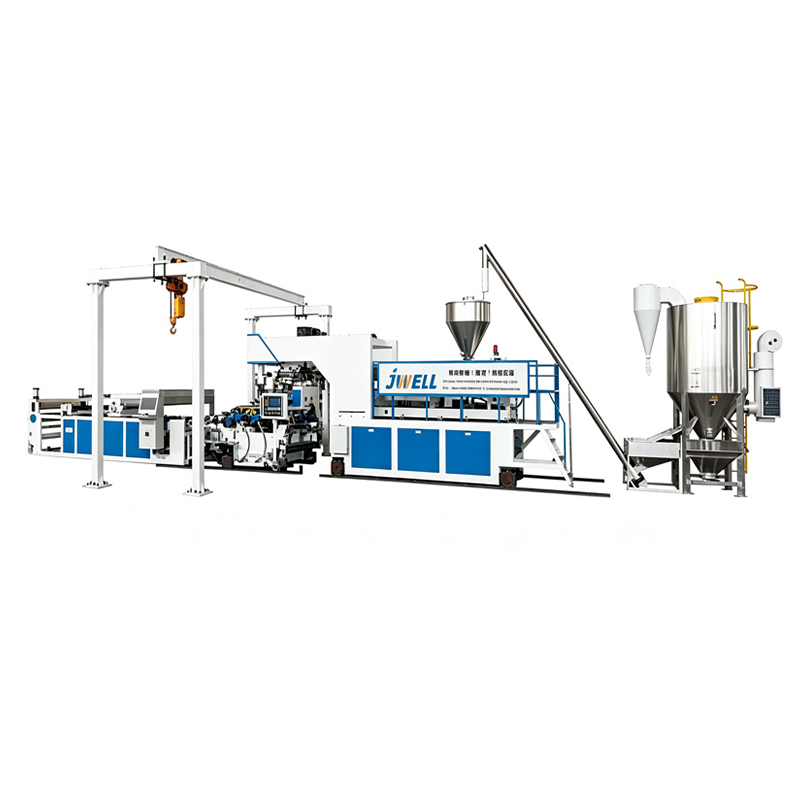
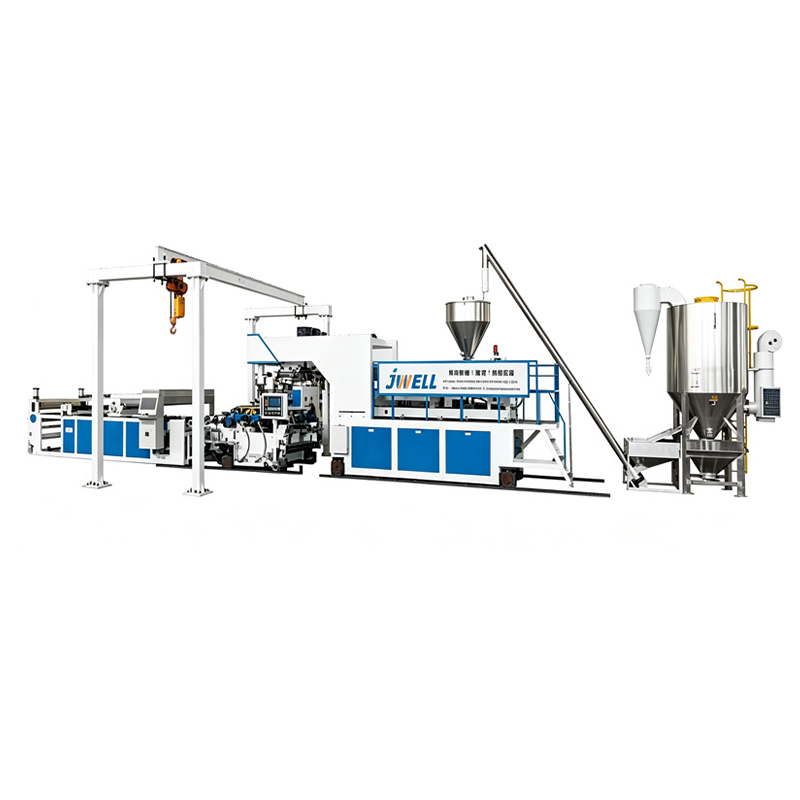
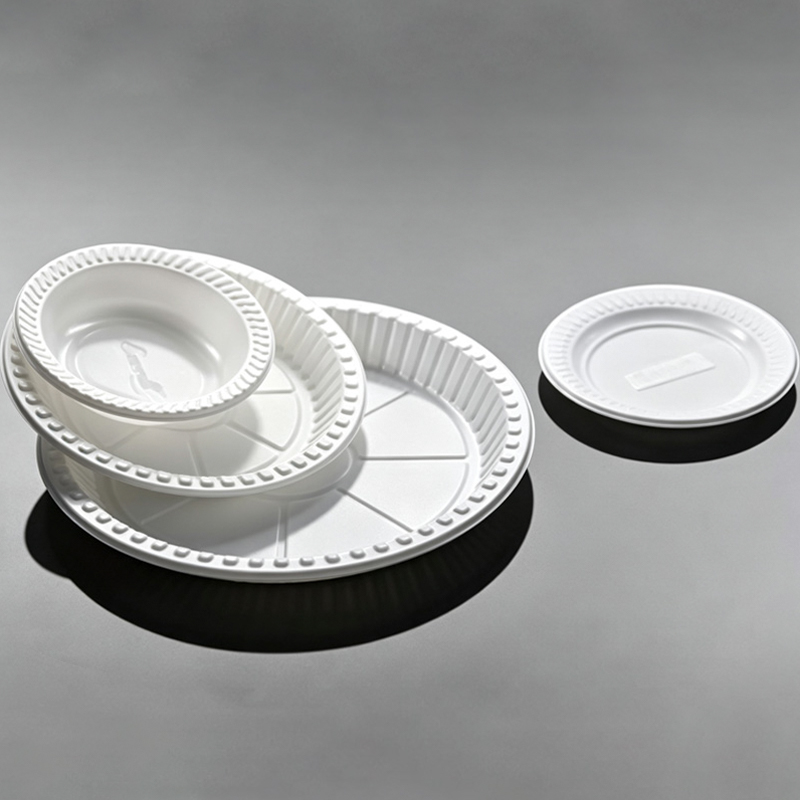
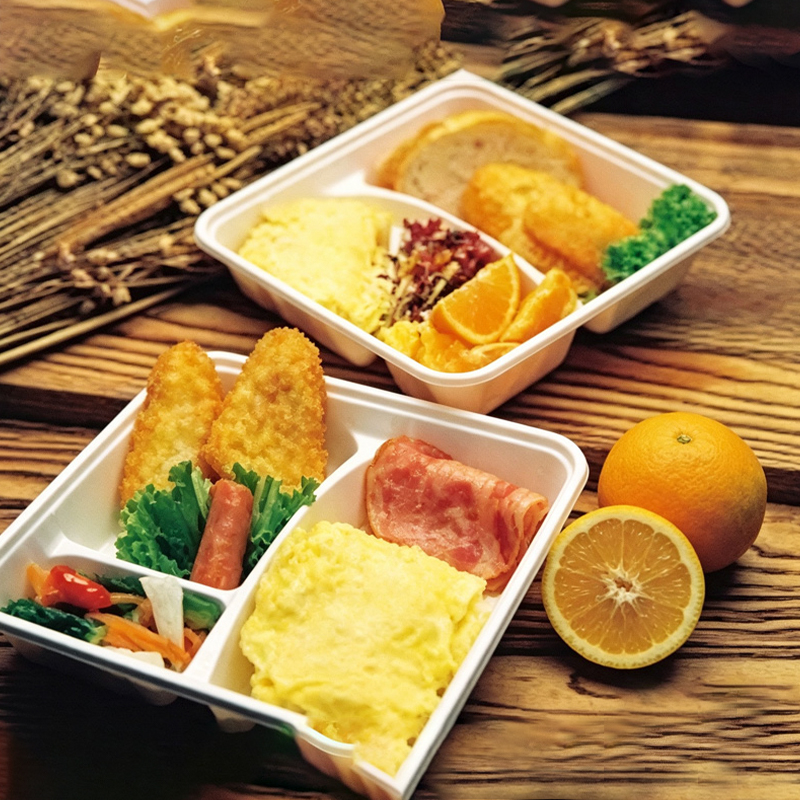
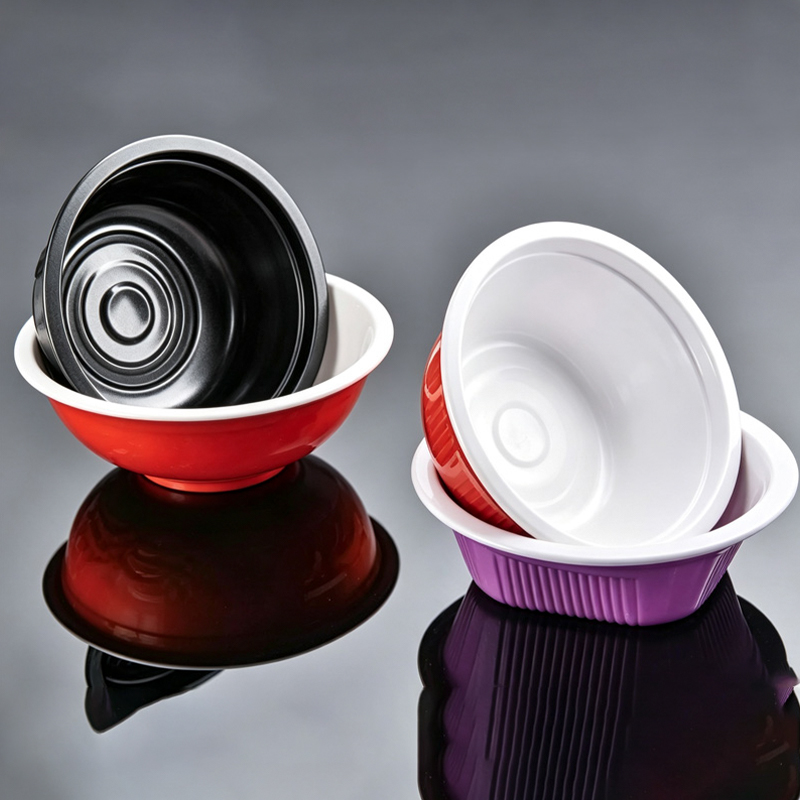
The JW series PP/PS sheet extrusion lines (models: JW5120/65-1000, JW5130/75-1000, JW5150/90-1000, JW985/65-1000, JW590-H, JW5100-H) are designed to produce high-quality rigid sheets with a thickness of 0.2–2.0 mm and a standard width of 800 mm. These lines are widely used in the thermoformed packaging industry and can process polypropylene (PP) and polystyrene (PS) materials.
Thanks to a wide output range (350–850 kg/h) and thickness flexibility, these lines serve various packaging sectors:
Food Packaging Containers
Case study: A Thai food packaging manufacturer uses the JW5130/75-1000 (output 500–650 kg/h) to produce 0.4 mm PP sheets for microwave lunch boxes. The line runs 22 hours per day, maintaining thickness tolerance consistently within ±0.01 mm.
Disposable Cups & Lids
Case study: A Mexican cup producer selected the JW5150/90-1000 (700–850 kg/h) for high-output PS sheet production. The 800 mm width perfectly matches the layout of its cup thermoforming machines, reducing edge trim scrap by 12%.
Electronic Trays (Anti-Static)
Case study: A Chinese electronic component supplier uses the JW590-H (400–500 kg/h) to produce 0.8 mm anti-static PS trays for IC shipping. The line’s precise melt temperature control prevents degradation of the conductive additives.
General Thermoforming Sheets
The JW5100-H (600–700 kg/h) is a popular choice for dairy cup and yogurt cup production, while the JW985/65-1000 (550–700 kg/h) offers a balance between the smaller JW5120 and larger JW5130, suitable for mid-sized factories.
|
Advantage |
Technical Support |
Real Benefit |
|
Wide output range |
350–850 kg/h across models |
One line handles both small and large orders without equipment changeover |
|
Precise thickness control |
0.2–2.0 mm adjustable; automatic thickness control system |
Material savings – e.g., reducing over-thickness by 0.01 mm on 1.0 mm sheet saves ~8 tons of raw material per 8000 operating hours per year |
|
Dedicated extruder combinations |
JW5120+JW565, JW5130+JW575, etc. |
Screw designs optimized for PP or PS, ensuring higher plasticizing capacity and lower specific energy consumption |
|
800 mm standard width |
Compatible with most global thermoforming machines |
No slitting or custom mold adjustments needed – reduces secondary operations |
|
High-output H-series models |
JW590-H / JW5100-H |
Up to 700 kg/h with lower back pressure; suitable for 24/7 continuous operation |
Real Customer Feedback
A Turkish packaging company replaced two old lines with one JW5150/90-1000, increasing daily PS sheet output from 12 tons to 16.5 tons while reducing energy consumption by 18% – thanks to the efficient screw and barrel design.
Each JW extrusion line undergoes rigorous in-line and post-production testing to ensure consistent sheet quality and machine reliability.
A. Incoming Material & Melt Quality
Each batch of PP/PS resin is tested for MFI (Melt Flow Index) before feeding.
Screen pack condition is monitored via melt pressure sensor – alarms operator when back pressure rises >10%.
B. During Extrusion (Real-Time)
|
Parameter |
Target |
Monitoring Method |
|
Thickness profile |
±3% of setpoint |
Online beta gauge (cross-web scanning) |
|
Width shrinkage |
≤1.5% |
Laser edge sensors |
|
Surface defects (gels, black specks) |
<0.5 per m² |
Automatic visual inspection system |
|
Mechanical properties (tensile, elongation) |
Batch sampling every 4 hours |
Universal testing machine (ASTM D882) |
C. Post-Production Testing (Finished Rolls)
Dimensional stability test: Samples placed in 50°C oven for 24 hours – acceptable shrinkage <2%.
Heat sealability test (for PS trays): Seal strength ≥25 N/15mm at 130°C.
Case – Quality Verification
A Polish rigid film processor requested a complete FAT (Factory Acceptance Test) for its JW5100-H line. A trial run produced 5 tons of 0.5 mm PS sheet. Third-party lab results showed:
Thickness tolerance: +0.008 / -0.006 mm
Haze (PS): 2.1% (standard <3%)
Output stability: 645–658 kg/h over 8 hours
All passed the customer’s strict requirements for medical blister packaging.
| Model | JWS120/65-1000 | JWS130/75-1000 | JWS150/90-1000 | JWP85/65-1000 | JwS90-H(High-yield) | JwS100-H(High-yield) |
| Material | PP、PS | |||||
| Extruder Specification | JWS120+JWS65 | JWS130+JWS75 | JWS150+JWS75 | JWP85+JWS65 | JWS90 | JWS100 |
| Products Width(mm) | 800 | 800 | 800 | 800 | 800 | 800 |
| Products Thickness(mm) | 0.2-2.0 | 0.2-2.0 | 0.2-2.0 | 0.2-2.0 | 0.2-2.0 | 0.2-2.0 |
| Capacity(Max.)(kg/h) | 350-450 | 500-650 | 700-850 | 550-700 | 400-500 | 600-700 |
Q1: Can the same line process both PP and PS?
A: Yes. All JW models can run both PP and PS. However, switching materials requires a screw purge and temperature profile adjustment (PP: 190–230°C; PS: 170–210°C). The JW590-H and JW5100-H are equipped with a quick-change screen pack system, reducing changeover time to less than 30 minutes.
Q2: What is the actual output for 0.3 mm PP sheet on the JW5130/75-1000?
A: Based on customer data: approximately 480–520 kg/h. The nominal range of 500–650 kg/h is for 0.5–1.0 mm sheets. Thinner sheets yield slightly lower output due to line speed limitations (max 35 m/min at 800 mm width). Our engineering team can provide specific output curves for your target thickness.
Q3: How can I avoid thickness stripes (cross-web thickness variation)?
A: Thickness stripes typically come from die lip contamination or non-uniform temperature distribution. We recommend:
Cleaning the die lips daily with a copper scraper.
Using an automatic die bolt heating system (optional on JW5150 and JW985 models) to fine-tune local thickness.
Ensuring the melt pump (integrated on JW5130 and above) runs at a constant speed – any speed fluctuation indicates a feeding issue.
Q4: What is the difference between standard models and “-H” high-output models?
A: The JW590-H and JW5100-H feature:
Larger L/D ratio (36:1 vs. standard 33:1)
Grooved feed section for higher conveying efficiency
Intensified cooling barrel – allows 20–30% higher screw speeds without overheating.
Result: up to 700 kg/h vs. ~450 kg/h for a similarly sized standard line.
Q5: My factory has limited floor space. Which model is most compact?
A: The JW5120/65-1000 has the smallest footprint (approx. 18 m × 2.5 m including winder). It still delivers 350–450 kg/h – sufficient for small to medium packaging producers. The JW985/65-1000 is also relatively compact but offers higher output (550–700 kg/h) with a slightly longer cooling section.
Q6: What is the typical energy consumption per ton of sheet?
A: On-site data from a Vietnamese customer running the JW5150/90-1000 on 0.6 mm PS:
Total installed power: 280 kW
Actual consumption: 0.28–0.32 kWh per kg of sheet (including extruder, pull rolls, winder, and heating/cooling).
For PP, energy consumption is about 5% higher due to higher melt temperatures.




Pipe Extrusion Production Line
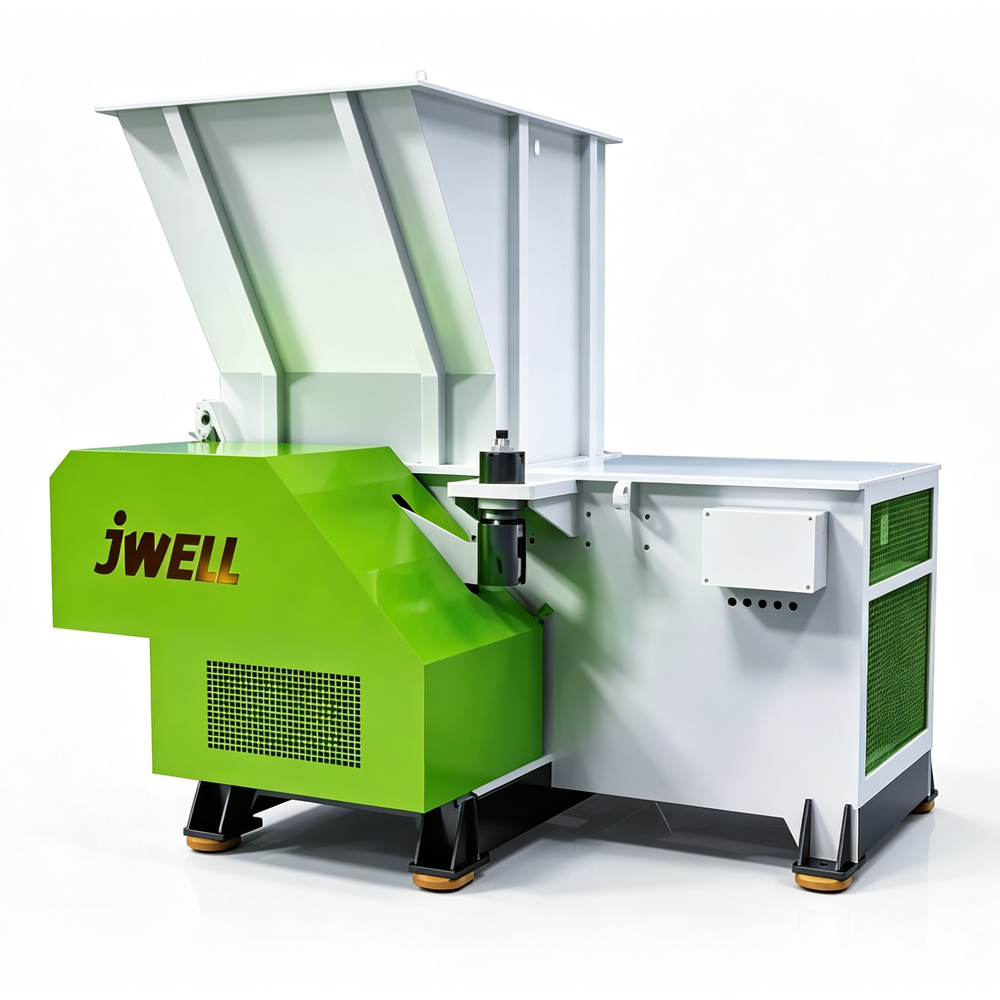
Plastic Shredder Crusher Machine

Tel: +86-19057068112

E-mail: [email protected]

Company Address
No. 128 Qingfeng Road, Xieqiao Town, Haining City, Jiaxing City, Zhejiang Province

19057068112

 English
 русский