
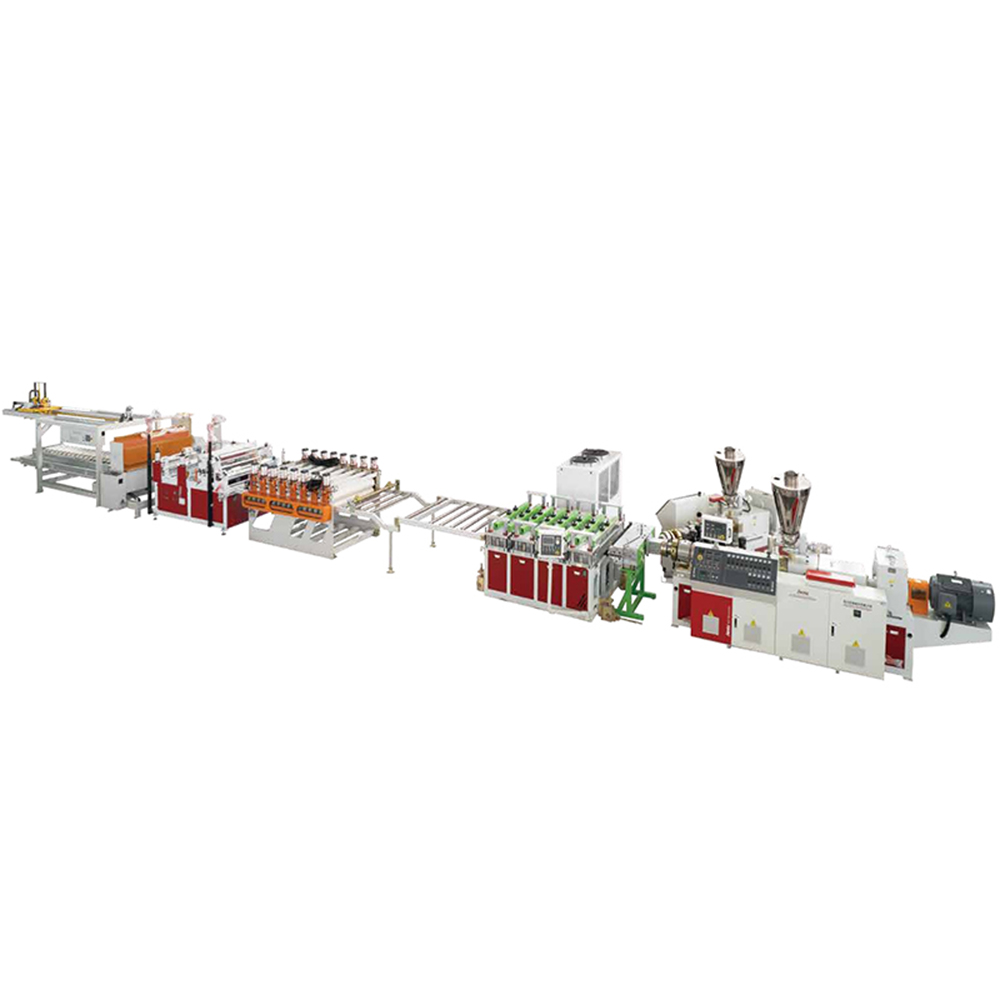
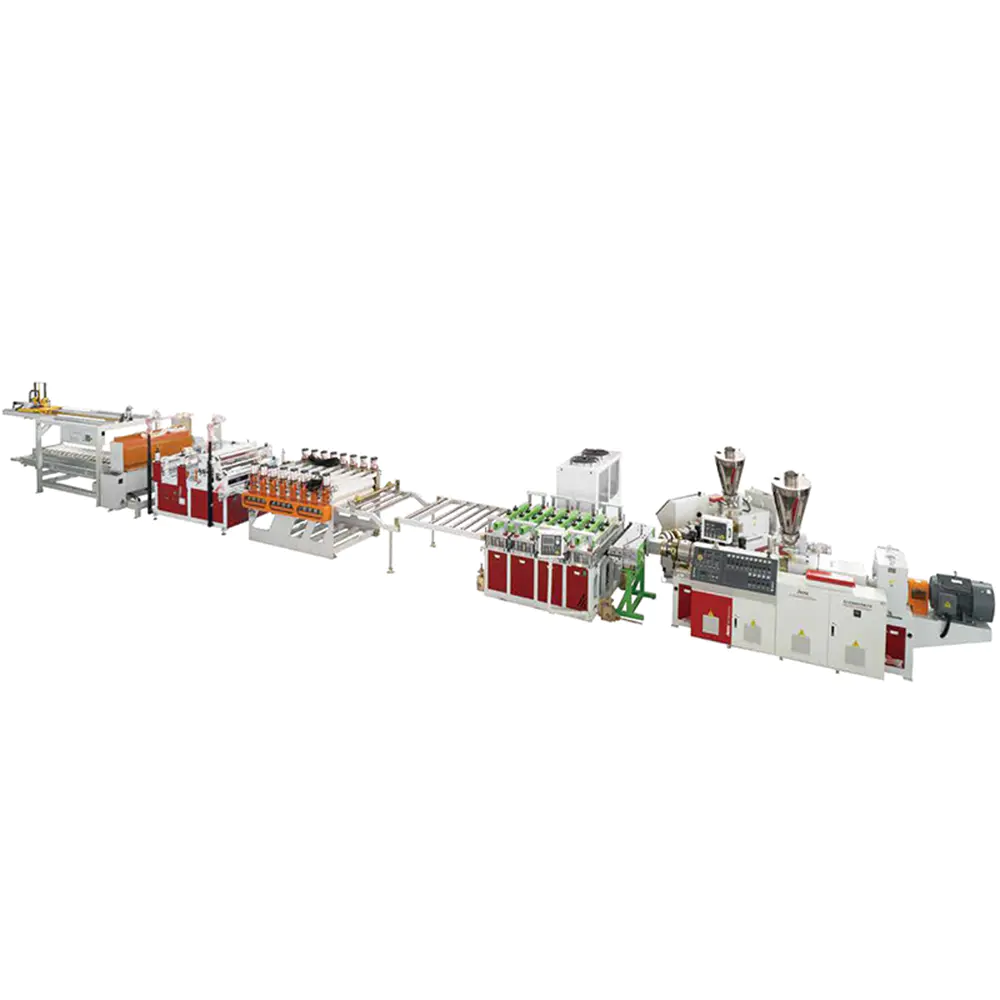
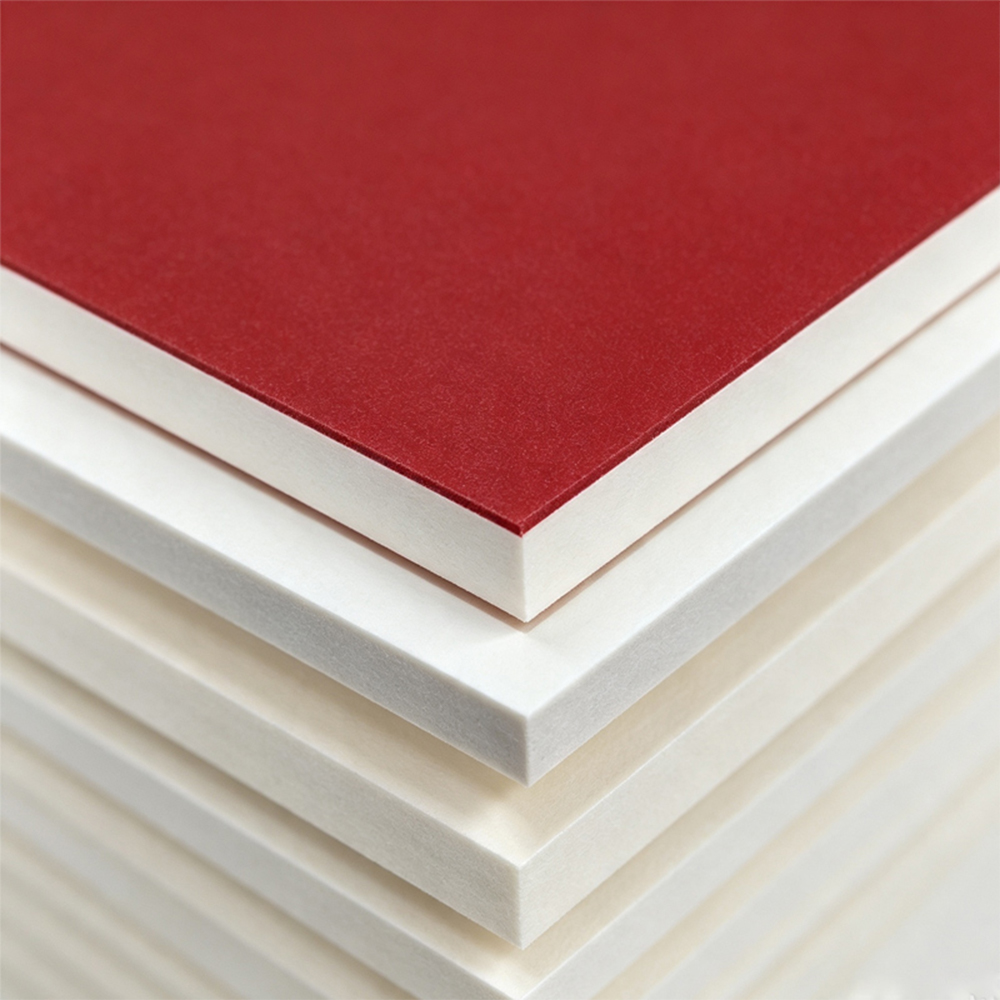

The PVC celuka WPC foam board extrusion line is the core equipment for manufacturers producing lightweight, high-strength composite panels. Our advanced lines – available in skin foam and co-extrusion foam configurations – deliver unmatched efficiency and product quality. With precise extrusion control and high throughput, these lines are designed for modern construction, furniture, and automotive industries.
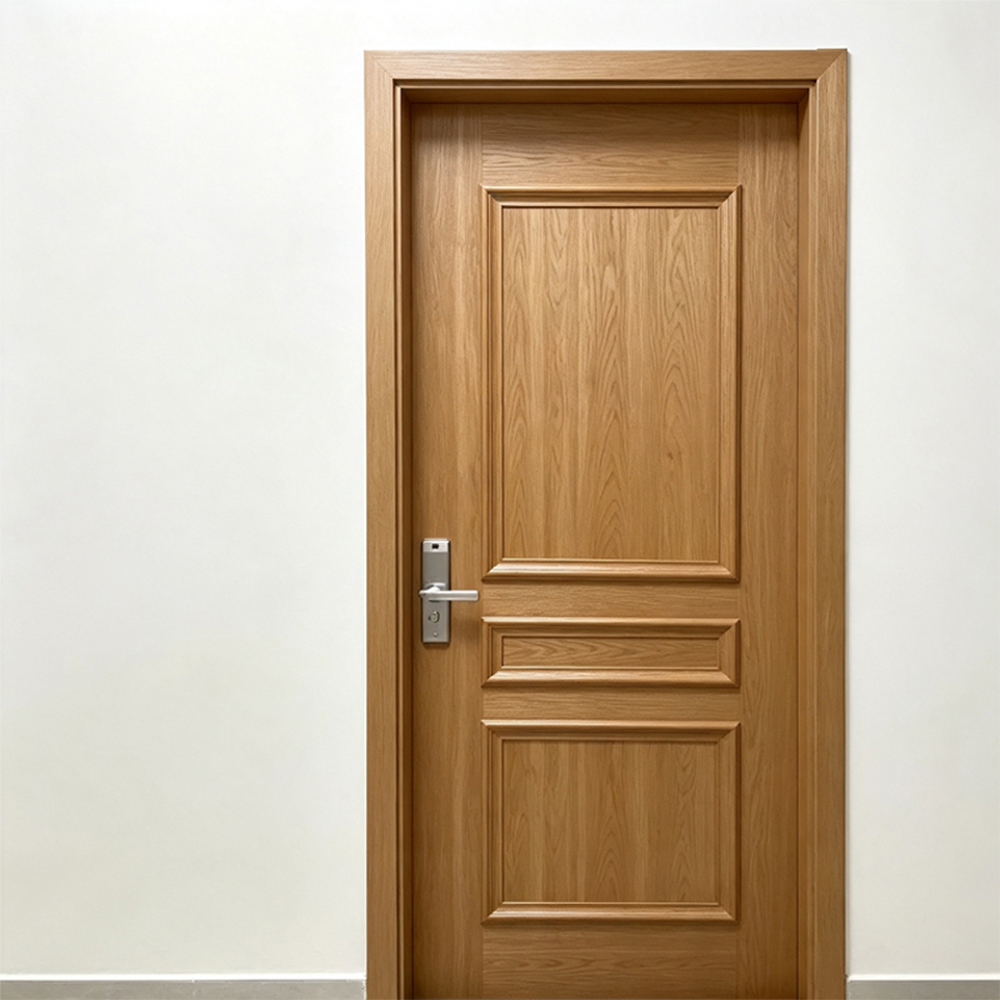
Furniture & Cabinetry
Applications: Bathroom cabinets, kitchen cabinets, wardrobe doors.
Why WPC foam board? Waterproof, termite-proof, easy to process.
Real case: A Malaysian furniture manufacturer switched to our SJZ80/156 skin foam line (300–400 kg/h) to produce 18mm thick, 1400mm wide boards. They reduced material weight by 35% compared to solid PVC while maintaining screw retention. Monthly output increased to 220 tons.
Construction & Decoration
Applications: Wall panels, soffits, decorative profiles, outdoor flooring.
Why co-extrusion? The co-extruded cap layer provides UV resistance and scratch protection.
Real case: A Chilean building supplier uses our co-extrusion line (SJZ65/132 + SJZ80/156) to produce 1600mm wide, 8mm thick wall panels. At up to 500 kg/h, they supply 40,000 m² per month. The co-extruded layer ensures color stability for over 5 years under intense sunlight.
Signage & Advertising
Applications: Digital printing substrates, foam signs.
Why 3–30mm thickness range? Flexibility – from 3mm thin signs to 30mm thick 3D letters.
Real case: A Polish signage company uses our skin foam line at 350 kg/h to produce 3–6mm boards, achieving perfectly flat surfaces for high-resolution UV printing.
|
Parameter |
Skin Foam Line (SJZ80/156) |
Co-extrusion Line (65/132+80/156) |
|
Width |
1220–1600 mm |
1220–1600 mm |
|
Thickness |
3–30 mm |
3–30 mm |
|
Max output |
300–400 kg/h |
400–500 kg/h |
|
Main motor |
75 kW |
37 kW + 75 kW |
Key Advantages
A. High output, low consumption
The SJZ80/156 conical twin-screw extruder provides high torque at low screw speeds. Energy savings reach 20% compared to single-screw machines. At 400 kg/h output, actual power consumption at full load is only about 65 kW.
B. Wide thickness and width range
From 3mm ultra-thin boards to 30mm rigid boards, widths up to 1600mm – all on one line. This eliminates the need for multiple machines.
C. Superior surface via co-extrusion
The co-extrusion model uses an auxiliary SJZ65/132 extruder (37 kW) to apply a pure PVC or ASA cap layer. This layer prevents water absorption and UV degradation – critical for outdoor products.
D. Excellent foam stability
Our screw design and cooling system control melt temperature within ±1.5°C. The result: closed-cell foam structure with density as low as 0.45 g/cm³ while maintaining surface hardness (Shore D > 65).
We implement a 7-step quality control protocol for each line.
Raw material inspection
Test: Particle size of PVC resin, moisture content of wood fiber or calcium carbonate (<0.5%).
Equipment: Moisture analyzer (0.01% accuracy) and vibrating screen.
Acceptance criteria: Any batch with moisture >0.6% is rejected to prevent surface bubbles.
In-process monitoring
|
Parameter |
Tolerance |
Monitoring frequency |
|
Melt temperature |
±1.5°C |
Continuous (thermocouple) |
|
Screw speed |
±0.5 rpm |
Every 5 minutes |
|
Board thickness |
±0.1 mm |
Laser thickness gauge, real-time feedback |
Physical & mechanical testing (per shift)
Density (ASTM D792): target 0.5–0.7 g/cm³. Take 3 samples from head, middle, and tail of each coil.
Surface hardness (Shore D): minimum 62 for skin foam line; minimum 68 for co-extruded cap layer.
Water absorption (24h immersion): <1.5% by weight. Co-extruded boards typically achieve <0.8%.
Screw retention (ASTM D1761): >800 N at 15mm thickness.
Final visual inspection
Illuminated inspection table (1000 lux). Reject boards with:
Any bubble >1mm in diameter
Scratch longer than 50mm
Color difference ΔE >1.5 (measured by colorimeter)
Real QC case results
A Vietnamese customer producing 1220mm×2440mm boards reported: after 300 continuous hours on a co-extrusion line, thickness variation remained within ±0.08mm (better than the guaranteed ±0.1mm). Their scrap rate dropped from 4.2% to 1.1% within one month.
| Model | Skinning foaming board extrusion line | Co-extrusion foamed board extrusion line |
| Products Width(mm) | 1220-1600 | 1220-1600 |
| Products Thickness(mm) | 3-30 | 3-30 |
| Extruder Specification | SJZ80/156 | SJZ65/132, SJZ80/156 |
| Capacity (Max.)(Kg/h) | 300-400 | 400-500 |
| Main Motor Power(Kw) | 75 | 37/75 |
Q1: Why do bubbles still appear on my board surface even when using the SJZ80/156 line?
A: Bubbles usually come from:
Excessive moisture in calcium carbonate or wood filler (must be <0.5%).
Too high screw speed causing melt fracture. Reduce speed until output drops to 85% of maximum, then increase gradually.
Insufficient venting: Check the vacuum vent (pressure should be below -0.08 MPa). Clean the vent every 4 hours.
Real solution: A Turkish customer encountered bubble lines at 380 kg/h. We advised drying filler to 0.3% moisture and lowering melt temperature from 185°C to 178°C. Bubbles disappeared within 2 hours.
Q2: How to achieve an ultra-smooth surface on thick boards (25–30mm)?
A: For boards thicker than 20mm, use the co-extrusion line even if a cap layer is not required. The auxiliary extruder can feed the same material as the main extruder, effectively increasing plasticizing capacity. This reduces melt pressure fluctuations. Set the first section of the cooling calibrator to 45°C, not lower – too fast cooling causes rough surfaces.
Q3: What is the actual energy cost per ton?
A: For the skin foam line (75 kW main motor plus downstream equipment, total ~110 kW). At average output 350 kg/h:
Energy per ton = 110 kWh / 0.35 tons = 314 kWh/ton.
Assuming electricity cost $0.12/kWh → $37.7 per ton of board. Compared to single-screw lines (typically 400–450 kWh/ton) → saving 22%.
Q4: How often should I replace the screw and barrel?
A: For WPC materials (with wood fiber/calcium carbonate), abrasive wear is significant. Using our nitrided steel screw (hardness 950–1050 HV):
Typical life for skin foam line: 8,000–10,000 operating hours.
For co-extrusion: main SJZ80/156 works harder (higher back pressure) → replace after 7,000 hours. Auxiliary SJZ65/132 lasts >12,000 hours.
Signs of wear: Output drops below 320 kg/h at same screw speed → measure screw flight clearance (>0.5mm requires replacement).
Q5: Can I use 100% recycled PVC on this line?
A: Yes, but we recommend limiting recycled content to 30% for skin foam lines and 20% for co-extruded boards. Exceeding that leads to:
Reduced melt strength → board sag between calibrating rolls.
Contaminants causing die lines (appearing as dark streaks).
Recommendation: Install a melt filter (150–200 mesh) before the die. A Brazilian customer ran 40% post-industrial recycled PVC on a co-extrusion line after adding an automatic screen changer – stable output at 430 kg/h.
Q6: How to solve width inconsistency (shrinking from 1600mm to 1580mm)?
A: Width shrinkage is caused by improper cooling or excessive pull.
Check haul-off speed: should be 0.5–1% slower than the line speed at the calibrator exit.
Raise water temperature in the first cooling bath from 15°C to 25°C. Slowing cooling reduces residual stress.
For boards thicker than 20mm, add a second cooling calibrator (3m long) immediately after the first one.




Pipe Extrusion Production Line
Plastic Shredder Crusher Machine

Tel: +86-19057068112

E-mail: [email protected]

Company Address
No. 128 Qingfeng Road, Xieqiao Town, Haining City, Jiaxing City, Zhejiang Province

19057068112

 English
 русский