
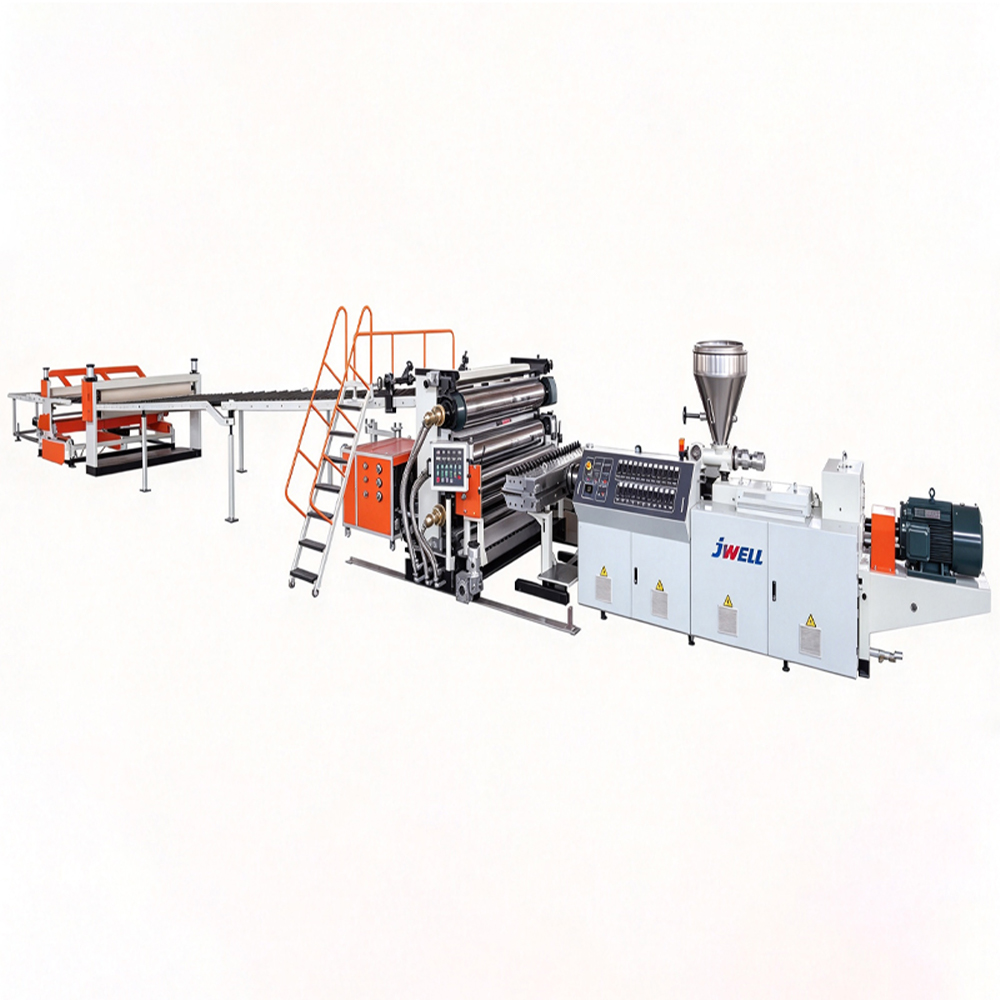
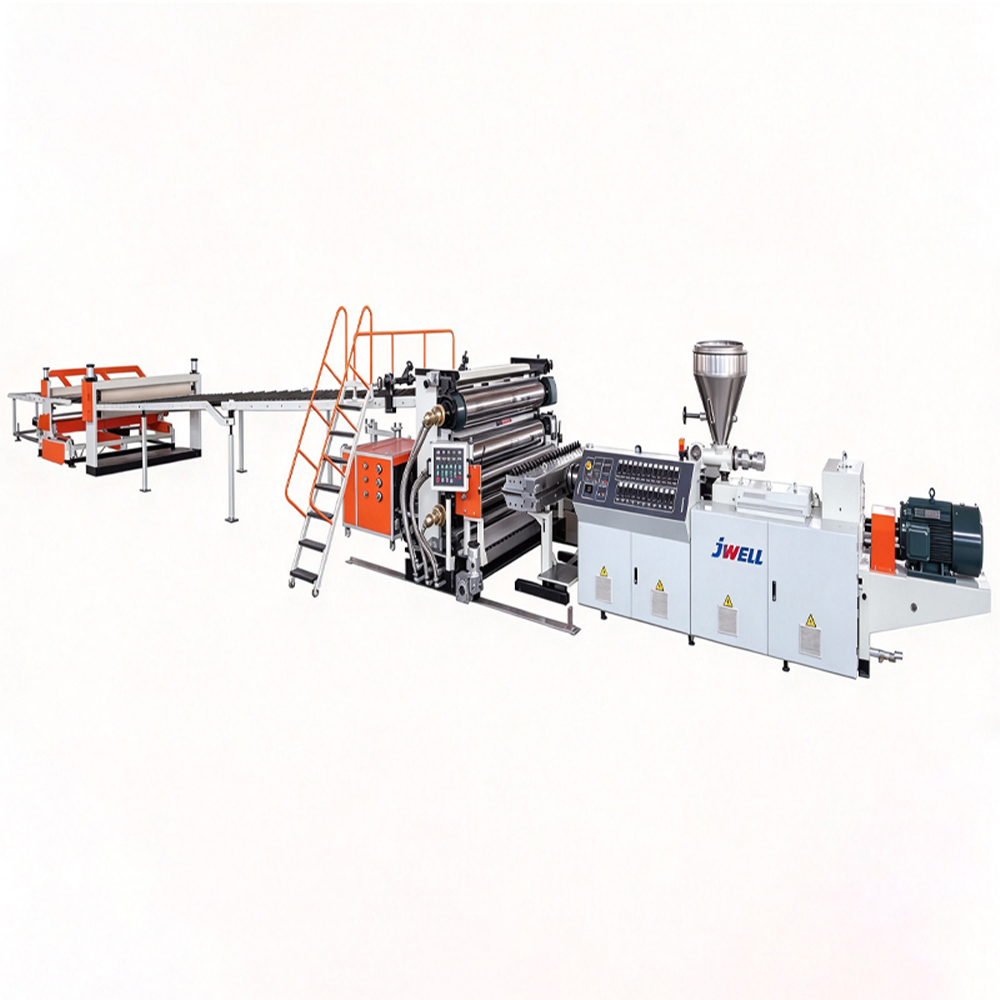
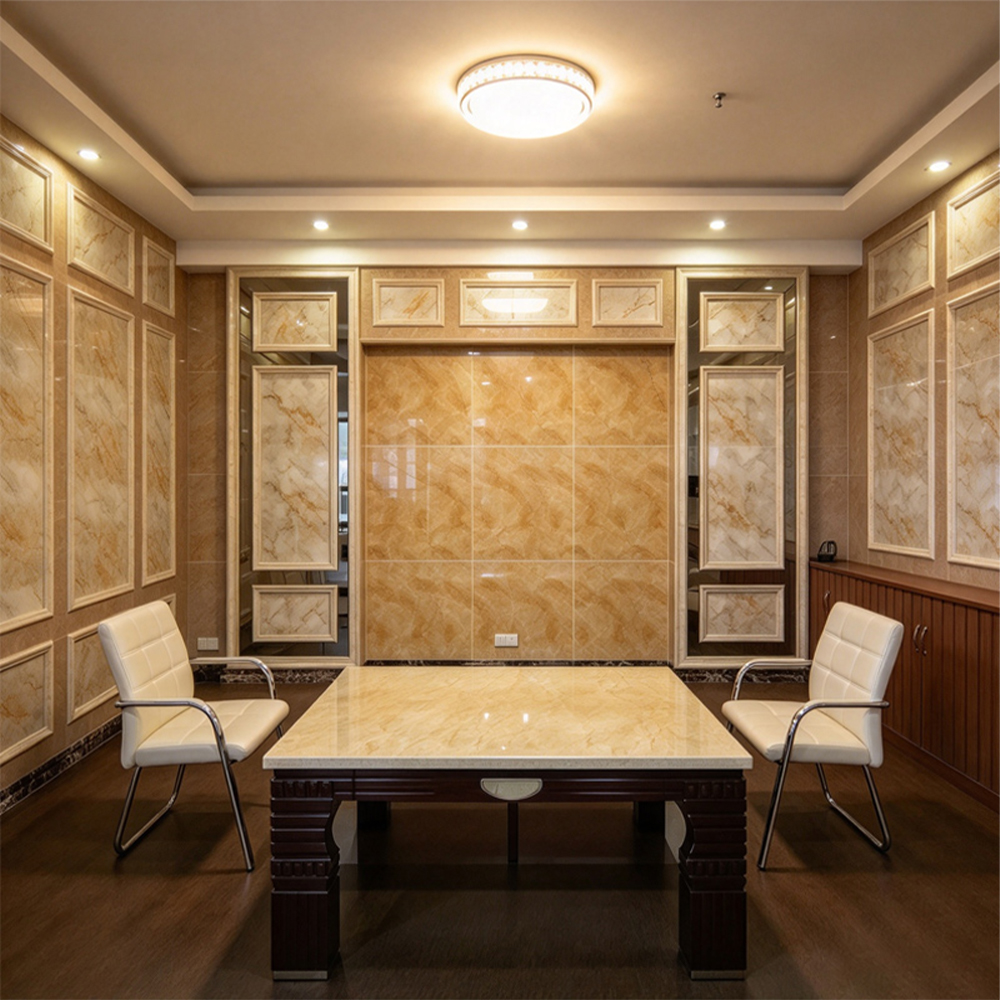
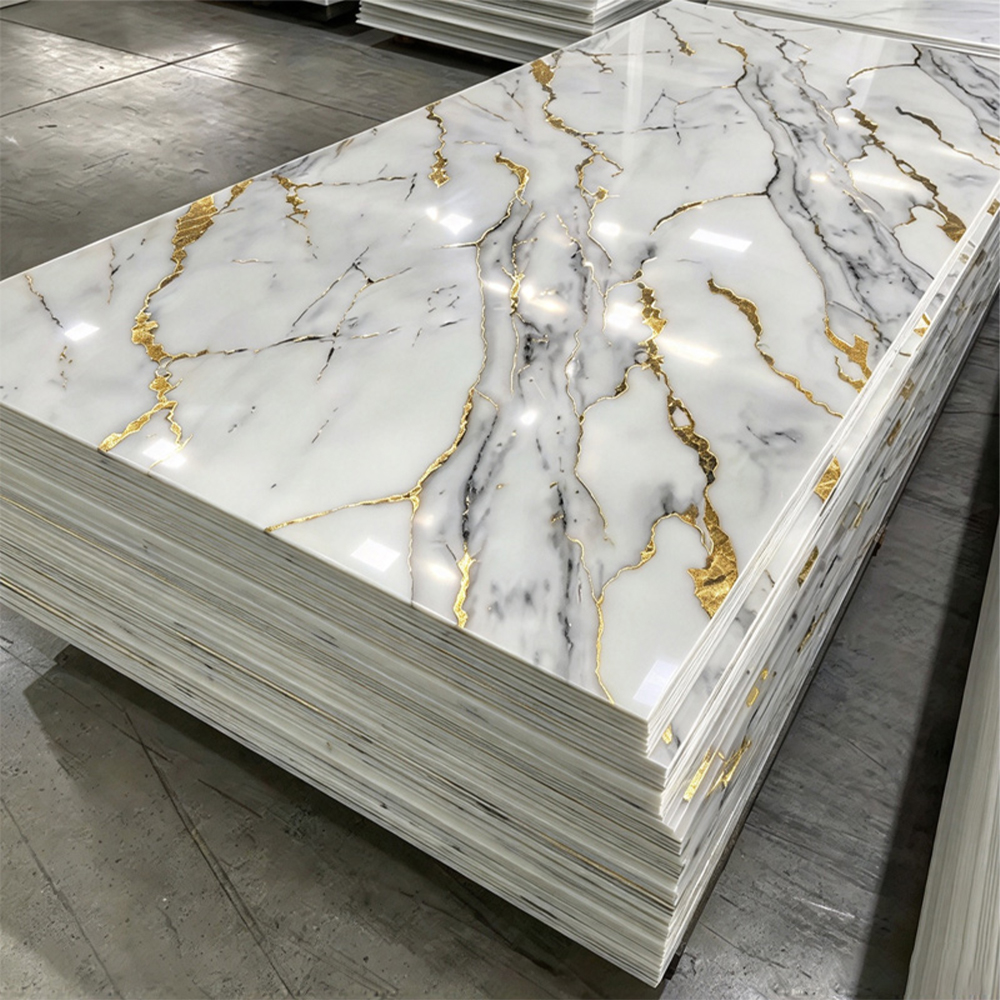
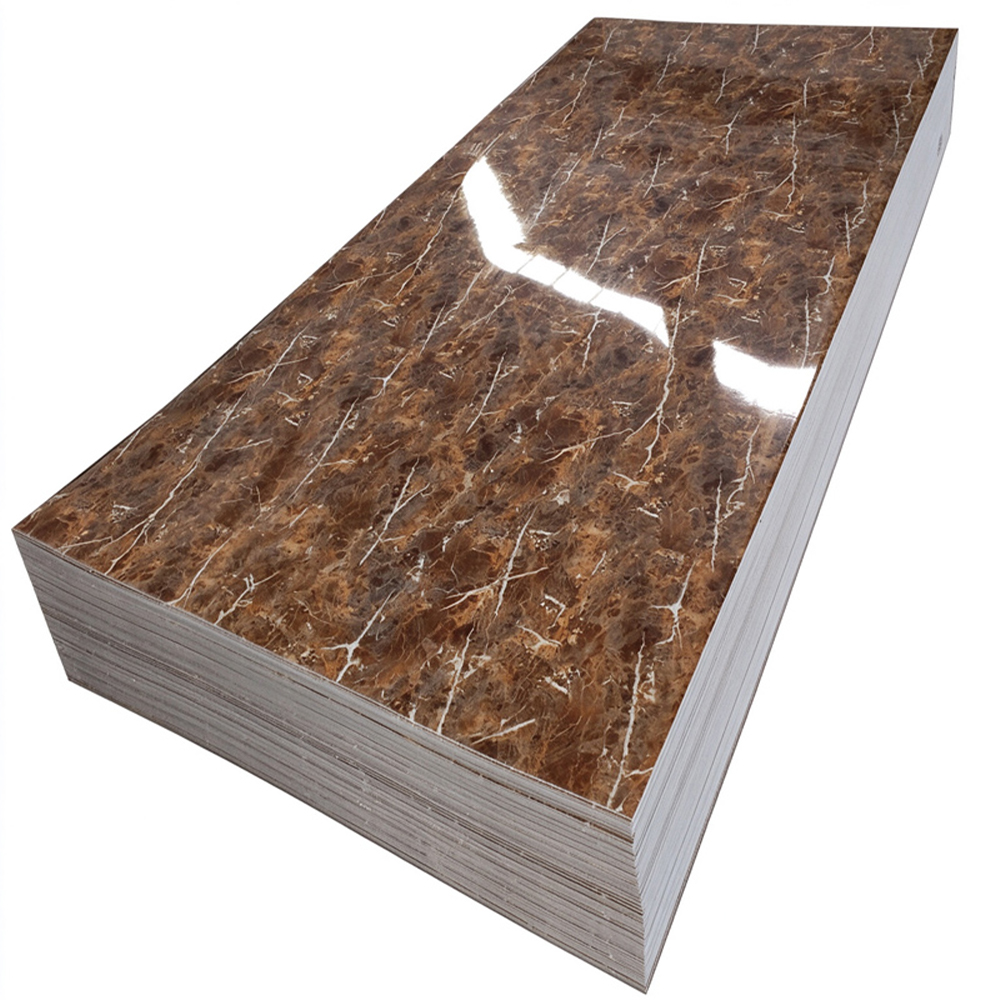
Jwell's PVC free-foaming / marble-like sheet extrusion line is specifically designed for producing high-performance decorative sheets, featuring excellent surface finish and a uniform cell structure.
Thanks to its wide width options and adjustable thickness range, this production line is widely used for:
Furniture Panels – A Vietnamese customer uses the 1220mm width (10-15mm thickness) to produce lightweight, water-resistant cabinet back panels, replacing traditional wood.
Decorative Marble-Like Sheets – A Turkish manufacturer uses the 2050mm model (3-6mm thickness) to produce high-gloss, stone-pattern wall cladding for hotel lobbies and commercial interiors.
Advertising & Sign Boards – An Italian sign maker produces 1560mm wide, 5-8mm thick foamed boards with a smooth, printable surface for outdoor billboards.
Construction Formwork – Middle Eastern contractors use 18mm thick sheets (1220mm width) as reusable concrete formwork due to its corrosion resistance and light weight.
High Output & Low Energy Consumption – The SJZ80/156 conical twin-screw extruder achieves an output of 350-450 kg/h with only 75 kW main motor power. Compared to parallel twin-screw designs, energy consumption per kg is reduced by approximately 18-22%, as verified by a Polish customer who produces 8-10 tons per shift.
Wide Product Coverage – One production line handles widths from 1220mm to 2050mm and thicknesses from 1mm to 18mm. This eliminates the need for multiple machines – a Chilean plant replaced three old lines with one of our lines, saving 40% of floor space.
Superior Marble-Like Effect – High torque (achieved by the 75kW motor) combined with precise temperature control ensures perfect dispersion of color masterbatch and marble-effect additives. Our customer in Indonesia produces realistic Carrara white patterns without post-printing.
Stable Foam Cell Structure – The conical screw design ensures gentle melt mixing, which is critical for PVC free-foaming. The result is a fine, uniform cell structure – density can be controlled between 0.45 and 0.70 g/cm³ depending on output and cooling settings.
Each production batch follows a strict protocol to guarantee sheet flatness, mechanical strength, and visual consistency.
|
Stage |
Process |
Equipment / Standard |
|
Raw Material Check |
Test PVC resin K-value, moisture content, and calcium carbonate particle size. |
Moisture analyzer, sieve shaker |
|
Extrusion Monitoring |
Real-time recording of melt pressure, temperature (170-190°C), and screw speed. |
Siemens PLC with alarm limits |
|
Online Thickness & Width |
Continuous laser or ultrasonic scanning across full 2050mm width. Accuracy ±0.05mm. |
Online thickness gauge |
|
Cooling & Calibration |
Vacuum calibration table ensures flatness ≤1.5mm/m. |
Calibration table with 8 independent vacuum zones |
|
Surface Defect Detection |
High-resolution camera detects bubbles, scratches, or uneven marble patterns. |
CCD vision system (max line speed 2.5 m/min) |
|
Mechanical Property Testing |
Tensile strength, impact strength (Izod), and Shore D hardness. Sampled every 500m. |
Universal tester, durometer |
|
Final Packaging Inspection |
Trim edges, apply protective film, verify stack alignment. |
Manual + automatic counter |
Real case: A Brazilian flooring manufacturer adopted our testing process to reject sheets with density deviation >0.03 g/cm³. Their scrap rate dropped from 5.2% to 1.8% within three months.
| Model | |||
| Products width (mm) | 1220 | 1560 | 2050 |
| Products thickness (mm) | 1-18 | 1-12 | 1-10 |
| Extruder specification | SJZ80/156 | SJZ80/156 | SJZ80/156 |
| Capacity (Max.) (kg/h) | 350-450 | 350-450 | 350-450 |
| Main motor power (kw) | 75 | 75 | 75 |
Q1: Can we produce both solid marble-like sheets and lightweight foamed boards on the same line?
A: Yes. By adjusting the foaming agent ratio (ADC or OBSH) and cooling settings, you can switch between free-foaming (density 0.45-0.65 g/cm³) and solid marble-like sheets (density 1.2-1.4 g/cm³) on the same SJZ80/156 extruder. A Philippine customer runs foamed boards at night and solid marble panels during the day.
Q2: What is the maximum production speed for 2050mm width and 6mm thickness?
A: For 6mm thickness and 2050mm width, typical line speed is 0.9-1.2 m/min, with an output of about 350-400 kg/h. If you need higher output, we recommend pre-heating the calcium carbonate filler and using a high-efficiency screw/barrel (optional upgrade).
Q3: How to avoid "orange peel" or "silver streak" defects on the surface of marble-like sheets?
A: These defects are usually caused by moisture in the filler or poor plasticization. Solutions:
Dry calcium carbonate to below 0.3% moisture.
Increase barrel temperature in zones 2 and 3 by 5-8°C (keep below 195°C to prevent degradation).
Check the vacuum vent – vacuum level must be maintained at -0.06 to -0.08 MPa.
Q4: Does the SJZ80/156 extruder support co-extrusion of a clear cap layer or UV protection layer?
A: Absolutely. A co-extrusion adapter can be added before the die. Many European customers co-extrude a 0.2-0.4mm clear ASA or PMMA cap layer on marble-like sheets for outdoor UV resistance.
Q5: What is the typical service life of the screw and barrel?
A: With regular maintenance (using corrosion-resistant screw material, avoiding overtemperature, keeping CaCO₃ content below 30 phr), the bimetallic barrel can last 18-24 months under full-load production (8000 hours/year). Replacement screw cost is approximately $3,200-3,800 USD, and replacement can be completed within 6 hours.
Q6: How to change from 1220mm width to 2050mm width?
A: You need to change the flat die and adjust the width of the calibration table. This changeover takes about 90 minutes for two trained technicians. We offer quick-clamp die adapters to reduce downtime.




Pipe Extrusion Production Line
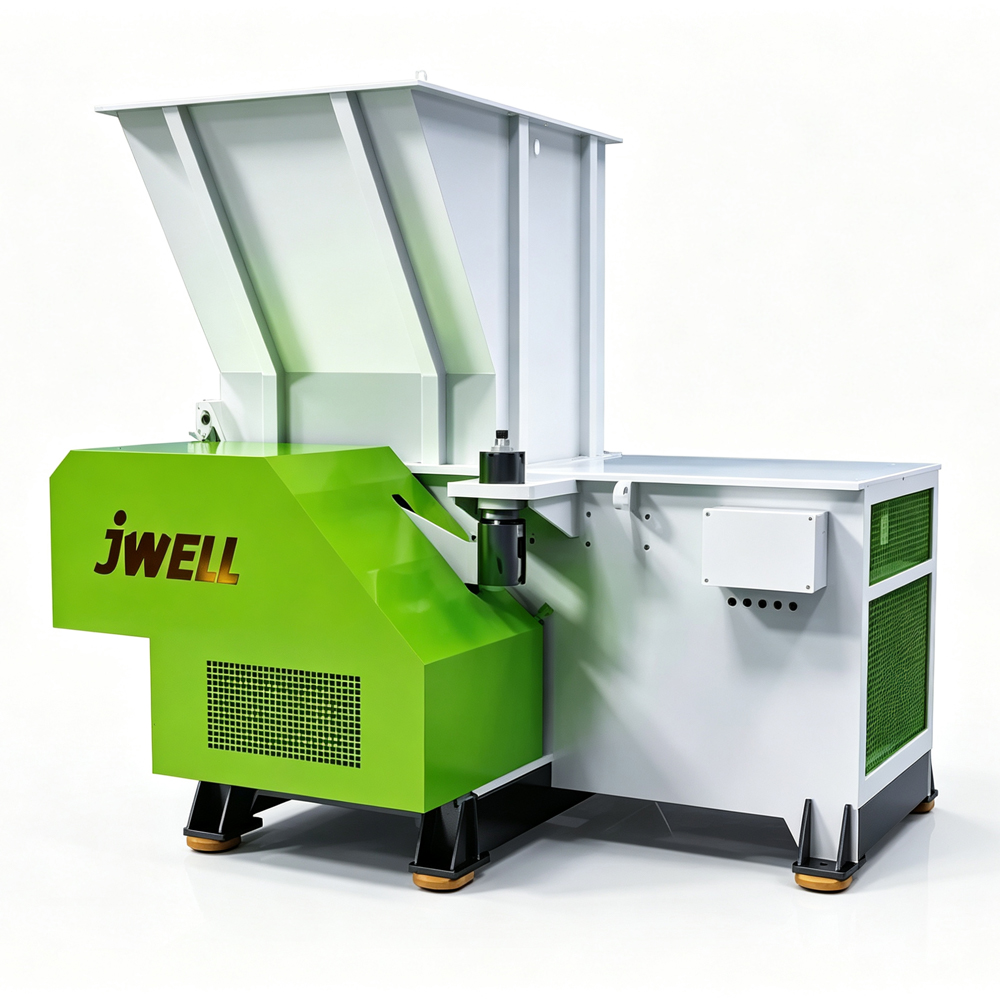
Plastic Shredder Crusher Machine

Tel: +86-19057068112

E-mail: [email protected]

Company Address
No. 128 Qingfeng Road, Xieqiao Town, Haining City, Jiaxing City, Zhejiang Province

19057068112

 English
 русский