
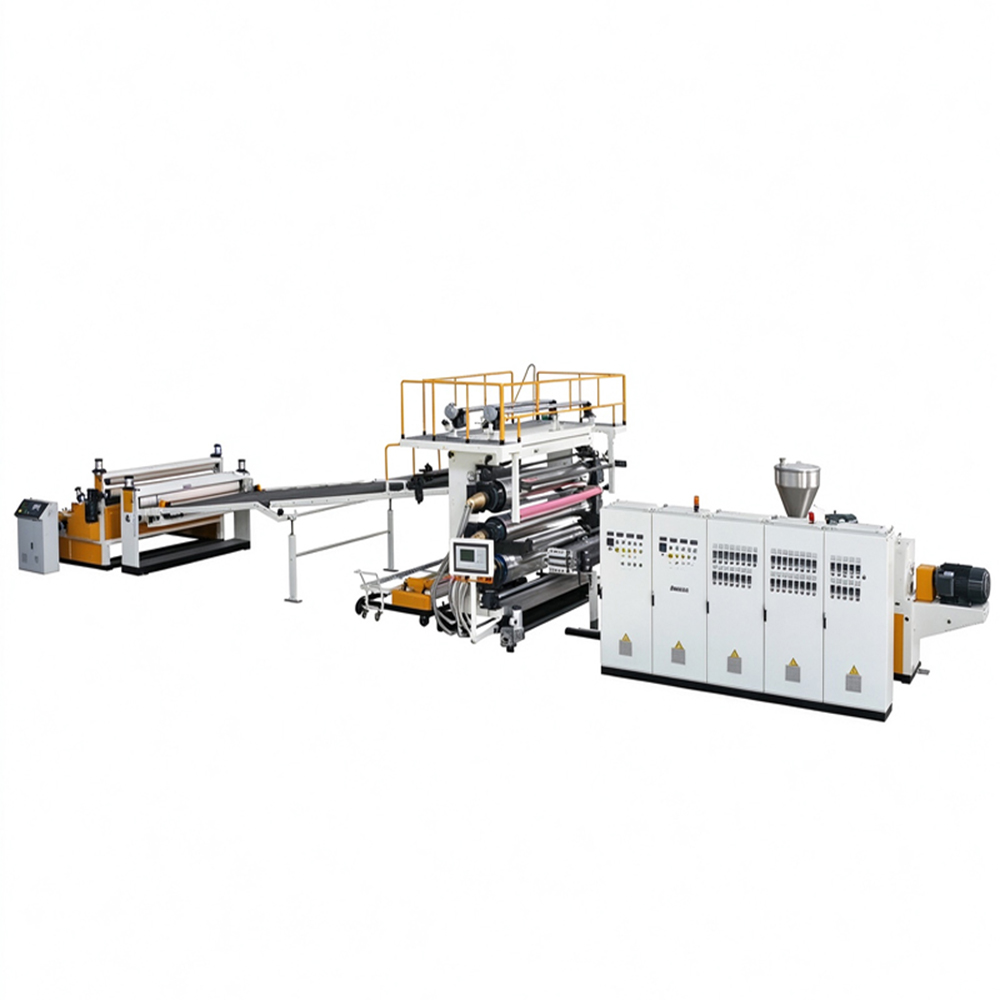
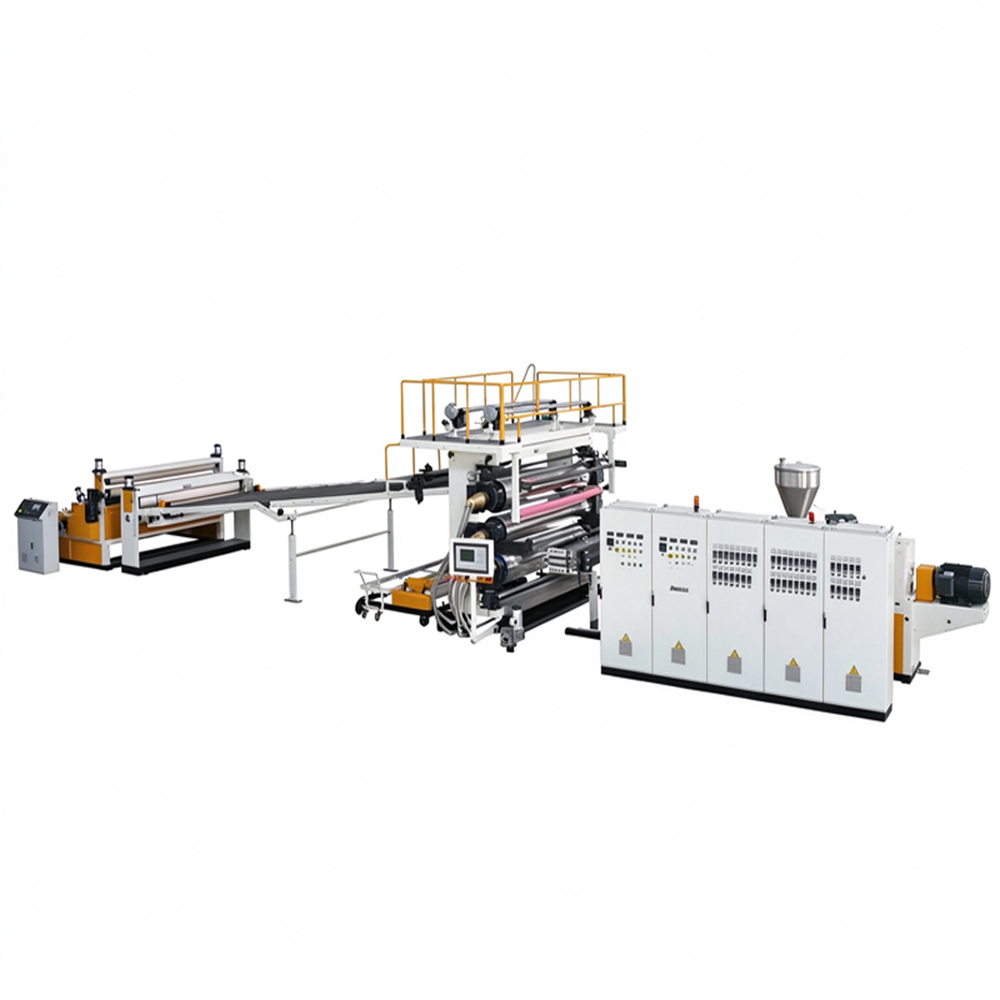
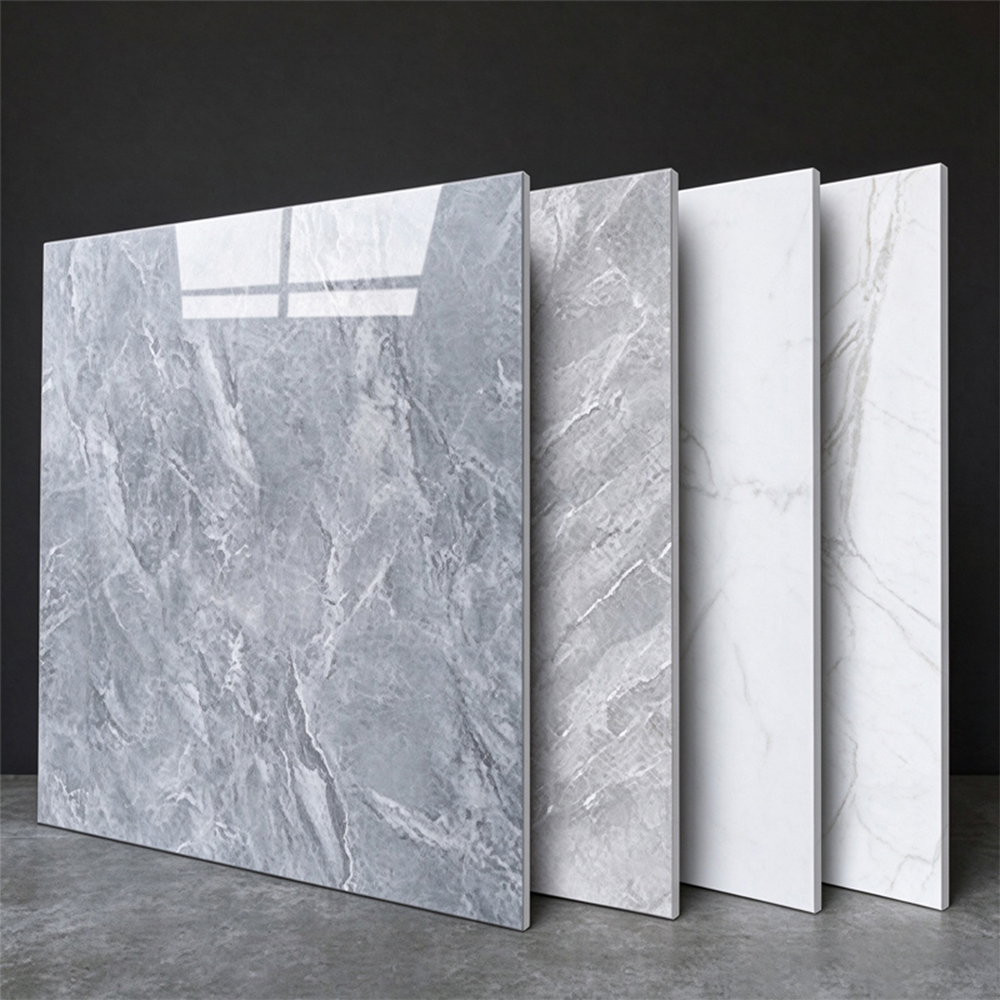
If you are looking for a reliable, high-output extrusion line to produce PVC flooring vinyl, decorative wall panels, or marble-like sheets, our SJZ series delivers field-proven performance. With two-layer and three-layer configurations, the line offers the flexibility to match your product width, output, and budget requirements.
The SJZ extrusion line is designed for high-volume production of three popular types of PVC-based decorative materials:
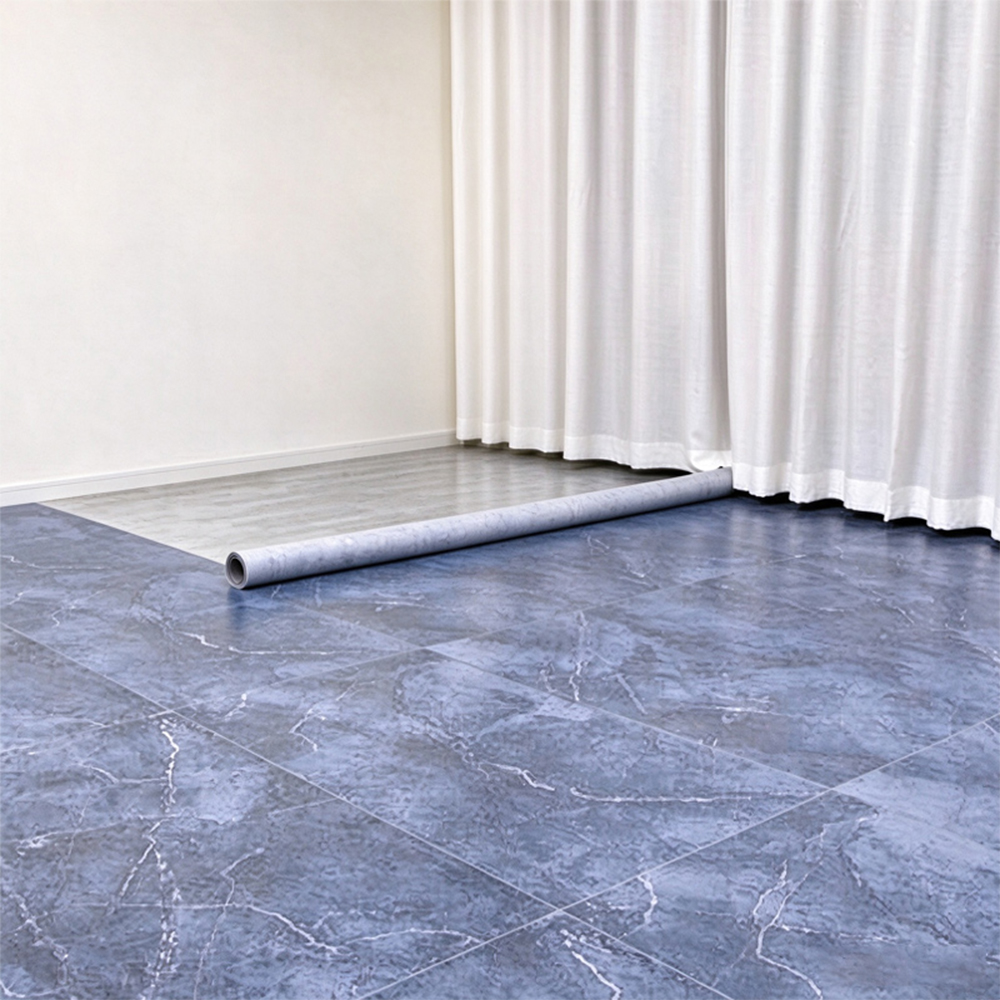
PVC Flooring Vinyl (Rolled flooring)
Suitable for residential, commercial, and industrial flooring. The multi-layer structure allows co-extrusion of a wear layer, decorative film, and a foamed or solid backing in one pass.
Decorative PVC Sheets
Used for interior wall panels, kitchen cabinets, furniture panels, and automotive interiors. The line can produce smooth, matte, or embossed surfaces.
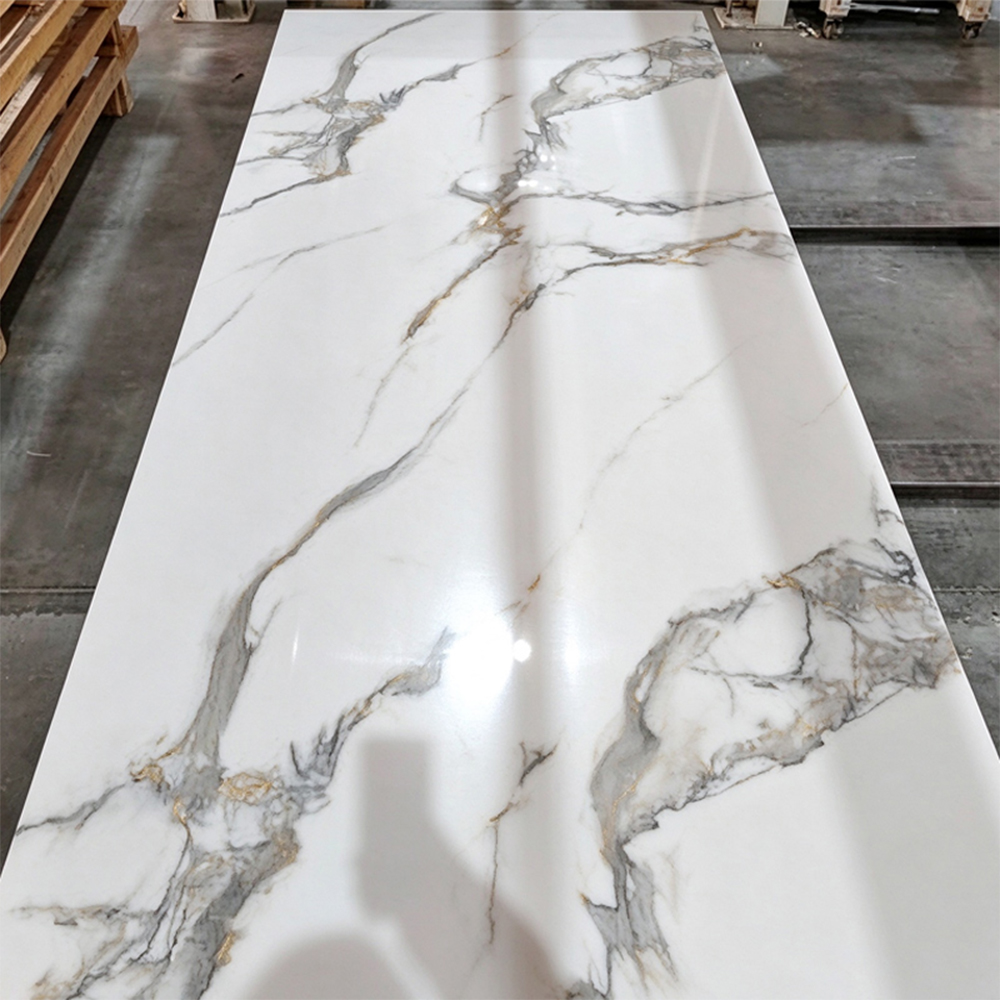
Marble-Like Sheets
Through calibrated feeding and multi-layer co-extrusion, the line creates realistic marble veining with excellent three-dimensional depth and gloss – a cost-effective alternative to natural stone for hotels, showrooms, and residential projects.
Real-world example:
A flooring manufacturer in Vietnam used a two-layer model (1500–2000mm width) to produce 1.8m wide PVC flooring vinyl at 520 kg/h. They replaced two old single-screw lines with one SJZ65/132 + SJZ80/156 line, reducing energy consumption by 30% while improving output consistency.
|
Feature |
Two-Layer (SJZ65/132 + SJZ80/156) |
Three-Layer (SJZ65/132 + SJZ80/156 + SJZ65/132) |
|
Product width |
1500 – 2000 mm |
2000 – 3000 mm |
|
Max output |
500 – 550 kg/h |
600 – 750 kg/h |
|
Main motor power |
37 kW + 55 kW |
37 kW + 55 kW + 37 kW |
Key benefits for your production:
High output with stability
The conical twin-screw extruders (SJZ65/132 and SJZ80/156) provide excellent melt uniformity and gentle processing of shear-sensitive PVC. Sheet thickness remains consistent even at maximum output (750 kg/h on the three-layer model).
Flexible width range
Two-layer: ideal for standard flooring rolls (1.5–2.0m).
Three-layer: handles rolls up to 3m wide – suitable for large-area commercial flooring or wide decorative panels.
Multi-layer cost efficiency
The three-layer configuration lets you use expensive virgin material (e.g., UV-resistant cap layer) only on the surface, while the middle and bottom layers use recycled or filled PVC. This reduces material costs by 15–25% without sacrificing appearance or wear resistance.
Energy-efficient motor layout
Independent motors (37/55 kW for two-layer; 37/55/37 kW for three-layer) allow you to run only the extruders needed when producing single-layer sheets. All motors are IE3 efficiency class.
Proven extruder design
The SJZ series conical twin-screws are known for long service life (over 10,000 hours before screw re-nitriding) and easy cleaning. The 65/132 model outputs 250–300 kg/h, and the 80/156 model can reach 450–500 kg/h.
Case study – three-layer marble sheet production:
A Turkish company used a three-layer line to produce 2.6m wide marble-look panels, achieving 720 kg/h. They reported that the middle layer (filled with 40% CaCO₃) reduced material costs by 22%, while the surface layers (virgin PVC + marble masterbatch) maintained a gloss above 85 GU at 60°.
We implement a rigorous multi-stage QC process to ensure that every extrusion line meets your output and product quality commitments.
A. Incoming raw material testing
PVC resin – K-value, particle size distribution (ASTM D1755)
Plasticizers, stabilizers, fillers – moisture content (<0.2%), fineness, thermal stability
B. In-process monitoring (during extrusion)
|
Parameter |
Monitoring tool |
Tolerance |
|
Melt temperature |
Thermocouple (zone) |
±2°C |
|
Screw speed |
Encoder feedback |
±1 rpm |
|
Melt pressure |
Pressure sensor |
±5 bar |
|
Sheet width |
Laser width sensor |
±2 mm |
|
Thickness |
Ultrasonic or beta gauge |
±0.03 mm |
C. Finished product testing (per roll/sheet)
Dimensional stability (ISO 23999) – shrinkage <0.2% after 6h at 80°C
Tensile strength & elongation (ASTM D638) – flexible flooring ≥12 MPa, elongation ≥150%
Tear strength (ASTM D1004) – ≥60 N/mm for 2mm thick sheet
Surface hardness (Shore D, ISO 868) – wear layer 65–75
Gloss & color uniformity – 60° glossmeter + spectrophotometer (ΔE < 0.5)
Marble pattern repeat accuracy – visual inspection + digital pattern scan (deviation ≤2mm per 10m)
D. Simulated use testing (for customer acceptance)
Abrasion resistance (Taber, CS-17 wheels, 1000 cycles) – weight loss <0.1g
Stain resistance (coffee, oil, tomato sauce – 24h exposure) – no permanent marks
Heat aging (7 days at 70°C) – no cracking or color change
Factory example:
Before shipping a three-layer line to a customer in Poland, we ran a 72-hour continuous test at 700 kg/h producing 2.8m wide marble-like sheets. Samples were taken every 2 hours for thickness and gloss checks – all samples consistently stayed within ±0.02mm and ΔE <0.3.
| Type | Double layers | Three layers |
| Products Width(mm) | 1500-2000 | 2000-3000 |
| Extruder Specification | SJZ65/132 - SJZ80/156 | SJZ65/132 - SJZ80/156 - SJZ65/132 |
| Max Output Capacity(kg/h) | 500-550 | 600-750 |
| Main Motor Power(kw) | 37/55 | 37/55/37 |
Q1: In day-to-day operation, what are the main differences between the two-layer and three-layer models?
A:
Two-layer produces A/B structure (e.g., cap layer + backing). Best for standard flooring vinyl with only one visible surface.
Three-layer produces A/B/C or A/B/A structures. Typical use: top decorative layer (expensive), middle recycled/filled layer (cost saving), bottom balancing layer (prevents curling). Three-layer also gives you an extra +1000mm width capability (up to 3000mm).
Q2: Can the line produce embossed or matte surfaces?
A: Yes. Add an embossing calender after the die. The melt temperature (160–180°C) is ideal for transferring fine wood, linen, or leather textures. Many customers use the same line to produce smooth marble sheets and embossed flooring planks – just change the calender rolls.
Q3: How do you clean the extruder when changing colors or materials?
A: For SJZ conical twin-screws, we recommend:
Stop feeding, run the screws at 10 rpm with purging compound (PVC-based cleaning compound).
Increase temperature by 20°C for 10 minutes, purge again.
For dark-to-light color changes, disassemble the screw assembly (2–3 hours for two technicians). Routine color change time <1 hour.
Q4: What is the actual power consumption at 80% load?
A: Based on real monitoring:
Two-layer (37+55 kW) → 55–60 kWh per ton of output.
Three-layer (37+55+37 kW) → 50–55 kWh per ton (lower per-ton cost due to higher output).
The above includes motors, heating zones, and cooling fans.
Q5: Can the line produce non-PVC sheets, such as TPO or EVA?
A: The SJZ twin-screw design is optimized for PVC (thermal stability, shear sensitivity). For TPO or EVA, you would need different screw geometry and cooling profiles. However, many customers use this line to produce WPC (wood-plastic composite) sheets by adjusting screw speed and adding a venting section – please consult our engineers for the WPC upgrade kit.
Q6: How long does it take to switch width on two-layer/three-layer?
A: 10–20 minutes. Two-layer line: 1500–2000mm; three-layer line: 2000–3000mm – both allow online width adjustment.




Pipe Extrusion Production Line
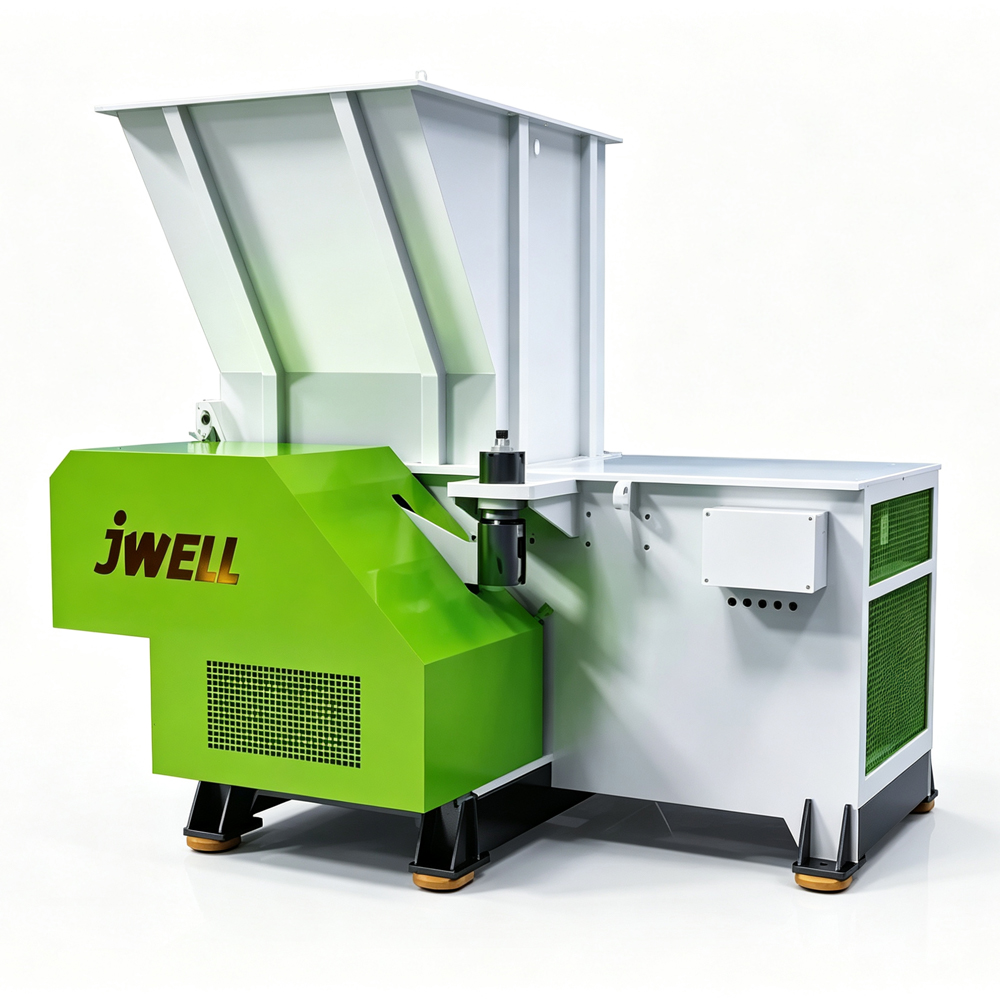
Plastic Shredder Crusher Machine

Tel: +86-19057068112

E-mail: [email protected]

Company Address
No. 128 Qingfeng Road, Xieqiao Town, Haining City, Jiaxing City, Zhejiang Province

19057068112

 English
 русский