
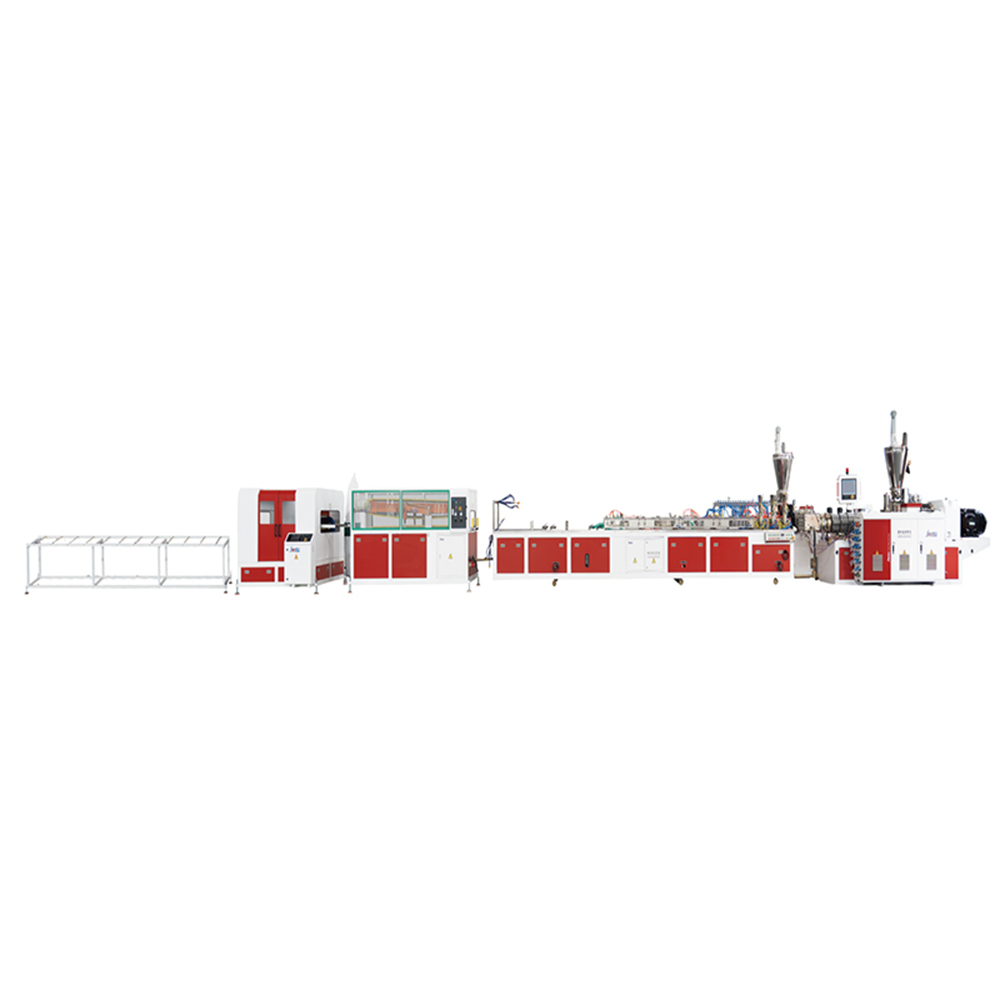
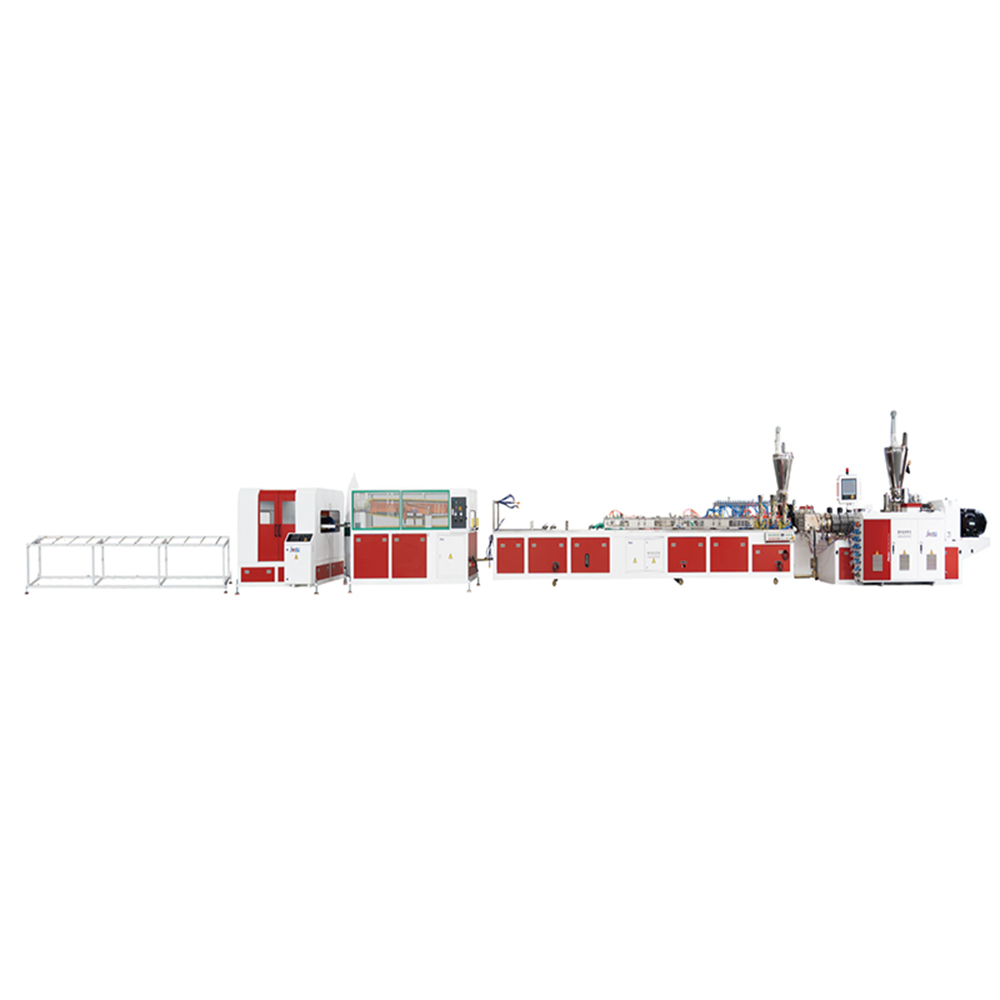
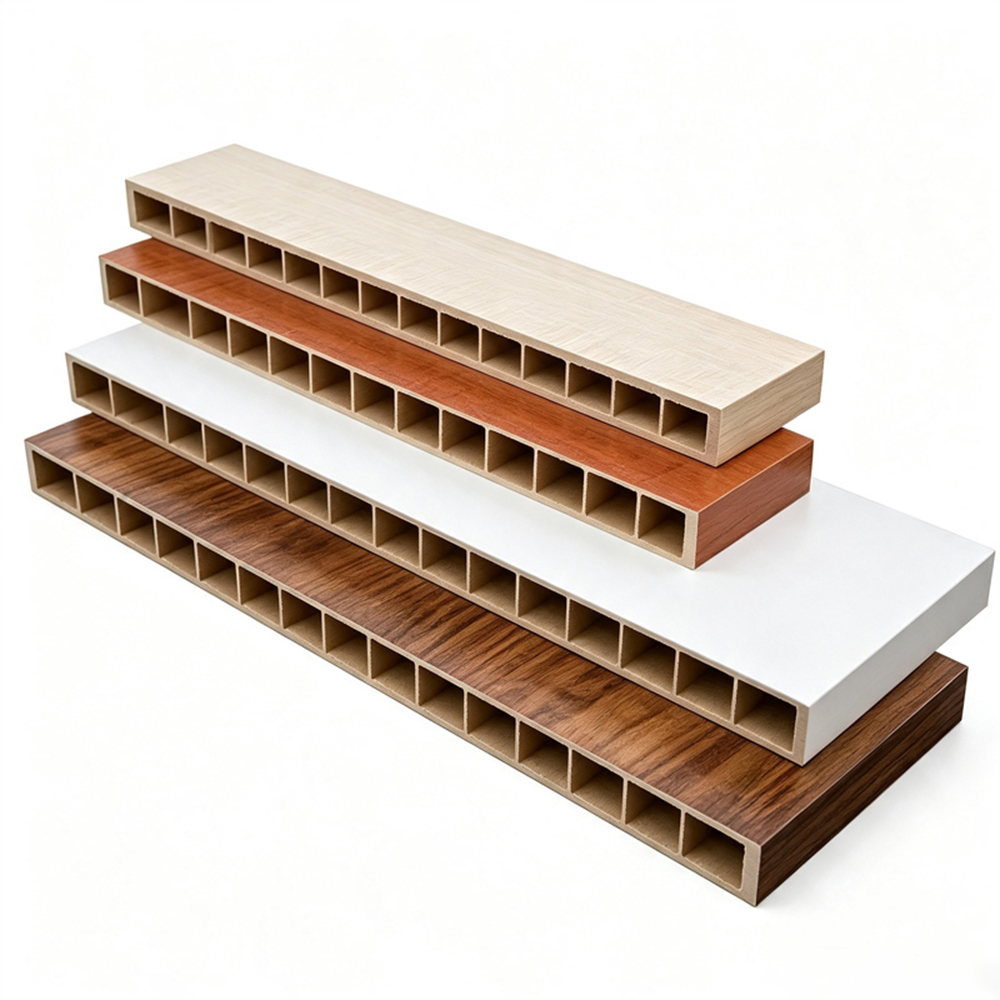
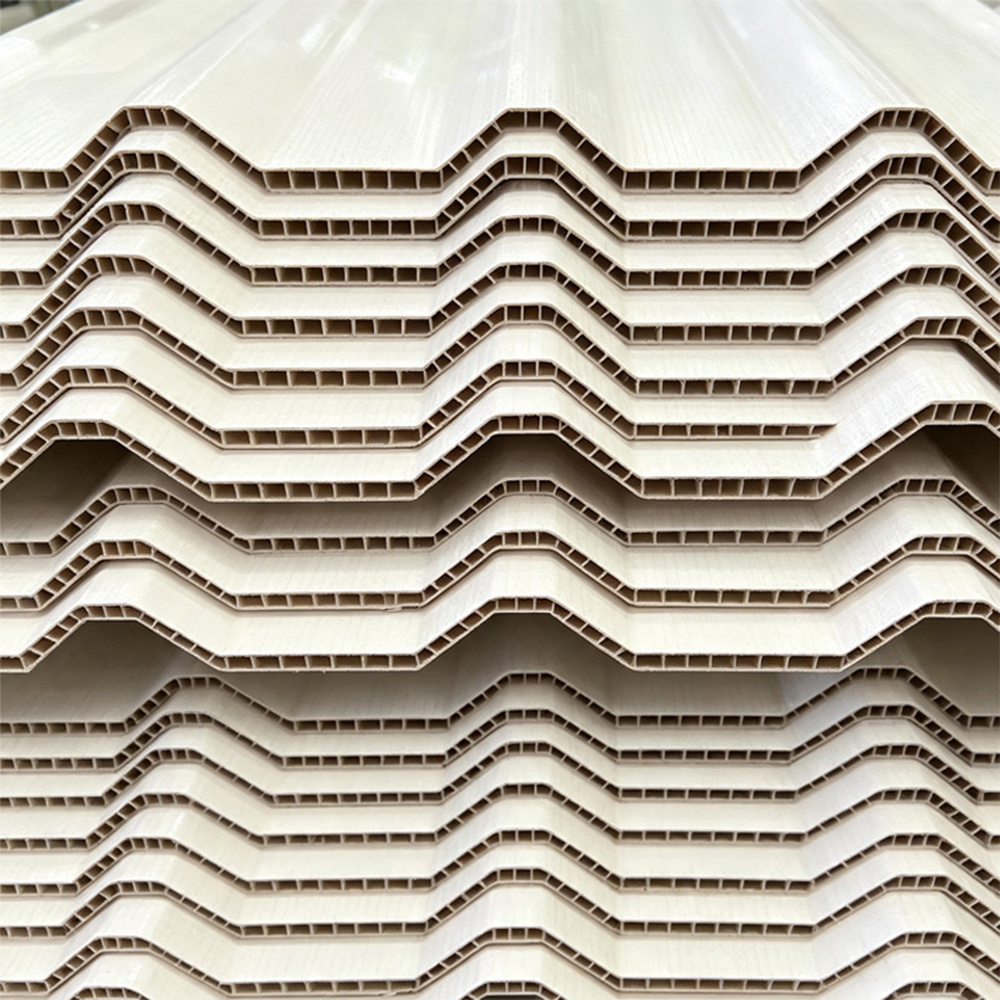
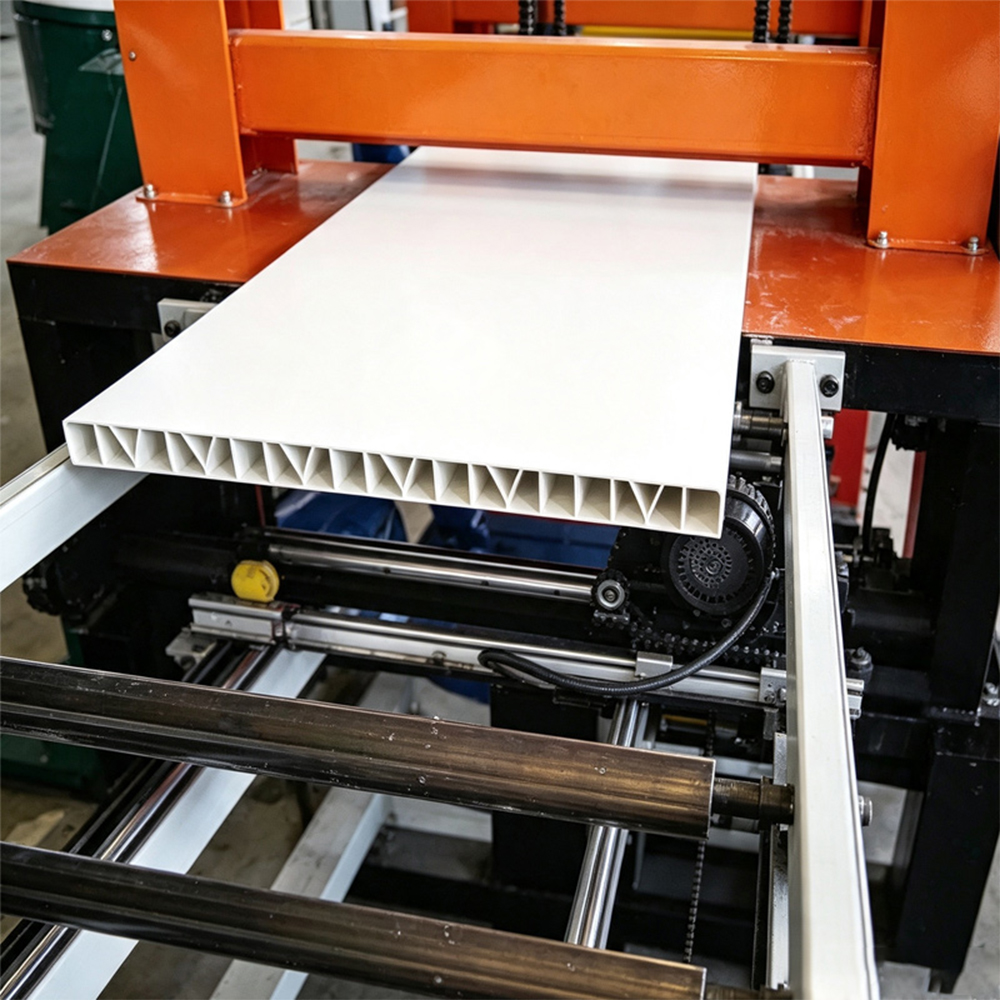
The PVC plastic-steel / PVC wood-plastic wide sheet extrusion line adopts a conical twin-screw extruder (SJZ series), featuring excellent extrusion stability, energy efficiency, and product uniformity. The maximum sheet width ranges from 800 mm to 1250 mm, meeting various industrial application needs from concrete formwork, interior wall panels to outdoor flooring and automotive components.
The combination of PVC plastic-steel and PVC wood-plastic sheets opens up a wide range of applications:
PVC Plastic-Steel Sheets
Concrete formwork systems – Replace traditional steel or plywood formwork, lightweight (40% lighter than steel formwork), waterproof, reusable 50-80 times.
Industrial protective sheets – Used in chemical plants, food processing facilities, and clean rooms, offering excellent corrosion resistance and easy cleaning.
Transport vehicle flooring – Lining sheets for trucks and trailers, resistant to impact, diesel, and road salt.
PVC Wood-Plastic Sheets
Outdoor flooring and fencing – High weather resistance, low maintenance, realistic wood grain texture.
Interior wall panels and ceilings – Lightweight, flame retardant (with additives), moisture resistant.
Automotive interior components – Door panels and trunk flooring, requiring low VOC and dimensional stability.
Actual Case – Vietnamese Furniture Manufacturer
A furniture factory in Binh Duong Province, Vietnam, installed a YF1000 line to produce wood-plastic sheets for outdoor benches and garden flooring. With a maximum extrusion capacity of 750 kg/h and sheet width of 1000 mm, they achieved a 20% reduction in raw material costs compared to solid wood, while tripling production speed. The finished sheets passed ASTM D7032 flooring performance standards and remained straight and warp-free after two years of use in a tropical climate.
Actual Case – German Construction Company
A German formwork rental company adopted the YF1250 line (1250 mm width) to produce PVC plastic-steel formwork sheets. The higher cooling water capacity (18 m³/h) and compressed air consumption (1.0 m³/min) enabled rapid cooling of thick sheets (up to 30 mm), ensuring flatness within ±0.2 mm. These sheets replaced 12 mm thick steel plates, reducing transport weight per truck by 35% and lowering fuel costs by 18%.
The YF series delivers tangible benefits based on its design specifications:
2.1 High Production Efficiency and Optimized Energy Use
Extrusion capacity – YF800: 450 kg/h; YF1000 and YF1250: 750 kg/h. This enables 24/7 continuous operation with minimal downtime.
Extruder power – 55 kW (YF800) and 110 kW (YF1000/1250). Specific energy consumption (kWh/kg) is very low: approximately 0.122 kWh/kg for YF800, and about 0.147 kWh/kg for larger models – 15% better than single-screw alternatives.
2.2 Wide and Flexible Sheet Dimensions
Maximum product width: 800 mm / 1000 mm / 1250 mm – suitable for standard building sheets (1220 mm wide) and custom furniture boards.
Thickness range: 3–30 mm (adjustable via die gap and calendering unit). Many applications require no secondary lamination.
2.3 Robust Conical Twin-Screw Extruder (SJZ Series)
SJZ 80/156 (YF800) and SJZ 92/188 (YF1000/1250) – Conical screw design ensures:
Gentle yet thorough mixing of PVC resin, wood fiber (40–60 mesh), and additives.
Reduced shear heat, preventing degradation of heat-sensitive wood fiber in wood-plastic composites.
Longer screw life: typical maintenance interval of 12,000–15,000 hours, even with abrasive wood flour.
2.4 Precise Utility Consumption
|
Model |
Cooling Water (m³/h) |
Compressed Air (m³/min) |
|
YF800 |
13 |
0.6 |
|
YF1000 |
15 |
0.8 |
|
YF1250 |
18 |
1.0 |
These are actual operating requirements, not peak loads. Closed-loop cooling systems recycle 90% of water, reducing total consumption by 40% compared to older designs.
2.5 Designed for Wood-Plastic and Plastic-Steel Formulations
The extruder and downstream calibration units can withstand:
Wood powder content up to 50% in wood-plastic composites (requires coupling agents).
Calcium carbonate filler up to 40 phr (parts per hundred resin) in plastic-steel sheets, increasing rigidity without damaging the screw.
Optional chrome-plated screw surface for highly abrasive steel-reinforced composites.
To ensure every sheet meets international standards (ASTM, EN, ISO), the YF series lines integrate a multi-stage quality control process:
3.1 Raw Material Incoming Inspection
PVC resin – K value 65–68 for wood-plastic, K value 60–62 for plastic-steel. Tests include viscosity and moisture content (<0.3%).
Wood fiber – Particle size distribution (40–80 mesh), moisture content (<2%), no metal impurities (via magnetic separator).
Additives – Impact modifiers (CPE, ACR), stabilizers (calcium/zinc or organotin), lubricants, and foaming agents (for lightweight sheets).
3.2 In-Process Monitoring (Real-time)
Melt temperature and pressure – Sensors at the die; alarm when pressure fluctuation exceeds ±3% (indicating screen pack clogging or unstable feeding).
Sheet thickness – Ultrasonic or laser thickness gauge at the puller; closed-loop feedback automatically adjusts die lip gap. Tolerance maintained at ±0.05 mm for sheets ≤10 mm.
Width control – Edge trimming guide with servo motor; deviation <2 mm per linear meter.
3.3 Finished Product Testing (Per Batch)
Samples from every 500 m² undergo the following tests:
|
Test Item |
Equipment/Method |
Acceptable Range (Wood-Plastic / Plastic-Steel) |
|
|
Dimensional stability |
24 h in 80°C oven |
Length change ≤0.5% (WPC) / ≤0.2% (PS) |
|
|
Impact strength (Charpy) |
Pendulum impact tester |
≥8 kJ/m² (WPC) / ≥15 kJ/m² (PS) |
|
|
Flexural modulus |
Three-point bending (ISO 178) |
≥1800 MPa (WPC) / ≥2800 MPa (PS) |
|
|
Water absorption |
24 h immersion (ASTM D570) |
≤1.5% (WPC) / ≤0.3% (PS) |
|
|
Flatness / warpage |
Digital dial gauge on granite surface plate |
≤1 mm/m (both) |
|
|
Surface hardness |
Shore D durometer |
≥65 (WPC) / ≥75 (PS) |
|
3.4 Long-Term Reliability Test – Actual Case
A Vietnamese wood-plastic manufacturer conducted a 72-hour continuous production test on a YF1000 line at 85% of maximum capacity (637 kg/h). Results:
Thickness variation was 0.08 mm (target for 10 mm sheet) – well within specification.
No screw wear debris detected in the melt filter after 72 hours.
Color consistency measured by spectrophotometer: ΔE < 0.6 throughout the run.
All test data was recorded via PLC and can be exported for customer certification (ISO 9001:2015 documentation provided).
| Type | YF800 | YF1000 | YF1250 |
| Max. width of product(mm) | 800 | 1000 | 1250 |
| Extruder type | SJZ 80/156 | SJZ 92/188 | SJZ 92/188 |
| Max. extrusion capacity(kg/h) | 450 | 750 | 750 |
| Extruder power(kw) | 55 | 110 | 110 |
| Cooling water(m³/h) | 13 | 15 | 18 |
| Compressed air(m³/min) | 0.6 | 0.8 | 1 |
Below are the six most frequently asked questions collected by our engineers from customers in Europe, Southeast Asia, and the Middle East.
Question 1: How to choose between YF800, YF1000, and YF1250?
Answer: Choose based on required sheet width and target annual output.
|
Model |
Max Width |
Typical Output (kg/h) |
Recommended Use |
|
YF800 |
800 mm |
350–420 |
Small-scale profiles, furniture edging, narrow flooring |
|
YF1000 |
1000 mm |
600–700 |
Standard wood-plastic flooring (95% of outdoor projects) |
|
YF1250 |
1250 mm |
650–730 |
Concrete formwork (1220x2440 mm sheets) or large automotive panels |
If you need an annual output above 3000 tons, YF1000 or YF1250 are economical choices – the 110 kW motor and 92/188 extruder provide excellent torque stability.
Question 2: Can the same line produce both plastic-steel sheets and wood-plastic sheets?
Answer: Yes – with minor changeover. The YF series lines include:
Dual-formulation screw design that efficiently mixes wood fiber (low bulk density) and high-density fillers (calcium carbonate, short glass fiber).
Quick-screen changer – switching from 80-mesh to 40-mesh filter takes less than 15 minutes.
Purge compound – use 10 kg of low-viscosity PVC purge compound to clean the screws before switching material types.
Note: For plastic-steel sheets with >15% steel fiber content (e.g., for high-impact protective sheets), we recommend the hard-faced screw option (tungsten carbide coating) to extend screw life.
Question 3: What causes uneven sheet thickness and how to solve it?
Answer: Based on field service records, the top three causes:
Die lip misalignment – Check and adjust manual die lip bolts at low line speed. YF series dies have independent heating zones for each die lip section.
Inconsistent melt temperature – Verify all heating bands are working properly (infrared thermometer shows ±2°C variation). Clean thermocouple wells – old oil/polymer residue can cause false readings.
Screw mixing section wear – After 10,000 operating hours, the compression zone may wear. Measure screw outer diameter; if wear >0.5 mm, repair or replace.
Actual repair case: A Polish customer reported thickness deviation of 0.4 mm on 8 mm wood-plastic sheets. We found two failed heating bands on the adapter flange. After replacement, deviation dropped to 0.07 mm.
Question 4: What is the typical power consumption per kilogram of finished sheet?
Answer: For YF1000 producing standard wood-plastic (50% wood flour, 50% PVC) at 700 kg/h:
Extruder motor: 110 kW × 0.85 (typical load) = 93.5 kW
Downstream motors (calibrator, puller, cutter, heating/cooling): ≈18 kW
Total = 111.5 kW → 0.159 kWh per kg of sheet
For plastic-steel sheets with higher calcium carbonate content (harder to melt), energy consumption rises to about 0.185 kWh/kg. Compared to single-screw extruders (0.22–0.28 kWh/kg) – this saves 25-35% on electricity bills.
Question 5: How often should I change the cooling water and clean the system?
Answer: Use softened or deionized water to prevent scaling. Recommended schedule:
Water change – every 3 months (or when conductivity > 500 µS/cm).
Clean cooling channels – every 6 months using citric acid solution (2% concentration, circulate for 4 hours). Just 0.5 mm of scale buildup increases energy consumption by 10%.
Check water strainers – monthly (especially for YF1250 with 18 m³/h flow – a partially clogged strainer reduces cooling efficiency and causes sheet warpage).
Question 6: Can the same extrusion line produce both solid PVC plastic-steel sheets and foamed PVC wood-plastic sheets?
Answer: Yes, but with some important adjustments.
The YF series (YF800, YF1000, YF1250) uses conical twin-screw extruders (SJZ 80/156 or SJZ 92/188) which combine good mixing ability with low shear – suitable for both highly filled formulations (plastic-steel, 40 phr calcium carbonate) and heat-sensitive wood-plastic composites.
Question 7: How to prevent sheet warpage when producing wide (1250 mm) sheets at high speed?
Answer: Warpage is usually caused by uneven cooling across the sheet width or internal stress generated by improper die lip adjustment. The YF1250 (1250 mm width, cooling water 18 m³/h, compressed air 1.0 m³/min) is designed to minimize warpage, but correct operation remains critical.


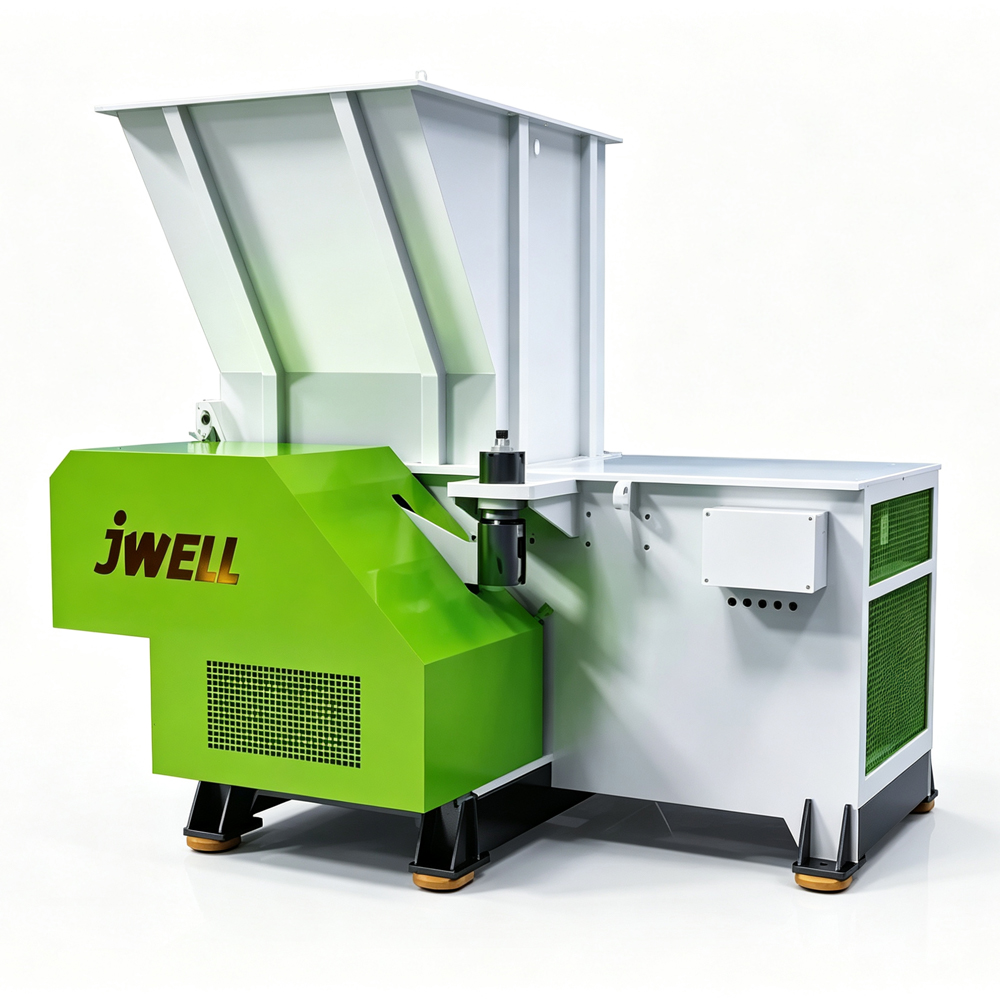


Pipe Extrusion Production Line
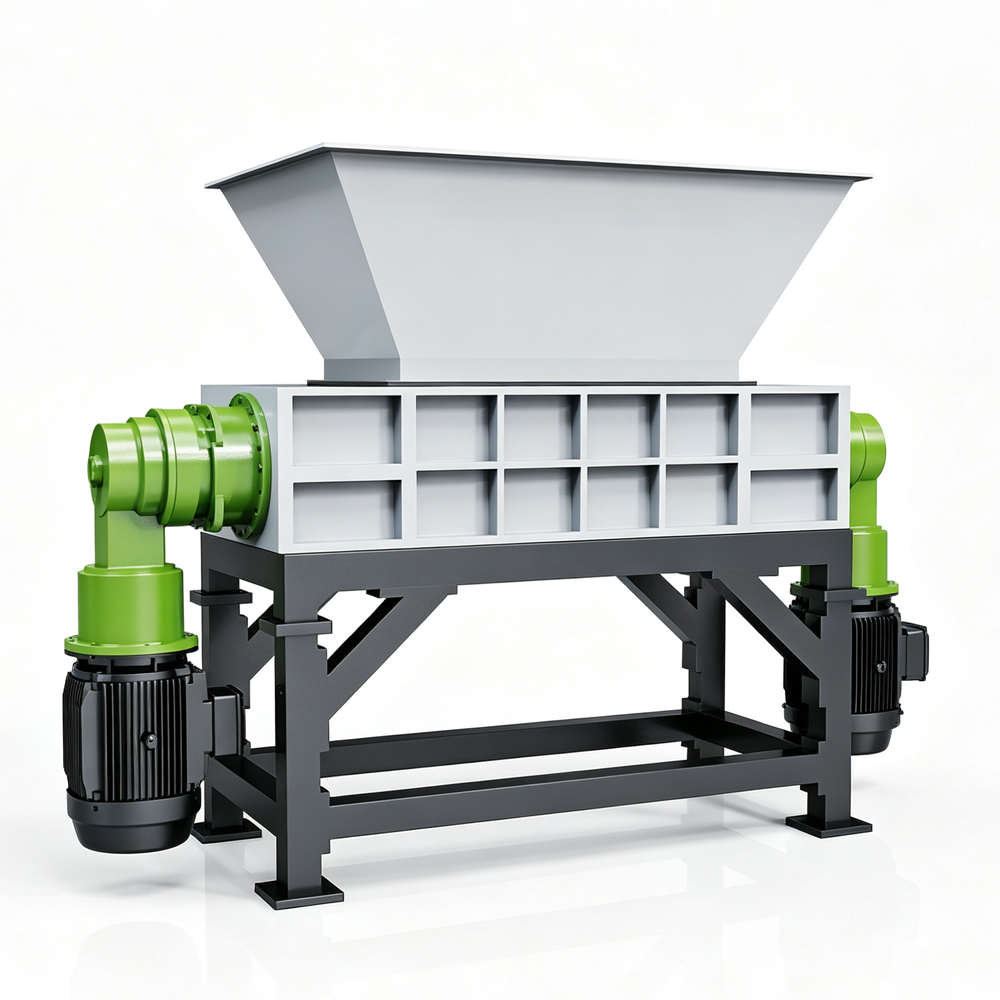
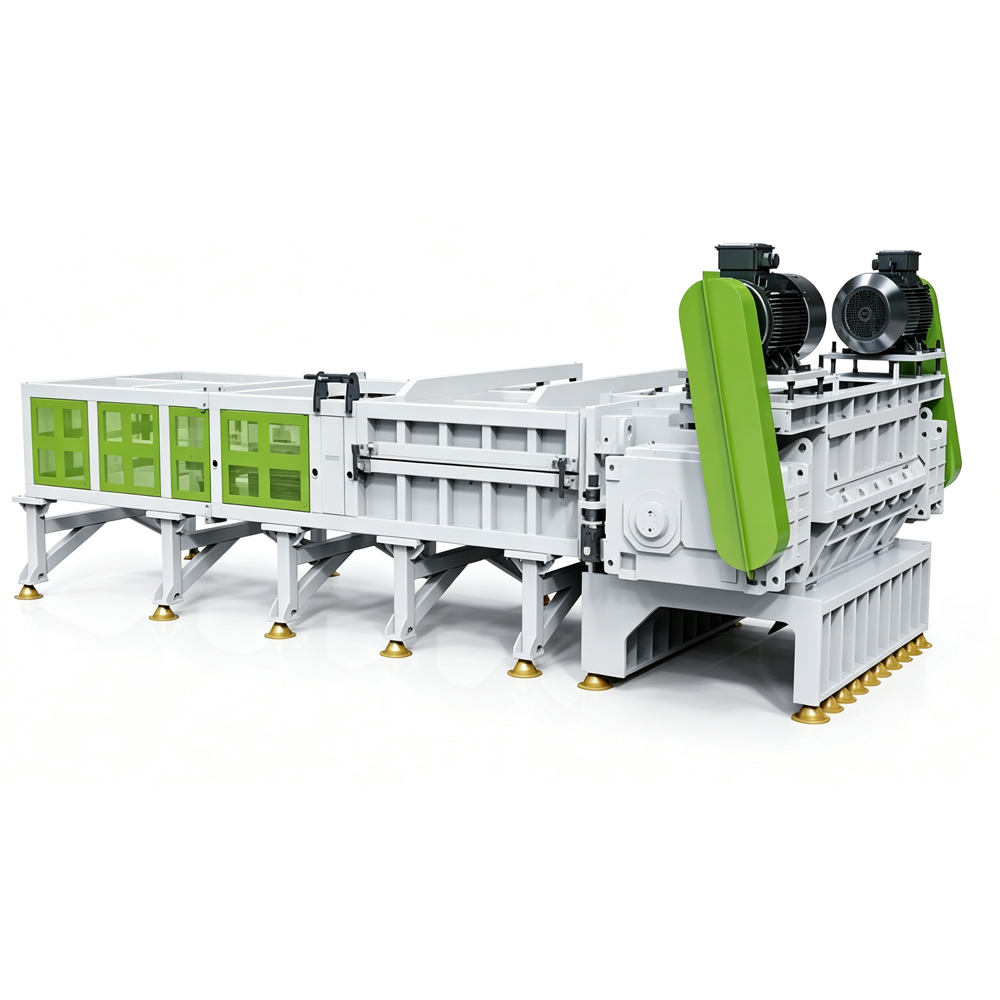
Plastic Shredder Crusher Machine

Tel: +86-19057068112

E-mail: [email protected]

Company Address
No. 128 Qingfeng Road, Xieqiao Town, Haining City, Jiaxing City, Zhejiang Province

19057068112

 English
 русский