
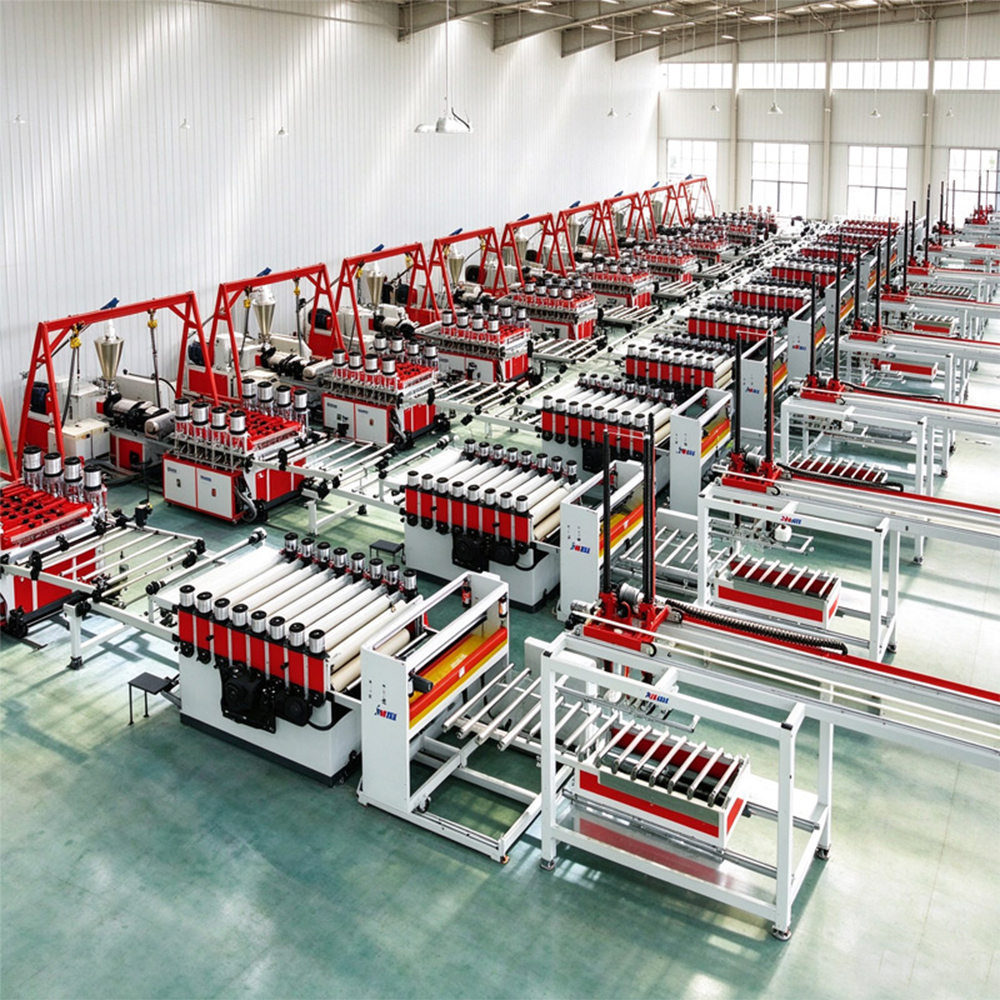
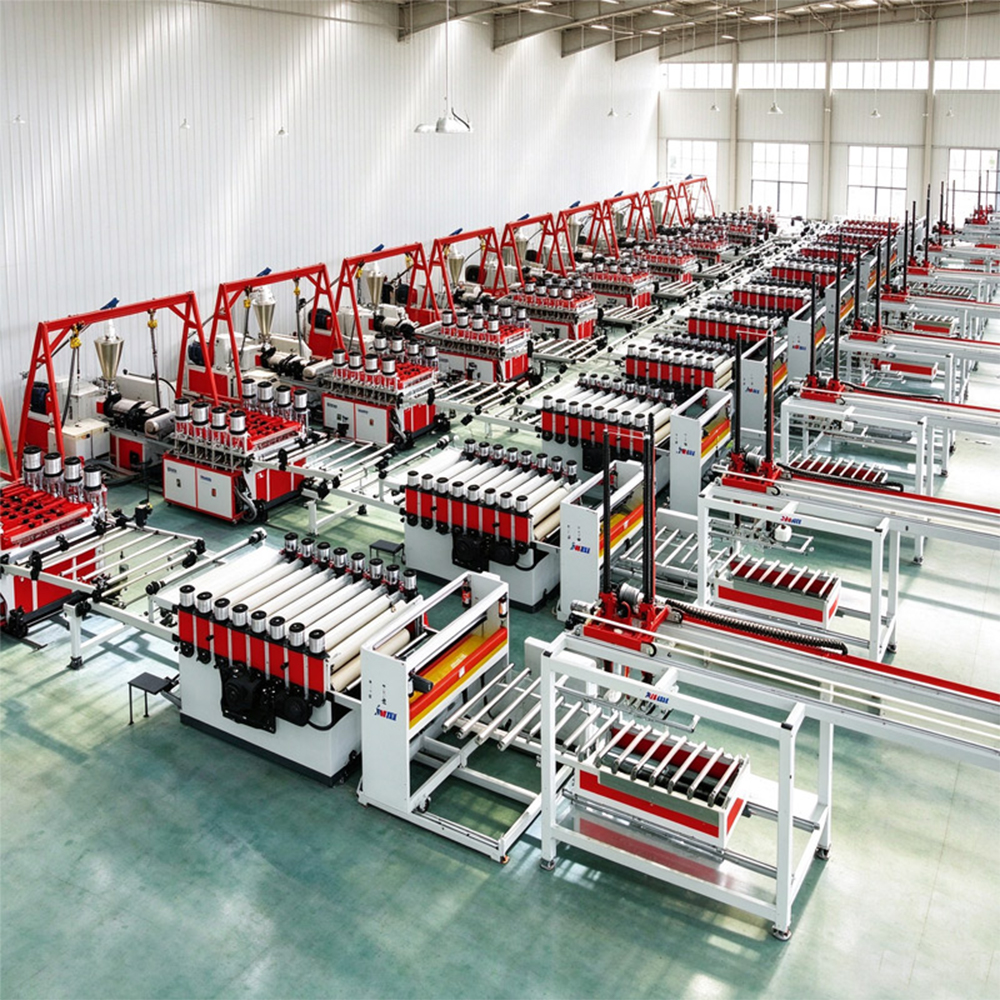
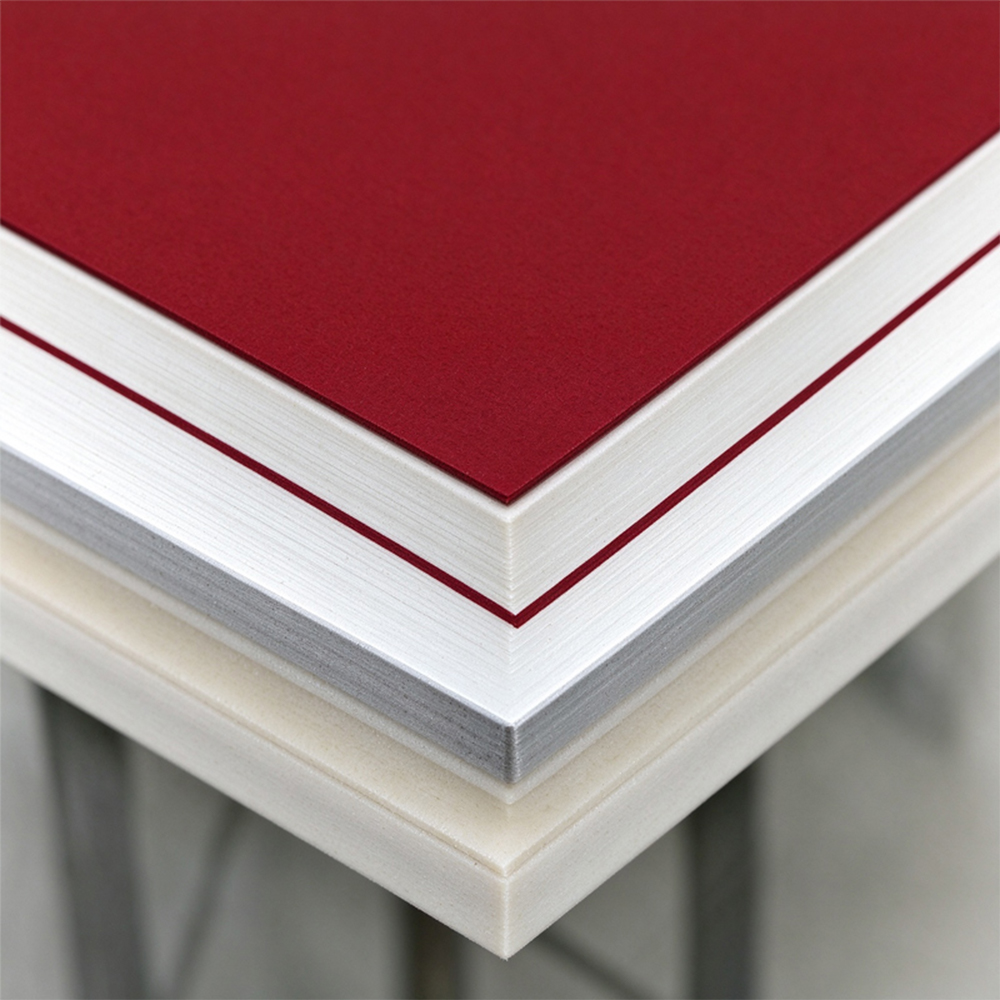
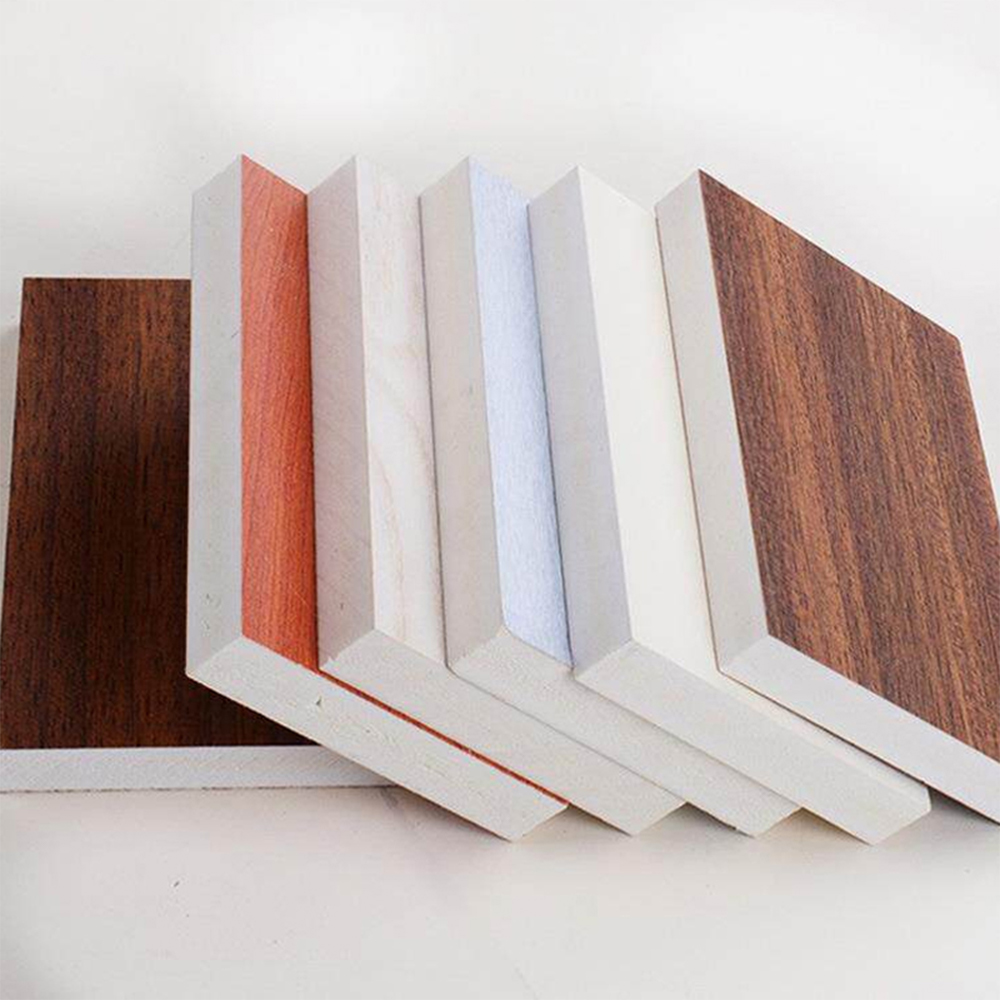
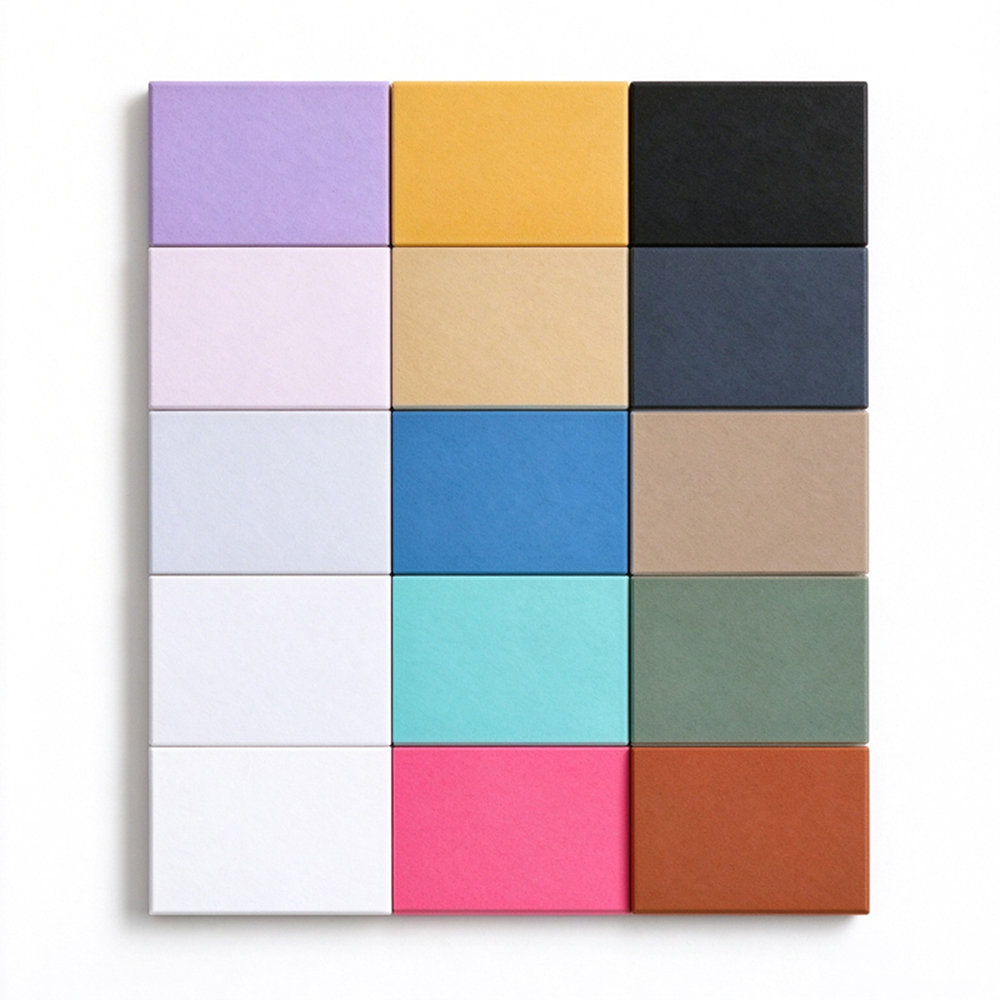
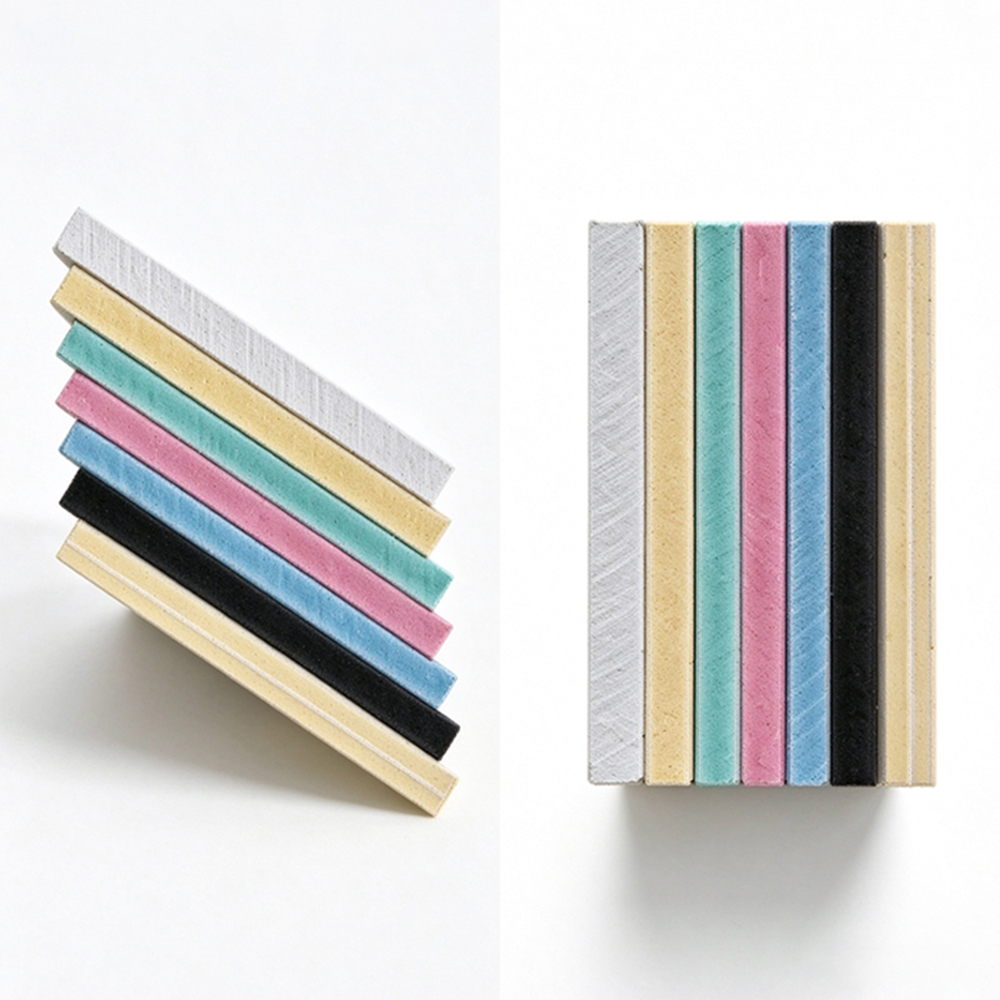
This PVC foam board extrusion line produces boards with a width of 1220 mm and thicknesses ranging from 5 to 35 mm. The two-stage model (SJZ80/65-1500) achieves a maximum output of 550 kg/h, saving approximately 20% energy compared to single-stage models. The equipment uses conical twin screws for uniform plasticization, resulting in smooth board surfaces and controllable density. It is widely used in advertising, furniture, and construction formwork, offering lightweight, waterproof properties and easy processing.
The PVC foam boards produced by this line are widely used in construction, furniture, advertising, and transportation industries. Production width is 1220 mm, thickness range is 5–20 mm (or 20–35 mm for thick boards). These boards serve as a lightweight, waterproof, cost-effective alternative to wood. Typical end products include:
Signage & Displays – Compatible with digital printing and screen printing.
Interior Decoration – Wall panels, ceiling panels, and partitions.
Furniture – Kitchen cabinets, bathroom cabinets, and shelving.
Construction – Concrete formwork, protective covers, and window frame profiles.
Real-world example: A Turkish furniture manufacturer used 15 mm PVC foam boards from this line to replace traditional plywood, reducing the weight of bathroom cabinets by 40% and improving moisture resistance.
|
Feature |
SJZ80-1500 |
SJZ80/65-1500 |
|
Extruder configuration |
Single conical twin screw (SJZ80/156) |
Two-stage (SJZ65/132 + SJZ80/156) |
|
Max output |
300–450 kg/h |
400–550 kg/h |
|
Main motor power |
75 kW |
37 kW + 75 kW (112 kW total) |
|
Thickness range |
5–20 / 20–35 mm |
Same |
Core advantages:
Higher efficiency for thick boards – The two-stage model (SJZ80/65-1500) delivers up to 550 kg/h, ideal for continuous production of 20–35 mm thick boards. Independent motors allow separate screw speed control, optimizing melt quality and reducing energy waste.
Superior plasticization – Conical twin screw design ensures uniform mixing of PVC resin, blowing agent, and modifiers. This produces a smooth surface and fine closed-cell structure – critical for edge finishing and nail/screw holding strength.
Broad thickness flexibility – Both models handle 5–35 mm. By adjusting screw speed and haul-off ratio, you can switch from lightweight 8 mm advertising board to rigid 30 mm construction sheet in under 30 minutes.
Energy efficiency – The SJZ80/65-1500 uses 37 kW for the smaller auxiliary extruder, matching melt demands at lower thicknesses, saving up to 20% electricity compared to single-motor designs.
To ensure boards meet ASTM D1784 or EN 13501 standards, the line integrates the following QC stages:
Incoming material testing
PVC resin (K value 65–68), calcium carbonate (particle size ≤ 10 µm), blowing agent (decomposition temperature 180–210°C). Each batch is tested for moisture content (< 0.3%) using a halogen moisture analyzer.
In-process monitoring
Melt pressure and temperature sensors at the adapter head and die. Pressure deviation > ±1.5 MPa triggers automatic screw speed correction.
Laser measurement of die lip gap (accuracy ±0.05 mm) to ensure thickness uniformity across 1220 mm width.
Post-extrusion testing (sampled every 500 meters)
Density – Archimedes method. Target: 0.45–0.65 g/cm³ for low-density boards; 0.65–0.85 g/cm³ for structural boards.
Surface hardness – Shore D durometer (minimum 55 for furniture grade).
Water absorption – 24-hour immersion test (< 1.5%).
Flexural strength – Three-point bending test (≥ 25 MPa for 15 mm board).
Screw pull-out resistance – ≥ 800 N for 10 mm thickness.
Real-world example: A Vietnamese customer producing 25 mm concrete formwork encountered edge collapse. Our QC team traced it to low melt temperature (170°C) at the die. After raising it to 190°C and adjusting the blowing agent dosage by 0.2%, closed-cell uniformity improved by 35%.
| Model | SJZ80-1500 | SJZ80/65-1500 |
| Production Width(mm) | 1220 | 1220 |
| Production Thickness(mm) | 5-20/20-35 | 5-20/20-35 |
| Extruder Model | SJZ80/156 | SJZ65/132, SJZ80/156 |
| Capacity (Max.)(kg/h) | 300~450 | 400~550 |
| Main Motor Power(kw) | 75 | 37/75 |
Q1: How can I adjust board density without changing the formulation?
A: Raise the calibration cooling temperature (from 25°C to 35°C) to slow surface solidification, allowing more cell expansion → lower density. Alternatively, increase haul-off speed by 5–10% to stretch the melt → higher density. Always adjust together with die lip opening.
Q2: Why is the top surface of my 20 mm board rough?
A: Usually due to insufficient melt homogenization. On the SJZ80/65-1500, check the speed ratio of the auxiliary extruder. Suggested: main 80 rpm, auxiliary 35 rpm. Also ensure the screen pack (40/80/40 mesh) is not clogged.
Q3: What maintenance is required for the twin-screw barrel?
A: Every 500 operating hours: check screw wear by measuring flight clearance (replace if > 0.3 mm). Every 2000 hours: pull out the screw to inspect for corrosion – PVC degradation deposits can be removed with a brass brush and heat treatment.
Q4: Can this line produce colored boards?
A: Yes. Add color masterbatch (2–5% by weight) via the rear feed port. For dark colors (red, black), increase processing temperature by 5–8°C to improve dispersion. Real-world example: A Spanish signage company used the SJZ80-1500 to produce consistent matte black boards at 185°C melt temperature.
Q5: How to prevent warpage of thin 5 mm boards?
A: Use a three-roll calibrator with the middle roll temperature 5°C higher than the top/bottom rolls. Increase the cooling water tank length by 2 meters and reduce haul-off tension. The independent drives of the two-stage model allow finer tension control.
Q6: The maximum output seems lower than 550 kg/h – why?
A: Check if you are using regrind. Each 10% increase in crushed recycled material reduces output by 8–12% due to lower bulk density. Also ensure cooling water temperature is below 20°C – higher water temperature limits the screw’s heat dissipation capacity, forcing lower screw speeds.
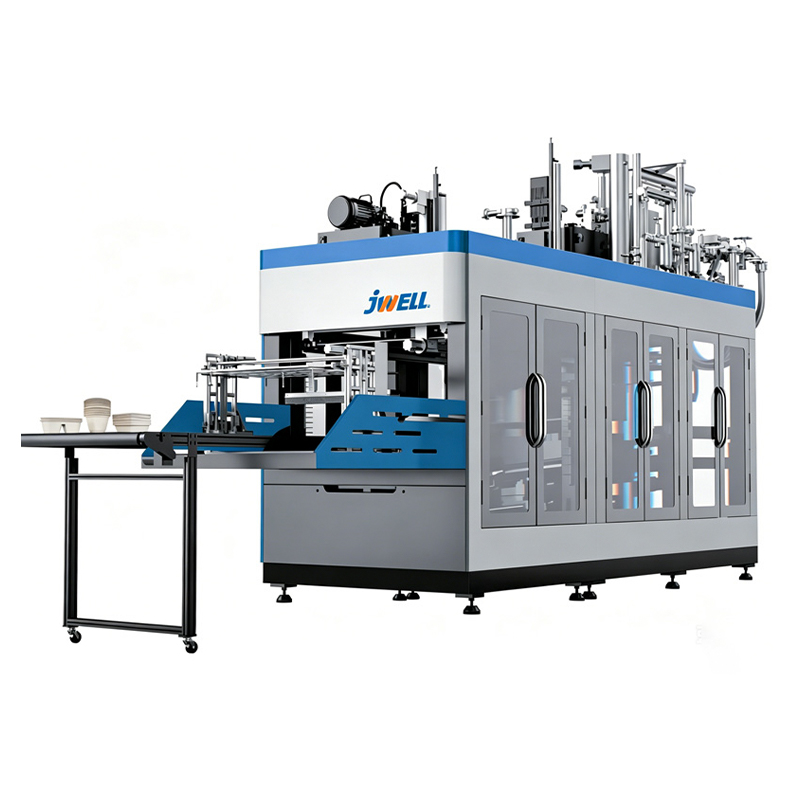


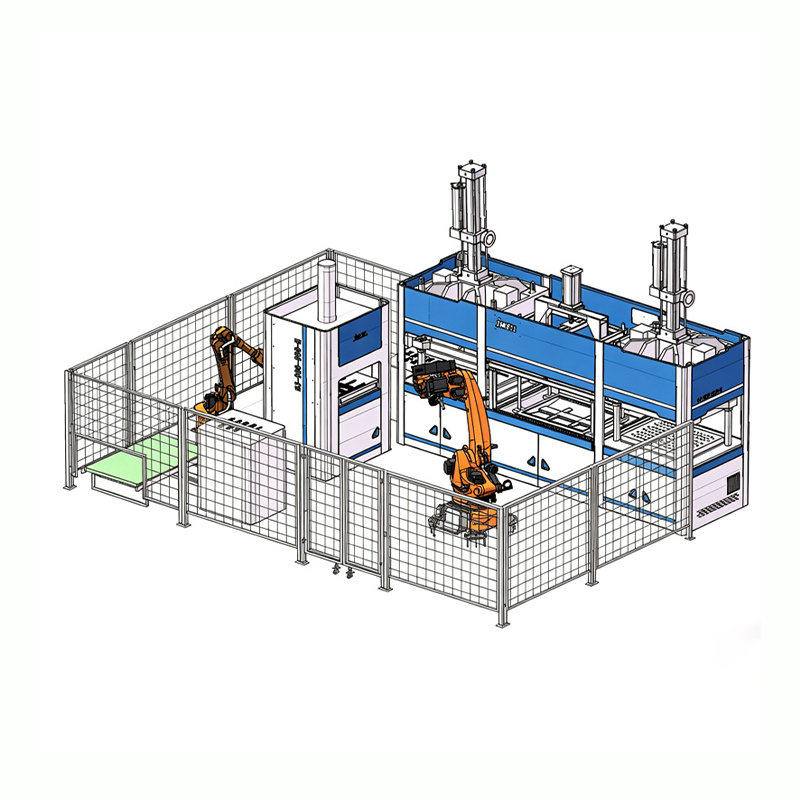


Pipe Extrusion Production Line
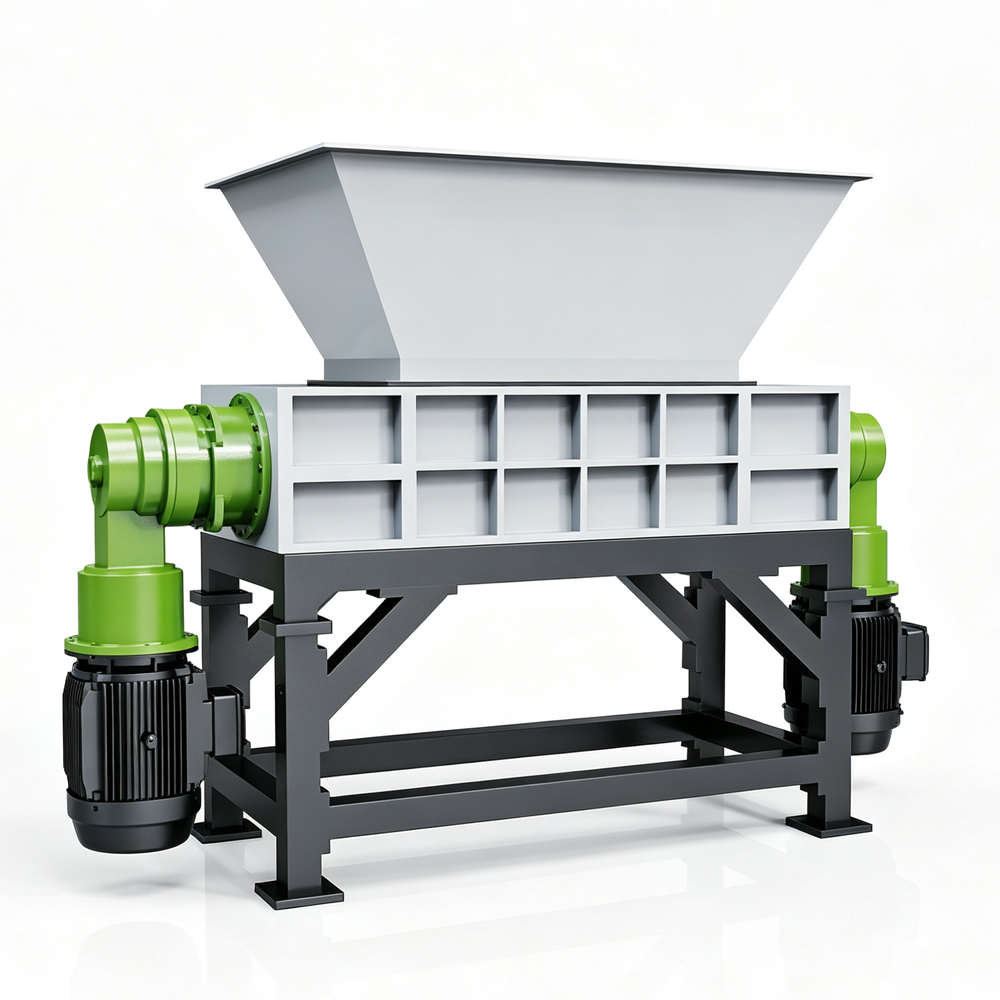
Plastic Shredder Crusher Machine

Tel: +86-19057068112

E-mail: [email protected]

Company Address
No. 128 Qingfeng Road, Xieqiao Town, Haining City, Jiaxing City, Zhejiang Province

19057068112

 English
 русский