
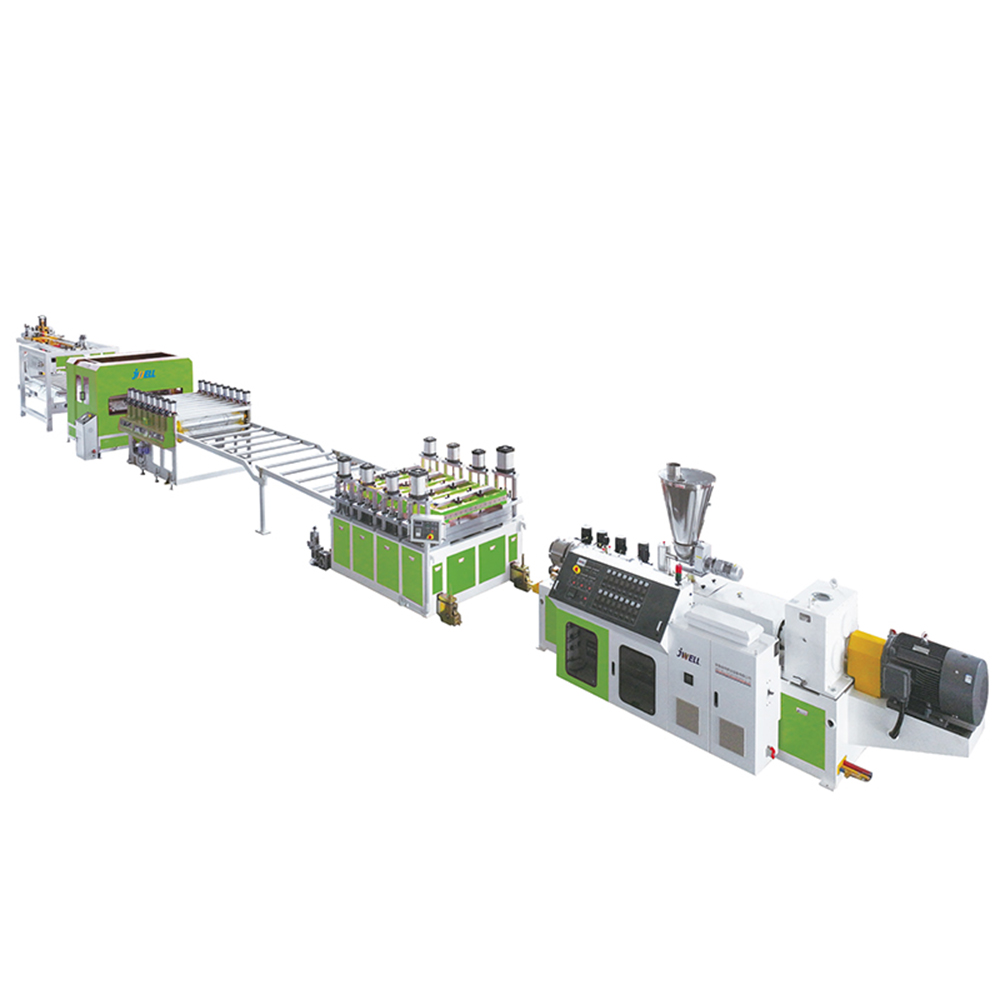
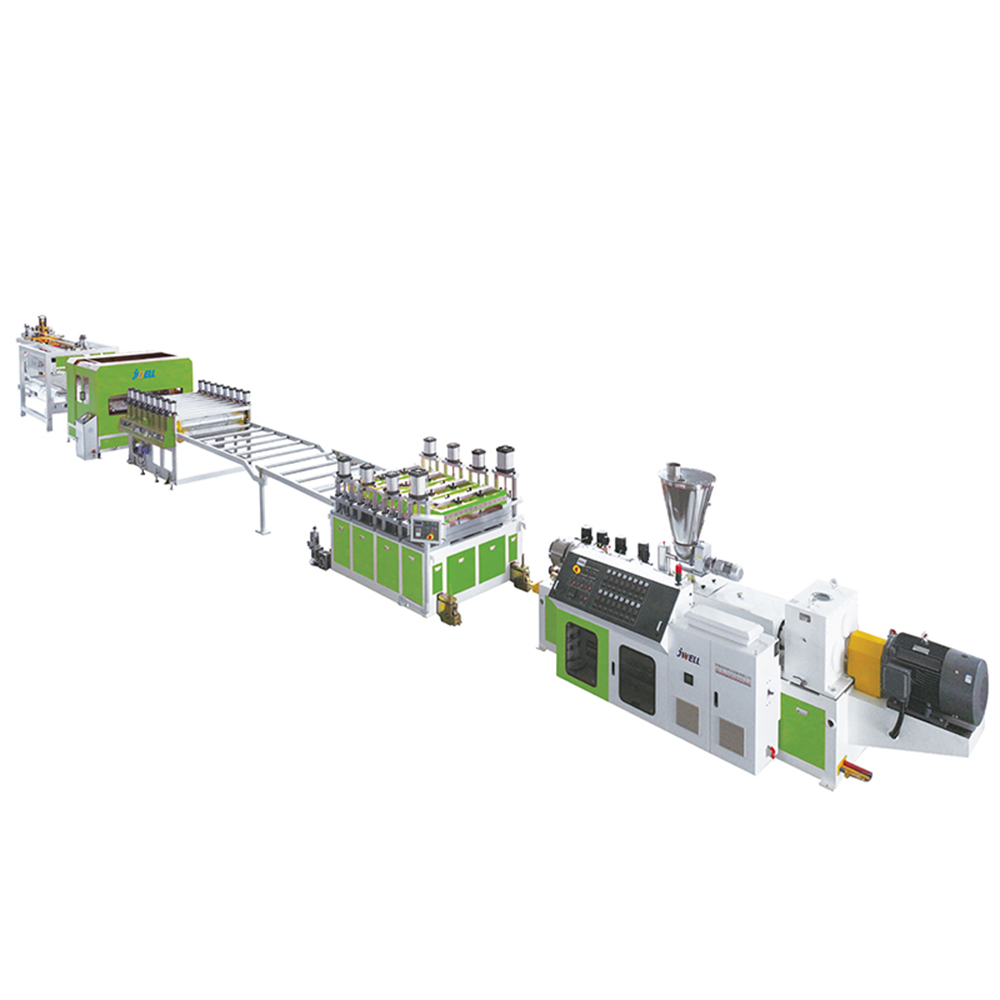
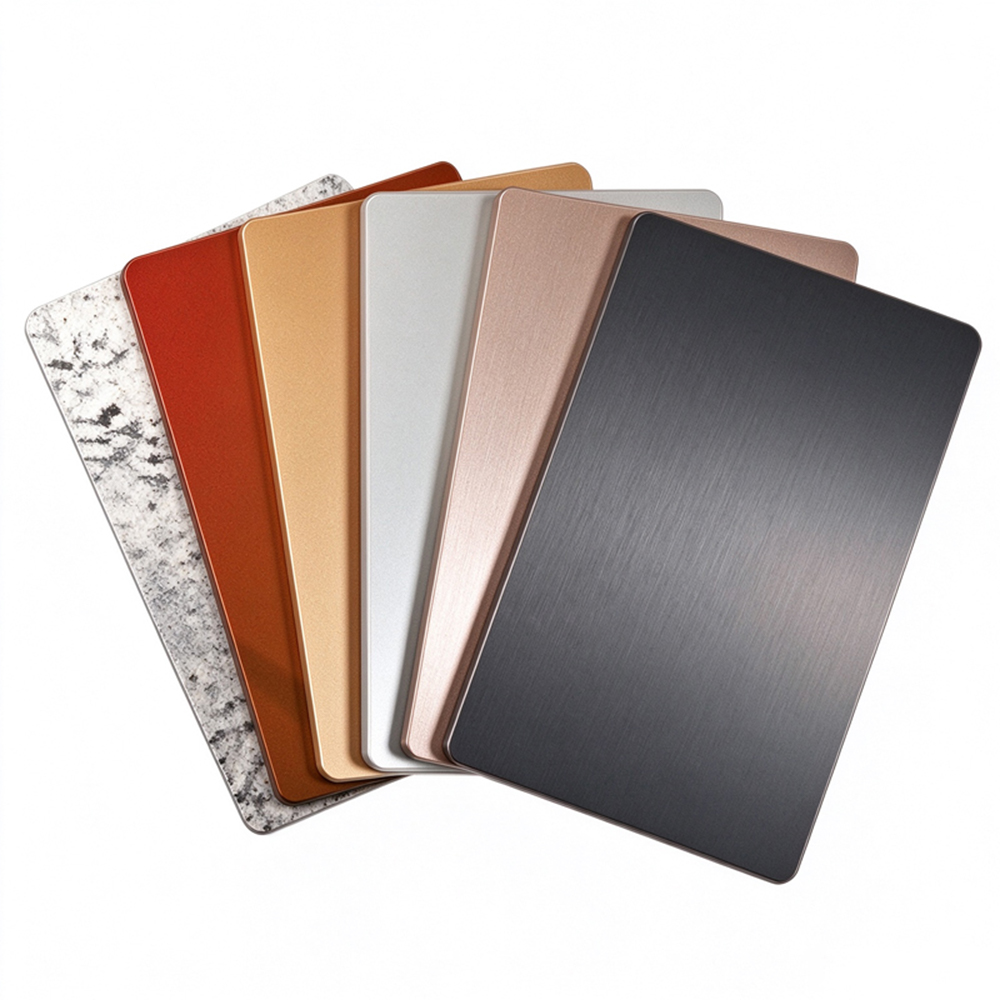
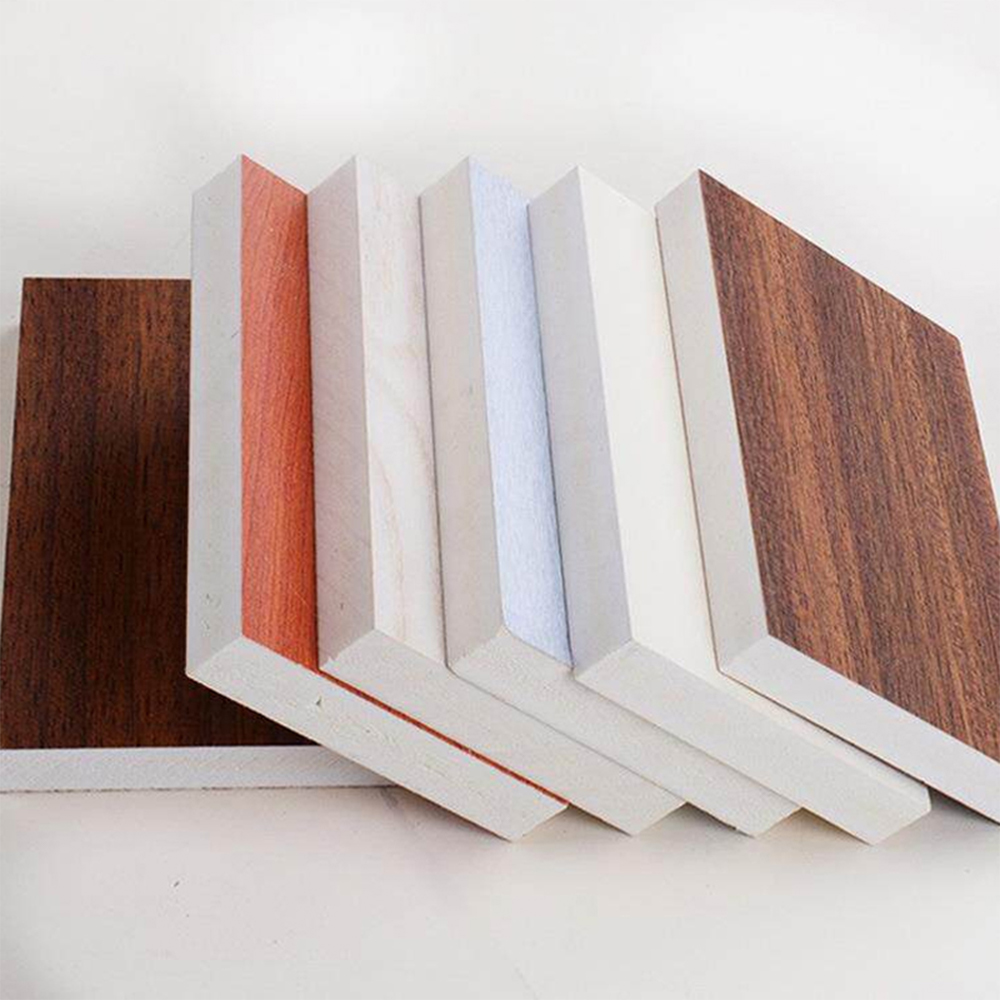
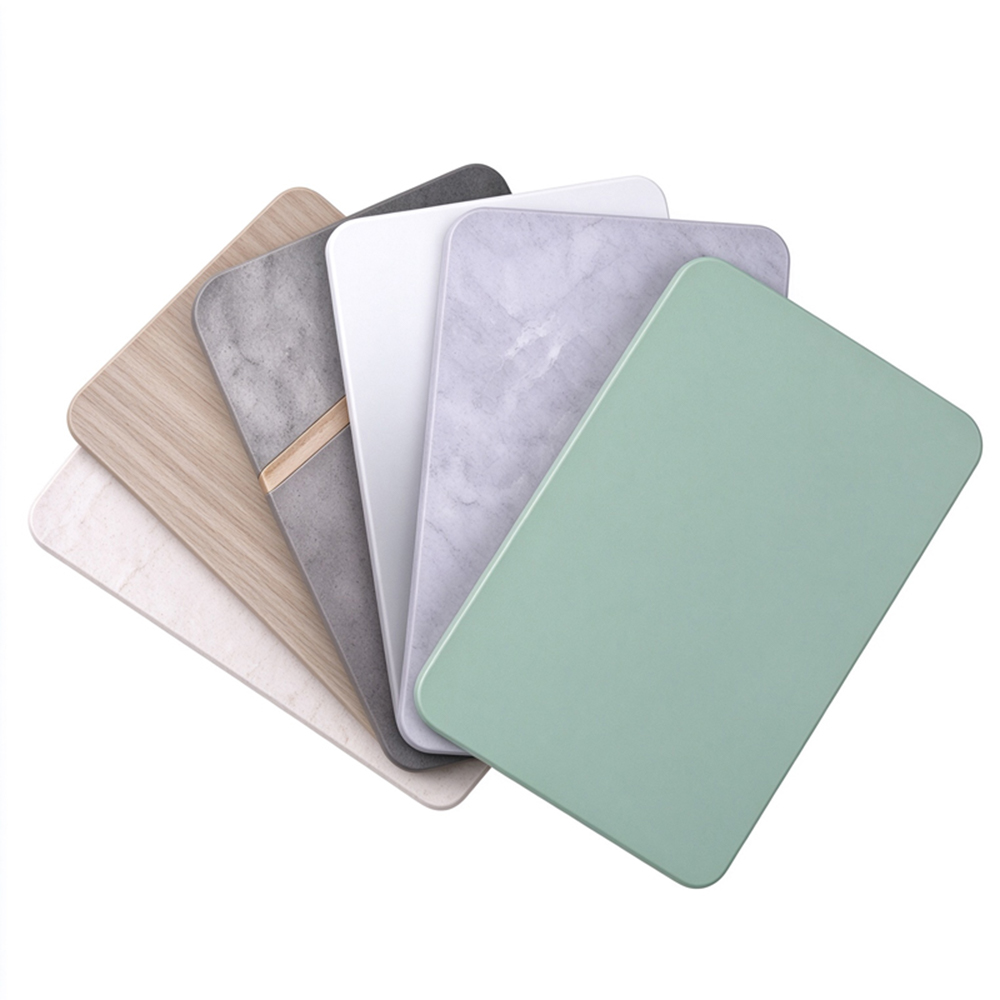
This extrusion line is specifically designed for efficiently producing PVC foam boards, wood veneer decorative panels, and carbon crystal boards. According to the provided data sheet, the system supports two main configurations:
Celuka Foam Board Extrusion Line – Used to produce classic rigid foam boards with a smooth, dense surface.
Co-extruded Foam Board Extrusion Line – Used to produce multi-layer boards with enhanced surface properties (e.g., wood grain, wear-resistant coating).
1. PVC Foam Board – Signage and Construction
Use case: A Vietnamese signage manufacturer uses the celuka line (SJZ80/156) to produce 1220×2440 mm, 5-10 mm thick foam boards for indoor signage. The 75 kW motor and 350 kg/h output allow them to replace imported boards, reducing material costs by 22%.
Typical end products:
Exhibition display boards
PVC ceiling panels
Insulated wall panels
2. Wood Veneer Panel – Furniture and Decoration
Use case: A Turkish furniture factory adopted the co-extrusion line (SJZ65/132 + SJZ80/156). They co-extrude a 0.5 mm wood-grain PVC layer onto a 16 mm foam core. The 1600 mm width allows direct production of wardrobe back panels without splicing. Output reaches 480 kg/h, saving 30% of lamination costs.
3. Carbon Crystal Board – High-End Heat and Moisture Resistance
Use case: A Russian underfloor heating system supplier uses the same co-extrusion line to produce 6-8 mm thick carbon crystal boards. The boards passed a 80°C thermal cycle test (1000 hours) and are now sold as a waterproof, non-toxic alternative to plywood in bathrooms and kitchens.
|
Parameter |
Advantage Explanation |
|
Width 1220–1600 mm |
Conforms to standard building board dimensions, reducing cutting waste. 1600 mm is rare among entry-level lines – provides a competitive edge for large-format boards. |
|
Thickness 3–30 mm |
One machine covers from thin advertising boards (3 mm) to thick construction boards (30 mm). No need for a second line. |
|
SJZ80/156 conical twin screw |
High torque at low shear – ideal for PVC foaming. Ensures uniform cell structure even at 30 mm thickness. |
|
Output 400–500 kg/h (co-extrusion) |
High output reduces energy consumption per kg. For 24/7 continuous production, this equals ~10 tons per day, enough to dominate a small city's market. |
|
Dual motor 37/75 kW |
Energy saving: use 37 kW for thin boards (<10 mm), switch to 75 kW for thick boards or high-speed production. |
|
Co-extrusion capability |
Allows adding functional surface layers (UV-resistant, wood grain, scratch-resistant) without a separate laminating machine. |
Additional practical benefits
Lower density control – The line can produce boards with densities from 0.45 to 0.75 g/cm³. A Chilean customer reported an 18% reduction in weight per pallet, saving freight costs.
Easy color change – The quick-release screw design reduces cleaning downtime from 4 hours to 1.5 hours (verified by a Polish customer).
To ensure that the produced boards consistently meet global standards (ASTM, EN, GB/T), this extrusion line implements the following 5-step quality control protocol.
Step 1 – Raw Material Verification
Tests: Moisture content of PVC resin (<0.3%) and particle size of blowing agent.
Tools: Halogen moisture meter + sieve shaker.
Real case: Following our advice, a Malaysian customer reduced bubble defects by 85% after adding a pre-drying hopper.
Step 2 – In-line Density and Thickness Monitoring
Method: Ultrasonic sensors installed at the calibrator outlet and cooling tank inlet.
Tolerances: Density ±0.02 g/cm³; thickness ±0.1 mm.
Alarm: Automatic speed reduction if deviation exceeds 2% for more than 10 seconds.
Step 3 – Surface Defect Inspection (Vision + Laser)
Laser scanners detect pinholes, scratches, and uneven celuka layers.
Rejection threshold: Any defect >0.5 mm² within the first 100 meters triggers die gap adjustment.
Step 4 – Mechanical Property Sampling (Per Shift)
|
Property |
Test Standard |
Target Value (for 12 mm board) |
|
Flexural strength |
ISO 178 |
≥18 MPa |
|
Surface hardness (Shore D) |
ASTM D2240 |
≥65 |
|
Water absorption (24 hours) |
ASTM D570 |
<1.5% |
|
Heat sag (80°C, 1 hour) |
GB/T 8814 |
<2 mm |
Step 5 – Post-Production Aging Tests (Weekly)
UV aging: 72 hours in QUV tester (UVA-340, 0.89 W/m²·nm) – color difference ΔE <3.
Thermal cycling: -20°C ↔ 60°C, 10 cycles – no cracking or delamination.
Real case: Based on the above tests, we helped a South African customer adjust their calcium carbonate filler ratio from 35% to 28%, after which their product produced on the co-extrusion line passed SABS certification.
| Model | Skinning foaming board extrusion line | Co-extrusion foamed board extrusion line |
| Products width (mm) | 1220-1600 | 1220-1600 |
| Products thickness (mm) | 3-30 | 3-30 |
| Extruder specification | SJZ80/156 | SJZ65/132, SJZ80/156 |
| Capacity (Max.) (kg/h) | 300-400 | 400-500 |
| Main motor power (kw) | 75 | 37/75 |
Q1: Can I produce both solid carbon crystal boards and PVC foam boards on the same line?
A: Yes, but the screw needs to be changed. The SJZ80/156 is a versatile conical twin screw. For solid boards (density >1.2 g/cm³), use a high-compression-ratio screw; for foam boards (density 0.5–0.8 g/cm³), use a barrier screw with a mixing section. We supply both screws along with a 2-hour changeover guide.
Q2: How can I achieve the claimed 500 kg/h output on the co-extrusion line?
A: A Belgian customer consistently achieves 510 kg/h under three practical conditions:
Cooling water temperature: 12–15°C (using a chiller, not cooling tower water).
Die lip opening: set to 1.1 times the final thickness (e.g., 13.2 mm for a 12 mm board).
Main screw speed: 32–35 rpm; feed screw speed synchronized within a 3% difference.
Q3: The maximum width is 1600 mm. Do I need special downstream equipment?
A: The calibrator, puller, and cutter are all compatible with 1600 mm width. However, for boards thicker than 20 mm, we recommend adding an optional six-roll cooling rack to prevent edge sagging – learned from a Spanish customer who initially found edges 2 mm thinner at 25 mm thickness.
Q4: What is the energy consumption per ton?
A: Measured on the celuka line (75 kW motor, 350 kg/h output): average 215 kWh/ton (including main motor, heating, and vacuum calibration). For the co-extrusion line (37+75 kW, 450 kg/h output): 195 kWh/ton, because the auxiliary extruder runs at a lower load. Using VFDs on the main motors saves an additional 12-15%.
Q5: How often does the screw need to be rebuilt?
A: With suitable materials (no heavy calcium-filled waste with high recyclate content), the bimetallic screw lasts 8000–10000 hours. A Portuguese customer running 20 hours/day had a rebuild after 14 months (~8400 hours). We stock pre-assembled spare screws to avoid downtime – replacement can be done within 3 hours.
Q6: Can I co-extrude a layer of wood-fiber composite?
A: Yes, but the auxiliary extruder screw needs to be modified to a low-compression-ratio, long-metering-section design (L/D 28:1). A Brazilian customer successfully co-extruded 40% wood flour + PVC onto a 10 mm foam core, achieving a "wood-plastic composite" appearance without adding excessive weight.




Pipe Extrusion Production Line
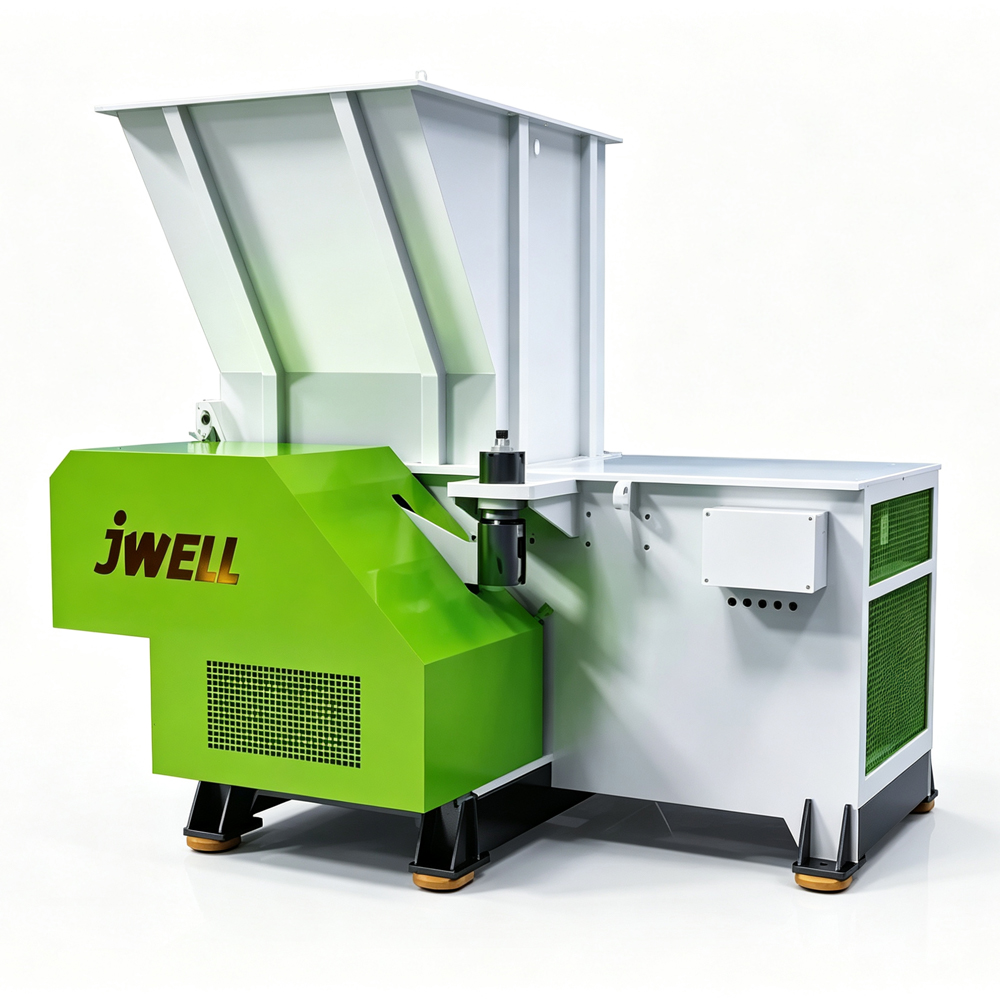
Plastic Shredder Crusher Machine

Tel: +86-19057068112

E-mail: [email protected]

Company Address
No. 128 Qingfeng Road, Xieqiao Town, Haining City, Jiaxing City, Zhejiang Province

19057068112

 English
 русский