
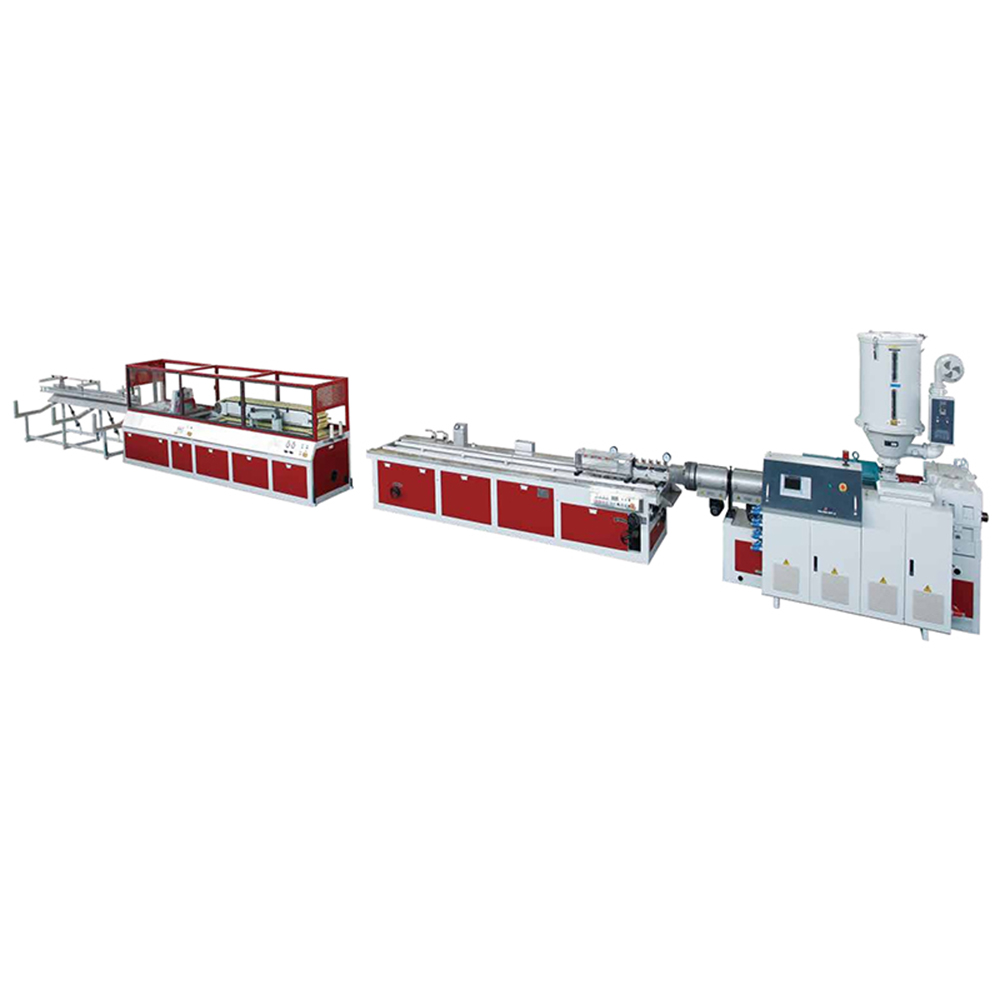
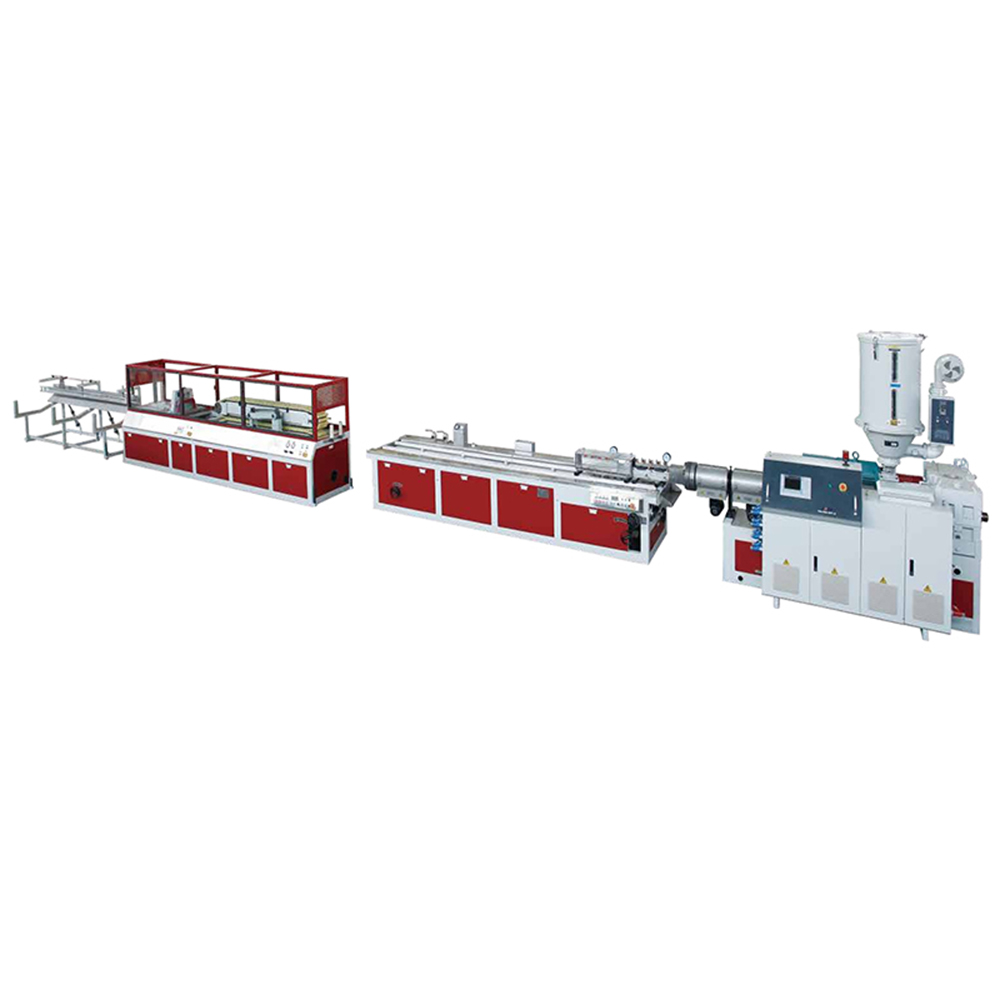
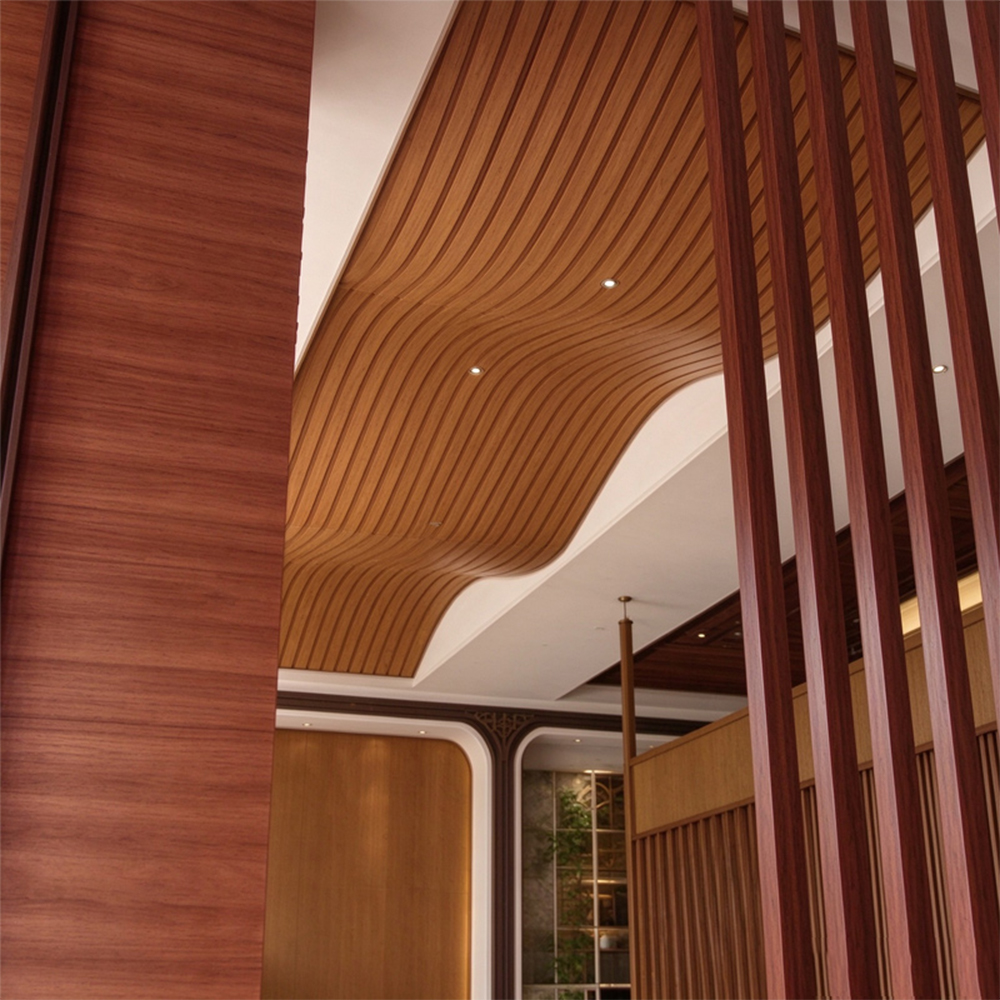
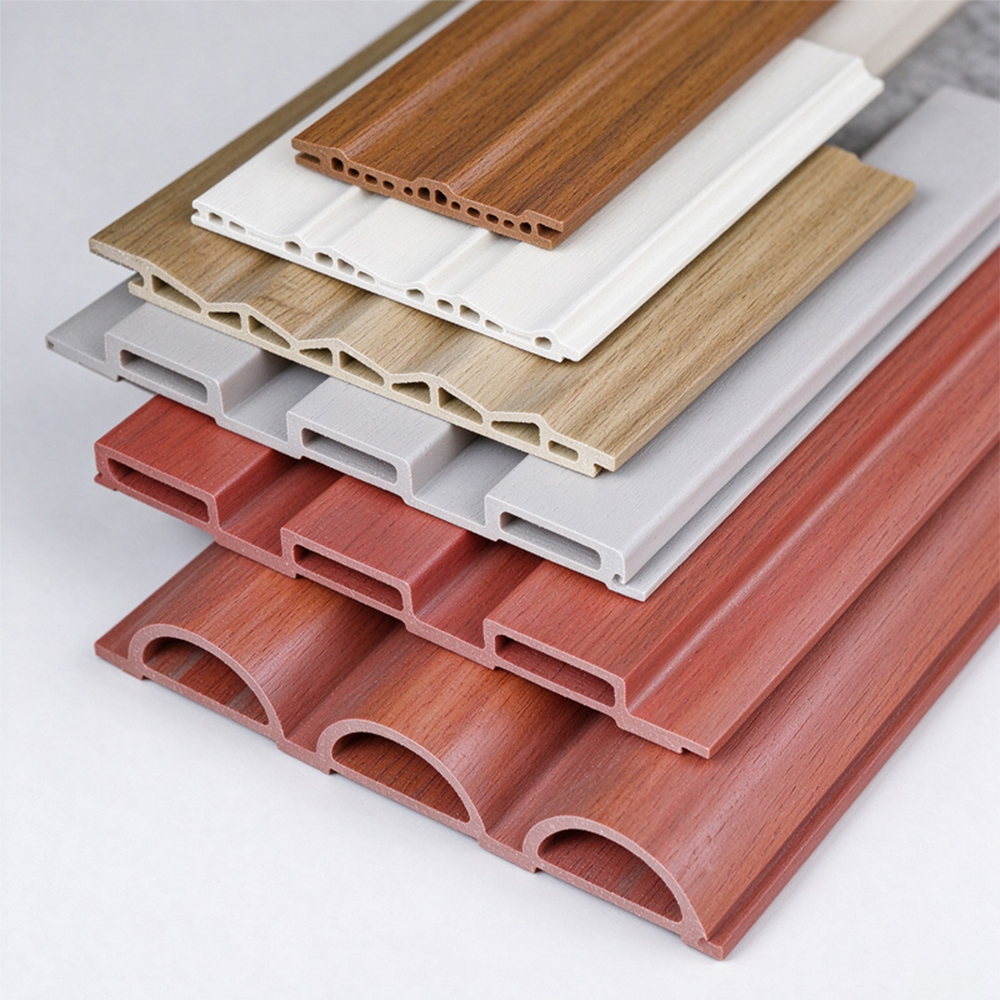
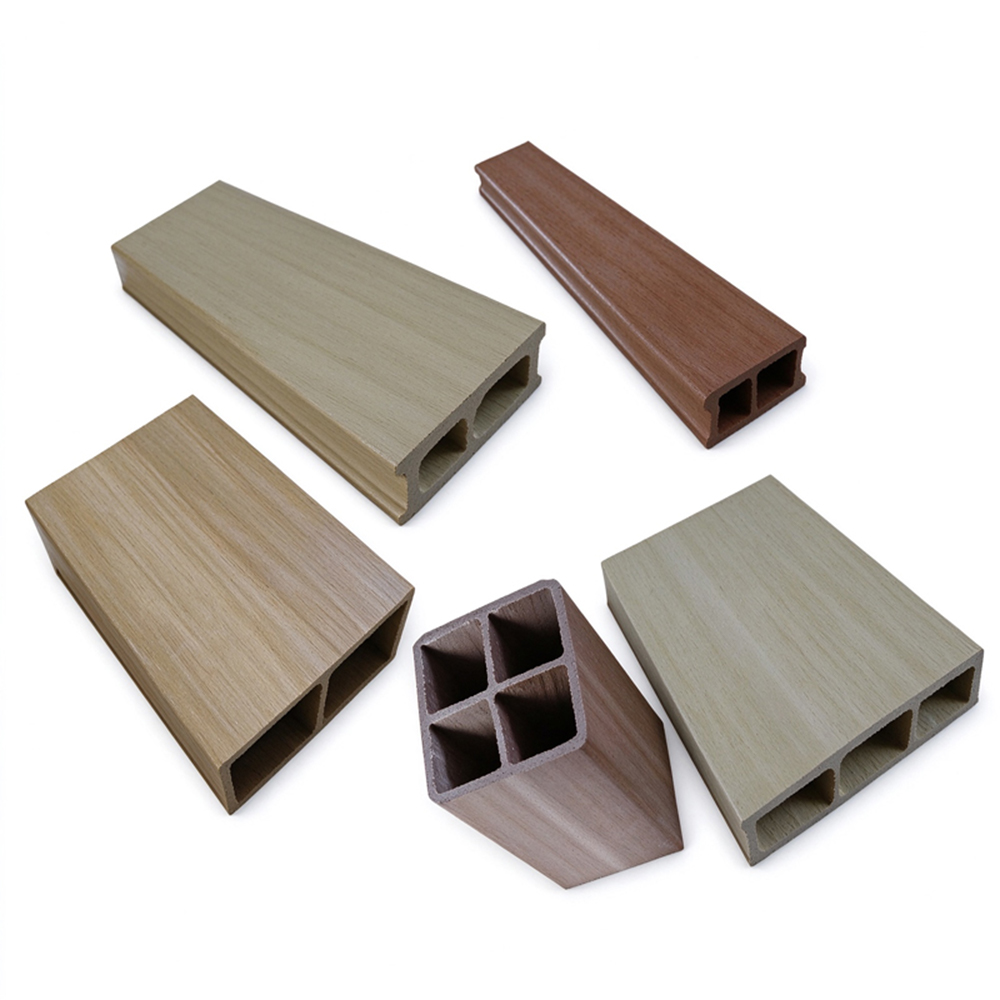
The PVC single screw wood-plastic foam board extrusion line is a specialized production system for manufacturing lightweight, high-strength wood-plastic composite (WPC) profiles and foamed sheets. This production line combines PVC resin with wood fiber or other fillers to produce environmentally friendly materials that mimic natural wood, while offering excellent durability, water resistance, and dimensional stability.
These extrusion lines are widely used in construction, interior decoration, furniture, and outdoor landscaping. Typical end products include:
Flooring & decking (width up to 300 mm): for gardens, pool surrounds, and public walkways.
Fences & railings (108–240 mm): privacy screens, balcony railings, and garden fences.
Door & window frames (108–180 mm): energy-saving, moisture-resistant profiles.
Wall panels & ceiling panels (240–300 mm): interior and exterior decorative panels with wood grain texture.
Automotive interior parts (small profiles): lightweight, low-VOC components.
For example, a furniture manufacturer in Southeast Asia uses the YF240 line (max width 240 mm, output 90 kg/h) to produce foamed WPC sheets for modular kitchen cabinets. The sheet density is 0.55 g/cm³, reducing shipping weight by 30% compared to solid wood.
Wide Product Width Range
The system can produce finished product widths from 108 mm to 300 mm. This flexibility allows you to switch between different products using the same extruder series (only changing downstream equipment), from small decorative lines (YF108) to wide decking boards (YF300).
Optimized Single Screw Design (L/D = 25:1)
All extruders (JWS45/25 to JWS120/25) feature an L/D ratio of 25:1. This provides sufficient shear and mixing for wood fiber dispersion without degrading the PVC matrix. Compared to twin-screw solutions, single screw lines are more energy-efficient and easier to maintain, especially for applications like foamed WPC that require gentle mixing.
Energy-Efficient Motor Power
JWS45/25: 11 kW – for small profiles (output 20 kg/h).
JWS65/25: 22 or 30 kW – dual options to match output (50–70 kg/h).
JWS75/25: 37 or 45 kW – achieves 90 kg/h with low specific energy consumption.
JWS90/25 or JWS120/25: 55 kW – achieves high output of 150 kg/h.
Real-world example: A recycling plant in Poland retrofitted a JWS75/25 line with a 37 kW motor. They used 80% recycled PVC + wood flour and achieved 85 kg/h with only 0.44 kWh per kg, which is 20% lower than comparable twin-screw lines.
Precise Cooling & Air Requirements
Cooling water: 7–9 m³/h – ensures rapid and uniform solidification of foamed cells, preventing collapse.
Compressed air: 0.5–0.8 m³/min – lower than many competitors, reducing operating costs.
High Foaming Quality
The combination of single screw shear control, die design, and cooling calibration produces a closed-cell foam structure with density as low as 0.45 g/cm³ (YF108) up to 0.75 g/cm³ (YF300 profiles for heavy loads). This provides an excellent strength-to-weight ratio.
In our factory, each extrusion line undergoes a 5-stage quality assurance process before shipment. We also provide a checklist for customers to use in their own production.
Raw Material & Component Inspection
Screw and barrel hardness (HRC 55–60) – tested with Rockwell hardness tester.
Heating bands – temperature uniformity check (±1°C).
Wood fiber moisture content – must be below 2% to avoid foaming defects.
Process Parameter Verification
Using the actual parameters listed in the table, we run each line continuously for 8 hours:
Motor load test: Verify that at maximum output (e.g., 150 kg/h for YF300), motor current does not exceed 110% of rated value.
Cooling water flow accuracy: Flow meter confirms the specified 7–9 m³/h.
Compressed air stability: Pressure drop <0.05 bar at 0.8 m³/min flow rate.
Product Dimensional & Appearance Inspection
Width tolerance: ±0.5 mm for all models (laser sensor measurement).
Surface finish: No shark skin, bubbles, or unmixed wood particles (standard AATCC 124).
Cell structure: Cross-section microscopic inspection – average cell diameter 50–150 μm, uniform distribution.
Mechanical & Physical Testing (Sample pieces)
For each production line, we extrude a 10-meter test batch:
Density (ASTM D792): target 0.5–0.7 g/cm³ depending on width.
Flexural strength (ASTM D790): ≥18 MPa for 240 mm boards.
Water absorption (ASTM D570): <1.5% after 24-hour immersion.
Heat deflection temperature (ASTM D648): >70°C at 1.82 MPa.
Long-Term Running Stability
We simulate continuous operation at 90% of maximum output for 72 hours. Data loggers record screw speed, motor current, melt temperature, and cooling water return temperature. Acceptance criterion: all parameters within ±5% of set values.
| Production width (mm) | 108 | 180 | 240 | 300 |
| Extruder type | JWS45/25 | JWS65/25 or JWS75/25 | JWS90/25 | JWS120/25 |
| motor power (kw) | 11 | 22/30 | 37/45 | 55 |
| Type | YF108 | YF180 | YF240 | YF300 |
| Output (kg/h) | 20 | 50/70 | 90 | 150 |
| Cooling water (m³/h) | 7 | 7/7 | 8 | 9 |
| Compressor air (m³/min) | 0.5 | 0.6/0.6 | 0.8 | 0.8 |
Q1: Why does the JWS65/25 model show an output range of "50/70 kg/h"?
A: The lower value (50 kg/h) applies to extruding highly filled (≥40% wood fiber) foamed profiles, while 70 kg/h is achievable with unfilled or rigid PVC. The motor power (22 kW vs 30 kW) also allows users to upgrade for higher output.
Q2: Can I use the same line to produce non-foamed solid WPC?
A: Yes. By removing the foaming agent and adjusting the die gap, the same line can extrude solid WPC. However, maximum output will decrease by about 20–25% due to increased back pressure. For example, the YF240 line (normally 90 kg/h for foamed) will produce around 70 kg/h for solid WPC.
Q3: How to avoid uneven cell structure (large cells or skin collapse)?
A: Based on our actual troubleshooting cases, three key factors:
Cooling water temperature: keep at 15–20°C. Above 25°C leads to cell coalescence.
Melt temperature: keep between 160–170°C for PVC/wood flour foaming. The last heating zone can be used as a cooling zone if necessary.
Screw speed: for JWS75/25, do not exceed 45 rpm when targeting density <0.6 g/cm³.
Q4: The compressed air consumption looks very low (0.5–0.8 m³/min). Is this sufficient for vacuum calibration?
A: Yes, because our calibrator uses a venturi vacuum system that requires only 0.5–0.8 m³/min (6–8 bar pressure) to generate -0.6 to -0.8 bar vacuum. A customer using the YF180 line reported 40% lower energy consumption compared to conventional systems, using a 7.5 kW air compressor.
Q5: What is the typical payback period for a YF240 line (90 kg/h)?
A: Based on a 2023 installation case in Vietnam:
Line price: approx. US$58,000 (FOB)
Output: 600 kg/day (single shift, 20 working days = 12 tons/month)
Selling price of WPC decking: US$950/ton
Material cost: US$520/ton → gross profit US$430/ton
Monthly gross profit: US$5,160 → payback period approx. 11 months (excluding labor and overheads).
Q6: Can I use the JWS120/25 extruder to produce 300 mm width products?
A: Absolutely. Although the table lists JWS90/25 as sufficient for 150 kg/h output, the JWS120/25 (not shown in the width row) can be paired with YF300 downstream equipment. It provides higher torque for difficult-to-mix formulations (e.g., 60% wood flour content). Real-world example: A profile manufacturer in Turkey uses JWS120/25 + YF300 to extrude 300×40 mm decking boards at 180 kg/h.




Pipe Extrusion Production Line
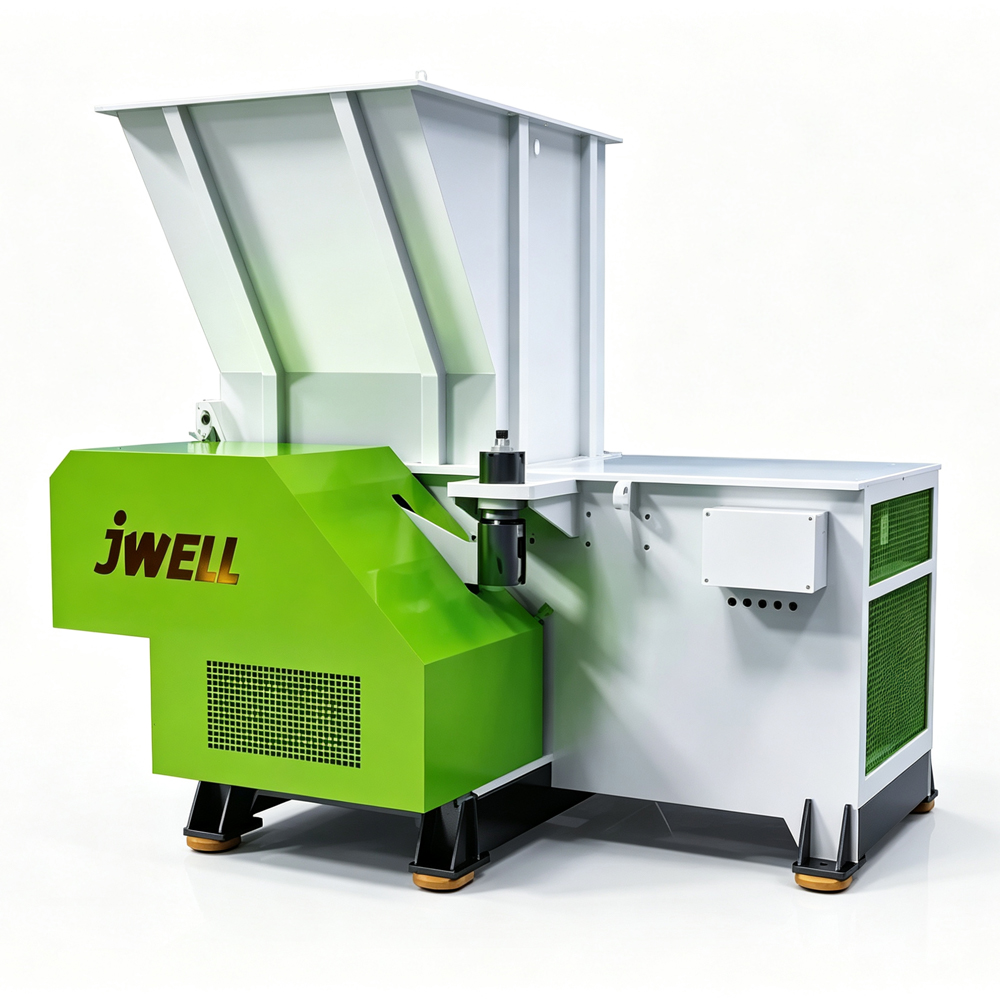
Plastic Shredder Crusher Machine

Tel: +86-19057068112

E-mail: [email protected]

Company Address
No. 128 Qingfeng Road, Xieqiao Town, Haining City, Jiaxing City, Zhejiang Province

19057068112

 English
 русский