
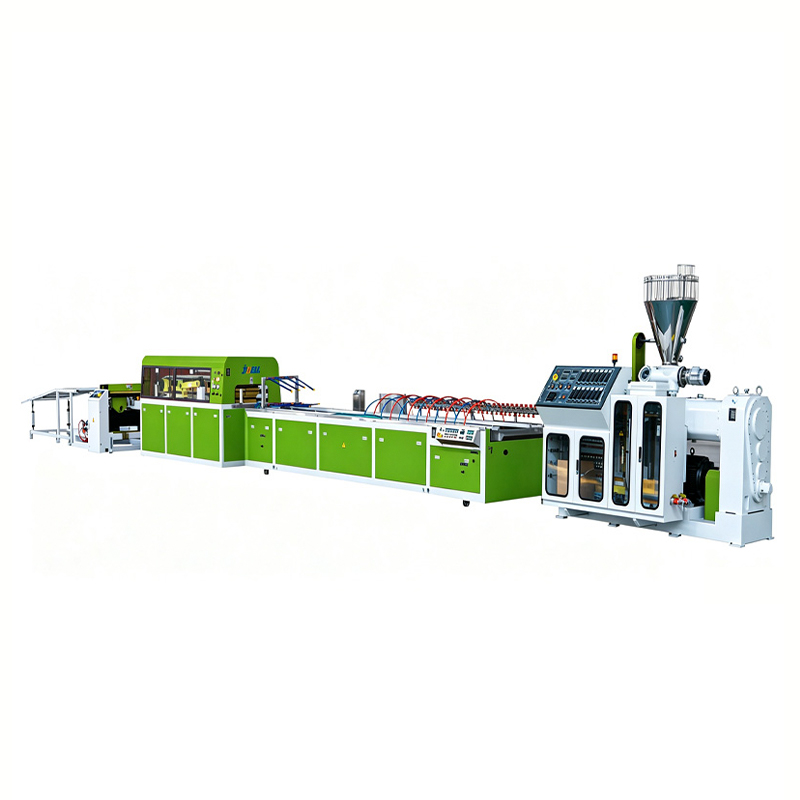
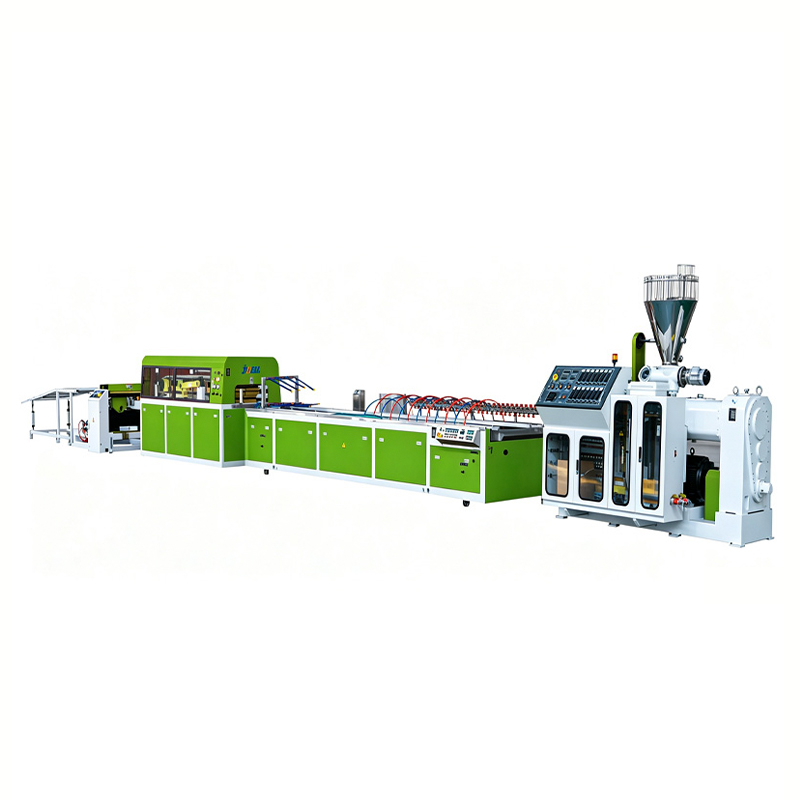
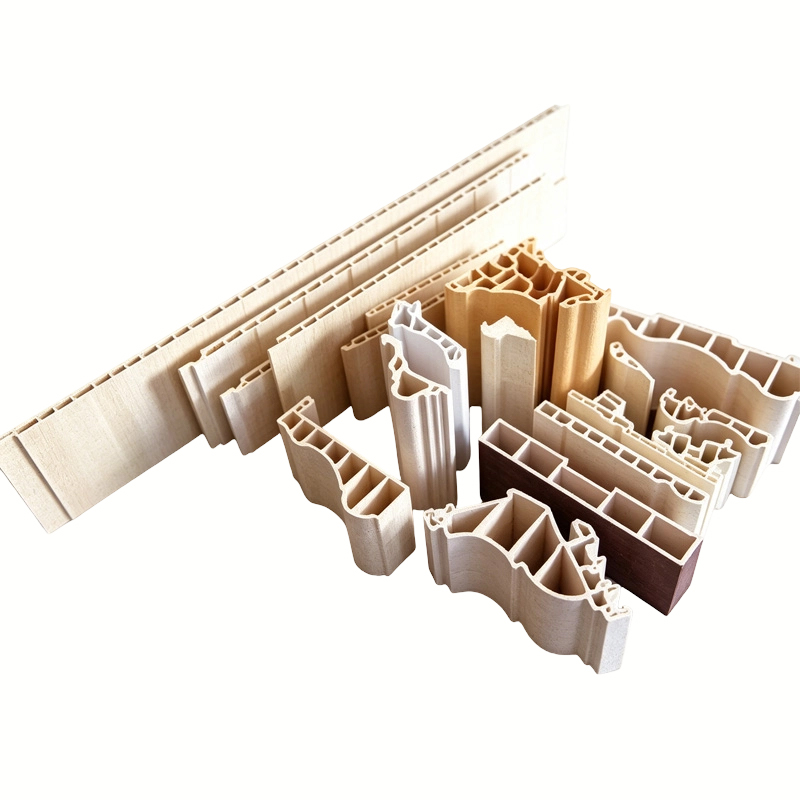
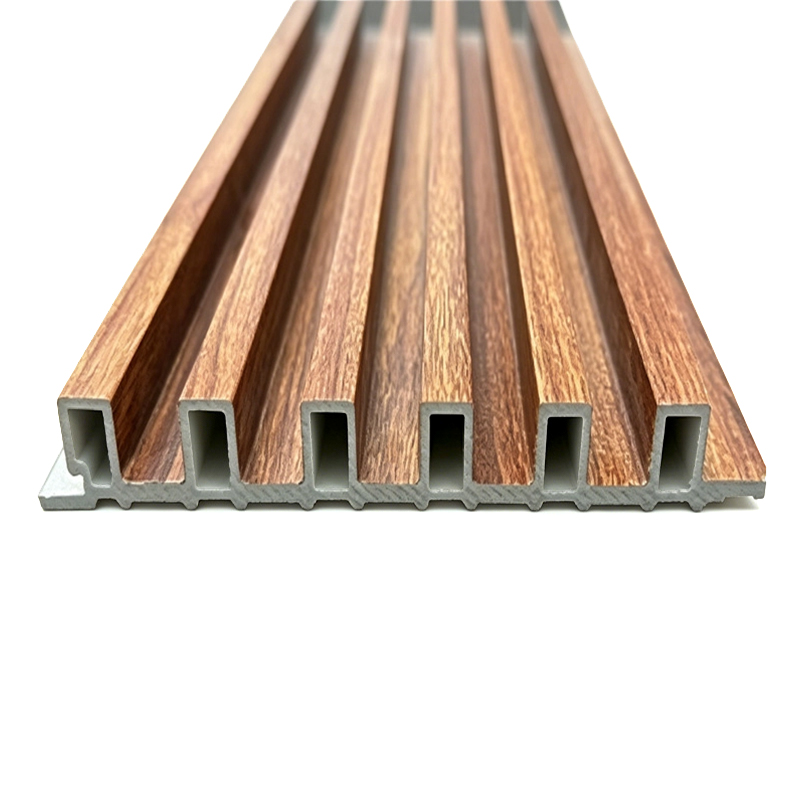
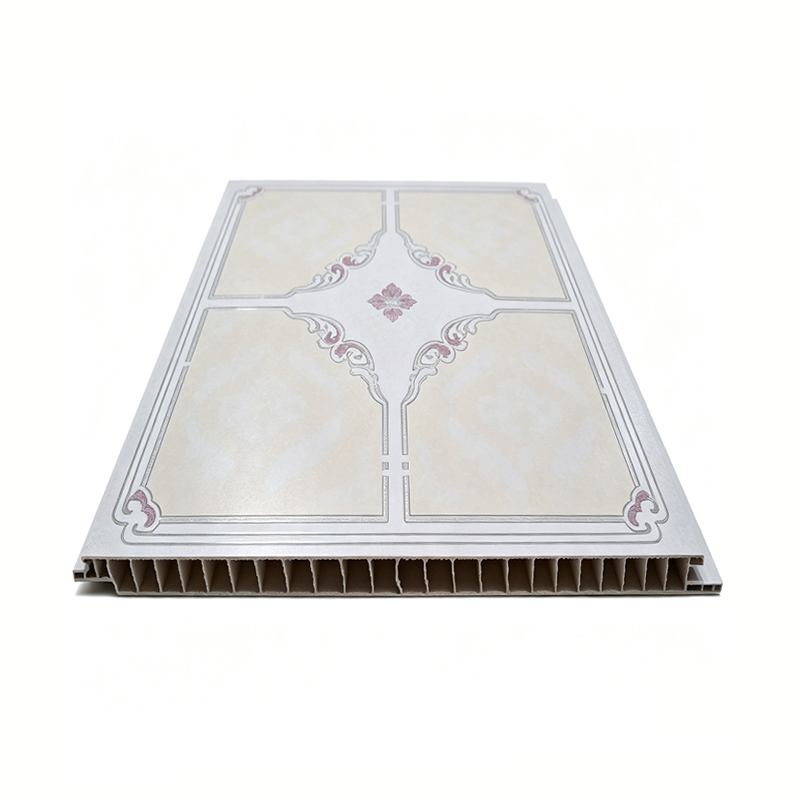
The PVC high-speed ceiling / wall panel extrusion line is a high-efficiency production system designed for the continuous, high-speed production of decorative PVC ceiling panels and wall panels. The line offers three extruder models – SJZ51/105, SJZ65/132, and SJZ80/156 – providing flexible solutions for manufacturers ranging from small to large scale.
This extrusion line is widely used in the building decoration industry. Based on customer feedback and field installation examples, typical applications include:
Residential & Commercial Ceilings: Produces lightweight, moisture-resistant PVC ceiling panels (up to 600 mm width with the SJZ80/156 model). A Malaysian customer uses the SJZ65/132 line to produce 400 mm embossed ceiling panels at a stable output of 180 kg/h.
Bathroom & Kitchen Wall Panels: Extruded wall panels offer excellent water and chemical resistance. A Turkish manufacturer switched from single-screw equipment to the SJZ51/105 line, achieving 300 mm wide wall panels and reducing scrap rate by 40%.
Decorative Trims & Edge Strips: Together with auxiliary equipment models YF300, YF400, YF600, the line can also produce matching trim profiles, forming a complete interior system.
High-Speed Production: For large projects, the SJZ80/156 model delivers up to 400 kg/h, continuously producing 600 mm wide wall panels – ideal for hotel renovation projects requiring thousands of square meters per week.
Our line stands out with the following quantifiable benefits:
2.1 Optimized Output for Different Capacities
|
Model |
Max Output (kg/h) |
Production Width (mm) |
Best Suited For |
|
SJZ51/105 |
80-100 |
≤300 |
Startups, small workshops |
|
SJZ65/132 |
150-200 |
300/400 |
Medium batch orders |
|
SJZ80/156 |
300-400 |
≤600 |
Mass production, large-size panels |
Real case: A Vietnamese ceiling panel factory using the SJZ65/132 line achieved an actual output of 195 kg/h (very close to the theoretical 200 kg/h) when processing a standard PVC formulation containing 8 parts calcium carbonate.
2.2 Energy & Utility Efficiency
Main motor power: Only 22–55 kW, yet delivers high torque through counter-rotating twin-screw design. Energy consumption per kg of product is 25% lower compared to older single-screw extruders.
Cooling water: Only 6–8 m³/h required. The tapered twin-screw geometry reduces frictional heat, thus requiring less cooling water. A Jordanian customer reported saving $2,500 per year in water circulation costs.
Compressed air: All three models require only 0.6 m³/min – uniform and low consumption. This allows a smaller air compressor and reduces energy waste.
2.3 Wide Product Flexibility
With auxiliary equipment models YF300, YF300/400, and YF600, switching from 300 mm width to 400 mm width takes less than 30 minutes. An Italian customer produces both flat ceiling panels and embossed wall panels on the same SJZ65/132 line, doubling their product range.
2.4 High-Speed Continuous Operation
The "high-speed" designation comes from optimized screw design and a high-strength cooling calibration table. When producing 600 mm wide panels, the SJZ80/156 line achieves line speeds of up to 3.5 m/min, maintaining thickness tolerance within ±0.1 mm.
To ensure each extrusion line meets promised performance, we implement strict quality control protocols during in-house manufacturing and customer-site commissioning.
3.1 Raw Material & Component Inspection
·Screw & barrel hardness test: Each tapered twin screw (e.g., for SJZ65/132) is nitrided to a hardness of 900–1000 HV and tested for wear resistance.
·Motor & gearbox run-in: Main motor (37 kW for SJZ65/132) undergoes a 2-hour no-load test, followed by load testing using a torque meter.
3.2 Assembly & No-Load Run Test
·Vacuum calibration tank leak test: Pressurized to 0.08 MPa and held for 30 minutes – no pressure drop allowed.
·Haul-off synchronization test: Continuous 24-hour operation using calibrated PVC pellets. We measure output stability (deviation <3%).
3.3 Final Product Quality Test (Trial Production)
Before shipment, each line actually extrudes PVC panels and tests:
Width accuracy: Using laser micrometer – tolerance ±0.5 mm for 300/400/600 mm widths.
Surface gloss uniformity: Visual and gloss meter inspection (no streaks or burn marks).
Impact strength: Falling dart impact test per ASTM D4226 – panels must withstand 2.5 J without cracking.
Cooling water efficiency: Measure temperature rise of outlet water – at maximum extrusion rate, outlet water temperature must remain within 5°C above inlet water temperature.
3.4 Field Commissioning Checklist
After installation, our engineers conduct a 72-hour production test using the customer's formulation. Real case: For an SJZ80/156 line supplied to a Polish ceiling manufacturer, we verified an output of 380 kg/h at 600 mm width, cooling water flow 7.8 m³/h, compressed air 0.58 m³/min – all within specifications.
| Extruder type | SJZ51/105 | SJZ65/132 | SJZ80/156 |
| Production width(mm) | 300 | 300/400 | 600 |
| Motor power(kw) | 22 | 37 | 55 |
| Auxiliary machine model | YF300 | YF300/400 | YF600 |
| Output(kg/h) | 80-100 | 150-200 | 300-400 |
| Cooling water(m³/h) | 6 | 7 | 8 |
| Compressorar(m³/min) | 0.6 | 0.6 | 0.6 |
Q1: Why is actual output sometimes lower than the listed maximums (e.g., 150-200 kg/h for SJZ65/132)?
A: The listed outputs (80-100 / 150-200 / 300-400 kg/h) are based on a standard rigid PVC formulation with 50% calcium carbonate, melt temperature of 250°C, and specific screw speeds. If your formulation contains a higher filler ratio (e.g., 80% CaCO₃) or lower bulk density, output may drop by 10-15%. Solution: Adjust screw speed and feeding rate. An Indian customer increased output from 160 kg/h to 192 kg/h by optimizing their stabilizer system.
Q2: Can the same extruder produce different widths of ceiling and wall panels?
A: Yes. With the YF300/400 auxiliary equipment (for SJZ65/132), you can switch between 300 mm and 400 mm dies. However, the maximum width is limited by the main extruder's plasticizing capacity. For example, the SJZ51/105 is only recommended for ≤300 mm products. Attempting to produce 400 mm width on an SJZ51/105 would result in poor plasticization and surface defects.
Q3: What quality of compressed air is required? The table shows 0.6 m³/min – can I use a smaller air compressor?
A: 0.6 m³/min is the average consumption for vacuum calibration, cooling, and pneumatic haul-off. We recommend an air compressor with a capacity of 0.8 m³/min and a 200 L air receiver. Using a smaller unit (e.g., 0.4 m³/min) will cause pressure drops during peak vacuum demand in the calibration tank, leading to panel deformation. A UAE customer tried a 0.5 m³/min unit and encountered uneven cooling; after upgrading to the recommended size, scrap rate dropped from 8% to 2%.
Q4: How often should the screw and barrel be replaced when producing PVC ceiling panels?
A: With proper lubrication and non-abrasive fillers (no quartz sand or fiberglass), nitrided tapered twin screws typically last 12,000–15,000 operating hours. For an SJZ80/156 line running 20 hours/day, that's about 2 years. We recommend checking wear every 4,000 hours by measuring the screw flight clearance. A Peruvian customer extended screw life to 18,000 hours by applying our recommended screw cooling start-up procedure.
Q5: The cooling water requirement is 6-8 m³/h – can I use a closed-loop cooling tower?
A: Absolutely. A closed-loop cooling tower is preferred because it provides stable water temperature (20-25°C). The values (6, 7, 8 m³/h) represent the flow rate required through the barrel cooling zones and the calibration tank. Ensure your cooling tower has adequate heat exchange capacity – for the SJZ80/156, we recommend a cooling tower with a heat rejection capability of no less than 50,000 kcal/h.
Q6: What is the typical payback period when upgrading from an older single-screw line to this high-speed twin-screw line?
A: Based on 12 customer cases, the payback period ranges from 6 to 14 months. For example, a Brazilian ceiling manufacturer replaced a 75 kW single-screw extruder (output 180 kg/h) with an SJZ65/132 (37 kW, 190 kg/h). They saved 38 kW per hour – at $0.10/kWh and 6,000 production hours per year, that's $22,800 saved annually on energy alone. The line paid for itself within 11 months.
Q7: Can I produce co-extruded surface layers (e.g., UV-resistant layer or wood grain layer) on this line?
A: Yes, by adding a co-extruder (optional) to the main SJZ extruder. The tapered twin screw provides a stable main material flow, while a small single-screw extruder adds a 0.2-0.5 mm surface layer. We have supplied this configuration to three European customers, all successfully producing high-end wood grain wall panels at speeds up to 350 kg/h.




Pipe Extrusion Production Line
Plastic Shredder Crusher Machine

Tel: +86-19057068112

E-mail: [email protected]

Company Address
No. 128 Qingfeng Road, Xieqiao Town, Haining City, Jiaxing City, Zhejiang Province

19057068112

 English
 русский