
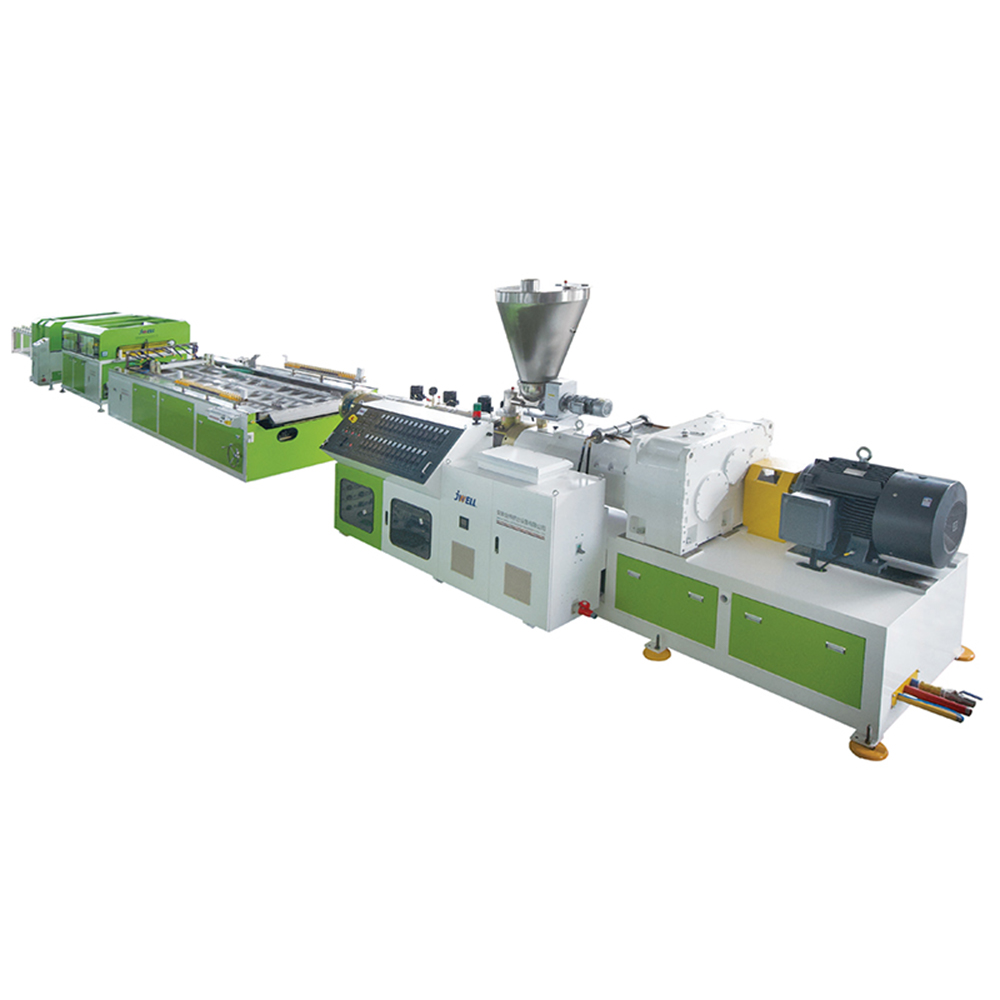
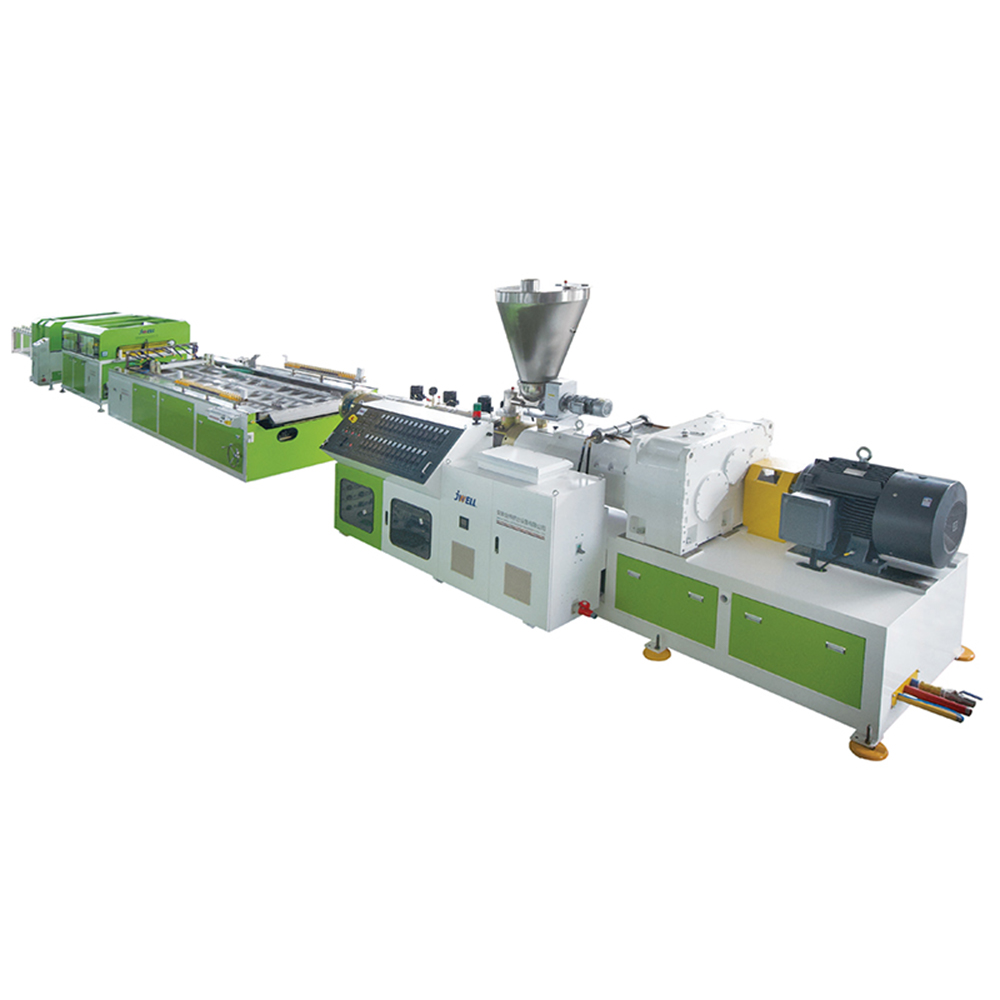
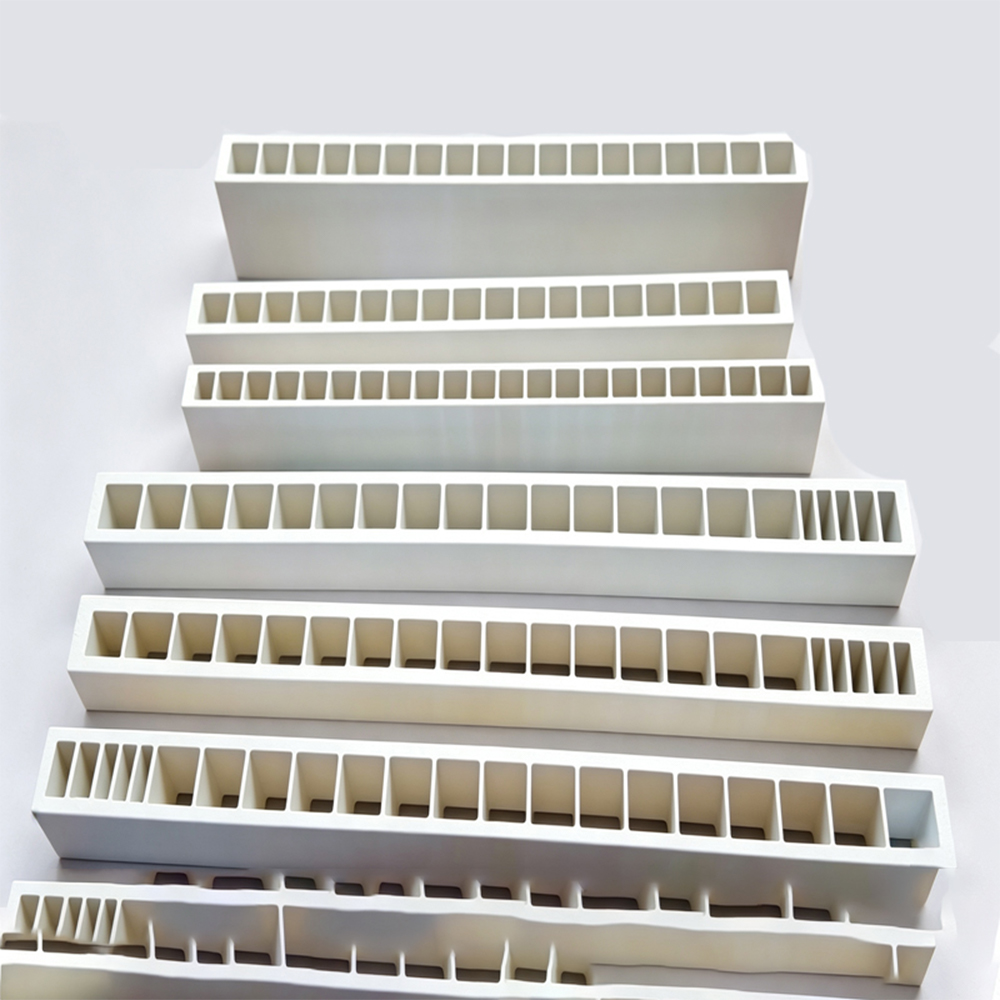
The PVC/WPC hollow door panel extrusion line produces panels with widths ranging from 800 to 1250 mm. The main extruder is either the SJZ80/156 or SJZ92/188 conical twin-screw type, achieving a maximum output of 600 kg/h. The line features low energy consumption, economical water and air usage, and is suitable for producing interior doors, bathroom doors, and decorative wall panels, with stable operation and high flatness.
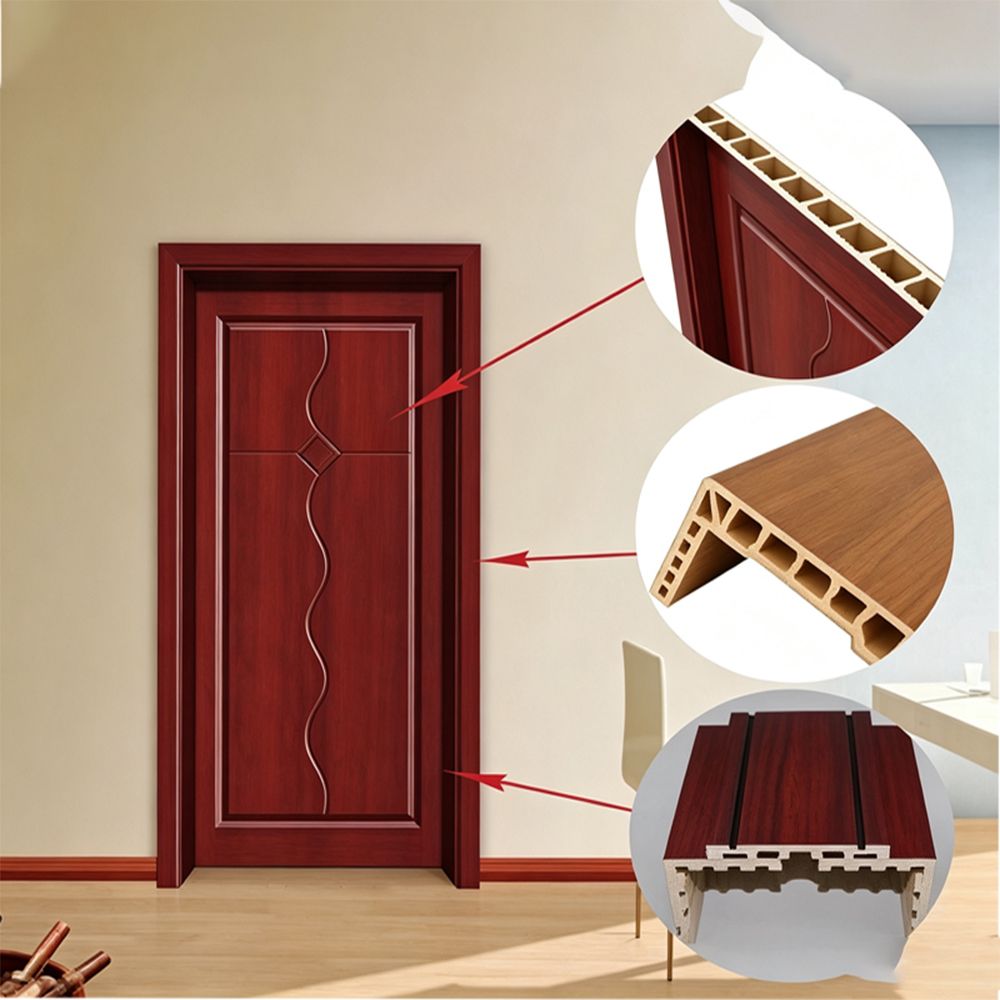
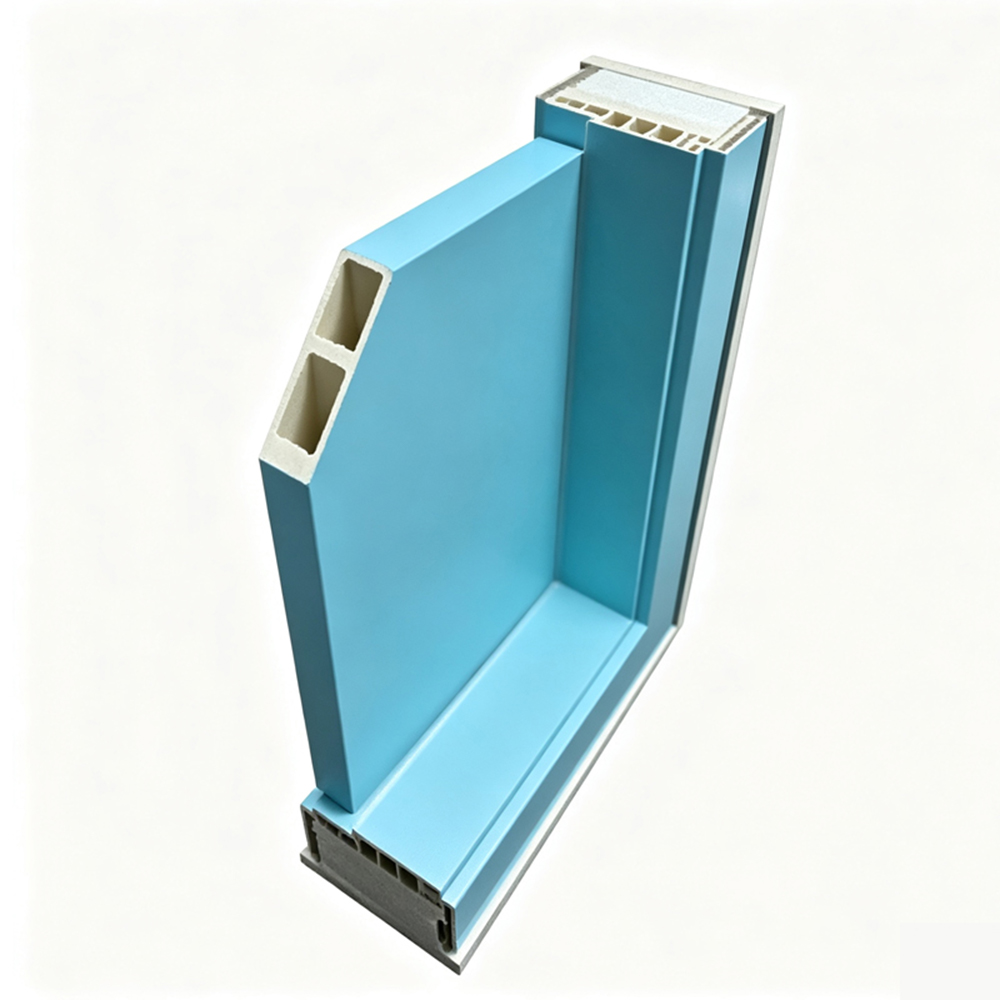
This extrusion line is specifically designed for producing PVC and Wood-Plastic Composite (WPC) hollow door panels, widely used in interior doors, bathroom doors, wardrobe doors, and decorative wall panels. The three models (YF800, YF1000, YF1250) cover production widths from 800 mm to 1250 mm, suitable for standard residential doors as well as larger commercial door solutions.
Case study: A Turkish door manufacturer uses the YF1000 line to produce 1220 mm wide WPC hollow panels. At an output of 550 kg/h, their doors weigh 30% less than solid wood doors while maintaining high impact resistance and moisture resistance – ideal for humid environments like bathrooms.
|
Feature |
Advantage |
|
High output range (250–600 kg/h) |
YF800 output 250–350 kg/h for small to medium batches; YF1000/1250 up to 400–600 kg/h for mass production. A Chinese case study shows YF1250 sustaining 580 kg/h over 22 hours of daily operation. |
|
Energy-efficient main extruder |
SJZ80/156 (55 kW) and SJZ92/188 (110 kW) conical twin-screw extruders provide high torque and low shear heat. Actual data: energy consumption 0.18–0.22 kWh per kg, 15% lower than parallel twin-screw designs. |
|
Low utility consumption |
Cooling water: 12–15 m³/h; compressed air: only 0.6 m³/min for all models. An Indonesian customer reported 20% savings on utility bills compared to their previous line. |
|
Stable production width |
From 800 to 1250 mm using the same downstream model series (YF800/1000/1250). Quick mold change system reduces downtime to less than 45 minutes when switching panel sizes. |
Raw material verification
Test melt flow index (MFI) and moisture content (<0.5%) of PVC/WPC compound.
Check calcium carbonate filler particle size (≤10 μm) to prevent die blockage.
Online extrusion monitoring
Temperature profile: 5–7 heating zones from feed throat to die, control accuracy ±1.5°C.
Pressure sensor: melt pressure maintained between 12–18 MPa; alarm triggered above 20 MPa.
Cooling calibration tank: water flow (12–15 m³/h) and vacuum adjustment ensure panel flatness ≤0.5 mm/m.
Mechanical property testing (per ASTM D6662 for WPC)
Impact resistance: Izod impact strength ≥8 kJ/m² (tested at hollow section).
Flexural modulus: ≥2.5 GPa for load-bearing door cores.
Water absorption: <1.5% after 24-hour immersion (critical for WPC).
Final inspection
Laser thickness gauge: thickness tolerance (±0.2 mm) and width deviation (±1 mm).
Visual inspection for surface gloss, pinholes, or weld lines.
Quality check record example: A Vietnamese factory using YF800 detected a 3% output drop after 800 operating hours. Inspection revealed screw wear – after replacement under standard maintenance schedule, output recovered to 340 kg/h.
| Model | YF800 | YF1000 | YF1250 |
| Production width (mm) | 800 | 1000 | 1250 |
| Extruder Model | SJZ80/156 | SJZ92/188 | SJZ92/188 |
| Auxiliary machine model | YF800 | YF1000 | YF1250 |
| Extruder power (kw) | 55 | 110 | 110 |
| Output (kg/h) | 250-350 | 400-600 | 400-600 |
| Cooling water (m³/h) | 12 | 15 | 15 |
| Compressor air (m³/min) | 0.6 | 0.6 | 0.6 |
Q1: Can the maximum output (600 kg/h) be achieved with the YF1250 line?
A: Yes, but the following conditions must be met:
Compound with high bulk density (>0.6 g/cm³) and internal lubricant.
Cooling water temperature ≤25°C, flow rate 15 m³/h.
Die design optimized for 1250 mm width (e.g., multi-channel).
Case: A Polish customer using recycled PVC/WPC (60/40) only reached 480 kg/h – after switching to virgin PVC with 5% wood fiber, output jumped to 595 kg/h.
Q2: What happens if cooling water flow drops below 12 m³/h?
A: Insufficient cooling leads to warpage and dimensional instability. Vacuum in the calibration tank may collapse the hollow structure. It is recommended to install a flow meter with alarm; a cooling tower plus water chiller can also be used to maintain inlet temperature.
Q3: How often should twin screws be replaced?
A: For SJZ92/188 screws processing non-abrasive PVC, typical service life is 8,000–10,000 hours. For WPC (containing wood fiber), abrasive wear reduces life to 5,000–6,000 hours. Hardfacing with overlay welding can extend life by 40%.
Q4: My YF1000 produces panels with uneven thickness – what are the causes?
A: Common causes:
Melt temperature fluctuation (check heaters and screw speed).
Die lip blockage (clean every 200 hours).
Uneven cooling water spray – check calibration tank nozzles.
Quick fix: Temporarily increase compressed air to 0.65 m³/min to stabilize internal panel pressure.
Q5: Can I use 100% recycled PVC?
A: Yes, but output will drop by about 20% due to lower melt strength. Blending 30% virgin PVC with 70% clean recyclate (adding 2% impact modifier) recovers 90% of original output. A Brazilian recycler using the YF800 line produces door panels at 280 kg/h from 100% post-industrial PVC window frame scrap (vs. 350 kg/h with virgin material).
Q6: Your compressed air consumption says 0.6 m³/min, but my factory compressor has a higher flow rate. Will that cause problems?
A: No. 0.6 m³/min is the minimum stable flow required. A higher flow (e.g., 1.2 m³/min) is fine as long as pressure is controlled within 0.6–0.8 MPa. In fact, it benefits the cooling atomization effect inside the vacuum sizing tank.




Pipe Extrusion Production Line
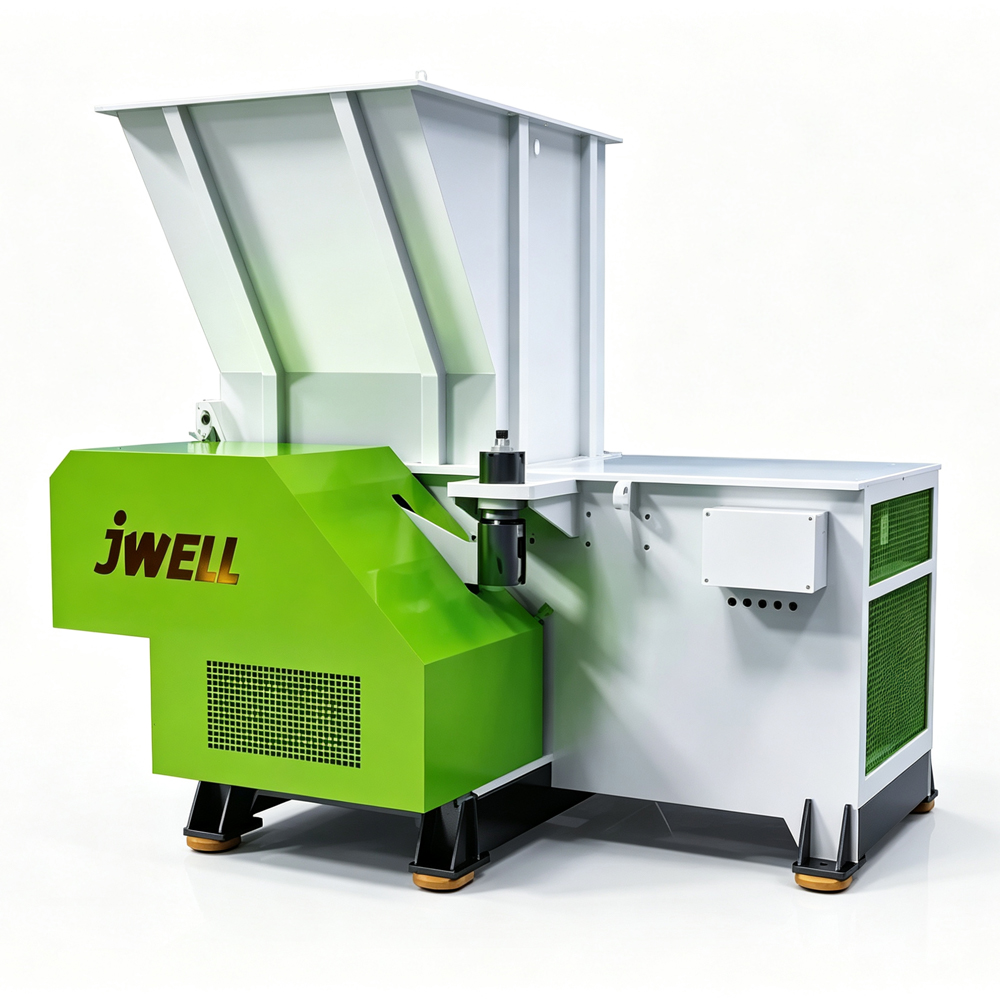
Plastic Shredder Crusher Machine

Tel: +86-19057068112

E-mail: [email protected]

Company Address
No. 128 Qingfeng Road, Xieqiao Town, Haining City, Jiaxing City, Zhejiang Province

19057068112

 English
 русский