
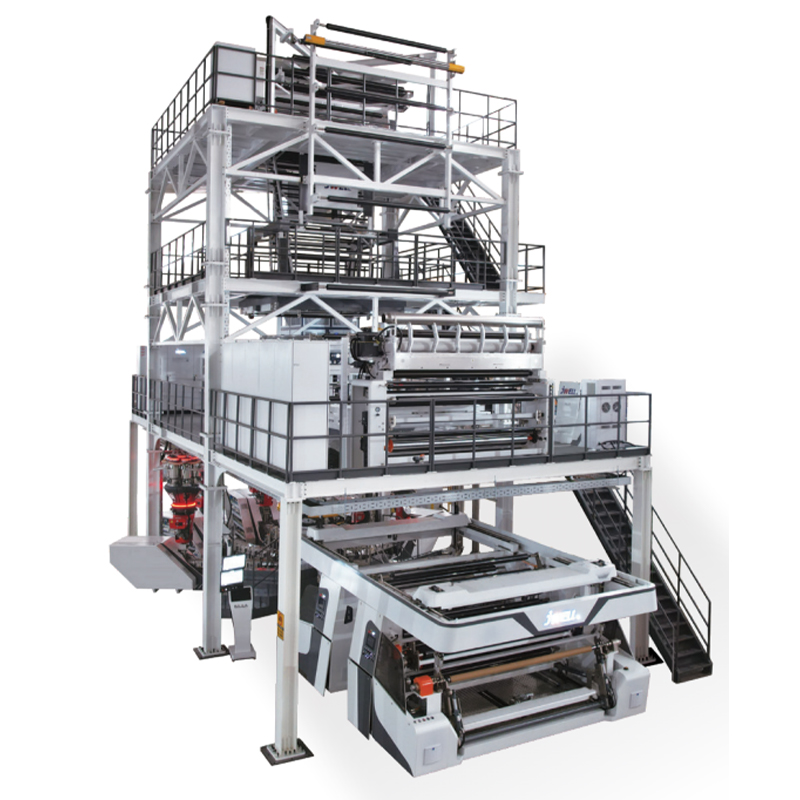
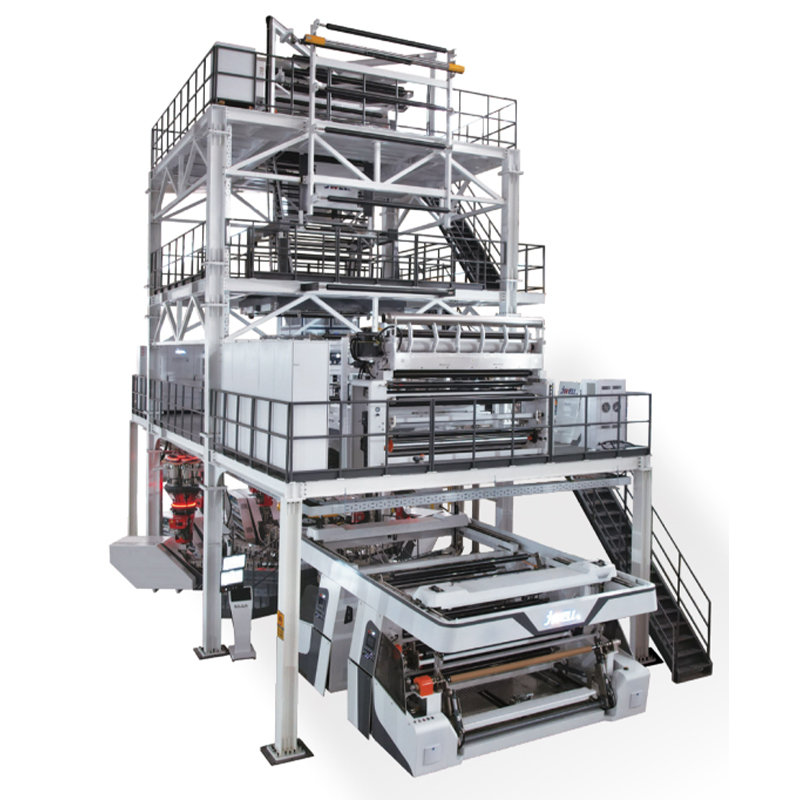
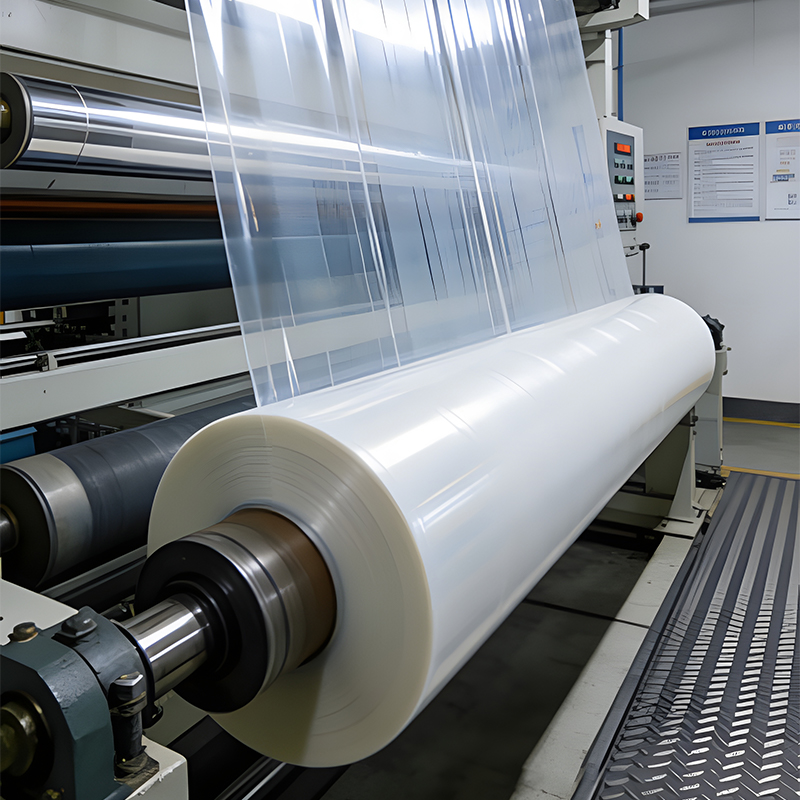
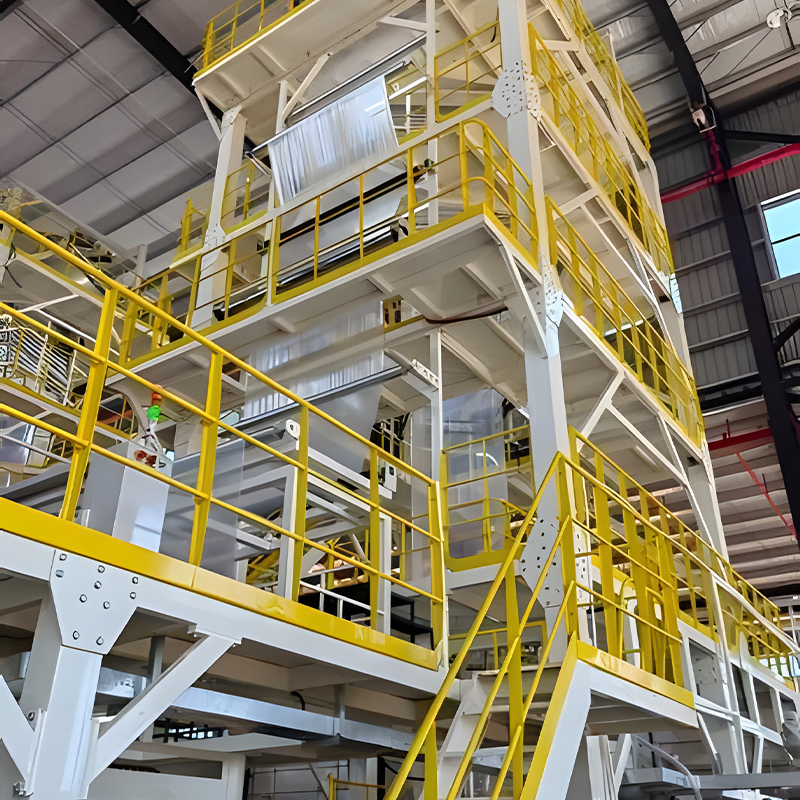
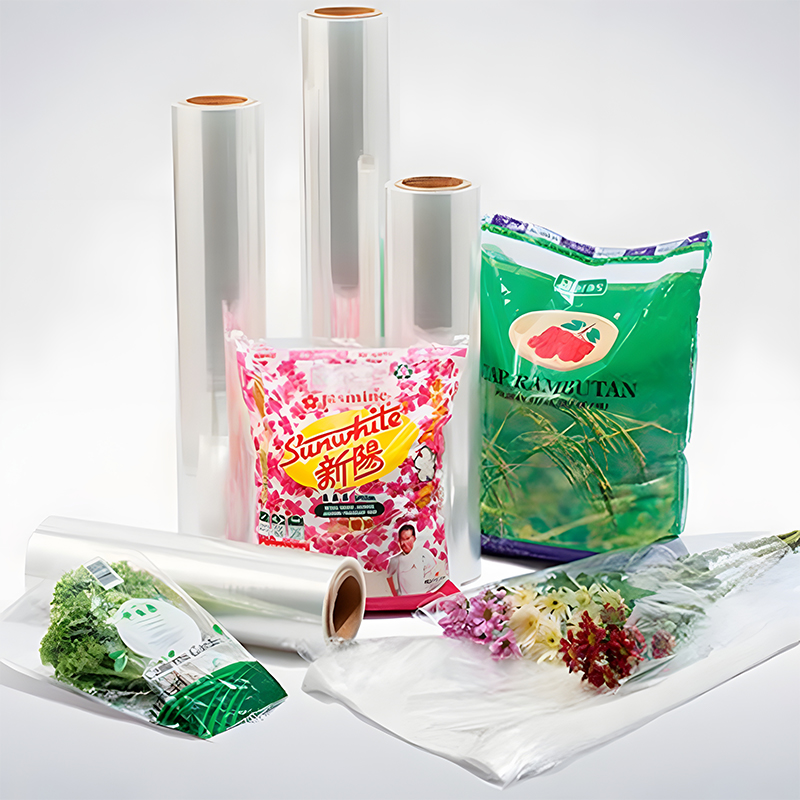
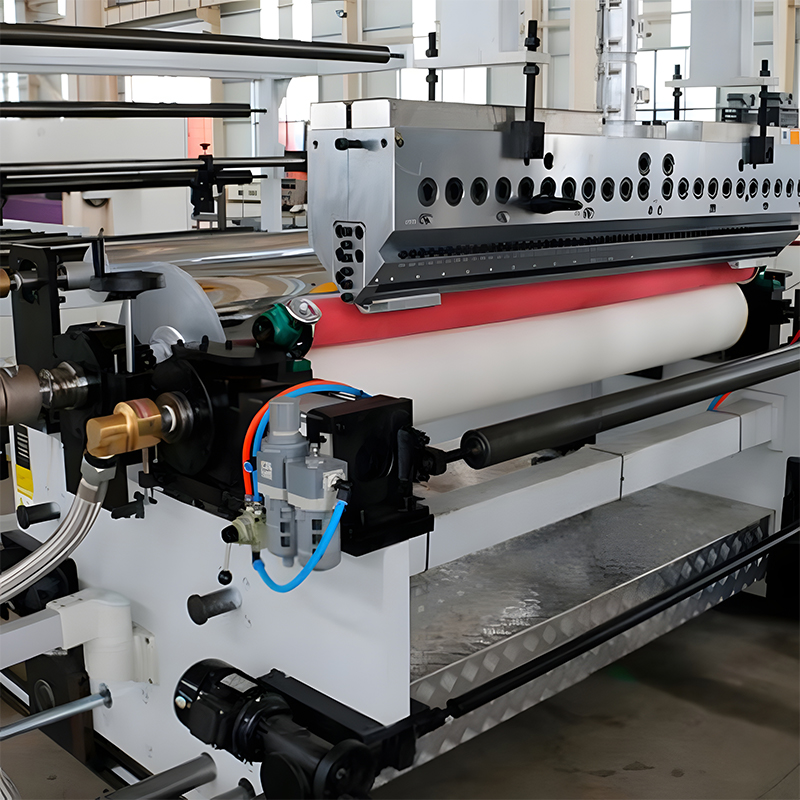
Thanks to flexible structure configurations (A/B/C for 3-layer, A/B/C/D/E for 5-layer) and output ranges of 300–800 kg/h, these lines are ideal for:
High-performance food packaging – 5-layer barrier films (with EVOH or nylon as core layer) for meat, cheese, and frozen products.
Heavy-duty shipping sacks – 3-layer co-extruded bags with high rigidity and puncture resistance (e.g., 1600 mm width for industrial liners).
Agricultural films – Mulch films, silage stretch wrap, and greenhouse covers up to 2600 mm width (model JBF-2800-5X).
Retail & garbage bags – Thin-gauge (0.03–0.2 mm) vest bags or draw tape bags with balanced mechanical properties.
Lamination films – Heat-sealable outer layers and rigid middle layers for snack food packaging films.
Real-life example:
A European agricultural film processor uses the JBF-2300-3/5X (2100 mm max product width, thickness 0.10–0.15 mm) to produce black/white mulch films. With a 5-layer A/B/C/D/E structure, they achieved a 35% increase in tear strength and 8% reduction in material consumption compared to their old 3-layer line. At an output of 550 kg/h, daily production exceeds 13 tons.
|
Feature |
Advantage |
|
Wide product width range (1400–2600 mm) |
One machine handles from small retail bags (JBF-1600) to large agricultural rolls (JBF-2800). |
|
Multi-layer flexibility |
Switch between 3 and 5 layers on the same machine – lowers capital investment and speeds up product changeovers. |
|
Thickness accuracy 0.03–0.2 mm |
Excellent thickness control for ultra-thin films (saves resin) or heavier-duty bags. |
|
Moderate installed power (250–450 kW) |
Energy-efficient AC drives and low-friction die design reduce energy consumption per kg by approx. 15% compared to older designs. |
|
High output (up to 800 kg/h) |
Model JBF-2800-5X can produce 19+ tons/day of 0.05 mm liner film – ideal for large-scale production. |
|
Proven "classic" reliability |
Simple construction, easy cleaning and maintenance, long die flow channel life (over 5 years without rework). |
Real-life example:
A Middle Eastern packaging producer replaced two single-layer lines with one JBF-1800-3/5X (1600 mm width). They now produce three-layer white/black/white film for bread bags. Output increased from 280 kg/h to 460 kg/h, while masterbatch usage decreased by 12% due to the skin layer design. Energy consumption per ton of product dropped by 18%.
To ensure consistent film properties (thickness, mechanical strength, appearance), we perform the following quality control steps during and after production.
Online Monitoring
Thickness gauge – In-line NIR or capacitive sensor scanning the bubble; real-time feedback to the automatic profile air ring. Tolerance: ±5% of target.
Melt pressure & temperature – Sensors on each extruder (A/B/C/D/E) to detect degradation or clogging.
Bubble stability camera – Vision system alerts operator when frost line height or bubble diameter deviates.
Winding tension control – Closed-loop tension sensors ensure uniform roll hardness (no telescoping or wrinkles).
Laboratory Testing (per shift or batch)
|
Test |
Standard |
Acceptance Criteria |
|
Tensile strength (MD/TD) |
ASTM D882 |
≥25 MPa (MD), ≥20 MPa (TD) for 0.05 mm LDPE film |
|
Elmendorf tear strength |
ASTM D1922 |
≥100 g (MD), ≥150 g (TD) |
|
Dart drop impact |
ASTM D1709 |
≥80 g for 0.05 mm film |
|
Heat seal strength |
ASTM F88 |
≥15 N/15mm at 130°C |
|
Haze & gloss |
ASTM D1003 / D2457 |
Haze <8% (clear layer), Gloss >60 units |
Finished Roll Inspection
Roll diameter – tolerance ±2 mm
Trim width – recorded to detect die center shift.
Printability test – Corona treatment level (dyne/cm) measured weekly.
Real-life example:
A Canadian garbage bag manufacturer using the JBF-1600-3/5X (1400 mm, thickness 0.04 mm) found occasional dart drop values below 70 g. By adjusting the bubble cooling air ring (from 18°C to 12°C) and increasing the LLDPE proportion in layer B, they stabilized impact strength at 95 g – verified by ASTM D1709 testing every 4 hours.
|
Model
|
Max. layflat film width (mm)
|
Products thickness (mm)
|
Lay structure
|
Total power (kW)
|
|
JBF-1600-3/5X
|
1400
|
0.03–0.2
|
A/B/C & A/B/C/D/E
|
250–300
|
|
JBF-1800-3/5X
|
1600
|
0.03–0.2
|
A/B/C & A/B/C/D/E
|
300–350
|
|
JBF-2300-3/5X
|
2100
|
0.03–0.2
|
A/B/C & A/B/C/D/E
|
250–300
|
|
JBF-2800-5X
|
2600
|
0.03–0.2
|
A/B/C/D/E
|
350–450
|
Q1: Can I switch between 3-layer and 5-layer production on the same line?
A: Yes. The JBF-1600/1800/2300-3/5X models come with a modular co-extrusion die and feedblock. The switch takes about 2 hours (including cleaning and die gap adjustment). For 3-layer mode, simply deactivate two extruders. The JBF-2800-5X is a dedicated 5-layer machine.
Q2: What is the actual maximum output for 0.03 mm film?
A: The "maximum output" figures (300–800 kg/h) are for standard 0.05–0.08 mm film. For 0.03 mm thickness, output is expected to be 20–25% lower due to bubble stability limitations. Example: JBF-1800-3/5X at 0.03 mm thickness → approx. 320–380 kg/h (instead of 400–500 kg/h). We recommend a dual-lip air ring for ultra-thin applications.
Q3: Which resins are compatible?
A: LDPE, LLDPE, HDPE, mLLDPE, EVA, and tie resins. For 5-layer barrier films, EVOH or PA (nylon) can be added in the core layer (B or D) – but additional drying equipment must be installed. Standard screws are not hardened for glass-fiber reinforced materials.
Q4: How often does the die or air ring need replacement?
A: Classic dies (no moving parts) typically last 5–8 years before internal flow channels need polishing. The air ring lip adjustment mechanism should be serviced annually. Customers using high-carbon-black or calcium carbonate masterbatches may need die cleaning every 6 months.
Q5: What is the typical payback period?
A: Based on actual user data (Southeast Asia, 2024):
Equipment cost (e.g., JBF-2300-3/5X) approx. USD 210,000–250,000 FOB
Operating profit per ton approx. USD 220–280 (film selling price USD 1,850/ton, resin cost USD 1,450/ton)
At 500 kg/h, 20 hours/day, 25 days/month → 250 tons/month → profit approx. USD 55,000–70,000/month.
Payback period: 4–7 months (excluding installation and training).
Q6: Can you supply a complete line including winder and bag making machine?
A: Yes. We offer a "Classic" series integrated solution: extruder + die + haul-off + surface winder (max roll diameter 800 mm) + automatic bag making auxiliary equipment for vest bags or star-seal bags. Just let us know your end product.





Tel: +86-19579950928

E-mail: [email protected]

Company Address
No. 128 Qingfeng Road, Xieqiao Town, Haining City, Jiaxing City, Zhejiang Province

19579950928

 English