
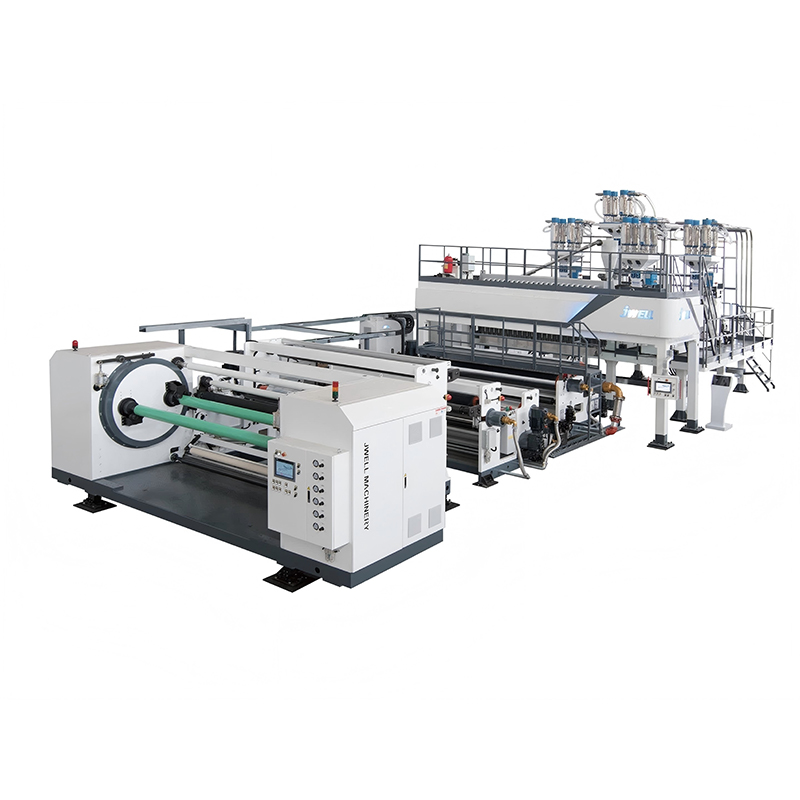
JWELL's JCFPE series PE self-adhesive protective film extrusion line is a complete set of equipment specially designed for high-speed, high-precision production of surface protection films. Unlike adhesive alternatives, the film produced by this line contains a self-adhesive layer that directly adheres to surfaces without the need for chemical adhesives.
These films are widely used to protect precision surfaces during manufacturing, transportation, and installation. Typical applications include:
Automotive Industry – Protecting painted body panels, interior trim, and electronic displays from scratches, dust, and UV exposure.
Actual case: A German Tier 1 automotive supplier adopted the JCFPE-135-2800 line to produce 0.05mm door edge protection film at a continuous speed of 180 m/min, reducing scrap rate by 22%.*
Electronics – Temporary surface protection for LCD screens, smartphone rear covers, and metal housings.
Actual case: A Korean electronics manufacturer used the JCFPE-120-1900 line to produce 0.02mm ultra-thin film for curved smartphone glass – the line's precision die control achieved thickness uniformity of ±0.0015mm.*
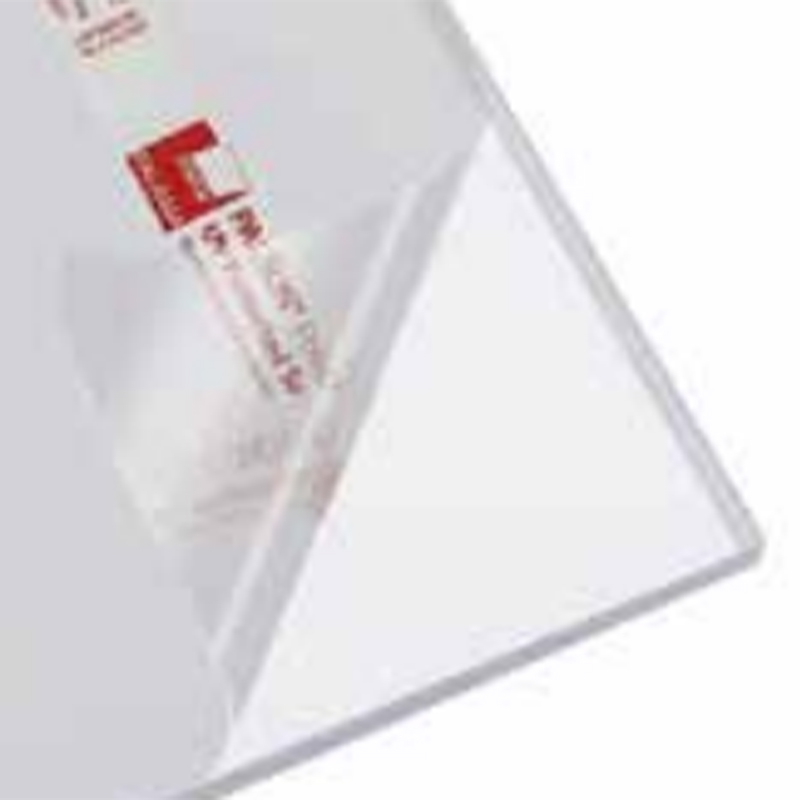
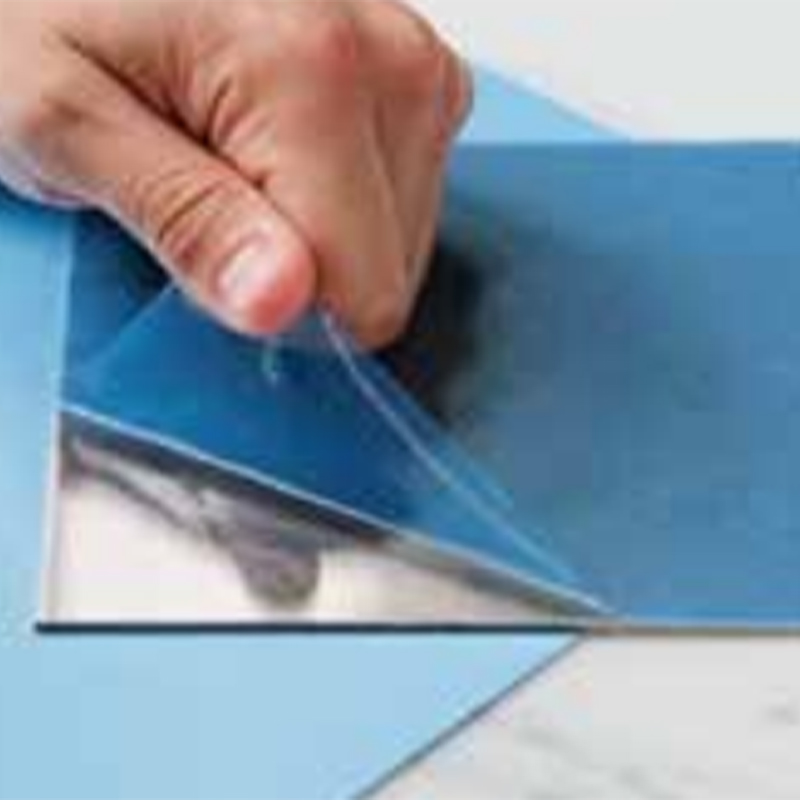
Building Materials – Protecting aluminum composite panels, stainless steel sheets, acrylic sheets, and PVC profiles.
Actual case: A Turkish building materials exporter used the JCFPE-125-2300 line to produce 2000mm wide protective film for marble slabs, eliminating residue issues common with solvent-based tapes.*
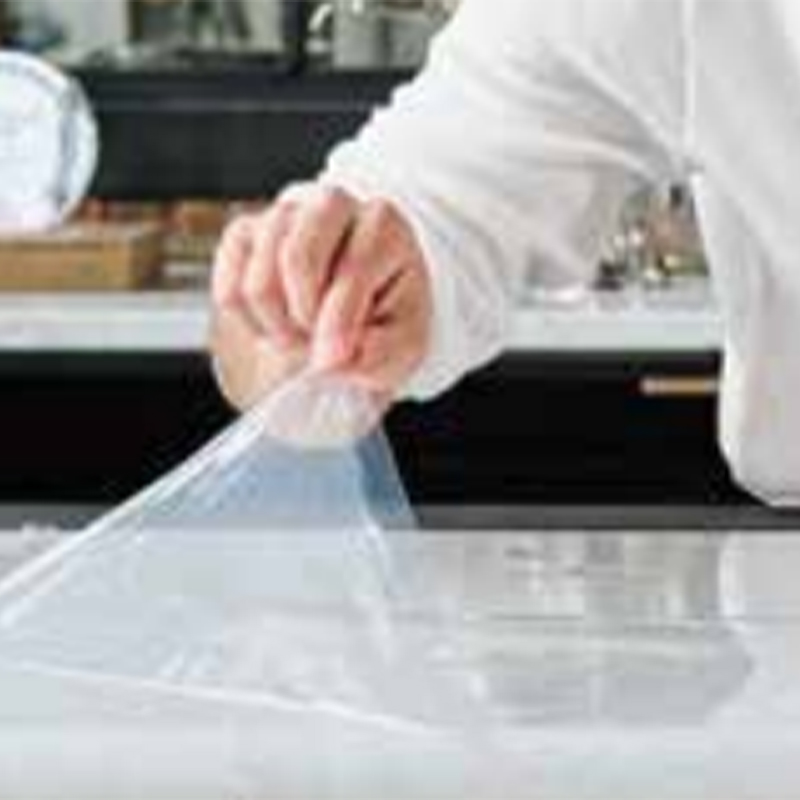
Household Appliances – Covering refrigerator doors, washing machine panels, and kitchen countertops during assembly.
|
Model |
Screw Diameter (mm) |
T-Die (mm) |
Film Width (mm) |
Film Thickness (mm) |
Line Speed (m/min) |
|
JCFPE-120-1900 |
φ120 |
1900 |
1600 |
0.02-0.15 |
180 |
|
JCFPE-125-2300 |
φ125 |
2300 |
2000 |
0.02-0.15 |
180 |
|
JCFPE-135-2800 |
φ135 |
2800 |
2500 |
0.02-0.15 |
180 |
Actual performance improvements:
Energy efficiency – Grooved feed section and barrier screw design reduce melt temperature by 8-10°C, saving 12-15% energy compared to conventional extruders.
Adhesive-free self-adhesion – Our die-drop + air knife system creates a micro-structured surface for instant adhesion (peel strength 0.8-2.5 N/25mm), eliminating VOC emissions and adhesive residue.
Fast product changeover – Automatic die lip gap adjustment (electric) allows thickness switching from 0.02 to 0.15mm within 3 minutes.
Wide width stability – Coat-hanger manifold T-die ensures thickness deviation <±3% across 2500mm width – verified by a Japanese automotive paint shop.
We integrate online + offline testing to ensure film consistency at 180 m/min.
Online monitoring (continuous):
NDC infrared thickness gauge – scans full width at 1000 points/sec, feedback to automatic die bolts. Tolerance: target thickness ±2%.
Matrix camera inspection – detects gels, fish eyes, black spots, and scratches down to 0.1 mm². Defects are located and automatically marked for edge trimming.
Laser width measurement – ensures actual film width stays within +0/-5 mm of T-die setting.
Offline laboratory tests (per batch):
Peel adhesion test (ASTM D3330) – measures initial tack (≤2 N/25mm) and permanent adhesion (after 72h aging).
Shear holding power – 24h resistance at 40°C / 1kg load.
UV aging (ASTM G154) – 200h QUV exposure, color difference ΔE <1.5.
Solvent residue test – GC-MS confirms zero benzene/toluene.
Thickness profile – 30-point measurement across full width using digital micrometer (accuracy ±0.5 μm).
Actual QC result:
A US logistics company tested the JCFPE-125-2300 line for 6 months. Over 1,200 production runs (>20,000 m² each), thickness CPk consistently ≥1.33, and customer rejections due to film defects dropped from 3.8% to 0.4%.
|
Model
|
Screw diameter (mm)
|
T-die (mm)
|
Products width (mm)
|
Product thickness (mm)
|
|
JCFPE-120-1900
|
φ120
|
1900
|
1600
|
0.02-0.15
|
|
JCFPE-125-2300
|
φ125
|
2300
|
2000
|
0.02-0.15
|
|
JCFPE-135-2800
|
φ135
|
2800
|
2500
|
0.02-0.15
|
Q1: Can this line run both LDPE and LLDPE to produce self-adhesive film?
A: Yes. The screw design works with LDPE, LLDPE, and their blends (e.g., 70% LDPE + 30% LLDPE). For high-tack formulations, we recommend LLDPE-rich blends (up to 50%) to improve tear strength and tackiness. Our feed section handles pellets with bulk density 0.48-0.55 g/cm³ without bridging.
Q2: How is thickness uniformity maintained at 180 m/min?
A: Three factors:
Automatic die lip adjustment – 32 heating zones and 26 adjusting bolts with 0.01 mm resolution.
Chill roll temperature control – closed-loop water system accuracy ±0.5°C (8-12°C for 20μm film).
Air knife positioning – automatically adjusts gap to maintain nip pressure.
Real-time data: At 180 m/min for 50μm target thickness, thickness standard deviation ≤1.2 μm.
Q3: What raw material specifications are required?
A:
Melt flow index (MFI): 2-8 g/10min (190°C/2.16kg) for base resin.
Antiblock masterbatch: 0.5-1.5% (silica-based).
Slip agent: Erucamide or oleamide, 800-1500 ppm for controlled COF (0.15-0.25).
Important – Do not use zinc stearate; it causes die buildup. We provide a starting formula with the machine.
Q4: How often should the T-die be cleaned?
A: For 24/7 continuous use with virgin material, every 3-4 weeks. For recycled material (up to 30%), every 10-14 days. The die features a quick-clamp disassembly design – complete cleaning by two persons takes 90 minutes.
Q5: What is the typical ROI period for this line?
A: Based on actual financial data from a Polish film processor using JCFPE-120-1900:
Investment: approx. €245,000 (line + auxiliary equipment).
Output: 800 tons/year at 75% utilization.
Gross margin: 28-32% (selling price €1,850/ton vs. raw material cost €1,150/ton).
Payback period: 11-14 months (including labor and electricity at €0.12/kWh).
Q6: Can it produce anti-static or UV-resistant film?
A: Yes. Add anti-static masterbatch (e.g., permanent antistat) or UV absorber (Tinuvin 326) via gravimetric feeders. The screw's mixing section ensures uniform dispersion even at 2-3% addition levels.
Q7: What is the maximum finished roll diameter?
A: Max OD 800 mm on 3-inch or 6-inch cores. Surface winder produces jumbo rolls up to 600 kg. An optional slitting station can slit into coreless rolls (50-200 mm) or 76mm core rolls for hand application.
Q8: How is start-up waste handled?
A: The line includes an edge trim recycling system – waste from trimming and punching is pneumatically returned to the extruder hopper (up to 15% of feed). For initial purge waste (approx. 20 kg), we supply a granulator to recycle it within 2 hours.





Tel: +86-19579950928

E-mail: [email protected]

Company Address
No. 128 Qingfeng Road, Xieqiao Town, Haining City, Jiaxing City, Zhejiang Province

19579950928

 English