
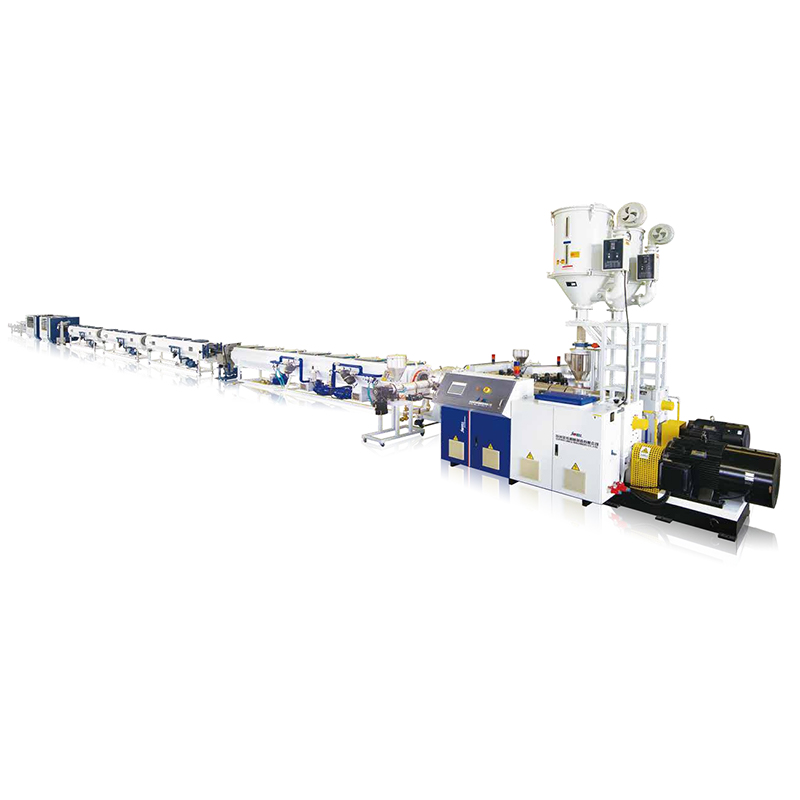
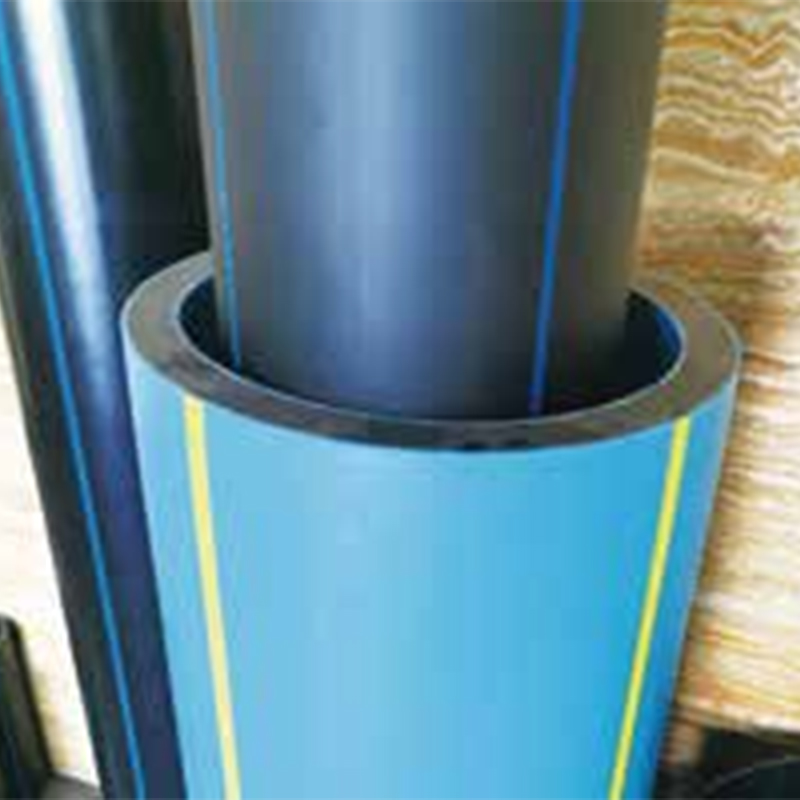
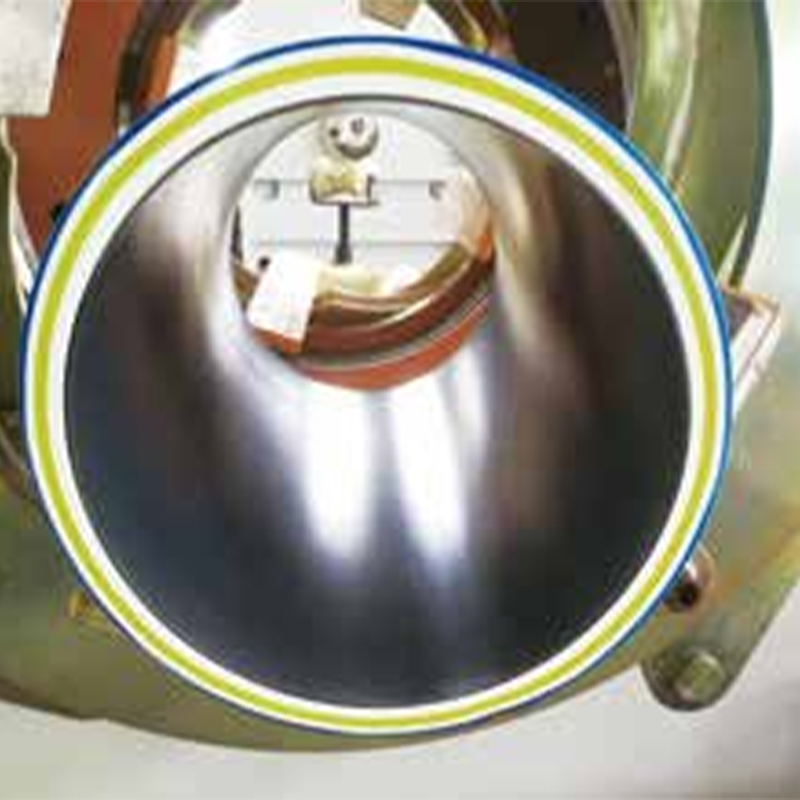
JWELL’s JWPEG series multi-layer HDPE solid-wall pipe co-extrusion lines are designed for high-output, continuous production of high-quality HDPE pipes in a diameter range from Ø16mm to Ø630mm. The series comprises eight carefully engineered models (JWPEG 63 to JWPEG 630), each equipped with dedicated extruder combinations and power configurations, enabling stable co-extrusion, material savings, and uniform wall thickness – making them ideal for water supply, gas, sewage, and industrial applications.
Thanks to the wide pipe diameter range and scalable output, our lines serve multiple industries:
|
Diameter Range |
Typical Applications |
|
Ø16–63 mm |
Domestic water supply, cable laying, drip irrigation laterals |
|
Ø20–160 mm |
Rural drinking water networks, small gas distribution (PE80/PE100) |
|
Ø75–250 mm |
Municipal water mains, reclaimed water, industrial slurry pipelines |
|
Ø110–315 mm |
City gas pipelines (medium pressure), stormwater drainage |
|
Ø160–450 mm |
Large-diameter water transmission, mine slurry, discharge headers |
|
Ø315–630 mm |
High-flow water supply, submarine pipelines, pressure mains |
Real case: A Southeast Asian municipal utility purchased two JWPEG-630 lines to produce DN500 HDPE pipes (PE100) for a 25 km raw water transmission project. Each line ran 24/7 at a stable output of 1220 kg/h, finishing three weeks ahead of schedule. The multi-layer design allowed a thin wear-resistant outer layer and a high-flow inner layer, reducing material costs by 8%.
Wide model selection & precise matching
Each model is optimized for a specific diameter window and output target. Examples:
JWPEG-63: 170–220 kg/h – ideal for small-diameter, high-speed lines.
JWPEG-315: 550–610 kg/h – perfect for medium-diameter gas/water pipes.
JWPEG-630: 1200–1240 kg/h – heavy-duty, high-output production.
Robust co-extruder configuration
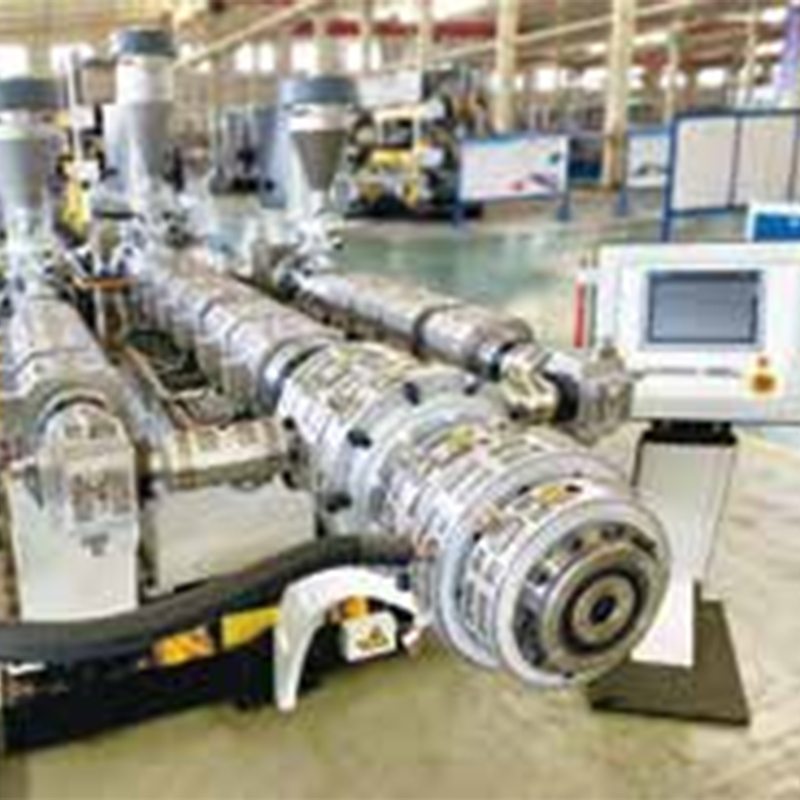
The specification table lists dedicated main extruders (e.g., JW5G/33, JW5T/38, JW5Q/38) and matching 45/33 or 65/33 co-extruders. This ensures:
Strong interlayer bonding without delamination risk.
Thickness accuracy – the co-extruder can run as low as 10% of total output, enabling ultra-thin functional layers (e.g., UV-resistant or color layers).
Energy-efficient power configuration
Main motor power ranges from 55+15 kW (JWPEG-63) to 250+75 kW (JWPEG-630). Specific energy consumption (kWh/kg) is among the lowest in its class – thanks to high-torque, low-speed extruder screws and optimized barrel heating zones.
High output stability
All models list narrow output ranges (e.g., JWPEG-250: 450–510 kg/h), indicating excellent melt pressure and temperature control. This means less scrap, fewer adjustments, and output fluctuations within ±2% even during long runs.
Multi-layer flexibility
Produce 2-layer or 3-layer HDPE pipes:
Outer layer: UV-resistant or colored (e.g., blue for drinking water, orange for gas)
Middle layer: recycled or high-stress material
Inner layer: virgin, low-friction PE100 for high flow rates
We integrate online and offline QC to ensure every meter of pipe meets ISO 4427 / ISO 4437 (water/gas) or ASTM F714 standards.
Online monitoring (continuous)
Ultrasonic wall thickness gauge – scans 8 points around the circumference, closed-loop control adjusts co-extruder speed.
Melt pressure & temperature sensors – at each extruder head.
Melt Flow Index (MFI) prediction – based on screw load and temperature profile.
Offline batch testing (per shift)
|
Test Item |
Standard |
Equipment |
|
Hydrostatic pressure (20°C / 80°C) |
ISO 1167 |
Burst tester (up to 25 bar) |
|
Longitudinal reversion |
ISO 2505 |
Oven & mandrel |
|
Ring stiffness (SN4 – SN16) |
ISO 9969 |
Compression tester |
|
Carbon black dispersion |
ISO 18553 |
Microscope |
|
Ovality & wall thickness |
ISO 11922 |
Laser micrometer & projector |
Example QC log from a JWPEG-450 line (producing Ø400mm, SDR11)
Wall thickness tolerance: ±0.25 mm (target 36.4 mm)
Hydrostatic burst pressure: 32 bar (requirement >25 bar)
Output stability: 790 kg/h ± 10 kg over 8 hours
All data stored in traceable batch reports for customer audit.
Q1: How do I select the right model for my production needs?
A: Match your target pipe diameter and required output (kg/h).
For Ø20–110 mm pipes, 200–300 kg/h → JWPEG-110
For Ø315–630 mm pipes, 1200 kg/h → JWPEG-630
Also consider SDR (wall thickness) – thicker walls reduce linear speed but kg/h output remains unchanged.
Q2: What is the actual energy consumption per kg of HDPE?
A: Based on field data:
Small model (JWPEG-63): ≈0.28 kWh/kg
Large model (JWPEG-630): ≈0.21 kWh/kg
This is 12–15% lower than single-screw lines without co-extrusion, due to the lower load on auxiliary extruders.
Q3: Can I use 100% recycled HDPE in the middle layer?
A: Yes. The co-extrusion layout allows the main extruder (e.g., JW5T/38) to process up to 70% recycled material in the core layer, while the 45/33 or 65/33 co-extruders supply virgin skin layers. Be sure to pre-dry the recyclate (moisture <0.02%) and use a melt filter (150–200 µm).
Q4: How often should screws and barrels be replaced?
A: With regular maintenance (wear inspection every 2000 hours) and processing only HDPE (no fillers like chalk), the JW series bimetallic screws can last 18,000–22,000 hours. Spare parts are interchangeable across all JWPEG models.
Q5: What is the typical changeover time between different pipe diameters?
A: For tooling changes within the same model (e.g., from Ø250 to Ø200 on a JWPEG-250): 45 minutes.
Switching to a different model (requires changing sizing sleeve and puller): 2–3 hours.
Quick-lock die rings and centralized vacuum regulation are standard.
Q6: Do you provide training and commissioning services?
A: Yes. Each line includes 7 days of on-site commissioning by our engineers and a complete operation manual. 24/7 remote troubleshooting is available via VPN.





Tel: +86-19579950928

E-mail: [email protected]

Company Address
No. 128 Qingfeng Road, Xieqiao Town, Haining City, Jiaxing City, Zhejiang Province

19579950928

 English