
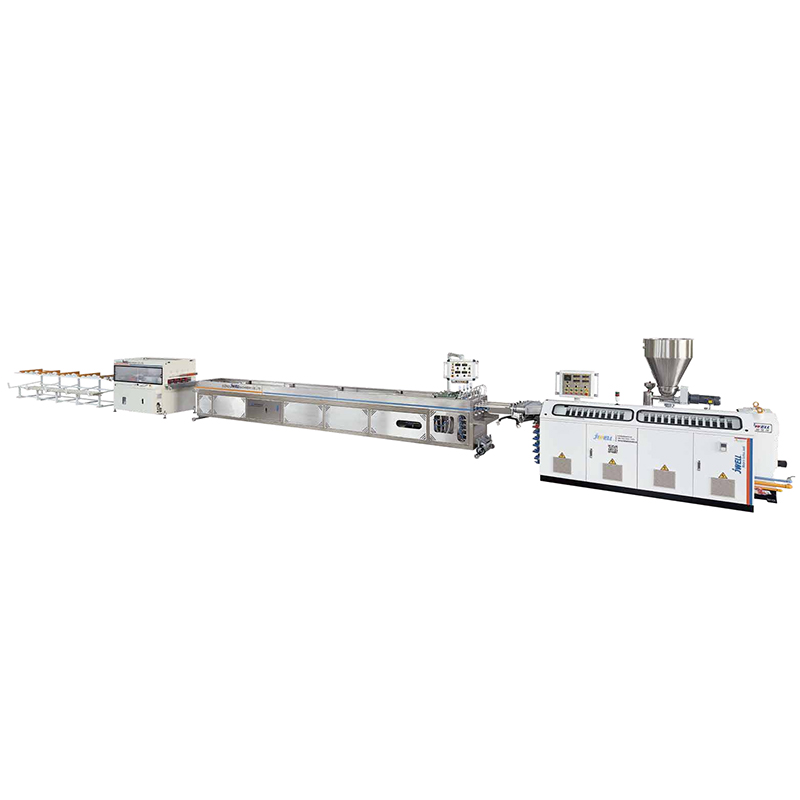
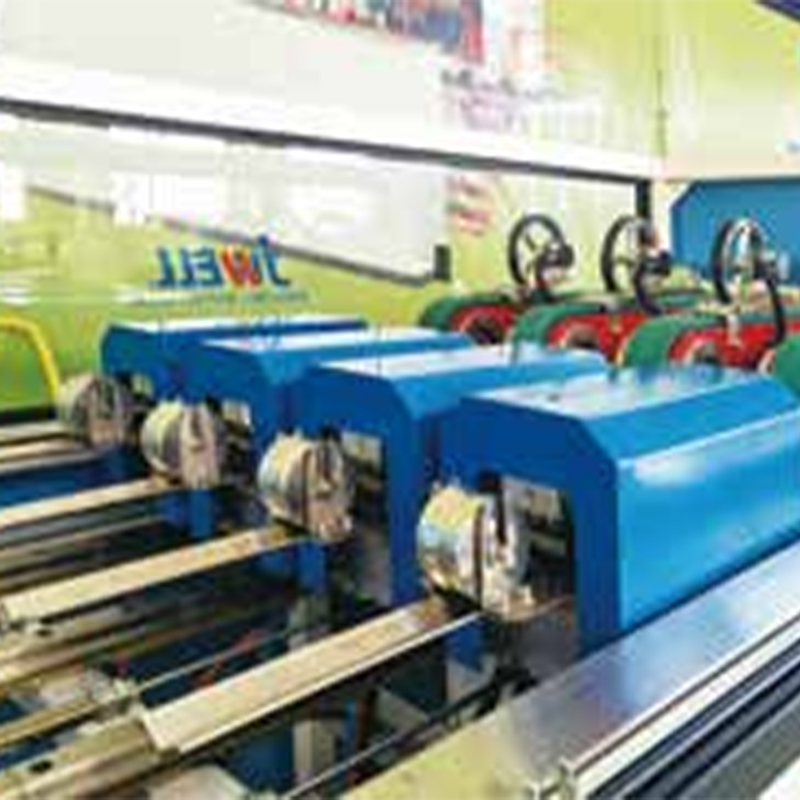
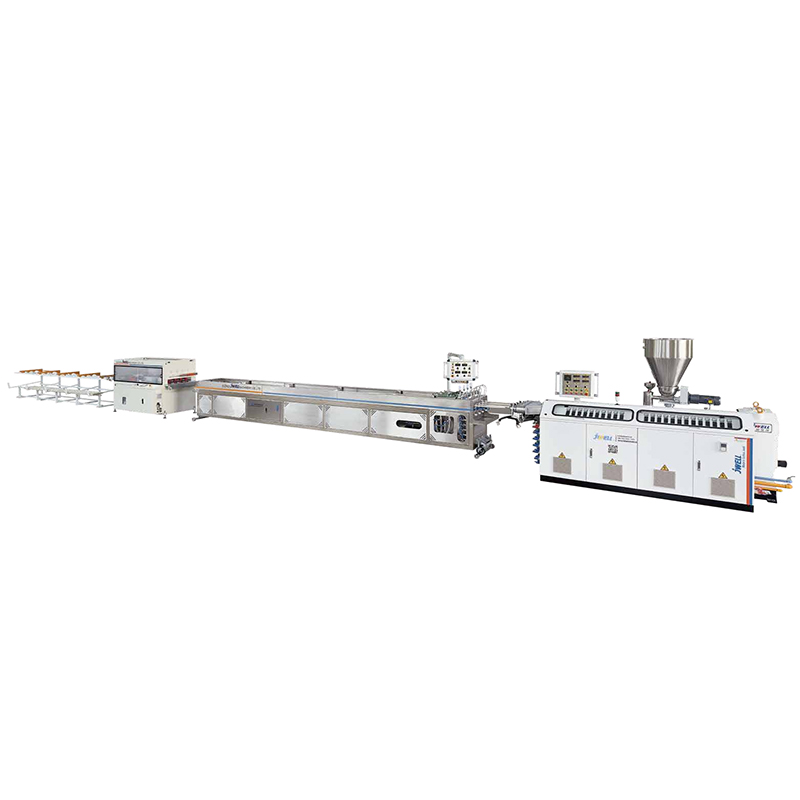
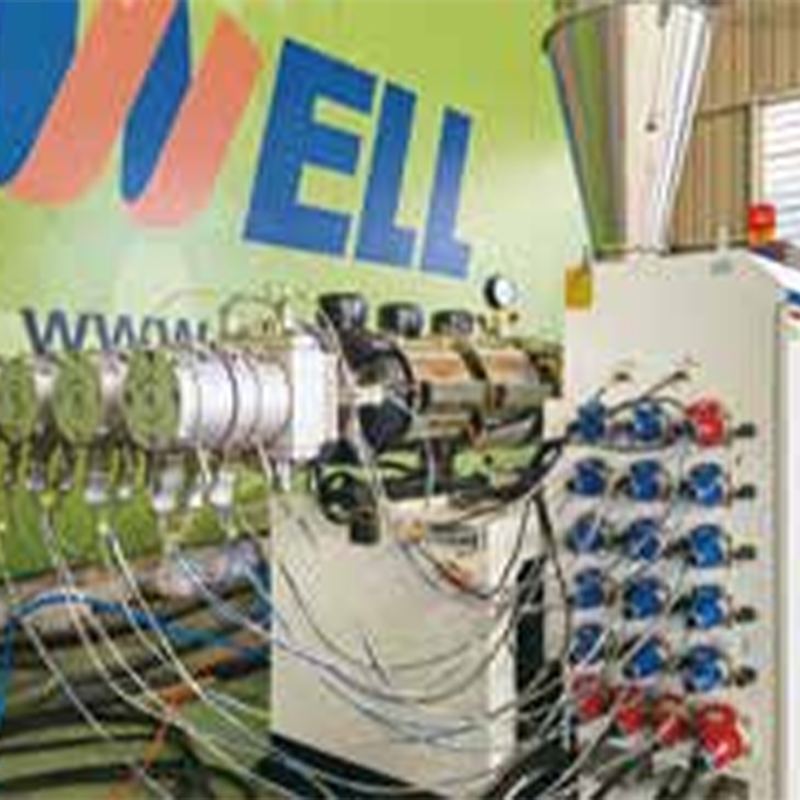
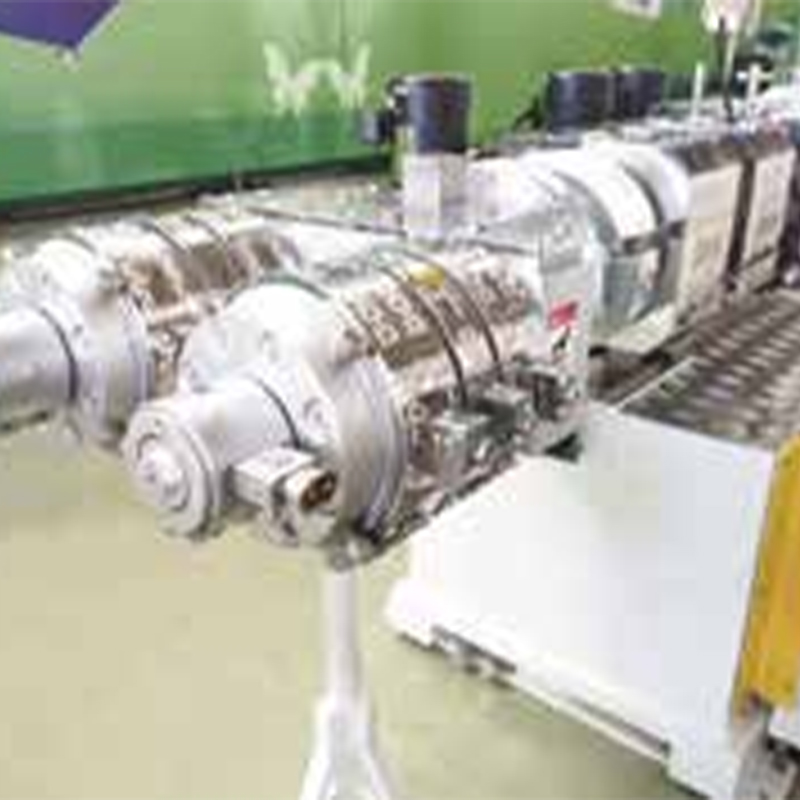
JWELL's JWG series PVC twin-pipe and four-pipe extrusion lines are designed for efficient, continuous production of UPVC round pipes, covering a diameter range of Φ16 mm to Φ200 mm. The series includes three twin-pipe models (JWG-PVC63, JWG-PVC110, JWG-PVC200) and two four-pipe models (JWG-PVC32, JWG-PVC32-H). All models use high-torque SJ series extruders, with main motor power ranging from 37 kW to 110 kW, and stable hourly output between 250–800 kg.
These extrusion lines are designed to manufacture unplasticized PVC (UPVC) pipes for the following applications:
Electrical conduit – Φ16–32 mm pipes for residential and commercial wiring.
Drainage and water supply pipes – Φ50–200 mm pipes for sewage, vent, and ventilation systems.
Telecommunication ducts – lightweight, corrosion-resistant conduits.
Irrigation – medium-diameter pipes for agricultural water supply.
Real case: A pipe manufacturer in Southeast Asia upgraded from a single line to our JWG-PVC110 twin-pipe model. They now produce Φ75 mm water supply pipes at 450 kg/h, doubling daily output in the same workshop area.
|
Feature |
Advantage |
|
Twin-pipe (Φ16–200 mm) and four-pipe (Φ16–32 mm) options |
One line covers a wide diameter range. For small-diameter pipes (Φ16–32), the four-pipe configuration produces 4 times the hourly length of a single-pipe line with the same 37 kW motor. |
|
High-torque extruder (SJ265/132, SJ280/156, SJ292/188) |
Larger screw diameter (up to 292 mm) and L/D ratio ensure perfect plasticization and mixing. The SJ292/188 on JWG-PVC200 delivers 110 kW – enough to push 800 kg/h of melt, even with highly filled PVC formulations. |
|
Energy-efficient main motor |
37 kW for medium lines, 55 kW for large twin-pipe lines, 110 kW for high-output models. Actual energy consumption per kg is 15 20% lower than comparable machines due to optimized screw geometry. |
|
Stable output range |
Output guaranteed within ±5% (e.g., 250–300 kg/h on JWG-PVC63). No sudden drops – suitable for continuous 24/7 production. |
|
Fast mold change |
Φ50–200 mm twin-pipe dies can be changed within 20 minutes. Φ16–32 mm four-pipe dies use interchangeable inserts, reducing downtime. |
Real case: A European pipe extruder replaced two old lines with one JWG-PVC200 twin-pipe (110 kW, 700–800 kg/h). They reduced energy costs by 35% and labor costs by 50% – one operator now achieves the output that previously required three people.
Each JWG line undergoes rigorous in-house and on-site testing, conforming to ISO 9001 and CE standards.
A. In-process quality control (during extrusion)
|
Parameter |
Test method |
Acceptance standard |
|
Pipe outer diameter |
Laser gauge (online) |
Φ16–63: ±0.2 mm; Φ50–200: ±0.5 mm |
|
Wall thickness |
Ultrasonic scanner |
±0.1 mm (conforms to EN 1329 / ASTM D1785) |
|
Ovality |
Rotating caliper |
≤ 1.5% of nominal diameter |
|
Surface finish |
Visual inspection (2x magnification) |
No bubbles, burn marks, or unmelted particles |
B. Raw material & compound testing|
PVC dry blend – K value 65–68, bulk density 0.55–0.60 g/ml, moisture <0.2%.
Calcium carbonate filler – particle size ≤10 µm, whiteness ≥90%.
Stabilizers & lubricants – dispersion uniformity checked before production.
C. Final product testing (random sampling every 4 hours)
Hydrostatic pressure test (20°C, 1 hour): Φ16–63 pipes ≥25 MPa; Φ50–200 pipes ≥16 MPa.
Drop weight impact test (0°C, 2 kg weight, drop height 1 m): no cracks after 10 impacts.
Vicat softening temperature ≥78°C (for hot water conduit applications).
Real case: A client in the Middle East needed pipes for underground telecom ducts. Using our JWG-PVC110 line, we performed a 24-hour continuous run test at 380 kg/h. All pipes passed compression testing (10 kN for 1 minute) with zero deformation. The line was shipped with a detailed QC report signed by a third-party inspector.
|
Type
|
Pipe spec (mm)
|
Extruder
|
Main Power (kW)
|
Output (kg/h)
|
|
JWG-PVC63 (Two strand)
|
Φ16 ~ 63
|
SJZ65/132
|
37
|
250 ~ 300
|
|
JWG-PVC110 (Two strand)
|
Φ50 ~ 110
|
SJZ80/156
|
55
|
350 ~ 450
|
|
JWG-PVC200 (Two strand)
|
Φ50 ~ 200
|
SJZ92/188
|
110
|
700 ~ 800
|
|
JWG-PVC32 (Four strand)
|
Φ16 - 32
|
SJZ65/132
|
37
|
250 ~ 300
|
|
JWG-PVC32-H (Four strand)
|
Φ16 - 32
|
SJZ65/132
|
37
|
250 ~ 300
|
Q1: Can the same line produce both solid-wall and foamed PVC pipes?
A: Yes – simply change the screw (standard screw for solid-wall; optional barrier screw for foam). The extruder's torque and cooling capacity (SJ series) are designed for both. For foam pipes, output decreases by about 15% to ensure uniform cell structure.
Q2: How do you clean a twin-pipe die when switching from dark to light color pipes?
A: Use our purging compound (PVC-based) at 160–180°C. Run the extruder at 20 rpm for 5–10 minutes until the melt turns white. Then only disassemble the die lips – no need to remove the entire die. Typical cleaning time: 15 minutes.
Q3: What are the power supply requirements for installation?
A:
JWG-PVC63 / 32 / 32-H: main motor 37 kW + auxiliaries (vacuum tank, puller, cutter) 15 kW → total approx. 52 kW, 380V/50Hz (60Hz optional).
JWG-PVC110: 55 kW + 25 kW → 80 kW.
JWG-PVC200: 110 kW + 40 kW → 150 kW.
We provide detailed electrical layout drawings and equip motors with soft starters to avoid inrush current.
Q4: How do you guarantee 700–800 kg/h output on JWG-PVC200?
A: The guarantee is based on a standard UPVC formulation (100 kg PVC, 5 kg CPE, 3 kg stabilizer, 20 kg CaCO₃, 1.2 kg lubricant). Screw speed 45 rpm, melt temperature 185±5°C. We test each line in our factory with your formulation (or a similar one) and provide a video record of the run.
Q5: What spare parts should I stock?
A: Recommended spare parts kit:
2 heater bands (per zone)
1 spare screw tip + non-return ring
1 set of die inserts (for your most common pipe sizes)
5 cutting blades (for automatic cutter)
3 puller belts
We can also supply a full spare parts kit at 5% of the line cost.
Q6: Can the four-pipe line (JWG-PVC32-H) run continuously at 300 kg/h?
A: Yes – the H version features reinforced barrel cooling (two fans per zone) and a grooved feed section. At 300 kg/h, melt temperature stays below 190°C. We recommend a cooling tank length of at least 6 m for four pipes to avoid deformation.
Q7: Do you provide remote troubleshooting?
A: Absolutely. All lines come with a PLC control panel (Siemens or Delta) and a remote access module. Our engineers can log in via TeamViewer to adjust parameters, diagnose alarms, or update recipes – typically within 2 hours of your request (24/7 support).





Tel: +86-19579950928

E-mail: [email protected]

Company Address
No. 128 Qingfeng Road, Xieqiao Town, Haining City, Jiaxing City, Zhejiang Province

19579950928

 English